
Trekking Rules in Nepal 2026: Complete Guide
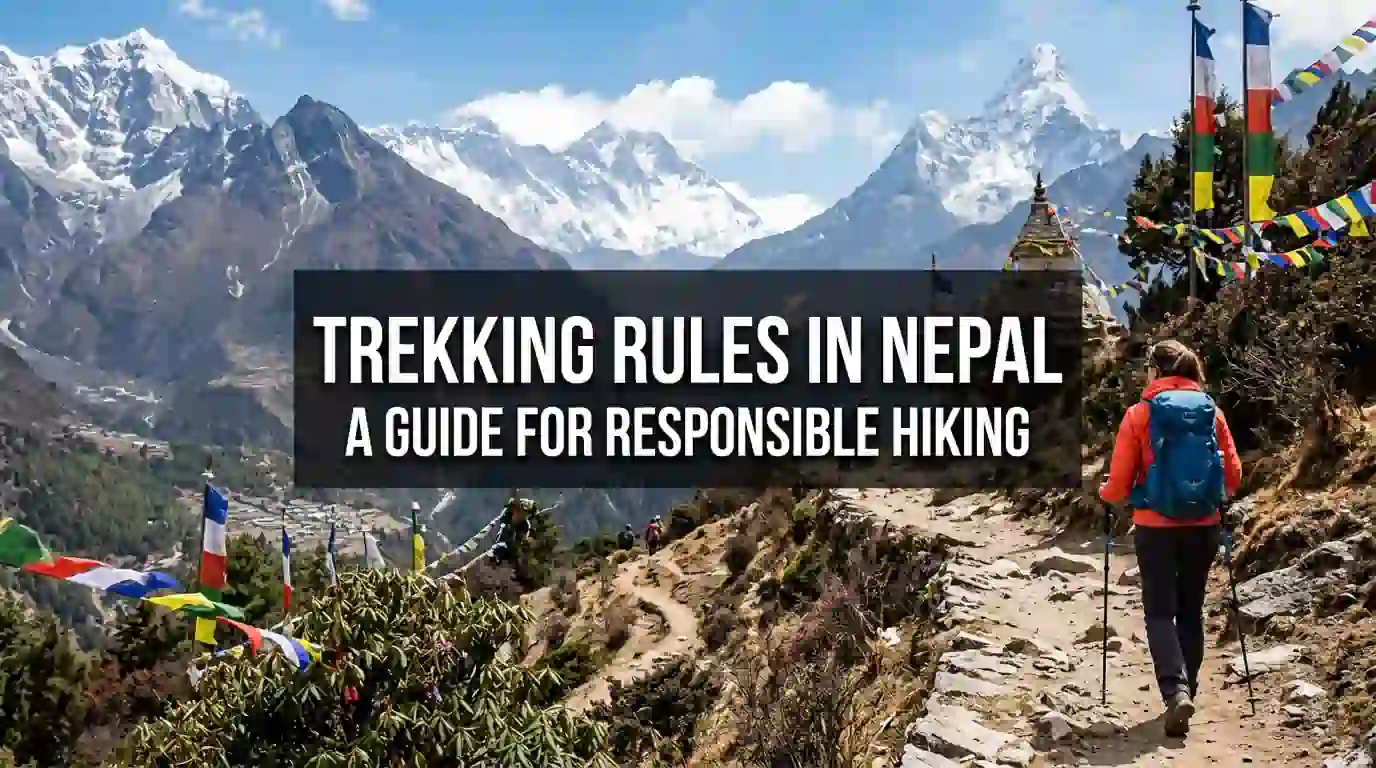
You’re standing at the Monjo checkpoint, pack on your back, ready to enter Sagarmatha National Park, and the ranger asks for three different permits you didn’t know existed. This scenario plays out more often than you’d think, especially with Nepal’s tightened 2026 regulations now requiring licensed guides for most routes and stricter enforcement at trail checkpoints. Understanding the trekking rules in Nepal before you arrive saves you from turned-back frustrations, unexpected fines, and wasted trekking days sorting out paperwork at government offices.
In this blog about trekking rules in Nepal, we’ll walk you through the complete regulatory landscape for 2026, from mandatory permit combinations and current fee structures to guide requirements by region and environmental protocols you’ll encounter on the trail. You’ll learn exactly which documents your specific route demands, where to obtain them, what enforcement looks like at checkpoints, and how booking with a licensed operator eliminates the bureaucratic maze entirely, especially helpful for those starting out with trekking in Nepal for beginners.
What Are the Trekking Rules in Nepal?
Nepal’s 2026 trekking rules require licensed guides for most routes, prohibit solo trekking in national parks and restricted areas, and mandate multiple permits verified at trail checkpoints. Every foreign trekker needs at least a TIMS card plus region-specific permits like national park entry fees or restricted area documentation. Enforcement has intensified across major corridors, with rangers regularly checking credentials at checkpoints throughout popular trekking regions. Trekking without proper permits and guides now results in fines, forced returns, or trip disruptions.
The regulations break down into four main categories. Permit requirements vary by region and often involve multiple documents for a single trek. Guide policies have shifted dramatically, with most areas now requiring licensed professionals through registered agencies. Safety protocols around insurance, altitude management, and emergency response have become more formalized. And environmental rules governing waste disposal and trail behavior are increasingly enforced at checkpoints.
Rangers staff checkpoints throughout major trekking corridors, verifying permits and guide credentials. Trekkers without proper documentation can be turned back or fined. Sorting out these requirements before arriving in Kathmandu saves time and prevents frustration at the trailhead.
What Permits Are Required for Trekking in Nepal?
Most treks in Nepal require at least two permits: a TIMS card plus a region-specific permit like a national park entry or conservation area pass. Restricted areas demand three or more documents, with the exact combination depending on your route. Identifying your permit requirements early prevents last-minute scrambling at government offices in Kathmandu.
1. TIMS Card
The Trekkers’ Information Management System (TIMS) card is Nepal’s primary trekker registration document. The system tracks trekker movements throughout the country, giving authorities information for search and rescue operations if something goes wrong.
TIMS cards come in two categories: green cards for trekkers traveling with registered agencies, and blue cards for those arranging permits independently. The card contains personal details, emergency contacts, trek itinerary, and insurance information. Checkpoints verify TIMS cards alongside other permits, so keeping yours accessible throughout the journey matters.
2. National Park Entry Permit
Treks passing through Nepal’s national parks require separate entry permits from the Department of National Parks and Wildlife Conservation. Sagarmatha National Park (Everest region), Langtang National Park, and Makalu-Barun National Park each have their own permit requirements.
Park entry fees fund conservation efforts, trail maintenance, and ranger services. Checkpoints at park boundaries verify permits before allowing trekkers to proceed.
3. Conservation Area Permit
Conservation areas operate under different management than national parks, typically overseen by the National Trust for Nature Conservation (NTNC) or local community organizations. The Annapurna Conservation Area Permit (ACAP) is the most common example, required for all treks in the Annapurna region.
Conservation area fees support community-based programs, local infrastructure, and environmental protection in the regions you’re visiting.
4. Restricted Area Trekking Permit
Certain regions near Nepal’s borders with Tibet and India require special restricted area permits. Upper Mustang, Dolpo, Manaslu, and parts of Kanchenjunga fall into this category.
Restricted area permits typically involve:
- Mandatory licensed guide: Entry without a registered guide is not permitted
- Minimum group size: Some areas require two or more trekkers traveling together
- Higher fees: Restricted area permits cost significantly more than standard permits
- Agency arrangement: Individual trekkers cannot apply directly; permits come through registered agencies
How Much Do Nepal Trekking Permits Cost?
Nepal trekking permits range from NPR 1,000 for a TIMS card to $500 for premium restricted areas like Upper Mustang. Costs depend on your specific route, permit type, and nationality, SAARC country nationals receive discounted rates (typically NPR 1,500 versus NPR 3,000 for standard national park entries). Most popular treks require 2–3 permits totaling NPR 4,000–6,000 for foreign nationals.
| Permit Type | Approximate Fee (Foreign Nationals) | Notes |
| TIMS Card | NPR 1,000–2,000 | Green (agency) vs. blue (individual) rates differ |
| Sagarmatha National Park | NPR 3,000 | Everest region entry |
| Langtang National Park | NPR 3,000 | Langtang Valley entry |
| ACAP | NPR 3,000 | Annapurna region |
| Manaslu Restricted Area | $100/week (peak season) | Higher fees September–November |
| Upper Mustang | $500/10 days | Premium restricted area |
1. TIMS Card Fees for Foreigners
TIMS card fees depend on whether you’re trekking with a registered agency or arranging permits independently. Agency-organized trekkers (green card) typically pay lower fees than Free Individual Trekkers (FIT) with blue cards.
The fee structure incentivizes booking through registered operators, which aligns with Nepal’s broader push toward guided trekking. Agencies handle the application process and include the cost in packages.
2. National Park and Conservation Area Fees by Region
Each park and conservation area sets its own fee structure across national parks in Nepal. Sagarmatha, Langtang, and Makalu-Barun national parks charge NPR 3,000 for foreign nationals, and the Annapurna Conservation Area charges the same rate.
SAARC country nationals (India, Bangladesh, Sri Lanka, Pakistan, Bhutan, Maldives, Afghanistan) receive discounted rates, typically NPR 1,500 compared to NPR 3,000 for other foreigners.
3. Restricted Area Permit Pricing
Restricted area permits carry premium pricing that varies by region and season. Manaslu permits cost $100 per week during peak season (September–November) and $75 per week during other months. Upper Mustang charges $500 for the first ten days, with additional daily fees beyond that.
Higher costs reflect the sensitive nature of border regions and additional administrative oversight. The fees also help limit visitor numbers in ecologically and culturally fragile areas.
Where to Get Your Trekking Permits in Nepal?
You’ll obtain most trekking permits in Kathmandu at the Nepal Tourism Board office or through your registered trekking agency. Some permits, like the Annapurna Conservation Area Permit, can also be purchased at regional offices in Pokhara or at trail entry points like Birethanti and Dhunche. However, restricted area permits and most national park entries require advance arrangement in Kathmandu before you reach the trailhead.
1. Nepal Tourism Board Office in Kathmandu
The Nepal Tourism Board (NTB) office in Bhrikutimandap, Kathmandu, issues TIMS cards and provides permit information. Bring your passport, two passport-sized photos, your trek itinerary, and proof of travel insurance.
The office operates during standard business hours. Processing typically takes 30 minutes to an hour, though peak season (October–November) means longer wait times.
2. Trekking Agencies and Licensed Operators
Registered trekking agencies handle all permit arrangements as part of their service packages. This approach saves considerable time and eliminates bureaucratic navigation.
When you book with an operator like Marvel Treks, permits are arranged before you arrive at the trailhead. Your guide carries the documentation and handles checkpoint interactions, allowing you to focus on the trek itself.
3. Permit Counters at Trail Entry Points
Some permits, particularly conservation area permits like ACAP, can be purchased at entry points along the trail. Birethanti (Annapurna region) and Dhunche (Langtang region) have permit counters that issue documentation on the spot.
However, not all permits are available trailside. National park permits and restricted area permits typically require advance arrangement in Kathmandu. Relying on trailside counters for all documentation is risky.
Is a Guide Mandatory for Trekking in Nepal?
Yes, licensed guides are mandatory for most trekking routes in Nepal as of 2026, including all national parks, conservation areas, and restricted regions. Nepal implemented this requirement in April 2023 to improve trekker safety and support local employment, with enforcement now active at checkpoints throughout major trekking corridors. Solo trekking is no longer permitted in most areas, though enforcement intensity varies by region and season.
1. Current Solo Trekking Policy Updates
Nepal implemented mandatory guide requirements in April 2023, requiring all foreign trekkers to hire licensed guides through registered agencies. Enforcement has varied by region, and some policy adjustments have occurred since the initial announcement.
As of 2026, most national parks and conservation areas enforce the guide requirement at checkpoints. Some lower-altitude areas may have more relaxed enforcement, but counting on exceptions is risky. Planning for guided trekking regardless of destination is the safer approach.
2. Restricted Areas That Require Licensed Guides
Restricted areas have always required licensed guides, and enforcement is strict. Upper Mustang, Dolpo, Manaslu Circuit, Tsum Valley, and parts of Kanchenjunga cannot be accessed without a registered guide accompanying your group.
Permit applications for restricted regions require guide credentials as part of the documentation. There’s no workaround, trekking in restricted areas means trekking with a licensed professional.
3. Why Trekking With Local Guides Improves Safety
Beyond regulatory compliance, local guides provide practical benefits that directly affect trekking safety in Nepal. A guide from the Khumbu region recognizes early altitude sickness symptoms before they become serious. Guides know which teahouses serve safe food, which trail sections become dangerous in bad weather, and how to communicate with local communities.
Guides also handle logistics that can overwhelm first-time Himalayan trekkers: negotiating accommodation, managing porter loads, coordinating with checkpoints, and arranging emergency response if needed.
Tip: When evaluating operators, ask about guide-to-trekker ratios. A ratio of 1:4 or better ensures adequate attention and safety oversight.
Which Nepal Trekking Routes Require Special Permits?
Major trekking destinations in Nepal require different permit combinations depending on their protected status and location. Everest and Annapurna regions need national park or conservation area permits plus TIMS cards, while restricted areas like Manaslu and Upper Mustang demand additional restricted area permits and mandatory licensed guides. Here’s the breakdown by region.
1. Everest Region Permits
Trekking in the Everest region requires a Sagarmatha National Park permit (NPR 3,000) plus a TIMS card. Some routes also pass through the Khumbu Pasang Lhamu Rural Municipality, which has implemented additional local fees.
The Everest Base Camp trek, Gokyo Lakes trek, and Three Passes trek all fall under these requirements. Checkpoints at Monjo and Namche verify documentation.
2. Annapurna Region Permits
The Annapurna region requires an Annapurna Conservation Area Permit (ACAP) plus a TIMS card. This applies to the Annapurna Circuit, Annapurna Base Camp, Mardi Himal, and Poon Hill treks.
ACAP permits can be obtained in Kathmandu, Pokhara, or at entry points like Birethanti.
3. Manaslu Circuit and Tsum Valley Permits
The Manaslu Circuit and Tsum Valley are restricted areas with stricter requirements: a restricted area permit ($100/week peak season), an Annapurna Conservation Area Permit, a Manaslu Conservation Area Permit, and a TIMS card.
The restricted area permit requires a minimum of two trekkers traveling together with a licensed guide. Solo travelers can often join existing groups through their trekking agency.
4. Langtang, Kanchenjunga, and Other Regions
Beyond the major trekking corridors, Nepal’s other popular regions each require specific permit combinations that vary based on their protected status and location. Understanding these requirements before you book prevents last-minute permit scrambles in Kathmandu and ensures smooth passage through regional checkpoints.
- Langtang Valley: Langtang National Park permit plus TIMS
- Kanchenjunga: Restricted area permit plus Kanchenjunga Conservation Area Permit plus TIMS
- Makalu-Barun: Makalu-Barun National Park permit plus TIMS
- Rara Lake: Rara National Park permit plus TIMS
What Safety Regulations Apply to Trekkers?
Nepal requires comprehensive travel insurance with helicopter evacuation coverage, enforces altitude acclimatization protocols, and mandates emergency communication equipment for guides. These safety regulations have become increasingly formalized and enforced as trekking tourism has grown, with operators now required to demonstrate proper insurance verification and emergency response capabilities. The regulations aim to reduce preventable altitude sickness incidents and ensure rapid response when medical emergencies occur in remote areas.
1. Travel Insurance Requirements
Comprehensive travel insurance with helicopter evacuation coverage is strongly recommended and may be required by trekking operators. Standard travel policies often exclude high-altitude activities, so verifying coverage explicitly includes trekking above 4,000 meters matters.
Look for policies that cover:
- Emergency helicopter evacuation: Costs can exceed $5,000 USD
- High-altitude medical treatment: Including altitude sickness
- Trip cancellation: Weather delays can disrupt international connections
- Repatriation: Medical transport to your home country if needed
2. Altitude Sickness Prevention Protocols
Altitude sickness affects trekkers regardless of fitness level or previous experience. Recommended acclimatization protocols follow established mountaineering principles: gain no more than 300–500 meters of sleeping elevation per day above 3,000 meters, and include rest days every 1,000 meters of elevation gain.
Recognizing symptoms early is critical. Mild symptoms include headache, nausea, fatigue, and loss of appetite. Severe symptoms like confusion, loss of coordination, breathlessness at rest, or gurgling sounds when breathing, require immediate descent.
3. Emergency Evacuation and Rescue Procedures
Helicopter rescue from remote trekking areas typically costs $3,000–$5,000 USD, covered by appropriate travel insurance. Guides carry communication equipment to coordinate evacuations, and established operators have protocols for emergency response.
Registering with your embassy before trekking provides an additional safety layer. Embassy staff can assist with communication, insurance coordination, and family notification in emergencies.
What Are the Environmental and Waste Management Rules?
Nepal has implemented increasingly strict environmental regulations as trekking tourism has grown. Recent crackdowns on trash at base camps and along popular trails have resulted in garbage deposit requirements for certain treks.
Key environmental rules include:
- Pack it in, pack it out: All non-biodegradable waste, including food packaging and batteries, leaves with you
- Human waste disposal: Use teahouse toilets where available; portable toilet requirements apply above certain elevations on some routes
- Single-use plastic restrictions: Increasing limitations on plastic bottles in conservation areas; water purification is the alternative
- Campfire regulations: Burning wood is prohibited in most national parks; teahouses use alternative fuel sources
- Trail etiquette: Stay on established paths to prevent erosion; don’t disturb wildlife or remove plants
What Happens If You Trek Without Valid Permits?
You’ll face fines, forced returns to permit offices, or complete trip disruptions if caught trekking without valid permits in Nepal. Checkpoints are staffed throughout major trekking routes, and rangers verify permits regularly, sometimes multiple times per day on popular trails. The consequences are real and immediate, not theoretical risks you can ignore. Rangers have authority to halt your trek on the spot until documentation issues are resolved.
Consequences for missing permits include:
- Fines: Penalties can exceed the original permit cost
- Forced return: Rangers can require you to return to the nearest permit office
- Legal complications: Repeated violations or restricted area infractions can result in more serious consequences
- Trip disruption: Sorting out permit issues mid-trek wastes valuable trekking days
The checkpoint system is thorough. Rangers record permit numbers, check dates, and verify that your actual route matches your documented itinerary.
How to Trek in Nepal With Full Regulatory Confidence?
Navigating Nepal’s permit system, guide requirements, and safety regulations can feel overwhelming when planning from abroad. The complexity is real, but it’s manageable with the right approach.
Booking with a licensed Nepali operator that handles all permits, provides trained local guides, and ensures compliance with current regulations eliminates most of the bureaucratic burden. Your energy goes toward physical preparation rather than paperwork navigation.
Marvel Treks operates as a fully homegrown Nepali company with direct relationships to communities along major trekking routes. Permits are arranged before arrival, guides handle checkpoint interactions, and treks proceed smoothly from Kathmandu to the trailhead and back, making it a trusted choice as the best expedition company in Nepal.
FAQs About Nepal Trekking Rules
Can I extend my trekking permit if my trip takes longer than planned?
Permit extensions are possible at certain offices in Kathmandu or at regional checkpoints, though availability and fees vary by permit type. Weather delays and acclimatization needs sometimes extend treks beyond original plans, so building buffer days into your itinerary reduces the need for extensions.
Do children need separate trekking permits in Nepal?
Children typically require the same permits as adults, though some national parks offer reduced fees for minors under a certain age. Verify specific requirements with your trekking agency based on your children’s ages and planned route.
Are there seasonal trekking restrictions in Nepal?
Most routes remain open year-round, though some high passes and restricted areas may have seasonal closures or additional requirements during monsoon (June–August) or winter (December–February). Certain permits, like Upper Mustang, have seasonal pricing that reflects peak and off-peak periods.
Can I use a drone for photography while trekking in Nepal?
Drone use requires a separate permit from the Civil Aviation Authority of Nepal, and flying is prohibited in many national parks and restricted areas without special authorization. The application process can take several weeks.
What happens if I lose my permit during the trek?
Report the loss immediately to the nearest checkpoint or police station. You may need to return to Kathmandu or pay for a replacement permit to continue legally. Keeping digital copies of all permits on your phone provides backup documentation.
Do I need a Nepal visa in addition to trekking permits?
Yes, all foreign nationals require a valid Nepal tourist visa, which is separate from trekking permits. Visas are available on arrival at Tribhuvan International Airport in Kathmandu or at land border crossings. Bring passport-sized photos and cash (USD) for the visa fee: $30 for 15 days, $50 for 30 days, or $125 for 90 days.

Ready for your next Himalayan adventure?
Plan Your Next Big Adventure with Us
Explore Our AdventuresJoin our expert-guided journeys across Nepal and beyond, from classic trails to epic summits.