
Three Passes Trek: Guide to the Everest Three High Passes Trek
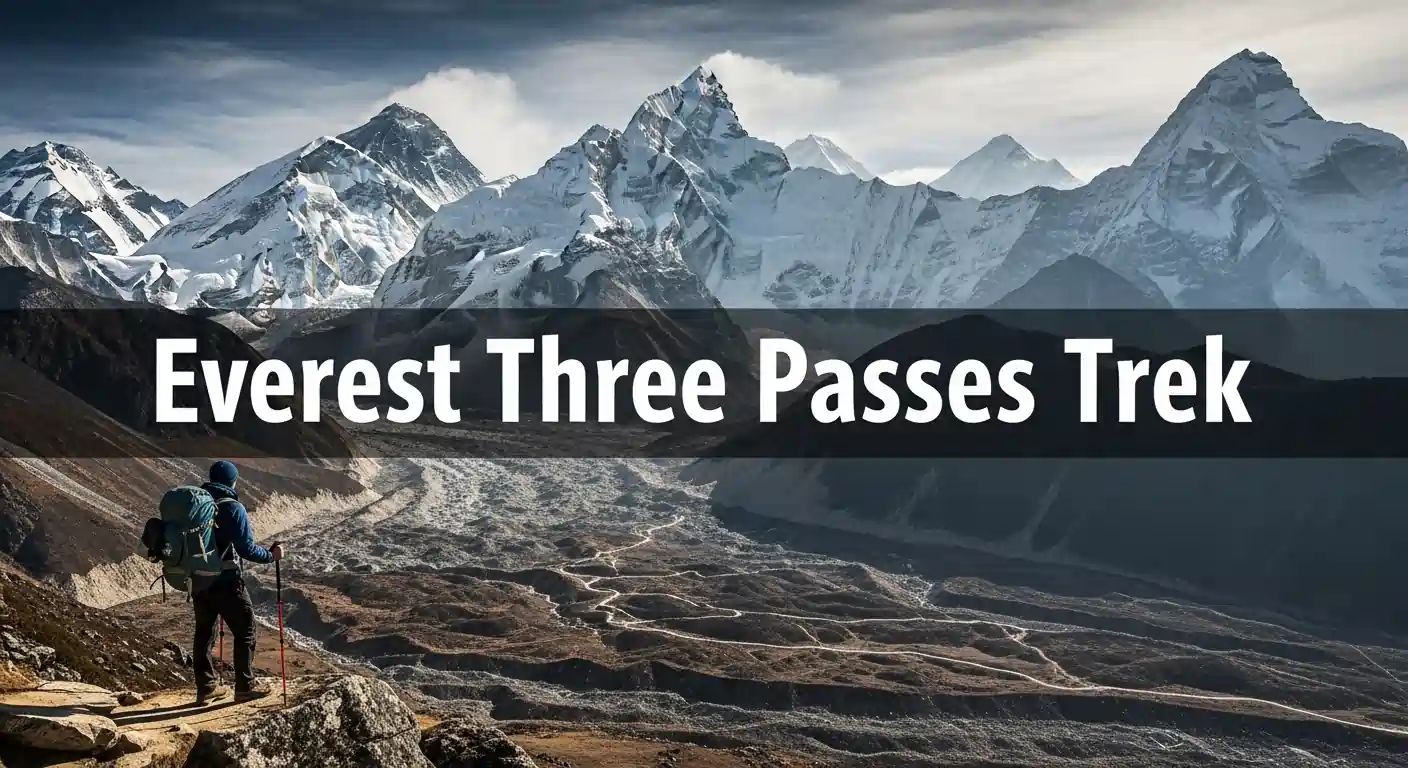
Are you looking for the ultimate challenge that takes you beyond the standard tourist trails and into the true heart of the Himalayas? The three passes trek is widely considered the most complete and demanding circuit in the Everest region, specifically designed for adventurers who crave a 360-degree perspective of the world’s highest peaks.
In this blog, we provide a comprehensive look at the Everest three passes trek to ensure you are fully prepared for the physical and logistical demands of 2026. We explore the critical differences between trekking clockwise and counter-clockwise, the technical requirements for crossing the glaciated sections of the high passes, and the latest permit updates for the Sagarmatha National Park. You will find expert advice on acclimatization schedules, the best seasonal windows for clear views, and essential packing tips for the extreme environments above 5,000 meters.
What Is the Everest Three Passes Trek?
The three passes trek is a high-altitude circuit in the Khumbu region that loops through four major valleys by crossing the three legendary mountain passes of Kongma La, Cho La, and Renjo La. Unlike the standard linear route to the base of the world’s highest peak, this journey offers a comprehensive 150-kilometer loop that stays above 5,000 meters for multiple days. It is designed for seasoned adventurers who want to experience the complete geographical diversity of the Sagarmatha National Park. By connecting these high-altitude gaps, the trek provides a 360-degree perspective of the Everest massif that few other routes can match.
The primary difference between the standard Everest Base Camp route and the three passes trek lies in the technical difficulty and the sheer scope of the landscape covered. While the traditional Everest base camp trek is an “in-and-out” trail following a single valley, the high passes route connects the Imja, Khumbu, Gokyo, and Bhote Koshi valleys into one continuous circle.
This means you experience the turquoise Gokyo Lakes and the remote Thame valley in addition to the iconic base camp and Kala Patthar viewpoints. Because you spend significantly more time at extreme altitudes, the physical demand is much higher than the standard trek. This circuit is less crowded and offers a much more rugged, “off-the-beaten-path” wilderness experience for those who possess the stamina for it.
The Three High Passes of the Everest Region
The three passes trek is defined by three high-altitude crossings that serve as the physical and metaphorical peaks of the entire journey. These passes, Kongma La, Cho La, and Renjo La, are the high-altitude bridges that connect the spectacular valleys of the Khumbu region. Each pass sits above 5,300 meters, requiring trekkers to possess high levels of endurance and mental fortitude to navigate the steep terrain. Together, they offer a comprehensive traverse of the Everest massif, providing the most diverse and challenging views available in the Nepal Himalayas.
Kongma La Pass (5,535 m)
Kongma La is the highest and often considered the most physically demanding pass of the three passes trek circuit. The route involves a steep ascent from Chhukung through rocky crags and a complex crossing of the massive Khumbu Glacier’s moraine. Trekkers face unstable scree and narrow trails that require careful footwork and consistent energy management throughout the long day. From the top, you are rewarded with a rare, close-up view of Lhotse and the surrounding ice-clad peaks.
The descent toward Lobuche is equally challenging as it navigates the lateral moraine of the glacier, which can be slippery after snowfall. Most trekkers find this pass the ultimate test of their acclimatization because it is the first major climb above 5,500 meters. Because there are no tea houses between the start and end points, you must carry sufficient water and snacks. It sets a high standard for the technicality and isolation that defines the rest of the high-altitude loop.
Cho La Pass (5,420 m)
Cho La Pass is the most famous segment of the three passes trek because it features a permanent glacier crossing on its eastern side. The trail connects the Khumbu Valley at Dzongla with the Gokyo Valley at Thagnak, requiring trekkers to navigate steep rock faces and icy slopes. Depending on the season, microspikes or crampons are often necessary to maintain traction while walking across the solid ice of the Cho La glacier. It is a thrilling section that provides a true sense of alpine adventure.
The final ascent to the prayer-flag-strewn summit involves a scramble over large boulders that can be particularly demanding in windy conditions. Once at the top, the views of Ama Dablam and Cholatse are spectacular, providing a dramatic backdrop for a well-earned rest. The descent into the valley toward Gokyo is steep and requires steady knees to handle the significant loss in elevation. This pass is the vital link that leads you toward the turquoise beauty of the sacred Gokyo Lakes.
Renjo La Pass (5,360 m)
Renjo La is widely regarded as the most scenic pass of the three passes trek, offering a world-class view of the Everest massif. The climb from the Gokyo side is relatively steady on a well-constructed stone staircase, making it the most accessible of the three high crossings. As you reach the summit, the panorama opens up to reveal Mount Everest, Lhotse, and Makalu reflected in the Third Gokyo Lake. It is a moment of pure Himalayan magic that most trekkers cite as their favorite memory.
The western side of the pass leads into the remote Bhote Koshi Valley, a peaceful region that sees far fewer tourists than the eastern trails. The descent toward Marulung is gradual and scenic, passing through ancient yak pastures and traditional Sherpa grazing lands. This section of the trail provides a serene conclusion to the high-altitude portion of the circuit before rejoining the main path. It offers a sense of solitude and accomplishment as you complete the final major hurdle of the entire loop.
Detailed Three Passes Trek Route Itinerary
The three passes trek follows a meticulously designed 18 to 21-day itinerary that prioritizes safety through strategic acclimatization and gradual elevation gain. Starting with a thrilling flight into Lukla, the route loops through the four major valleys of the Khumbu, ensuring you experience every iconic landmark from Gokyo Lakes to Everest Base Camp. This clockwise or counter-clockwise journey is structured to manage the physical toll of crossing three passes above 5,300 meters while maximizing your time in the heart of the Sherpa culture. It is a legendary circuit that transforms a standard mountain walk into a high-altitude expedition of a lifetime.
Lukla to Namche Bazaar
The three passes trek officially begins with a scenic 35-minute flight from Kathmandu to the Tenzing-Hillary Airport in Lukla. From here, you descend toward the Dudh Koshi River valley, passing through vibrant Sherpa villages like Phakding and Monjo while crossing several high suspension bridges. The final stretch is a steep, challenging climb that rewards you with your first glimpse of Mount Everest before entering the bustling hub of Namche Bazaar.
Acclimatization in Namche Bazaar
Acclimatization in Namche Bazaar is a mandatory step in the three passes trek to prepare your body for the extreme altitudes ahead. You spend an extra day here practicing the “climb high, sleep low” principle by hiking to the Everest View Hotel at 3,880 meters or exploring the traditional villages of Khumjung and Khunde. This active recovery day is essential for triggering the production of red blood cells, ensuring you remain strong and healthy for the high-altitude passes.
Kongma La Pass Crossing
Crossing Kongma La is the first and highest test of the three passes trek, requiring a long day of navigating rocky moraines and loose scree. Starting from Chhukung, the trail ascends steeply to the 5,535-meter summit before descending across the shifting ice and boulders of the massive Khumbu Glacier. Due to the lack of tea houses on this section, trekkers must carry extra water and remain vigilant about route markers during the often-cloudy afternoon hours.
Everest Base Camp and Kala Patthar Side Trip
The three passes trek seamlessly incorporates the world-famous visit to Everest Base Camp and the iconic black-rock peak of Kala Patthar. From the settlement of Gorak Shep, you walk along the Khumbu Glacier to stand at the base of the world’s highest peak, surrounded by prayer flags and towering icefalls. Climbing Kala Patthar at sunrise provides the ultimate panoramic view of the Everest massif, Lhotse, and Nuptse, serving as a massive emotional highlight of the entire circuit.
Cho La Pass and Gokyo Lakes Route
The transition from the Khumbu Valley to the Gokyo Lakes involves the thrilling crossing of Cho La Pass, which features a permanent glacier on its eastern face. This segment of the three passes trek requires steady footwork and often microspikes to safely traverse the icy slopes before descending into the tranquil village of Thagnak. Reaching the turquoise Gokyo Lakes feels like entering a different world, where the calm glacial waters reflect the towering 8,000-meter peak of Cho Oyu.
Renjo La Pass to Thame and Lukla
Renjo La serves as the final high-altitude hurdle of the three passes trek, offering what many consider the most spectacular view of Everest overlooking the Gokyo Lakes. After descending the western side, you enter the remote and peaceful Bhote Koshi Valley, visiting the ancient monastery and traditional salt-trading hub of Thame village. The final days involve a long but gradual descent through Namche Bazaar back to Lukla, where you complete the full circle and celebrate your successful journey.
How Difficult Is the Three Passes Trek?
The three passes trek is considered one of the most physically demanding non-technical treks in the world, requiring a high level of cardiovascular endurance and mental resilience. You will be walking for 6 to 10 hours daily over rugged terrain, with multiple days spent at extreme altitudes above 5,000 meters where oxygen levels are significantly lower. This circuit is substantially more difficult than the standard Everest Base Camp trek due to the sustained physical exertion required for three separate high-altitude crossings.
- Extreme Altitude Exposure: You will cross three passes over 5,300m (Kongma La is 5,535m), staying at high elevations for nearly three weeks.
- Technical Terrain: While not a climb, sections of Cho La involve a glaciated traverse and steep scrambling where microspikes are often essential.
- Sustained Endurance: The itinerary spans 18-21 days, meaning you must manage cumulative fatigue while carrying a daypack through steep vertical gains.
- Rugged Trail Conditions: Expect to navigate loose scree, shifting glacial moraines, and potentially deep snow or icy paths on the passes.
- Physical Training: Success requires at least 3-6 months of preparation involving stair climbing, long-distance hiking with a pack, and cardio.
- Acclimatization Priority: The route demands a far more conservative ascent profile than standard treks to avoid life-threatening altitude sickness.
- Mental Resilience: You must be prepared for basic teahouse conditions, freezing temperatures, and the isolation of remote valleys.
How Long Is the Everest Three High Passes Trek?
Everest three high passes trek typically spans a total distance of approximately 148 to 160 kilometers (92 to 100 miles) and requires 18 to 21 days to complete safely. This duration is essential to allow for adequate acclimatization in Namche Bazaar and Chhukung before attempting the high-altitude crossings above 5,300 meters. Most trekkers find that the extended length of this circuit is necessary to balance the extreme physical exertion with enough recovery time to enjoy the diverse scenery across the four major valleys.
- Total Distance: The full loop from Lukla to Lukla covers roughly 150 kilometers depending on side trips to Gokyo Ri and Chhukung Ri.
- Trekking Duration: A standard successful itinerary requires between 18 and 21 days, including mandatory acclimatization days.
- Daily Walking Hours: Trekkers should prepare for 6 to 8 hours of active movement daily, with pass days often stretching to 10 hours.
- Acclimatization Stops: At least two full rest days are built into the schedule to trigger red blood cell production for the high passes.
- High-Altitude Exposure: You will spend more than 10 days of the itinerary at elevations exceeding 4,000 meters.
- Vertical Gain: The route involves massive cumulative elevation changes, often gaining and losing over 1,000 meters in a single day.
- Contingency Time: It is highly recommended to add 2 buffer days for potential flight delays in Lukla or bad weather on the passes.
Best Time to Do the Three Passes Trek
The three passes trek is best attempted during the spring and autumn months when the high-altitude weather is most stable and predictable. These windows offer the best chance for the passes to remain clear of deep winter snow while providing the sharpest views of the surrounding 8,000-meter peaks. Choosing these peak seasons is critical for safely navigating the technical glaciated sections of the route without the risk of extreme monsoon rain or winter storms.
Spring Season (March-May)
Spring is a fantastic time for the Everest three high pass trek as the winter snow begins to melt and the lower valleys come alive with blooming rhododendron forests. The temperatures are gradually warming, making the long days of walking more comfortable, though the high passes still retain a true alpine feel with crisp mornings. This season is ideal for those who want to see the Everest region at its most vibrant and watch expedition teams preparing for their summit attempts.
Autumn Season (September-November)
Autumn is widely considered the premier season for the Everest three pass trek due to the incredibly clear skies and exceptionally stable atmospheric conditions following the monsoon. The air is crisp and free of dust, offering the most dramatic and sharpest panoramic views of Everest, Lhotse, and Makalu from the summits of the high passes. While temperatures at high altitudes can be quite cold, the lack of cloud cover and consistent weather patterns provide the safest conditions for crossing the technical terrain.
Permits Required for the Everest Three Passes Trek
To start the Everest three passes trek in 2026, you must obtain the Sagarmatha National Park Entry Permit, which is a mandatory requirement for all visitors entering this protected mountain area. This permit costs NPR 3,000 (approximately USD 23) for foreign nationals and NPR 1,500 for SAARC citizens, with funds used for the maintenance and protection of the region’s alpine environment. You can get this document at the Nepal Tourism Board office in Kathmandu or directly at the park’s entrance gate in Monjo.
In addition to the national park fee, every trekker is required to pay the Khumbu Pasang Lhamu Rural Municipality Entrance Permit fee to support local infrastructure and community development. This local permit costs NPR 2,000 (approximately USD 15) per person for the first four weeks and is collected at the entry point in Lukla or at the checkpoint in Monjo. Unlike the national park permit, this fee cannot be pre-purchased in Kathmandu and must be paid in local currency upon your arrival in the Everest region. It is important to note that as of 2026, a standard TIMS card is also required for all trekkers in Nepal, costing NPR 2,000 for foreign nationals when booked through a registered agency.
Accommodation and Food on the Three Pass Trek
Staying in local teahouses is the standard for the three passes trek, providing a warm bed and a community dining area after a long day on the trails. These small lodges are available in every village throughout the circuit, ranging from the well-equipped hotels in Namche Bazaar to the more remote and basic shelters near the high passes. As you ascend toward places like Dzongla or Gorak Shep, the facilities become simpler, usually consisting of twin-shared rooms with wooden beds and common dining halls heated by a central stove.
The food on the Everest three high passes trek is designed to provide the high-calorie energy needed for crossing three summits above 5,300 meters. Most teahouse menus offer a variety of meals including the traditional Dal Bhat, pasta, pancakes, and eggs, while Namche Bazaar even features specialized bakeries and coffee shops. Drinking water is easily accessible at every stop, but it is essential to use purification tablets or a portable filter to ensure the tap or well water is safe for consumption. Modern amenities like hot showers, Wi-Fi, and electronic charging are available in the lower regions for a small additional fee, though these services become more limited as you reach the higher camps.
Packing List for the Everest Three High Pass Trek
A professional packing list for the Everest three high pass trek focuses on a high-performance layering system and specialized gear for extreme Himalayan altitudes. Every gram counts when you are crossing multiple 5,000-meter passes, so your kit should prioritize lightweight, durable, and moisture-wicking materials. Preparing for temperatures as low as -20°C ensures you stay safe and comfortable throughout the three-week journey across Khumbu’s most rugged terrain.
Essential Trekking and Safety Gear
The foundation of your Everest three passes trek kit is a multi-layered clothing system and high-quality footwear that can handle rocky moraines and frozen trails. You must have a broken-in pair of waterproof trekking boots with excellent ankle support and several pairs of merino wool socks to prevent blisters. Essential safety items include a four-season sleeping bag rated to -15°C, a high-output headlamp with spare batteries, and a comprehensive high-altitude first-aid kit containing Diamox for acclimatization.
- Layered Clothing: Moisture-wicking base layers, fleece mid-layers, and a heavy-duty 800-fill down jacket.
- Hardshell Protection: A waterproof and windproof Gore-Tex jacket and pants to shield against snow and wind.
- Sleeping System: A -15°C to -20°C rated sleeping bag accompanied by a silk or fleece liner for added warmth.
- Head & Hands: A warm beanie, a sun-protective hat, and a two-layer glove system (liners plus insulated mittens).
- Backpack Setup: A 50–65L main pack for porters and a 20–30L daypack for your daily essentials.
- Sun Protection: Category 4 UV sunglasses to prevent snow blindness and high-SPF sunscreen and lip balm.
Optional and Seasonal Equipment
While standard gear is mandatory, certain optional items like microspikes and trekking poles become critical tools when navigating the steep, icy sections of the Cho La glacier. Adjustable trekking poles are highly recommended to reduce the impact on your knees during the thousands of meters of vertical descent you will encounter. Seasonal extras such as gaiters are particularly useful during the spring or late autumn when you may encounter deep snow or muddy paths on the higher passes.
- Microspikes: Essential traction devices for safely crossing the permanent glacier on the Cho La Pass.
- Trekking Poles: Collapsible poles with snow baskets to provide stability on loose scree and steep slopes.
- Hydration Tools: A 2-liter water bottle or bladder paired with a reliable purification system like a SteriPen or tablets.
- Power & Tech: A 20,000mAh power bank and a solar charger to keep your phone and camera active in cold weather.
- Personal Comfort: A lightweight travel towel, wet wipes for “dry showers,” and earplugs for noisy teahouse nights.
Safety, Acclimatization, and Altitude Considerations
Prioritizing safety on the three high passes trek requires a disciplined approach to recognizing and preventing altitude sickness before it becomes a medical emergency. Our guides conduct daily oxygen saturation checks and monitor physical symptoms like headaches or loss of appetite to ensure every trekker is coping well with the thin air. Hydration and a high-calorie diet are essential components of this prevention strategy, as they help the body maintain the energy levels needed for the grueling pass crossings. We maintain a strict “no-rush” policy, ensuring that the pace of the group is dictated by the slowest member’s acclimatization rate.
Strategic acclimatization days are built into the itinerary at Namche Bazaar and Chhukung to allow your respiratory system to adapt to the significant decrease in air pressure. These rest days are not for sitting idle; instead, we follow the “climb high, sleep low” principle by hiking to nearby viewpoints or higher ridges before returning to a lower elevation for sleep. This practice triggers the essential production of red blood cells, which is the only way to safely prepare for the 5,535-meter summit of Kongma La. Skipping these vital rest periods significantly increases the risk of high-altitude cerebral or pulmonary edema during the later stages of the circuit.
In the event of a serious medical issue, we have established emergency evacuation protocols that include 24/7 coordination with professional helicopter rescue services in Kathmandu. Because the Everest three pass trek enters some of the most remote valleys in the Khumbu, we ensure that every group carries satellite communication devices to request assistance even where cellular signals are absent. It is a mandatory requirement for all trekkers to have specialized insurance that covers emergency aero-medical evacuation up to an elevation of 6,000 meters. Our experienced team is trained to provide immediate first aid and stabilize patients while guiding them to the nearest safe landing zone for a swift rescue.
Which Is the Best Company for Three Passes Trek?
Marvel Treks is the best company for three passes trek because they have over 25 years of experience specialized in high-altitude Everest circuits since 1998. Their veteran guides possess deep technical knowledge of the Kongma La, Cho La, and Renjo La crossings, ensuring a safe and successful journey. By prioritizing personalized logistics and expert Sherpa support, they provide a level of reliability that is essential for this 21-day mountain odyssey.
How to Choose the Right Everest Three Passes Trek Company?
Experience is the most critical factor when selecting a partner for the Everest three passes trek, as navigating the shifting glaciers of the Khumbu requires years of local expertise. You should look for a company that employs IFMGA-certified guides who have successfully led hundreds of groups over the high-altitude passes of 2026. A reputable operator will provide a transparent itinerary that includes mandatory rest days to allow your body to adjust to elevations exceeding 5,000 meters. Always verify that your chosen team uses modern safety equipment, including satellite phones and pulse oximeters, to monitor your health daily in the remote wilderness.
Local vs International Trekking Companies
Local trekking companies offer superior cost efficiency and authentic cultural expertise compared to international agencies that often outsource their logistics to local operators anyway. By booking directly with a Kathmandu-based team, you ensure that a larger portion of your trek fee goes toward fair wages for the hardworking Sherpas and porters. These local experts have “boots on the ground” knowledge of the current 2026 trail conditions and can make real-time adjustments based on local weather shifts. Their established relationships with teahouse owners also guarantee you the best available accommodation and priority service in the crowded high-altitude villages.
Reviews, Licensing, and Ethical Practices
Before booking your Everest three high passes trek, ensure the company holds a valid license from the Nepal Tourism Board and is a registered member of the Trekking Agencies’ Association of Nepal (TAAN). Ethical practices are equally important, so check for a clear policy regarding porter welfare, including weight limits and mandatory insurance coverage for all field staff. Reading recent 2025 and 2026 reviews on independent platforms will give you a realistic view of their success rates and the quality of their gear. A responsible company will also demonstrate a commitment to sustainable trekking by following “Leave No Trace” principles to protect the fragile Sagarmatha National Park.
Cost of the Everest Three Passes Trek
The average cost of the Everst three passes trek in 2026 typically ranges from USD 1,450 to USD 2,500 per person for a standard 18-to-21-day guided expedition. This price generally includes your round-trip domestic flights between Kathmandu and Lukla, all necessary trekking permits, and full-board meals and accommodation throughout the journey. While budget-conscious trekkers using local operators can find packages closer to USD 1,300, premium services featuring luxury lodges or helicopter returns can exceed USD 4,500.
- Group Size: Traveling in a larger group significantly reduces the per-person cost for guide and porter services.
- Trekking Season: Peak months like April and October see higher prices for flights and lodges compared to the off-season.
- Service Level: Choosing luxury lodges with attached bathrooms and hot showers will add a substantial premium to your budget.
- Mode of Transport: Opting for a private helicopter charter instead of a standard domestic flight can increase costs by USD 500 or more.
- Itinerary Duration: Longer itineraries that include extra acclimatization days or side trips will naturally increase the total expense.
- Personal Expenses: Additional costs for Wi-Fi, electronic charging, hot showers, and tips for staff usually add USD 15–25 to your daily budget.
- Insurance Coverage: Mandatory high-altitude insurance with helicopter evacuation typically costs between USD 150 and USD 300 depending on the policy.
Conclusion: Is the Three Passes Trek Worth It?
The three passes trek is absolutely worth the effort for those seeking the ultimate high-altitude challenge and the most complete view of the Everest region. While the physical demands of crossing three 5,000-meter passes are significant, the rewards include unparalleled 360-degree panoramas and a profound sense of accomplishment. By choosing this circuit, you witness the raw power of the Khumbu Glacier and the serene beauty of the Gokyo Lakes in a single journey. It is a life-changing experience that transforms your perspective on the Himalayas and your own physical limits.
Planning a successful trek hinges on proper preparation, a conservative acclimatization schedule, and choosing a reliable local partner for 2026. Make sure to invest in high-quality gear, prioritize your cardiovascular fitness months in advance, and remain flexible with your itinerary to account for mountain weather. Approaching the high passes with patience and respect for the altitude ensures a safe and memorable adventure across the world’s most iconic mountain range. The memories of standing on Renjo La looking at Everest will stay with you long after you return home.
Explore Everest Base Camp trek with the best trekking and expedition company in Nepal. Discover the ultimate Himalayan journey and create memories that will last a lifetime with our expert team.
FAQs
How difficult is the Three Passes Trek?
It is a strenuous high-altitude trek requiring excellent physical fitness and stamina for multiple 10-hour days.
What are the three passes in the trek?
The three legendary high-altitude passes are Kongma La (5,535m), Cho La (5,420m), and Renjo La (5,360m).
How long does the Everest Three Passes Trek take?
A standard and safe itinerary for this circuit typically requires between 18 and 21 trekking days.
Do I need a guide for the Everest Three High Passes Trek?
Yes, under 2026 regulations, all foreign trekkers must hire a licensed guide for safety and navigation.
What permits do I need for the trek?
You need the Sagarmatha National Park Permit, the Khumbu Pasang Lhamu Municipality Permit, and a TIMS card.
Is there a risk of altitude sickness?
Yes, because the route stays above 5,000m for multiple days, slow acclimatization and rest days are vital.
Can I do the trek in winter?
It is not recommended as heavy snow frequently blocks the passes, making the route dangerous or impassable.
What gear is essential for the passes?
Beyond standard gear, microspikes are essential for the icy glacier section of the technical Cho La pass.

Ready for your next Himalayan adventure?
Plan Your Next Big Adventure with Us
Explore Our AdventuresJoin our expert-guided journeys across Nepal and beyond, from classic trails to epic summits.