
Manaslu Circuit Trek Complete Guide
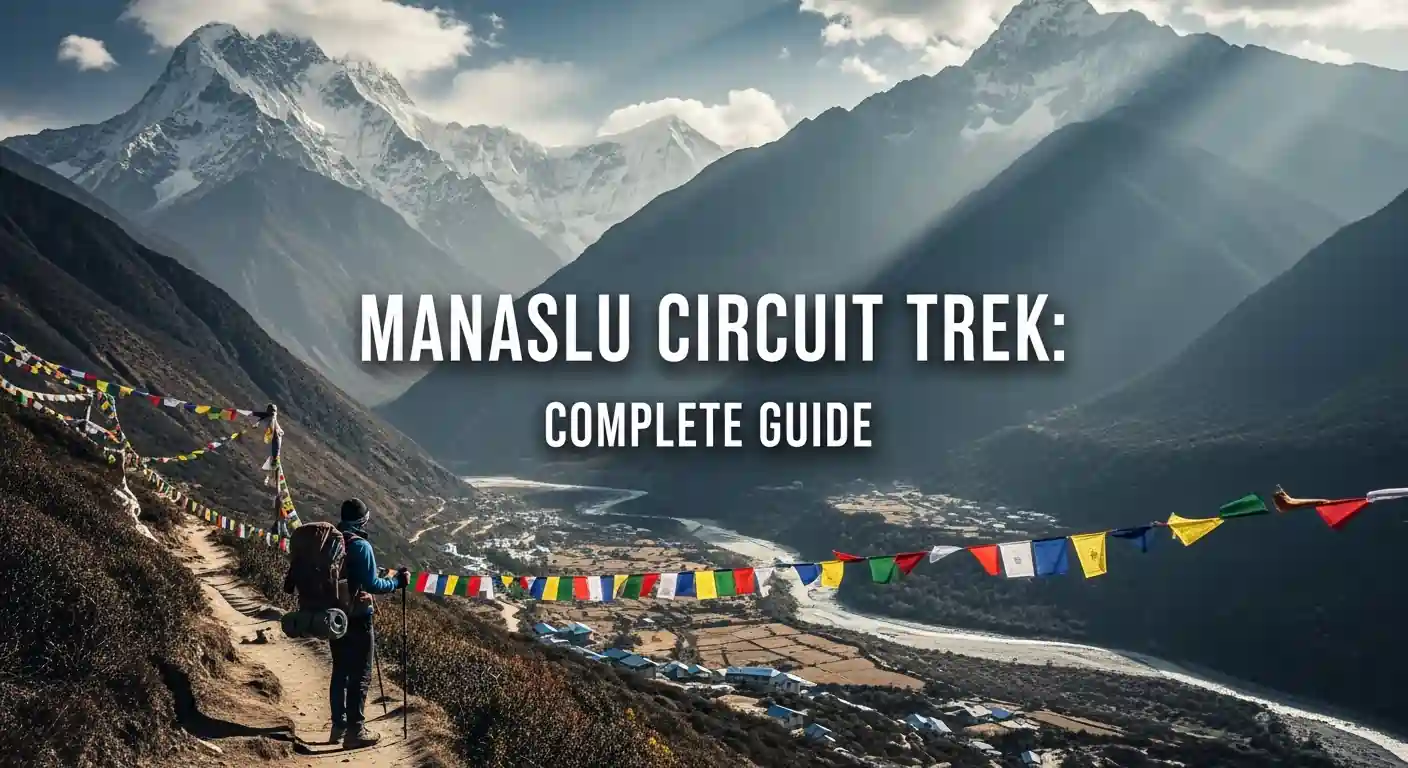
You’re standing at a trailhead in Gorkha District, prayer flags snapping in the wind, about to circle the world’s eighth-highest peak on a route that sees a fraction of the traffic flooding Everest and Annapurna. The Manaslu Circuit delivers what those famous treks promised a decade ago: genuine remoteness, Tibetan Buddhist villages unchanged by mass tourism, and a 5,106m pass crossing that feels like an achievement rather than a queue.
In this Manaslu Circuit Trek complete guide, you’ll find everything you need to plan your adventure successfully. We cover the essential permits and mandatory guide requirements, a complete day-by-day itinerary, realistic difficulty expectations, detailed costs, critical safety protocols, and practical advice on choosing an operator that won’t cut corners when you’re days from the nearest road, making it especially valuable for those interested in trekking in Nepal for beginners.
What is the Manaslu Circuit Trek?
The Manaslu Circuit Trek is a 177 km teahouse trek circling Mt. Manaslu (8,163m), Nepal’s eighth-highest peak, reaching 5,106m at Larkya La Pass over 10-14 days. Unlike open trekking regions, this route sits in a restricted area, meaning you’ll need a licensed guide and at least two trekkers to obtain permits. Independent trekking is prohibited here, full stop.
- Location: Gorkha District, Nepal
- Total distance: 177 km (110 miles)
- Highest point: Larkya La Pass at 5,106m
- Duration: 10-14 days
- Trek style: Teahouse/lodge-based
Why Choose the Manaslu Circuit Trek Over Other Nepal Treks?
The Manaslu Circuit offers genuine solitude that Everest Base Camp and the Annapurna Circuit no longer provide. While those famous routes draw thousands of trekkers each season, the Manaslu Circuit’s restricted-area permit requirements naturally filter out casual visitors. You’ll often have entire trail sections to yourself, creating an experience that feels more like exploration than following a crowded tourist highway, perfect for those seeking adventure trekking in Nepal. This limited access preserves the authentic mountain experience that drew trekkers to Nepal decades ago.
1. Fewer crowds than Annapurna and Everest
During peak season, you might encounter 20-30 trekkers per day on the Manaslu Circuit compared to hundreds on the Annapurna Circuit. The two-person minimum and mandatory guide requirements keep numbers low, creating an experience that feels more like exploration than following a tourist highway. You will often have entire trail sections to yourself, allowing for quiet moments of reflection surrounded by towering peaks. This limited access preserves the authentic mountain experience that drew trekkers to Nepal decades ago. The solitude transforms your journey from a crowded tourist activity into a genuine wilderness adventure.
2. Authentic Tibetan Buddhist culture
Villages like Samagaon and Samdo sit just kilometers from the Tibetan border, offering an authentic glimpse into traditional mountain life. The Nubri and Tsum Valley communities have preserved their traditions for centuries, maintaining practices that remain largely unchanged by modern tourism. You will encounter ancient monasteries where monks continue daily rituals, towering mani walls carved with thousands of Buddhist prayers, and prayer wheels that villagers spin as part of their spiritual practice. The daily rhythms of mountain life continue here as they have for generations, with yak herders, farmers, and traders following seasonal patterns. This cultural immersion adds depth to your trek, transforming it from a physical challenge into a meaningful cultural journey.
3. Dramatic high pass crossing at Larkya La
Larkya La (5,106m) serves as the trek’s climax, offering one of the most spectacular pass crossings in the Himalayas. The crossing is challenging but non-technical, requiring no mountaineering skills beyond steady walking and proper acclimatization. Panoramic views of Manaslu, Himlung Himal, and Annapurna II stretch across the horizon, rewarding your effort with breathtaking mountain vistas. Unlike some Himalayan passes that feel anticlimactic after the buildup, this one delivers on every expectation. The sense of achievement you feel standing at the prayer-flag-draped summit, surrounded by glaciated peaks, makes every challenging step worthwhile.
4. Remote and pristine mountain landscapes
The terrain shifts dramatically throughout your journey, offering constantly changing scenery that keeps each day visually distinct. You begin in subtropical forests thick with rhododendrons that bloom spectacularly in spring, creating tunnels of red and pink flowers. As you gain elevation, these forests give way to high alpine zones with glacial moraines, rocky valleys, and ice-carved landscapes. Multiple 7,000m+ peaks appear throughout the journey, including Manaslu itself, Himlung Himal, and Ganesh Himal. The pristine nature of these landscapes, largely untouched by development, creates a wilderness experience increasingly rare in Nepal’s popular trekking regions.
Best time to trek the Manaslu Circuit
The Manaslu Circuit’s weather patterns directly determine your trekking experience and safety, especially when crossing Larkya La Pass at over 5,000 meters. Choosing the right season means the difference between clear mountain views and dangerous conditions that can close the pass entirely. Understanding seasonal variations helps you plan your trek during optimal windows when trails are accessible and visibility is at its best, making it essential to know the best season to trek in Nepal.
1. Autumn Trekking Season from September to November
October and November offer the most stable conditions for the Manaslu Circuit, delivering clear skies, minimal precipitation, and excellent visibility that showcases the Himalayan peaks in their full glory. Post-monsoon trails are well-established and dry, making for comfortable trekking conditions. The main drawback is popularity, teahouses fill quickly during peak weeks, so booking well in advance is essential. Daytime temperatures remain pleasant at lower elevations, though nights grow cold as you approach Larkya La, requiring proper layering and a quality sleeping bag.
2. Spring Trekking Season from March to May
Warming temperatures bring the landscape to life, with rhododendron forests exploding in vibrant reds and pinks at lower elevations, a spectacular sight that autumn trekkers miss entirely. Conditions remain generally stable before the monsoon arrives in June, offering reliable trekking weather with gradually warming days, making it one of the best times for spring treks in Nepal. Afternoon clouds are more common than in autumn, occasionally obscuring mountain views, though mornings typically start clear. The trails see fewer trekkers than October-November, giving you more solitude while still maintaining good teahouse availability and services.
3. Monsoon and Winter Conditions to Avoid
June through August brings the monsoon season with heavy rainfall that turns trails muddy, increases landslide risk significantly, and brings out leeches on lower trail sections, making for miserable trekking conditions, highlighting why monsoon trekking in Nepal is generally not recommended for routes like Manaslu. Mountain views disappear behind persistent clouds, and the pass crossing becomes dangerous or impossible due to snow and poor visibility. December through February sees extreme cold with temperatures plummeting well below freezing, particularly at high camps, while heavy snowfall can close Larkya La entirely for weeks at a time. These seasons require specialized equipment, experience, and flexibility that most trekkers lack, making them unsuitable for standard Manaslu Circuit attempts.
| Season | Months | Weather | Trail Conditions | Recommendation |
| Autumn | Sep-Nov | Clear, stable | Excellent | Best time |
| Spring | Mar-May | Warming, some clouds | Good | Recommended |
| Monsoon | Jun-Aug | Heavy rain | Landslide risk | Avoid |
| Winter | Dec-Feb | Cold, snow | Pass may close | Not recommended |
Manaslu Circuit Trek permits and requirements
The restricted-area status creates a permit structure unlike open trekking regions. You cannot obtain permits independently. Booking through a registered agency is mandatory, and your operator will handle all permit arrangements on your behalf.
1. Manaslu Restricted Area Permit
The RAP (Restricted Area Permit) serves as your primary authorization to trek the Manaslu Circuit. Permit costs vary depending on the season, with peak trekking months (September to November) commanding higher fees than off-season periods. The two-person minimum requirement applies strictly here, though solo trekkers can join scheduled group departures to meet this regulation. Your trekking agency will handle the RAP application process on your behalf, as individual trekkers cannot obtain this permit independently.
2. Manaslu Conservation Area Permit
The MCAP functions as a conservation fee that directly supports environmental protection and community development within the Manaslu region. This permit helps fund trail maintenance, waste management programs, and local conservation initiatives throughout the protected area. Your trekking agency typically arranges the MCAP alongside your RAP, streamlining the permit process. The fee is fixed regardless of season, making it a straightforward component of your overall permit costs.
3. Annapurna Conservation Area Permit
The ACAP becomes necessary because the Manaslu Circuit trail exits through Dharapani, which falls within the Annapurna Conservation Area boundaries. You’ll need this permit for the final trekking days before reaching Besisahar, where most treks conclude. Like the MCAP, this conservation fee supports environmental protection and sustainable tourism development in the Annapurna region. Your operator will arrange this permit along with your other required documentation before the trek begins.
4. TIMS card requirements
TIMS (Trekkers’ Information Management System) registers your presence with Nepali authorities for safety tracking and emergency response purposes. The system helps authorities monitor trekker movements and coordinate rescue operations if needed. Current regulations regarding TIMS have shifted in recent years, with some changes to requirements for restricted area treks. Confirm with your operator whether TIMS is still required for the Manaslu Circuit or if the conservation area permits have replaced this registration system.
Do you need a guide for the Manaslu Circuit Trek
Yes, a licensed guide is mandatory due to restricted-area regulations. This isn’t bureaucratic overreach; the region lacks the infrastructure and emergency services found on more developed routes.
Your guide handles permit logistics at checkpoints, navigates unmarked trail sections, secures teahouse accommodation, and provides safety briefings for the pass crossing. Guides typically cost $25-$40 per day. The best ones bring years of Manaslu-specific experience plus cultural knowledge that transforms the trek from a physical challenge into a genuine journey.
Complete day by day Manaslu Circuit Trek itinerary
The standard 13-day itinerary provides enough time for proper acclimatization while keeping daily trekking distances manageable. Shorter versions are available, but they compress the schedule and significantly increase your risk of altitude sickness. This day-by-day breakdown shows you what to expect each day, from the drive to Soti Khola through the challenging Larkya La Pass crossing and back to Kathmandu.
Day 1: Kathmandu to Soti Khola
A 7-8 hour drive through Gorkha District brings you to the trailhead at Soti Khola (730m). The road is rough and bumpy, winding through terraced hillsides and small villages. This journey gives you a taste of rural Nepal before you even start trekking. Expect dusty conditions and frequent stops as the road quality deteriorates the further you get from Kathmandu. You’ll spend the night at a basic teahouse in Soti Khola, preparing for your first day on the trail.
Day 2: Soti Khola to Machha Khola
Your first trekking day follows the Budhi Gandaki river valley through subtropical forest, crossing multiple suspension bridges. The trail alternates between rocky paths and stone staircases as you navigate the river gorge. You’ll pass small settlements and terraced fields while adjusting to the rhythm of trekking with your pack. The day ends at Machha Khola (869m), a small village where the river and trail converge. This relatively gentle introduction helps your body adapt to daily trekking before the more challenging days ahead.
Day 3: Machha Khola to Jagat
You’ll enter the restricted area at a permit checkpoint, where officials will verify your documentation before allowing you to continue. The trail passes impressive waterfalls cascading down cliff faces and navigates through narrow gorges carved by the river. Several suspension bridges add excitement to the day’s trekking as you cross back and forth over the rushing water below. You’ll notice the landscape becoming more dramatic with each kilometer. Jagat (1,340m) marks your first night inside the restricted Manaslu Conservation Area.
Day 4: Jagat to Deng
Tibetan influence appears in the architecture and prayer flags as you gain elevation through this culturally transitional zone. The trail continues following the river valley, with stone houses featuring flat roofs replacing the pitched roofs of lower elevations. You’ll cross more suspension bridges and pass through small villages where locals maintain traditional farming practices. The vegetation begins to shift as subtropical species give way to temperate forest. Deng (1,804m) sits in a narrow valley surrounded by steep hillsides.
Day 5: Deng to Namrung
Significant elevation gain brings you into villages with prominent prayer wheels and mani walls carved with Buddhist mantras. The trail climbs steadily through pine and rhododendron forests, offering occasional glimpses of snow-capped peaks ahead. You’ll notice the air becoming thinner and cooler as you approach 3,000 meters. Traditional stone houses with intricately carved wooden windows reflect the strong Tibetan Buddhist culture of this region. Namrung (2,660m) provides your first real taste of high-altitude village life.
Day 6: Namrung to Samagaon
First views of Manaslu’s massive north face appear as you approach Samagaon, the largest village on the route. The trail offers spectacular mountain panoramas including Manaslu, Himalchuli, and Ganesh Himal dominating the skyline. You’ll pass through Lho village with its impressive monastery before continuing to Samagaon. The landscape opens up into wider valleys with stone-walled fields and grazing yaks. Samagaon (3,530m) serves as your base for an important acclimatization day.
Day 7: Acclimatization day in Samagaon
This rest day is crucial for altitude adjustment before pushing higher toward the pass. Optional hikes to Manaslu Base Camp or Birendra Tal (a glacial lake) help with acclimatization by taking you higher during the day before returning to sleep at a lower elevation. The Pungyen Gompa monastery offers cultural exploration and stunning views over the valley. You can also explore the village, interact with locals, and prepare your gear for the higher elevations ahead. Use this day to monitor how your body is responding to the altitude.
Day 8: Samagaon to Samdo
A shorter trek allows further acclimatization as you reach this Tibetan border village perched high above the valley. The trail climbs gradually through alpine terrain with increasingly sparse vegetation. You’ll notice the landscape becoming more barren and windswept as you approach the Tibetan plateau’s influence. Samdo (3,860m) sits just a few kilometers from the Tibet border, with a distinct frontier atmosphere. The village serves as a traditional trading post where locals have exchanged goods with Tibetan traders for centuries.
Day 9: Acclimatization day in Samdo
Your second rest day includes optional hiking toward the Tibetan border or exploring the surrounding valleys. This additional acclimatization day significantly improves your chances of successfully crossing Larkya La Pass. You can hike to viewpoints overlooking the border region or simply rest and conserve energy. Use this time to prepare mentally and physically for the pass crossing ahead. Ensure all your gear is organized and ready for the challenging days to come.
Day 10: Samdo to Dharamsala
The trek to high camp (also called Larkya Phedi) brings you to basic stone shelter accommodation at 4,460m. The trail climbs steadily through increasingly barren terrain with glacial moraines and rocky slopes. Vegetation disappears almost entirely as you enter the high alpine zone. The accommodation at Dharamsala is the most basic on the entire trek, with simple stone buildings offering shelter from the elements. An early dinner and early night are essential since you’ll be waking around 3-4 AM for the pass crossing.
Day 11: Dharamsala to Bimthang via Larkya La Pass
The longest day begins with a pre-dawn start, crossing Larkya La (5,106m) before descending steeply to Bimthang (3,590m). You’ll climb for 3-4 hours in darkness using headlamps before reaching the pass at sunrise. The panoramic views from the top include Manaslu, Himlung Himal, Cheo Himal, and Annapurna II stretching across the horizon. After celebrating at the prayer-flag-draped summit, you’ll descend steeply for 4-5 hours to Bimthang. This is the crux of the entire trek, demanding mental toughness and physical endurance.
Day 12: Bimthang to Tilije
You’ve entered the Annapurna region now, descending through rhododendron forests that mark a dramatic change from the barren high country. The trail drops rapidly, losing over 1,000 meters of elevation as you return to greener, more vegetated terrain. Your knees will feel the strain of the long descent after yesterday’s pass crossing. The forest provides welcome shade and the air feels noticeably thicker and warmer. Tilije (2,300m) sits in a lush valley that feels almost tropical after the high-altitude environment.
Day 13: Tilije to Besisahar and return to Kathmandu
Final trekking to Dharapani takes 2-3 hours through pine forests and terraced farmland. From Dharapani, you’ll take a jeep or bus to Besisahar, bouncing along rough mountain roads for several hours. The drive to Besisahar connects you back to the main highway system. From there, a 5-6 hour drive returns you to Kathmandu, completing your circuit around Manaslu. You’ll arrive back in the capital tired but accomplished, having completed one of Nepal’s most rewarding treks.
Tsum Valley extension for the Manaslu Circuit
The Tsum Valley adds 4-7 days to your itinerary, branching off the main circuit to explore a sacred “hidden valley” that remained closed to outsiders until 2008. Additional permits are required.
The valley’s ancient Tibetan Buddhist heritage includes monasteries dating back centuries and communities maintaining traditional practices with minimal outside influence. If time permits, this extension transforms an already exceptional trek into something extraordinary.
How difficult is the Manaslu Circuit Trek?
The Manaslu Circuit is a strenuous trek that demands more from you than Everest Base Camp. You’ll face longer daily distances, rougher terrain, and less developed infrastructure throughout the route. The combination of high altitude, challenging trail conditions, and remote location makes this trek physically and mentally demanding. Proper fitness preparation and realistic expectations about the difficulty level are essential for success.
1. Daily trekking hours and distance
Expect 6-8 hours of walking daily on rugged terrain including rocky trails, suspension bridges, and steep ascents that test your endurance. Some days are shorter (4-5 hours), allowing for easier recovery and acclimatization. The pass day can exceed 10 hours of continuous trekking, making it the longest and most demanding day of the entire circuit. Daily distances vary significantly depending on terrain difficulty and elevation gain, so time on the trail matters more than kilometers covered.
2. Altitude and acclimatization challenges
AMS (Acute Mountain Sickness) risk increases significantly above 3,500m, with symptoms including headache, nausea, and dizziness that can worsen rapidly. More serious conditions include HACE and HAPE (High Altitude Cerebral Edema and High Altitude Pulmonary Edema), both potentially fatal if not recognized and treated immediately. The two rest days at Samagaon and Samdo are non-negotiable for safe acclimatization, allowing your body to adjust to the thinning air. Proper acclimatization means the difference between successfully crossing Larkya La and facing a dangerous medical emergency at high altitude.
3. Larkya La Pass crossing
Pass day demands a pre-dawn start (typically 3-4 AM) to cross before afternoon weather deteriorates and winds pick up. You’ll face steep climbing to 5,106m with potential snow or ice underfoot, requiring careful footing and steady pacing. After reaching the summit, a long descent of 4-5 hours tests your knees and mental endurance as fatigue sets in. Weather can change rapidly at this elevation, with clear morning skies giving way to afternoon clouds, wind, or snow within hours.
4. Physical fitness requirements
Two to three months of preparation with cardio training, hiking with a weighted pack, and leg strength exercises will serve you well for this demanding trek. Building your cardiovascular endurance through running, cycling, or stair climbing prepares your body for long days at altitude. Prior high-altitude experience helps but isn’t mandatory, as many first-time high-altitude trekkers successfully complete the circuit with proper preparation. What matters most is arriving fit, following acclimatization protocols strictly, and listening to your body throughout the trek.
Manaslu Circuit Trek cost and budget planning
The Manaslu Circuit Trek requires careful budget planning to understand total costs and compare operators effectively. Your expenses include permit fees, guide and porter wages, teahouse accommodation, meals, and additional services like hot showers and gear rental. Knowing these cost breakdowns helps you evaluate package deals accurately and avoid unexpected charges on the trail. Transparent pricing from reputable operators ensures you get fair value without hidden fees that inflate your final bill.
1. Permit fees
The Restricted Area Permit (RAP) varies in cost depending on the season you choose to trek, with peak months commanding higher fees than off-season periods. The Manaslu Conservation Area Permit (MCAP) and Annapurna Conservation Area Permit (ACAP) add fixed costs to your total permit expenses. Reputable trekking operators include all three permits in their package price, handling the application process on your behalf. Expect to pay approximately $100-200 total for all permits combined, though exact amounts fluctuate based on current government regulations and your trekking dates.
2. Guide and porter costs
Licensed guides charge between $25-$40 per day depending on their experience level and language skills, while porters cost $18-$25 daily to carry your main luggage. A porter-guide who combines both roles offers a budget-friendly alternative for solo trekkers or small groups looking to reduce costs. These daily rates typically cover the guide or porter’s salary, food, accommodation, and insurance throughout the trek. Tipping approximately 10% of the total trek cost is customary practice in Nepal, divided between your guide and porter based on their service quality and given at the trek’s conclusion.
3. Accommodation and meals
Teahouse rooms along the Manaslu Circuit run $5-$15 per night for basic twin-bed accommodation with shared bathrooms. Food prices increase steadily with altitude as transportation costs rise, so expect to spend $15-$25 daily for three meals (breakfast, lunch, and dinner). Hot showers cost an additional $2-5 where available, while device charging and Wi-Fi access add $2-5 each to your daily expenses. Budget an extra $5-10 per day for snacks, drinks, and these additional services to avoid running short on cash in remote villages.
4. Total budget estimates
Guided group treks through registered agencies typically start around $1,100-1,500 per person for all-inclusive packages covering permits, guide, accommodation, and meals. This price range reflects standard group departures with shared costs among multiple trekkers following a fixed itinerary. Private treks or customized itineraries cost more due to dedicated guide services and flexible scheduling that accommodates your specific preferences. Budget an additional $300-500 for personal expenses including gear rental, tips, extra services, snacks, and emergency funds for unexpected situations on the trail.
What is Included in a Manaslu Circuit Trek Tour Package?
Tour packages include specific services that vary between operators, so knowing what’s covered helps you compare prices accurately. Standard inclusions typically cover transportation, permits, accommodation, meals, guide services, and porter support. Some operators add gear rental like sleeping bags and down jackets while others charge separately for these items. Understanding exactly what you’re paying for prevents surprise costs and helps you identify the best value for your budget.
- Transportation: Airport pickups, Kathmandu hotel nights, drives to trailhead and return transport
- Permits: All permits (RAP, MCAP, ACAP) arranged and included
- Accommodation: Kathmandu hotel nights, teahouse accommodation, three meals daily during trekking
- Staff: Licensed English-speaking guide, porter for main luggage (typically up to 15kg)
- Gear: Many operators provide down jackets, sleeping bags, duffel bags, and trekking poles
Marvel Treks includes gear items that significantly reduce your preparation burden.
Safety and health on the Manaslu Circuit Trek
The Manaslu Circuit’s remote location demands thorough preparation that goes beyond what you’d need for more developed trekking routes. You’ll be days away from medical facilities, road access, and reliable communication networks throughout much of the trek. Understanding altitude sickness prevention, emergency protocols, and proper health precautions becomes critical when help isn’t readily available. This section covers the essential safety measures and health considerations that will keep you safe on the trail.
1. Altitude sickness prevention
The “climb high, sleep low” principle guides proper acclimatization throughout your trek, allowing your body to adjust gradually to decreasing oxygen levels. Staying well-hydrated by drinking 3-4 liters of water daily helps your body cope with altitude stress. Recognize early symptoms of altitude sickness including persistent headache, nausea, loss of appetite, and dizziness that doesn’t improve with rest. If severe symptoms develop or your condition worsens despite rest and hydration, descending immediately to a lower elevation is the only safe response. Never ignore altitude sickness symptoms or push higher when your body is clearly struggling to adapt.
2. Emergency evacuation options
Helicopter evacuation provides the fastest route to medical care when serious emergencies occur on the trail, though costs typically range from $3,000 to $7,000 depending on your location. Your guide carries a satellite phone for emergency coordination, contacting rescue services and arranging helicopter pickup from designated landing zones along the route. Evacuations typically fly directly to Kathmandu hospitals equipped to handle altitude-related illnesses and trekking injuries. Weather conditions must permit helicopter flight, so evacuation isn’t always immediately available during storms or poor visibility. This reality makes prevention and early recognition of problems critical, as you cannot always count on rapid evacuation when conditions deteriorate.
3. Travel insurance requirements
Comprehensive travel insurance covering high-altitude trekking up to at least 6,000 meters is absolutely essential before you depart for Nepal. Your policy must explicitly include helicopter evacuation coverage, as standard travel insurance often excludes high-altitude activities and emergency rescue costs. Verify that your insurance covers the Manaslu Circuit specifically, as some policies exclude restricted-area treks or require additional riders for coverage. Read the fine print carefully to understand exclusions, deductibles, and the claims process before you need to use it. Carry printed copies of your insurance policy and emergency contact numbers with you throughout the trek.
4. First aid and medical support
Your guide carries a comprehensive first aid kit containing basic medications, bandages, and supplies for treating minor injuries and common ailments on the trail. No medical facilities, clinics, or doctors exist anywhere along the Manaslu Circuit route, making prevention and self-care your primary health strategy. Diamox (acetazolamide) is commonly used by trekkers to aid acclimatization by increasing breathing rate and oxygen intake, though it requires a prescription in most countries. Consult your doctor before the trek about Diamox and other medications you might need, discussing proper dosages and potential side effects. Bring your own personal medications and a small first aid kit to supplement what your guide carries.
Manaslu Circuit Trek packing list
Packing for the Manaslu Circuit means preparing for extreme temperature variations, from subtropical heat in lower valleys to freezing conditions above 4,000 meters. A proper layering system allows you to adjust your clothing throughout the day as temperatures fluctuate and elevation changes. You’ll add or remove layers multiple times daily, making versatile, packable clothing essential for comfort and safety across all climate zones you’ll encounter on this trek.
1. Clothing and layering system
- Base layer: Moisture-wicking tops and bottoms
- Mid layer: Fleece jacket or down sweater
- Outer layer: Waterproof jacket and pants
- Insulation: Down jacket for high altitude
- Accessories: Warm hat, sun hat, gloves, UV-protection sunglasses
2. Footwear and trekking gear
Broken-in waterproof trekking boots are non-negotiable for the Manaslu Circuit, as blisters from new boots can end your trek before you reach the pass. Your boots need ankle support for rocky terrain and waterproofing for stream crossings and potential snow at high altitude. Trekking poles are highly recommended for steep descents after Larkya La, reducing knee strain during the punishing 1,500-meter drop to Bimthang. A comfortable daypack (30-40L) carries your daily essentials while porters transport your main luggage in a duffel bag. Gaiters provide additional protection against snow, mud, and trail debris, particularly useful during the pass crossing and monsoon fringe seasons.
3. Electronics and documents
A reliable headlamp with extra batteries is essential for the pre-dawn Larkya La crossing that begins around 3-4 AM in complete darkness. Your power bank keeps your phone charged for photos and emergency communication, though charging opportunities exist at most teahouses for a small fee. Carry physical copies of your passport, permits, and travel insurance documents in a waterproof bag, as you’ll need to show permits at multiple checkpoints throughout the restricted area. A camera or smartphone captures the spectacular mountain scenery, though cold temperatures drain batteries quickly at high altitude. Consider bringing a portable solar charger as backup power, particularly useful during longer trekking days when teahouse charging isn’t available.
4. Personal items and toiletries
High-altitude sun exposure is intense and relentless, making high-SPF sunscreen (50+) and lip balm with UV protection essential to prevent painful burns on exposed skin. Hand sanitizer and wet wipes maintain basic hygiene when hot showers aren’t available or are too expensive to justify daily use. Bring all personal medications in their original packaging along with prescriptions, as pharmacies don’t exist anywhere on the trail. Water purification tablets or a filter system like SteriPEN ensures safe drinking water throughout the trek, as tap water isn’t potable and buying bottled water becomes expensive and environmentally irresponsible. Pack toilet paper and a small trowel for emergencies, though most teahouses provide basic bathroom facilities along the route.
Tip: Carry enough Nepalese Rupees in cash—there are no ATMs on the trail.
Teahouse Accommodation on the Manaslu Circuit
Teahouses are basic mountain lodges run by local families, not hotels. Rooms typically have twin beds with basic bedding. Bringing your own sleeping bag adds warmth.
Shared bathrooms are standard. Hot showers cost $2-5 extra where available. Meals come from a set menu: dal bhat, noodles, momos, and simple Western options. Accommodation is more basic than Everest or Annapurna routes due to fewer trekkers supporting infrastructure development.
How to Choose a Reliable Manaslu trek Nepal Operator?
Choosing the right trekking company directly impacts your safety and overall experience on the Manaslu Circuit. The cheapest agencies often cut corners on guide quality, safety equipment, and proper acclimatization schedules. These cost savings frequently backfire through hidden fees, inadequate support during emergencies, or poorly trained guides who lack Manaslu-specific experience. Investing in a reputable operator with transparent pricing and proven safety protocols ensures you get genuine value rather than just a low initial price.
1. Verify permits and licensing
Confirm your operator is registered with the Nepal Tourism Board and holds TAAN (Trekking Agencies’ Association of Nepal) membership, as these credentials verify legitimacy and adherence to industry standards. Registered agencies must meet specific safety and operational requirements that protect trekkers throughout their journey. Ask to see registration certificates and TAAN membership documentation before making any payments. Legitimate operators will provide this information readily, while unlicensed agencies will make excuses or avoid the question entirely.
2. Review inclusions and hidden costs
Compare what’s included versus excluded in the package price, as vague pricing often hides significant additional costs that inflate your final bill. Watch for hidden fees like permit surcharges, single supplements, gear rental charges, and extra service costs that aren’t mentioned upfront. Request a detailed breakdown showing exactly what you’re paying for and what costs extra on the trail. Transparent operators provide clear, itemized pricing that leaves no room for surprise charges when you’re already committed to the trek.
3. Check guide experience and training
Ask about guide certifications, years of Manaslu-specific experience, first aid training, and English proficiency to ensure you’re getting qualified support. Experienced guides who have completed the Manaslu Circuit dozens of times bring invaluable knowledge about trail conditions, weather patterns, and altitude management. Verify that guides hold current wilderness first aid certification and can communicate effectively in your language. The best operators assign guides who specialize in the Manaslu region rather than rotating guides across multiple trekking routes.
4. Evaluate safety protocols
Inquire about acclimatization schedules, communication equipment, emergency evacuation procedures, and guide-to-trekker ratios to assess how seriously the operator takes your safety. Reputable companies build in proper rest days at Samagaon and Samdo rather than rushing the itinerary to save costs. Confirm that guides carry satellite phones for emergency communication and that the operator has established relationships with helicopter rescue services. Ask how they handle altitude sickness cases and what their evacuation track record looks like over recent seasons.
5. Read reviews and testimonials
Check TripAdvisor and Google Maps for specific mentions of guide quality and how problems were handled, as these real experiences reveal how operators perform under pressure. Look for patterns in reviews rather than focusing on single complaints or praise, paying attention to comments about safety, guide competence, and value for money. Recent reviews matter more than old testimonials, as operator quality can change significantly over time with staff turnover and management shifts. Contact previous trekkers directly if possible to ask specific questions about their experience with the operator you’re considering.
Plan your Manaslu Circuit Trek adventure
You now have everything you need to plan your Manaslu Circuit adventure. The route offers genuine remoteness, authentic cultural encounters, and the satisfaction of crossing a challenging high pass with fewer crowds than Nepal’s more famous treks, especially when you choose the best expedition company in Nepal to ensure a safe and well-organized journey.
Marvel Treks brings Manaslu-specific experience, local guides who know every teahouse and trail section, included gear, and safety protocols developed through thousands of successful treks.
FAQs about the Manaslu Circuit Trek
How much should you tip your guide and porter on the Manaslu Circuit Trek?
Standard practice is approximately 10% of the total trek cost, divided between guide and porter, given at the end of the trek in Nepalese Rupees.
What phone and internet connectivity can you expect on the Manaslu Circuit?
Mobile signal (NCell) is available in some villages but unreliable above Samagaon. Wi-Fi is available at teahouses for $2-5, though speeds are slow.
Can you customize the Manaslu Circuit Trek itinerary?
Yes, reputable operators offer customization including adding Tsum Valley, extending acclimatization days, or combining with the Annapurna Circuit.
What happens if weather closes Larkya La Pass?
Your guide will hold at Dharamsala or Samdo until conditions improve. If the pass remains closed, you may need to retrace your route.
Is the Manaslu Circuit Trek suitable for beginners with no high-altitude experience?
Fit beginners can complete the trek with proper preparation. Prior trekking experience at lower altitudes is recommended, and following acclimatization protocols strictly is essential.

Ready for your next Himalayan adventure?
Plan Your Next Big Adventure with Us
Explore Our AdventuresJoin our expert-guided journeys across Nepal and beyond, from classic trails to epic summits.