Island Peak Climbing

Nepal
Khumbu Himal
1-12 Pax
6,189m
Challenging
Teahouse/Lodge
5-8 hrs
Autumn, Spring
Highlights of Island Peak Climbing
- Glacial walk and climbing to Island peak.
- Experience the tented night camps.
- Diverse flora and fauna of Sagarmatha National Park.
- Spectacular view of Everest, Lhotse, and Makalu.
Island Peak Climbing Overview
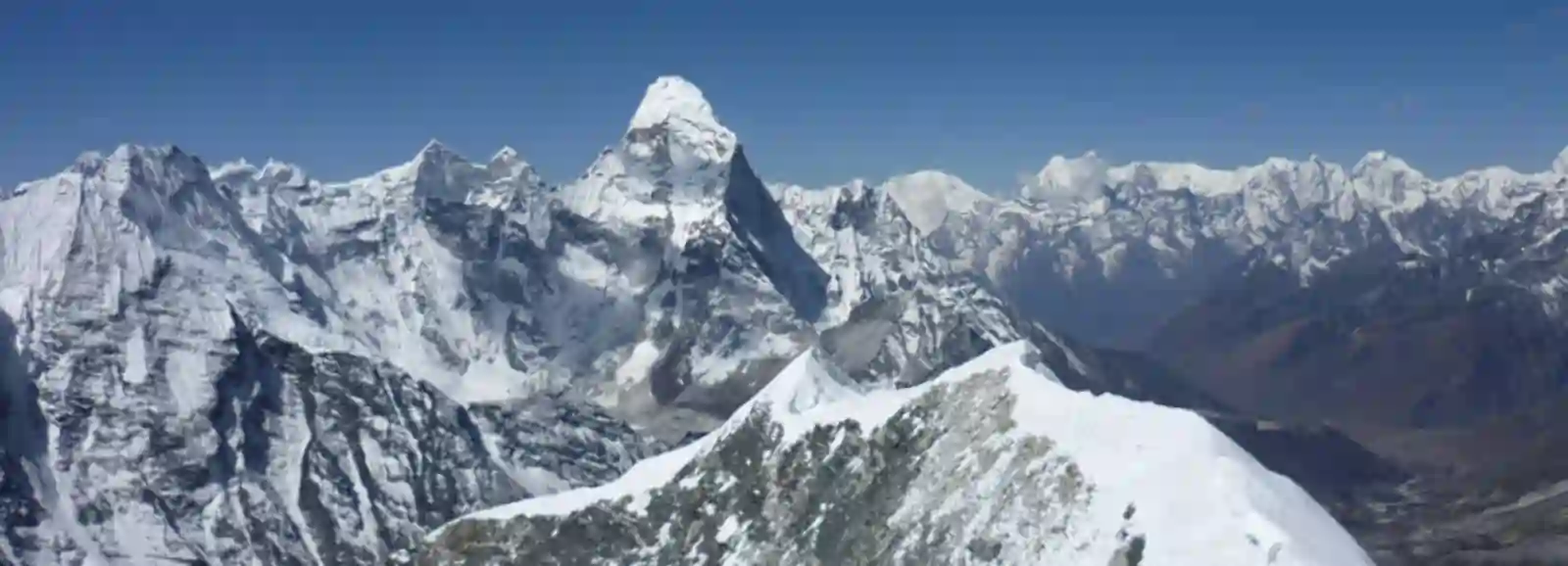
Island Peak, known locally as Imja Tse, rises to 6,189 meters in the Khumbu Himal of Nepal, at the head of the Imja Khola valley. The peak sits within Sagarmatha National Park, a UNESCO World Heritage Site protecting the upper Khumbu Valley’s diverse flora and fauna. British climber Eric Shipton named the mountain Island Peak in 1951 because, when viewed from the village of Dingboche, it appears as an island standing alone in a surrounding sea of ice. The Nepal Mountaineering Association officially renamed it Imja Tse in 1983, taking the name from the Imja Valley in which it stands. Marvel Treks guides climbers through a 16 day journey that combines the classic Khumbu Valley trekking route with a guided technical climb to the summit, using crampons, an ice axe, a climbing harness, and fixed rope ascent on the final headwall.
Key Facts Table
| Fact | Detail |
| Mountain | Island Peak, locally known as Imja Tse |
| Elevation | 6,189 m / 20,305 ft |
| Category | NMA trekking peak, Group B |
| Location | Khumbu Himal, Solukhumbu District, Koshi Province, Nepal |
| Protected Area | Sagarmatha National Park (UNESCO World Heritage Site) |
| Base Camp Altitude | 5,087 m |
| High Camp Altitude | 5,600 m |
| Standard Route | Southwest ridge approach via the Imja Glacier and the Headwall |
| Expedition Duration | 16 days (Marvel Treks package, includes Everest region trek) |
| Best Season | Spring, March to May, and Autumn, September to November |
| Permit Authority | Nepal Mountaineering Association (NMA) |
| Named For | Eric Shipton, 1951, appearance as an island in a sea of ice from Dingboche |
| Renamed | Imja Tse, by the NMA, 1983 |
| First Ascent | 1953, British Mount Everest Expedition training climb |
| First Ascent Team | Tenzing Norgay, Charles Evans, Alfred Gregory, Charles Wylie, and Sherpa team members |
| First True Summit | Hans Rudolf von Gunten with two Sherpas, Swiss team |
| Visible Peaks From Summit | Everest, Lhotse, Lhotse Shar, Makalu, Nuptse, Baruntse, Ama Dablam |
| Price from | USD $1,330 per person (see full cost breakdown below) |
- A detailed certificate from Marvel Treks and Expedition (after accomplishment)
- A complimentary raincoat to shed you during the rainy season.
- A Complimentary Duffel Bag throughout the trek from our company. (returnable)
- A warm complimentary Down Jacket during the entire trek on behalf of Marvel Treks. (returnable)
- A complimentary sleeping bag for your icy trek. (returnable)
- The essential climbing gear like mountain axe, trekking sticks, etc, for your need throughout the trek. (returnable)
- Delightful complimentary Authentic Nepali cuisine as dinner to embark on your arrival and departure
- Critical complimentary First Aid Service (in times of need)
- An informative trekking map for you to cherish on behalf of our company
- Trendy Sunhat and t-shirt as souvenirs on behalf of Marvel Treks and Expedition.
- All the crucial services about airport transfer to and from the hotel via a private tourist vehicle ($40)
- Our company will accommodate the Garbage Disposal System. ($500)
- Climbing Permit for Peak Climbing ($250)
- TIMS (Trekkers’ Information Management Systems )($10)
- National park entry fees / ACAP permits / Conservation entry fees. ( $30)
- All essential local tax and office service charges Gov tax ($100 )
- 2 nights accommodation in a Kathmandu (Kathmandu hotel or similar) ($40)
- Porter Service ($350)
- Miscellaneous ($10)
- Marvel Treks and Expedition won’t be responsible for all the Lunch and dinner in Kathmandu.
- Extra nights in any city that’s not accommodated in the Marvel Treks and Expedition itinerary.
- Summit bonus (250 USD)
- All the International flight checks and airfares.
- Marvel Treks and Expedition won’t be responsible for alcoholic/ non-alcoholic liquors.
- Additional porter fees along with tips of guides and porters.
- Tips for Climbing Sherpa (200 USD)
- Electronic gadgets like chargers, headphones.
- Individual costs like a hot shower, phone calls, laundry, souvenirs.
- Travel coverage and emergency evacuations.
- Tips for our staff’s drivers.
Detailed Itinerary
Day 1: Kathmandu - Lukla, trek to Phakding (35 minutes flight, 3 hours walk)
An early morning flight from Kathmandu to Lukla covers a dramatic 35 minutes of mountain scenery before landing at Tenzing Hillary Airport, one of the most renowned short runways in the world. From Lukla at 2,840 meters, the trek begins immediately with a gentle three hour walk along the Dudh Kosi river to the village of Phakding at 2,610 meters, the first overnight stop in the Khumbu Valley.
Day 2: Phakding - Namche Bazaar (7-8 hours walk)
A long and steady seven to eight hour day follows the Dudh Kosi river through pine forest and several suspension bridges before climbing a steep final section into Namche Bazaar at 3,440 meters, the unofficial capital of the Khumbu region and the last major trading hub before the high mountains. Namche offers bakeries, gear shops, and the first proper views of distant peaks.
Day 3: Namche Bazaar - Syangboche (2-3 hours walk)
A long and steady seven to eight hour day follows the Dudh Kosi river through pine forest and several suspension bridges before climbing a steep final section into Namche Bazaar at 3,440 meters, the unofficial capital of the Khumbu region and the last major trading hub before the high mountains. Namche offers bakeries, gear shops, and the first proper views of distant peaks.
Day 4: Syangboche - Tengboche (4 hours walk)
A four hour walk leads through rhododendron forest and across the Dudh Kosi valley to Tengboche at 3,860 meters, home to the most famous monastery in the Khumbu region. The Tengboche Monastery offers sweeping views of Ama Dablam and is a significant spiritual site for the Sherpa community.
Day 5: Tengboche - Dingboche (6 hours walk)
A six hour trek continues up the valley to Dingboche at 4,410 meters, a village known for its dramatic location beneath the peaks of Lhotse Shar and Island Peak’s larger neighbors. Dingboche is also the historic vantage point from which Eric Shipton’s expedition first observed Island Peak in 1951 and gave it its English name.
Day 6: Dingboche - Lobuche (5-6 hours walk)
A five to six hour walk crosses increasingly rugged, high altitude terrain to reach Lobuche at 4,940 meters, passing memorials to climbers who have died on Everest along the way. The landscape becomes more barren and mountainous, with views of the Khumbu Glacier’s lower reaches.
Day 7: Lobuche-Gorakshep (3-4 hours walk)
A three to four hour walk along the edge of the Khumbu Glacier leads to Gorakshep at 5,164 meters, the final settlement before Everest Base Camp itself. Gorakshep sits on a flat, sandy former lake bed and serves as the staging point for both Everest Base Camp and Kala Patthar.
Day 8: Gorakshep - Kalapatthar (3-4 hours walk)
A three to four hour round trip climbs to Kala Patthar at 5,644 meters, widely regarded as the best accessible viewpoint of Mount Everest in the entire region, since Everest itself is not visible from its own Base Camp. From the summit of Kala Patthar, Everest, Nuptse, and the surrounding peaks are visible in full.
Day 9: Kalapatthar - Chukkung (2 hours walk)
The route descends from the Gorakshep area and turns south toward Chhukung at 4,730 meters, the final village before Island Peak Base Camp and the gateway to the Imja Valley. This day marks the transition from the classic Everest Base Camp trekking route onto the dedicated Island Peak approach.
Day 10: Chukkung - Island Peak Base Camp (3-4 hours walk)
A three to four hour walk follows the Imja Valley directly toward Island Peak, climbing steadily over moraine and rocky terrain to reach Base Camp at 5,087 meters, the first night spent in tented mountaineering style accommodation rather than a teahouse.
Day 11: Island Peak Base Camp - High Camp (4-5 hours walk)
A four to five hour climb gains approximately 500 vertical meters to High Camp at 5,600 meters, a small, exposed camp used as the launch point for the summit attempt. Guides use this day to conduct final equipment checks, review crampon and harness fitting, and brief the team on the summit day plan.
Day 12: High camp - Island peak, return to Chukkung
Departure from High Camp begins between midnight and 2 AM. The route crosses rocky terrain before reaching the Imja Glacier, where the team ropes up and crosses crevassed terrain using fixed lines and, where needed, ladder crossings. From Crampon Point, the route ascends a steep snow slope to the base of the Headwall, a near vertical ice and snow section of approximately 100 meters climbed using a jumar on fixed rope. Above the Headwall, a narrow, exposed summit ridge leads to the true summit at 6,189 meters, with panoramic views of Everest, Lhotse, Makalu, Nuptse, Baruntse, and Ama Dablam. The descent retraces the same route to High Camp and continues down to Chhukung the same day, making summit day the longest and most demanding single day of the entire trip, typically 10 to 14 hours.
Day 13: Chukkung - Tengboche (4-5 hours walk)
A four to five hour descent retraces the trekking route back through Dingboche and down to Tengboche, allowing the body to recover at lower altitude following the exertion of summit day.
Day 14: Tengboche - Namche Bazaar (4 hours walk)
A four hour walk continues the descent back to Namche Bazaar, where many climbers take the opportunity to enjoy a hot shower, a proper bakery meal, and a celebratory atmosphere among other returning trekking and climbing groups.
Day 15: Namche Bazaar - Lukla (8 hours walk)
A long eight hour day retraces the full route back to Lukla, completing the trekking portion of the expedition and arriving in time for a final overnight stay before the return flight.
Day 16: Lukla - Kathmandu (35 minutes flight)
A 35 minute flight returns the group to Kathmandu, concluding the 16 day Island Peak climbing itinerary. A farewell dinner of authentic Nepali cuisine, included in the package, celebrates the completion of the climb.
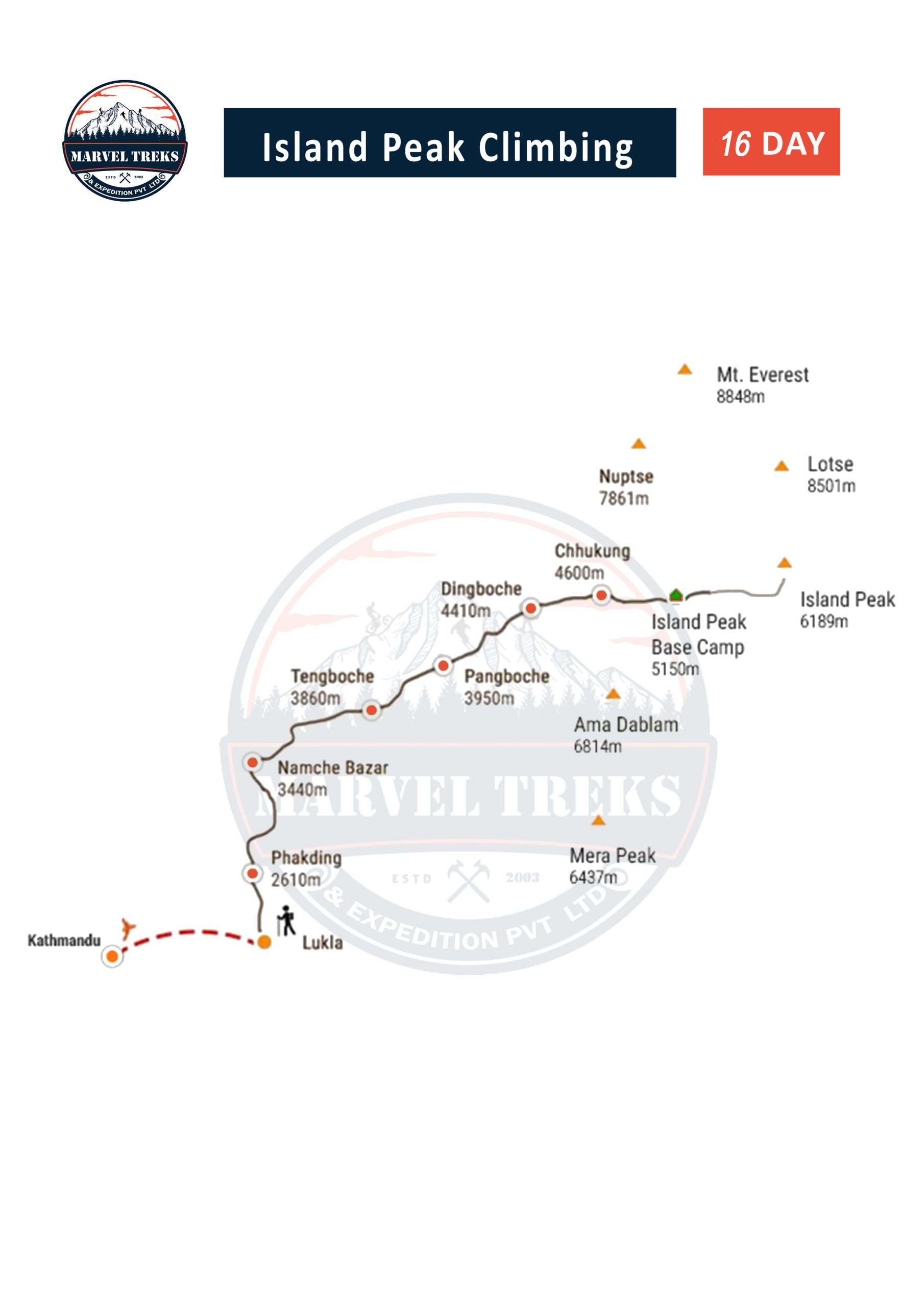
Trip Map
What Is Island Peak? A Training Ground for Everest
Island Peak occupies a unique place in Himalayan climbing history. It sits at the southern end of the Lhotse Shar ridge, separated from that larger peak by a connecting col, and rises directly above the Imja Valley in full view of Everest, Lhotse, and Makalu. The mountain was first noticed by Western climbers in 1951, when Eric Shipton’s reconnaissance expedition spotted it from Dingboche and gave it the descriptive English name Island Peak, since it appeared to stand alone like an island surrounded by glaciers and ice fields. The name stuck for three decades until the Nepal Mountaineering Association formally renamed it Imja Tse in 1983, restoring a name tied to the Imja Valley itself.
In 1953, members of the British Mount Everest Expedition used Island Peak as a training and acclimatization climb in the weeks before their historic first ascent of Everest. The climbing team included Tenzing Norgay, who would go on to summit Everest with Edmund Hillary weeks later, along with Charles Evans, Alfred Gregory, and Charles Wylie, supported by several Sherpas. This early ascent reached the southwest side of the peak. A complete ascent to the true highest point was made later by Swiss climber Hans Rudolf von Gunten together with two Sherpas, a climb notable for being connected to the second ascent of Everest and the first ascent of Lhotse by the same Swiss expedition team.
Today, Island Peak retains its historical role as a stepping stone mountain. Climbers preparing for Everest, Lhotse, Ama Dablam, or other technical Himalayan peaks frequently use Island Peak as a proving ground, since it introduces glacier travel, fixed rope ascent, crampon technique, and high altitude decision making in a controlled, well supported environment.
Island Peak Route Description, Base Camp to Summit
Chhukung to Island Peak Base Camp (5,087 m)
The approach to Island Peak Base Camp begins at Chhukung, a small settlement at 4,730 meters that serves as the last teahouse stop before the mountain. From Chhukung, the trail climbs steadily across moraine and rocky terrain for three to four hours, gaining views of the southern face of Lhotse Shar and the broad glacial valley below the peak. Base Camp itself sits at 5,087 meters on a flat gravel plain, marking the first night spent in tented accommodation on the expedition.
Base Camp to High Camp (5,600 m)
From Base Camp, the route to High Camp climbs approximately 500 vertical meters over four to five hours, following a rocky ridge before descending slightly onto a sheltered shelf used for tents at 5,600 meters. High Camp is exposed to wind and offers limited space, so Marvel Treks limits group sizes here to maintain safety and comfort. Most teams arrive at High Camp in the early afternoon, rest, and prepare gear for an overnight departure.
Summit Day, the Imja Glacier and the Headwall
Summit day begins between midnight and 2 AM with headlamps lit, departing High Camp for the long push to the top. The route first crosses a section of rocky and snow covered terrain before reaching the edge of the Imja Glacier, where climbers rope up and put on crampons for the glacier crossing. This section involves navigating crevasses, which are marked and managed by the climbing Sherpa team using fixed ropes and, when needed, aluminum ladders across wider gaps.
Beyond the glacier crossing lies Crampon Point, the staging area where climbers complete final gear checks before the technical climbing begins in earnest. From here, the route ascends a steep snow and ice slope toward the base of the Headwall, a near vertical ice and snow wall of approximately 100 meters that forms the single most demanding section of the climb. Climbers ascend the Headwall using a jumar (mechanical ascender) clipped to a fixed rope placed by the lead Sherpa team earlier in the season or on the morning of the climb itself.
Above the Headwall, the angle eases onto the summit ridge, a narrow, exposed crest with steep drops on both sides leading to the true summit at 6,189 meters. The final ridge requires careful, steady movement, often with a short rope connecting climbers to their guide for additional security. From the summit, climbers are rewarded with an open panorama including Everest, Lhotse, Makalu, Nuptse, Baruntse, and Ama Dablam, a reward considered by many guides to be among the best mountain views available from any trekking peak in Nepal.
The descent retraces the same route back through the Headwall, the Imja Glacier crossing, and down to High Camp, typically completed by early to mid afternoon. Most teams then continue down to Chhukung the same day or the following morning, depending on group fatigue and weather.
How Difficult Is Island Peak? An Honest Assessment
Island Peak is officially classified by the Nepal Mountaineering Association as a trekking peak, a category that can mislead climbers into underestimating the challenge. While no prior technical mountaineering certification is legally required, the climb itself demands real skills, including glacier travel with crampons, use of an ice axe on moderate snow slopes, jumar ascent on a fixed rope for the Headwall, and basic rope management on the exposed summit ridge.
The principal difficulties on Island Peak are threefold. First, altitude. Base Camp sits at 5,087 meters and High Camp at 5,600 meters, both high enough to produce symptoms of altitude sickness in climbers who have not acclimatized properly. Second, the long summit day, which typically runs 10 to 14 hours round trip from High Camp, beginning in darkness and extreme cold. Third, the technical Headwall section, which, while short, requires genuine physical strength and confidence on a fixed rope at high altitude, conditions that are mentally and physically different from climbing the same terrain at sea level.
Marvel Treks structures its 16 day itinerary specifically to manage these three challenges, building in a full Everest Base Camp style acclimatization trek through Namche Bazaar, Tengboche, Dingboche, Lobuche, and Gorakshep before the climb begins, ensuring climbers arrive at Chhukung already well adapted to altitudes above 5,000 meters.
Permits and Fees for Island Peak Climbing 2026
| Permit or Fee | Approximate Cost (USD) | Issuing Authority |
| NMA Climbing Permit, spring season | $350 per person | Nepal Mountaineering Association |
| NMA Climbing Permit, autumn season | $175 per person | Nepal Mountaineering Association |
| NMA Climbing Permit, winter or summer season | $175 per person | Nepal Mountaineering Association |
| Sagarmatha National Park entry permit | $30 per person | Department of National Parks and Wildlife Conservation |
| Khumbu Pasang Lhamu Rural Municipality fee | $20 per person | Local municipality |
| TIMS card | $10 per person | Nepal Tourism Board |
| Garbage deposit | $500 per permit (often per group, refundable in part) | Nepal Mountaineering Association |
All of these fees are bundled into Marvel Treks’ published price and are processed on behalf of every climber. A government licensed climbing guide is mandatory for Island Peak under NMA rules. Solo climbing without a licensed guide is not permitted.
Island Peak Versus Other Nepal Trekking Peaks
| Factor | Island Peak (Imja Tse) | Mera Peak | Lobuche East |
| Elevation | 6,189 m | 6,476 m | 6,119 m |
| Technical difficulty | Moderate, glacier and headwall | Easy to moderate, mostly walking | Higher, steeper summit ridge |
| Best for | First technical climb | First high altitude trek with summit | Climbers with some prior peak experience |
| Permit cost (spring) | $350 | $350 | $350 |
| Combine with EBC trek | Yes, very common | Less common, different valley | Yes, very common |
| Typical duration | 16 to 20 days | 15 to 18 days | 14 to 18 days |
Training and Preparation for Island Peak
Two to Three Months Before Departure
- Build cardiovascular endurance with three to four sessions per week of hiking, running, or cycling
- Practice hiking with a loaded pack of 8 to 10 kilograms on hilly or stepped terrain
- If possible, gain experience with crampons and an ice axe on a local glacier, via ferrata, or indoor ice wall
- Begin practicing with trekking poles to build the habit of efficient, sustainable pacing on long days
Final Weeks Before Departure
- Break in trekking boots and climbing boots fully before the trip to avoid blisters at altitude
- Review use of a jumar (ascender) and harness if this is your first time using fixed rope climbing equipment
- Consult a physician about Diamox (Acetazolamide) for altitude sickness prevention
- Confirm travel insurance includes coverage for climbing above 6,000 meters and emergency helicopter evacuation
Altitude Sickness on Island Peak
Altitude sickness is the most common reason climbers fail to reach the summit of Island Peak, more often than technical difficulty on the Headwall itself. Base Camp at 5,087 meters and High Camp at 5,600 meters are both high enough to trigger Acute Mountain Sickness (AMS) in climbers who ascend too quickly or skip proper acclimatization.
Common Symptoms of AMS
- Headache
- Dizziness
- Loss of appetite
- Shortness of breath
- Rapid heartbeat
Prevention Strategies
- Ascend slowly and follow the structured acclimatization schedule built into the itinerary
- Stay well hydrated throughout each day
- Eat nutritious, calorie dense food even when appetite is reduced
- Get adequate rest and avoid unnecessary exertion on rest days
- Avoid alcohol and smoking throughout the trek and climb
Common Medications Carried by Guides
- Acetazolamide (Diamox) for acclimatization support
- Ibuprofen or paracetamol for headache relief
- Promethazine for nausea
- Dexamethasone, carried for emergency HACE treatment by senior guides
- Nifedipine, carried for emergency HAPE treatment by senior guides
Error: Contact form not found.
Price W/O Addons: US$ 1330 per person
- A detailed certificate from Marvel Treks and Expedition (after accomplishment)
- A complimentary raincoat to shed you during the rainy season.
- A Complimentary Duffel Bag throughout the trek from our company. (returnable)
- A warm complimentary Down Jacket during the entire trek on behalf of Marvel Treks. (returnable)
- A complimentary sleeping bag for your icy trek. (returnable)
- The essential climbing gear like mountain axe, trekking sticks, etc, for your need throughout the trek. (returnable)
- Delightful complimentary Authentic Nepali cuisine as dinner to embark on your arrival and departure
- Critical complimentary First Aid Service (in times of need)
- An informative trekking map for you to cherish on behalf of our company
- Trendy Sunhat and t-shirt as souvenirs on behalf of Marvel Treks and Expedition.
- All the crucial services about airport transfer to and from the hotel via a private tourist vehicle ($40)
- Our company will accommodate the Garbage Disposal System. ($500)
- Climbing Permit for Peak Climbing ($250)
- TIMS (Trekkers’ Information Management Systems )($10)
- National park entry fees / ACAP permits / Conservation entry fees. ( $30)
- All essential local tax and office service charges Gov tax ($100 )
- 2 nights accommodation in a Kathmandu (Kathmandu hotel or similar) ($40)
- Porter Service ($350)
- Miscellaneous ($10)
- Marvel Treks and Expedition won’t be responsible for all the Lunch and dinner in Kathmandu.
- Extra nights in any city that’s not accommodated in the Marvel Treks and Expedition itinerary.
- Summit bonus (250 USD)
- All the International flight checks and airfares.
- Marvel Treks and Expedition won’t be responsible for alcoholic/ non-alcoholic liquors.
- Additional porter fees along with tips of guides and porters.
- Tips for Climbing Sherpa (200 USD)
- Electronic gadgets like chargers, headphones.
- Individual costs like a hot shower, phone calls, laundry, souvenirs.
- Travel coverage and emergency evacuations.
- Tips for our staff’s drivers.
Departures & Availability of Island Peak Climbing
Dates of Trip
1330Save 133
March 1, 2023 - March 16, 2023
1330Save 133
March 17, 2023 - April 1, 2023
1330Save 133
April 2, 2023 - April 17, 2023
1330Save 133
April 18, 2023 - May 3, 2023
1330Save 133
May 4, 2023 - May 19, 2023
1330Save 133
May 20, 2023 - June 4, 2023
1330Save 133
June 5, 2023 - June 20, 2023
1330Save 133
June 21, 2023 - July 6, 2023
1330Save 133
July 7, 2023 - July 22, 2023
1330Save 133
July 23, 2023 - August 7, 2023
1330Save 133
August 8, 2023 - August 23, 2023
1330Save 133
August 24, 2023 - September 7, 2023
1330Save 133
September 8, 2023 - September 23, 2023
1330Save 133
September 24, 2023 - October 9, 2023
1330Save 133
October 10, 2023 - October 25, 2023
1330Save 133
October 26, 2023 - November 10, 2023
1330Save 133
November 11, 2023 - November 26, 2023
1330Save 133
November 27, 2023 - December 12, 2023
1330Save 133
December 13, 2023 - December 28, 2023
1330Save 133
December 29, 2023 - January 13, 2024
1330Save 133
January 14, 2024 - January 29, 2024
1330Save 133
January 30, 2024 - February 14, 2024
1330Save 133
February 15, 2024 - March 1, 2024
1330Save 133
March 2, 2024 - March 17, 2024
1330Save 133
March 18, 2024 - April 2, 2024
1330Save 133
April 3, 2024 - April 18, 2024
1330Save 133
April 19, 2024 - May 4, 2024
1330Save 133
May 5, 2024 - May 20, 2024
1330Save 133
May 21, 2024 - June 5, 2024
1330Save 133
June 6, 2024 - June 21, 2024
1330Save 133
June 22, 2024 - July 7, 2024
1330Save 133
July 8, 2024 - July 23, 2024
1330Save 133
July 24, 2024 - August 8, 2024
1330Save 133
August 9, 2024 - August 24, 2024
1330Save 133
August 25, 2024 - September 9, 2024
1330Save 133
September 10, 2024 - September 25, 2024
1330Save 133
September 26, 2024 - October 11, 2024
1330Save 133
October 12, 2024 - October 27, 2024
1330Save 133
October 28, 2024 - November 12, 2024
1330Save 133
November 13, 2024 - November 28, 2024
1330Save 133
November 29, 2024 - December 14, 2024
1330Save 133
December 15, 2024 - December 30, 2024
Group Discount Prices
Frequently Asked Questions
Traveler Reviews




1-12 Pax from 1463
$ 1330/pax
speak to an Experts

We are featured on