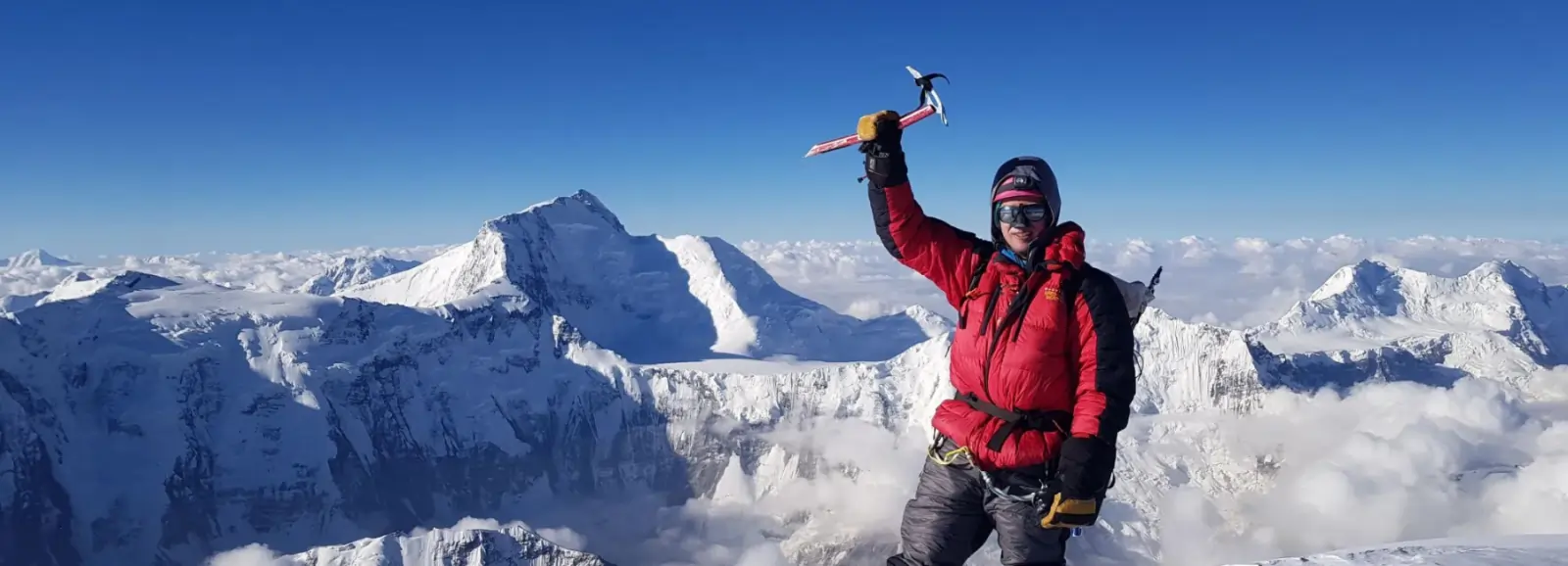
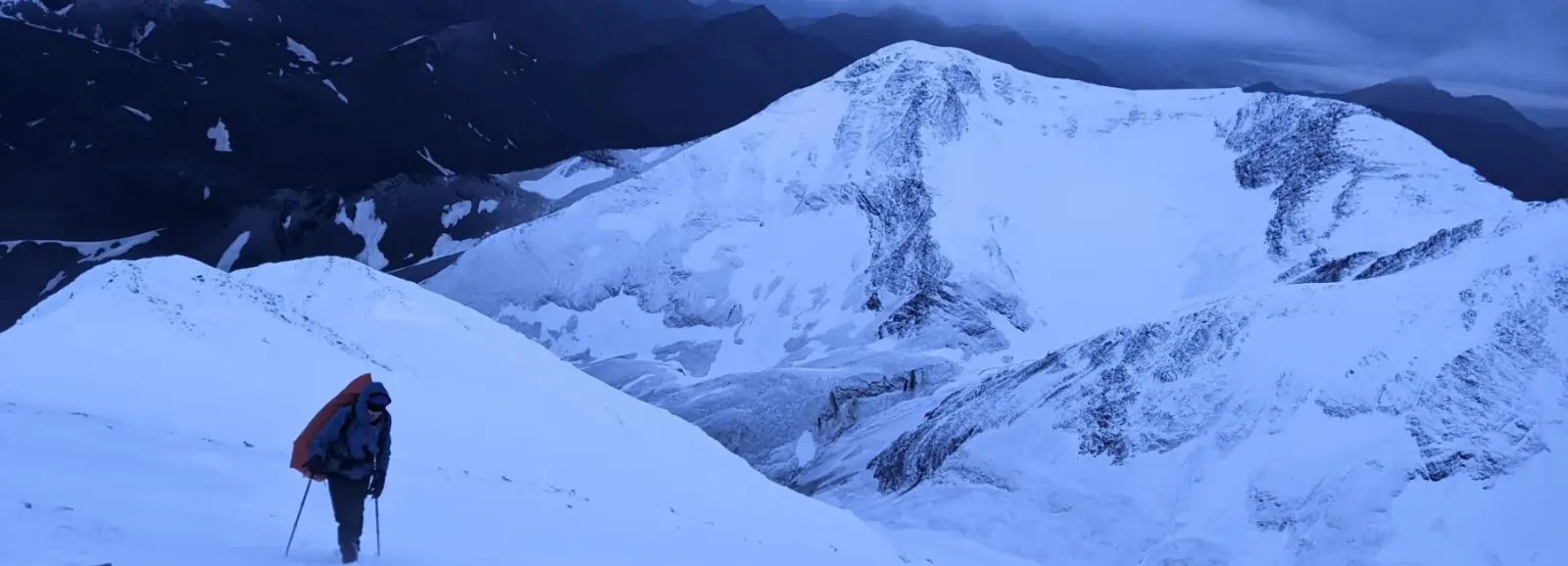
Ismoil Somoni Peak Expedition

Tajikistan
Pamir Mountain
1-12 Pax
7495 m
Extreme
Teahouse/Lodge, Tented Camp
5-8 hrs
Autumn, Spring
Highlights of Ismoil Somoni Peak Expedition
- The first successful summit of the mountain in 1933 by a Soviet expedition.
- A Soviet team achieved the first winter ascent of the mountain in 1988.
- The first ascent of the mountain by a woman, which Tamara Larina of the Soviet Union achieved in 1978.
- Mark Inglis of New Zealand achieved the first ascent of the mountain by a double amputee in 2007.
- The oldest person reached the mountain’s summit, which Kurt Diemberger of Austria, achieved at 80 in 2007.
Ismoil Somoni Peak Expedition Overview
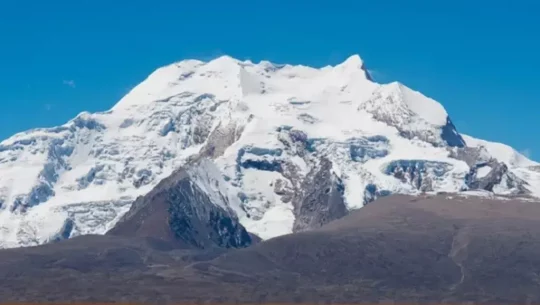
Ismoil Somoni Peak, also known historically as Communism Peak and before that as Stalin Peak, rises to 7,495 meters (24,590 feet) above the Pamir Mountains of Tajikistan, making it the highest mountain in Tajikistan and the highest peak of the former Soviet Union. It stands within the Academy of Sciences Range (Akademia Nauk Range) in Gorno-Badakhshan Autonomous Oblast, at coordinates 38.9378 degrees North, 72.0142 degrees East, near the confluence of the vast Fedchenko Glacier system.
The mountain is one of five peaks required for the Snow Leopard Award, the prestigious mountaineering distinction granted for summiting all former Soviet peaks above 7,000 meters, and it is generally considered the most technically demanding and highest of the five. The first ascent was made on September 3, 1933 by Soviet mountaineer Yevgeniy Abalakov during the Tajik-Pamir Expedition organized by the USSR Academy of Sciences. Marvel Treks and Expedition runs a 32-day guided expedition to this summit via the standard Borodkin Route, beginning in Dushanbe and using a helicopter transfer to Moskvina Meadow Base Camp at approximately 4,100 meters.
Key Facts Table
| Fact | Detail |
| Mountain | Ismoil Somoni Peak |
| Former Names | Stalin Peak (1933 to 1962), Communism Peak (1962 to 1999) |
| Local Name | Uz-Tergi (Tajik, meaning head-spinning) |
| Tajik Script | Kullai Ismoili Somoni |
| Elevation | 7,495 m / 24,590 ft |
| World Rank | Highest mountain in Tajikistan, highest in the former USSR |
| Location | Gorno-Badakhshan Autonomous Oblast, Tajikistan |
| Range | Academy of Sciences Range (Akademia Nauk Range), Pamir Mountains |
| Coordinates | 38.9378 N, 72.0142 E |
| Standard Route | Borodkin Route via Borodkin Spur and Pamirskoe Plateau |
| Base Camp | Moskvina Meadow / Moskvina Polyana, 4,100 to 4,360 m |
| Base Camp Access | Helicopter from Jirgital (Dzhirgital), approximately 30 to 45 minutes flight |
| High Camps | Camp I (5,200 to 5,300 m), Camp II (5,700 to 5,800 m), Camp III (6,100 to 6,400 m), Camp IV (6,800 to 6,900 m near Dushanbe Peak) |
| Key Route Feature | Pamirskoe Plateau (3 km wide, 12 km long, between 4,700 m and 6,300 m) |
| Summit Pyramid | Dushanbe Peak (6,900 m) ascended before the final rocky pyramid |
| Expedition Duration | 32 days (Marvel Treks package including acclimatization peaks) |
| Best Season | Summer, mid-July to mid-August |
| Difficulty | Extreme, UIAA 5A classification, sustained high-altitude glacier and mixed terrain |
| First Ascent | Yevgeniy Abalakov, September 3, 1933 |
| First Ascent Route | Original long southern route (rarely used today) |
| Normal Route First Climbed | Borodkin Route, 1968 |
| First Woman | Lyudmila Agranovskaya, 1969 (verify; page currently lists Tamara Larina 1978 which conflicts with Wikipedia) |
| First Winter Ascent | Soviet team, 1988 |
| Notable Ascent | Mark Inglis, New Zealand double amputee, 2007 |
| Notable Ascent | Kurt Diemberger, Austria, summited at age 80 in 2007 |
| Snow Leopard Peak | Yes, one of five peaks required for the Snow Leopard Award |
| Neighboring Peak | Korzhenevskaya Peak / Peak Ozodi (7,105 m), 13 km away, commonly climbed together |
| Price from | USD $4,500 (service package, see full cost breakdown) |
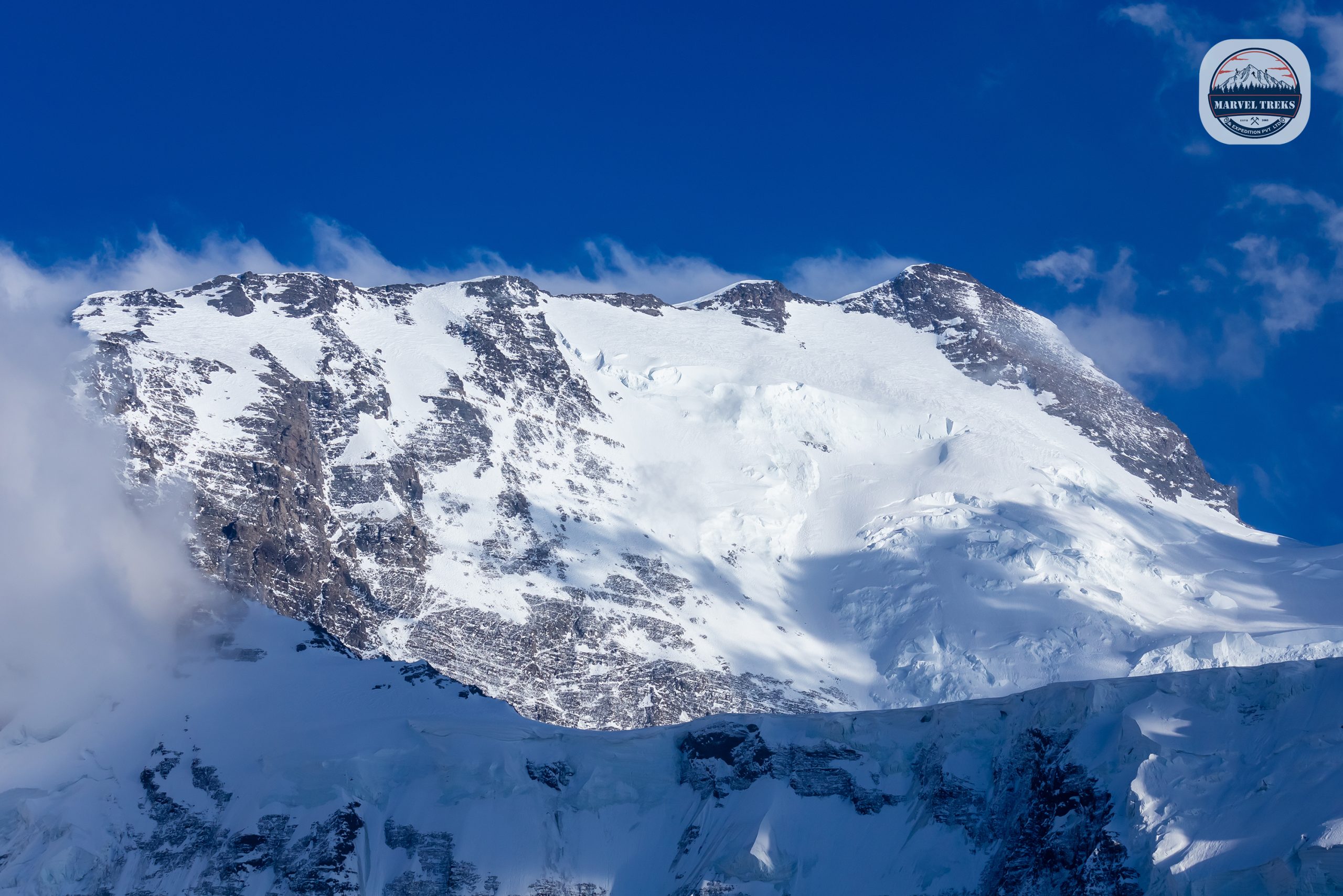
Gallery of Ismoil Somoni Peak Expedition
| Day | Itinerary | Altitude | Duration |
|---|---|---|---|
| 1 | Arrival in Dushanbe, Tajikistan – airport pickup & hotel transfer | 800 m | 1–2 hrs |
| 2 | Expedition briefing, permit processing & equipment check | 800 m | 4–5 hrs |
| 3 | Drive Dushanbe → Khorog | 2,200 m | 10–12 hrs |
| 4 | Drive Khorog → Base of Pamir Highway / trek start | 2,500 m | 6–7 hrs |
| 5 | Trek start → Advance Base Camp approach | 3,200 m | 5–6 hrs |
| 6 | Arrive Ismoil Somoni Base Camp | 4,100 m | 5–6 hrs |
| 7 | Base Camp prep & acclimatization | 4,100 m | 3–4 hrs |
| 8 | Glacier training & rope practice at Base Camp | 4,100 m | 3–4 hrs |
| 9 | Base Camp → Camp I | 4,700 m | 4–5 hrs |
| 10 | Camp I → Camp II | 5,200 m | 4–5 hrs |
| 11 | Acclimatization / carry to Camp III & descend | 5,500 m | 5–6 hrs |
| 12 | Camp II → Camp III (overnight) | 5,800 m | 4–5 hrs |
| 13 | Summit Day: Camp III → Ismoil Somoni Summit → Camp III | 7,495 m | 10–14 hrs |
| 14 | Descend Camp III → Camp II | 5,200 m | 4–5 hrs |
| 15 | Camp II → Base Camp | 4,100 m | 5–6 hrs |
| 16 | Rest / contingency day at Base Camp | 4,100 m | - |
| 17 | Base Camp → Khorog / trek back | 2,200 m | 6–7 hrs |
| 18 | Drive Khorog → Dushanbe | 800 m | 10–12 hrs |
| 19 | Rest / sightseeing / equipment packing in Dushanbe | 800 m | - |
| 20 | Final departure from Dushanbe | - | 1–2 hrs |
- Arrival and Ground Services: International and domestic airport pick-up and drop-off are provided with a warm welcome by a Marvel Treks and Expeditions representative. All ground transportation in Kathmandu and guided sightseeing as per itinerary are included, excluding entrance fees.
Excludes
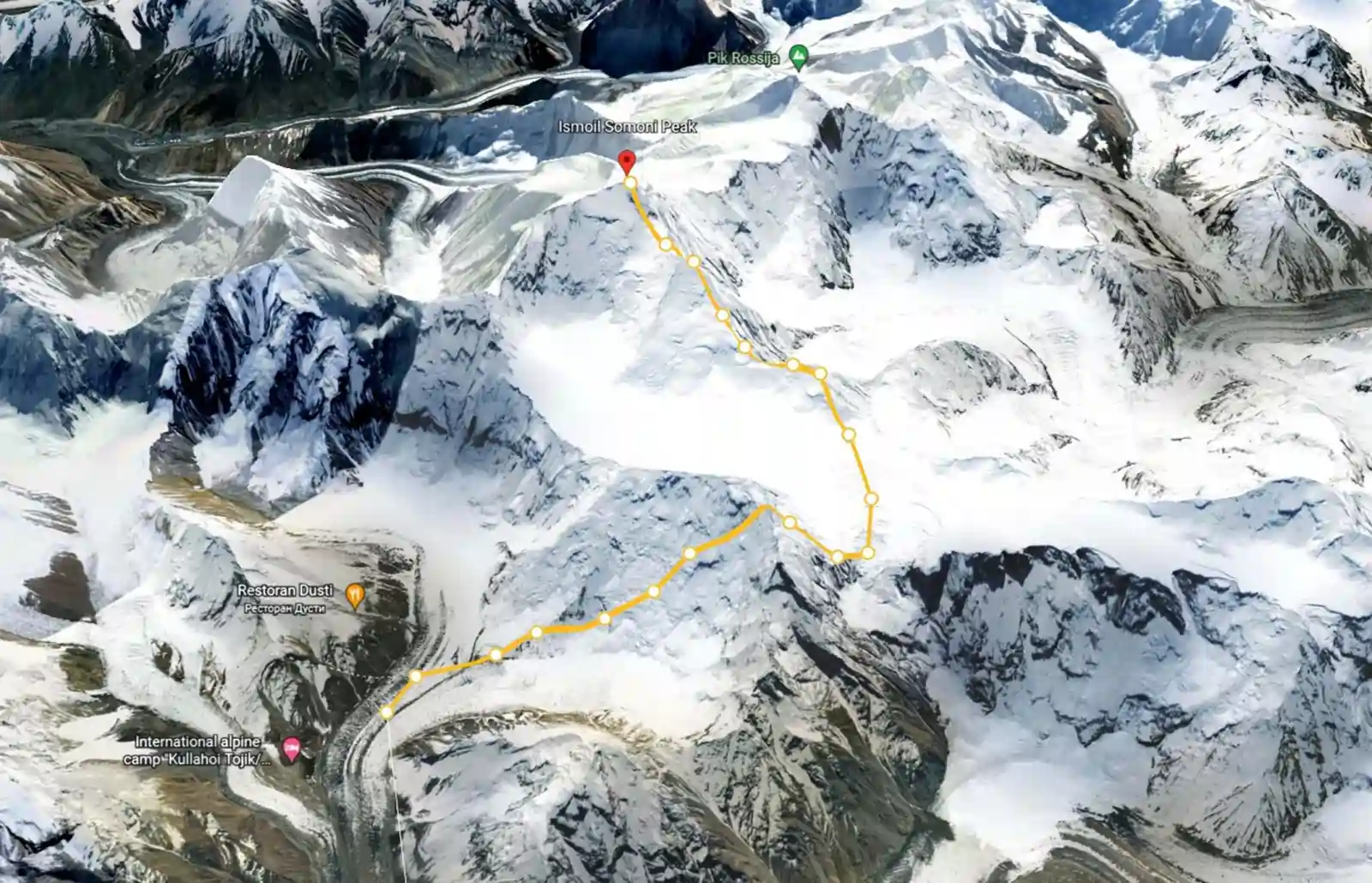
Trip Map
Expedition Equipment List
| Travel Documents | Hands |
| Valid Passport | Thin Fleece Gloves (2 Pairs) |
| Credit/Debit Card | Wind Stopper / Screen Tap Gloves (2 Pairs) |
| pP Size Photo (4 Pieces) | Heavy Gloves (Guide Gloves) |
| Insurance Paper And Contact Address | Summit Gloves – 8000m. |
| Foot Wear | Sleeping Bags |
| Summit Boot – 8000m. (Kailas / Lasportiva / Millet ) | Sleeping Bag -20OC to -30OC |
| Climbing Boot – 6000m. (Kailas / Lasportiva / Millet) | Down Sleeping Bag -40OC (Extreme Comfort) |
| Normal Socks (5-8 Pairs) | Thermarest Mattress (Cell Foam) |
| Summit Socks/6000 m. Socks (2 Pairs) | Down Mattress (Inflatable) |
| Trekking Shoes (Gore Tex) | Sleeping Bag Liner |
| Light Trekking/Sports Shoes | Inflatable Pillow |
| Camp Booties (1 Pair) | Climbing Equipment |
| Slipper (1 Pair) | Climbing Helmet |
| Upper Body | Summit Down Suit – 8000m. |
| Thermal Top Base Layer (2-3 Pcs) | Ice Axe with Spike & Axe Protector Harness |
| Fleece Jacket (1-2 Pcs) | Belay Devices/ Figure of 8/ ATC Guide Jumar / Ascender |
| Gore Tex Jacket (1 Pcs) | Lock Carabiner (3 Pcs) Unlock Carabiner (2 Pcs) Tape Slings/240 cm |
| Wind Proof Jacket (1-2 Pcs) | Snow Goggle (Summit Purpose, Antifog, Polarized, UV Protection) |
| Down Jacket (1-2 Pcs) | Head Light 500-700 Lumens Spare |
| Cotton T-Shirt (3-5 Pcs) | Battery (Energizer Ultimate Lithium) |
| Lower Body | Satellite Phone With Credit (Optional) |
| Thermal Bottom Base Layer (2-3 Pcs) | Walking Stick/ Trekking Pole |
| Fleece Trouser (1-2 pcs) | Pocket Knife (Swiss) |
| Gore Tex Pant (1 pcs) | Altimeter Watch |
| Light Weight Quick Dry Trekking Pants (2-3 Pairs) | Pee Bottle |
| Gaiters for trekking boots | Power Bank |
| Down Pants (1pcs) | Crampons (Fit with Boot)/Packing Cover |
| Under Wear (4-6 Pcs) | Bag Packs |
| Sun Stuffs | Rucksacks 35 L – 50 L |
| Banana Boat/ Nivea Sun Cream (up to -50 Spf) | Duffle Bag 120 L-150 L (2 Pcs) |
| Lip Guard -30 to -50 (Spf) | Lundry/Garbage Bag (Large) |
| Sun Glasses (Uv Protection) | Water Proof Stuff Sacks/Dry Bag- Small/ Medium/ Large (3-4 Pcs) |
| Glaciers Glasses (Uv Protection) | Medical/First Aid |
| Moisturiser / Lotion | Brufen / Ibuprofens |
| Eating & Drinking | Antibiotic |
| 1 Ltr. Water Bottle | Diamox |
| 1/ 1.5 Ltr. Thermos | Paracetamol |
| Mug (Opt.) | Handy Plaster |
| Spoon/ Fork (Opt.) | Crack Bandage |
| Bowl (Opt.) | Tincture Iodine |
| Miscellaneous | Ondem |
| Nail Cutter | Cetirizine |
| Umbrella / Rain Coat | Electrolyte |
| Hot Water Bag | Minil 10mg (Palpitation, anxiety) |
| Camera | Codopar (Headache & chest pain) |
| GPS Tracker (Recommended) | Salbetol 4mg (Breathless) |
| Hand & Toe Warmer | Azithromycin 500mg (chronic tonsillitis, fever, nose, throat infection-must take 5 days) |
| Toiletries (Personal) | Flupen 250mg (prevent wound infection) |
| Toilet Paper / Wet Tissue | Allegra 120/180mg (Allergic tonsil) |
| Toothpaste | Menstrual Products |
| Toothbrush | Head |
| Soap | Sun Cap |
| Shampoo | Balaclava |
| Towel | Fleece Hat/ Warm Hat (1-2 Pcs) |
| Garbage Bag | Neck Gaiter (2-3 Pcs) |
What Is Ismoil Somoni Peak? History, Names, and Significance
Ismoil Somoni Peak is one of the great remote mountains of Central Asia, a massive rock and ice pyramid resting on a vast four-sided base in the heart of the Tajikistan Pamirs. The mountain has held three different names across its recorded history, each reflecting the political era in which it was named. Soviet mountaineers first confirmed its existence in 1928 during a joint Soviet-German scientific expedition, during which the mountain was tentatively identified with the already known Garmo Peak.
Locally in Tajik, the mountain has been called Uz-Tergi for generations, which translates as head-spinning, an accurate description of the effects of its extreme altitude on human physiology. The mountain dominates the landscape for hundreds of kilometers in every direction and is visible from the surrounding ranges of the central Pamirs.
The mountain’s strategic significance in the world of high-altitude mountaineering is tied primarily to the Snow Leopard Award, a prestigious distinction in the Soviet and post-Soviet mountaineering community for climbers who summit all five peaks above 7,000 meters in the former USSR. The five peaks are Ismoil Somoni (7,495 m, Tajikistan), Lenin Peak (7,134 m, Kyrgyzstan), Khan Tengri (7,010 m, Kyrgyzstan and Kazakhstan border), Jengish Chokosu (7,439 m, Kyrgyzstan, also called Victory Peak or Pobeda Peak), and Korzhenevskaya Peak (7,105 m, Tajikistan). Ismoil Somoni is typically attempted last in the Snow Leopard progression because its combination of technical difficulty, extreme altitude, remote access, and complex acclimatization requirements makes it the most demanding of the five.
The Academy of Sciences Range and Pamir Geography
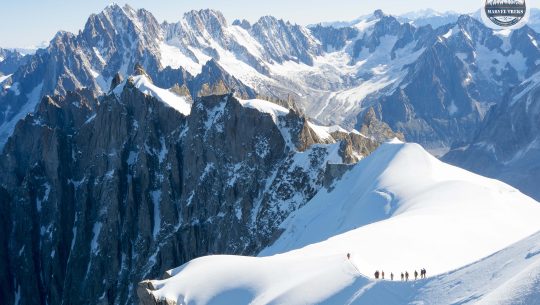
The Pamir Mountains of Tajikistan are one of the highest mountain systems on Earth, forming a vast elevated plateau often described as the Roof of the World. The central and northwestern Pamirs are home to several of the highest peaks in the former Soviet Union, connected by the Academy of Sciences Range, a series of ridges running predominantly east to west. The Fedchenko Glacier, at 71.2 kilometers the largest glacier in Central Asia outside the polar regions, drains from the flanks of this range and is one of the defining geographical features of the region.
Expeditions to Ismoil Somoni Peak operate from Moskvina Meadow (Moskvina Polyana), a base camp area at approximately 4,100 to 4,360 meters situated near a small alpine lake at the confluence of the Waltera Glacier and the Moskvina Glacier. From this base, both Ismoil Somoni and the neighboring Korzhenevskaya Peak (13 km distant) can be approached, which is why climbers pursuing the Snow Leopard Award frequently attempt both peaks in a single season. A secondary base camp area exists at Suloev / Fortambek Camp on the Fortambek plateau, used primarily as an alternative logistics hub near the Tramplinny (Springboard) Glacier, which is known for its regular and dramatic avalanche descents.
Ismoil Somoni Climbing Routes
Borodkin Route (Normal Route, Standard Approach from the North)
The Borodkin Route is the standard climbing route on Ismoil Somoni Peak and the one used by virtually all commercial expeditions today. It was first climbed in 1968 by a Moscow mountaineering team led by Borodkin, after whom the route is named. The route follows the northern aspect of the mountain from Moskvina Base Camp via the Walter Glacier and up the Borodkin Spur, a prominent ridge on the northern flank.
The climb is divided into three distinct phases. The first phase is the ascent of the Borodkin Spur itself, which climbs from Base Camp at 4,100 meters to the edge of the Pamirskoe Plateau at approximately 5,800 meters. This section involves sustained glacier travel and steep ice and mixed terrain, requiring crampons, ice axes, and fixed rope on the steeper passages. Four high camps (Camp I at 5,200 to 5,300 m, Camp II at 5,700 to 5,800 m, Camp III at 6,100 to 6,400 m, and Camp IV at 6,800 to 6,900 m) are established along the route before the summit attempt.
The second phase is the crossing of the Pamirskoe Plateau, one of the most distinctive features of any 7,000 meter climb in the world. The plateau is approximately 3 kilometers wide and 12 kilometers long in its greatest extent, sitting between 4,700 meters at its lowest point and 6,300 meters at the foot of the summit pyramid. Climbers traverse the plateau in its width rather than its full length, but the crossing still requires sustained effort at extreme altitude. Weather on the plateau is unpredictable, with rapid temperature changes and wind events that can pin teams in camp for multiple days.
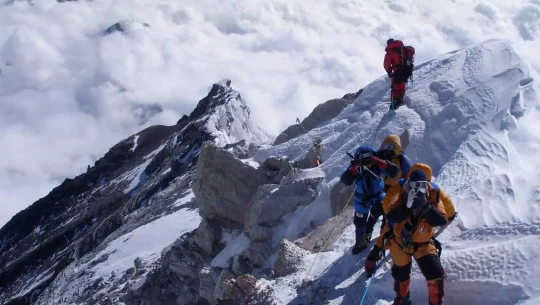
The third phase is the ascent of the summit pyramid itself. From the plateau edge, the route climbs through the subsidiary Dushanbe Peak at 6,900 meters before a western ridge leads through a rocky, technically demanding section to the true summit at 7,495 meters. The final section is steeper and more technical than the plateau crossing. An important feature near the summit involves a notch or embrasure from which a short ridge leads to the top. The descent requires particular care through this section, since fatigue at extreme altitude and the reversal of the technical sections make the descent the most accident-prone phase of the climb.
A key logistical challenge on the descent from the Pamirskoe Plateau back to the Borodkin Spur is a gain of approximately 150 meters of re-ascent required to reach the top of the spur from the plateau. This counter-ascent after a summit day at 7,495 meters is physically demanding and is one reason the Borodkin Route requires exceptional endurance and acclimatization.
Original 1933 Route (Historical)
The original route taken by Yevgeniy Abalakov in 1933 ascended from the south via a much longer and more complex line that is rarely repeated today. This route has been essentially superseded by the Borodkin Route and is not used in commercial expeditions.
Other Faces and Ridges
Ismoil Somoni has four major faces, each presenting serious difficulties. The south face, east face, west face, and various ridge variants have been climbed by elite expeditions over the decades, but none are viable commercial routes. All guided expeditions use the Borodkin Route.
Acclimatization Strategy on Ismoil Somoni
Ismoil Somoni Peak at 7,495 meters cannot be safely attempted without a robust multi-week acclimatization programme. The mountain is significantly more demanding than any 8,000 meter peak in Nepal from an acclimatization perspective because the base camp at 4,100 meters offers less initial altitude gain than, say, Everest’s 5,364 meter base, meaning the body must do more adaptation work between base camp and the summit.
Marvel Treks structures the acclimatization programme around three progressively higher peaks at Moskvina Base Camp, which is the standard industry practice for serious Ismoil Somoni expeditions.
Acclimatization Rotation Schedule
| Phase | Objective | Altitude | Purpose |
| Rotation 1 | Vorobeva Peak | 5,685 to 5,691 m | Initial high altitude stimulus, glacier travel practice, first acclimatization summit |
| Rotation 2 | Chetyreh Peak (Chetyrekh) | 6,230 to 6,299 m | Intermediate acclimatization to above 6,000 m, extended time on glacier terrain |
| Rotation 3 | Korzhenevskaya Peak / Peak Ozodi | 7,105 m | Full pre-summit acclimatization to 7,000 m tier, mental and physical preparation for Ismoil Somoni |
| Summit Push | Ismoil Somoni Peak | 7,495 m | Summit attempt via Borodkin Route after full acclimatization cycle |
Each rotation follows the climb-high, sleep-low principle: climbers ascend to a higher altitude than their sleeping camp to create an altitude adaptation stimulus, then descend to recover. After completing the Korzhenevskaya rotation, the team returns to Moskvina Base Camp for rest before committing to the full Ismoil Somoni summit push through the four high camps. Most experienced guides require that all team members reach the summit of Korzhenevskaya before considering any attempt on Ismoil Somoni.
Altitude Illness at 7,000 Meters
- AMS (Acute Mountain Sickness): Common from 3,500 meters upward. Managed with rest, hydration, and Diamox (Acetazolamide) as prescribed. Mandatory descent if symptoms worsen after 24 hours of rest at current altitude.
- HAPE (High Altitude Pulmonary Edema): Fluid in the lungs. Requires immediate descent and supplemental oxygen. Marvel Treks carries Nifedipine for HAPE emergency treatment. A Gamow bag (portable hyperbaric chamber) is maintained at Moskvina Base Camp for stabilization.
- HACE (High Altitude Cerebral Edema): Fluid in the brain. Requires immediate descent and Dexamethasone injection. All senior guides carry Dexamethasone above Camp II.
- Supplemental oxygen: Oxygen cylinders are carried above Camp III (approximately 6,100 m) and are available for summit day use and emergency management. Regulators and spare cylinders are held at Camp IV.
- Pulse oximetry: Marvel Treks guides take SpO2 readings from all team members at every camp every morning and evening. Readings below 70 percent combined with symptoms trigger a mandatory descent evaluation.
Ismoil Somoni Climbing History
1928, First Identification
The existence of a peak in the Soviet Pamirs higher than Lenin Peak was first established in 1928 during the long-term Tajik-Pamir Expedition of the USSR Academy of Sciences, which began with a Soviet-German scientific expedition to the region. Initial attempts to identify the mountain’s exact location and height were confounded by its tentative association with the already recorded Garmo Peak. By 1932, further expedition work had demonstrated that the two peaks were distinct, and the new discovery in the Academy of Sciences Range was identified as a major summit requiring a dedicated ascent.
1933, First Ascent, Yevgeniy Abalakov
The first ascent of what was then called Stalin Peak was made on September 3, 1933 by Soviet mountaineer Yevgeniy Abalakov during the Tajik-Pamir Expedition. Abalakov, accompanied by politician and chemist Nikolai Gorbunov, reached the summit via the southern approach route. The ascent was a landmark achievement in Soviet mountaineering and established the Abalakov family, including Yevgeniy’s brother Vitaly, as central figures in the development of Soviet alpine climbing. The original 1933 route is an extremely long and complex southern line that has rarely been repeated in the decades since.
1962, Renamed Communism Peak
Following the de-Stalinization campaign in the Soviet Union under Nikita Khrushchev, the mountain was renamed Communism Peak (Peak Kommunizma) in 1962. This name reflected the ideological emphasis of the Soviet state and remained in use for nearly four decades.
1968, Borodkin Route Established
The Borodkin Route, the modern standard route, was first climbed in 1968 by a Moscow mountaineering team led by a climber known as Borodkin. The route ascended the northern aspect of the mountain via what became known as the Borodkin Spur, opening a safer and more logical line to the summit pyramid than the original 1933 approach. The Borodkin Route is now the route used by all commercial expeditions to Ismoil Somoni.
1969, First Female Ascent
The first ascent of Ismoil Somoni Peak (then Communism Peak) by a woman is recorded as having been made in 1969 by Lyudmila Agranovskaya of the Soviet Union, according to the Himalayan Database and Wikipedia. The existing Marvel Treks page attributes this milestone to Tamara Larina in 1978, which does not match the widely cited historical record. This discrepancy should be verified with primary sources or Russian mountaineering federation records before publishing.
1988, First Winter Ascent
A Soviet team made the first winter ascent of Communism Peak in 1988, a remarkable achievement given that winter temperatures on the Pamirskoe Plateau can fall to minus 40 degrees Celsius or below with sustained winds that push the effective wind chill to minus 50 to minus 60 degrees. The winter ascent demonstrated the extraordinary capabilities of the Soviet high-altitude mountaineering school during its peak era.
1999, Renamed Ismoil Somoni Peak
Following Tajikistan’s independence in 1991 and the subsequent process of renaming Soviet-era landmarks, the mountain was renamed Ismoil Somoni Peak in 1999 in honor of Ismail Samani, the founder and most celebrated ruler of the Samanid dynasty, which governed a vast Tajik-Persian empire from the ninth to the tenth century and is considered the first major Tajik-language state in history. The renaming was part of a broader national effort to reclaim Tajik cultural and historical identity following independence.
2007, Notable Ascents
The year 2007 saw two remarkable ascents that demonstrated the accessibility of Ismoil Somoni for climbers from very different backgrounds. Mark Inglis of New Zealand completed the summit as a double amputee, climbing with prosthetic lower limbs on the same year he had summited Everest. Austrian alpinist Kurt Diemberger, one of the most respected high-altitude climbers in history, reached the summit at the age of 80, a record for the mountain.
The Snow Leopard Award, Positioning Ismoil Somoni in a Larger Project
The Snow Leopard Award was established during the Soviet era as the Central Asian equivalent of the Seven Summits challenge. It recognizes mountaineers who summit all five peaks above 7,000 meters within the boundaries of the former Soviet Union. The five peaks and their standard climbing bases are:
| Peak | Elevation | Country | Season | Typical Order |
| Lenin Peak / Ibn Sina | 7,134 m | Kyrgyzstan | July to Aug | 1st or 2nd (most accessible) |
| Korzhenevskaya Peak | 7,105 m | Tajikistan (GBAO) | July to Aug | 2nd or 3rd |
| Khan Tengri | 7,010 m | Kyrgyzstan/Kazakhstan | July to Aug | 2nd or 3rd (technically demanding) |
| Jengish Chokosu | 7,439 m | Kyrgyzstan | July to Aug | 4th (most remote) |
| Ismoil Somoni | 7,495 m | Tajikistan (GBAO) | July to Aug | 5th (hardest, climbed last) |
Many climbers pursuing the Snow Leopard Award combine Ismoil Somoni and Korzhenevskaya in a single season, since both peaks share the Moskvina Base Camp and the acclimatization on Korzhenevskaya serves as the final rotation before the Ismoil Somoni summit push. Marvel Treks can structure combined expeditions for climbers who wish to attempt both peaks in one season.
Tajikistan, Country Context and Gateway City Dushanbe
Tajikistan is a landlocked mountainous republic in Central Asia bordered by Afghanistan to the south, Uzbekistan to the west, Kyrgyzstan to the north, and China to the east. With a population of approximately 10 million, it is one of the smallest economies in Central Asia but home to some of the highest and most dramatic mountain terrain on the continent. The Pamir Mountains occupy approximately 93 percent of the country’s territory. The capital, Dushanbe, is a city of approximately 900,000 people at 800 meters elevation, accessible by international flights from Moscow, Istanbul, Dubai, Beijing, and several Central Asian hubs. Dushanbe serves as the staging point for all Ismoil Somoni expeditions.
Access to the Pamir region where Ismoil Somoni Peak is located requires a Tajikistan visa plus a separate Gorno-Badakhshan Autonomous Oblast (GBAO) permit. The GBAO is a restricted border zone due to its proximity to Afghanistan and China. Marvel Treks arranges both permits as part of the expedition package. Dushanbe to Jirgital, the helicopter staging village, takes approximately 7 to 8 hours by road through increasingly dramatic Pamir landscapes. Jirgital lies in a valley surrounded by mountains and serves as the only practical departure point for helicopter transfers to Moskvina Base Camp.
The helicopter transfer from Jirgital to Moskvina Base Camp is a critical logistics element. There is only one helicopter provider for this route, operating under government authorization, and delays of several days are common due to weather, maintenance schedules, or government priorities. All expedition timelines must build in a buffer for helicopter delays. The aircraft used is typically the Mil Mi-8, a Russian twin-turbine medium transport helicopter that can carry a full expedition team with equipment in a single load.
Weather and Climbing Conditions
The Pamir climate is defined by extreme continental conditions: hot, dry summers at lower elevations and Arctic conditions at altitude, with rapid transitions and unpredictable storm systems that develop without the clear warning signs of monsoon-driven weather in Nepal. The only viable climbing window for Ismoil Somoni is mid-July to mid-August.
| Period | Conditions | Suitability |
| Before mid-July | Unstable, frequent snowfall, poor visibility | Acclimatization on lower peaks only |
| Mid-July to late July | Most stable conditions of the season | Primary summit window |
| August | Gradually deteriorating, increasing storm risk | Summit attempts possible, declining stability |
| After mid-August | Rapid deterioration, early autumn storms | Not recommended |
| September to June | Extreme cold and wind on upper mountain | Outside climbing season |
Summit temperatures on the Pamirskoe Plateau and above typically range from minus 15 to minus 30 degrees Celsius even in July and August, with wind chill values that can reach minus 40 to minus 50 degrees Celsius in storm conditions. Marvel Treks uses the professional Meteotest weather service based in Bern, Switzerland for daily forecast updates during the expedition, received via satellite phone at Moskvina Base Camp.
Training and Experience Requirements
Ismoil Somoni Peak is not suitable for climbers without documented high-altitude mountaineering experience above 6,000 meters. Most professional guide services, including Marvel Treks, require that applicants have summited at least one 7,000 meter peak before joining this expedition. The minimum experience profile for this climb includes:
- Successful summit of at least one 7,000 meter peak (Peak Lenin or Korzhenevskaya are ideal prerequisites)
- Demonstrated proficiency with crampons on sustained 45 to 55 degree ice and mixed terrain
- Fixed rope technique using jumar/ascender, rappel, and ice axe arrest
- Multi-week expedition experience in cold, remote environments
- Experience living and moving above 5,500 meters for extended periods
- Strong cardiovascular endurance for long summit days (10 to 14 hours) at extreme altitude
- Cold injury awareness and prevention skills, including layering technique and frostbite recognition
Climbers who have summited Manaslu, Aconcagua, Denali, or similar serious objectives but not a 7,000 meter peak should complete either Lenin Peak or Korzhenevskaya before attempting Ismoil Somoni. The jump from 6,000 meter experience to the Pamirskoe Plateau at 6,300 meters and the summit pyramid above is significantly larger than comparable altitude jumps in other mountain regions.
Error: Contact form not found.
Price W/O Addons: US$ 4500 per person
- Arrival and Ground Services: International and domestic airport pick-up and drop-off are provided with a warm welcome by a Marvel Treks and Expeditions representative. All ground transportation in Kathmandu and guided sightseeing as per itinerary are included, excluding entrance fees.
Excludes
Departures & Availability of Ismoil Somoni Peak Expedition
Dates of Trip
4500Save 450
July 11, 2023 - August 11, 2023
4500Save 450
July 12, 2023 - August 12, 2023
4500Save 450
July 25, 2023 - August 25, 2023
4500Save 450
July 26, 2023 - August 26, 2023
4500Save 450
August 8, 2023 - September 8, 2023
4500Save 450
August 9, 2023 - September 9, 2023
4500Save 450
August 15, 2023 - September 15, 2023
4500Save 450
August 16, 2023 - September 16, 2023
4500Save 450
July 11, 2024 - August 11, 2024
4500Save 450
July 12, 2024 - August 12, 2024
4500Save 450
July 25, 2024 - August 25, 2024
4500Save 450
July 26, 2024 - August 26, 2024
4500Save 450
August 8, 2024 - September 8, 2024
4500Save 450
August 9, 2024 - September 9, 2024
4500Save 450
August 15, 2024 - September 15, 2024
4500Save 450
August 16, 2024 - September 16, 2024
4500Save 450
July 11, 2025 - August 11, 2025
4500Save 450
July 12, 2025 - August 12, 2025
4500Save 450
July 25, 2025 - August 25, 2025
4500Save 450
July 26, 2025 - August 26, 2025
4500Save 450
August 8, 2025 - September 8, 2025
4500Save 450
August 9, 2025 - September 9, 2025
4500Save 450
August 15, 2025 - September 15, 2025
4500Save 450
August 16, 2025 - September 16, 2025
Group Discount Prices
Frequently Asked Questions
Traveler Reviews




1-12 Pax from 4950
$ 4500/pax
speak to an Experts

We are featured on