Complete Guide For Upper Mustang Trek 2026
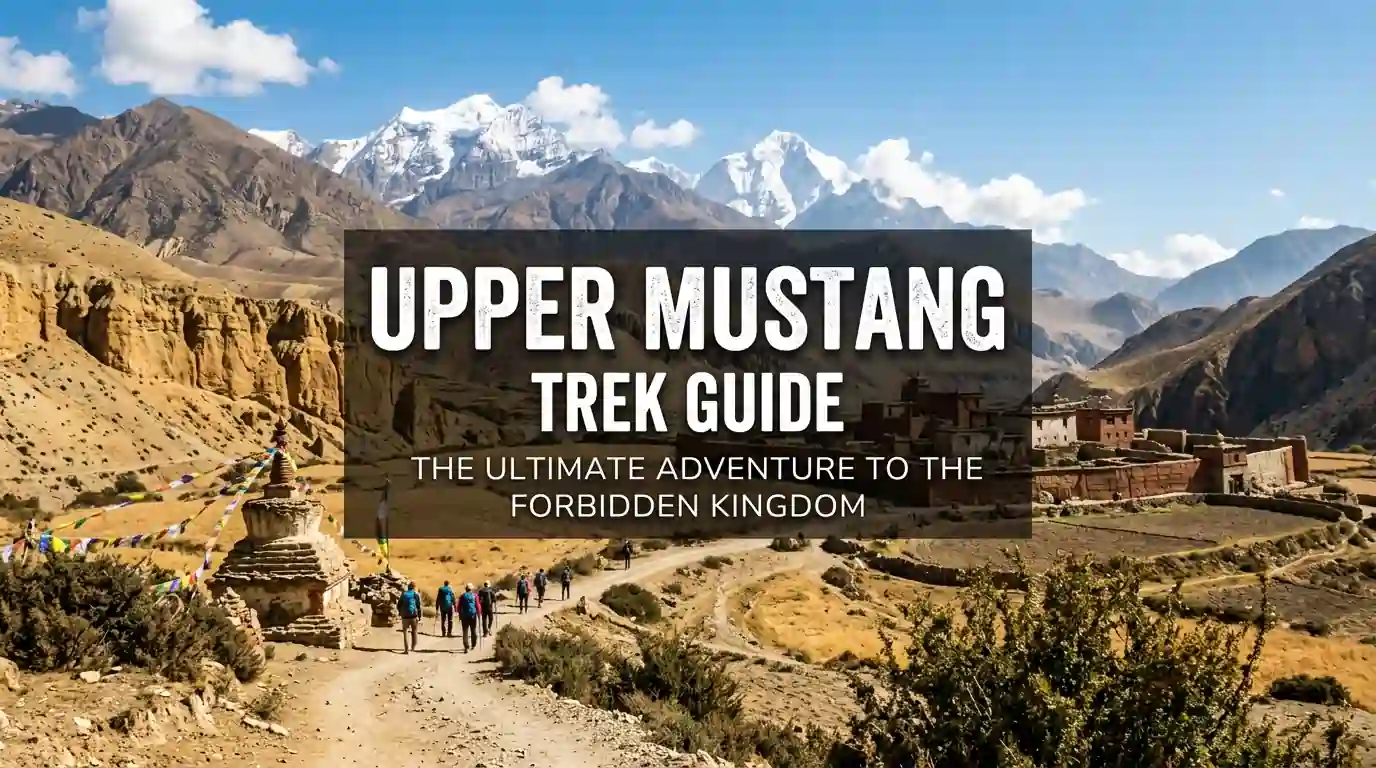
Standing at the gates of Lo Manthang, you’re looking at a walled city that was off-limits to outsiders for centuries and still requires a $500 permit just to enter. Upper Mustang earned its “Forbidden Kingdom” nickname honestly. This high-desert region of Nepal remained closed to foreign trekkers until 1992, and the restrictions that remain today have preserved Tibetan Buddhist culture in ways few places on earth can match.
In this blog about the Upper Mustang trek complete guide, we’ll cover everything you need to plan your journey to this restricted Himalayan kingdom. You’ll learn about permit requirements and costs, the best seasons to visit, a detailed day-by-day itinerary, and practical advice on choosing the right trekking operator. Whether you’re drawn by ancient monasteries, dramatic desert landscapes, or authentic Tibetan culture, this guide will help you prepare for one of Nepal’s most rewarding adventure trekking in Nepal experiences.
What is the Upper Mustang Trek?
The Upper Mustang trek is a 12-17 day journey through Nepal’s restricted trans-Himalayan desert region, following an ancient trade route from Kagbeni to the walled city of Lo Manthang at 3,840 meters. Unlike the green valleys of Everest or Annapurna, this region sits in the rain shadow of the Himalayan range, creating an arid landscape that looks more like Tibet than Nepal. The area remained closed to foreigners until 1992, and strict permit requirements still limit visitor numbers today.
You’ll walk through terrain that feels almost lunar, wind-carved cliffs, red and ochre plateaus, and whitewashed villages clinging to barren hillsides. Annual rainfall here barely reaches 250mm, which has preserved ancient cave dwellings, centuries-old monasteries, and settlements where Tibetan Buddhist culture has survived largely unchanged for generations.
Why Upper Mustang is Called the Forbidden Kingdom?
Upper Mustang is called the Forbidden Kingdom because it remained closed to outsiders for centuries and was only opened to foreign trekkers in 1992. The region functioned as an independent kingdom with its own royal lineage, maintaining strict control over who could enter its borders. This deliberate isolation helped preserve its unique Tibetan Buddhist culture and ancient traditions. Even today, the $500 permit requirement and travel restrictions continue to limit access to this remote Himalayan region.
1. The Ancient Kingdom of Lo
Upper Mustang was once the Kingdom of Lo, a powerful Tibetan-influenced state that controlled lucrative salt trade routes between the Himalayas and the Indian plains. The royal palace still stands in Lo Manthang, and though the monarchy was officially dissolved in 2008, the former king remains a respected figure in local affairs.
Walking through Lo Manthang’s narrow streets, you’ll see a medieval city that has changed remarkably little over five centuries.
2. Tibetan Buddhist Heritage in Mustang
The region’s isolation from both Nepal and Chinese-controlled Tibet preserved its religious heritage in ways few places can match. Ancient monasteries like Thubchen Gompa and Jampa Lhakhang contain Buddhist murals and statues dating back to the 15th century.
Prayer flags stretch between buildings, mani walls line the trails, and the sound of monks chanting echoes through villages each morning.
3. When Upper Mustang Opened to Foreign Trekkers
Nepal’s government opened Upper Mustang to limited foreign tourism in 1992, though restrictions remain tight. Other regions like the Tsum Valley followed similar openings later, each maintaining strict permit controls to preserve their cultural heritage.
The high permit fees and mandatory guide requirements serve a dual purpose: protecting fragile cultural sites and limiting environmental impact in a region with minimal infrastructure.
How Much Does the Upper Mustang Trek Cost?
The Upper Mustang trek costs between $2,000 and $3,500 per person for a complete journey. The mandatory $500 restricted area permit forms the largest single expense in your budget. Additional costs include guide fees, teahouse accommodation, meals, and transportation to the trailhead at Jomsom. This higher price point reflects the region’s protected status and limited access compared to other Nepal treks.
| Cost Category | Budget Range |
| Restricted Area Permit | $500 (first 10 days) + $50/day after |
| Guide fees | $30–$50 per day |
| Accommodation and meals | $40–$60 per day |
| Transportation to Jomsom | $120–$150 (flight) or $50–$80 (jeep) |
| Total estimated cost | $2,000–$3,500 |
1. Restricted Area Permit Fees
The Upper Mustang Special Permit costs $500 per person for the first 10 days, with an additional $50 charged for each day beyond that. This fee goes directly to the Nepal government and cannot be negotiated. It’s the primary reason Upper Mustang costs significantly more than treks like Everest Base Camp or Annapurna Circuit.
2. Guide and Porter Expenses
Licensed guides typically charge $30 to $50 per day, depending on experience and English proficiency. Porters cost around $20 to $25 daily and make the trek considerably more comfortable. Since independent trekking is prohibited, guide costs are unavoidable.
3. Accommodation and Meal Costs
Daily expenses for teahouse stays and three meals typically run $40 to $60 per person. Prices increase as you move deeper into the restricted area because everything, food, fuel, supplies, arrives by mule or jeep over rough mountain roads.
4. Transportation to Jomsom
The trek begins in Jomsom, reachable from Pokhara by:
- Flight: 20 minutes, $120–$150 one way
- Jeep: 8-10 hours, $50–$80 one way
Flights are faster but frequently cancelled due to afternoon winds in the Kali Gandaki valley.
5. Total Budget Estimate
Booking through an agency like Marvel Treks simplifies cost planning considerably. All-inclusive Upper Mustang trek packages bundle permits, guide fees, accommodation, meals, and transportation into a single price, eliminating guesswork and hidden expenses.
What Permits Do You Need for Upper Mustang Trek Nepal?
You need three permits for the Upper Mustang trek: the Upper Mustang Special Permit ($500 for 10 days), the Annapurna Conservation Area Permit (ACAP), and the TIMS card. Your trekking agency handles all permit applications on your behalf since independent trekking is prohibited in this restricted area. The government only issues the special permit through licensed operators, making agency booking mandatory rather than optional.
1. Upper Mustang Special Permit
This is the main entry document, issued by the Department of Immigration in Kathmandu. The permit covers a minimum of 10 days and requires at least two trekkers traveling together. Solo permits are not issued under any circumstances. Your agency handles the complete application process, which requires passport copies and recent photos. This permit is what grants you legal access to the restricted Upper Mustang region.
2. Annapurna Conservation Area Permit
Since the trek route passes through the Annapurna Conservation Area, you’ll also need an ACAP permit. This costs approximately NPR 3,000 for foreign nationals. The fee directly supports conservation efforts in the region, helping protect the fragile high-altitude ecosystem. Your trekking agency obtains this permit along with your other documentation.
3. TIMS Card
The Trekkers’ Information Management System card tracks trekker movements for safety purposes across Nepal’s trekking regions. Your agency arranges this alongside your other permits as part of the standard documentation package. You’ll present it at various checkpoints along the route. This system helps authorities maintain accurate records of trekkers in remote areas for emergency response purposes.
4. Why You Must Book Through a Registered Agency
Independent trekking is strictly prohibited in Upper Mustang. The government only issues special permits to licensed trekking operators, making agency booking mandatory rather than optional.
Best Time to Trek Upper Mustang
Upper Mustang’s position in the Himalayan rain shadow creates a unique advantage: it remains dry and accessible when the rest of Nepal is drenched by monsoon rains. This makes it one of the few Himalayan destinations where you can trek comfortably nearly year-round. The best trekking windows are spring (March to May) and autumn (September to November), though the summer monsoon season also works well here. Your choice depends on weather preferences, crowd levels, and whether you want to experience the famous Tiji Festival.
1. Spring Trekking Season
The spring trekking season from March through May brings moderate temperatures, clear skies, and occasional wildflowers in the lower valleys. Daytime temperatures at Lo Manthang hover around 15 to 20°C, though nights can still drop below freezing. This is a popular season, so booking permits and flights well in advance is wise. The weather is generally stable, making it ideal for photography and comfortable trekking conditions throughout the day.
2. Monsoon and the Rain Shadow Advantage
June through August is monsoon season across Nepal, but Upper Mustang receives minimal rainfall during this period. While trekkers elsewhere contend with leeches and mudslides, the Mustang trails remain dry and walkable. This makes it one of the few Himalayan destinations suitable for summer trekking. You’ll encounter fewer crowds and can often negotiate better rates on accommodation. The landscape takes on a slightly greener hue compared to other seasons, and the dust is kept down by occasional light showers.
3. Autumn Trekking Season
September through November offers the most stable weather and clearest mountain views. Temperatures are comfortable, skies are typically cloudless, and the post-monsoon air provides excellent visibility. This is peak season across Nepal, so expect more trekkers on the trail and higher demand for permits and flights. The harvest season brings additional cultural activities to villages, and the crisp air makes for stunning photography opportunities with crystal-clear Himalayan panoramas.
4. Trekking During Tiji Festival
The three-day Tiji Festival, usually held in Lo Manthang each May, celebrates a Buddhist deity’s victory over a demon threatening the kingdom. Monks perform elaborate masked dances, and the entire community gathers for ceremonies. If you’re planning to attend, book at least two to three months ahead because permits, flights, and lodges fill quickly. Witnessing this ancient festival adds a profound cultural dimension to your trek, offering insights into living Tibetan Buddhist traditions that have survived for centuries.
How to Get to Upper Mustang?
You reach Upper Mustang by first traveling to Pokhara, then taking either a 20-minute flight or an 8-10 hour jeep ride to Jomsom, where the trek officially begins. The flight offers dramatic mountain views but cancels frequently due to wind, while the overland route is longer but more reliable. Most trekkers choose based on their schedule flexibility and tolerance for uncertainty. Both options deliver you to Kagbeni, the gateway to the restricted Upper Mustang region.
1. Pokhara to Jomsom Flight
The 20-minute mountain flight from Pokhara to Jomsom offers dramatic views of Dhaulagiri and Annapurna as you soar through the Himalayan corridor. Flights operate only in the morning hours, typically before 11 AM, because afternoon winds make the Kali Gandaki valley too turbulent for small aircraft to land safely. The flight path follows the deepest gorge in the world, providing stunning aerial perspectives of the landscape below. Despite the short duration, this scenic flight is considered one of the most spectacular mountain flights in Nepal.
2. Driving from Pokhara via Beni
The overland jeep route takes 8 to 10 hours along a rough, winding road through the world’s deepest gorge, passing through Beni and following the Kali Gandaki river upstream. The journey is longer and less comfortable than flying, with bumpy roads and dusty conditions, but it eliminates the uncertainty of weather-dependent flights. This route allows you to witness the gradual landscape transformation from subtropical valleys to high-altitude desert terrain. Many trekkers choose to fly in one direction and drive out the other, combining both experiences and reducing the risk of delays.
3. Backup Plans for Flight Cancellations
Jomsom flights cancel frequently, sometimes for multiple consecutive days during poor weather conditions, particularly during the monsoon season and winter months. Building 1 to 2 buffer days into your itinerary is essential to account for these unpredictable delays without compromising your overall schedule. A reputable agency handles rebooking on the next available flight or arranges alternative jeep transport when flights are grounded for extended periods. Having flexible travel dates and a contingency plan ensures your trek can proceed smoothly regardless of weather disruptions at the start or end of your journey.
Upper Mustang Trek Itinerary
The classic Upper Mustang trek follows a roughly circular route that takes you through the Kali Gandaki valley to the ancient walled city of Lo Manthang. The journey typically spans 10 to 12 trekking days, ascending gradually through traditional Tibetan villages and high desert terrain. You’ll return either by retracing your steps along the same trail or taking an alternate route through different settlements. This circular approach allows you to experience the region’s diverse landscapes and cultural sites while maintaining a comfortable acclimatization schedule.
1. Kagbeni to Tsarang
- Days: 1–4
- Route: Jomsom → Kagbeni → Chele → Samar → Ghami → Tsarang
- Highlights: Entering the restricted area at Kagbeni, walking the Kali Gandaki riverbed, watching the landscape transform from green valleys to high desert plateau
The terrain shifts dramatically once you pass Kagbeni. Green fields give way to red and ochre cliffs, and the trail climbs steadily through increasingly arid terrain.
2. Tsarang to Lo Manthang
- Days: 5–6
- Route: Tsarang → Lo La Pass → Lo Manthang
- Highlights: Tsarang Monastery, first view of Lo Manthang from Lo La Pass (3,810m)
Cresting Lo La Pass and seeing the walled city spread across the plateau below is one of the trek’s defining moments.
3. Exploring Lo Manthang and Surroundings
- Days: 7–8
- Route: Acclimatization and exploration in Lo Manthang
- Highlights: Royal Palace, Jampa Lhakhang, Thubchen Gompa, optional excursion to Choser Caves
Spending two nights in Lo Manthang allows time to explore the city’s narrow lanes, visit ancient monasteries, and take optional day trips to nearby cave complexes.
4. Return Journey to Jomsom
- Days: 9–12
- Route: Lo Manthang → Ghami → Samar → Kagbeni → Jomsom
- Highlights: Alternate return via Ghar Gompa, one of the region’s oldest monasteries
The return journey can follow the same trail or take an alternate route through different villages. The full round-trip typically takes 10-12 trekking days.
Upper Mustang Trek Difficulty and Physical Requirements
The Upper Mustang trek is rated moderate in difficulty, requiring good physical fitness but no technical mountaineering skills. While the maximum altitude is lower than many Himalayan treks, the challenge comes from consecutive days of walking at high elevation through arid desert terrain. You’ll need stamina for sustained daily trekking, the ability to handle thin air and intense sun exposure, and mental preparation for the cumulative physical demands of a multi-day journey.
1. Daily Walking Distance and Hours
You’ll walk between 5 to 7 hours each day, covering approximately 10 to 15 kilometers depending on the specific route section. The terrain varies from relatively flat valley floors to gradual ascents over high passes, with the trail occasionally crossing rocky sections and dusty paths. The challenge isn’t any single difficult day but rather the cumulative effect of walking multiple consecutive days at altitude. Your body needs to adjust not just to the elevation but to the sustained physical effort required throughout the trek.
2. Maximum Elevation and Terrain Conditions
the highest point on the trek is approximately 3,840 meters at Lo Manthang, which is lower than many popular Himalayan destinations like Everest Base Camp or Thorong La Pass.
However, the high-altitude desert environment presents its own challenges with dry, dusty conditions and strong winds that can be physically draining. Sun exposure is intense due to the thin atmosphere and lack of shade, making proper sun protection essential throughout the day. The thin air at this elevation can feel deceptively tiring, and even moderate exertion may leave you more breathless than you’d expect at lower altitudes.
3. How to Train Before Your Mustang Trek
Begin your training at least two to three months before departure by focusing on cardiovascular fitness through activities like running, cycling, or swimming to build your aerobic capacity. Incorporate regular long-distance hiking with a loaded daypack to strengthen your legs and simulate the conditions you’ll face on the trail. Gradually increase both the duration and difficulty of your training hikes, ideally including some elevation gain to prepare your muscles for uphill walking. Building this foundation of endurance and leg strength will make the consecutive trekking days far more enjoyable and reduce your risk of injury or excessive fatigue.
Top Highlights Along the Mustang Trek Route
The Upper Mustang trek offers unique cultural and natural attractions that justify its premium cost compared to other Nepal treks. From ancient walled cities and centuries-old monasteries to mysterious cliff caves and traditional Tibetan villages, this restricted region preserves heritage sites found nowhere else in the Himalayan range. The dramatic landscapes of the Kali Gandaki gorge and the authentic cultural experiences in remote settlements make every day of trekking rewarding and memorable.
1. Lo Manthang Walled City
The medieval capital of Lo Manthang stands as a living museum of Tibetan Buddhist culture, enclosed within ancient defensive walls that have protected it for centuries. Its mud-brick architecture, imposing Royal Palace, and maze-like streets offer a glimpse into a preserved Tibetan society that has survived largely intact since the 15th century. Walking through the narrow lanes feels like stepping back in time, with prayer wheels, colorful murals, and traditional homes creating an atmosphere unchanged by modern development. The city remains one of the last functioning walled settlements in the Himalayan region, making it an extraordinary destination for cultural exploration.
2. Ancient Monasteries and Gompas
Upper Mustang’s monasteries contain some of the finest examples of Tibetan Buddhist art and architecture in Nepal, with many structures dating back over 500 years. Thubchen Gompa and Jampa Lhakhang in Lo Manthang house remarkable murals, statues, and religious artifacts that have been carefully preserved through centuries of isolation. The ancient Ghar Gompa, accessible on the return journey, ranks among the oldest active monasteries in the entire region and offers insight into living Buddhist traditions. These sacred sites provide not just visual beauty but also opportunities to witness monks practicing rituals that have remained unchanged for generations.
3. Mysterious Sky Caves
Thousands of man-made caves are carved into the sheer cliffs throughout Upper Mustang, some dating back over 3,000 years and creating one of the region’s most intriguing mysteries. Archaeologists and historians continue to debate the original purpose of these caves, which may have served as homes, meditation chambers, burial sites, or storage facilities for ancient communities. The Choser cave complex near Lo Manthang is accessible as a day trip and features multiple levels of chambers connected by precarious hand-carved tunnels and ladders. Exploring these ancient dwellings offers a fascinating glimpse into the ingenuity and determination of the people who once inhabited this harsh desert landscape.
4. Kali Gandaki Gorge
The trek follows portions of the Kali Gandaki gorge, recognized as the world’s deepest gorge when measured from the river to the surrounding peaks of Dhaulagiri and Annapurna. The dramatic landscape features towering rock walls, wind-sculpted formations, and the powerful river that has carved through the Himalayan range for millions of years. Along the riverbed, trekkers can find saligrams, fossilized ammonites that are considered sacred by Hindus and are often used in religious ceremonies throughout Nepal and India. The geological and spiritual significance of this natural wonder adds another dimension to the trekking experience in this remarkable region.
5. Traditional Mustang Villages
Whitewashed villages like Kagbeni, Chele, Ghami, and Tsarang are built in traditional Tibetan architectural style, featuring flat roofs, prayer flags, and narrow alleys that wind between closely packed homes. These settlements have adapted to the harsh desert climate through centuries of experience, with thick walls providing insulation and rooftop spaces used for drying crops and storing firewood. The villages maintain their traditional character with mani walls covered in carved prayers, chortens marking sacred sites, and communal water systems that carefully manage the scarce resource. Staying in these communities offers authentic cultural immersion and the chance to witness daily life that has changed remarkably little over generations.
Accommodation and Food on the Upper Mustang Trek
Accommodation along the Upper Mustang trek consists of basic teahouse lodges that provide simple but comfortable shelter in remote villages. The food is hearty and designed for high-altitude trekking, with menus featuring traditional Nepali and Tibetan dishes. While facilities are more basic than popular routes like Everest Base Camp, the authentic experience and warm hospitality make up for the lack of modern amenities. Expect simple rooms, communal dining areas, and meals that fuel your daily trekking needs.
1. Teahouse Standards and Expectations
Teahouses in Upper Mustang offer simple twin-sharing rooms with basic beds and blankets, communal dining halls where trekkers gather for meals, and shared squat toilets that are standard throughout the region. Electricity for charging devices is limited and often comes with an extra fee, typically charged per hour or per device. Hot showers are rare in remote villages, and when available, they usually require additional payment and may only offer solar-heated water during certain hours. The accommodations are clean and functional, providing everything you need for a good night’s rest after a long day of trekking.
2. Upgraded Lodge Options
In larger settlements like Kagbeni, Jomsom, and Lo Manthang, some upgraded lodges offer attached bathrooms with western-style toilets and better overall amenities for trekkers willing to pay a premium. These lodges may feature more comfortable mattresses, cleaner facilities, and occasionally hot showers with more reliable water supply. The upgraded options provide a welcome comfort boost, especially after several days in more basic teahouses along the trail. While still simple by urban standards, these lodges offer the best accommodation available in the restricted Upper Mustang region.
3. What You Will Eat in Upper Mustang
Menus throughout Upper Mustang center on dal bhat (lentil soup with rice), which provides the carbohydrates and protein needed for sustained trekking at high altitude. You’ll also find Tibetan bread, momos (dumplings filled with vegetables or meat), thukpa (hearty noodle soup), and occasionally fried rice or pasta dishes. Fresh vegetables are limited due to the arid climate and difficulty transporting produce to remote villages, so meals tend to be simple and repetitive. Bringing your own favorite snacks like energy bars, nuts, or chocolate is a good idea to supplement meals and provide variety during the trek.
What to Pack for Nepal Mustang Trekking?
You need to pack for extreme sun exposure, strong winds, and dusty conditions in Upper Mustang’s high-desert environment. The arid climate and intense UV radiation at altitude require proper sun protection and layered clothing. Dust storms are common, so bring gear to protect your eyes, face, and electronics. Your packing list should prioritize lightweight, versatile items that handle both cold nights and warm sunny days.
1. Clothing for High Desert Conditions
A layering system is essential:
- Base layer: Moisture-wicking merino wool or synthetic shirts
- Mid layer: Fleece or down jacket for insulation
- Outer layer: Windproof and waterproof jacket and pants
- Sun protection: Wide-brimmed hat, quality sunglasses, high-SPF sunscreen
- Dust protection: Buff or mask for windy days
2. Essential Trekking Gear
- Sturdy, broken-in trekking boots
- Trekking poles for knee support
- Headlamp with extra batteries
- Water purification system (tablets or filter)
- Personal first-aid kit
3. Personal Items and Toiletries
The high-altitude desert environment demands specific personal care items to protect against harsh conditions. Pack high-SPF sunscreen and lip balm to shield against intense UV radiation that’s amplified by the thin atmosphere and reflected off barren terrain. Hand sanitizer is essential since handwashing facilities are limited in remote teahouses, and you’ll want to maintain hygiene before meals. Bring all personal medications in their original packaging, a portable power bank for charging devices when electricity is scarce, and your camera with extra batteries since cold temperatures drain battery life faster at altitude.
4. Gear You Can Rent in Kathmandu
You don’t need to purchase every piece of specialized trekking equipment before arriving in Nepal. Bulky items like down jackets, sleeping bags rated for sub-zero temperatures, and trekking poles can be rented affordably from outdoor shops in Kathmandu or Pokhara, typically for $1-2 per item per day. This saves luggage space and money, especially for gear you might only use once. Marvel Treks often provides complimentary loans of essential items like sleeping bags and down jackets to clients, eliminating rental costs entirely. Renting locally also ensures you get equipment suited to Himalayan conditions without the expense of international shipping or airline baggage fees.
Altitude and Safety Considerations
Trekking at high altitude requires careful attention to your body’s adjustment process and awareness of potential health risks. The Upper Mustang trek reaches elevations where reduced oxygen levels can affect even fit trekkers, making proper acclimatization and safety planning essential. Understanding altitude sickness symptoms and having comprehensive emergency coverage ensures you’re prepared for the challenges of this remote Himalayan region.
1. Acclimatization Schedule
The standard Upper Mustang itinerary follows a gradual ascent pattern that allows your body time to adjust to reduced oxygen levels at higher elevations. Acclimatization is the process where your body produces additional red blood cells to carry oxygen more efficiently, and this adaptation takes time and cannot be rushed. The trek’s carefully designed daily elevation gains help minimize the risk of altitude-related illness while keeping you comfortable throughout the journey. Following the planned schedule and avoiding unnecessary rapid ascents gives your body the best chance to adapt successfully to the thin mountain air.
2. Altitude Sickness Warning Signs
Acute Mountain Sickness (AMS) can affect anyone regardless of fitness level, so recognizing early warning signs is critical for your safety. Common symptoms include persistent headaches that don’t respond to standard pain medication, nausea or vomiting especially when combined with other symptoms, dizziness or confusion that affects your balance and clear thinking, and unusual fatigue that goes beyond normal tiredness from trekking. If symptoms become severe or continue to worsen despite rest and hydration, the only reliable treatment is immediate descent to lower elevation. Your guide is trained to recognize these symptoms and will make decisions prioritizing your health and safety above completing the itinerary.
3. Emergency Evacuation and Travel Insurance
Comprehensive travel insurance with helicopter evacuation coverage up to 6,000 meters is mandatory for the Upper Mustang trek and should be arranged before departure, as trekking safely in Nepal depends heavily on proper insurance and preparation. In serious medical emergencies, helicopter evacuation is the only way to exit Upper Mustang’s remote areas quickly since ground transport would take many hours over rough terrain. Your insurance policy must explicitly state that it covers high-altitude trekking in Nepal, as some standard policies exclude activities above certain elevations. Verify all coverage details and carry proof of insurance with emergency contact numbers throughout your trek.
Has Road Construction Affected the Upper Mustang Trek
A jeep road now connects Jomsom to Lo Manthang, and this is a common concern among prospective trekkers. The honest answer: the trekking experience remains worthwhile.
The vast landscapes, ancient monasteries, and profound cultural encounters are undiminished by the road’s presence. Many trekking routes now follow alternative off-road trails that avoid the main road entirely, preserving the sense of remoteness that makes Upper Mustang special.
How to Choose the Right Upper Mustang Trek Operator?
Choosing a reputable trekking operator is the most important decision for your Upper Mustang trek since independent trekking is prohibited by law. The government only issues restricted area permits through licensed agencies, making your operator choice critical for safety, logistics, and overall experience. A quality operator handles all permits, provides experienced guides, arranges reliable accommodation, and has contingency plans for weather delays. Your trek’s success depends entirely on selecting an agency with proven expertise in this remote restricted region.
1. Questions to Ask Before Booking
- What exactly is included and excluded in the quoted price?
- How experienced are your guides specifically with Upper Mustang?
- What is your safety protocol and emergency plan?
- What is your policy for flight cancellations or itinerary changes?
2. Warning Signs of Low Quality Operators
- Unusually low prices: Often means cutting corners on safety or guide pay
- Unclear pricing: Hidden fees that appear after booking
- Unlicensed guides: Lack of proper permit documentation
- Poor reviews: Especially those mentioning safety issues
3. What Quality Trek Packages Include
A reputable operator provides all necessary permits (Upper Mustang, ACAP, TIMS), an experienced licensed local guide, all accommodation and standard meals, ground and air transport, and robust contingency planning for weather delays. Marvel Treks operates as a fully homegrown Nepali company, keeping economic benefits connected to local communities while delivering the logistical support that makes complex treks manageable.
Start Planning Your Upper Mustang Adventure
Planning an Upper Mustang trek requires more investment than standard Himalayan routes, but the reward is an unforgettable journey into a preserved Himalayan kingdom. The unique culture, starkly beautiful landscapes, and sense of traveling back in time make it worth every bit of the effort, especially when organized with the best expedition company in Nepal.
Ready to step into the Forbidden Kingdom? Explore Our Adventures with Marvel Treks.
FAQs About the Upper Mustang Trek
Can I extend my Upper Mustang trek to visit Damodar Kunda?
Yes, Damodar Kunda is a sacred high-altitude lake that can be added as a challenging extension. This requires additional permits, camping equipment, and a higher fitness level, making it best suited for experienced trekkers comfortable with remote wilderness travel.
What happens if my Jomsom flight gets cancelled due to weather?
Flight cancellations are common. Reputable operators arrange jeep transport as a backup or adjust your itinerary accordingly. Building 1-2 buffer days into your schedule is essential for managing this uncertainty.
Is mobile phone signal available along the Upper Mustang route?
Nepali networks (Ncell, NTC) have limited coverage in larger villages like Kagbeni and Lo Manthang, but signal is unreliable or absent between settlements. Carry a power bank to keep devices charged.
Can I combine the Upper Mustang trek with the Annapurna Circuit?
Yes, the two treks share the Jomsom-Kagbeni section. Experienced trekkers can combine both into an extended three to four-week itinerary for a comprehensive Annapurna region experience.
Are there age restrictions for the Upper Mustang restricted area permit?
There are no official government age restrictions. However, all trekkers, especially children and older adults, need to be physically fit for multi-day walking at high altitude. Suitability depends on individual fitness rather than age alone.
How far in advance should I book for the Tiji Festival period?
Book at least two to three months in advance for a Tiji Festival trek (typically in May). Permits, flights, and the best accommodations fill quickly during this popular cultural event.
Can I trek Upper Mustang independently without joining a group?
Independent solo trekking is not permitted. You can, however, arrange a private trek for just yourself and a guide rather than joining a pre-scheduled group departure.

Ready for your next Himalayan adventure?
Plan Your Next Big Adventure with Us
Explore Our AdventuresJoin our expert-guided journeys across Nepal and beyond, from classic trails to epic summits.