
Complete Guide For Tsum Valley Trek 2026
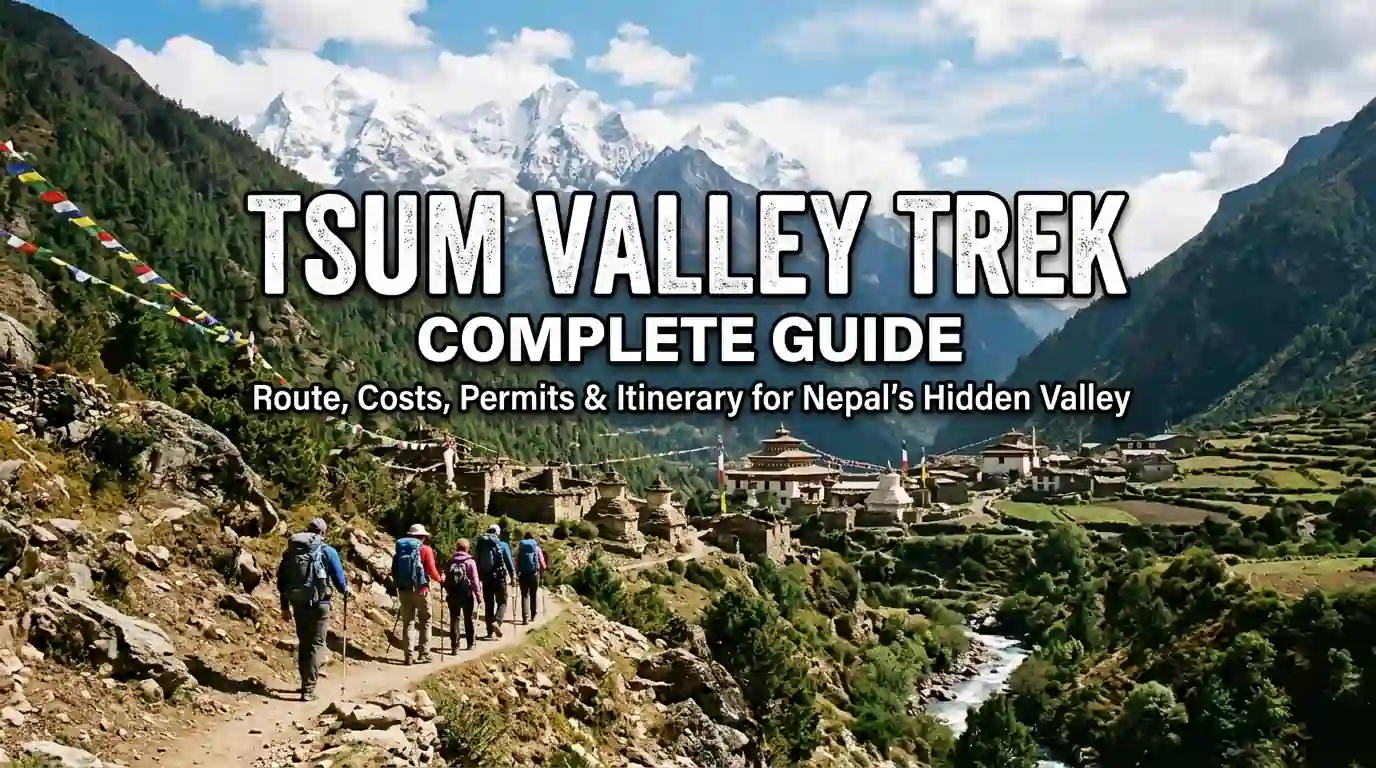
Picture a Himalayan valley so sacred that residents have practiced non-violence for centuries, refusing to harm even insects, while ancient monasteries cling to cliffsides and prayer flags flutter above stone villages unchanged since the Tibetan Buddhist settlers arrived generations ago. The Tsum Valley Trek remained closed to foreigners until 2008, and its restricted-area status still keeps annual visitor numbers under 2,000, making it one of Nepal’s last truly uncrowded trekking destinations.
In this blog about the Tsum Valley trek complete guide, we’ll walk you through everything you need to plan your journey into this sacred valley. You’ll find detailed information on the day-by-day itinerary, permit requirements and costs, fitness expectations, packing recommendations, and practical advice on choosing an operator who can navigate the restricted-area regulations.
What is Tsum Valley Trek?
The Tsum Valley trek is a 10-14 day journey into one of Nepal’s most sacred and culturally preserved Himalayan valleys, located in northern Gorkha district near the Tibetan border. “Tsum” translates to “vivid” in Tibetan, and locals call this place “the valley of happiness” because of the peaceful Buddhist communities who have lived here for centuries. Nepal opened the valley to foreign trekkers only in 2008, and its restricted-area status keeps visitor numbers low, typically under 2,000 trekkers per year.
The trek reaches a maximum elevation of approximately 3,700 meters near Mu Gompa, one of the region’s oldest monasteries. You’ll walk through ancient villages where Tibetan Buddhist traditions remain unchanged, passing carved mani stones, prayer flags, and centuries-old gompas along the way. Unlike the Everest or Annapurna regions, Tsum Valley offers cultural immersion without extreme altitude challenges.
- Location: Northern Gorkha district, bordering Tibet
- Status: Restricted area requiring special permits through a registered agency
- Maximum elevation: Approximately 3,700 meters at Mu Gompa
- Character: Sacred Buddhist valley with ancient monasteries and traditional villages
Why Trek Tsum Valley Over Other Nepal Routes?
Tsum Valley stands out from other Nepal trekking routes because it offers genuine cultural immersion in a sacred Buddhist valley that remains largely untouched by mass tourism. The restricted area permit system keeps annual visitor numbers under 2,000 trekkers, creating an authentic experience where you’ll encounter ancient monasteries, traditional Tibetan communities practicing centuries-old customs, and dramatic Himalayan scenery without the crowds that define popular routes like Everest Base Camp or Annapurna Circuit. Unlike those heavily trafficked trails, Tsum Valley gives you the rare opportunity to trek for hours without seeing another foreign visitor, staying in family-run teahouses rather than commercial lodges.
1. Ancient Monasteries and Tibetan Buddhist Heritage
The valley contains some of Nepal’s most significant Buddhist sites, including Mu Gompa and Rachen Gompa, which have stood for centuries as spiritual centers for the local communities. What makes Tsum Valley truly unique is the Shyagya practice, a centuries-old tradition of non-violence where residents don’t kill any living creature, not even insects. This spiritual commitment shapes daily life throughout the valley, from agricultural practices to how people interact with their environment. You’ll witness monks performing ancient rituals and see prayer wheels spinning continuously as villagers maintain traditions passed down through generations.
2. Remote Trails Without the Crowds
Permit restrictions keep annual visitor numbers low, creating an experience vastly different from the crowded trails of Everest or Annapurna. You might walk for hours without seeing another foreign trekker, passing only local villagers and yak herders going about their daily routines. The teahouses feel more like family homestays than commercial lodges, where hosts share meals and stories with guests. This isolation allows for genuine cultural exchange and peaceful trekking where the only sounds are birdsong, prayer flags fluttering in the wind, and the distant rush of mountain rivers.
3. Dramatic Himalayan Panoramas
The U-shaped glacial valley offers views of Ganesh Himal, Sringi Himal, and Boudha Himal rising above terraced fields and traditional stone villages. Unlike the stark high-altitude landscapes of the Everest region, Tsum Valley combines mountain grandeur with lush forests, waterfalls, and agricultural terraces. The changing elevations mean you’ll experience diverse ecosystems, from subtropical forests at lower altitudes to alpine meadows near Mu Gompa. Morning light illuminates snow-capped peaks while afternoon clouds create dramatic shadows across the valley walls, offering photographers endless opportunities to capture the Himalayan landscape.
When is the Best Time to Trek Tsum Valley?
The best season for trekking in Nepal to explore Tsum Valley is during spring (March to May) and autumn (September to November) when weather conditions are most stable and mountain views are clearest. Spring brings rhododendron blooms and warming temperatures, while autumn offers post-monsoon clarity with crisp mountain views and deep blue skies. Both seasons provide dry trails, accessible routes, and comfortable trekking conditions, though autumn typically has the best visibility for photography.
| Season | Months | Weather Conditions | Trail Status | Crowd Level |
| Spring | March–May | Clear skies, rhododendron blooms | Dry, accessible | Low |
| Autumn | Sept–Nov | Stable weather, best visibility | Dry, accessible | Low–moderate |
| Monsoon | June–Aug | Heavy rain, leeches | Muddy, risky | Very low |
| Winter | Dec–Feb | Cold, possible snow | Potentially blocked | Very low |
1. Spring Trekking Conditions in March to May
Warming temperatures bring rhododendron forests into spectacular bloom along the lower sections of the trail during spring season. Visibility is generally excellent throughout this period, though occasional afternoon clouds can roll in during May. The valley feels alive with agricultural activity as villagers prepare fields for planting. This season offers comfortable trekking temperatures and colorful landscapes that make photography particularly rewarding.
2. Autumn Trekking Conditions in September to November
Post-monsoon clarity creates ideal conditions for photography, with crisp mountain views and deep blue skies dominating the landscape. This period coincides with major Buddhist festivals, including Lhosar celebrations that offer opportunities to witness traditional ceremonies. The stable weather patterns make autumn the most popular season for trekking in Tsum Valley. Clear visibility and comfortable temperatures provide excellent conditions for both trekking and cultural exploration.
3. Why Monsoon and Winter Are Not Recommended
Monsoon trekking brings daily afternoon downpours, slippery trails, and leeches in forested sections that make trekking uncomfortable and potentially dangerous. Winter temperatures drop significantly, and snow can block higher sections of the trail near Mu Gompa. Limited teahouse services during these off-seasons add to the challenges. Most trekking agencies discourage travel during monsoon and winter months due to safety concerns and poor trail conditions.
Tsum Valley Trek Itinerary for 11 Days
The standard 11-day itinerary balances proper acclimatization with comprehensive exploration of the valley’s cultural highlights. Each day involves 5-7 hours of walking, allowing you to experience ancient monasteries, traditional villages, and stunning mountain scenery without rushing. The route gradually ascends into the sacred valley before retracing your steps back to the trailhead, giving you time to absorb the unique Tibetan Buddhist culture that defines this remote region.
Day 1. Kathmandu to Machha Khola by Jeep
The 8-10 hour drive from Kathmandu passes through Gorkha district on roads that transition from paved highways to rough mountain tracks. You’ll witness the landscape change from bustling towns to rural villages as you follow the Budhi Gandaki River valley. Machha Khola sits at approximately 930 meters, where you’ll spend your first night in a basic teahouse. The long drive prepares you for the adventure ahead while offering glimpses of rural Nepali life along the way.
Day 2. Machha Khola to Jagat
Today’s 6-7 hour walk follows the Budhi Gandaki River through subtropical forests, crossing several suspension bridges that sway above the rushing water below. The trail alternates between riverside paths and sections carved into cliff faces, offering your first taste of Himalayan trekking terrain. Jagat (1,340m) marks the official entry point for permit checks, where officials will verify your restricted area documentation. You’ll notice the temperature cooling as you gain elevation, and the vegetation becoming more diverse with each kilometer.
Day 3. Jagat to Lokpa
The trail climbs steadily through forests of oak and rhododendron, with the sound of the river gradually fading as you gain altitude. You’ll reach the junction where the Tsum Valley route splits from the main Manaslu Circuit, marking your official entry into the sacred valley. Lokpa sits at 2,240 meters, where the landscape begins to open up and you’ll catch your first views of the surrounding peaks. The village offers a peaceful setting to rest after a full day of ascending through changing vegetation zones.
Day 4. Lokpa to Chumling
Crossing into Tsum Valley proper, the landscape opens into a broader glacial valley with terraced fields and traditional stone houses dotting the hillsides. Chumling (2,386m) is one of the valley’s main settlements, with a monastery and school serving the surrounding communities. You’ll notice the distinct Tibetan architectural style in the buildings, with prayer flags fluttering from rooftops and carved mani stones lining the paths. The village provides your first real immersion into the Buddhist culture that has thrived here for centuries.
Day 5. Chumling to Chekampar
The trail continues deeper into the valley, passing through villages where residents still wear traditional Tibetan dress and maintain centuries-old customs. You’ll walk past ancient mani walls covered in Buddhist inscriptions and prayer wheels that locals spin as they pass. Chekampar (3,031m) sits beneath dramatic cliff faces that tower above the valley floor, creating a sense of isolation from the outside world. The increasing altitude means you’ll want to pace yourself and stay hydrated throughout the day’s walk.
Day 6. Chekampar to Nile
Today’s 4-5 hour walk brings you to Nile (3,361m), with an optional side trip to Rachen Gompa, a monastery perched on a hillside with commanding views of the surrounding peaks. The shorter walking day allows time to explore the monastery and interact with the nuns who maintain this spiritual center. You’ll notice the air getting thinner at this elevation, making it important to move slowly and allow your body to adjust. The village of Nile serves as your base for the next two nights, positioning you perfectly for the trek’s highlight tomorrow.
Day 7. Nile to Mu Gompa and Return
The highlight of the trek takes you on a day excursion to Mu Gompa near the Tibetan border at approximately 3,700 meters. The 4-5 hour round trip allows time to explore the monastery complex, one of the oldest and most significant Buddhist sites in the region. You’ll witness monks performing ancient rituals and see prayer flags strung across the valley, creating a deeply spiritual atmosphere. The views from this elevation encompass the entire upper valley, with snow-capped peaks rising in every direction before you return to Nile for the night.
Day 8. Nile to Chumling
Retracing your steps offers different perspectives of the valley, with morning light illuminating features you might have missed on the ascent. The descent allows you to move at a comfortable pace while stopping to photograph the changing landscapes and interact with villagers you may have passed earlier. The 5-6 hour walk to Chumling feels easier with the altitude working in your favor, though you’ll still need to watch your footing on steeper sections. Returning to familiar teahouses creates a sense of completion as you begin the journey back toward civilization.
Day 9. Chumling to Philim
Continuing the descent through changing vegetation zones, you’ll pass through Philim village, where the Tsum Valley trail rejoins the main Manaslu Circuit route. The 6-7 hour walk brings you to approximately 1,570 meters, where you’ll notice the air becoming warmer and more humid as you lose elevation. The forests grow denser with subtropical plants replacing the alpine vegetation of the upper valley. This transition marks your gradual return to the lower elevations and the end of your time in the sacred valley.
Day 10. Philim to Machha Khola
The final trekking day rejoins the main trail and follows the river back to the road head where your journey began. This 6-7 hour walk completes the circuit, taking you through familiar villages and across the same suspension bridges you crossed on day two. The descent feels straightforward after the challenges of the higher elevations, though the humid lower altitudes can make the walking feel warmer. Reaching Machha Khola brings a sense of accomplishment as you prepare for the drive back to Kathmandu tomorrow.
Day 11. Machha Khola to Kathmandu
The return jeep journey takes 8-10 hours, arriving in Kathmandu in the evening as you retrace the rough mountain roads back to paved highways. The long drive gives you time to reflect on the trek and process the cultural experiences of the past ten days. You’ll watch the landscape transform from remote mountain villages back to the bustling outskirts of the capital. Most trekkers arrive tired but satisfied, with memories of ancient monasteries and peaceful valleys that few outsiders ever witness.
What Permits Do You Need for Tsum Valley Trek?
You need three permits for Tsum Valley Trek: a Restricted Area Permit ($35 USD per week), Manaslu Conservation Area Permit ($30 USD), and TIMS card ($20 USD). Because Tsum Valley is a restricted area, you cannot obtain these permits independently, a registered trekking agency must arrange them on your behalf through the Nepal Tourism Board and Immigration Office in Kathmandu. The process typically takes 3-4 working days and requires passport copies, passport-sized photos, and proof of travel insurance.
1. Restricted Area Permit Requirements
The special restricted area permit costs approximately $35 USD per week for the first four weeks, making it the most important document for entering Tsum Valley. You’ll need to provide passport copies, passport-sized photos, and proof of travel insurance to your trekking agency for processing. Officials at multiple checkpoints along the trail will verify your permit, so keep it accessible throughout your trek. This permit cannot be obtained independently and must be arranged through a registered trekking agency in Nepal.
- Cost: $35 USD per week
- Required documents: Passport copy, passport photos, travel insurance proof
- Verification: Multiple checkpoints along the trail
2. Manaslu Conservation Area Permit
The MCAP costs approximately $30 USD and supports environmental conservation efforts throughout the Manaslu region, including Tsum Valley. This permit helps fund trail maintenance, waste management programs, and wildlife protection initiatives in the conservation area. Your trekking agency will arrange this permit along with your restricted area permit as part of the complete documentation package. The MCAP is mandatory for all trekkers entering the Manaslu Conservation Area, regardless of your specific route.
- Cost: $30 USD
- Purpose: Environmental conservation and trail maintenance
- Coverage: Entire Manaslu Conservation Area
3. TIMS Card for Tsum Valley
The Trekkers’ Information Management System card costs approximately $20 USD and tracks trekker movements for safety and emergency response purposes. This card helps authorities maintain records of who is trekking in the region, which becomes crucial if search and rescue operations are needed. Your trekking agency will arrange the TIMS card as part of your complete permit package when processing your other documents. The card must be presented at checkpoints along with your other permits throughout the trek.
- Cost: $20 USD
- Purpose: Safety tracking and emergency response
- Arrangement: Processed by your trekking agency
4. How to Obtain Your Tsum Valley Permits
All permits are processed through the Nepal Tourism Board and Immigration Office in Kathmandu by your registered trekking agency. The processing typically takes 3-4 working days, so plan to arrive in Kathmandu at least a week before your trek starts to allow time for any delays. Your agency will handle all the paperwork and government office visits, though you’ll need to provide the required documents and passport photos. Make sure to bring multiple passport copies and extra passport-sized photos to Kathmandu for the permit application process.
- Required documents: Passport copy, passport photos, travel insurance proof
- Processing location: Nepal Tourism Board and Immigration Office in Kathmandu
- Timeline: Allow 3-4 working days minimum
- Arrival recommendation: Reach Kathmandu at least one week before trek departure
How to Get to Tsum Valley from Kathmandu?
You reach Tsum Valley trailhead by road from Kathmandu, there’s no flight option like the Everest region. The journey takes 8-10 hours by private jeep or local bus, following a scenic route through Dhading district to Arughat, then continuing along rough mountain roads to Soti Khola or Machha Khola where the trek begins. The drive passes through rural villages and follows the Budhi Gandaki River valley as the landscape transitions from bustling towns to remote mountain terrain. Most trekkers choose private jeeps for comfort and flexibility, though local buses offer a budget alternative with less predictable schedules.
- Route: Kathmandu → Dhading → Arughat → Soti Khola/Machha Khola
- Transport options: Private jeep (recommended) or local bus
- Duration: 8-10 hours depending on road conditions
Do You Need a Guide and Porter for Tsum Valley Trek?
Yes, you need a guide for the Tsum Valley Trek because it is a restricted area where Nepal government regulations legally require licensed guides for all trekkers. This requirement goes beyond bureaucracy, especially when compared to solo trekking in Nepal, as guides provide essential navigation in a region where trails aren’t always clearly marked, offer cultural interpretation of the sacred Buddhist sites, and can arrange monastery visits that would otherwise be difficult to access independently.
1. Why Guides Are Mandatory in Restricted Areas
Nepal government regulations require licensed guides for all restricted area permits, making it legally impossible to trek Tsum Valley independently. Checkpoints along the route verify guide credentials at multiple locations throughout your journey. Beyond meeting legal requirements, experienced guides provide essential cultural interpretation of the sacred Buddhist sites you’ll encounter. They can also arrange special monastery visits and interactions with local communities that would be difficult to access on your own. Having a knowledgeable guide enhances both the safety and cultural depth of your Tsum Valley experience.
2. Benefits of Hiring a Local Porter
Porters carry the bulk of your gear, typically 15 to 20 kilograms, allowing you to walk with just a light daypack containing water, snacks, and camera equipment. This significantly reduces physical strain and lets you enjoy the trek without being weighed down by heavy loads. Hiring a porter directly supports local communities in the Tsum region, providing valuable income to families who depend on trekking tourism. Many porters come from the villages you’ll pass through, and their employment helps sustain the local economy. Walking with only a daypack also improves your balance on steep sections and river crossings, making the trek safer and more enjoyable overall.
Tsum Valley Trek Difficulty and Fitness Requirements
The Tsum Valley trek is classified as moderate difficulty, requiring reasonable fitness levels but no technical climbing skills. The route includes some challenging sections on steeper terrain, with daily walking times of 5-7 hours through varied landscapes. While the maximum elevation of approximately 3,700 meters is lower than many Nepal treks, the repeated ascents and descents demand good cardiovascular endurance and leg strength.
Trail Terrain and Elevation Profile
The trail conditions vary significantly throughout the trek, ranging from well-maintained stone paths in villages to rougher sections with river crossings and steep climbs. Unlike routes that climb steadily to a single high point, Tsum Valley gains and loses elevation repeatedly as you move deeper into the valley. The highest point near Mu Gompa reaches approximately 3,700 meters, where the air is noticeably thinner but still manageable for most trekkers with proper acclimatization. The terrain includes suspension bridges, forested sections, and exposed mountain paths that require sure footing and attention to trail conditions.
Daily Walking Hours and Distances
Most trekking days involve 5-7 hours of walking, covering distances of 10-15 kilometers depending on the terrain and elevation changes. The pace is moderate, allowing time for rest breaks, photography, and cultural interactions along the way. Some days are shorter to allow for acclimatization or monastery visits, while others involve longer walks between villages. The daily distances are manageable for anyone with regular hiking experience, though the cumulative effect of multiple days at altitude requires good overall fitness.
Physical Preparation Before Your Trek
Starting a cardiovascular training program 6-8 weeks before your departure significantly improves your comfort and enjoyment on the trail. Focus on activities that build leg strength and endurance, such as hiking with a weighted pack, stair climbing, cycling, or running on varied terrain. Practice walking for several hours at a time to prepare your body for the daily distances you’ll cover in Tsum Valley. Building core strength through exercises like planks and squats also helps with balance on uneven trails and reduces the risk of injury during your trek.
Altitude Sickness and Safety in Tsum Valley
While Tsum Valley’s maximum elevation of approximately 3,700 meters is lower than many Nepal treks, altitude sickness remains a real concern for trekkers who ascend too quickly or ignore early warning signs. The gradual elevation gain throughout the itinerary helps with acclimatization, but individual responses to altitude vary significantly regardless of fitness level. Understanding the symptoms, prevention strategies, and emergency protocols ensures you can recognize problems early and respond appropriately. Proper preparation and awareness of altitude-related risks make the difference between a safe, enjoyable trek and a potentially dangerous situation requiring evacuation.
1. Maximum Elevation on the Tsum Valley Route
The highest point near Mu Gompa reaches approximately 3,700 meters, where oxygen levels drop to about 60% of what you’d experience at sea level. This elevation is significantly lower than the Everest Base Camp trek (5,364m) or Annapurna Circuit with Thorong La pass (5,416m), making Tsum Valley more accessible for trekkers concerned about extreme altitude. Despite the moderate maximum elevation, the repeated ascents and descents throughout the valley mean your body is constantly adjusting to changing oxygen levels. The gradual approach to Mu Gompa over several days allows most trekkers to acclimatize properly, though individual responses to altitude vary regardless of the ascent profile.
2. How to Prevent Altitude Sickness?
Staying properly hydrated by drinking 3-4 liters of water daily helps your body adjust to altitude and reduces the severity of symptoms. Following your guide’s pace is crucial even if you feel strong, rushing ahead increases your risk of altitude sickness significantly. Many doctors recommend Diamox (acetazolamide) as a preventive medication, though you should consult your physician before departure to discuss whether it’s appropriate for your situation. Recognizing altitude sickness symptoms like headache, nausea, dizziness, and unusual fatigue allows you to address problems before they become serious — always report symptoms to your guide immediately rather than trying to push through discomfort.
- Hydration: Drink 3-4 liters of water daily
- Pacing: Follow your guide’s pace, even if you feel strong
- Medication: Consult your doctor about Diamox before departure
- Warning signs: Headache, nausea, dizziness, fatigue, report immediately to your guide
3. Emergency Evacuation and Medical Support
Helicopter evacuation is available for serious altitude sickness like HACE or HAPE or other medical emergencies, though response times depend heavily on weather conditions and visibility in the valley. The remote location of Tsum Valley means evacuation can take several hours even in ideal conditions, making prevention and early intervention critical. Travel insurance with specific helicopter rescue coverage is absolutely essential, evacuation costs can exceed $5,000 USD and must typically be paid upfront before the helicopter departs. Your trekking agency will coordinate with rescue services if needed, but having comprehensive insurance documentation and emergency contact information readily available speeds the process significantly.
Accommodation Options Along the Tsum Valley Route
Teahouse accommodation throughout Tsum Valley provides basic but functional facilities that meet the essential needs of trekkers. The lodges are simple mountain guesthouses run by local families, offering clean rooms with beds and blankets, shared bathroom facilities, and communal dining areas where meals are served. While the amenities are modest compared to commercial hotels, the teahouses provide a warm, dry place to rest after each day’s walk. The authentic experience of staying in family-run lodges adds to the cultural immersion that makes Tsum Valley special.
1. Teahouse and Basic Lodge Facilities
Typical teahouses offer twin rooms with foam mattresses and blankets, though the comfort level is basic compared to commercial hotels. Most lodges provide shared bathroom facilities with squat toilets, and some higher-altitude locations may have outdoor facilities. The communal dining areas serve as gathering spaces where trekkers share meals and stories with hosts and fellow travelers. Bringing a quality sleeping bag rated to at least -10°C is essential since blankets alone may not provide sufficient warmth at higher elevations, especially during spring and autumn nights when temperatures drop significantly.
2. What to Expect from Mountain Accommodation
Electricity in Tsum Valley teahouses comes primarily from solar panels, which means power availability is often limited to evening hours when batteries are charged. Hot water for showers is available at some lodges for an additional fee of $2-5, though many trekkers opt for cold water washes to save money and reduce environmental impact. Mobile phone coverage remains unreliable throughout most of the valley, with only intermittent Nepal Telecom signal in certain villages. The basic nature of these facilities is part of the authentic mountain experience, and most trekkers find the simple accommodations perfectly adequate after a full day of trekking.
Food and Meals on Tsum Valley Trek
Teahouse meals throughout Tsum Valley provide simple but nutritious food that fuels your daily trekking, with menus offering a mix of Nepali staples and basic international dishes. The variety decreases as you move deeper into the valley where supplies become more limited, but the portions remain generous and the food is freshly prepared. Most lodges serve three meals daily in communal dining areas where you’ll share tables with fellow trekkers and local families. Understanding what to expect from mountain cuisine helps you plan your nutrition strategy and avoid disappointment about menu limitations at higher elevations.
1. Typical Teahouse Menu Options
Dal bhat (lentils, rice, and vegetables) is the staple meal throughout Nepal and remains the most reliable option at every teahouse, often available with unlimited refills that provide excellent value for hungry trekkers. Other common menu items include noodle soups like thukpa, fried rice, momos (Tibetan dumplings), chapati with vegetables, and occasionally pasta or pancakes at lower-elevation lodges. The menus become more limited as you ascend deeper into the valley, with higher-altitude teahouses focusing on simpler dishes that can be prepared with available ingredients. Most meals are carbohydrate-heavy to provide the energy you need for trekking, and portions are typically generous enough to satisfy even the heartiest appetites after a full day on the trail.
2. Vegetarian and Dietary Accommodations
Vegetarian options are readily available at all teahouses since many local residents follow Buddhist dietary practices that emphasize plant-based eating. Special dietary requirements like vegan or gluten-free meals are possible but require advance communication with your trekking agency so they can inform lodge owners along the route. The remote location and limited supply chains mean that specialized ingredients aren’t available, so travelers with strict dietary needs should bring supplemental foods like protein bars or gluten-free snacks. Communicating your requirements clearly before the trek begins ensures lodge owners can prepare appropriate meals within the constraints of what’s available in this remote mountain valley.
Tsum Valley Trek Packing List
Packing the right gear makes the difference between comfortable trekking and difficult days on the trail in Tsum Valley. The changing elevations mean you’ll experience diverse weather conditions, from warm subtropical forests at lower altitudes to cold alpine environments near Mu Gompa. A well-planned packing list ensures you have the essential clothing layers, trekking equipment, and personal items needed for the 11-day journey. The items below represent the core gear that will keep you safe, comfortable, and prepared for the varied conditions you’ll encounter throughout the trek.
1. Clothing and Layering Essentials
Proper layering is crucial for managing the temperature changes you’ll experience from subtropical forests to alpine environments. Start with moisture-wicking thermal base layers, add a fleece jacket or down vest for insulation, and top with waterproof and windproof outer layers. Don’t forget essential accessories like warm hats, sun hats, gloves, and a buff or neck gaiter to protect against both cold and sun exposure.
- Base layer: Moisture-wicking thermal tops and bottoms
- Mid layer: Fleece jacket or down vest for insulation
- Outer layer: Waterproof and windproof jacket and pants
- Extras: Warm hat, sun hat, gloves, buff/neck gaiter
2. Trekking Gear and Footwear
Quality footwear and essential trekking equipment make a significant difference in your comfort and safety on the trail. Broken-in waterproof trekking boots prevent blisters and provide ankle support on uneven terrain, while camp sandals give your feet relief at teahouses. A 25-35 liter daypack is sufficient if you’re using porter service, and trekking poles are highly recommended for stability on descents and river crossings. Your sleeping bag should be rated to at least -10°C since teahouse blankets alone won’t provide adequate warmth at higher elevations.
- Footwear: Broken-in waterproof trekking boots, camp sandals
- Backpack: 25-35 liter daypack if using porter service
- Trekking poles: Highly recommended for descents and river crossings
- Sleeping bag: Rated to -10°C minimum
3. Personal Items and Toiletries
Sun protection is critical at higher elevations where UV rays are stronger, so bring sunscreen rated SPF 50 or higher and lip balm with SPF protection. Hand sanitizer helps maintain hygiene when washing facilities are limited, and you should pack any personal medications you regularly take. Water purification tablets are essential for treating drinking water and help reduce plastic waste from bottled water throughout your trek.
4. Electronics and Important Documents
A headlamp with spare batteries is absolutely essential since electricity is limited and you’ll need reliable light for early morning starts or evening activities. Bring a high-capacity power bank (10,000+ mAh minimum) since charging opportunities are limited to solar-powered teahouses with restricted hours. Keep your passport, permits, travel insurance documents, and emergency contact information in waterproof bags for protection against rain and river crossings.
How Much Does Tsum Valley Trek Cost?
The Tsum Valley trek costs between $1,200 and $2,000 USD per person for a complete 11-day package, depending on group size and service level. This price typically includes permits ($85 total), guide and porter services, accommodation, meals, and transportation from Kathmandu. Solo trekkers pay higher rates due to individual guide requirements, while group treks reduce per-person costs through shared expenses. Budget-conscious trekkers can expect to pay around $1,200-1,400 in a group, while private treks with premium services range from $1,600-2,000 per person.
1. Permit Fees Breakdown
Three permits are required for Tsum Valley Trek, with a combined cost of approximately $85 USD. The Restricted Area Permit is the most expensive at $35 per week, while the Manaslu Conservation Area Permit costs $30 and the TIMS card adds another $20. Your trekking agency will arrange all three permits as part of your package, processing them through the Nepal Tourism Board and Immigration Office in Kathmandu.
- Restricted Area Permit: $35 USD per week
- Manaslu Conservation Area Permit: $30 USD
- TIMS Card: $20 USD
2. Guide and Porter Daily Rates
Licensed guides typically cost $25-35 USD per day depending on experience level and language skills. Porters charge $20-25 USD per day to carry your main luggage, allowing you to trek with just a light daypack. Most trekking packages include these costs, but if you’re arranging services separately, expect to pay these daily rates plus food and accommodation for your guide and porter throughout the trek.
3. Accommodation and Food Budget
If meals and lodging aren’t included in your package, budget $25-40 USD daily for teahouse accommodation and three meals. Room costs range from $3-5 per night, while meals typically cost $5-8 each depending on the dish and location. Higher-altitude teahouses often charge slightly more due to the difficulty of transporting supplies, and prices increase as you move deeper into the valley where resources become more limited.
4. Hidden Costs and Tipping Guidelines
Several additional expenses aren’t typically included in package prices and can add up throughout your trek. Hot showers cost $2-5 per use at teahouses with heating facilities, while charging electronic devices runs $2-3 per charge at remote lodges with limited solar power. Tipping your guide and porter at the trek’s end is customary, with standard amounts being $5-10 per day for guides and $3-5 per day for porters, calculated based on the total trek duration.
- Hot showers: $2-5 per use
- Device charging: $2-3 per charge at remote lodges
- Tipping: Customary to tip guides ($5-10/day) and porters ($3-5/day) at trek end
Culture and Monastery Etiquette in Tsum Valley
The sacred nature of Tsum Valley demands respectful behavior from all visitors who enter this deeply spiritual region. The local communities have preserved Tibetan Buddhist traditions for centuries, and understanding proper etiquette ensures you honor their customs while experiencing the valley’s cultural richness. Following these guidelines shows respect for the religious practices that define daily life in Tsum Valley and helps maintain the sacred atmosphere that makes this place special.
1. Tibetan Buddhist Customs and Traditions
Prayer wheels throughout the valley should always be turned clockwise, following the direction of the sun as Buddhist tradition requires. When you encounter mani walls with carved Buddhist inscriptions, pass them on the left side to maintain the proper circumambulation direction. The sacred mantra “Om Mani Padme Hum” appears carved into stones along trails and in villages, representing the compassion of Avalokiteshvara and serving as constant reminders of the valley’s spiritual significance. These customs are not mere traditions but active expressions of faith that locals practice daily, and observing them correctly demonstrates your respect for their beliefs.
2. How to Visit Monasteries Respectfully
Always remove your shoes before entering monastery buildings, as footwear is considered impure in sacred spaces throughout Buddhist culture. Walk clockwise inside monastery compounds and prayer halls, maintaining the traditional circumambulation pattern that honors Buddhist practice. Ask permission before entering restricted areas or inner sanctums, as some spaces are reserved for monks and nuns or contain sacred objects not meant for public viewing. Dress modestly with covered shoulders and knees, speak quietly to maintain the peaceful atmosphere, and avoid pointing your feet toward Buddha statues or religious objects.
3. Photography Rules at Sacred Sites
Photography inside monasteries is often restricted or completely prohibited to protect the sanctity of religious spaces and sacred objects. Always ask permission from monks, nuns, or monastery caretakers before taking any photos inside buildings or of religious ceremonies. When photographing local people in villages or on trails, request consent with a gesture or simple question rather than taking candid shots without permission. Many monks and nuns prefer not to be photographed, and respecting their wishes is more important than capturing the perfect image for your collection.
Mobile Network and Electricity in Tsum Valley
Connectivity and power availability in Tsum Valley are extremely limited compared to popular trekking routes, reflecting the region’s remote location and traditional infrastructure. Most teahouses rely on solar panels for electricity, which means charging opportunities are restricted to daylight hours when batteries are charged. Mobile phone coverage remains unreliable throughout the valley, with only intermittent signal in certain villages. Understanding these limitations helps you prepare appropriate expectations and backup power solutions for your trek.
- Mobile network: Nepal Telecom has intermittent signal in some villages, but coverage is unreliable throughout most of the valley
- WiFi availability: Not available at most lodges, with only rare exceptions in lower-elevation villages
- Electricity source: Solar power systems provide limited charging at some teahouses during evening hours
- Charging costs: Expect to pay $2-3 per device charge at lodges with solar power
- Recommendation: Bring high-capacity power banks (10,000+ mAh) and assume you’ll be offline for most of the trek
Connectivity is limited throughout most of the valley.
- Mobile network: Nepal Telecom has intermittent signal in some villages
- WiFi: Not available at most lodges
- Electricity: Solar power available at some teahouses for basic charging
Group Trek vs Private Trek in Tsum Valley
Choosing between a group trek and a private trek depends on your budget, schedule flexibility, and personal preferences. Group treks offer lower per-person costs through shared expenses and provide opportunities to meet fellow trekkers, while private treks give you complete control over your itinerary, pace, and departure dates. Both options provide the same cultural immersion and access to Tsum Valley’s sacred sites, with the main differences being cost structure and scheduling flexibility. Consider your priorities carefully when deciding which approach best suits your trekking style.
| Factor | Group Trek | Private Trek |
| Cost | Lower per person | Higher but customizable |
| Flexibility | Fixed itinerary/dates | Custom schedule |
| Social | Meet other trekkers | Personal attention |
| Pace | Group pace | Your own pace |
1. Advantages of Joining a Group Trek
Group treks reduce per-person costs significantly through shared guide and transportation expenses, making them ideal for budget-conscious trekkers. Fixed departure dates simplify planning and provide opportunities to meet fellow adventurers from around the world. The social aspect creates a shared experience where you’ll form connections with like-minded travelers throughout the journey.
2. When a Private Trek Makes Sense
Private treks offer complete flexibility with departure dates and daily schedules, perfect for travelers with specific timing requirements or those who prefer moving at their own pace. You’ll receive personalized attention from your guide who can adjust the itinerary based on your interests and energy levels. The customizable nature of private arrangements allows you to spend more time at sites that interest you most without being constrained by group schedules.
Plan Your Tsum Valley Adventure with Local Experts
Tsum Valley offers something increasingly rare in Himalayan trekking: an authentic cultural experience in a landscape that tourism hasn’t yet transformed. The combination of ancient monasteries, peaceful Buddhist communities, and dramatic mountain scenery creates a journey that stays with you long after you return home, especially when planned with the best expedition company in Nepal.
Booking with a knowledgeable local operator ensures your permits are handled correctly and your guides understand the cultural significance of what you’re seeing. View the complete Tsum Valley Trek itinerary and inclusions to start planning your dates.
Marvel Treks employs trained local guides and maintains eco-friendly practices throughout the region.
FAQS
Can I combine Tsum Valley Trek with Manaslu Circuit?
Yes, a combined Manaslu Circuit with Tsum Valley trek extends the itinerary to 18-22 days and includes crossing Larkya La pass at 5,160 meters.
What is the difference between Tsum Valley only and Manaslu Tsum Valley Trek?
The Tsum Valley only trek focuses exclusively on the sacred valley without crossing high passes, reaching a maximum of approximately 3,700 meters. The combined trek adds the Manaslu Circuit route including Larkya La pass.
How crowded is Tsum Valley compared to Everest Base Camp or Annapurna?
Tsum Valley sees significantly fewer trekkers due to restricted area permit requirements.
What happens if weather delays my Tsum Valley trek itinerary?
Your guide will adjust the schedule as needed. Having buffer days and comprehensive travel insurance is strongly recommended.
Is helicopter rescue available in Tsum Valley?
Helicopter evacuation is available for emergencies, though response times depend on weather conditions. Travel insurance with helicopter rescue coverage is essential.
Do I need technical climbing gear for Tsum Valley Trek?
No technical climbing gear is required, Tsum Valley is a trekking route on established trails without glacier travel or rope work.

Ready for your next Himalayan adventure?
Plan Your Next Big Adventure with Us
Explore Our AdventuresJoin our expert-guided journeys across Nepal and beyond, from classic trails to epic summits.