
Travel Insurance for Trekking in Nepal: Complete Guide 2026
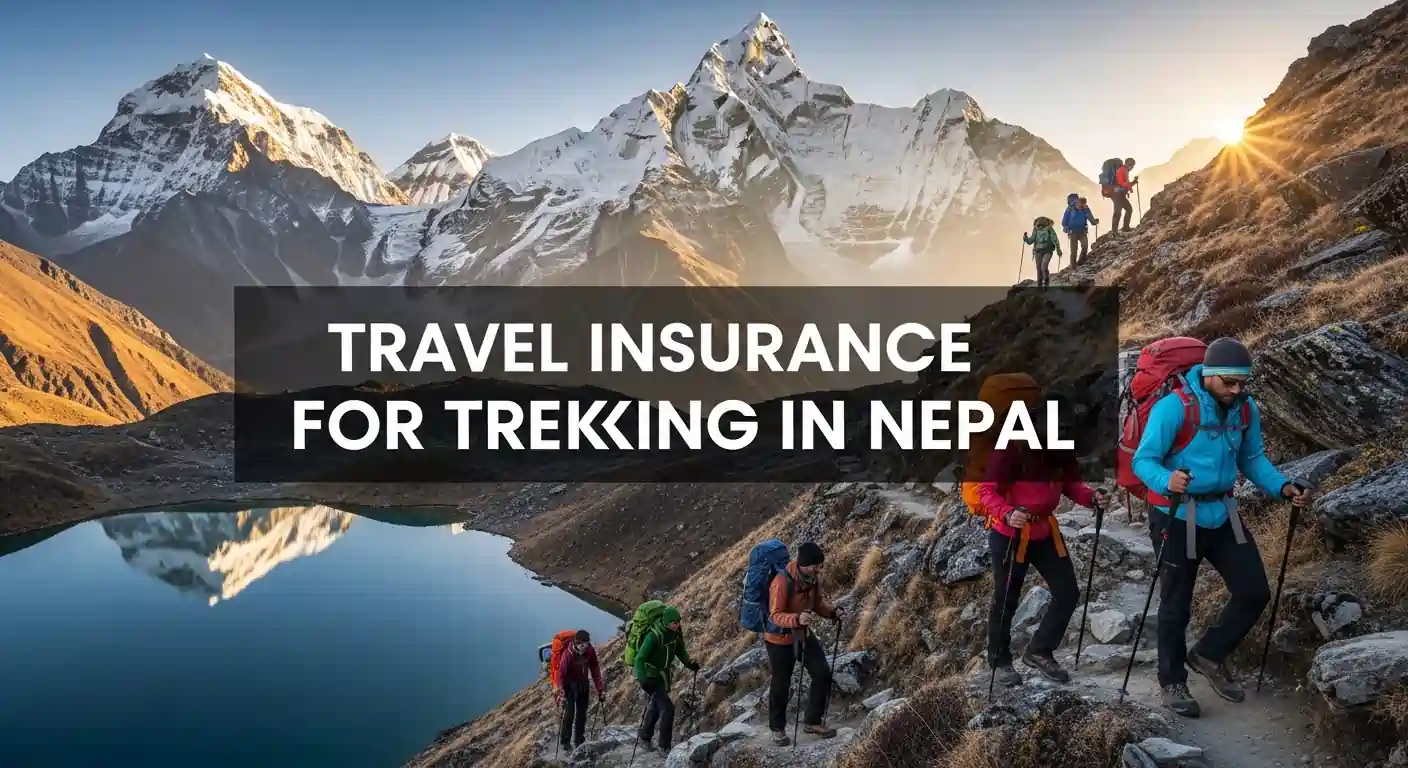
You’re three days into the Everest Base Camp trek when your trekking partner starts showing signs of altitude sickness, confusion, a persistent headache, and stumbling on flat ground. The guide calls for an emergency helicopter evacuation. Within hours, you learn the rescue flight costs $8,000, and the hospital in Kathmandu wants payment upfront before treatment begins.
In this blog on travel insurance for trekking in Nepal, we’ll walk you through everything you need to know about protecting yourself in the Himalayas. You’ll discover exactly what coverage levels your specific trek requires, which insurance providers actually honor their commitments when emergencies happen, and the critical policy details that determine whether you’re genuinely protected or just carrying expensive paperwork. By the end, you’ll know how to choose the right policy that matches your trek’s altitude, covers helicopter evacuations, and provides real peace of mind on the trail.
Start Your Nepal Expedition Today
Is Travel Insurance Required for Trekking in Nepal?
Travel insurance for trekking in Nepal is not legally required, but it’s practically essential for anyone heading into the Himalayas. The ideal policy covers high-altitude medical treatment up to 6,000 meters, helicopter emergency evacuation, and trip cancellation. Costs typically range from $50 to $150 for a two to three week trek, depending on your route’s elevation and your age.
Top providers like World Nomads, Global Rescue, and IMG Global specialize in adventure coverage that standard travel policies simply don’t offer. While trekking permits like the TIMS (Trekkers’ Information Management System) card don’t ask for proof of insurance, most reputable trekking operators will either strongly recommend or require comprehensive coverage before departure.
Here’s the reality on the ground: rescue helicopters and hospitals in Nepal expect upfront payment or immediate insurance verification before providing services. Without valid coverage, you could face bills exceeding $10,000 for a single evacuation flight, and that’s before hospital costs even begin.
Why Standard Travel Insurance Falls Short For Nepal Treks?
Standard travel insurance falls short for Nepal treks because it’s designed for typical tourist activities, not high-altitude mountain expeditions. Most basic policies cap medical coverage at 2,500-3,000 meters, far below the elevations you’ll reach on popular treks like Everest Base Camp (5,364m) or Annapurna Circuit (5,416m). These policies also typically exclude helicopter evacuations, restrict multi-day trekking activities, and don’t provide coverage in remote areas far from road access, exactly where Nepal’s best trekking routes are located.
1. Altitude limits on standard policies
Most standard travel insurance caps medical coverage at 2,500 to 3,000 meters elevation. The problem is obvious: the Everest Base Camp trek reaches 5,364 meters, and the Annapurna Circuit crosses Thorong La Pass at 5,416 meters.
If you experience a medical emergency above your policy’s stated altitude limit, your entire coverage becomes void. You’re personally responsible for all costs, helicopter, hospital, everything.
2. Helicopter evacuation exclusions
Standard policies often exclude or severely limit helicopter rescue coverage. In Nepal’s rugged terrain, a helicopter is frequently the only viable evacuation option, especially for severe altitude sickness conditions like High Altitude Pulmonary Edema (HAPE) or High Altitude Cerebral Edema (HACE). HAPE causes fluid buildup in the lungs, while HACE causes brain swelling, both can become life-threatening within hours, making rapid descent by foot impossible.
3. Adventure activity restrictions
Insurance companies distinguish between “hiking” and “trekking” in their policy language. Many standard policies cover single-day hiking but specifically exclude multi-day trekking with guides and porters.
If your itinerary involves technical climbing with ropes and crampons, like Island Peak or Mera Peak, you’ll want separate mountaineering coverage entirely. The distinction matters when you’re filing a claim.
4. Remote location coverage gaps
Standard policies may not provide coverage in areas far from road access or established medical facilities. Unfortunately, that describes most of Nepal’s prime trekking regions, from the Khumbu Valley to the Annapurna Sanctuary. A policy that works fine in Kathmandu might offer zero protection once you’re three days’ walk from the nearest road.
Altitude Coverage Requirements For Popular Nepal Treks
Matching your insurance coverage to your specific trek’s maximum elevation is one of the most important decisions you’ll make during trip planning. Each Nepal trek reaches a different high point, and your policy must cover that altitude, plus a safety buffer. If you’re heading to Everest Base Camp at 5,364 meters, you’ll need at least 6,000-meter coverage, while lower routes like Langtang Valley may only require 5,000 meters. Getting this match right ensures your coverage remains valid when you need it most, at altitude.
| Trek | Maximum Altitude |
| Everest Base Camp | 5,364m |
| Annapurna Circuit (Thorong La) | 5,416m |
| Annapurna Base Camp | 4,130m |
| Langtang Valley | 3,870m |
| Manaslu Circuit (Larkya La) | 5,160m |
| Mardi Himal | 4,500m |
1. Everest Base Camp and Khumbu region treks
For the classic EBC trek, you’ll want a policy with minimum 6,000-meter coverage. This provides a buffer above the 5,364-meter high point at Base Camp and covers Kala Patthar viewpoint at 5,644 meters, the actual highest point on most Everest region itineraries. The same coverage applies to other Khumbu treks like the Three Passes route or Gokyo Lakes. Without this altitude threshold, your policy becomes void at the exact elevations where emergencies most commonly occur, leaving you personally responsible for all rescue and medical costs in one of the world’s most remote trekking regions.
2. Annapurna Circuit and Annapurna Base Camp
These two treks have very different altitude requirements, even though they share a name. The Annapurna Circuit crosses Thorong La Pass at 5,416 meters, requiring 6,000-meter coverage, while the Annapurna Base Camp trek only reaches 4,130 meters, so a policy with 5,000-meter coverage could work. A good rule of thumb: purchase coverage with at least a 500-meter buffer above your planned maximum altitude. This buffer accounts for side trips, viewpoints, or acclimatization hikes that might take you higher than your main trail’s official maximum elevation.
3. Langtang Valley and Manaslu Circuit
Langtang Valley offers a lower-altitude alternative, reaching 3,870 meters at Kyanjin Ri, making it accessible with 5,000-meter coverage. The Manaslu Circuit, though, crosses Larkya La Pass at 5,160 meters, placing it firmly in the high-altitude category requiring 6,000-meter coverage. Don’t let the “less famous” label fool you, Manaslu’s remoteness and limited rescue infrastructure actually make comprehensive insurance even more critical than on busier routes. The distance from medical facilities means evacuation costs can be higher despite the trek’s lower profile.
4. Peak climbing and expedition coverage
If your itinerary includes climbing peaks like Island Peak (6,189m) or Mera Peak (6,476m), you’ll want specialized mountaineering insurance, a different product category than trekking coverage. Any activity involving ropes, crampons, or fixed lines typically requires explicit “technical climbing” coverage in your policy. Standard trekking insurance excludes these activities entirely, meaning even a simple glacier crossing with crampons could void your coverage. Contact your provider before booking any peak climbing extension to confirm you have the right protection, as adding mountaineering coverage mid-trip is often impossible or prohibitively expensive.
Ready to Explore the Himalayas?
From iconic treks and peak climbing adventures to challenging Himalayan expeditions, our experienced team is here to help you plan an unforgettable journey in Nepal.
How Helicopter Rescue Insurance Works In Nepal?
Helicopter rescue insurance in Nepal covers emergency evacuations from remote trekking areas, typically costing $3,000-$10,000 without coverage. Your guide coordinates with your insurance provider to obtain authorization before dispatch, while you need minimum $100,000 in evacuation coverage that explicitly includes helicopter rescue. The process involves your trekking agency contacting your insurer for a Guarantee of Payment, then arranging the flight once approved.
1. Why are helicopter evacuations common in Nepal?
Altitude sickness can escalate rapidly, and descending by foot isn’t always possible or fast enough. Due to Nepal’s rugged terrain, deep valleys, high passes, and limited road access, helicopters are the standard emergency response for serious medical issues, not a luxury option.
HAPE and HACE can become life-threatening within hours, making rapid evacuation essential when symptoms appear.
2. Helicopter rescue costs without insurance
Without insurance, a helicopter evacuation flight typically costs $3,000 to $10,000 or more, depending on your location, weather conditions, and aircraft type required. Hospitals in Kathmandu will require full payment or an insurance guarantee before admitting you for treatment.
When you factor in hospitalization and potential medical repatriation, costs can quickly exceed $20,000.
3. Minimum evacuation coverage to carry
A policy with at least $100,000 in emergency medical and evacuation coverage provides adequate protection for most Nepal treks. The policy language matters here: look for explicit mention of “helicopter evacuation” or “emergency air ambulance,” not just generic “medical transport.”
Also check that the evacuation coverage limit is separate from, not deducted from, your overall medical coverage limit.
4. How rescue coordination works on the trail?
In an emergency, your guide contacts their trekking agency in Kathmandu. The agency then contacts your insurance provider to obtain authorization, called a Guarantee of Payment (GOP), for the rescue. Once approved, the helicopter is dispatched.
This is why carrying your policy number and emergency contact details at all times is critical. Reputable operators like Marvel Treks maintain direct communication channels with rescue services to streamline this process when minutes matter.
Tip: Save your insurance policy number, emergency contact number, and a PDF of your coverage summary on your phone. Also carry a paper copy in your daypack, and share the details with your guide before starting your trek.
Best Travel Insurance Providers For Nepal Trekking
Choosing the right insurance provider makes the difference between genuine protection and worthless paperwork when emergencies happen at altitude. The providers below specialize in high-altitude adventure coverage and have proven track records in Nepal. Here’s how the major options compare based on altitude limits, evacuation coverage, and unique features that matter on the trail:
| Provider | Max Altitude | Helicopter Evacuation | Notable Features |
| World Nomads | 6,000m+ | Yes | Buy/extend while traveling |
| Global Rescue | Unlimited | Yes | Specialized SAR membership |
| IMG Global | 6,000m+ | Yes | High medical limits |
| Battleface | 6,000m+ | Yes | Customizable add-ons |
| SafetyWing | 4,500m | Limited | Budget option only |
1. World Nomads
World Nomads is popular among adventure travelers for good reason. Their Explorer plan provides altitude coverage up to 6,000 meters and covers over 200 adventure activities, making it suitable for most Nepal treks. A key advantage is that you can purchase or extend a policy while already traveling, which offers flexibility if your plans change mid-trip. The platform is user-friendly and claims processing is straightforward. World Nomads works well for trekkers who want comprehensive coverage without complicated paperwork or restrictions on when they can buy their policy.
2. Global Rescue
Global Rescue operates differently because it’s a membership-based service specializing in field search, rescue, and evacuation rather than traditional insurance. Their focus is purely on getting you out of dangerous situations and to proper medical care, not on covering medical bills afterward. Many serious trekkers pair a Global Rescue membership with a separate medical insurance policy for comprehensive protection. This combination ensures both evacuation expertise and medical expense coverage. Global Rescue maintains its own operations team and doesn’t rely on third-party contractors, which can mean faster response times in remote areas.
3. IMG Global
IMG Global offers strong medical coverage with high evacuation limits, making it a solid option for longer trips or trekkers wanting higher medical coverage caps. Their plans cover high-altitude trekking when specified in the policy, and they provide clear documentation of what’s included. The company has experience handling claims from Nepal and understands the specific challenges of Himalayan trekking. IMG Global works particularly well if you’re planning an extended stay in Nepal or combining your trek with travel to other countries in the region.
4. Battleface
Battleface offers customizable policies allowing you to add specific adventure activities, ensuring precise coverage for your trek without paying for protection you don’t need. This works well if you’re combining trekking with other adventure sports like paragliding or white-water rafting in Nepal. You can adjust coverage levels for different activities and choose exactly what protection makes sense for your itinerary. The flexibility means you’re not locked into a one-size-fits-all package. Battleface is ideal for trekkers who want control over their coverage details and prefer tailored policies.
5. SafetyWing
SafetyWing provides a budget-friendly option, but with important limitations you need to understand before purchasing. Coverage typically caps at 4,500 meters, making it suitable for lower-altitude treks like Langtang Valley or Annapurna Base Camp but inadequate for EBC or high-pass routes. The monthly subscription model works well for digital nomads or long-term travelers, but the altitude restriction is a deal-breaker for many Nepal treks. If your entire itinerary stays below 4,500 meters, SafetyWing offers good value. For higher-altitude routes, you’ll need to look at other providers with proper elevation coverage.
How Much Nepal Trekking Insurance Costs?
Nepal trekking insurance typically costs $50 to $150 for a two to three week trek with proper high-altitude coverage. The exact price depends on your specific trip details and the level of protection you choose. Several factors influence your premium:
- Trip duration: Longer trips cost more
- Altitude coverage level: Higher limits increase premiums
- Evacuation coverage amount: Higher caps mean higher costs
- Age: Older trekkers typically pay more
- Home country: Rates vary by nationality
For a typical two to three week trek, expect to pay between $50 and $150 for adequate high-altitude coverage. The cheapest option isn’t always appropriate, spending slightly more on proper coverage is far cheaper than paying for a helicopter rescue out of pocket.
Essential Coverage Your Nepal Trek Insurance Policy Includes
Your Nepal trekking insurance policy needs to include specific coverage elements to protect you in the Himalayas. Before purchasing any policy, carefully verify it contains the essential protections listed below. These core components ensure you have genuine coverage when emergencies happen at altitude, not just expensive paperwork that fails when you need it most.
1. High altitude medical coverage
Your policy needs a minimum $100,000 in medical coverage that explicitly covers treatment for altitude-related illnesses including AMS (Acute Mountain Sickness), HAPE, and HACE. Confirm this coverage applies at your trek’s maximum elevation, not just at sea level. The policy should clearly state that high-altitude conditions are covered by medical emergencies. Without this specific language, you risk having claims denied when altitude sickness strikes above base elevations.
2. Emergency helicopter evacuation
This is non-negotiable for Nepal trekking. The policy language matters: look for explicit mention of “helicopter evacuation” or “emergency air ambulance” in your coverage documents. Check that the evacuation coverage limit is separate from your overall medical coverage limit, ensuring you have adequate funds for both rescue and treatment. Many policies bundle these together, which can leave you short on coverage when you need expensive helicopter transport plus hospital care.
3. Trip cancellation and interruption
This covers non-refundable costs like flights and permits if you’re forced to cancel before departure or end your trek early. Review the list of covered reasons, which typically includes illness, family emergencies, or natural disasters that prevent you from completing your planned itinerary. The coverage should reimburse prepaid expenses that you cannot recover from airlines, hotels, or trekking operators. Make sure you understand what qualifies as a valid cancellation reason under your specific policy terms.
4. Gear and baggage protection
This covers lost, stolen, or damaged equipment, which is useful given the value of quality trekking gear you’ll be carrying into remote areas. Note that expensive items like cameras and electronics often have per-item limits, so check the fine print before assuming full coverage for high-value gear. Some policies require you to list expensive items separately or purchase additional coverage for electronics. Keep receipts for your gear as proof of value when filing claims for lost or damaged equipment.
5. 24/7 emergency assistance line
Verify your insurer provides a 24-hour emergency line that works internationally and can be reached from Nepal. You may be calling from a satellite phone with limited connectivity, so save the number in multiple places before your trek begins. Test the number before departure to confirm it connects properly from your phone. The emergency line should have staff who understand trekking emergencies and can coordinate with local rescue services in Nepal when time-sensitive situations arise.
What Nepal Trekking Insurance Does Not Cover?
Nepal trekking insurance typically excludes coverage above your policy’s altitude limit, technical climbing without mountaineering endorsement, and pre-existing medical conditions. These exclusions can void your entire claim if you’re not aware of them before departure. Understanding what’s not covered prevents costly surprises when filing claims:
- Trekking above your policy’s altitude limit: Coverage becomes void if you exceed the stated maximum
- Technical climbing without mountaineering coverage: Rope work, crampons, or fixed lines require separate endorsement
- Pre-existing medical conditions: Usually excluded unless declared and approved with additional premium
- Trekking against government advisories: Coverage may be void if your country advises against Nepal travel
- Alcohol or drug-related incidents: Standard exclusion across all policies
- Rescue for non-medical reasons: Getting lost without a medical emergency may not be covered
Mistakes to avoid when buying trek insurance for Nepal
Buying the wrong insurance is one of the easiest mistakes to make when planning a Nepal trek, and it’s also one of the most expensive to fix after the fact. These common errors catch trekkers off guard every season, often only becoming apparent when filing a claim from a hospital bed in Kathmandu. Understanding these pitfalls before purchasing your policy ensures you’re genuinely protected, not just carrying paperwork that fails when you need it most.
1. Assuming standard travel insurance covers trekking
“Travel insurance” and “trekking insurance” are different products. Standard travel policies typically exclude multi-day trekking activities and high-altitude coverage. Always verify your policy explicitly covers high-altitude trekking, and don’t assume it does based on the name alone. Read the activity list carefully to confirm trekking is included, not excluded, in your coverage.
2. Ignoring altitude limits in the policy
This is the most common and costly mistake trekkers make when purchasing insurance. Going even a few meters over your policy’s stated altitude limit can void coverage entirely, leaving you personally responsible for all rescue and medical costs. Always check the fine print for “maximum altitude covered” and ensure it exceeds your trek’s highest point. Add a 500-meter buffer above your planned maximum elevation to account for side trips and viewpoints.
3. Underestimating evacuation coverage amounts
A single helicopter flight from remote trekking areas can cost $3,000 to $10,000 or more depending on location and weather conditions. Many trekkers purchase policies with inadequate evacuation limits, only discovering the shortfall when facing an emergency. Ensure your evacuation limit is high enough, at least $100,000, and verify it is separate from, not part of, your medical coverage limit. This separation ensures you have adequate funds for both expensive helicopter transport and subsequent hospital treatment.
4. Forgetting to disclose pre-existing conditions
Failing to declare known conditions like asthma, heart issues, or diabetes can void your entire policy when you file a claim, even if the condition is unrelated to your emergency. Insurance companies review medical history during claims processing, not just at purchase. Honesty on your application protects you later, and many insurers will cover pre-existing conditions if you declare them upfront and pay the additional premium. Hiding medical history to save money on premiums can cost you everything when you need coverage most.
5. Not carrying policy documents on the trek
You’ll need your policy number, the insurer’s emergency phone number, and a coverage summary accessible on the trail when emergencies happen. Rescue coordination requires immediate insurance verification, and delays can complicate evacuations in time-sensitive situations. Save a digital copy on your phone and carry a paper backup in your daypack in case your phone fails or loses battery. Your guide also benefits from having your insurance details before the trek begins, allowing faster coordination with rescue services if needed.
How To Choose Travel Insurance For Your Nepal Trek?
Selecting the right policy requires matching your trek’s altitude to coverage limits, verifying evacuation amounts, and comparing providers. Start by identifying your trek’s maximum elevation, then ensure your policy covers that altitude plus a safety buffer. Compare at least two to three providers, read exclusions carefully, and purchase before departing for Nepal.
1. Confirm your trek’s maximum altitude
Research the highest point of your specific itinerary and add a 500-meter buffer to determine the minimum coverage limit you need. This buffer accounts for side trips, viewpoints, or acclimatization hikes that might take you higher than your main trail’s official maximum elevation. For example, if you’re trekking to Everest Base Camp at 5,364 meters, you’ll want coverage that extends to at least 6,000 meters to ensure you’re protected throughout your entire journey.
2. Calculate your required evacuation coverage
Factor in potential helicopter costs, hospital stays, and medical repatriation when determining your evacuation coverage amount. A minimum of $100,000 is the standard recommendation for Nepal, as a single helicopter flight can cost $3,000 to $10,000 depending on your location and weather conditions. Make sure this evacuation limit is separate from your medical coverage limit, ensuring you have adequate funds for both expensive helicopter transport and subsequent hospital treatment.
3. Compare providers for your altitude and duration
Use the provider comparison table above as a starting point, then get quotes from two to three different providers to find the best fit for your specific trek. Check what’s included in the base price versus what requires an add-on, as some providers bundle helicopter evacuation while others charge extra. Pay attention to how each provider handles altitude limits, emergency assistance, and claims processing, as these details can make a significant difference when you actually need to use your coverage.
4. Read the fine print on exclusions
Look specifically for clauses related to altitude caps, activity definitions (trekking vs. hiking vs. climbing), and pre-existing conditions before finalizing your purchase. These exclusions determine whether your coverage remains valid when emergencies happen, so understanding them upfront prevents costly surprises later. If anything is unclear in the policy language, call the provider directly for clarification before purchasing, as assumptions about coverage can leave you unprotected when you need help most.
5. Purchase and download your policy documents
Buy your insurance before departing for Nepal, not after arriving. Download PDF copies of your full policy and share your insurance details with your trekking operator and an emergency contact back home.
Plan your Nepal trek with confidence
Proper insurance is a key part of trek preparation, but it’s not the only one. Choosing a reputable operator with strong safety protocols and experienced guides further reduces your risk on the mountain. Best expedition and trekking company in Nepal includes first aid support on all treks and maintains direct communication channels with rescue services, ensuring that if an emergency occurs, the response is immediate and coordinated.
FAQs about travel insurance for Nepal trekking
Can I buy travel insurance after arriving in Nepal?
Some providers like World Nomads allow you to purchase a policy while already traveling, but your options will be limited and premiums may be higher. Arranging insurance before departure is typically the better approach.
Does travel insurance cover altitude sickness in Nepal?
Yes, provided your policy explicitly covers high-altitude trekking and you’re within your stated altitude limit. Altitude sickness conditions (AMS, HAPE, HACE) are treated as medical emergencies under qualifying policies.
What documents do I carry for insurance claims on a trek?
Carry your policy number, your insurer’s 24-hour emergency contact number, a printed summary of your policy, and collect any medical reports or receipts on the trail for later claims.
Do I need different insurance for peak climbing versus trekking?
Yes. Peak climbing involving technical gear like ropes, crampons, or harnesses typically requires specialized mountaineering insurance, a separate and more expensive category than standard trekking coverage.
Why is Nepal trekking insurance more expensive than regular travel insurance?
The higher cost reflects increased risk for insurers: high-altitude medical emergencies, expensive helicopter evacuations, and remote locations with limited medical facilities all contribute to higher premiums.
How do trekking operators coordinate with insurance during emergencies?
Reputable operators maintain direct contact with rescue services. In an emergency, they initiate the evacuation request on your behalf, contact your insurer for authorization, and manage ground logistics while you focus on getting to safety.

Ready for your next Himalayan adventure?
Plan Your Next Big Adventure with Us
Explore Our AdventuresJoin our expert-guided journeys across Nepal and beyond, from classic trails to epic summits.