
Which Trekking Region in Nepal is Right for You?
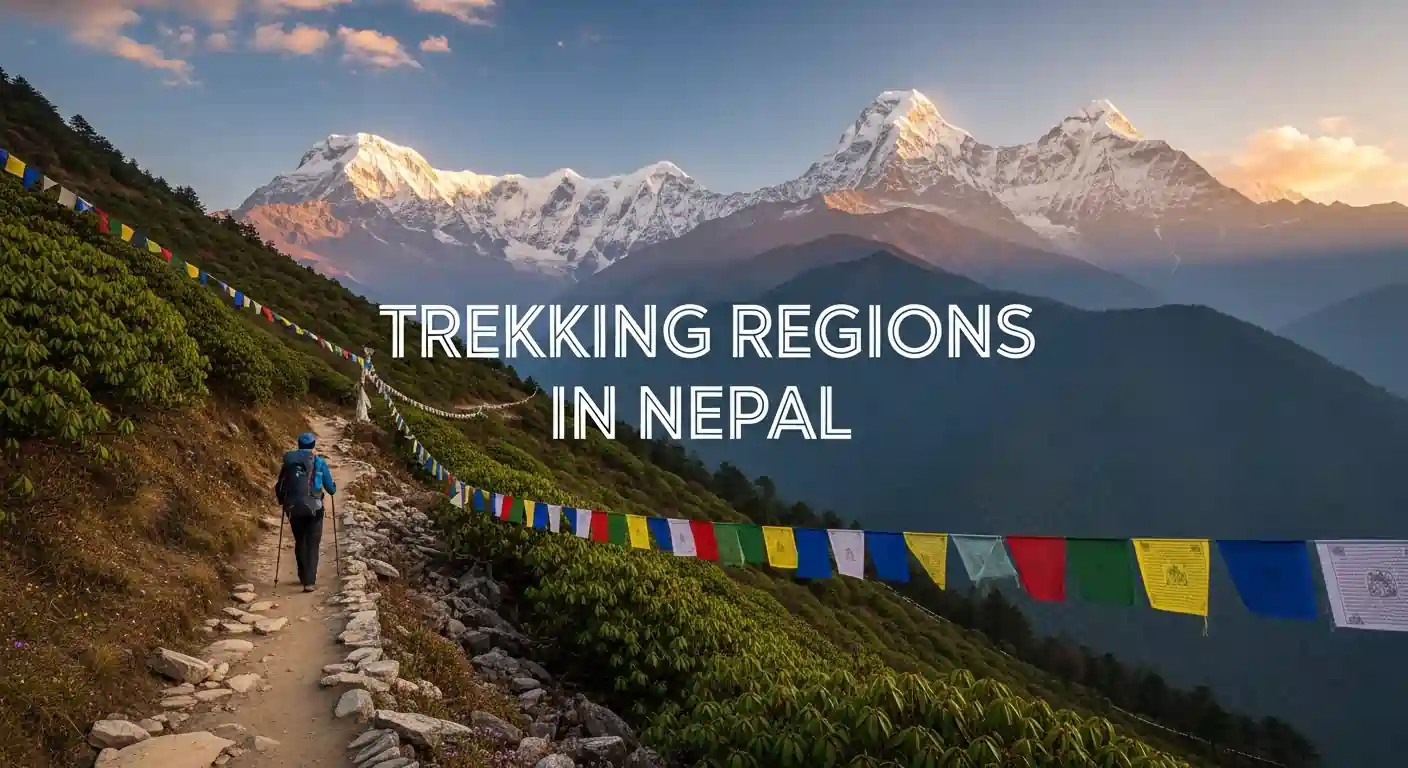
You’ve decided to trek in Nepal, but now you’re staring at a map with five major regions, dozens of routes, and no clear way to compare them. Everest has the name recognition, Annapurna has the variety, Langtang is closer to Kathmandu, and Manaslu promises wilderness, but which one actually fits your fitness level, timeline, and what you want from the experience?
In this blog about best trekking regions in Nepal, we’ll walk you through each major area so you can make an informed choice. We’ll compare scenery, difficulty levels, trek duration, crowd density, and permit requirements across all five regions. By the end, you’ll know exactly which trail matches your priorities and capabilities.
What Are Nepal’s Major Trekking Regions?
Nepal’s five major trekking regions are Everest, Annapurna, Langtang, Manaslu, and remote areas like Upper Mustang and Dolpo, each offering distinct landscapes, cultural experiences, and difficulty levels, making them perfect for adventure trekking in Nepal. The Everest region delivers the world’s highest peaks and deep Sherpa culture. Annapurna provides the widest variety of landscapes from subtropical forests to high-altitude deserts, along with Nepal’s most developed trail network. Langtang sits closest to Kathmandu, making it ideal for shorter trips without flight logistics. Manaslu offers wilderness solitude in a restricted area that feels untouched by mass tourism. And remote destinations like Upper Mustang and Dolpo preserve ancient Tibetan Buddhist culture in otherworldly high-altitude desert landscapes that few travelers ever witness.
So which one fits you? That depends on how much time you have, how fit you are, whether you want crowds or solitude, and what kind of scenery moves you. A first-time Himalayan trekker often starts with Annapurna or Everest because the infrastructure is solid and the names are familiar. Meanwhile, experienced trekkers looking for something wilder tend to explore Manaslu or the far western regions where you might go hours without seeing another group.
- Everest Region: Home to the world’s highest peak, Sherpa villages, and Nepal’s most famous teahouse trail
- Annapurna Region: Nepal’s most visited area, ranging from subtropical forests to high desert passes
- Langtang Valley: The closest major trekking region to Kathmandu, known for alpine meadows and Tamang Buddhist culture
- Manaslu Circuit: A restricted-area wilderness trek circling Nepal’s eighth-highest mountain
- Remote Regions: Upper Mustang, Dolpo, and Kanchenjunga offer permit-restricted access to ancient cultures and true expedition-style remoteness
Everest Region for Bucket-List Mountain Views
The Everest region is exactly what you picture when you think of Himalayan trekking. You walk through Sagarmatha National Park, a UNESCO World Heritage Site, passing legendary Sherpa villages like Namche Bazaar and Tengboche before reaching Everest Base Camp at 5,364 meters on the Everest Base Camp Trek. The trail is well-worn, the teahouses are comfortable, and the views are the stuff of documentaries.
1. Iconic Peaks and Sherpa Culture
From the trail, you’ll see Everest (8,849m), Lhotse (8,516m), Nuptse (7,861m), and the striking pyramid of Ama Dablam (6,812m). The Sherpa people who live here have supported Himalayan mountaineering for over a century, and their monasteries, prayer flags, and hospitality define the cultural texture of the trek.
Tengboche Monastery sits at 3,867 meters with Everest framed behind it. It’s one of the most photographed scenes in the Himalayas, and standing there in person hits differently than any photo.
2. Trail Difficulty and Trek Duration
The classic Everest Base Camp trek takes 10–14 days round-trip from Lukla. You’ll hike 5–7 hours daily over well-maintained but steep terrain, starting at Lukla (2,860m) and reaching Kala Patthar (5,644m) for sunrise views. The challenge comes from altitude rather than technical difficulty, and proper acclimatization days are built into every responsible itinerary.
3. Who Chooses the Everest Region
This region suits bucket-list seekers, history enthusiasts fascinated by mountaineering legends, and trekkers who want world-class teahouse facilities with reliable Wi-Fi and hot showers at most stops. However, expect significant trail traffic during October–November peak season.
Annapurna Region for Diverse Scenery and Culture
The Annapurna region offers Nepal’s greatest variety of landscapes within a single trekking area. You move from rice paddies and rhododendron forests to high-altitude deserts and glacial moraines. Accessible by road from Pokhara (a scenic 25-minute flight or 6-hour drive from Kathmandu), this region provides more flexibility in trek length than any other, especially for routes like the Annapurna Base Camp Trek.
1. Mountain Panoramas and Ethnic Diversity
You’ll see the Annapurna massif (Annapurna I at 8,091m is the world’s tenth-highest peak), the sacred Machapuchare (Fishtail, 6,993m), and distant views of Dhaulagiri (8,167m). Culturally, the trails pass through Gurung, Thakali, and Manangi villages, each with distinct architecture, cuisine, and traditions. This ethnic diversity creates a rich cultural tapestry that changes as you move through different valleys and elevations.
2. Trail Difficulty and Trek Duration
Trek options range from the 7 to 10 day Annapurna Base Camp trek (reaching 4,130m) to the 15 to 21 day Annapurna Circuit crossing Thorong La Pass at 5,416 meters. Infrastructure is excellent throughout, with teahouses offering private rooms, varied menus, and charging facilities. The trails are well-maintained and clearly marked, making navigation straightforward even for first-time Himalayan trekkers.
3. Who Chooses the Annapurna Region
First-time Himalayan trekkers often start here because of the well-developed trails, easy access from Pokhara, and flexibility to choose shorter or longer routes like the Annapurna Sanctuary Trek. Culture enthusiasts appreciate the ethnic diversity and the opportunity to experience multiple distinct communities in a single trek. Those wanting reliable facilities without the Everest crowds find Annapurna an excellent balance between adventure and comfort.
Langtang Valley for Short Treks Near Kathmandu
Langtang is the most accessible of Nepal’s major trekking regions, located just a 7 to 8 hour drive from Kathmandu with no flights required. This proximity makes it perfect for trekkers with limited time who want a genuine Himalayan experience without complex logistics. You also avoid the unpredictable Lukla flight schedule that can delay Everest treks by days during bad weather, especially on the Langtang Valley Trek.
1. Alpine Scenery and Tamang Heritage
The valley delivers classic Himalayan scenery: Langtang Lirung (7,227m) dominates the skyline, alpine meadows stretch across high pastures, and glaciers feed rushing rivers below. The Tamang people, ethnically and culturally Tibetan, maintain Buddhist monasteries and a cheese-making tradition introduced by Swiss development projects decades ago.
The region has rebuilt remarkably since the devastating 2015 earthquake, and trekking here directly supports communities still recovering.
2. Trail Difficulty and Trek Duration
A standard Langtang Valley trek takes 7–10 days, reaching Kyanjin Gompa at 3,870 meters with optional day hikes to Tserko Ri (4,984m) for panoramic views. The trail is moderate with steady uphill but without extreme altitude or technical sections. Daily hiking averages 5–6 hours through rhododendron forests and yak pastures, with gradual elevation gain that allows natural acclimatization. You can extend the trek by crossing into the Gosainkunda sacred lakes or connecting to Helambu, adding another 3–5 days to your itinerary.
3. Who Chooses the Langtang Region
Time-limited travelers, those seeking fewer crowds, and trekkers who want to directly support earthquake recovery communities find Langtang ideal. It’s also excellent for a first Himalayan experience without the logistical complexity of flying to remote airstrips. Trekkers who prefer road access over unpredictable mountain flights appreciate the reliability, while those wanting authentic cultural interaction without overwhelming tourist infrastructure value the valley’s quieter trails and genuine village hospitality.
Manaslu Circuit for Remote Wilderness Trekking
The Manaslu Circuit delivers the raw wilderness experience that drew adventurers to the Annapurna Circuit decades ago, before roads reached the valleys and teahouse traffic multiplied. Circling the world’s eighth-highest peak through dramatic gorges and high passes, this restricted area requires a special permit (currently $100 per week in peak season) and mandatory booking through a licensed trekking agency with a registered guide. You cannot trek Manaslu independently, the permit system ensures controlled access that preserves the region’s remote character while supporting local communities through regulated tourism.
1. Wild Landscapes and Tibetan Villages
The trail follows the dramatic Budhi Gandaki gorge, climbing through subtropical forests into high-altitude terrain beneath Manaslu (8,163m), the world’s eighth-highest peak. Villages like Samagaon and Samdo preserve Tibetan Buddhist culture, with ancient monasteries and mani walls lining the path. The sense of remoteness here is genuine. You will encounter traditional stone houses, prayer wheels, and locals practicing centuries-old customs that remain largely unchanged by modern tourism.
2. Trail Difficulty and Trek Duration
The full circuit takes 14 to 18 days, crossing Larkya La Pass at 5,160 meters. Terrain is more challenging than Everest or Annapurna, with river crossings on suspension bridges, steep rocky sections, and less-developed teahouse facilities. Good fitness and previous trekking experience are important here. Daily hiking ranges from 6 to 8 hours through varied terrain that demands both physical endurance and mental preparation for basic mountain conditions.
3. Who Chooses the Manaslu Region
Experienced trekkers seeking adventure off the beaten path, those comfortable with basic accommodation, and travelers who value wilderness over convenience gravitate toward Manaslu. The permit requirement and mandatory guide ensure smaller group sizes, creating a more intimate trekking experience. This region appeals to adventurers who have already completed popular routes and now want to explore Nepal’s wilder, less-commercialized trails where authentic mountain culture still thrives.
Tip: Because Manaslu is a restricted area, you cannot trek here independently. Working with a licensed operator like Marvel Treks ensures your permits are processed correctly and you have experienced local guides who know the terrain.
Upper Mustang and Other Remote Himalayan Regions
Beyond the four main trekking regions, Nepal offers restricted and lesser-known destinations for adventurous travelers seeking true remoteness and unique cultural experiences. These areas require special permits, longer timeframes, and higher budgets, but they reward you with landscapes and cultures that few outsiders ever witness, especially on the Upper Mustang Trek. If you’ve already completed the classic treks and want to push deeper into Nepal’s hidden corners, these remote regions deliver expedition-style adventure and cultural immersion that feels like stepping back in time.
1. Upper Mustang and the Forbidden Kingdom
Upper Mustang was closed to foreigners until 1992 and remains one of the best-preserved Tibetan Buddhist cultures on Earth. The landscape is unlike anywhere else in Nepal, featuring a high-altitude desert in the rain shadow of the Annapurna and Dhaulagiri ranges, with eroded cliffs, cave monasteries, and the walled city of Lo Manthang. The restricted area permit costs $500 for 10 days, and you must trek with a licensed guide and agency. This region appeals to culture enthusiasts and photographers drawn to otherworldly desert landscapes painted in shades of ochre and rust, where ancient traditions survive largely unchanged by the modern world.
2. Dolpo and Western Nepal
Dolpo, made famous by Peter Matthiessen’s book The Snow Leopard, offers Nepal’s most remote trekking experience. Shey Phoksundo Lake, with its impossibly blue waters, anchors treks through a region where Bon Buddhist traditions predate Tibetan Buddhism. Reaching Dolpo requires significant time (3+ weeks), a substantial budget, and expedition-style preparation with camping and pack animals since teahouse infrastructure is minimal. The region sees fewer than 1,000 trekkers annually, making it ideal for adventurers seeking true wilderness solitude and the chance to experience Nepal as it existed decades ago before tourism development reached the main trekking corridors.
3. Kanchenjunga and Eastern Nepal
The trek to Kanchenjunga Base Camp approaches the world’s third-highest peak (8,586m) through pristine forests and villages that see perhaps 200 trekkers per year. This is a 20+ day commitment through extremely remote terrain with limited teahouse options, requiring careful planning and self-sufficiency. The region offers two base camps (north and south) with spectacular views of Kanchenjunga’s massive wall, and the trails pass through diverse ecosystems ranging from subtropical jungles to high-altitude glacial zones. Trekkers here should be experienced, physically fit, and comfortable with basic facilities and long days on challenging trails far from any rescue infrastructure.
Nepal Trekking Regions Comparison Table
| Region | Best For | Typical Duration | Max Altitude | Difficulty | Crowd Level | Permit Type |
| Everest | Bucket-list views, Sherpa culture | 10–14 days | 5,644m (Kala Patthar) | Challenging | High (peak season) | Standard (TIMS + National Park) |
| Annapurna | Variety, flexibility, first-timers | 7–21 days | 5,416m (Thorong La) | Moderate to Challenging | Moderate to High | Standard (TIMS + Conservation Area) |
| Langtang | Short trips, Kathmandu access | 7–10 days | 4,984m (Tserko Ri) | Moderate | Low to Moderate | Standard (TIMS + National Park) |
| Manaslu | Remote wilderness, experienced trekkers | 14–18 days | 5,160m (Larkya La) | Challenging | Low | Restricted ($100/week + guide required) |
| Upper Mustang | Cultural immersion, unique landscape | 10–14 days | 3,840m (Lo Manthang) | Moderate | Low | Restricted ($500/10 days) |
How Do You Choose the Right Trekking Region?
Choose your trekking region by matching your available time, fitness level, budget, and preferred experience to what each area offers. If you have limited time and want easy access, pick Langtang. For iconic mountain views and established trails, choose Everest or Annapurna. If you seek wilderness and have trekking experience, go for Manaslu or remote regions. Your decision should balance practical constraints like trip duration and permit costs with personal preferences for crowd levels and cultural experiences.
1. Match Your Fitness Level to Trail Difficulty
Trail difficulty varies significantly across regions. Langtang and shorter Annapurna treks suit moderately fit trekkers who exercise regularly but haven’t done high-altitude hiking before. Everest Base Camp and the Annapurna Circuit demand better conditioning, with 5–7 hours of daily hiking and significant elevation gain. Manaslu and remote regions require previous trekking experience and comfort with challenging, less-maintained trails.
In Himalayan terms, “moderate” means 4–6 hours of hiking daily with 500–800 meters of elevation gain. “Strenuous” means 6–8 hours with steeper terrain and higher altitude.
2. Consider Your Available Time
Your available days often determine your region more than any other factor. Langtang fits a 10-day Nepal trip comfortably. Everest Base Camp and Annapurna Base Camp work within two weeks. The Annapurna Circuit and Manaslu require 18–21 days including travel. Remote regions like Dolpo or Kanchenjunga demand three weeks or more.
Don’t forget to factor in Kathmandu arrival/departure days and potential weather delays, especially if your route involves flights to mountain airstrips.
3. Decide Between Popular Trails and Remote Routes
The trade-off between well-serviced busy trails and quieter remote routes affects your daily experience significantly. On the Everest and Annapurna trails, you’ll meet trekkers from around the world, have menu choices at teahouses, and find charging stations and Wi-Fi. On Manaslu or in Dolpo, you might be the only group at a teahouse, facilities are basic, and you’ll carry more of your own supplies.
4. Factor in Altitude and Acclimatization Needs
Every major Nepal trekking region reaches altitudes where Acute Mountain Sickness (AMS) becomes a real concern, typically above 2,500 meters. Symptoms include headache, nausea, fatigue, and difficulty sleeping. More serious conditions like HAPE (High Altitude Pulmonary Edema) and HACE (High Altitude Cerebral Edema) can be life-threatening if ignored.
Regions with gradual altitude profiles, like Langtang and the Annapurna Base Camp trail, allow your body to adjust more naturally. Routes crossing high passes require careful acclimatization scheduling.
When to Trek in Each Region?
The best time to trek in Nepal is during autumn (October-November) and spring (March-May), though each region has unique seasonal considerations. Autumn offers the most stable weather and clearest mountain views across all regions, making it peak trekking season. Spring brings warmer temperatures and blooming rhododendrons but slightly hazier skies. Timing your trek correctly ensures you experience clear summit views rather than weeks of cloud cover that can obscure the mountains entirely.
1. Autumn Trekking Season in Nepal
October and November offer the most stable weather, clearest skies, and best mountain visibility across all regions. Temperatures are comfortable at lower elevations and cold but manageable at high altitude. This is peak season, so expect the highest trail traffic, especially on Everest and Annapurna routes.
2. Spring Trekking Season in Nepal
March through May brings warmer temperatures and spectacular rhododendron blooms in the middle hills. Views can be hazier than autumn due to atmospheric dust, but crowds are somewhat lighter.
3. Monsoon and Winter Trekking Considerations
The monsoon (June–September) brings heavy rain, leeches, and trail washouts to most regions. However, rain-shadow regions like Upper Mustang and Dolpo actually experience their driest weather during monsoon, making them viable summer destinations.
Winter (December–February) offers clear skies but bitter cold at altitude, with some high passes closed by snow.
What Are the Permit Requirements and Costs?
Nepal’s trekking permits fall into two categories: standard permits for open areas like Everest, Annapurna, and Langtang (costing $50–70 total), and restricted area permits for regions like Manaslu, Upper Mustang, and Dolpo (ranging from $100 to $500+ and requiring a licensed guide). Understanding this system helps you budget accurately and ensures you’re trekking legally. Standard permits include a TIMS card and national park entry, while restricted permits can only be obtained through registered trekking agencies and come with mandatory guide requirements that protect these sensitive cultural and environmental areas.
1. Standard Trekking Permits
Most trekkers need two documents: a TIMS card (Trekkers’ Information Management System, approximately $20) and a national park or conservation area entry permit ($30–50 depending on the region). These apply to Everest, Annapurna, and Langtang regions.
2. Restricted Area Permits
Manaslu, Upper Mustang, Dolpo, and Kanchenjunga require special restricted area permits that can only be obtained through a registered trekking agency. You cannot trek these regions independently.
- Manaslu: $100 per week (September–November), $75 per week (December–August)
- Upper Mustang: $500 for 10 days
- Dolpo: $500 for 10 days
3. Cost Comparison by Region
- Budget-friendly regions: Langtang and Annapurna offer the lowest overall costs due to standard permits and road access
- Mid-range regions: Everest adds expense through mandatory Lukla flights ($180–350 round-trip)
- Premium regions: Manaslu, Upper Mustang, and Dolpo carry significant permit fees plus higher logistics costs
Expert Tips for Planning Your Nepal Trek
Planning a successful Nepal trek requires more than just choosing a region. You need to consider logistics, acclimatization strategies, weather preparation, and cultural sensitivity. These practical tips will help you avoid common mistakes and ensure your trek is safe, enjoyable, and respectful to the communities you’ll visit along the trail.
1. Book With a Local Trekking Operator
Local operators are required for restricted areas, but they add value everywhere. They handle permits, arrange guides and porters, and provide ground knowledge that international agencies simply subcontract anyway. Your money stays in Nepal’s economy, and you get direct communication with the team managing your trek.
2. Allow Extra Days for Altitude Acclimatization
Rushing altitude causes problems in every region. Build rest days into your itinerary. The “climb high, sleep low” principle means taking day hikes above your sleeping elevation, then descending to rest.
3. Prepare for Variable Mountain Weather
Mountain weather changes within hours. Pack layered clothing regardless of season. Rain gear is essential even in “dry” seasons. Conditions at 5,000 meters bear no resemblance to conditions at 3,000 meters on the same day.
4. Respect Local Communities and the Environment
Trekking sustainably means packing out waste, using refillable water bottles with purification, supporting local teahouses, and respecting cultural sites. The communities along these trails depend on trekking income.
Start Planning Your Nepal Trekking Adventure
There’s no single “best” trekking region in Nepal, only the best fit for your time, fitness, budget, and what kind of experience you’re seeking. Everest delivers iconic views and mountaineering history. Annapurna offers variety and accessibility. Langtang provides a genuine Himalayan experience close to Kathmandu. Manaslu rewards experienced trekkers with wilderness solitude. And remote regions like Upper Mustang preserve cultures found nowhere else on Earth.
Once you’ve identified your region, working with experienced local operators ensures your permits, logistics, and safety systems are handled by people who know these mountains intimately.
Ready to Find Your Trail?
Marvel Treks offers guided itineraries across all of Nepal’s trekking regions, from classic Everest Base Camp journeys to remote Manaslu circuits as the best expedition company in Nepal.
FAQs About Trekking Regions in Nepal
Can you combine multiple trekking regions in one trip to Nepal?
Yes, with sufficient time you can trek in two regions during a single visit. Common combinations include Langtang followed by a shorter Annapurna trek, or Everest Base Camp with a few days in the Annapurna foothills. Allow adequate rest days between treks.
Which Nepal trekking region is safest for solo travelers?
Everest and Annapurna regions have the most trekkers and best-developed infrastructure, making them comfortable for solo travelers who want company on the trail. However, hiring a guide is recommended for all regions regardless of experience.
Do all Nepal trekking regions require a guide?
Restricted areas like Manaslu, Upper Mustang, and Dolpo legally require a licensed guide and organized group booking. Everest, Annapurna, and Langtang can technically be trekked independently, though guides significantly enhance safety.
What is the altitude difference between Nepal’s main trekking regions?
Maximum altitudes range from around 4,000–5,000 meters in Langtang to over 5,400 meters at Thorong La Pass (Annapurna Circuit) and 5,644 meters at Kala Patthar (Everest region). All regions reach altitudes where AMS is a genuine concern.
Which trekking region in Nepal has the best teahouse accommodation?
Everest and Annapurna regions offer the most developed teahouse networks, with private rooms, hot showers (for a fee), varied menus, and charging facilities available at most stops. Manaslu and remote regions have more basic facilities.
How does mobile phone connectivity vary across Nepal’s trekking regions?
Everest and Annapurna have reasonable mobile coverage in major villages, though service becomes spotty above 4,000 meters. Langtang has improving connectivity along the main trail. Remote regions like Dolpo and Kanchenjunga have very limited or no mobile service.

Ready for your next Himalayan adventure?
Plan Your Next Big Adventure with Us
Explore Our AdventuresJoin our expert-guided journeys across Nepal and beyond, from classic trails to epic summits.