Off the Beaten Path Treks in Everest Region: 7 Hidden Routes
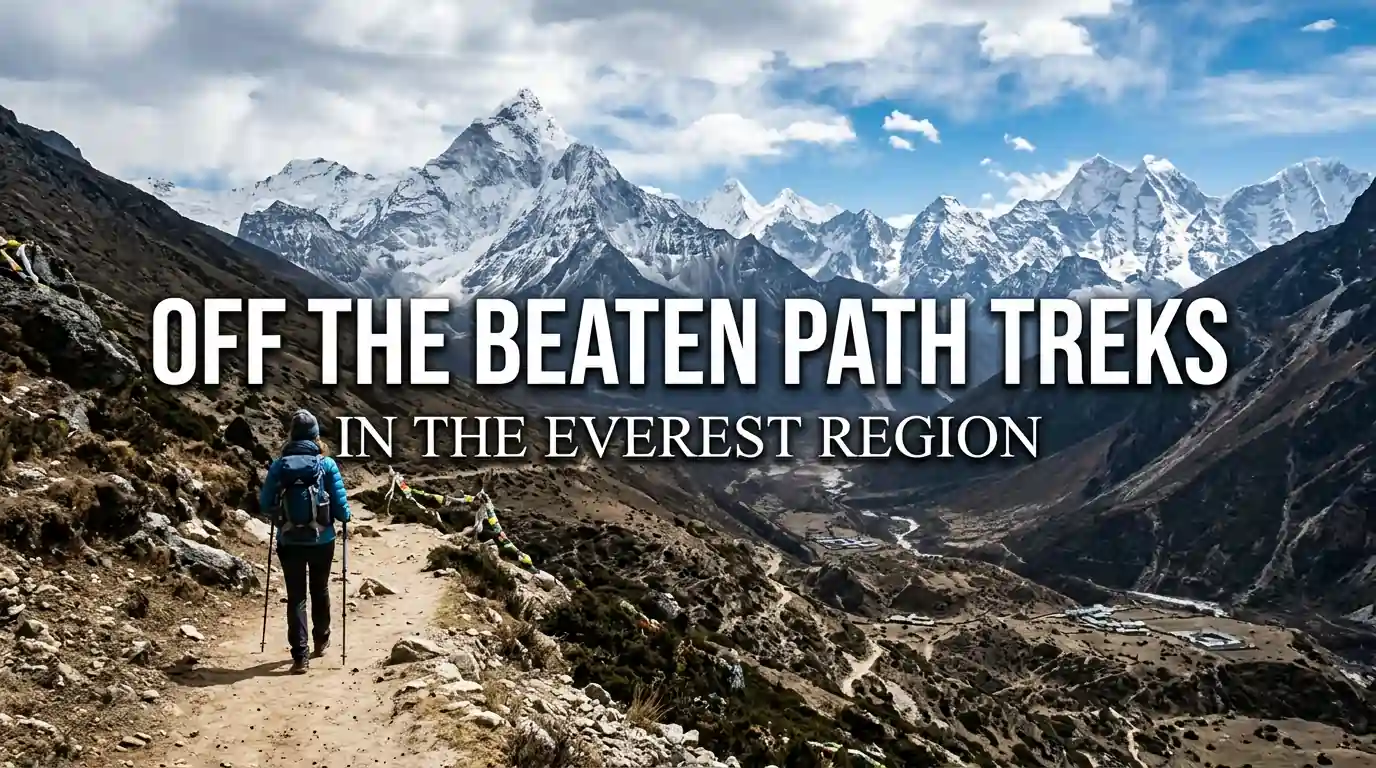
Every year, more than 50,000 trekkers crowd the classic Everest Base Camp trail, turning what should be a wilderness adventure into a congested mountain highway. But just beyond these well-worn paths, the Khumbu region hides spectacular alternatives where you can stand beside turquoise glacial lakes, cross dramatic high passes, and explore remote base camps in near solitude. These off the beaten path treks in the Everest region offer the same breathtaking Himalayan scenery without the shoulder-to-shoulder experience of the main corridor.
In this blog about off the beaten path treks in Everest region, we explore seven hidden routes that range from accessible adventures to serious high-altitude challenges. You’ll discover everything you need to choose the right trek for your abilities and interests, including detailed difficulty ratings, duration estimates, permit requirements, cost breakdowns, and essential preparation tips. Whether you’re seeking peaceful lake scenery or the ultimate three-pass challenge, these lesser-known trails deliver authentic Himalayan experiences, perfect even for those interested in trekking in Nepal for beginners.
Why Choose Off the Beaten Path Treks in the Everest Region?
Off the beaten path, treks in the Everest region provide spectacular Himalayan scenery with far fewer crowds than the main EBC trail. These alternative routes through the Khumbu region lead to turquoise glacial lakes, dramatic high passes, and remote base camps where you might stand completely alone with Everest’s north face reflected in pristine waters. While thousands queue along the classic corridor each season, these quieter trails deliver equally breathtaking mountain panoramas with only a fraction of the foot traffic.
Off the beaten path treks in the Everest region refer to alternative routes that bypass the main EBC corridor while remaining within Sagarmatha National Park. The trails lead to high passes, sacred lakes, and remote base camps that most visitors never see. You’ll still encounter teahouses and established trails, but the experience feels markedly different from the busy main route.
The trade-offs are worth understanding upfront:
- Fewer teahouses: Less flexibility with accommodation, and some routes require camping
- Navigation challenges: Without the constant stream of trekkers to follow, route-finding becomes more demanding
- Greater rewards: Authentic Sherpa village encounters, unobstructed photography, and views earned through genuine effort
7 Best Hidden Nepal Trek Routes in the Khumbu Region
Beyond the crowded Everest Base Camp trail, the Khumbu region reveals seven spectacular alternative routes that deliver authentic Himalayan experiences. These hidden treks range from accessible lake circuits to challenging high-altitude passes, each offering unique perspectives on the world’s highest peaks. All routes start from Lukla or nearby access points and remain within the greater Khumbu area, combining stunning scenery with far fewer crowds than the main corridor.
1. Gokyo Lakes Trek
The Gokyo Lakes trek follows the western valley of the Khumbu region to a chain of six sacred turquoise lakes fed by the Ngozumpa Glacier, Nepal’s longest. Most trekkers reach Gokyo village at 4,790 meters, where the third lake sits beneath Cho Oyu. The highlight comes at Gokyo Ri (5,357m), a viewpoint many experienced trekkers consider superior to Kala Patthar on the EBC route. From the summit, you can see four 8,000-meter peaks (Everest, Lhotse, Makalu, and Cho Oyu) in a single sweeping panorama. Teahouse accommodation is available throughout, making Gokyo Lakes an accessible alternative over 10-12 days.
2. Renjo La Pass Trek
Renjo La (5,360m) offers one of the most dramatic high pass crossings in the Everest region. The climb to the pass is steep and demanding, but the reward is a 360-degree view encompassing the entire Gokyo Valley, the Ngozumpa Glacier, and the Everest massif. “La” means “pass” in Tibetan, and crossing one represents a significant achievement in Himalayan trekking. Teahouse options thin out near the pass itself, so timing the crossing to reach accommodation before dark becomes essential. Most trekkers combine Renjo La with the Gokyo Lakes for a 12-14 day itinerary.
3. Cho La Pass Trek
Cho La (5,420m) connects the Gokyo Valley with Lobuche on the main EBC trail, creating the possibility of a loop itinerary that visits both destinations. The pass involves glacier crossing and some scrambling over rocky terrain, making it more technical than standard trekking routes. Weather windows matter significantly here. Cloud cover or fresh snow can make the pass dangerous or impassable, so flexibility in the itinerary is essential. When conditions align, the crossing offers intimate views of Cholatse and Taboche that few trekkers ever witness.
4. Three Passes Trek
For those seeking the ultimate off the beaten path challenge in the Everest region, the Three Passes Trek combines Renjo La, Cho La, and Kongma La into a single 18-20 day circuit. The route demands excellent fitness, proper acclimatization, and mental resilience for consecutive high-altitude days. The reward matches the effort. You’ll experience the full diversity of the Khumbu landscape (glacial lakes, high passes, remote valleys, and multiple perspectives on the world’s highest peaks). The Three Passes Trek suits experienced high-altitude trekkers who have already completed routes like EBC or Annapurna Circuit.
5. Ama Dablam Base Camp Trek
Ama Dablam (6,812m) is often called the Matterhorn of the Himalayas, and its base camp trek offers intimate views of one of the world’s most beautiful peaks. The route branches from the main EBC trail at Pangboche, reaching base camp at approximately 4,570 meters. At 8-10 days, Ama Dablam Base Camp works well for trekkers with limited time. Photographers particularly appreciate the dramatic angles on Ama Dablam’s distinctive ridgeline, and the trail sees far fewer visitors than the main EBC route.
6. Pikey Peak Trek
Pikey Peak (4,065m) offers exceptional Everest panoramas at a fraction of the altitude and difficulty of other routes. The trek begins from Salleri or Phaplu (accessible by jeep from Kathmandu), eliminating the Lukla flight entirely. The lower elevation makes Pikey Peak suitable for trekkers concerned about altitude or those seeking a gentler introduction to Himalayan trekking. You’ll pass through traditional Sherpa and Rai villages rarely visited by tourists over a 7-9 day itinerary.
7. Kongma La Pass Trek
Kongma La (5,535m) is the highest and most challenging of the three passes, connecting Lobuche with Chukhung Valley. The route involves steep climbing, potential snow travel, and glacier navigation. Many trekkers combine Kongma La with Island Peak climbing, using the pass crossing as both a scenic route and acclimatization for the 6,189-meter summit. The views from the pass encompass the Khumbu Glacier, Imja Tse, and the towering south face of Lhotse.
| Trek | Duration | Difficulty | Best For |
| Gokyo Lakes | 10-12 days | Moderate-Challenging | Lake scenery, fewer crowds |
| Renjo La Pass | 12-14 days | Challenging | High pass experience |
| Cho La Pass | Variable | Challenging | Combining with EBC loop |
| Three Passes | 18-20 days | Very Challenging | Ultimate adventure seekers |
| Ama Dablam BC | 8-10 days | Moderate | Photography, limited time |
| Pikey Peak | 7-9 days | Easy-Moderate | Beginners, acclimatization |
| Kongma La Pass | 12-15 days | Challenging | Technical trekkers |
How to Choose the Right Hidden Everest Trek for You?
Choose your hidden Everest trek by matching your fitness level, available vacation days, and what you most want to experience, whether that’s photography, solitude, or physical challenge, key considerations for adventure trekking in Nepal. The seven routes range from beginner-friendly Pikey Peak (7–9 days, below 4,100m) to the demanding Three Passes circuit (18–20 days, crossing three 5,300m+ passes). Selecting the right match prevents both disappointment from choosing too easy a route and unnecessary risk from attempting something beyond your current abilities.
1. By Difficulty Level
The seven routes span a wide range of physical and technical demands:
- Easy-Moderate: Pikey Peak stays below 4,100 meters and requires no high-altitude experience
- Moderate: Gokyo Lakes and Ama Dablam Base Camp suit fit trekkers comfortable with 5-7 hours of daily walking
- Challenging: Renjo La, Cho La, and Kongma La involve steep climbs, potential snow, and elevations above 5,300 meters
- Very Challenging: Three Passes demands 18+ days of consecutive high-altitude trekking
If you’ve never trekked above 4,000 meters, starting with Pikey Peak or Gokyo Lakes builds confidence for future routes.
2. By Duration and Time Available
Available vacation time often determines which routes are realistic:
- 7-10 days: Pikey Peak, Ama Dablam Base Camp
- 10-14 days: Gokyo Lakes, Renjo La Pass, Cho La Pass (as part of EBC loop)
- 15-20+ days: Three Passes, Kongma La combined with Island Peak
Add 2-3 buffer days for potential Lukla flight delays. A 12-day trek realistically requires 15-16 days of total travel time.
3. By Primary Interest
Different routes excel at different experiences:
- Photography: Ama Dablam Base Camp offers dramatic peak compositions
- Solitude: Renjo La Pass sees the fewest trekkers
- Lakes and glaciers: Gokyo Lakes provides the most water-focused scenery
- Physical challenge: Three Passes tests endurance and altitude tolerance
- Cultural immersion: Pikey Peak passes through traditional villages rarely visited by tourists
Best Time for Off the Beaten Path Hikes in Nepal Everest Region
The Khumbu region experiences distinct seasonal weather patterns that directly affect your trekking experience. Trail conditions, mountain visibility, and teahouse operations all shift dramatically throughout the year. Understanding these seasonal cycles helps you choose the optimal time for your hidden Everest trek. Each season brings unique advantages and challenges that can make or break your adventure.
Autumn (September-November) delivers the clearest skies and most stable weather. Post-monsoon air provides exceptional mountain visibility, making autumn the preferred season for photography. Temperatures remain comfortable for trekking, though nights grow cold at higher elevations.
Spring (March-May) brings warmer temperatures and rhododendron blooms in lower forests. Visibility can be slightly hazier than autumn due to atmospheric moisture, but mountain views remain excellent on most days. Spring sees fewer trekkers than autumn, making it one of the best spring treks seasons across Nepal.
Winter (December-February) offers the quietest trails but demands serious cold-weather preparation. Temperatures at Gokyo or high passes can drop below -20°C at night, and some teahouses above 4,500 meters close entirely.
Monsoon (June-August) brings daily afternoon rain, slippery trails, leeches in lower forests, and clouds that obscure mountain views. Monsoon season is generally not recommended for Everest region trekking.
Permits and Logistics for Remote Everest Trekking
Planning for off the beaten path routes in the Everest region requires the same permits as the standard EBC trek, but the logistics differ in important ways. Teahouse availability becomes less predictable on remote trails, with some sections offering limited accommodation options that require advance planning. Guide services take on greater importance for navigation and safety on routes with fewer trekkers to follow. Understanding these differences helps you prepare properly for the unique challenges of hidden Khumbu trails.
1. Required Permits for Hidden Everest Routes
Every trek in the Khumbu region, whether you choose the crowded EBC trail or a hidden route to Gokyo Lakes, requires the same set of permits. Sagarmatha National Park regulations apply uniformly across all trails within its boundaries. This means you’ll need identical documentation regardless of which off the beaten path route you select.
- Sagarmatha National Park Entry Permit: NPR 3,000 for foreign nationals, obtainable in Kathmandu or at the Monjo checkpoint
- Khumbu Rural Municipality Permit: Collected at designated checkpoints along the route
- TIMS Card: Trekkers’ Information Management System registration for safety tracking
Trekking operators typically arrange all permits as part of the package.
2. Teahouse Availability vs Camping
Teahouse availability changes dramatically depending on which hidden route you choose. Some trails maintain well-established lodge networks similar to the main EBC corridor, while others offer only scattered accommodation options that require careful daily planning. Understanding these differences helps you prepare properly and set realistic expectations for comfort levels along your chosen route.
- Well-established teahouses: Gokyo Lakes, Pikey Peak, Ama Dablam Base Camp
- Limited teahouses near passes: Renjo La, Cho La, Kongma La
- May require camping: Three Passes circuit in some sections
On routes with limited teahouse options, arriving early in the afternoon secures beds at preferred lodges.
Do You Need a Guide for Remote Nepal Trek Routes?
Yes, you need a licensed guide for all off the beaten path treks in the Everest region. Nepal’s current regulations require all foreign trekkers in national parks to hire a licensed guide, making solo independent trekking no longer permitted in the Khumbu area.
Beyond legal requirements, guides provide essential value on off the beaten path routes. Local guides recognize early altitude sickness symptoms, navigate trail junctions that lack signage, assess pass conditions, and handle permit checkpoints efficiently. Marvel Treks employs skilled local guides from the Khumbu region who bring intimate knowledge of hidden routes, including teahouse owners, weather patterns, and alternative paths when conditions change.
Preparation Tips for Off the Beaten Path Treks
Off the beaten path treks in the Everest region demand more comprehensive preparation than standard EBC routes due to limited teahouse infrastructure, fewer trekkers for assistance, and more challenging terrain. Self-sufficiency becomes critical on remote trails where help may be hours away. Proper physical conditioning, altitude acclimatization strategies, and reliable gear make the difference between a successful adventure and a difficult struggle. These three preparation pillars ensure you’re ready for the unique challenges of hidden Khumbu routes.
1. Physical Fitness and Training Requirements
High-altitude trekking on remote routes requires exceptional cardiovascular endurance, leg strength for steep ascents, and mental resilience for consecutive demanding days. Building this fitness foundation takes consistent training over 8-12 weeks before departure. Your preparation should simulate the physical demands you’ll face on the trail.
- Hiking with weight: Practice carrying 5-8 kg on trails with elevation gain
- Stair climbing: Builds the specific leg strength needed for Himalayan terrain
- Cardio training: Running, cycling, or swimming improves oxygen efficiency
- Long walks: Weekend hikes of 15-20 km build endurance for consecutive trekking days
2. Acclimatization and Altitude Safety
Altitude sickness can affect anyone regardless of fitness level or previous trekking experience, making proper acclimatization your most important safety consideration. The key principles remain consistent across all high-altitude routes. Recognizing early symptoms and responding appropriately prevents minor discomfort from escalating into serious medical emergencies.
- Climb high, sleep low: Day hikes to higher elevations aid acclimatization
- Gradual ascent: Limit sleeping elevation gain to 300-500 meters per day above 3,000 meters
- Hydration: Drink 3-4 liters of water daily at altitude
- Recognize symptoms: Headache, nausea, fatigue, and loss of appetite signal AMS (Acute Mountain Sickness)
- Immediate descent: The only reliable treatment for serious altitude illness
3. Essential Gear and Packing List
Off the beaten path routes require reliable gear that performs in variable mountain conditions where equipment failure can create serious problems. Quality matters more than quantity on remote trails with limited resupply options. Your gear list should prioritize versatility, durability, and weather protection.
- Clothing layers: Moisture-wicking base layers, insulating fleece or down, waterproof shell
- Footwear: Broken-in waterproof trekking boots with ankle support
- Technical gear: Trekking poles, headlamp with spare batteries, quality daypack
- Safety items: First aid kit, water purification tablets, emergency whistle
- Cold weather: Sleeping bag rated to -15°C, warm hat, insulated gloves
Marvel Treks provides complimentary gear loans including down jackets, sleeping bags, and duffel bags.
Cost of Hidden Treks in the Everest Region
Budget planning for off the beaten path routes in the Everest region requires understanding both the upfront package costs and the additional expenses that accumulate throughout your trek. While guided packages cover major costs like permits, accommodation, meals, and guide services, daily extras like hot showers, device charging, bottled water, and tips can add $200-400 to your total budget. The final cost varies significantly based on trek duration, group size, season, and whether your chosen route requires camping equipment beyond standard teahouse facilities.
1. Factors That Affect Trek Pricing
The final cost of your hidden Everest trek isn’t fixed, it shifts based on several key variables that can swing your budget by hundreds of dollars. Understanding these factors upfront helps you plan accurately and avoid surprises when booking your adventure.
- Duration: Longer routes like Three Passes cost more than shorter alternatives
- Group size: Solo travelers pay more per person than groups of 4-6
- Season: Peak autumn dates may carry premium pricing
- Service level: Guide-to-trekker ratios, porter support, and accommodation quality
- Camping requirements: Routes requiring tents and cooking equipment add costs
2. Sample Cost Ranges by Route
Guided package prices for off the beaten path Everest treks typically fall within the following ranges:
| Trek | Approximate Cost (USD) |
| Pikey Peak | $600-900 |
| Ama Dablam BC | $800-1,200 |
| Gokyo Lakes | $1,200-1,800 |
| Renjo La Pass | $1,400-2,000 |
| Cho La Pass (loop) | $1,500-2,200 |
| Kongma La Pass | $1,600-2,400 |
| Three Passes | $2,200-3,500 |
3. Hidden Costs to Budget For
Even the most comprehensive guided packages don’t cover every expense you’ll encounter on the trail. Understanding these additional costs upfront prevents budget surprises and helps you plan accurately for your hidden Everest trek.
- Hot showers: $3-5 per shower at teahouses
- Device charging: $2-5 per charge, increasing with altitude
- Bottled water or purification: $3-5 daily
- Tips for guides and porters: $10-15/day for guides, $8-10/day for porters
- Snacks and extras: $5-10 daily for chocolate, coffee, or additional food
- Travel insurance: $50-150 depending on coverage level and duration
Budget an additional $200-400 beyond the package price for extras.
Start Planning Your Hidden Himalayan Trek Today
The Everest region holds far more than its famous base camp trail. From the turquoise waters of Gokyo Lakes to the challenging high passes, hidden routes deliver world-class Himalayan experiences with solitude and authenticity that crowds diminish on the main corridor.
Choosing the right route depends on fitness level, available time, and what you hope to experience. Marvel Treks specializes in remote Everest region routes, with local guide teams who know every teahouse, trail junction, and weather pattern, making them a strong choice as the best expedition company in Nepal. Comprehensive packages include permits, accommodation, meals, and complimentary gear loans.
FAQs About Off the Beaten Path Trekking in Nepal
Can beginners attempt off the beaten path treks in the Everest region?
Yes, routes like Pikey Peak and Gokyo Lakes suit fit beginners with proper preparation. Both treks follow established trails with teahouse accommodation throughout. Hiring an experienced guide is strongly recommended for first-time high-altitude trekkers.
Is helicopter rescue available on remote Everest routes?
Helicopter evacuation operates throughout Sagarmatha National Park, including remote areas like Gokyo and the high passes. Response times may be longer on off the beaten path routes, and weather can delay flights. Comprehensive travel insurance with emergency evacuation coverage is essential.
How crowded are the Gokyo Lakes compared to Everest Base Camp trail?
Gokyo Lakes sees significantly fewer trekkers than the main EBC route. You’ll still encounter other trekkers at popular stops like Gokyo village and on the Gokyo Ri summit climb, but the overall experience feels markedly more peaceful.
Do high pass crossings like Cho La require technical climbing equipment?
Passes like Cho La involve scrambling over rocky terrain and potential snow or ice travel, but they do not require ropes, harnesses, or technical climbing gear for most trekkers. Microspikes or light crampons can be useful depending on conditions.
What happens if weather closes a mountain pass during my trek?
Flexible itineraries with buffer days are essential for any route involving high passes. Experienced guides assess conditions each morning and adjust plans accordingly. In worst cases, trekkers may wait for weather windows or backtrack to alternative routes.
Are the teahouses on hidden Everest routes as comfortable as those on the main EBC trail?
Teahouses on less-traveled routes tend to be more basic, with simpler rooms, limited menu options, and fewer amenities like hot showers or charging facilities. Bringing a quality sleeping bag rated to -15°C ensures comfort regardless of teahouse conditions.

Ready for your next Himalayan adventure?
Plan Your Next Big Adventure with Us
Explore Our AdventuresJoin our expert-guided journeys across Nepal and beyond, from classic trails to epic summits.