
Everest Base Camp Trek in April: Complete Guide 2026
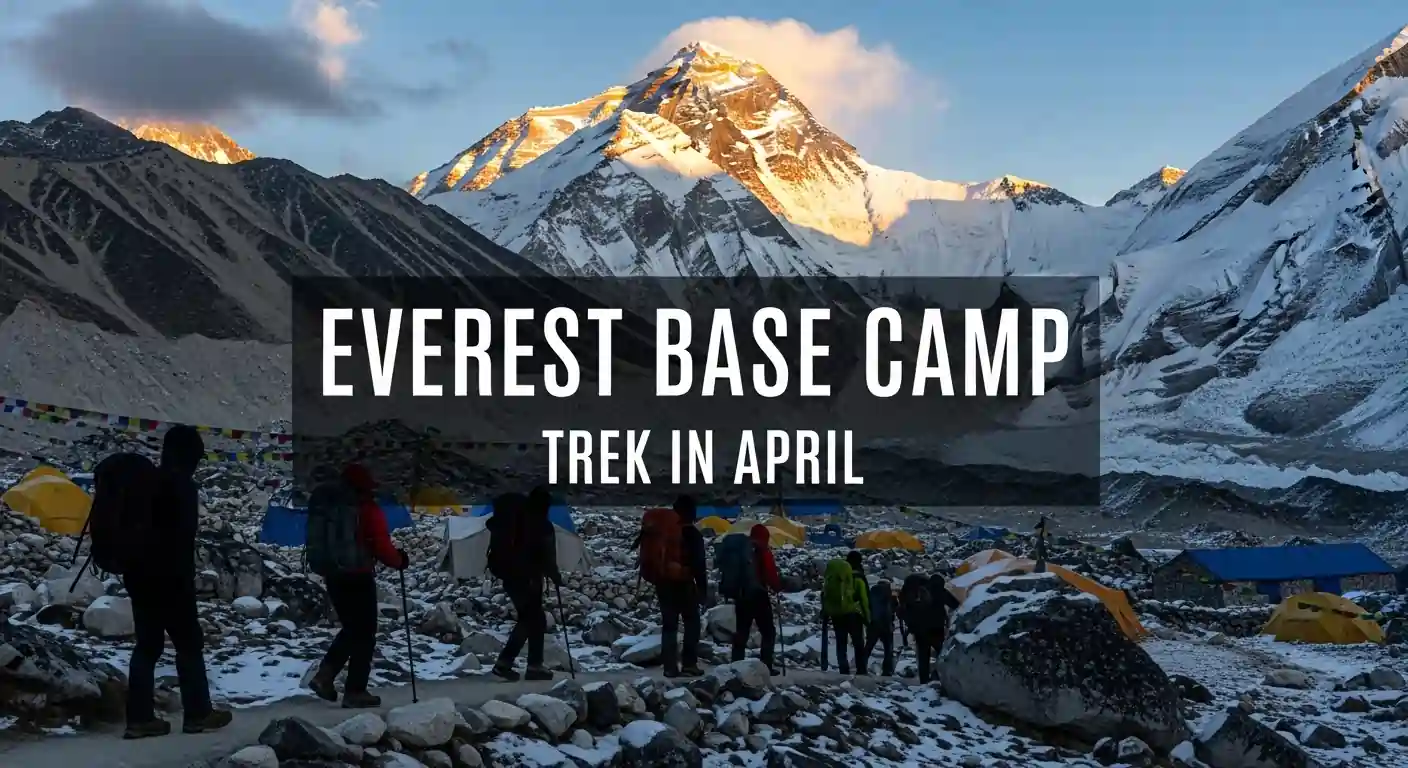
Ever wake up and realize your most adventurous act lately was choosing a different brand of cereal? Look, we get it, the corporate grind in 2026 can be a real soul-sucker, and your “internal engine” is probably idling in neutral. But imagine standing at 17,598 feet, where the air is thin enough to make your brain do a little high-vibration dance and the Khumbu Icefall looks like a frozen architectural masterpiece designed by a god with a serious attitude. April on the “Big E” isn’t just a trek; it’s a high-stakes invitation to witness the “Roof of the World” shedding its winter skin while elite climbing teams prepare for their 8,848-meter tactical sieges.
In this blog, we’re laying out the definitive tactical blueprint for the Everest Base Camp Trek in April, ensuring your 2026 expedition is a total summit-level success. We’ll be diving deep into why this specific spring window is the “Goldilocks” of the mountaineering calendar ,stable enough for crystal-clear panoramas but edgy enough to keep your adrenaline at a healthy high-vibration peak. From navigating the legendary Namche Bazaar crowds to vetting your gear for those sub-zero base camp nights, we’re covering the training schedules, the permit red tape, and the insider tips that only a veteran “mountain engine” would know.
Why Choose Everest Base Camp Trek in April?
You can choose Everest base camp trek in April because it’s the high-vibration “sweet spot” of the year where the Himalayan winter finally surrenders and the trails become a tactical playground of perfect visibility and mild temperatures. It is the prime window when the “Death Zone” winds migrate north, leaving behind a stable atmosphere that makes reaching 5,364 meters feel less like a survival test and more like an elite victory lap. In April, you aren’t just trekking; you’re stepping into the world’s most iconic mountain theater during its grandest opening night.
Spring season advantages (clear skies, stable weather)
Spring is the heavyweight champion of trekking seasons, offering a high-vibration combo of deep blue skies and a “stable-as-a-rock” weather pattern that keeps your tactical itinerary on track. Unlike the unpredictable snows of winter or the muddy chaos of the monsoon, April provides consistent morning windows for snagging those high-definition views of Lhotse and Nuptse before the afternoon clouds roll in. This predictability means fewer flight delays at Lukla and a much higher success rate for reaching the base of the “Big E” without having to battle a surprise blizzard.
Rhododendron blooms and scenic Himalayan views
Trekking in April means walking through a literal floral explosion, where the lower-altitude forests below Namche Bazaar are draped in a riot of red, pink, and white rhododendron blooms. This high-vibration scenery acts as a lush, colorful contrast to the stark, monochromatic rock and ice you’ll face higher up, making every mile of the trail a photographer’s tactical dream. It’s nature’s way of cheering you on with a vibrant, scenic backdrop that keeps your morale peaking even when your lungs are starting to negotiate for more oxygen.
Peak trekking season benefits vs off-season
While the off-season offers solitude, the April peak season provides a high-vibration social energy and the tactical security of having a fully operational rescue infrastructure and thriving teahouse community. This is the specific month when elite climbing expeditions are setting up their “tented cities” at Base Camp, giving you a front-row seat to the actual mountaineering spirit that defines the region. You get the benefit of well-trodden, dry trails and the chance to swap high-altitude stories with global legends, which is a massive psychological boost you simply won’t find during the desolate, freezing winter months.
Also Read: Everest Base Camp Trek in March
Weather and Temperature During Everest Base Camp Trek in April
The weather during the Everest Base Camp trek in April is the “Goldilocks” of the Himalayan seasons, offering a high-vibration balance of warm, sunny days and stable, high-definition visibility. While the lower valleys feel like a lush spring afternoon, the high-altitude climate remains a tactical challenge where temperatures fluctuate wildly once the sun dips behind the 8,000-meter ridges. It’s the most reliable window in 2026 for consistent trekking conditions, allowing your “internal engine” to operate at peak efficiency without fighting the brutal winter freeze or monsoon moisture. However, with the full enforcement of the “No Guide, No Trek” policy this year, many adventurers are asking, can you trek Everest base camp on your own?
Temperature breakdown by altitude (Lukla to Base Camp)
In April, temperatures operate on a high-vibration sliding scale, starting at a balmy 12°C to 18°C in Lukla (2,860m) and Namche Bazaar (3,440m) during the sun-drenched midday hours. As you push into the mid-hills like Dingboche (4,410m), the mercury hovers between 5°C and 9°C, finally hitting a tactical “chill zone” at Everest Base Camp (5,364m) where daytime highs range from 2°C to 10°C. These predictable gradients allow for precise gear layering, ensuring you don’t overheat in the forests or freeze on the moraines.
Day vs night temperature variations
The Himalayan climate in April features a “split personality” where the intense daytime UV can make it feel like 20°C, only for the thermometer to crash into sub-zero territory the moment the sun disappears. Above Namche Bazaar, nighttime temperatures are a high-stakes tactical reality, often plummeting to -5°C or as low as -15°C at the Gorak Shep teahouses. You’ll find yourself peeling off layers like a high-vibration onion by noon, then diving into a 4-season sleeping bag by 8:00 PM to survive the deep mountain frost.
Visibility, wind, and precipitation conditions
April is the heavyweight champion of visibility, providing crystal-clear morning skies that offer uninterrupted, tactical views of Everest, Lhotse, and Ama Dablam before the clouds roll in. While the winds average a moderate 6-15 km/h, the high-altitude gusts can pick up in the late afternoon, making your windproof shell an essential piece of 2026 survival kit. Precipitation stays low throughout the month, with only occasional light snow flurries or pre-monsoon showers that clear quickly to reveal an even more dazzling, high-vibration landscape.
Everest Base Camp Trek Route Overview in April
The route to Everest Base Camp in April is a high-vibration journey through the spiritual and geological heart of the Khumbu, where the trail transforms from a lush, floral forest into a stark, lunar landscape of ice and rock. It’s a tactical ascent that follows the footsteps of legends, taking you from the world’s most dramatic airport in Lukla through the bustling “Sherpa Capital” of Namche Bazaar and finally to the doorstep of the world’s highest peak. In April, this route is at its most alive, buzzing with the energy of international climbing teams and the scent of blooming pines.
Standard Itinerary (Lukla → Namche Bazaar → Tengboche → Dingboche → Gorakshep → EBC)
The classic 12-to-14-day tactical mission begins with a high-vibration flight to Lukla (2,860m) before pushing through the Dudh Koshi valley to the horseshoe-shaped hub of Namche Bazaar. From there, you’ll navigate the spiritual heights of Tengboche and the alpine meadows of Dingboche, eventually reaching Gorakshep for the final rocky grind to Everest Base Camp (5,364m). This 2026 blueprint ensures you hit the trail’s legendary milestones while allowing your body the necessary time to negotiate with the thinning air at every major elevation jump.
Key Highlights Along the Trail
April’s highlights are a high-vibration mix of nature and culture, starting with the explosion of red rhododendrons in the lower forests and the first clear glimpses of Ama Dablam’s iconic “Mother’s Necklace” peak. You’ll witness the “yellow city” of tents at Base Camp where elite climbers prep for their 2026 summit bids, and experience the deep, spiritual vibration of the Tengboche Monastery during evening prayers. The ultimate tactical reward is the sunrise from Kala Patthar (5,545m), where Everest glows like molten gold against a deep, pre-monsoon blue sky.
Acclimatization Stops and Importance
Acclimatization stops in Namche (3,440m) and Dingboche (4,410m) are non-negotiable tactical pauses that allow your blood cells to throw a high-vibration “production party” to handle the low oxygen. Following the “climb high, sleep low” rule, like hiking to the Everest View Hotel, forces your system to adapt to the thin air while you recover at a lower altitude overnight. Skipping these stops is a high-stakes gamble that often ends in a rescue helicopter flight; taking the extra day ensures you arrive at Base Camp with your “internal engine” running smooth and your brain clear.
Difficulty Level and Fitness Requirements for EBC Trek in April
The Everest Base Camp trek in April is a moderate to challenging “stairway to heaven” that requires a solid cardiovascular engine and a high-vibration mindset to handle the 5,364-meter oxygen deficit. While it doesn’t require you to be a pro mountaineer, the 2026 trail demands respect for the relentless vertical gains and the rocky, uneven terrain that’ll test your grit at every switchback. It’s essentially a long-distance tactical mission where your endurance and ability to pace yourself are the only things standing between you and the world’s most famous base camp.
Trek Difficulty (Moderate to Challenging)
This trek sits squarely in the “strenuous” category, primarily because you’re walking 5 to 8 hours a day on a path that feels like it was designed by someone who hated flat ground. While the April trails are generally dry and well-maintained, the sheer altitude makes every step feel like you’re wearing a high-vibration lead suit, especially once you cross the 4,000-meter mark. It’s not a technical climb, but the combination of thin air, steep Khumbu stone steps, and rugged glacial moraines turns a simple hike into a high-stakes endurance test for your entire system.
Required Fitness Level and Endurance
To conquer the “Big E” in 2026, your fitness level needs to be high-vibration enough to sustain repeated days of 10-15km hikes while carrying a tactical daypack. You don’t need a six-pack, but you do need “mountain lungs” and leg strength that can handle the eccentric load of long descents without your knees filing a formal protest. Good aerobic health is your best defense against early fatigue, ensuring your heart can keep pumping oxygen to your muscles even when the atmosphere starts to feel like it’s running out of fuel.
Pre-Trek Training Plan (Cardio, Strength, Altitude Prep)
Your tactical training blueprint should start at least three months out, focusing on a high-vibration cocktail of stair-climbing, lunges, and 45-minute cardio sessions four times a week. The secret weapon is “practice hiking”, getting out on local hills with a weighted 5-8kg pack to break in your boots and vet your gear before you hit the actual Himalayas. Incorporate core work like planks to stay stable on the rocky trails, and if you can, find some high-altitude spots nearby to give your respiratory system a taste of what’s coming in April.
What to Pack for Everest Base Camp Trek in April?
For the Everest Base Camp Trek in April, you should pack a high-vibration mix of moisture-wicking layers, a heavy-duty -15°C down jacket, and a 4-season sleeping bag to handle the radical temperature swings of the Khumbu. It’s all about tactical versatility, you need gear that can handle the sun-drenched forests of Lukla where you’re sweating in a T-shirt, and the midnight frost of Gorakshep where the air turns into a literal icebox. Think of your packing list as a modular survival kit; every piece should serve a specific purpose in your 2026 mission, whether it’s blocking the UV rays or trapping your body heat during a high-altitude blizzard. Don’t overpack, but don’t skimp on the insulation, getting “mountain cold” is a vibe-killer you definitely want to avoid.
Layering system for spring trekking
Your layering strategy is the most critical tactical tool in your rucksack, relying on a three-part system to manage moisture, trap heat, and block the elements. Start with a merino wool base layer to pull sweat away from your skin, add a high-vibration fleece or “puffy” mid-layer for insulation, and finish with a waterproof, breathable shell to guard against the wind. This setup allows you to add or subtract layers like a human onion as you move from the hot valleys to the freezing high passes, keeping your “internal engine” from overheating or stalling out.
Essential gear (boots, down jacket, sleeping bag)
These are the “Big Three” of your expedition, and they need to be vetted for 2026-level quality before you even step foot in Nepal. You need waterproof, broken-in trekking boots with solid ankle support, a heavy-duty down jacket rated to at least -15°C for those freezing teahouse nights, and a 4-season sleeping bag that keeps you toasty when the room temp crashes. Investing in these three items is the best tactical move you can make, as they are the primary barriers between your comfort and the raw, unyielding power of the high Himalayas.
Accessories (sunglasses, sunscreen, trekking poles)
These tactical add-ons are what separate the pros from the rookies, protecting you from the high-vibration UV rays and the brutal impact of the trail on your joints. You’ll need Category 4 polarized sunglasses to prevent snow blindness and high-SPF sunscreen to keep your face from looking like a piece of overcooked yak jerky. A pair of lightweight trekking poles will save your knees by at least 25% on the descents, acting like 4WD for your legs and keeping you stable when the terrain gets rocky and unpredictable.
Permits and Cost of Everest Base Camp Trek in April 2026
For the Everest Base Camp trek in 2026, you’ll need to budget between $1,200 and $2,200 for a standard 14-day mission, covering the two mandatory permits and your essential trail logistics. This is the “beauty tax” for accessing the world’s most elite mountain real estate during the high-vibration spring peak, ensuring your paperwork is vetted and your trail support is locked in. Securing your Everest base camp trek permit now involves a tactical two-step process: the Khumbu Pasang Lhamu Rural Municipality Permit (NPR 3,000) and the Sagarmatha National Park Entry Permit (NPR 3,000), both of which are strictly verified at the Lukla and Monjo checkpoints to fund local 2026 conservation and infrastructure.
Required Permits (Sagarmatha National Park, Khumbu Pasang Lhamu Permit)
To legally enter the Khumbu region in 2026, you must secure the Khumbu Pasang Lhamu Rural Municipality Permit (NPR 3,000 / $23) and the Sagarmatha National Park Entry Permit (NPR 3,000 + 13% VAT / $28). These tactical documents have replaced the old TIMS card system in this region and are usually settled in Lukla or Monjo. It’s a small price to pay for a high-vibration pass into a UNESCO World Heritage site where the “Big E” holds court.
Cost Breakdown (Guide, Porter, Flights, Accommodation)
Your 2026 tactical budget includes the mandatory licensed guide ($30–$50/day) and an optional but highly recommended porter ($20–$30/day) to keep your “internal engine” from redlining under a heavy pack. Round-trip flights from Kathmandu or Ramechhap to Lukla sit between $450 and $520, while your daily “fuel” (meals and teahouse beds) will run you another $40–$60 depending on how many yak-cheese pizzas you inhale.
Budget vs Luxury EBC Trekking Options
For those on a “lean and mean” budget mission, $1,200–$1,600 covers the basics with shared teahouse rooms and a group guide, keeping things authentic and high-vibration. If you want the “Elite Tier” experience, luxury packages ranging from $3,000 to over $5,000 offer heated rooms, gourmet menus, and even a tactical helicopter return from Gorakshep to save your knees the downhill grind. Either way, the mountains don’t care how much you spent on your sleeping bag, the view from the top is a universal win.
Accommodation and Food on Everest Base Camp Trek in April
Your accommodation and food on the Everest Base Camp trek in April is a high-vibration tactical mix of cozy mountain teahouses and calorie-dense “summit fuel” designed to keep your internal engine humming. It’s a logistical dance where you trade urban luxury for communal warmth and hearty Dal Bhat, ensuring you’re well-rested and fully recharged for every vertical gain in 2026’s busiest trekking month.
Teahouse Experience During Peak Season
Staying in a Khumbu teahouse during the April peak is like joining a high-vibration international mountain fraternity where the dining room is the social heart of the expedition. You’ll typically get a basic, twin-sharing wooden room that acts as a tactical base for sleep, while the central common area is where you’ll huddle around a yak-dung stove to swap stories with climbers and fellow trekkers. In April, these lodges are buzzing with life, offering a raw and authentic vibe that’s a world away from your 2026 office cubicle, though you should expect shared bathroom facilities and a “bring-your-own-sleeping-bag” policy to stay truly toasty. It’s an immersive cultural experience where the thin walls mean you might hear your neighbor’s celebratory “we made it” snoring, but the shared camaraderie makes every rustic detail feel like part of the adventure.
Food Options and Pricing Along the Trail
The menu on the EBC trail is a high-vibration tactical buffet ranging from the legendary “Dal Bhat Power” (lentil soup and rice) to surprisingly decent yak-cheese pizzas and apple fritters. In 2026, you can expect to spend between $30 and $50 per day on fuel, with prices naturally scaling up as the porters carry your ingredients to higher altitudes like Gorakshep. Dal Bhat remains the ultimate “pro-move” for trekkers because it often comes with free refills, providing the sustained energy needed for 8-hour trail days, while vegetarian options are highly recommended to keep your digestive system vetted and safe. Don’t be surprised if a simple Snickers bar costs $3 at 5,000 meters, every calorie has to be hauled up those stone steps by human or animal power, making every bite a hard-earned tactical win.
Crowds and Trail Conditions in April
Navigating the Everest region in April is a high-vibration tactical challenge where you’ll find the trails at their busiest, but also their most stable and predictable. While the “rush hour” feel at suspension bridges is a reality, the ground under your boots is generally dry and firm, providing the best structural traction of the 2026 spring season for your vertical push. Covering the standard Everest base camp trek distance of 130 kilometers (80 miles) round-trip from Lukla requires a “zero-ego” approach to pacing, especially as you navigate the final 15km push from Lobuche to the edge of the Khumbu Glacier.
Peak season traffic on Everest trails
April is the absolute heavyweight champion of the Khumbu calendar, meaning you’ll be sharing the high-vibration trail with a global army of trekkers and elite climbing teams prepping for the summit. Expect a “mountain highway” vibe where the legendary Namche Bazaar and Gorakshep become bustling tactical hubs filled with the energy of a thousand different missions. While the trails are lively, this peak traffic means you need to stay sharp and yield to the constant stream of yak caravans and porters hauling supplies to the yellow tent city at Base Camp.
Pros and cons of trekking in a busy season
The biggest “pro” of the April surge is the festive, high-vibration atmosphere and the tactical safety of having constant support and fellow adventurers nearby if things go sideways. Conversely, the “con” is the immense pressure on local resources, leading to fully booked teahouses and a slight loss of that raw, Himalayan solitude you might be dreaming of. You trade the quiet, freezing isolation of winter for a social, well-serviced environment where the teahouses are warm, the menus are full, and the collective excitement for the “Big E” is contagious.
Tips to avoid crowds (early starts, alternative routes)
To beat the high-vibration herds, your best tactical move is to hit the trail by 6:00 AM, allowing you to reach the next village and secure a bed before the midday “check-in scramble” begins. You can also pivot your mission toward alternative routes like the Gokyo Lakes or the “high trail” via Phortse, which offer world-class views with a fraction of the standard EBC foot traffic. Hiring a veteran guide is the ultimate crowd-dodging secret, as they can use their local intel to steer you toward quieter lodges and lesser-known viewpoints that the main “trekking trains” usually miss.
How to Prepare for Everest Base Camp Trek in April?
You can prepare for the Everest Base Camp trek in April by vetting your “cardio engine” through a three-month training plan, securing your mandatory 2026 permits early, and coordinating the logistics of the Ramechhap-to-Lukla flight diversion. This preparation phase is your tactical foundation, ensuring your body can handle the 5,364-meter oxygen drop while your itinerary accounts for the peak season’s high-vibration crowds. It’s a multi-layered mission where physical grit meets logistical precision, including a technical approach to packing for Everest base camp trek that balances sub-zero sleeping gear with breathable layers for those 20°C (68°F) lower-valley afternoons, to ensure your spring expedition doesn’t stall out before you even hit the trail.
Physical and Mental Preparation Tips
Your physical preparation should focus on “functional mountain torque,” combining heavy cardiovascular work with weighted stair-climbing to simulate the relentless stone steps of the Khumbu. Mentally, you need to cultivate a high-vibration “one-step-at-a-time” philosophy, practicing resilience for those moments when the altitude makes your brain feel like it’s floating in a jar. Vetting your gear during long weekend hikes is the best tactical way to ensure your boots and your willpower are both “broken-in” before you land in Nepal.
Booking Flights (Lukla) and Accommodations in Advance
In 2026, most April flights to Lukla divert to Ramechhap (Manthali Airport) to manage air traffic, so you must book your 4-hour pre-dawn ground transfer and your plane tickets at least 3-4 months out. Accommodations in tactical hubs like Namche Bazaar and Gorakshep fill up faster than a yak at a salt lick during the spring peak, making early reservations your only defense against sleeping in a communal dining room. A well-timed booking ensures your “internal engine” has a proper place to recharge after every high-altitude grind.
Hiring Guides and Porters
Under the strictly enforced 2026 “No Guide, No Trek” policy, hiring a government-licensed guide is a mandatory tactical requirement for every foreign trekker entering the Everest region. A veteran guide acts as your local liaison and safety radar, while a porter takes the high-vibration weight off your back, allowing you to focus entirely on your breathing and the scenery. This support team is your elite insurance policy, ensuring your mission stays on track and your logistics remain vetted through the busiest month of the year.
Travel Insurance and Emergency Planning
Your 2026 travel insurance must be a specialized high-altitude policy that explicitly covers helicopter evacuation and medical treatment up to 6,000 meters. Standard plans often have a “tactical blind spot” that ends at 3,000 meters, which is a disaster when you’re pushing for 5,364 meters at Base Camp. Always share your digital policy details and emergency contact info with your agency, as a fast-response rescue bird is your only “get-out-of-jail-free” card if Acute Mountain Sickness (AMS) decides to crash your party.
What Are the Pros and Cons of Everest Base Camp Trek in April?
Trekking to Everest Base Camp in April is a high-vibration balancing act where you trade ultimate solitude for the most stable weather and vibrant landscapes of the 2026 season. It is the tactical “Goldilocks” window where the mountain is most accessible and visually stunning, though you’ll need to navigate the logistical squeeze of the spring crowds and peak seasonal pricing.
| Feature | Pros (High-Vibration Wins) | Cons (Tactical Hurdles) | Comparison: March vs. April vs. May |
| Weather & Visibility | Exceptional Stability: Clear mornings and deep blue skies offer perfect, high-definition views of the “Big E.” | Afternoon Haze: Pre-monsoon moisture can occasionally create hazy conditions in the lower valleys by midday. | March: Colder with lingering winter snow. May: Hotter and more humid as clouds build up. |
| Flora & Scenery | Floral Explosion: The lower Khumbu forests are alive with blooming rhododendrons and vibrant spring colors. | Trail Dust: High traffic on dry trails can create dusty conditions, requiring a tactical buff or face mask. | March: First buds appearing. May: Lush green vegetation but flowers start to fade. |
| Crowds & Vibe | Social Energy: You’ll share the trail with a global community and elite climbing teams prepping for the summit. | “Mountain Highway” Vibes: Popular hubs like Namche and Gorakshep are at maximum capacity, leading to busy teahouses. | March: Much quieter trails. May: Very busy, mostly populated by mountaineers and summit aspirants. |
| Logistics & Safety | High Passes Open: Warmer temps ensure high passes like the Cho La are safer and more accessible for tactical crossings. | Peak Pricing: Flights and guides are in high demand, meaning 2026 premium seasonal rates are in full effect. | March: Some high passes may still be snow-blocked. May: Similar to April, but heat increases at lower elevations. |
| The “Everest” Factor | Climbing Buzz: Witnessing the yellow tent city at Base Camp gives you a front-row seat to actual mountaineering history. | Shared Space: You might have to share communal areas or wait longer for your “Dal Bhat Power” in crowded lodges. | March: Base Camp is mostly empty. May: The “climax” of the season with summit pushes underway. |
Conclusion
The Everest Base Camp Trek in April is basically the “God Mode” setting for Himalayan adventures, offering a high-vibration mix of crystal-clear mornings and that legendary Khumbu climbing buzz. It’s the tactical sweet spot where you get to witness the “yellow city” of tents at base camp while walking through forests draped in blooming rhododendrons that look like they’ve been photoshopped into reality. Sure, you’ll be sharing the trail with a global tribe of mountain-junkies, but that shared energy is what makes 2026 feel like a true expedition rather than just a lonely walk in the woods, an experience that reaches its full potential when curated by the local masters at Marvel Treks.
FAQS
Is April a good time for the EBC trek?
Yes, it’s the “Goldilocks” month with stable weather, clear skies, and spectacular blooming rhododendrons along the trail.
Are flights to Lukla diverted in 2026?
Most spring flights depart from Ramechhap (Manthali) instead of Kathmandu to manage heavy peak-season air traffic.
Do I need a mandatory guide in 2026?
Yes, Nepal’s “No Guide, No Trek” policy requires all foreign trekkers to hire a licensed professional.
What permits are required for Everest Base Camp?
You need the Sagarmatha National Park permit and the Khumbu Pasang Lhamu local municipality entrance permit.
How cold is it at Base Camp in April?
Daytime is mild (0°C to 5°C), but nights are a tactical challenge, dropping to a freezing -15°C.
Can I see the climbing expeditions in April?
Yes, this is peak season for Everest summit attempts; you’ll see the famous tent city at Base Camp.
Is altitude sickness common in April?
The risk is high above 4,000m. Walk slowly, stay hydrated, and never skip your mandatory acclimatization days.

Ready for your next Himalayan adventure?
Plan Your Next Big Adventure with Us
Explore Our AdventuresJoin our expert-guided journeys across Nepal and beyond, from classic trails to epic summits.