
Can You Trek to Everest Base Camp on Your Own? Solo Trekking Guide
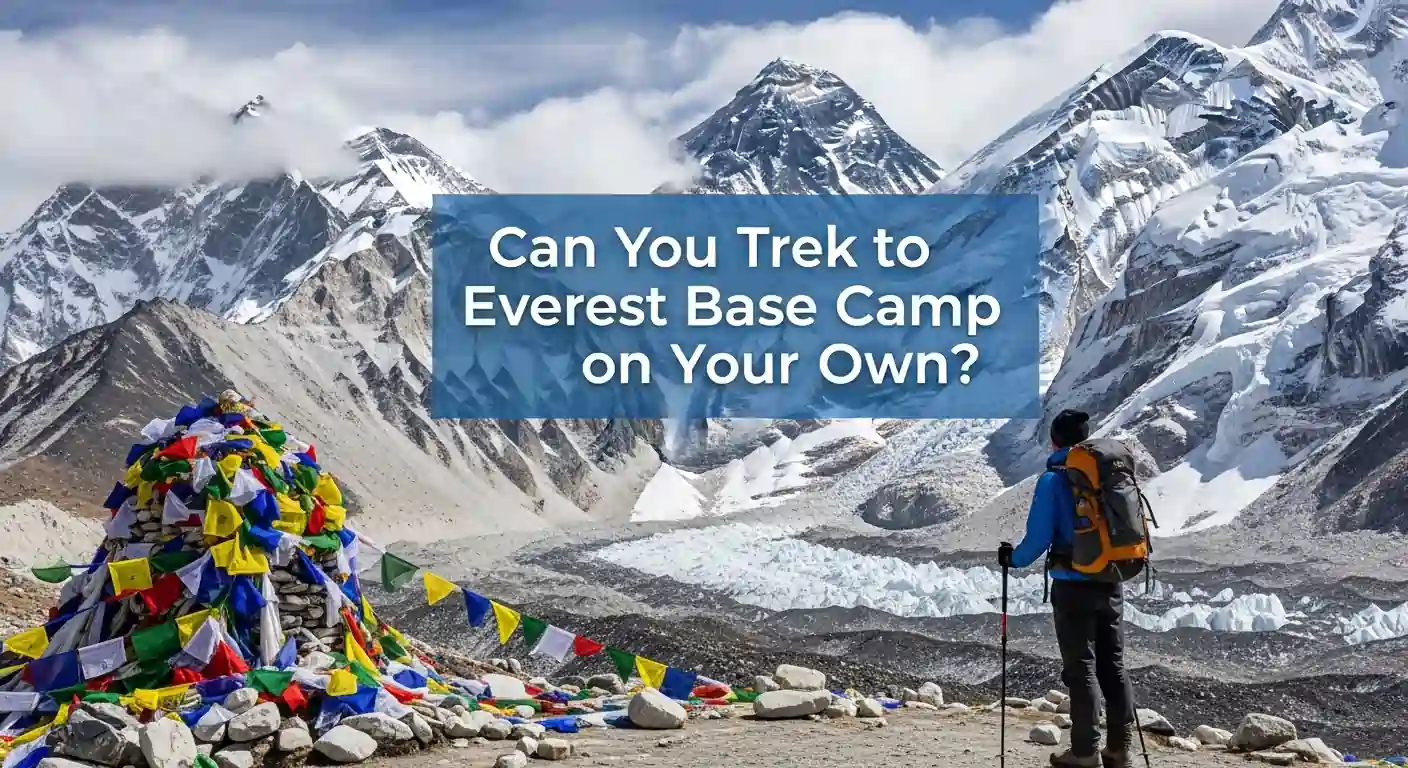
As of 2026, you can still trek to Everest Base Camp on your own, as the Khumbu region remains one of the few high-altitude areas in Nepal where a licensed guide is not yet legally mandatory for international trekkers. While the Nepal Tourism Board implemented a ban on solo trekking in most national parks and restricted areas in 2023, the Khumbu Pasang Lhamu Rural Municipality (which governs the Everest region) has maintained its own local authority. This means independent travelers still have the freedom to navigate the legendary trail to EBC without being part of an organized group or hiring a mandatory guide.
However, answering “can you trek to Everest base camp on your own” involves more than just understanding the current legalities; it requires a deep dive into the logistical challenges of managing your own permits, teahouse bookings, and high-altitude safety. While the trail is well-marked and the “Sherpa Highway” is bustling, solo trekking to 5,364 meters comes with significant responsibilities regarding acclimatization and emergency protocols. This guide provides the essential breakdown for independent trekkers looking to take on the world’s most famous base camp solo at the foot of Mount Everest.
Is It Legal to Trek to Everest Base Camp Without a Guide?
While the Nepal Tourism Board (NTB) strictly enforces a “No Solo Trekking” rule nationwide, independent trekking to Everest Base Camp is technically legal but effectively impossible due to local permit regulations. Although the Khumbu Pasang Lhamu Rural Municipality has historically resisted the national mandate to allow solo travelers, for the 2026 season, they have aligned with national safety standards. Consequently, while no “national” law forbids it, you cannot legally obtain the necessary digital tracking cards or pass through key checkpoints like Monjo and Namche Bazaar without a registered agency-verified guide.
Nepal’s Trekking Regulations Explained
As of 2026, the traditional paper TIMS card has been completely replaced by a digital e-TIMS system that requires a licensed guide to activate. To enter the Everest region, you must possess a Sagarmatha National Park permit and a Khumbu local permit, both of which are now part of a digital QR-code system. Under the strict 2023+ updates, these permits are only issued to registered trekking agencies that provide a certified guide for the duration of your trip. Attempting to bypass these checkpoints without a guide can result in immediate fines of up to NPR 12,000 and being turned back to Lukla.
Do You Need a Guide for Everest Base Camp?
While “restricted areas” like Manaslu have always required guides, the Everest region now follows a similar “Effectively Mandatory” status to ensure trekker safety and support the local economy. Unlike lower-altitude day hikes, the trail to EBC passes through a National Park where enforcement is now strictly digitized at the Monjo gateway. Checkpoint officials will scan your digital trek card to verify that a licensed guide, carrying a valid blue ID card, is accompanying you. This shift ensures that every foreign national has a professional first responder available for medical emergencies, especially as the government increases its oversight of solo trekking in Nepal.
Can You Trek to Everest Base Camp on Your Own Safely?
Trekking to Everest Base Camp on your own is physically possible but carries inherent risks that are significantly mitigated by the presence of a professional guide. While the trail itself is essentially a “Sherpa Highway” with frequent settlements, the extreme altitude and unpredictable Himalayan weather mean that a minor health issue can rapidly escalate into a life-threatening emergency. Safety for a solo trekker depends entirely on your self-reliance, high-altitude experience, and ability to recognize early warning signs of illness without an external monitor.
Trail Conditions and Navigation
The EBC trail is exceptionally well-maintained and clearly marked, making it one of the easiest high-altitude routes to navigate from a purely directional standpoint. You will find a constant stream of porters, yaks, and other trekkers to follow, and the density of teahouse infrastructure means you are rarely more than an hour or two from the nearest village. However, during the shoulder seasons or in heavy snow, the path can become obscured, and navigating the shifting moraine of the Khumbu Glacier near Base Camp requires a keen eye for cairns and fresh tracks. Without a guide, you are responsible for making every route-finding decision, which can be exhausting when your cognitive function is impaired by the thin air at 5,000 meters.
Altitude Sickness Risks
Acute Mountain Sickness (AMS) is the primary danger for any EBC trekker, and solo travelers are particularly vulnerable because they lack an objective partner to monitor their behavior. Subtle symptoms like a persistent headache, loss of appetite, or mild dizziness are easy to ignore or downplay when you are determined to reach the next village. A guide is trained to recognize the “denial” phase of AMS and will enforce mandatory acclimatization days in Namche Bazaar and Dingboche to ensure your blood chemistry catches up to the elevation. Without this professional oversight, many independent trekkers push too fast, potentially leading to High Altitude Pulmonary Edema (HAPE) or Cerebral Edema (HACE), both of which require immediate descent and medical intervention.
Emergency Response and Evacuation
In the event of an accident or severe illness, a solo trekker must rely on the kindness of strangers or teahouse owners to initiate a complex helicopter rescue system. While Nepal has a highly efficient private helicopter network, arranging an evacuation at 5,000 meters requires clear communication with insurance providers and logistical coordination that is incredibly difficult to manage while incapacitated. Standard travel insurance for EBC must specifically cover “search and rescue” and “helicopter evacuation” up to 6,000 meters, a requirement that most reputable agencies will verify before you depart. Having a guide means you have an immediate advocate who can coordinate with the nearest heli-pad, use a satellite phone or radio to call for help, and ensure you are safely transported to a hospital in Kathmandu.
Pros and Cons of Trekking to Everest Base Camp Independently
Choosing to trek to Everest Base Camp independently allows for a deeply personal and cost-effective journey through the Khumbu, but it places the full burden of safety and logistics on your shoulders. While you gain the ultimate freedom to dictate your daily mileage and rest stops, you lose the safety net of professional decision-making during high-altitude medical crises or sudden Himalayan weather shifts. This trade-off between total autonomy and structured support is the most critical decision an independent trekker must make before flying into Lukla.
| Feature | Independent Trekking (Solo) | Guided Trekking (Group/Private) |
| Total Cost | Significantly lower; you pay only for what you consume. | Higher; includes guide wages, insurance, and agency fees. |
| Itinerary Flexibility | Maximum; change routes or add rest days at any time. | Fixed; must adhere to the pre-planned group schedule. |
| Safety & AMS Monitoring | Self-monitored; high risk of misdiagnosing altitude symptoms. | Professional monitoring; guides carry oximeters and first aid. |
| Navigation & Logistics | You handle teahouse bookings, permits, and route-finding. | Stress-free; all bookings and permits are handled for you. |
| Cultural Depth | Limited to surface interactions with locals and fellow hikers. | High; guides provide deep insights into Sherpa history and culture. |
| Emergency Handling | Entirely your responsibility to coordinate heli-evacuations. | Seamless; the agency and guide handle all emergency protocols. |
| Pacing | Hike at your own natural speed without feeling rushed. | Paced for the group average to ensure collective arrival times. |
Cost Comparison: Independent vs Guided Everest Base Camp Trek
The cost of Everest Base Camp trek varies significantly depending on whether you choose to manage your own logistics or opt for a full-service guided package. An independent trekker can save several hundred dollars by avoiding agency commissions and choosing basic accommodation, but they often face higher “on-the-spot” prices for meals and services. Conversely, a guided trek offers price certainty and collective bargaining power, ensuring that flights, permits, and porterage are secured well in advance at a fixed rate.
Independent Trek Cost Breakdown
For an independent trek, the largest fixed cost is the round-trip flight to Lukla, which currently ranges from $420 to $460 in 2026. You must also budget for the Khumbu Pasang Lhamu Rural Municipality permit and the Sagarmatha National Park entry fee, totaling roughly $50. Teahouse accommodation remains relatively affordable, starting at $5-$10 per night, but daily meals can cost between $30 and $50 as food prices escalate with altitude. Adding in a mandatory guide fee of $30-$40 per day brings the total 14-day independent budget to approximately $1,200 to $1,500.
Guided Everest Base Camp Trek Cost
A professionally guided EBC package typically ranges from $1,200 to $1,800, providing an all-inclusive experience that covers your Lukla flights, high-altitude lodging, and all necessary permits. These packages include a government-licensed guide and the services of a porter, who carries the bulk of your gear, allowing you to focus entirely on the trek. By choosing a guided option with a company like Marvel Treks, you gain the added value of medical monitoring, airport transfers in Kathmandu, and the peace of mind that all logistics and emergency protocols are fully managed.
How to Plan an Independent Everest Base Camp Trek?
Planning an independent Everest Base Camp trek requires meticulous logistical coordination to manage flight schedules, permit acquisitions, and high-altitude safety protocols without an agency’s assistance. Unlike organized tours, you are responsible for securing your own transportation to Lukla and ensuring your itinerary allows for proper acclimatization to prevent altitude sickness. Success depends on your ability to remain flexible in the face of unpredictable Himalayan weather while strictly adhering to the latest 2026 trekking regulations and knowing exactly how to prepare for Everest base camp trek.
Required Permits and Documents
To enter the Everest region, you must obtain two primary documents: the Sagarmatha National Park entry permit and the Khumbu Pasang Lhamu Rural Municipality permit. The local municipality permit is usually purchased at the checkpoint in Lukla or Monjo, while the national park permit can be secured at the Nepal Tourism Board in Kathmandu or at the park entrance gate. You will need to provide digital copies of your passport and several passport-sized photos, so it is wise to carry multiple physical and digital backups. Ensure you have these documents easily accessible at all times, as they are scanned at multiple military and local checkpoints throughout the trek.
Booking Flights to Lukla
Booking your flights to Lukla should be done as early as possible, as these small-aircraft flights are notorious for being grounded due to wind, cloud cover, or visibility issues. It is essential to build at least two or three “buffer days” into your itinerary to account for potential delays, which are common even during the peak spring and autumn seasons. If flights from Kathmandu are fully booked or grounded, some trekkers opt for alternative routes, such as flying into Phaplu and trekking an additional three days to reach the main trail. Always confirm your flight the day before departure and be prepared for early morning starts to catch the clearest weather windows.
Accommodation and Teahouse Booking Tips
During the peak trekking months of April, May, October, and November, teahouse availability can be extremely limited, making advance bookings or early arrivals at each village essential. If you are trekking solo, you may be asked to share a room or sleep in the common area during peak surges, whereas the off-season offers significantly more flexibility and choice. In villages like Namche Bazaar and Dingboche, it is often better to book your return stay on your way up to ensure a comfortable bed for the descent. Many teahouses now allow for digital bookings through social media or local contacts, which can save you the stress of hunting for a room after a long day of hiking.
Suggested Itinerary for Trekking to Everest Base Camp on Your Own
Designing a successful solo itinerary requires a strict commitment to the “climb high, sleep low” philosophy to ensure your body adapts to the rapidly decreasing oxygen levels. While it is tempting to push through to higher elevations to save time, an independent trekker must build in mandatory rest days to monitor their health without the oversight of a guide. A well-paced 14-day schedule provides the necessary buffer for both physiological adaptation and the inevitable flight delays that occur at the high-altitude Lukla airport.
Standard 12-14 Day EBC Itinerary
The standard itinerary begins with a flight to Lukla followed by a gradual ascent through Phakding to the Sherpa capital of Namche Bazaar, where a two-night stay is essential for acclimatization. From Namche, the trail winds through Tengboche and Dingboche, with a second mandatory rest day in Dingboche (4,410m) to prepare for the final push toward Lobuche and Gorak Shep. Reaching Everest Base Camp and climbing Kala Patthar for the iconic sunrise view of the summit typically happens on days 8 and 9, followed by a rapid three-day descent back to Lukla. This 14-day window is widely considered the safest and most effective timeline for independent trekkers to reach the base of the world’s highest peak.
Shortened and Extended Route Options
For those seeking more than the standard out-and-back trail, extending your trek to include the Gokyo Lakes or the Three Passes offers a significantly more challenging and scenic experience. The Gokyo Lakes extension adds roughly 3-4 days to your journey, taking you over the Cho La Pass and into a valley of turquoise glacial lakes with stunning views of Cho Oyu. If you are an experienced high-altitude trekker, the Three Passes trek is the ultimate loop, crossing Renjo La, Cho La, and Kongma La to connect the entire Khumbu region in a grueling 18-21 day circuit. These extended options require much higher self-reliance and technical navigation skills, making them best suited for those who have already conquered several 5,000-meter peaks.
What Are the Biggest Risks of Trekking to Everest Base Camp Alone?
The biggest risks of trekking to Everest Base Camp alone stem from the lack of a secondary observer to identify high-altitude illness and the total responsibility for managing life-threatening logistics in a remote environment. Without a guide or partner, you are solely responsible for diagnosing your own symptoms, navigating shifting glacial terrain, and coordinating emergency help if you become incapacitated. These risks are compounded by the extreme unpredictability of Himalayan weather and the potential for total communication isolation in higher elevations.
- Severe High-Altitude Illness: Without a guide to monitor your oxygen saturation and behavior, subtle AMS symptoms can rapidly escalate into fatal HAPE or HACE.
- Rapid Weather Deterioration: Sudden blizzards or monsoon-related washouts can obscure the trail, leaving a solo trekker stranded without navigation support or extra supplies.
- Winter Extremes: Trekking in the off-season poses severe hypothermia risks, with temperatures dropping below -20°C and many teahouses closing down, limiting your shelter options.
- Communication Dead Zones: While WiFi exists, it is notoriously unreliable above 4,000m; if you suffer an injury in a dead zone, you have no way to signal for an emergency evacuation.
- Logistical Failure: Independent trekkers are often the first to lose their seats during Lukla flight cancellations, potentially stranding you for days without a support network.
- Financial Vulnerability: There are no ATMs past Namche Bazaar; if you run out of cash or lose your wallet, you have no way to pay for food, lodging, or local help.
- Physical Injury: A simple ankle sprain or fall on the Khumbu Glacier becomes a major crisis when there is no one nearby to carry your pack or help you reach the nearest village.
When Should You Consider Hiring a Guide Instead?
You should hire a guide if you lack experience above 4,000 meters, have a strict departure date, or simply want to maximize your safety and cultural immersion. While a solo trek offers freedom, a professional guide acts as a vital insurance policy against the unpredictable nature of the Himalayas. They manage the logistics that often frustrate independent travelers, such as securing Lukla flights during weather delays or finding high-quality teahouses during the peak season surges.
First-Time High-Altitude Trekkers
If you have never trekked in thin air, a guide is your most important asset for recognizing the subtle, often ignored early signs of altitude sickness. First-timers frequently misinterpret the “Khumbu Cough” or mild headaches, which can lead to dangerous delays in treatment or descent. A guide provides an objective perspective, monitoring your heart rate, oxygen saturation, and overall pace to ensure you reach Base Camp safely. Their presence takes the guesswork out of the journey, allowing you to focus on the scenery while they manage the physiological risks of the high-altitude environment.
Limited Time or Fixed Schedule Travelers
Travelers on a tight schedule benefit immensely from a guide’s ability to “grease the wheels” of Himalayan logistics, particularly when it comes to the notoriously delayed Lukla flights. Agencies have deep-rooted relationships with airlines and teahouse owners, giving their clients priority when flights are grounded or rooms are scarce. If a weather window opens suddenly, a guide can coordinate a quick departure that an independent trekker might miss while waiting in line. This logistical efficiency is the only way to ensure you complete the 14-day trek without risking your international flight home from Kathmandu.
Solo Female Travelers Seeking Added Security
While the Everest region is generally very safe for women, hiring a guide provides an extra layer of security, companionship, and peace of mind during long days on the trail. A dedicated guide acts as a buffer against unwanted attention and ensures that you are never truly isolated in remote sections or when staying in communal teahouses. Beyond physical safety, having a local guide offers a richer cultural experience, as they can facilitate deeper conversations with Sherpa women and families along the way. For many solo female trekkers, the professional bond with a guide turns a daunting physical challenge into a supportive and socially enriching adventure.
Conclusion
Deciding whether to trek to Everest Base Camp on your own or with a guide comes down to your level of experience, your comfort with risk, and your desire for logistical freedom. While the trek is technically “walkable” for an independent traveler, the challenges of high-altitude health management and the complexity of Himalayan logistics in 2026 make a guided journey the superior choice for most. Whether you choose the autonomy of a solo trek or the security of a guided group, the goal remains the same: to stand at the foot of the world’s highest peak and witness the raw majesty of the Khumbu.
Ultimately, the best way to experience Everest is the way that makes you feel most confident and safe. For some, that means the rugged self-reliance of carrying their own gear and finding their own way; for others, it means having a professional team to handle the heavy lifting so they can focus on the breathtaking scenery. Whichever path you choose, the Everest Base Camp trek is a life-altering adventure that demands respect for the mountain and an unwavering commitment to safety. Prepare well, listen to your body, and the roof of the world will reward you with an experience like no other.
Ready to head on the journey of a lifetime without the logistical stress? Let Marvel Treks handle the details while you focus on the views. From expert local guides to seamless Lukla flight coordination, we ensure your EBC adventure is safe, ethical, and unforgettable. Book your 2026 Everest Base Camp trek with the best in the business today!
FAQS
Is it legal to trek to Everest Base Camp alone in 2026?
Yes, solo trekking is still legally permitted in the Khumbu region, unlike other parts of Nepal where guides are now strictly mandatory.
Do I need a TIMS card for a solo EBC trek?
No, the Khumbu region uses its own local permit system instead of the TIMS card, which you can purchase in Lukla.
How much does a solo EBC trek cost?
A solo trek typically costs between $1,000 and $1,300, covering flights, permits, basic food, and teahouse accommodation for two weeks.
Can I hire a porter without a guide?
Yes, you can hire an independent porter in Lukla to carry your gear, providing local support without the full cost of a guide.
Is the EBC trail easy to follow without a guide?
Yes, the trail is very well-marked and busy, making it difficult to get lost during the peak spring and autumn trekking seasons.
What is the biggest risk of trekking EBC on your own?
Altitude sickness is the primary risk, as you lack a professional partner to monitor your health and symptoms in the thin air.
Can I book teahouses in advance as a solo trekker?
While difficult online, you can call ahead or have your Lukla lodge owner help you book rooms for the higher-altitude villages.
Is there mobile network coverage on the solo EBC route?
Yes, Ncell and NTC provide decent coverage up to Base Camp, though satellite-based WiFi (Everest Link) is more reliable at higher elevations.

Ready for your next Himalayan adventure?
Plan Your Next Big Adventure with Us
Explore Our AdventuresJoin our expert-guided journeys across Nepal and beyond, from classic trails to epic summits.