
Sherpa Culture and Traditions: What Every Trekker Should Know
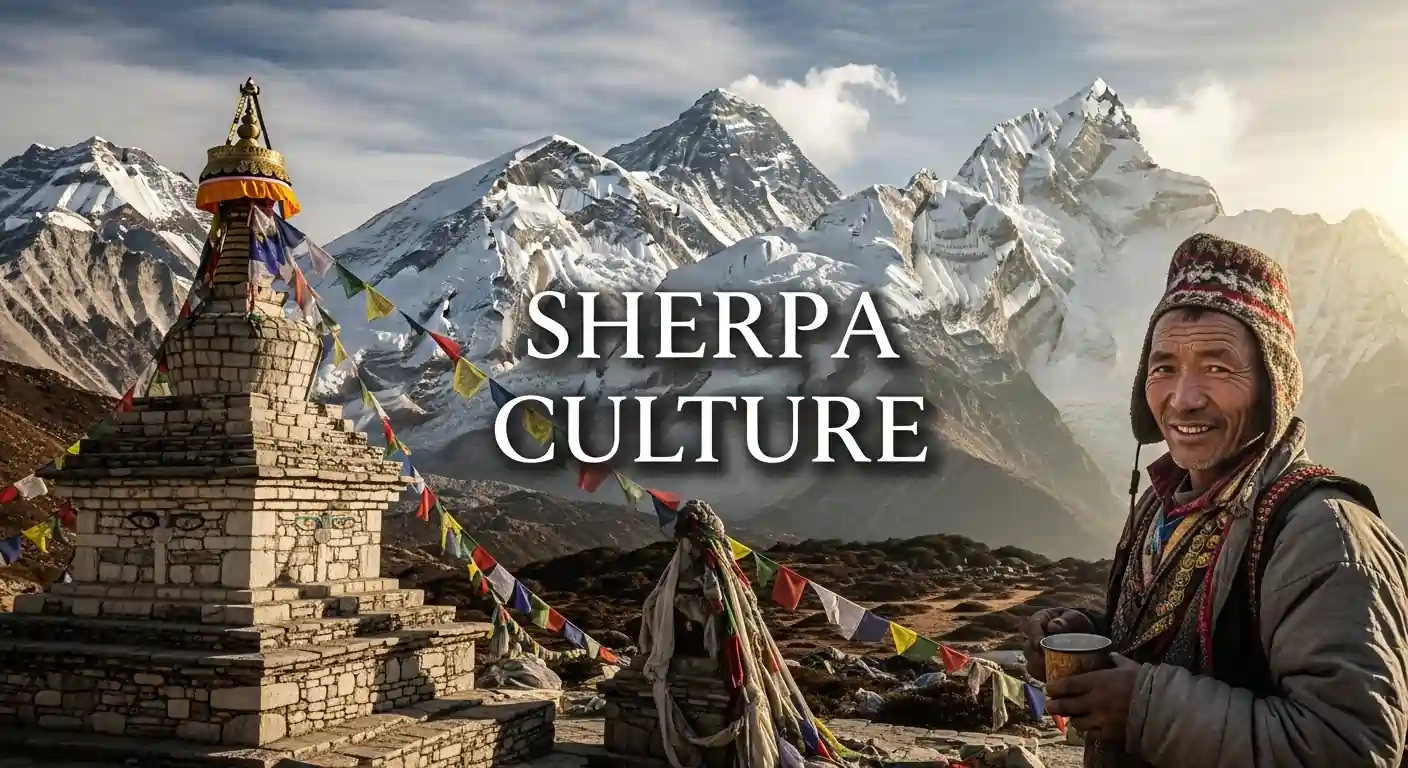
You’re hiking toward Everest Base Camp when your guide pauses at a wall of carved stones, motions for you to pass on the left, and murmurs something about prayers carried by the wind. It’s a small moment, easy to miss if you don’t know what you’re looking at. But these details are the difference between walking through Sherpa homeland as a tourist and experiencing it as a guest who understands what they’re seeing.
In this blog about Sherpa culture and traditions, we’ll take you beyond the surface-level understanding of who the Sherpas truly are, a distinct Himalayan ethnic group with their own language, Buddhist practices, and centuries of high-altitude heritage. You’ll discover the religious and cultural practices you’ll encounter on the trail, learn proper etiquette for visiting monasteries and villages, understand the vital role Sherpas play in Himalayan mountaineering, and find out how to support these communities ethically during your trek. Whether you’re planning your first journey to the Khumbu or simply want to travel more respectfully, this guide will help you experience Sherpa homeland as an informed and considerate guest.
Who Are the Sherpas?
The Sherpas are a distinct Himalayan ethnic group with their own language, religion, and centuries-old traditions, not simply a job title for mountain guides. This distinction matters because Western media often uses “Sherpa” as shorthand for any Nepali mountain worker, which erases the identity of an entire people. When you trek through the Khumbu region below Everest, you’re walking through the cultural heartland of the Sherpa community.
Sherpa as an Ethnic Group
Sherpas belong to one of Nepal’s many ethnic communities, alongside the Tamang, Rai, Gurung, and dozens of others. They speak a Tibetan-derived language, practice a unique form of Buddhism, and maintain customs that have survived for over 500 years in some of the world’s most challenging terrain. The population is concentrated primarily in Nepal’s Solukhumbu District, though Sherpa communities also exist in Kathmandu, Darjeeling (India), and abroad.
1. Sherpa as an Occupation
Here’s where confusion often arises. The trekking industry uses “sherpa” (lowercase) as a job description for any porter or high-altitude guide, regardless of actual ethnicity. Your porter might be Tamang, your guide might be Rai, and neither would be ethnically Sherpa despite holding “sherpa” positions.
- Ethnic Sherpa: A person born into the Sherpa community with Sherpa heritage, language, and cultural identity.
- Occupational sherpa: Any high-altitude worker or guide in the trekking industry, regardless of ethnic background.
Asking someone respectfully about their background is perfectly acceptable—it shows genuine interest rather than assumption.
2. Where Sherpas Live in Nepal Today?
The villages you’ll encounter on Everest-region treks, Namche Bazaar, Tengboche, Khumjung, Phortse, and Thame, are traditional Sherpa settlements where families have lived for generations. The Khumbu Valley, protected within Sagarmatha National Park, remains the spiritual and cultural center of Sherpa identity, even as many families have migrated to urban areas for education and business opportunities.
Origin and History of the Sherpa People
The Sherpa people trace their roots to eastern Tibet, migrating centuries ago across high Himalayan passes to settle in what is now northeastern Nepal. Their name literally means “people from the east” in Tibetan, reflecting this journey from the Kham region. Once settled in the Khumbu Valley beneath Everest, they adapted to extreme elevations through yak herding, potato farming, and trans-Himalayan trade. Generations of high-altitude living have given Sherpas measurable physiological advantages in processing oxygen, a result of natural selection rather than myth.
1. Migration from Tibet to the Himalayas
The name “Sherpa” itself tells their origin story, it translates to “people from the east” in Tibetan. Centuries ago, Sherpa ancestors migrated from the Kham region of eastern Tibet, crossing high Himalayan passes to settle in what is now northeastern Nepal. This migration brought Tibetan Buddhist traditions, language roots, and highland survival skills that define Sherpa culture today.
2. Settlement in the Khumbu Region
Once in Nepal, Sherpas established villages in the high valleys beneath Everest, adapting to elevations where most crops won’t grow. Traditional livelihoods centered on yak herding, potato farming (one of the few crops that thrives above 3,000 meters), and trans-Himalayan trade with Tibet.
3. How Sherpas Adapted to High Altitude Life?
Living above 3,000 meters for generations has given Sherpas measurable physiological advantages at altitude. Research shows they process oxygen more efficiently and maintain better blood flow in low-oxygen environments than lowland populations, who must undergo careful Everest acclimatization to function at similar elevations. This adaptation is the result of natural selection over centuries of high-altitude living, not a supernatural ability.
Sherpa Religion and Spiritual Beliefs
Religion shapes every aspect of Sherpa daily life, from the prayer flags fluttering above homes to the monasteries anchoring each village. Sherpas practice Tibetan Buddhism with a devotion that goes far beyond ritual, it’s woven into their identity, their relationship with the mountains, and the way they welcome strangers. Understanding these spiritual beliefs helps you recognize the sacred landscape you’re walking through and shows respect for the communities hosting your journey.
1. Tibetan Buddhism in Sherpa Culture
Sherpas practice the Nyingmapa school of Tibetan Buddhism, the oldest of Tibet’s Buddhist traditions. Religion permeates daily life through morning prayers, household shrines, and the guidance of lamas (religious teachers) who hold significant community influence. You’ll notice this immediately: prayer flags flutter from every rooftop, and the sound of chanting often drifts from homes at dawn. Unlike compartmentalized weekly services, Buddhism shapes every aspect of Sherpa existence, from how they greet strangers to how they view the mountains themselves.
2. Monasteries and Gompas You Will See on the Trail
Tengboche Monastery, perched at 3,867 meters with Everest framing its backdrop, is the most famous gompa (monastery) you’ll encounter on the Everest Base Camp route. Pangboche Gompa and Thame Monastery are equally significant to Sherpa spiritual life, serving as centers for religious ceremonies and community gatherings. Most monasteries welcome respectful visitors, though basic etiquette applies. Remove shoes before entering, walk clockwise around the interior, and avoid pointing your feet toward altars or statues. These aren’t just tourist attractions but active spiritual centers where monks live, study, and practice daily.
3. Prayer Flags, Mani Stones, and Prayer Wheels
You’ll encounter sacred objects constantly on Himalayan trails, each serving a specific spiritual purpose. Prayer flags (lungta) are colorful rectangular flags inscribed with mantras, and Sherpas believe the wind carries prayers across the land to benefit all beings. Mani stones are rocks carved with “Om Mani Padme Hum” and other mantras, and you should always pass on your left, keeping the stones on your right. Prayer wheels are spinning cylinders containing written mantras that you spin clockwise as you walk past. Chortens are Buddhist stupas marking sacred sites or memorializing the deceased, and you should walk around them clockwise to show proper respect.
Traditional Sherpa Festivals and Ceremonies
Sherpa festivals blend Buddhist devotion with community celebration, offering trekkers a rare window into living traditions that have survived for centuries. These ceremonies mark sacred dates in the Tibetan calendar and bring entire villages together for masked dances, ritual blessings, and feasting. If your trek coincides with a major festival, you’ll witness Sherpa culture at its most vibrant, though you should always observe respectfully as a guest rather than a spectator.
1. Mani Rimdu Festival
If your trekking dates align with October or November, you might witness Mani Rimdu at Tengboche Monastery, one of the most significant Sherpa religious celebrations. Monks perform elaborate masked dances representing the victory of Buddhism over evil, followed by blessing ceremonies where the head lama distributes blessed pills and sacred threads. The festival typically spans several days and draws Sherpas from surrounding villages who gather to receive blessings and participate in communal prayers. Respectful visitors are welcome to observe the ceremonies, though you should maintain a quiet presence and follow monastery etiquette throughout the festivities.
2. Dumji Festival
Dumji honors Guru Rinpoche, the saint credited with bringing Buddhism to Tibet, and occurs in early summer (May to June) across different Sherpa villages. Unlike the monastery-centered Mani Rimdu, Dumji unfolds at the village level with multi-day celebrations featuring traditional dancing, feasting, and rituals. Each village celebrates on different dates, so the festival rotates through Sherpa communities throughout the season. The celebration strengthens community bonds as families gather to share traditional foods, perform sacred dances, and renew their spiritual commitments under the guidance of local lamas.
3. Losar and Other Sherpa Celebrations
Losar, the Tibetan and Sherpa New Year, falls in February or March and brings family gatherings, special foods, and monastery visits. Trekking during any of the major festivals offers cultural immersion that’s impossible to replicate at other times, though lodges fill quickly during festival periods.
The Role of Sherpas in Himalayan Mountaineering
Sherpas transformed from subsistence farmers and traders into the backbone of Himalayan mountaineering over the past century. Their high-altitude expertise, physiological advantages, and intimate knowledge of the mountains make them indispensable to expeditions. What began with early European climbing attempts has evolved into a profession where Sherpas not only support climbers but set records and lead expeditions themselves, fundamentally reshaping who gets credit for Himalayan achievements.
1. Tenzing Norgay and the First Everest Summit
On May 29, 1953, Tenzing Norgay Sherpa and Edmund Hillary became the first confirmed climbers to reach Everest’s summit, transforming global awareness of the Sherpa people overnight. Tenzing’s legacy remains deeply felt in Sherpa communities today, where his descendants continue working in mountaineering and his name carries almost mythic status in the Khumbu. This historic achievement marked the beginning of Sherpa recognition in the mountaineering world and established a foundation for future generations of Sherpa climbers.
2. Modern Sherpa Climbing Records and Achievements
Contemporary Sherpa climbers have shattered records that seemed impossible a generation ago, demonstrating extraordinary skill and endurance at extreme altitudes. Kami Rita Sherpa holds the record for most Everest summits, while female Sherpa climbers like Lhakpa Sherpa are increasingly breaking barriers in what was traditionally a male-dominated field. These achievements showcase how Sherpas have evolved from support staff to record-breaking mountaineers in their own right.
3. Why Sherpas Excel at High Altitude
The physiological adaptations mentioned earlier translate directly into mountaineering performance, allowing Sherpas to work effectively at altitudes where most climbers struggle to walk. Their bodies extract oxygen more efficiently and recover faster from exertion, giving them a measurable advantage in high-altitude environments. However, genetic advantage doesn’t make them invincible, as Sherpas face the same risks from avalanches, crevasses, and extreme weather as anyone else on the mountain.
What Sherpas Do on Modern Treks and Expeditions
Sherpas serve as guides, porters, and safety experts on Himalayan treks and climbing expeditions. They navigate routes, carry equipment, monitor trekkers for altitude sickness, and make critical decisions about weather and safety. Their roles range from licensed guides who lead groups and interpret cultural sites to porters who transport gear between lodges. This expertise combines generations of mountain knowledge with modern training in first aid, navigation, and client care.
1. The Role of a Sherpa Guide
Licensed Sherpa guides complete government-certified training covering navigation, first aid, and client safety. On your trek, a guide handles route decisions, monitors weather conditions, interprets cultural sites, and watches for signs of altitude sickness.
- Guides make critical decisions about route safety and weather conditions
- They provide cultural interpretation at monasteries and sacred sites
- Most guides working with international trekkers speak conversational to fluent English
- They monitor trekkers continuously for altitude sickness symptoms
2. The Role of a Sherpa Porter
Porters carry loads between lodges, typically 25 to 30 kilograms of client gear, allowing you to trek with just a daypack. While many porters are ethnically Sherpa, others come from Tamang, Rai, and other communities.
- Porters transport your main luggage so you can hike comfortably with a light daypack
- Not all porters are ethnically Sherpa despite the common terminology
- Ethical treatment of porters varies significantly between trekking operators
- Standard porter loads range from 25 to 30 kilograms maximum
3. How Sherpas Keep Trekkers Safe
Your Sherpa team’s safety responsibilities extend beyond trail navigation. They provide comprehensive protection through altitude monitoring, weather assessment, emergency response, and expert route knowledge.
- Altitude monitoring: Watching for symptoms of AMS (Acute Mountain Sickness), including headache, nausea, and confusion
- Weather assessment: Reading cloud patterns and making go/no-go decisions
- Emergency response: Coordinating helicopter evacuations and administering first aid when situations deteriorate
- Route knowledge: Navigating trails in fog, snow, or darkness when conditions change unexpectedly
Common Misconceptions About Sherpas
Western media and casual trekking conversations perpetuate several misunderstandings about Sherpa people that reduce their identity to stereotypes. Recognizing these misconceptions helps you interact more respectfully with the communities hosting your trek and appreciate Sherpas as a distinct ethnic group with their own heritage, not just mountain workers with superhuman abilities.
1. Not Every Guide in Nepal Is a Sherpa
Western media often uses “Sherpa” as shorthand for any Nepali mountain worker, which erases the distinct identities of other ethnic groups who work equally hard in the trekking industry. Your guide might introduce themselves as Tamang, Gurung, or Rai, each with their own rich cultural heritage. Nepal’s trekking workforce includes dozens of ethnic communities, and assuming everyone is Sherpa overlooks this diversity. Asking about someone’s background respectfully shows genuine interest in their actual identity rather than making assumptions based on their profession.
2. Sherpa Is Not Just a Job Title
Conflating an ethnicity with an occupation reduces an entire people to their economic function. Sherpas work as teachers, doctors, business owners, and government officials, and mountaineering represents just one slice of Sherpa professional life. Many Sherpas have never worked in trekking or climbing at all, pursuing careers completely unrelated to tourism. Recognizing Sherpa as an ethnic identity first, rather than a job description, shows respect for the full scope of their community and contributions to Nepali society.
3. Sherpas Are Not Superhuman
Acknowledging Sherpa climbing abilities sometimes slides into mythology that obscures real human vulnerability. Many Sherpas have died on Everest, often while fixing ropes or carrying loads through the Khumbu Icefall so that paying clients can attempt the summit. The 2014 avalanche that killed 16 Sherpas remains a stark reminder of the dangers they face regularly. Respecting Sherpas means recognizing both their remarkable capabilities and the genuine risks they accept, treating them as skilled professionals rather than invincible mountain spirits.
Sherpa Food and Hospitality Traditions
Sherpa cuisine reflects centuries of adaptation to high-altitude living, where hearty, warming foods provide the calories needed to survive harsh mountain conditions. Meals center around staples like rice, lentils, and potatoes, often served in communal teahouse settings that double as social gathering spaces. Food in Sherpa culture goes beyond sustenance. It represents hospitality, community bonds, and the practical wisdom of mountain people who have perfected the art of nourishment in extreme environments.
1. Traditional Sherpa Cuisine and Staple Dishes
High-altitude cooking prioritizes calories and warmth:
- Dal bhat: Lentils, rice, and vegetables served twice daily, the foundation of Nepali mountain cuisine.
- Sherpa stew (thukpa): A hearty noodle soup perfect for cold evenings above 4,000 meters.
- Momos: Tibetan-style dumplings filled with vegetables or meat.
- Butter tea (po cha): Salted tea churned with yak butter; most Westerners find it challenging, but it’s genuinely warming at altitude.
2. The Teahouse Experience in Sherpa Villages
Teahouses are family-run lodges offering basic rooms and communal dining areas centered around wood-burning stoves. Evenings bring trekkers together over meals, sharing stories while charging devices and warming frozen fingers. You’re a guest in someone’s home, not a customer at a hotel.
3. Mealtime Customs and Guest Etiquette
Guests are typically served first as a sign of respect, and accepting tea or food when offered is considered polite. If you’re eating with your hands (common with dal bhat), use your right hand, the left is traditionally considered unclean.
Sherpa Cultural Etiquette Every Trekker Should Follow
Respecting Sherpa customs transforms you from a passing tourist into a welcomed guest in their homeland. Simple gestures like greeting people properly, behaving respectfully at sacred sites, and understanding local protocols show that you value the culture you’re experiencing. These practices aren’t complicated rules to memorize but thoughtful actions that demonstrate genuine appreciation for the communities hosting your journey. Following basic etiquette enriches your trek while honoring the traditions that have sustained Sherpa culture for centuries.
1. How to Greet Sherpas Respectfully?
“Namaste” (palms together, slight bow) works universally across Nepal, while “Tashi Delek” is the traditional Sherpa and Tibetan greeting you’ll hear in the Khumbu. Handshakes are perfectly acceptable with guides accustomed to international clients.
2. Behavior at Monasteries and Sacred Sites
Religious sites require specific conduct:
- Remove shoes before entering temple buildings.
- Walk clockwise around religious monuments, mani walls, and prayer wheels.
- Ask permission before photographing monks, rituals, or sacred objects.
- Dress modestly, covering shoulders and knees.
- Speak quietly and avoid pointing at religious statues.
3. Photography and Privacy Protocols
Always ask before photographing Sherpa people, especially elders and children, a quick gesture toward your camera with a questioning look usually suffices. Some religious sites prohibit interior photography entirely.
4. Tipping and Gift-Giving Customs
Tipping guides and porters is expected and typically presented in an envelope at the trek’s conclusion. Small gifts like photos from your home country or school supplies are welcome but not obligatory. Avoid giving money or candy directly to children on the trail, it encourages begging and can create problematic dynamics in villages.
Challenges Sherpas Face Today
Despite their essential role in Himalayan mountaineering and tourism, Sherpas face serious challenges that threaten both their safety and livelihoods. Dangerous working conditions on high-altitude expeditions claim lives regularly, while economic pressures and unfair pay practices persist across the industry. Climate change adds another layer of threat, altering the mountain environment their communities have depended on for centuries and straining resources in villages unprepared for current tourism volumes.
1. Dangerous Working Conditions on Expeditions
The Khumbu Icefall is a constantly shifting maze of crevasses and unstable ice towers that claims Sherpa lives regularly because they traverse it repeatedly while fixing ropes and ferrying loads for expeditions. Sherpas face the most dangerous sections of Everest multiple times per climbing season, exposing them to avalanche risk, crevasse falls, and collapsing ice seracs. The 2014 avalanche that killed 16 Sherpas remains the deadliest single disaster in Everest history, highlighting the extreme dangers these mountain workers accept as part of their profession. Despite improvements in safety equipment and protocols, high-altitude work continues to pose life-threatening risks that disproportionately affect Sherpa climbing staff.
2. Economic Pressures and Fair Pay Issues
A significant gap often exists between what trekkers pay operators and what porters and guides actually receive in wages and benefits. Some companies underpay staff, skip insurance coverage, or provide inadequate equipment for high-altitude conditions, leaving workers vulnerable during emergencies. The economic pressure to accept dangerous work stems from limited employment alternatives in mountain communities where tourism represents one of few income sources. Asking your operator directly about porter treatment policies, insurance coverage, and fair wage practices before booking helps ensure your money supports ethical treatment of the people making your trek possible.
3. Climate Change and Environmental Threats in the Khumbu
Glacial lake outburst floods (GLOFs) pose increasing threats to Sherpa villages as temperatures rise and glacial lakes expand beyond safe levels in the valleys above settlements. Changing weather patterns affect both agriculture and trekking seasons, disrupting traditional farming cycles and making expedition timing less predictable than in previous generations. Increased tourism strains water supplies and waste management systems in communities never designed for current visitor volumes, creating sanitation and environmental challenges. Melting glaciers and unpredictable snowfall patterns threaten the long-term sustainability of both Sherpa livelihoods and the mountain environment their culture has depended on for centuries.
How to Support Sherpa Communities Ethically
Support Sherpa communities by choosing operators that pay fair wages and provide proper equipment, staying at locally owned teahouses, and practicing responsible environmental habits on the trail. Your trekking choices directly impact the livelihoods and safety of the people who make Himalayan adventures possible. Ethical support means ensuring your money reaches the communities hosting you rather than disappearing into corporate profits. Small decisions about where you stay, what you buy, and who you trek with create meaningful differences in Sherpa villages.
1. Choose Trekking Operators That Treat Sherpas Fairly
When evaluating operators, look for transparency on specific points:
- Fair wages: Porters paid at or above industry standards.
- Proper equipment: Porters provided with adequate clothing, boots, and shelter for high-altitude conditions.
- Insurance coverage: Staff covered for accidents, medical emergencies, and helicopter evacuation.
- Weight limits: Loads capped at reasonable levels, typically 25–30 kilograms maximum.
2. Support Sherpa-Owned Businesses and Lodges
Staying at locally owned teahouses rather than outside-invested facilities keeps money circulating within Sherpa communities. Purchasing handicrafts directly from artisans ensures your spending benefits the people whose homeland you’re visiting.
3. Practice Leave No Trace in Sherpa Lands
Packing out all trash, using refillable water bottles, and minimizing plastic waste protects the environment Sherpas call home. Many responsible operators now include trail clean-up as part of their expeditions.
Useful Sherpa Phrases and Greetings for Trekkers
Learning a few basic Sherpa phrases shows respect for the culture you’re experiencing and creates genuine connections with the people hosting your trek. Even imperfect attempts at speaking Sherpa delight locals and demonstrate that you see them as more than service providers. The Sherpa language shares roots with Tibetan, so these phrases work throughout the Khumbu region and help you engage more meaningfully with communities along the trail.
1. Basic Greetings and Polite Expressions
Even imperfect attempts at Sherpa phrases delight locals:
| English | Sherpa/Tibetan | Pronunciation |
| Hello | Tashi Delek | tah-shee deh-lek |
| Thank you | Thuchi che | too-chee chay |
| Yes | La | lah |
| No | Min | min |
| How are you? | Karu duk? | kah-roo dook |
| Goodbye | Kale phe | kah-leh feh |
2. How to Say Thank You and Show Appreciation
“Thuchi che” is arguably the most valuable phrase you can learn, use it liberally with your guide, porters, and teahouse hosts. Combining words with a genuine smile and slight bow communicates appreciation even when pronunciation falls short.
Experience Authentic Sherpa Culture on Your Nepal Trek
Traveling with knowledgeable local guides transforms a scenic hike into genuine cultural immersion. Routes through Solukhumbu pass directly through authentic Sherpa villages where you can visit monasteries, observe daily life, and share meals with families who have called the Khumbu home for generations.
Marvel Treks, known as the best expedition and trekking company in Nepal, employs and trains skilled local guides who share their heritage with trekkers, connecting cultural understanding with community empowerment. When your guide explains the significance of a mani wall or introduces you to a monastery’s head lama, you’re experiencing the Khumbu through eyes that have known it since childhood.
FAQs About Sherpa Culture and Traditions
How do Sherpa names work?
Sherpas are traditionally named after the day of the week they were born, Dawa for Monday, Mingma for Tuesday, Lhakpa for Wednesday, Phurba for Thursday, Pasang for Friday, Pemba for Saturday, and Nima for Sunday. “Sherpa” functions as a shared surname indicating ethnic identity rather than family lineage.
Can you visit a Sherpa village without doing a multi-day trek?
Yes, Namche Bazaar and surrounding villages are accessible via a short flight to Lukla followed by a one or two-day hike. Cultural visits are possible without committing to a full Everest Base Camp itinerary.
What is the best trek for experiencing Sherpa culture?
The Everest Base Camp Trek passes through the heart of Sherpa homeland, including villages like Namche Bazaar, Tengboche, and Khumjung where you can visit monasteries, schools, and the Sherpa museum.
Do all Sherpas speak English?
Many Sherpa guides working with trekking companies speak conversational to fluent English. However, Sherpas in remote villages, particularly elders, may speak only Nepali and their native Sherpa language.
Are there female Sherpa guides available for treks?
Yes, female Sherpa guides exist and are growing in number, though they remain a minority in the industry. You can request a female guide when booking your trek.

Ready for your next Himalayan adventure?
Plan Your Next Big Adventure with Us
Explore Our AdventuresJoin our expert-guided journeys across Nepal and beyond, from classic trails to epic summits.