
What Roles Do Sherpas Play On Everest Expedition? Complete Guide
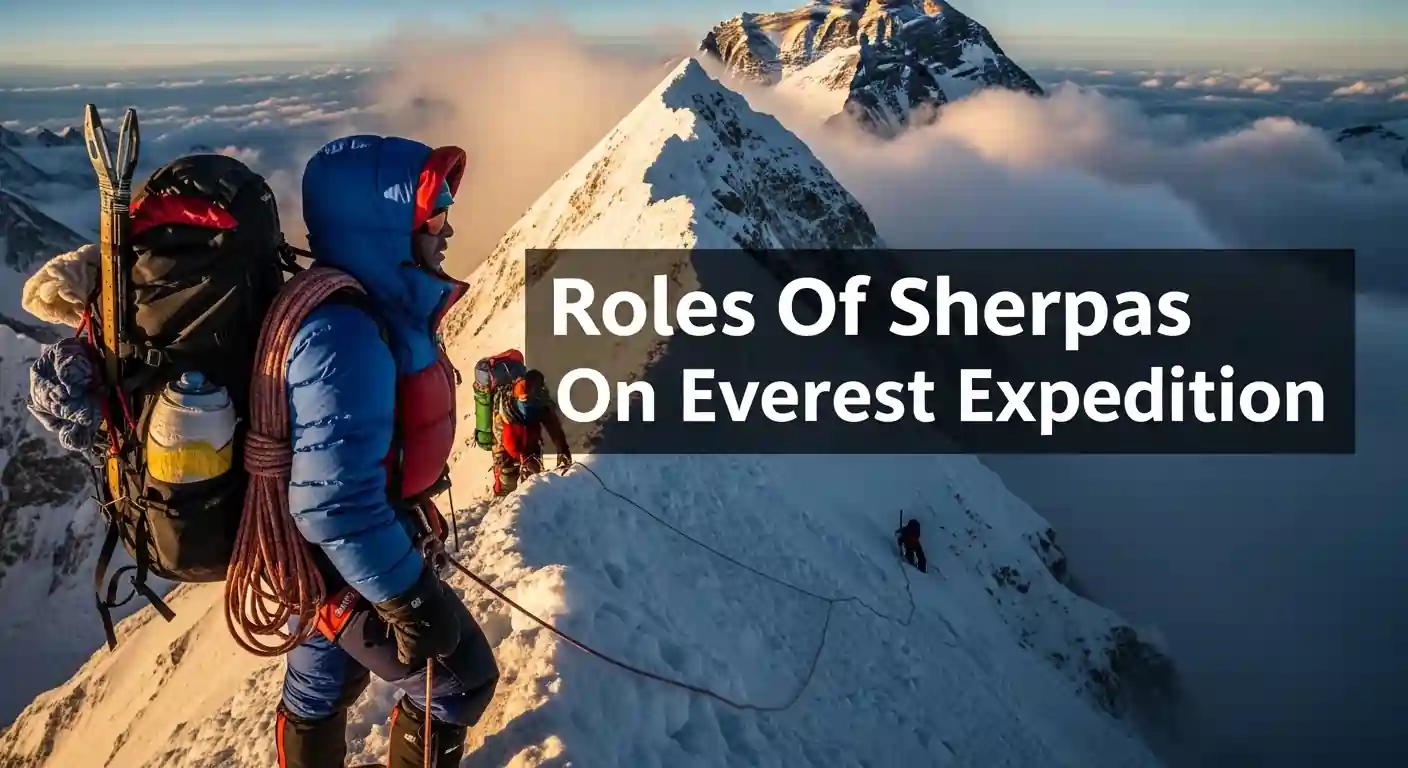
When you imagine the summit of Mount Everest, you probably see a lone climber planted in the snow, puffing oxygen like a high-altitude Darth Vader while planted in a sea of white. But let’s get real, behind every “solo” conqueror is a high-vibration engine of the Sherpa elite who are the literal backbone of the Himalayas. Without these legendary mountain architects, the “Death Zone” would just be a very expensive graveyard; they aren’t just guides, they are the tactical geniuses who turn a suicidal vertical climb into a calculated, successful mission.
In this blog, we are going to dive deep into What Roles Do Sherpas Play On Everest Expedition to give you the full, unvarnished look at the masters of the Khumbu. We’ll break down their multifaceted responsibilities, from the “Icefall Doctors” who risk it all to fix ropes across shifting glaciers to the high-altitude cooks who keep calories flowing at 6,000 meters. We’ll explore the tactical logistics they manage, the spiritual connection they have with the “Mother Goddess of the World,” and why their DNA is basically a cheat code for surviving the thin air.
Who Are Sherpas?
Sherpas are an elite Tibetan-origin ethnic group native to the high-altitude valleys of the Himalayas, particularly the Khumbu region of Nepal, where they have lived for over 500 years at elevations that would leave most people gasping for air. They aren’t just “mountain workers”; they are a distinct cultural community with a deep spiritual bond to the peaks they call Chomolungma.
Evolution has essentially given them a high-vibration biological “cheat code,” with unique genetic adaptations that allow their bodies to process oxygen with incredible efficiency in the thin, sub-zero atmosphere of the Death Zone. This combination of ancestral heritage and physiological grit has earned them a global reputation as the world’s most elite high-altitude climbers and the undisputed architects of every successful mission to the summit of Mount Everest.
Why Are Sherpas Crucial to Everest Expeditions?
Sherpas are crucial to Everest expeditions because they possess a unique, high-vibration combination of ancestral mountain intuition and a biological “cheat code” that allows their bodies to thrive in the thin air of the Death Zone. Without their tactical mastery, the world’s highest peak would remain an impenetrable fortress; they are the elite architects who fix the ropes, bridge the lethal crevasses of the Khumbu Icefall, and manage the staggering logistics required to mitigate the dangers of climbing Everest at 8,000 meters.
- Genetic Altitude Adaptation: Having lived at high elevations for generations, Sherpas have evolved a physiological efficiency in their mitochondria, allowing them to produce massive energy with minimal oxygen compared to lowlanders.
- The “Icefall Doctors” Protocol: A specialized team of elite Sherpas risks everything each season to scout, fix ropes, and anchor ladders across the shifting, lethal labyrinth of the Khumbu Icefall before any climbers arrive.
- Logistical Heavy-Lifting: They perform the “brute force” work of transporting oxygen cylinders, tents, and food to high-altitude camps (Camp 1 through 4), ensuring the infrastructure for survival is set long before the summit push.
- Acute Mountain Intuition: Their deep cultural connection to the peaks gives them an uncanny ability to read subtle shifts in wind, cloud patterns, and snow stability that even the most advanced weather apps can miss.
- High-Altitude Rescue Support: When a mission goes sideways in the Death Zone, Sherpas are often the only ones with the physical grit to perform “superhuman” rescues, carrying exhausted climbers to safety at 8,000+ meters.
- Spiritual Guardianship: They lead the essential “Puja” ceremonies to seek permission and protection from the mountain deities, ensuring the expedition is anchored in a respectful and grounded vibration.
Key Roles of Sherpas on Everest Expedition
Sherpas perform a spectrum of elite, high-vibration roles on an Everest expedition, ranging from the technical “Icefall Doctors” who bridge lethal crevasses to the high-altitude porters who manage the staggering logistics of the Death Zone. They are the literal engine of the mountain, executing a tactical masterplan that begins months before the first climber arrives and continues through every grueling vertical meter to the summit. Without their specialized coordination and physical grit, the infrastructure required to mitigate the risk of Mount Everest deaths at 8,000 meters simply would not exist.
Route Setting and Icefall Navigation
A specialized team of Sherpas known as the “Icefall Doctors” are the first to enter the mountain, fixing the labyrinth of ropes and aluminum ladders through the shifting, deadly Khumbu Icefall. This is perhaps the most high-stakes role on the mountain, requiring them to scout a safe path through a crumbling glacier that moves several feet a day. They maintain this “lifeline” throughout the season, constantly re-anchoring lines and replacing ladders swallowed by crevasses to ensure that climbers have a vetted, tactical route through the most dangerous section of the climb.
Carrying Equipment and Supplies
Sherpas handle the “brute force” logistics of the expedition, making multiple rotations to ferry oxygen cylinders, heavy tents, and food caches to the high-altitude camps (Camps 1–4). While a client might carry a light daypack, a Sherpa often hauls 20-30kg of essential survival gear through the thin air, building the “oxygen bank” at the South Col that makes the final summit push possible. This role is a test of pure physiological endurance, as they must move faster and carry more than anyone else on the hill to ensure that all necessary Everest climbing equipments, from triple-insulated boots to high-flow regulators, are fully stocked before the weather window opens.
Camp Setup and Logistics Management
Beyond the heavy lifting, Sherpas are the master architects of the high-altitude villages, establishing everything from the sprawling Base Camp to the “ragged edge” tents at 8,000 meters. They manage the complex tactical dance of fuel consumption, food preparation, and waste management in a sub-zero environment where even boiling water is a chore. By the time an exhausted climber reaches a high camp, the Sherpa team has already pitched the tents, melted the snow for hydration, and secured the perimeter against the brutal Himalayan winds.
Guiding and Supporting Climbers
During the actual ascent, Sherpa guides act as the “mountain brain” for their clients, providing technical climbing support, managing oxygen flow, and making critical “go/no-go” safety calls. They are constantly monitoring the client’s physical state and the mountain’s volatile weather, often clipping climbers into safety lines or short-roping them through technical rock steps like the Hillary Step. This role requires a high-vibration blend of mentorship and elite athleticism, as the guide must be strong enough to lead the way while remaining mentally sharp enough to navigate the tactical chaos of a summit push.
Rescue and Emergency Assistance
When a mission goes sideways in the Death Zone, Sherpas are the primary ,and often only, rescue force capable of performing “superhuman” evacuations at extreme altitudes. They lead the tactical response for injured or exhausted climbers, often carrying individuals on their backs or rigging complex sled systems to lower them through technical terrain. Their ability to remain calm and physically dominant during a crisis is the ultimate safety net on Everest, turning potential tragedies into successful survival stories through sheer mountain grit.
Stand on the Top of the World with Everest Expedition
Get expert support from Marvel Treks or explore everything you need to know about the Everest Expedition before your climb.
How Do Sherpas Help Climbers Reach the Summit?
Sherpas help climbers reach the summit by serving as the tactical “high-altitude engine” that manages the physical, technical, and psychological barriers of the Death Zone. They are the elite navigators who fix the final miles of safety line to the peak, ensuring that every climber has a literal “lifeline” to the roof of the world. Beyond the technical work, they provide a high-vibration grounding force, managing oxygen flow and making critical split-second safety decisions that bridge the gap between a successful summit and a high-stakes mountain disaster, especially during the narrow weather windows of the Everest summit push.
Acclimatization Support
Sherpas guide climbers through a tactical “climb high, sleep low” rotation schedule, ensuring their bodies adapt to the thinning air of the Khumbu. They monitor a climber’s physical vitals and pace, often slowing them down to prevent “altitude burnout” or early-onset AMS before the final push. This role is a delicate balance of physiological coaching and logistical coordination, ensuring the team moves as a single, high-vibration unit toward the higher camps without compromising long-term stamina.
Fixing Summit Routes
A specialized elite team of Sherpas is responsible for the “summit fix,” anchoring kilometers of static rope from the South Col all the way to the 8,848-meter peak. They are the first to stand on the summit each season, testing snow stability and bridging technical obstacles like the Hillary Step to create a vetted, secure path for paying clients. This role is arguably the most dangerous job on Earth, as it involves working in the “Death Zone” for hours without a safety line already in place, purely to create one for others.
Providing Motivation and Guidance
When a climber hits the “mental wall” at 8,000 meters, Sherpas provide the psychological grit and emotional anchoring needed to keep their legs moving. They act as high-altitude mentors, offering calm, steady encouragement and tactical advice that keeps a climber focused on the next step rather than the overwhelming scale of the mountain. In an environment where the brain is starved of oxygen and prone to panic, a Sherpa’s grounded presence is often the only thing keeping a climber’s spirit from breaking.
Sherpa Skills and Expertise
Sherpa expertise is a high-vibration blend of biological “cheat codes,” generational mountain wisdom, and elite technical training that makes them the world’s most capable high-altitude specialists. They don’t just “climb” Everest; they manage it, using a tactical skill set honed over centuries to navigate the most lethal environments on the planet with a calm, surgical precision.
High-Altitude Climbing Experience
Most Sherpas on an Everest expedition have spent over a decade working their way up from porters to lead guides, often accumulating dozens of summits across multiple 8,000-meter peaks. This isn’t just a job; it’s a career of high-altitude immersion where they learn the “rhythm” of the thin air and the specific tactical challenges of the Khumbu. By the time they lead a client, their “mountain memory” is so deep that they can navigate the South Col in a total whiteout using nothing but instinct and experience.
Technical Mountaineering Skills
Sherpas are elite technicians in rope fixing, anchor setting, and complex glacier navigation, often outperforming western climbers in the most rugged terrain. They are the masters of the aluminum ladder and the fixed line, capable of bridging massive crevasses and securing thousands of meters of rope in sub-zero winds. Their ability to perform high-stakes engineering at 29,000 feet, where the brain is literally starving for oxygen—is a testament to their superior technical grit and tactical focus.
Survival Skills in Extreme Conditions
A Sherpa’s ability to assess risk and adapt to shifting weather patterns is a high-vibration “sixth sense” that has saved countless lives in the Death Zone. They can read the subtle “hiss” of the wind or the specific “weight” of a cloud to predict a storm long before it hits, allowing them to make critical “go/no-go” safety calls. Their survival training isn’t just about gear; it’s about a deep, spiritual understanding of the mountain’s temperament and a zero-ego approach to staying alive in the world’s most hostile theater.
Risks and Challenges Faced by Sherpas
Sherpas face a high-vibration gauntlet of objective mountain hazards, extreme physiological stress, and socio-economic friction that makes their profession one of the most dangerous on Earth. While they are the elite architects of the Khumbu, they operate in a tactical environment where a single “bad day” at the office can mean navigating a collapsing glacier or surviving a 100-mph windstorm in the Death Zone.
Dangerous Terrain and Avalanches
Sherpas are disproportionately exposed to objective mountain risks, as they must pass through lethal sections like the Khumbu Icefall dozens of times per season while clients may only pass through twice. This constant exposure to “serac fall” and avalanche zones means they are the first to encounter shifting terrain and the most likely to be in the path of a natural disaster. Their role requires them to be the “canary in the coal mine,” identifying unstable slopes and fixing lines in high-exposure areas before the mountain is deemed safe for others.
Physical and Mental Challenges
Working at 8,000 meters for months at a time puts a staggering “tax” on the Sherpa body, leading to chronic high-altitude exhaustion and a heightened risk of long-term respiratory issues. Beyond the physical grind of carrying 30kg loads in the thin air, the mental burden of being responsible for the lives of less-experienced climbers creates a state of perpetual high-alert stress. They often work 18-hour days, melting snow and securing camps while others sleep, maintaining a high-vibration focus despite severe sleep deprivation and sub-zero cold.
Limited Recognition and Compensation Issues
Despite being the literal backbone of the multi-million dollar Everest industry, many Sherpas still struggle for equitable pay, comprehensive life insurance, and global recognition that matches their contribution. While the narrative often centers on the “heroic western climber,” the tactical reality is that the mission’s success belongs to the Sherpa team. There is an ongoing, high-stakes conversation in the mountaineering community about improving death benefits for families and ensuring that the “masters of the mountain” are compensated fairly for the extreme risks they take every season.
Difference Between Sherpas and Other Guides
The fundamental difference between Sherpas and other guides lies in a high-vibration combination of genetic “home-field advantage” and a deep-rooted cultural lineage that transforms mountaineering from a sport into a way of life. While international guides often bring elite technical certifications and Western medical training to the table, Sherpas provide the raw physical engine and an intuitive “mountain sixth sense” that allows them to perform heavy-duty logistics at 8,000 meters while others are struggling to simply breathe.
| Feature | Sherpa Guides | International Guides | High-Altitude Porters (HAPs) |
| Primary Origin | Local Khumbu/Himalayan Ethnic Group | Usually Western (USA, Europe, NZ) | Various Nepali ethnic groups (Rai, Tamang, etc.) |
| Physiological Edge | Genetic adaptation to low oxygen (mitochondrial efficiency). | Acclimatized through training, but limited by biology. | High endurance, though often less specialized than Sherpas. |
| Tactical Role | Fixing ropes, setting camps, and carrying O2 cylinders. | Client management, communication, and safety oversight. | Transporting heavy loads and gear between camps. |
| Mountain Intuition | High-vibration “sixth sense” for weather and snow stability. | Rely heavily on technical data and weather forecasting apps. | Strong trail knowledge, but less involved in “big picture” strategy. |
| Technical Responsibility | The “Icefall Doctors” and summit route fixers. | Lead climbing, technical instruction, and medical response. | Supporting the infrastructure; less focus on route setting. |
| Spiritual Connection | Deep Buddhist ties; lead the essential Puja ceremonies. | Usually treat the mountain as a physical/sporting objective. | Varies, but often share local mountain respect/traditions. |
Cost of Hiring Sherpas for Everest Expedition
Hiring a high-vibration Sherpa team is the single most significant investment in an Everest expedition, typically accounting for 30% to 50% of a standard $45,000 to $75,000 climber budget. This isn’t just a “fee”; it’s a tactical allocation for life-support services, ensuring you have the elite physical engine and technical expertise required to survive the 8,848-meter environment. Investing in a veteran Sherpa team from a reputable agency ensures that “hidden” costs, like high-altitude insurance and gear bonuses, are fully covered, providing a transparent and ethically grounded path to the summit.
| Service Component | Estimated Cost (USD) | What is Included / Why it Matters |
| Base Salary & Summit Bonus | $5,000 – $10,000+ | Includes the base wage for the 2-month mission plus a “success bonus” for reaching the peak. |
| High-Altitude Insurance | $500 – $1,500 | Mandatory tactical coverage for life, medical emergencies, and helicopter rescue/evacuation. |
| Equipment & Gear Allowance | $2,000 – $3,500 | Funding for 8,000m-rated down suits, boots, oxygen masks, and technical climbing hardware. |
| Load-Carrying Bonuses | $500 – $1,000 | Extra “per-load” incentives for ferrying oxygen and tents through the Khumbu Icefall to Camp 4. |
| Food & Base Camp Logistics | Included in Package | Full-board meals, heated dining tents, and specialized high-altitude fuel/rations for the team. |
| Icefall Doctors Fee | $600 – $1,000 | A shared contribution paid by all expeditions to the team that maintains the ropes and ladders. |
| Fair Wage Premium | Variable | Ethical agencies include higher base rates to support Sherpa families and local community funds. |
What Would Everest Expeditions Be Like Without Sherpas?
Without Sherpas, an Everest expedition would transform from a high-vibration tactical mission into a nearly insurmountable, high-stakes gamble with a catastrophic drop in success rates. The mountain would effectively become a “closed fortress” for 99% of modern climbers, as the logistical engine and safety infrastructure, from the fixed ropes in the Khumbu Icefall to the oxygen banks at the South Col, would simply vanish. Removing the Sherpa elite from the equation doesn’t just make the climb harder; it removes the very foundation of Himalayan mountaineering, leaving even the world’s best athletes to face the “Death Zone” with zero support and no vetted path to the summit.
- Logistical Total Collapse: The staggering “brute force” effort of ferrying hundreds of oxygen cylinders and tents to Camp 4 would fall entirely on the climbers, likely ending most missions before they even reach 7,000 meters.
- The “Icefall” Dead-End: Without the specialized “Icefall Doctors” to scout and bridge the shifting Khumbu glacier daily, the primary route to the Western Cwm would become a lethal, unnavigable labyrinth of collapsing seracs.
- Zero Safety Net in the Death Zone: High-altitude rescues at 8,000+ meters—which are almost exclusively performed by elite Sherpa teams—would become impossible, turning minor injuries into guaranteed fatalities.
- Extreme Physiological Burnout: Climbers would be forced to break trail through waist-deep snow and anchor their own lines, burning through limited caloric reserves and oxygen far faster than their bodies could recover.
- Loss of Mountain Intuition: Without the Sherpas’ “sixth sense” for shifting weather patterns and snow stability, expeditions would be flying blind, relying solely on fallible digital forecasts in a volatile 29,000-foot environment.
- Spiritual Disconnect: The essential “Puja” ceremonies and cultural grounding that define the Everest experience would be lost, stripping the climb of its profound connection to the Sherpa heritage and the mountain’s sacred history.
Conclusion
The Sherpas are the high-vibration heartbeat of every Everest expedition, transforming the world’s most hostile environment into a theater of human achievement. They are far more than just “helpers” or “porters”; they are the elite architects, tactical commanders, and spiritual guardians who make the 8,848-meter summit a physical possibility for the rest of the world. From the perilous, early-season rope fixing in the Khumbu Icefall to the life-saving oxygen management in the Death Zone, their contribution is the literal bridge between a high-stakes gamble and a successful mission to the roof of the world. To stand on the summit of Everest is a personal triumph, but to do so is to stand on the shoulders of the most resilient and skilled mountain masters on the planet, many of whom form the core elite team at Marvel Treks.
FAQS
Are all Sherpas mountain guides?
No, “Sherpa” is an ethnic group; while many work in mountaineering, they are also farmers, business owners, and professionals.
What is an “Icefall Doctor”?
A specialized team of elite Sherpas who fix and maintain the route through the dangerous, shifting Khumbu Icefall.
How much weight do Sherpas carry?
Sherpas often carry loads between 20kg and 30kg at extreme altitudes to stock high camps with essential supplies.
Do Sherpas use supplemental oxygen?
Most Sherpas use oxygen during summit pushes to maintain high-vibration tactical awareness and physical strength for client safety.
What is a “Puja” ceremony?
A sacred Buddhist ritual performed at Base Camp to ask the mountain deities for permission and safe passage.
How many times do Sherpas climb Everest?
Many veteran Sherpa guides have reached the summit 10, 15, or even 25+ times throughout their elite careers.
Why are Sherpas better at high altitude?
They possess genetic adaptations, such as more efficient mitochondria, that allow their bodies to produce energy with less oxygen.
What is a Sirdar?
The Sirdar is the lead Sherpa commander who manages the entire local crew and logistical strategy for an expedition.

Ready for your next Himalayan adventure?
Plan Your Next Big Adventure with Us
Explore Our AdventuresJoin our expert-guided journeys across Nepal and beyond, from classic trails to epic summits.