What are the Best Everest Region Treks? Complete Guide
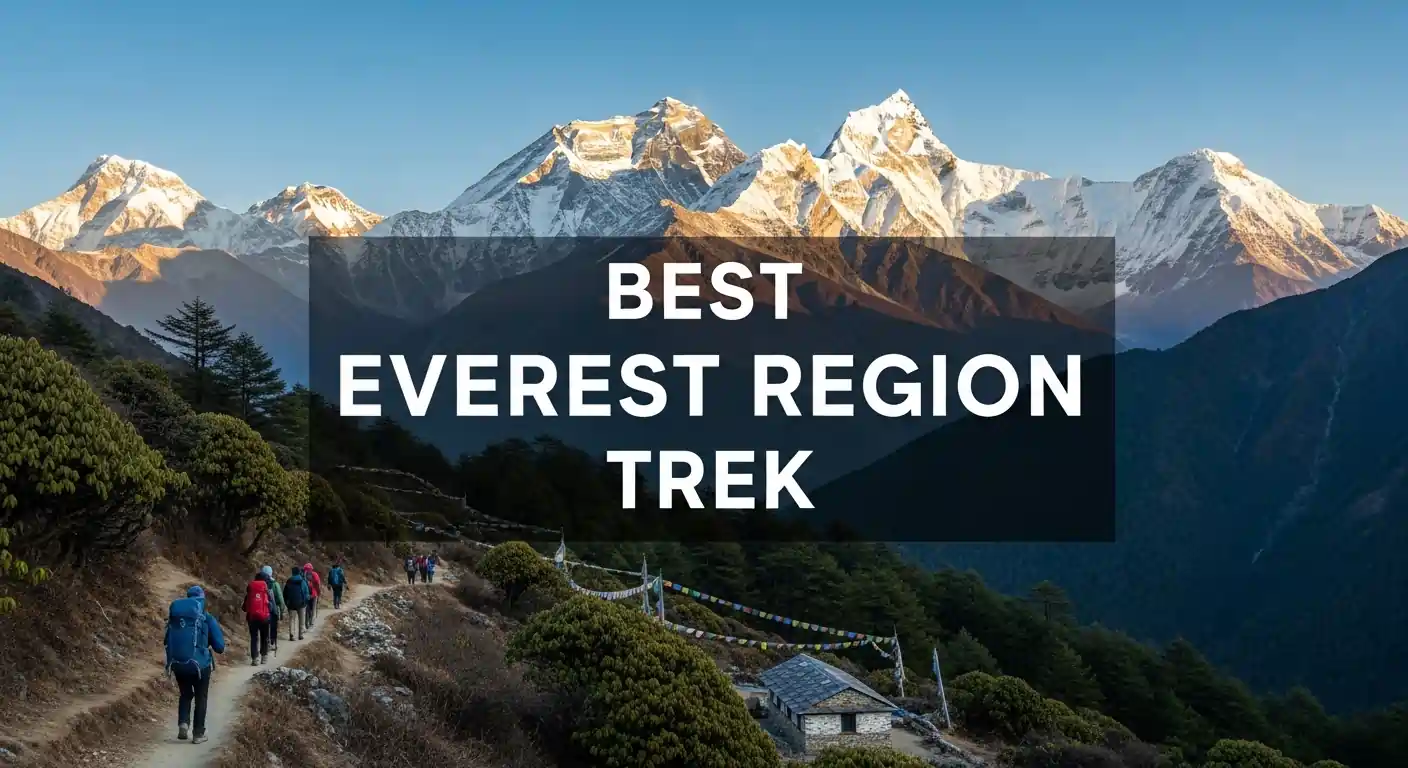
Have you ever closed your eyes and imagined standing amidst the world’s highest peaks, hearing nothing but the snap of prayer flags in the wind? The Everest region isn’t just a trekking destination; it’s a spiritual and physical rite of passage for anyone who calls themselves an adventurer. Whether you want to touch the base of the highest mountain on Earth or find a quiet turquoise lake away from the crowds, there is a path in the Khumbu that is calling your name.
In this blog, we are going to dive deep into every Everest region trek, helping you choose the perfect trail for your fitness level and timeline. We will break down the legendary Base Camp route, explore the hidden valleys of Gokyo, and even look at shorter options for those who want the views without the two-week commitment. By the end of this guide, you’ll know exactly which Himalayan path belongs on your bucket list and how to best prepare for the sheer thrill of adventure trekking in Nepal.
Why Choose an Everest Region Trek in Nepal?
Choosing an Everest region trek is the ultimate way to experience the world’s highest peaks while immersing yourself in the legendary Sherpa culture of the high Himalayas. It is one of the few places on Earth where you can walk on well-established trails directly into the shadows of 8,000-meter giants, combining world-class adventure with unique spiritual and cultural encounters.
- Standing at the Foot of Giants: You get the unrivaled opportunity to stand face-to-face with Mt. Everest (8,848.86m), Lhotse, and Ama Dablam, creating memories that last a lifetime.
- Deep Cultural Immersion: The Khumbu is the heartland of the Sherpa people, allowing you to visit ancient monasteries like Tengboche and experience a lifestyle shaped by the mountains.
- World-Class Infrastructure: Unlike more remote routes, the Everest region offers high-quality teahouses with comfortable beds, hot food, and even Wi-Fi in the middle of the wilderness.
- Diverse Route Options: Whether you want the iconic Base Camp path, the quiet turquoise Gokyo Lakes, or the challenging Three Passes, there is a trail for every level of grit.
- Breathtaking Biodiversity: Walking through Sagarmatha National Park—a UNESCO World Heritage site—takes you through lush rhododendron forests and high-alpine landscapes filled with rare wildlife.
- The “Lukla Factor”: Starting your journey with a flight to Tenzing-Hillary Airport is an adrenaline-pumping experience that officially kicks off your adventure in the most dramatic way possible.
- A Global Community: You’ll meet fellow adventurers from every corner of the globe, sharing stories over ginger tea and forming bonds that only the high altitude can create.
Best Everest Region Trek Routes
Choosing the right route for an Everest region trek depends entirely on your previous mountain experience, your physical fitness level, and how much time you can spend in the thin air. While some people are strictly focused on reaching the famous base camp, others prefer the solitude of the high passes or the luxury of a helicopter return to avoid the long walk back. Each trail offers a distinct perspective of the Khumbu, and understanding the nuances of these different paths is the best way to ensure your Himalayan dream doesn’t turn into a logistical nightmare.
Everest Base Camp Trek (EBC Trek)
The Everest Base Camp trek is the most iconic journey in the world of hiking and serves as the primary gateway for those wanting to stand at the foot of the world’s highest peak. Most itineraries span 12 to 14 days, starting with a flight to Lukla and moving through Namche Bazaar before reaching the legendary Base Camp at 5,364 meters. The true highlight of this route is the pre-dawn climb to the Kala Patthar viewpoint, which offers the most unobstructed view of the Everest summit and the Khumbu Icefall. While it is a moderately difficult trek that requires good stamina, it remains the gold standard for first-time high-altitude adventurers because the trail is well-defined and the teahouse facilities are excellent. You should expect the cost to vary depending on your choice of lodges, but it generally offers the best balance of challenge and reward in the entire region.
Gokyo Lakes Trek
If you are looking for a scenic alternative to the main Everest highway, the Gokyo Lakes trek offers a visually spectacular journey into a valley dominated by six emerald-green glacial lakes. Instead of following the crowds toward the base camp, this trail veers west, leading you through quieter Sherpa villages and toward the massive Ngozumpa Glacier. The ultimate objective is the summit of Gokyo Ri at 5,357 meters, which many veteran guides claim provides a better panoramic view of four 8,000-meter peaks than any other spot in the Khumbu. This route is perfect for trekkers who want to avoid the congestion of the main trail while still experiencing the raw, high-altitude beauty of the Himalayas. It is a slightly more peaceful trekking experience that focuses on the serenity of the turquoise water and the stark beauty of the alpine landscape.
Everest Three Passes Trek
The Everest Three Passes trek is arguably the most challenging and complete high-altitude trekking experience in Nepal, crossing the formidable Kongma La, Cho La, and Renjo La passes. This route is specifically designed for experienced trekkers who have a high level of physical fitness and are comfortable navigating rugged terrain and crossing glaciers at over 5,000 meters. By linking the three major valleys of the region, you get a full Everest circuit experience that includes the base camp, the Gokyo Lakes, and the remote Bhote Koshi valley. It typically takes 18 to 20 days to complete, making it a grueling test of endurance, but the rewards are unmatched in terms of solitude and mountain vistas. This is the ultimate “deep dive” into the Himalayas for those who want to see every corner of the Everest region without compromise.
Everest View Trek (Short Everest Trek)
The Everest View trek is an ideal option for beginners, families, or anyone with a limited schedule who still wants to see the “Roof of the World” with their own eyes. Usually lasting only 5 to 7 days, this short itinerary focuses on the lower sections of the Khumbu, taking you as far as Namche Bazaar and the luxury Everest View Hotel. Because you stay below 4,000 meters, the risk of altitude sickness is significantly lower, making it a much safer and more comfortable choice for older travelers or those with young children. You still get to experience the thrill of the Lukla flight and see iconic peaks like Everest, Ama Dablam, and Lhotse without the physical strain of a multi-week expedition. It is a high-reward journey that proves you don’t have to suffer through extreme heights to experience the magic of the Sherpa heartland.
Luxury Everest Region Trek
For those who want to experience the majesty of the Himalayas without sacrificing modern comforts, the Luxury Everest region trek offers a premium approach to the standard EBC route. This experience utilizes the highest-quality luxury teahouses, such as Yeti Mountain Home or Everest Summit Lodges, which provide heated rooms, electric blankets, and even attached bathrooms in some locations. Many of these packages also include a helicopter return from Gorak Shep or Everest Base Camp, allowing you to skip the several days of downhill walking and fly back to Kathmandu in style. This option is perfect for travelers who value their comfort and want to focus on the photography and the scenery rather than the physical grit of a traditional trek. It turns a rugged mountain expedition into a high-end adventure that is both physically accessible and incredibly memorable.
How to Choose the Best Everest Region Trek for You?
To choose the best Everest region trek, you must weigh your physical fitness and prior high-altitude experience against your available time and specific interests, such as photography, cultural immersion, or extreme physical challenge. If you are a first-timer with moderate fitness, the classic Everest Base Camp (EBC) trek provides the perfect balance of iconic landmarks and established infrastructure, while those seeking solitude and stunning lake views should opt for the Gokyo Lakes route. For the elite adventurer, the Three High Passes offers the ultimate test of endurance, whereas families or those on a tight schedule will find the Everest View Trek to be the most rewarding “bite-sized” Himalayan experience. Overthinking it is easy, but usually, your gut knows if you want the famous base camp photo or a quiet ridge to yourself, particularly when you are looking for the right fit for trekking in Nepal for beginners.
Best Time for an Everest Region Trek
Picking the right month for your Everest region trek is the biggest factor in determining whether you’ll be staring at a wall of white fog or a crystal-clear mountain summit. The weather in the Khumbu is notoriously fickle, so timing your trip during the two “golden windows” of stability is essential for both your safety and those million-dollar photos.
Spring (March-May)
Spring is arguably the most vibrant time to hit the trails, as the rhododendron forests are in full bloom and the “climbing fever” at Everest Base Camp is at its absolute peak. You’ll share the path with colorful expeditions and yaks carrying gear for those attempting the summit, which adds a unique buzz to the atmosphere that you won’t find at any other time. While the mornings are crisp, the daytime temperatures are quite comfortable for trekking, and the snow at higher elevations starts to melt away. Just be prepared for some afternoon clouds to roll in occasionally, though they usually clear up by the time you wake up for your next morning’s trek.
Autumn (September-November)
Autumn is widely considered the “gold standard” for an everest region trek because the monsoon rains have just finished washing all the dust and haze out of the atmosphere. This results in the sharpest, most high-definition views of the peaks you can possibly imagine, making it the favorite season for professional photographers. The weather is incredibly stable during these months, meaning flight cancellations at Lukla are much less frequent compared to the spring. It does get quite a bit colder as you move into November, but the trade-off is the most reliable blue skies the Himalayas have to offer.
Winter Trekking in Everest
Winter trekking (December–February) is a “bold” choice that is perfect for those who absolutely hate crowds and want the mountains all to themselves. The air is bone-dry and the visibility is actually some of the best of the year, but the nighttime temperatures can easily plunge to -20°C (-4°F) once you get above Namche Bazaar. Many of the high-altitude lodges and passes, like Cho La, may close due to heavy snow, so you have to be flexible with your itinerary. If you have the right down gear and don’t mind the biting chill, the silence of the winter Khumbu is a deeply peaceful and meditative experience.
Monsoon Challenges
Attempting a trek during the monsoon season (June–August) is generally not recommended unless you are a fan of leeches, muddy trails, and obscured mountain views. The heavy rains make the stone stairs incredibly slippery and often lead to long delays or total cancellations of the flights into Lukla due to poor visibility. While the landscape is incredibly lush and green during this time, you’ll likely spend more time looking at the inside of your rain jacket than at the summit of Everest. Most teahouses at higher elevations close down during these months, making logistics a real headache for anyone trying to push past Namche.
Everest Region Trek Difficulty and Altitude Considerations
The difficulty of any Everest region trek is almost entirely defined by how your body handles the thin air once you cross the 3,500-meter threshold. While the trails are generally well-maintained, the sheer vertical gain combined with decreasing oxygen levels makes even a simple walk feel like a marathon. It’s a mental game as much as a physical one, requiring you to balance your ambition with a realistic understanding of how altitude affects your respiratory system and overall energy levels.
Maximum Altitude Comparison Table
Understanding the peaks and valleys of each route is the first step in gauging the overall challenge you’re signing up for. The Everest region trek you choose will have a specific “ceiling” that dictates how much oxygen your body will have to work with during the final push. Generally, the higher you go, the more “rest days” you need to bake into your schedule to stay safe.
| Trek Name | Highest Point | Elevation (Meters) | Elevation (Feet) |
| Everest View Trek | Everest View Hotel | 3,880 m | 12,730 ft |
| Gokyo Lakes Trek | Gokyo Ri | 5,357 m | 17,575 ft |
| Everest Base Camp | Kala Patthar | 5,545 m | 18,192 ft |
| Three High Passes | Kongma La | 5,535 m | 18,159 ft |
Risk of Altitude Sickness
Altitude sickness, or AMS, is the single biggest “party pooper” in the Khumbu and it doesn’t care how many marathons you’ve run back home. Most trekkers start feeling the first “tweaks” of the altitude, like a dull headache or a bit of trouble sleeping—once they stay a night in Namche Bazaar. If you ignore these signs and keep pushing higher, you risk developing more serious conditions like HAPE or HACE, which are life-threatening. The key is to be honest with yourself and your guide; there’s no shame in taking an extra night to adjust if your head is pounding like a drum.
Acclimatization Strategies
The “secret sauce” to a successful Everest region trek is the age-old mountain rule: “Climb high, sleep low.” This means you spend your days hiking to a higher elevation to trigger your body to produce more red blood cells, but you always return to a slightly lower altitude to sleep and recover. Drinking at least 4 liters of water a day and eating plenty of garlic soup (a local favorite!) are also proven ways to keep your blood flowing well. Most importantly, your itinerary should never skip the “active rest” days in Namche or Dingboche, as these are the moments your body does the heavy lifting of adapting to the thin air.
Physical Fitness Preparation
You don’t need to be an elite athlete to trek in the Everest region, but you definitely shouldn’t show up straight from the couch. Your training should focus on “stair power” and cardiovascular endurance, as you’ll be spending 5 to 7 hours a day going up and down stone steps. I always tell people to start hiking with a weighted backpack at least two months before their trip to get their legs and core used to the strain. Don’t worry about speed, train for stamina, because the person who can walk at a slow, steady pace for six hours is the one who’s going to enjoy the sunset at the top.
Permits Required for Everest Region Trekking
Navigating the bureaucracy of a Himalayan expedition is just as important as packing your boots, as you’ll need specific documentation to enter the protected zones of the Khumbu. These permits aren’t just red tape; the fees go directly toward maintaining the trails, funding local rescue services, and preserving the delicate alpine ecosystem of the Everest region. Since regulations in Nepal can change overnight, having your paperwork in order before you leave Kathmandu, or as you enter the region, is essential for a stress-free start to your adventure.
Sagarmatha National Park Permit
The Sagarmatha National Park entry permit is a mandatory requirement for any Everest region trek as most trails pass through this UNESCO World Heritage site. You can obtain this permit either at the Department of Tourism office in Kathmandu or directly at the park entrance gate in Monjo. The cost is approximately NPR 3,000 for foreigners, and you’ll need to keep this document handy throughout your trek, as there are several checkpoints where rangers will ask to see it. It’s a small price to pay for the privilege of walking through some of the most strictly protected and beautiful mountain landscapes on the planet.
Khumbu Pasang Lhamu Rural Municipality Permit
Introduced to replace the old local taxes, the Khumbu Pasang Lhamu Rural Municipality permit is a local government requirement that you must pick up in either Lukla or Monjo. Unlike the national park permit, this one cannot be obtained in Kathmandu, so don’t let anyone tell you otherwise! It costs about NPR 2,000 for the first four weeks and is used to fund local infrastructure like bridges and health posts that keep the trekking industry running. Make sure you have a few passport-sized photos and some local currency ready, as the process is usually quick but strictly cash-only at the village gates.
TIMS Card Update
As of 2026, the Trekkers’ Information Management System (TIMS) card rules have seen some significant shifts, specifically regarding solo trekking in the Everest region. While the Khumbu region has historically had its own independent permit system, the national government often updates whether a “Blue” or “Green” TIMS card is required alongside your other documents. In most cases now, if you are trekking with a registered agency like Marvel Treks, we handle all these updates for you to ensure you’re compliant with the latest security protocols. It’s always best to check the latest 2026 status before you fly, as the Nepal Tourism Board occasionally adjusts these requirements to improve trekker safety and tracking.
Cost of Everest Region Trek (Budget Breakdown)
Calculating the total cost of an Everest region trek involves balancing the non-negotiable fees, like flights and permits, with your personal choices for food, luxury, and guide support. In 2026, prices have stabilized but remain reflective of the high logistics required to transport supplies to the roof of the world. By breaking down these expenses into a daily budget, you can avoid any “sticker shock” when you’re deep in the mountains and far from a functioning ATM.
| Expense Category | Estimated Cost (USD) | 2026 Service Details & Notes |
| Mandatory Permits | $55 – $65 | Includes Sagarmatha National Park, Khumbu Municipality, and the new 2026 Green Fee. |
| Lukla Flight (RT) | $350 – $520 | Price varies depending on whether you fly from Kathmandu or Ramechhap (Manthali). |
| Licensed Guide | $30 – $50 / Day | Hiring a licensed guide is now a mandatory safety requirement for foreigners in 2026. |
| Porter Support | $20 – $30 / Day | A porter carries up to 20kg, letting you focus on the views rather than the back pain. |
| Teahouse Lodging | $5 – $25 / Night | Lower elevation rooms are cheaper; higher up, prices rise as the insulation gets thinner. |
| Food & Water | $30 – $45 / Day | Based on three solid meals (Dal Bhat power!) and roughly 3-4 liters of treated water. |
| Misc (WiFi/Power) | $5 – $15 / Day | Hot showers, device charging, and “Everest Link” WiFi cards all add up above Namche. |
| Travel Insurance | $150 – $300 | Critical: Must specifically cover helicopter evacuation up to 6,000 meters. |
What to Pack for an Everest Region Trek?
To have a successful Everest region trek, you must pack a comprehensive layering system designed for temperatures ranging from 20°C to -20°C, along with high-quality technical gear and a specialized insurance policy. Because the Khumbu is a remote, high-altitude environment, your gear serves as your primary survival tool, protecting you against rapid weather shifts and extreme cold.
Essential Gear Checklist
- Moisture-wicking Base Layers: Bring at least two sets of synthetic or merino wool tops and bottoms to keep sweat away from your skin.
- Insulating Mid-layers: A heavy fleece or a lightweight “puffy” jacket is essential for maintaining core body heat during the day.
- Heavy Down Jacket: You need a high-loft down jacket (rated to at least -15°C) for the freezing nights and the early morning push to Kala Patthar.
- Waterproof Outer Shell: A breathable GORE-TEX jacket and pants will protect you from the high-altitude winds and unexpected snow or rain.
- Trekking Boots: Ensure you have high-top, waterproof, and well-broken-in boots to prevent blisters on the rocky, uneven trails.
- Sleeping Bag: A four-season sleeping bag (rated -20°C or lower) is non-negotiable, as most teahouse bedrooms are unheated at night.
- Personal First Aid Kit: Include basics like blister tape, rehydration salts, and medications for stomach issues or altitude headaches.
Clothing Layers for High Altitude
- Merino Wool Socks: Pack 3-4 pairs of thick hiking socks and a few thin liner socks to keep your feet warm and dry.
- Thermal Underwear: These are vital for sleeping in and for wearing under your trekking pants on the higher altitude sections.
- Trekking Trousers: Lightweight, quick-dry pants are best; avoid cotton or denim as they become heavy and cold when wet.
- Warm Hat & Sun Hat: A wool or fleece beanie for the cold, and a wide-brimmed hat to protect your face from the intense high-altitude sun.
- Buff or Neck Gaiter: This is essential for protecting your throat from the cold, dry “Khumbu cough” caused by breathing thin air.
- Insulated Gloves: Bring a pair of lightweight liner gloves and a heavy-duty waterproof pair for the sub-zero sections of the trek.
- Casual Lodge Wear: A set of clean, dry clothes to change into every evening helps your body recover and stay warm after a long day.
Trekking Equipment
- Adjustable Trekking Poles: These are absolute lifesavers for your knees during the steep descents and provide stability on rocky terrain.
- High-Quality Headlamp: Necessary for early morning summit pushes and navigating teahouses at night; don’t forget extra batteries.
- Water Purification: Bring a LifeStraw or purification tablets to avoid buying plastic bottles and to ensure your water is safe to drink.
- Backpack & Rain Cover: A 35-45 liter daypack with a waterproof cover is perfect if you have a porter carrying your main duffel.
- UV-Protection Sunglasses: High-altitude UV rays are much stronger; ensure your glasses are Category 3 or 4 to prevent snow blindness.
- Power Bank: Charging is expensive in the mountains, so a high-capacity solar-compatible power bank will save you money and stress.
- Lightweight Towel: A quick-dry microfiber towel is much better for trekking than a standard cotton towel that never dries in the cold.
Travel Insurance
- Altitude Coverage: Ensure your policy specifically covers trekking up to 6,000 meters (most standard policies stop at 3,000m or 4,000m).
- Helicopter Evacuation: This is the most critical feature; a rescue flight from the Everest region can cost upwards of $5,000 out of pocket.
- Medical Expenses: Check that your insurance covers hospital stays in Kathmandu and specialized treatment for altitude-related illnesses.
- Flight Cancellations: Lukla flights are frequently delayed by weather; good insurance will reimburse you for missed connections or extra hotel nights.
- Theft and Damage: Your electronics and gear are valuable, so make sure your policy covers loss or damage while on the trail.
- Search and Rescue: Some policies separate “evacuation” from “search,” so verify that both are included in your Himalayan coverage.
- Proof of Insurance: Always carry a printed copy of your policy and the 24-hour emergency contact number in your daypack at all times.
Accommodation and Food During Everest Trekking
Accommodation and food on an Everest region trek have evolved into a surprisingly comfortable “teahouse culture” that balances rustic mountain living with essential modern amenities. These family-run lodges serve as the heartbeat of the trail, providing weary hikers with a warm place to sleep, a social dining hall to share stories, and the high-carb fuel necessary to conquer the next day’s elevation gain.
Tea House Experience
The traditional teahouse is a simple stone or wooden lodge that offers basic twin-sharing rooms, usually equipped with two wooden beds and foam mattresses. While the rooms themselves are unheated and can get quite chilly at night, the communal dining area is kept cozy with a central pot-bellied stove fueled by dried yak dung. Staying in these lodges is an incredibly social experience, allowing you to connect with Sherpa hospitality and fellow travelers from across the globe. As you climb higher, the facilities become more basic, but the sense of warmth and camaraderie only grows stronger as the air gets thinner.
Meals Available (Dal Bhat, Western Options)
When it comes to trekking food, the legendary “Dal Bhat” (lentil soup, rice, and vegetable curry) is the undisputed king because it is nutritious, filling, and comes with free refills to keep your energy levels topped up. However, most teahouse menus are surprisingly diverse, offering everything from garlic soup, which is great for altitude, to pasta, pancakes, and even yak steaks in the larger villages like Namche Bazaar. It is generally recommended to stick to vegetarian options at higher altitudes to avoid any potential stomach issues from meat that has been carried up by porters. You’ll also find plenty of ginger lemon honey tea, which is the perfect “mountain fuel” for keeping your throat hydrated in the dry Khumbu air.
WiFi and Charging Facilities
In 2026, staying connected in the Everest region is easier than ever, though it often comes with a “mountain premium” price tag as you move further from Lukla. Most teahouses offer WiFi through “Everest Link” cards, which allow you to buy a specific amount of data to check in with family or post that epic summit photo. Charging your devices, phones, cameras, and power banks, is usually available for a small fee in the common dining area, as electricity is often generated by solar panels or local hydro-projects. It is a smart move to carry your own high-capacity power bank and a solar charger to save money and ensure you never run out of juice when the perfect photo opportunity arises.
Culture and Local Experience in the Everest Region
The Everest region isn’t just a world of rock and ice; it is the sacred ancestral home of the Sherpa people, whose rich Tibetan Buddhist heritage is woven into the very fabric of the landscape. Walking these trails means passing through a living museum of ancient traditions, where every mountain peak, stone wall, and fluttering flag carries a deep spiritual significance. For many travelers, the profound connection to the local community and the serene atmosphere of the high-altitude monasteries end up being even more memorable than the view from the top of Everest itself.
Sherpa Community
The Sherpa people are world-renowned for their incredible physical resilience and deep-rooted hospitality, acting as the soul of the Khumbu region. Originally migrating from Tibet over 500 years ago, they have adapted to the extreme altitudes of the Everest region, building vibrant villages like Namche Bazaar and Khumjung that thrive in the thin air. Beyond their fame as elite mountaineers, the Sherpa community maintains a lifestyle deeply connected to the mountains, characterized by a unique blend of ancient customs and modern adaptability. Spending time in their homes and teahouses offers a rare glimpse into a culture that prioritizes community, spiritual practice, and a profound respect for the natural world.
Tengboche Monastery
Sitting at an elevation of 3,867 meters, Tengboche Monastery is the spiritual heart of the Everest region and one of the most famous Buddhist landmarks in the world. Rebuilt after a fire in 1989, this majestic structure serves as the main center for Sherpa monks, who perform daily rituals and the legendary Mani Rimdu festival in the autumn. As you enter the monastery, the smell of juniper incense and the deep resonance of chanting create an atmosphere of total tranquility, perfectly framed by the backdrop of Ama Dablam. Trekkers are often welcome to observe the afternoon prayers, providing a moment of quiet reflection and a spiritual “reset” before continuing the climb toward the higher base camps.
Mani Walls and Prayer Flags
As you trek through the Khumbu, you will constantly encounter Mani walls, long stone structures inscribed with the Buddhist mantra “Om Mani Padme Hum”, and colorful prayer flags dancing in the mountain wind. It is a local custom to always walk to the left of these sacred walls as a sign of respect and to earn spiritual merit. The prayer flags, representing the five elements (earth, water, fire, air, and space), are believed to carry prayers and blessings to all corners of the world as they fray in the wind. These symbols serve as a constant reminder that in the Everest region, the path you walk is considered a sacred journey rather than just a physical challenge.
Responsible Trekking & Sustainable Tourism
With the Everest region becoming more popular every year, practicing responsible trekking is essential to preserving the delicate alpine environment and supporting the local economy. Sustainable tourism means minimizing your plastic waste, by using water purification tablets instead of buying bottles, and ensuring you follow the “Leave No Trace” principles on the trails. It also involves choosing local agencies that pay fair wages to their porters and respecting cultural taboos, such as not taking photos inside monasteries without permission. By trekking mindfully, you help ensure that the Sherpa culture and the pristine beauty of the Himalayas remain intact for the next generation of adventurers to discover.
How to Prepare Physically and Mentally for an Everest Region Trek?
To prepare for an Everest region trek, you must focus on building functional leg strength and cardiovascular endurance through consistent training while developing a patient, resilient mindset for the high-altitude environment. It’s not about being the fastest person on the trail, but about having the stamina to walk for six hours a day and the mental toughness to handle the cold and thin air. Starting your preparation at least three months in advance will ensure your body is ready for the relentless stone stairs of the Khumbu.
Cardio and Strength Training
Your physical training should prioritize “stair power” and aerobic capacity, as the Everest trails are famous for their steep, never-ending climbs. Spending time on a stair-master or hiking local hills with a weighted backpack is much more effective than simple flat-ground running. You want to build strength in your quads, glutes, and calves to handle the descents, which can be just as taxing on your joints as the uphill sections. Consistent cardio sessions, like swimming or cycling, will also help your heart become more efficient at pumping oxygen, which is a massive advantage once the air starts thinning out above 4,000 meters.
Mental Resilience
Mental toughness is often the “X-factor” that determines who reaches Base Camp, especially when you’re dealing with sub-zero temperatures and the physical fatigue of day ten. You have to be prepared to feel uncomfortable, whether it’s a cold room, a lack of privacy, or the simple exhaustion of a long day, and keep moving forward with a positive attitude. Visualizing the challenges beforehand and setting small, daily goals can help prevent you from feeling overwhelmed by the scale of the mountains. Remind yourself that the struggle is part of the experience, and that the sense of achievement at the top is directly proportional to the effort you put in.
Altitude Adaptation Mindset
Developing an altitude adaptation mindset means letting go of your ego and accepting that the mountain, not your fitness level, is in total control of the pace. You have to be okay with walking at a “snail’s pace” and being the last person into the teahouse if that’s what your body needs to stay healthy. This mindset involves constant self-monitoring, checking your hydration, breathing, and headache levels, without becoming overly anxious or obsessive. Respecting the “Bistari, Bistari” (slowly, slowly) philosophy is the most important mental shift you can make, as it allows your body the time it needs to naturally adjust to the decreasing oxygen levels.
Conclusion
Choosing the right Everest region trek is about more than just picking a destination; it is about selecting a journey that matches your personal spirit of adventure and your physical limits. Whether you find yourself standing at the iconic Everest Base Camp, gazing at the turquoise beauty of the Gokyo Lakes, or testing your grit on the Three High Passes, the Khumbu region promises a profound transformation that stays with you long after you descend. By prioritizing your health, respecting the local Sherpa culture, and choosing the right season for your trek, you are setting the stage for one of the most significant experiences of your life.
The mountains are calling, and in 2026, the trails of the Everest region are more vibrant and accessible than ever before. Don’t let another year pass by just dreaming of these legendary peaks, take the first step toward the “Roof of the World” today. With the right preparation and the right team by your side, the thin air and steep climbs become the backdrop for a story of resilience and awe. The Khumbu is waiting to show you its secrets, so pack your bags, lace up your boots, and get ready to experience the majesty of the Himalayas firsthand.
Are you ready to witness the grandeur of the world’s highest peaks in 2026? Marvel Treks is your premier partner for a safe, expert-led journey through the Everest region. Our guides are local high-altitude specialists who prioritize your safety and success every step of the way. From navigating Lukla flights to ensuring your acclimatization is perfect, we handle the logistics so you can focus on the views. Don’t just dream about the Himalayas, experience them with the best in the business. Book your 2026 Everest adventure today!
FAQS
Which Everest trek is best for beginners?
The Everest View Trek is ideal as it stays below 4,000m and only takes 5–7 days.
How much does an Everest region trek cost?
A standard 14-day trek typically costs $1,600 to $2,200, including flights, permits, and a private guide.
Is the Everest Base Camp trek crowded?
Yes, during peak spring and autumn months, though Gokyo Lakes offers a much quieter, scenic alternative.
Do I need a permit for the Everest region?
Yes, you need the Sagarmatha National Park permit and the Khumbu Pasang Lhamu Rural Municipality permit.
How hard is the Three High Passes Trek?
It is the most difficult route, requiring 18-20 days of endurance and experience crossing 5,000m+ glaciers.
Can I see Everest from the Gokyo Lakes trek?
Absolutely, the view from Gokyo Ri offers a massive 360-degree panorama of Everest and three other 8,000m peaks.
Is there WiFi and electricity on these treks?
Yes, most teahouses offer charging and WiFi for a small fee, though it becomes expensive at higher altitudes.
What is the highest point of the EBC trek?
The highest point is Kala Patthar at 5,545 meters, providing the best view of the Everest summit.

Ready for your next Himalayan adventure?
Plan Your Next Big Adventure with Us
Explore Our AdventuresJoin our expert-guided journeys across Nepal and beyond, from classic trails to epic summits.