
Wildlife in Sagarmatha National Park: What Trekkers Need to Know
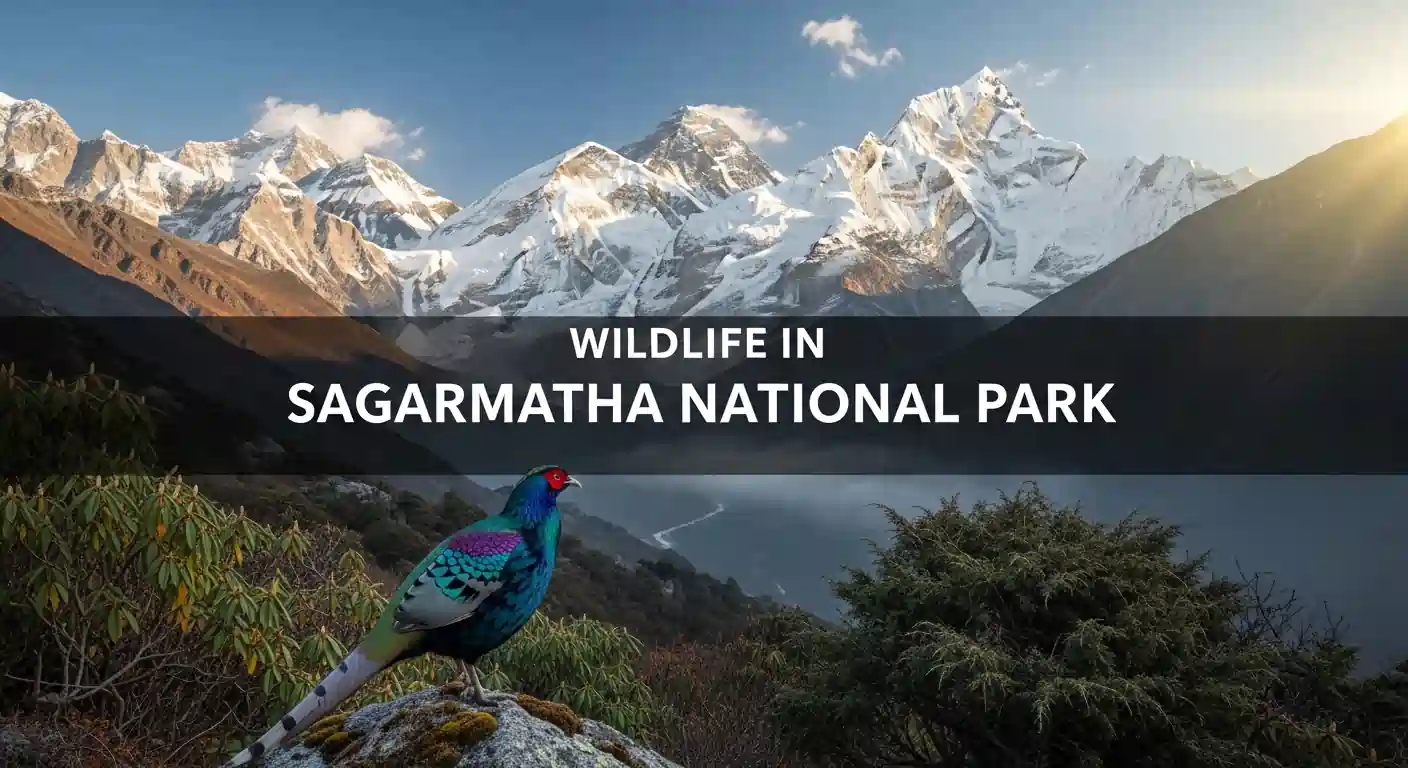
You’re hiking toward Tengboche when a flash of iridescent blue-green catches your eye, a Himalayan monal, Nepal’s national bird, foraging on the slope above. Moments like this remind trekkers that Sagarmatha National Park protects far more than just the world’s highest peak.
In this blog about wildlife in Sagarmatha National Park, we’ll explore the remarkable biodiversity that thrives in the shadow of the world’s highest peaks. The park’s 1,148 square kilometers shelter 28 mammal species and over 200 bird species, from elusive snow leopards patrolling rocky ridgelines to marmots whistling warnings across alpine meadows. You’ll discover which animals you can realistically expect to see during your trek, where along the trail to find them, and practical tips to improve your chances of meaningful wildlife encounters in the Everest region.
Explore Nepal’s Top Mountain Expeditions
What Wildlife Lives in Sagarmatha National Park?
Sagarmatha National Park shelters 28 mammal species and over 200 bird species across its 1,148 square kilometers of extreme Himalayan terrain. This UNESCO World Heritage site in Nepal’s Khumbu region supports rare wildlife including snow leopards, red pandas, Himalayan black bears, and Himalayan tahr in its forested valleys and alpine meadows. The park’s remarkable biodiversity thrives across elevations ranging from 2,845 meters up to the flanks of Mount Everest itself, with species uniquely adapted to survive in one of Earth’s harshest environments.
What makes this ecosystem fascinating is how dramatically it changes with altitude. Lower elevations feature dense rhododendron and birch forests that shelter musk deer and langur monkeys. Climb higher, and the sparse alpine scrubland becomes the domain of wild goats, marmots, and soaring raptors. By the time you reach the permanent snow line, only a handful of hardy species remain.
- Mammals: 28 documented species including snow leopard, Himalayan tahr, musk deer, red panda, Himalayan black bear, and grey wolf
- Birds: Over 200 species recorded, with the Himalayan monal (Nepal’s national bird), blood pheasant, and lammergeier among the most notable
- High-altitude specialists: Himalayan marmots, pikas, and weasels thrive in rocky terrain above treeline
Rare Mammals You Can Spot on the Everest Trek
While Sagarmatha National Park shelters 28 mammal species, only a handful are realistically visible to trekkers on the standard Everest Base Camp route. This section profiles the most notable mammals you might encounter, from the near-mythical snow leopard that few ever glimpse, to the abundant Himalayan marmots that whistle from nearly every high-altitude meadow. Understanding where these animals live, when they’re active, and what signs to look for dramatically improves your chances of meaningful wildlife encounters during your trek.
1. Snow Leopard
The snow leopard is Sagarmatha’s most celebrated and least-seen resident. These solitary cats patrol rocky terrain above 3,500 meters, hunting blue sheep and Himalayan tahr across vast home ranges. Your chances of a direct sighting are extremely slim, as most trekkers who spend weeks in the park never glimpse one. Conservation efforts have allowed small populations to return to the region, and you might spot tracks, scrape marks, or scat along high ridgelines, particularly in the Gokyo and upper Imja valleys.
2. Himalayan Tahr
The Himalayan tahr is the mammal you’re most likely to see during your trek. These wild goats with distinctive reddish-brown coats frequent steep cliffs and grassy slopes between 3,000 and 5,000 meters. Males sport impressive manes that grow fuller during the autumn mating season. Look for tahr grazing on near-vertical terrain in the early morning, particularly around Namche Bazaar and along the trail to Tengboche.
3. Musk Deer
The Himalayan musk deer is an endangered species recognizable by the elongated canine teeth visible in males. These solitary animals prefer dense rhododendron and birch forests and are most active at dawn and dusk. Musk deer are notoriously shy, and poaching pressure has reduced their numbers significantly. Your best chance for a sighting comes in the forested sections between Lukla and Namche, though even there encounters remain uncommon.
4. Red Panda
Despite sharing a name with giant pandas, red pandas are not closely related. These cat-sized mammals with russet fur and ringed tails inhabit bamboo understory and temperate forests at lower elevations within the park. Their nocturnal and arboreal habits make daytime sightings rare. The forests around Phakding and the lower Dudh Koshi valley offer the best habitat, though you’re more likely to find signs of their presence than the animals themselves.
5. Himalayan Black Bear
The Himalayan black bear lives in forested zones below the alpine line, typically between 2,500 and 4,000 meters. These bears generally avoid trekkers and pose minimal threat on established trails. Proper food storage at teahouses helps prevent unwanted encounters. Bears are most active during autumn when they forage intensively before winter, and you might spot one in the forests around Tengboche or in side valleys off the main trekking route.
6. Himalayan Marmot
Himalayan marmots are the wildlife you’re almost guaranteed to encounter. These large rodents live in colonies throughout high alpine meadows, particularly around Gorak Shep and Lobuche. Their distinctive warning whistle often alerts you to their presence before you see them. Marmots are diurnal and curious, frequently popping up from burrows to observe passing trekkers, making them excellent photography subjects.
7. Himalayan Wolf
The Himalayan wolf is a rare canid that roams the upper elevations of the park. Genetically distinct from common grey wolves, these animals hunt in small packs and prey primarily on blue sheep and livestock. Sightings have increased in recent years due to conservation efforts, though encounters remain uncommon. Wolves are most often spotted in remote upper valleys and high passes, away from the popular Everest region trekking routes.
Birds of Sagarmatha National Park
Sagarmatha National Park ranks among the Himalaya’s premier birdwatching destinations, with species diversity concentrated in forested zones below 4,000 meters. Even trekkers with no particular interest in birds will notice the colorful pheasants and massive raptors that inhabit the region.
| Bird Species | Elevation Range | Key Identification Features |
| Himalayan Monal (Danphe) | 2,500–4,500m | Iridescent plumage, Nepal’s national bird |
| Blood Pheasant | 3,000–5,000m | Red breast streaking, ground-dwelling |
| Lammergeier | All elevations | 2.5m wingspan, diamond-shaped tail |
| Yellow-billed Chough | 3,500m+ | Yellow bill, acrobatic flight near lodges |
1. Himalayan Monal
The Himalayan monal, locally called Danphe, serves as Nepal’s national bird and displays spectacular iridescent plumage that shifts between green, purple, and copper depending on the light. Males are particularly striking during the breeding season when their colors become most vibrant. You’ll commonly spot them in rhododendron forests around Tengboche, particularly during morning hours when they forage on open slopes. These pheasants are relatively large and often allow trekkers to observe them from a reasonable distance before moving away.
2. Blood Pheasant
Blood pheasants prefer scrubby alpine terrain just below the treeline and are named for the distinctive red streaking on their breast feathers. These ground-dwelling birds often travel in small groups and are relatively approachable compared to other high-altitude species. They’re frequently seen along the trail between Dingboche and Lobuche, especially in areas with dense juniper and rhododendron scrub. Their habit of freezing when approached rather than immediately fleeing makes them excellent subjects for patient wildlife observers.
3. Lammergeier
The lammergeier, or bearded vulture, is one of the world’s most impressive raptors with wingspans exceeding 2.5 meters. These birds are famous for dropping bones from great heights to crack them open and access the marrow inside, a unique feeding behavior you might witness during your trek. You’ll often see them soaring on thermals above valleys and ridgelines throughout your journey, their distinctive diamond-shaped tail making them easy to identify. Lammergeiers patrol the entire elevation range of the park, from lower valleys to the highest passes.
4. Yellow-billed Chough
Yellow-billed choughs are the birds you’ll encounter most frequently at high altitude, congregating around teahouses and lodges where they boldly scavenge scraps from outdoor dining areas. These gregarious corvids are highly social and often perform acrobatic flight displays that showcase their mastery of mountain air currents. Their distinctive yellow bills and red legs make them easy to identify, and their loud, ringing calls become a familiar sound at every high-altitude stop. Unlike many mountain birds, choughs show little fear of humans and often approach within a few meters of trekkers.
Ready for Your Next Himalayan Adventure?
Discover Nepal’s most breathtaking treks, expeditions, and mountain journeys with expert local guides. Let us help you plan an unforgettable adventure in the Himalayas.
Where To See Wildlife Along the Trekking Routes?
The best wildlife viewing locations along the Everest Base Camp route include the rhododendron forests below Namche Bazaar for musk deer and forest birds, the alpine meadows near Tengboche for Himalayan tahr and pheasants, and the rocky terrain above Dingboche for raptors and marmots. Each elevation zone supports distinct species adapted to specific habitats, from dense lower forests to sparse high-altitude scrubland. Understanding these zones helps you know what to look for and when to have your camera ready during your trek.
1. Rhododendron and Birch Forests Below Namche Bazaar
The lower forests between Lukla (2,860m) and Namche Bazaar (3,440m) offer the richest mammal diversity on the standard Everest Base Camp route. This zone provides habitat for musk deer, langur monkeys, and red pandas if you’re exceptionally fortunate. Forest birds including laughingthrushes, minivets, and sunbirds are common throughout this elevation range. Early morning departures from Phakding increase your chances of spotting deer and forest birds before trail traffic picks up.
2. Alpine Meadows and Scrubland Near Tengboche
The open terrain surrounding Tengboche Monastery (3,867m) provides excellent wildlife viewing opportunities for trekkers. Himalayan tahr frequently graze on steep slopes visible from the monastery grounds, and blood pheasants inhabit scrubby areas along the trail. Dawn walks in this area are particularly productive for birdwatching, as the combination of forest edge and alpine meadow creates diverse habitat in a relatively small area.
3. Rocky Terrain Above Dingboche
Above Dingboche (4,410m), vegetation becomes sparse and mammal sightings decrease significantly. However, this zone offers excellent raptor viewing as lammergeiers, Himalayan griffon vultures, and golden eagles regularly patrol the skies. Marmots are abundant near the trail, and their warning whistles become a familiar soundtrack. The rocky terrain also supports pikas, small rabbit-like mammals that dart between boulders and remain active even in cold conditions when other animals have retreated.
4. Tengboche Monastery and Surrounding Forests
The forest surrounding Tengboche Monastery receives special protection from the local community, creating a de facto wildlife sanctuary within the park. Monks have maintained this forest for generations, and animals here show less fear of humans than elsewhere on the trail. This area represents one of your best opportunities for quality wildlife observation during your trek. The protected status and reduced human disturbance make it an ideal location for patient wildlife watchers seeking meaningful encounters.
Do Animals Live on Mount Everest?
Yes, but only at lower elevations. The summit pyramid and upper slopes above 6,000 meters support almost no permanent animal life due to extreme cold, low oxygen, and lack of food.
1. Wildlife at Extreme Elevations
The summit pyramid and upper slopes above approximately 6,000 meters support almost no permanent animal life. The combination of extreme cold, low oxygen, and lack of food makes survival impossible for most species. However, certain birds regularly fly at remarkable altitudes, with yellow-billed choughs and bar-headed geese observed above 8,000 meters. Climbers at high camps frequently report choughs scavenging around tents, demonstrating their remarkable adaptation to extreme conditions.
2. What Survives Above Base Camp
The highest-dwelling animal documented in the Everest region is Euophrys omnisuperstes, a tiny jumping spider found at elevations up to 6,700 meters. These spiders survive by eating wind-blown insects that become trapped on snow and ice. Above Everest Base Camp (5,364m), wildlife sightings become increasingly rare, with marmots and pikas inhabiting rocky terrain around Gorak Shep. Birds occasionally appear at high camps, but the zone above the Khumbu Icefall is essentially lifeless.
Best Time to Spot Wildlife in the Everest Region
The timing of your trek significantly impacts your wildlife viewing opportunities in Sagarmatha National Park. The spring and autumn trekking seasons offer the most reliable conditions for spotting animals, with each presenting distinct advantages. Spring brings mating displays and migratory birds returning to the region, while autumn provides crystal-clear visibility and animals actively feeding before winter. Understanding seasonal patterns helps you plan your trek around peak wildlife activity and maximize your chances of memorable encounters with the park’s remarkable fauna.
1. Spring Season (March to May)
The spring trekking season brings animals to lower elevations as snow melts and new vegetation emerges across the park. Rhododendron blooms attract nectar-feeding birds, and many species engage in spectacular mating displays during this period, with the Himalayan monal’s courtship behavior being particularly striking. Spring also marks the return of migratory birds to the region, creating excellent opportunities for birdwatchers. This season offers the unique advantage of observing both resident and migratory species together in the same habitat.
2. Autumn Season (September to November)
Autumn offers the clearest skies and most stable weather of the year, making it the most popular trekking window for wildlife observation. Wildlife activity increases significantly as animals prepare for winter, with mammals feeding intensively to build fat reserves before the harsh months ahead. The post-monsoon period brings reduced vegetation density, making animals easier to spot in the forests and along ridgelines. Visibility for spotting distant animals on slopes is typically excellent during this season, providing ideal conditions for photography and observation.
3. Winter and Monsoon Considerations
Winter (December through February) drives many animals to lower elevations, potentially increasing sightings in forested zones below Namche Bazaar. However, harsh conditions limit trekking options, and some teahouses close for the season, making wildlife observation more challenging. The monsoon season (June through August) brings leeches to lower forests and obscures mountain views with clouds and rain. While forests are lush and green during monsoon, wildlife observation becomes difficult due to dense vegetation and reduced animal activity during wet conditions.
The monsoon season (June through August) brings leeches to lower forests and obscures mountain views with clouds and rain. While forests are lush and green, wildlife observation becomes difficult.
Wildlife Spotting Tips for Trekkers
Spotting wildlife in Sagarmatha National Park requires more than luck—it demands patience, timing, and the right approach. The following practical tips will help you maximize your chances of meaningful wildlife encounters during your Everest trek, from choosing the optimal time of day to understanding animal behavior patterns that experienced trekkers use to their advantage.
1. Start Your Day Early
Dawn offers the best mammal activity before trail traffic increases and temperatures rise. Animals that spent the night feeding often remain visible in early morning light. Departing your teahouse at first light, typically around 5:30 to 6:00 AM, dramatically improves your chances of spotting wildlife along the trail.
2. Stay Quiet and Move Slowly
Loud conversations and rapid movement scare wildlife away. When you spot an animal or enter promising habitat, pause frequently and scan the terrain with binoculars. Groups that maintain quiet discipline see significantly more wildlife than those that don’t.
3. Bring Binoculars and a Telephoto Lens
Compact binoculars (8×32 or 10×42) are essential gear for wildlife observation, as most animals are viewed from considerable distance. A telephoto lens of at least 200mm is recommended for photography. Quality optics make the difference between identifying distant species and missing them entirely.
4. Let Your Guide Take the Lead
Experienced local guides recognize animal signs, tracks, and habitual locations that visitors typically miss. They also maintain relationships with other guides and conservation officers who share recent sighting information. Their knowledge of seasonal patterns and animal behavior gives you a significant advantage in spotting elusive species.
5. Watch for Tracks and Signs
Even when animals aren’t visible, their signs tell a story. Learning to identify scat, tracks, and scrape marks adds depth to your wildlife experience. Snow leopard scrapes, musk deer pellets, and bear claw marks on trees all indicate recent animal activity in the area.
Tip: Ask your guide to point out wildlife signs during your trek. Understanding what to look for transforms every section of trail into potential wildlife habitat.
Conservation and Ethical Wildlife Watching in Sagarmatha
Sagarmatha National Park’s conservation success depends partly on responsible visitor behavior. The park’s buffer zone and community forest management initiatives have helped wildlife populations recover, mirroring conservation approaches at lowland reserves like Chitwan National Park, but continued vigilance remains important.
- Maintain distance: Never approach or attempt to feed wild animals. A minimum distance of 30 meters is recommended for most species.
- Stay on established trails: This reduces habitat disturbance and prevents erosion that degrades wildlife habitat.
- Pack out all waste: Food scraps attract scavengers unnaturally and can alter animal behavior patterns.
- Respect quiet zones: Areas near monasteries and in protected forest sections often serve as wildlife refuges.
The park entrance fee (NPR 3,000 for foreign nationals) directly supports conservation efforts.
Why Trekking With Local Guides Improves Wildlife Sightings?
Local guides bring decades of accumulated knowledge about animal behavior, seasonal patterns, and specific locations where wildlife congregates. A guide who grew up in the Khumbu region has spent thousands of hours on these trails and knows where tahr bed down, which forests shelter musk deer, and when marmots emerge from hibernation.
Guides also communicate with each other throughout the trekking season, sharing information about recent sightings. This informal network means your guide often knows about wildlife activity before you even start walking.
Beyond spotting animals, local guides provide cultural context that enriches your understanding. They can explain the relationship between Sherpa communities and local wildlife, the role of animals in Buddhist tradition, and the conservation challenges facing the region.
Experience Sagarmatha National Park Wildlife With Marvel Treks
Marvel Treks’ guided Everest Base Camp treks include knowledgeable local guides trained in wildlife identification and responsible observation practices. As the best expedition and trekking company in Nepal, our team’s deep familiarity with the Khumbu region, built over years of guiding thousands of trekkers, translates into better wildlife encounters for you.
FAQs About Wildlife in Sagarmatha National Park
What is the rarest animal in Sagarmatha National Park?
The snow leopard is considered the rarest mammal in Sagarmatha National Park, with very few trekkers ever spotting one due to its solitary nature and remote high-altitude habitat.
Are wild animals in Sagarmatha National Park dangerous to trekkers?
Wildlife in Sagarmatha National Park generally avoids human contact, and attacks on trekkers are extremely rare. The main precaution involves proper food storage to avoid attracting Himalayan black bears.
Do I need a permit to photograph wildlife in Sagarmatha National Park?
Your standard Sagarmatha National Park entry permit covers personal photography of wildlife without additional fees. Commercial filming or drone use requires separate permits from park authorities.
Can I see red pandas on the Everest Base Camp trail?
Red pandas inhabit lower forested sections between Lukla and Namche Bazaar, but their nocturnal and secretive behavior makes sightings very uncommon on the standard trekking route.
What wildlife can I see near Everest Base Camp itself?
The area around Everest Base Camp and Gorak Shep hosts mainly Himalayan marmots, pikas, and high-altitude birds like yellow-billed choughs and lammergeiers rather than larger mammals.
How does elevation affect which animals I can see in Sagarmatha?
Lower forested zones (2,500–3,500m) support the greatest mammal diversity including deer and bears. Mid-elevation alpine areas (3,500–4,500m) are home to tahr and pheasants. Higher zones above treeline support primarily marmots, pikas, and soaring raptors.

Ready for your next Himalayan adventure?
Plan Your Next Big Adventure with Us
Explore Our AdventuresJoin our expert-guided journeys across Nepal and beyond, from classic trails to epic summits.