
How to Plan Himalayan Climbing Logistics: A Step-by-Step Guide
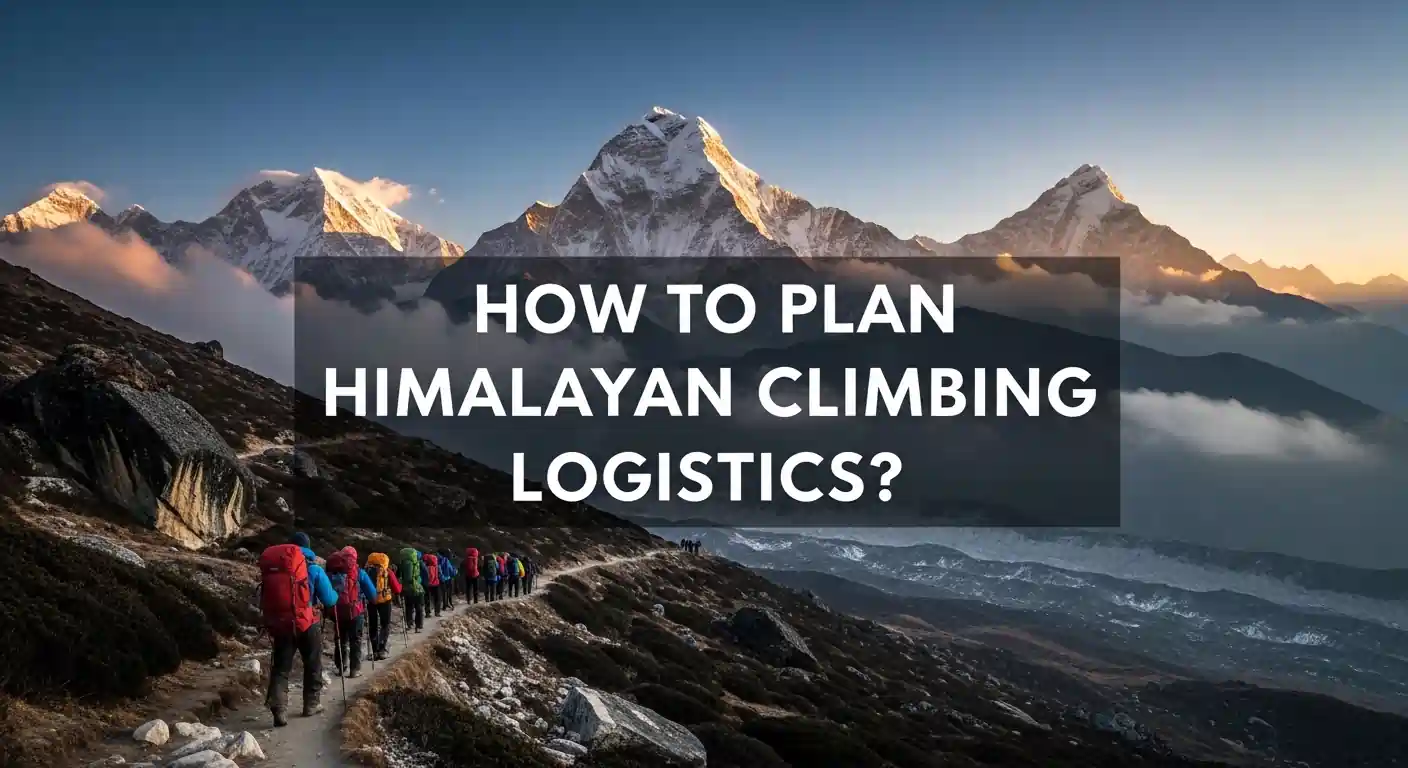
You’ve spent months building fitness, researching peaks, and mentally preparing for a Himalayan expedition. But somewhere between choosing a route and actually standing at Base Camp, there’s a sprawling web of permits, oxygen calculations, Sherpa coordination, and weather windows that can make or break your climb before you ever touch the mountain.
In this blog on Himalayan climbing logistics, we break down the complex operational framework that transforms your high-altitude ambitions into reality. You’ll discover how to navigate government permits, coordinate Sherpa support, manage oxygen systems, and time your summit push within narrow weather windows. We cover everything from selecting the right peak and vetting expeditions in Nepal operators to establishing high camps and executing descent protocols, giving you a complete picture of what happens behind the scenes before, during, and after a Himalayan expedition.
What Are Himalayan Climbing Logistics?
Himalayan climbing logistics are the comprehensive planning, coordination, and operational systems that get you from your front door to the summit and back safely. This includes permit acquisition, Sherpa team coordination, oxygen management, Base Camp infrastructure, high-altitude supply chains, weather forecasting, and emergency protocols, essentially every moving piece required to execute an expedition on peaks above 6,000 meters. For 7,000-meter peaks and higher, you’re typically looking at 8–12 months of preparation, a support team of 18–25 people, and transport of hundreds of kilograms of supplies through some of the most remote terrain on Earth.
Unlike standard trekking, expedition logistics involve establishing multiple high camps, managing supplemental oxygen systems, and coordinating weather-dependent summit windows that may last only 48–72 hours per season. The difference between a successful climb and a dangerous situation often comes down to how well the moving pieces fit together before you ever leave Kathmandu.
How to Choose the Right Peak and Route?
You can choose the right peak and route by evaluating your technical skill level, budget constraints, and timeline availability, since these factors directly determine permit costs, gear requirements, and team size. A climber targeting Cho Oyu faces different logistics than someone attempting Everest’s South Col route, even though both are 8,000-meter peaks, making this your first major logistical decision that shapes everything downstream.
1. Popular Peaks for First Himalayan Expeditions
- Cho Oyu (8,188m): Often considered the most accessible 8,000-meter peak with less technical terrain and a relatively straightforward glacier approach
- Manaslu (8,163m): Remote location with fewer crowds, moderate technical challenge, and lower permit fees than Everest
- Everest (8,849m): Most supported infrastructure and established logistics, but highest permit fees ($11,000+ per climber) and significant traffic during summit windows
2. Route Difficulty and Technical Requirements
Technical routes require more fixed ropes, additional Sherpa support, and specialized gear. The standard South Col route on Everest, for instance, involves the Khumbu Icefall and Lhotse Face, requiring daily route-fixing by Sherpa teams and ladder systems maintained throughout the season. When you’re comparing operators, ask specifically how they handle route-fixing fees and whether those costs are included in your package.
3. Seasonal Considerations by Peak
Spring (pre-monsoon, April–May) and autumn (post-monsoon, late September–October) offer the most stable weather windows for Himalayan climbing. However, not all peaks are equally climbable in both seasons. Everest sees the vast majority of attempts in spring, while some technical routes become more feasible in autumn when snow conditions stabilize.
How to Select a Reliable Expedition Operator?
To select a reliable expedition operator, you should thoroughly vet their Sherpa-to-climber ratios, verify their emergency evacuation protocols, and confirm that all inclusions are itemized in writing before you commit. Your operator determines the quality of Sherpa support, Base Camp infrastructure, oxygen systems, and emergency response protocols, making this arguably the most consequential logistical decision you’ll make. Choosing the best expedition and trekking company in Nepal means looking for transparent communication, insured staff, and detailed weather forecasting services, the operational standards that separate safe expeditions from dangerous ones.
1. Key Questions to Ask Before Booking
Before you sign anything, get clear answers on the following:
- What is your Sherpa-to-climber ratio on summit day?
- How do you handle emergency evacuations above Base Camp?
- What oxygen system and backup reserves do you provide?
- Are your Sherpa staff insured and fairly compensated?
- What weather forecasting service do you use?
2. What Full-Service Expedition Logistics Include
A reputable operator’s package typically covers:
- Permits and fees: Climbing permit, liaison officer, national park entry, environmental deposit
- Ground transport: Airport transfers, internal flights to trailhead (Lukla, Simikot, etc.)
- Base Camp services: Sleeping tents, dining tent, cook staff, communication equipment
- High-altitude support: Sherpa team, oxygen cylinders, fixed ropes, high camp gear
3. Sherpa-to-Climber Ratios and Why They Matter
One Sherpa per climber is the gold standard for 8,000-meter peaks. This ratio ensures you have dedicated support for oxygen management, rope work, and emergency response during the summit push. Lower ratios, sometimes offered by budget operators, may indicate cost-cutting that compromises your safety margin when conditions deteriorate.
What Nepal Climbing Permits and Requirements You Need?
You need a climbing permit (royalty fee), TIMS card, national park entry permit, and environmental deposit to climb in Nepal, all coordinated through the Ministry of Tourism or Nepal Mountaineering Association. Most reputable operators handle this entire permit process as part of their expedition package, submitting applications on your behalf and ensuring compliance with government requirements. The specific permits and fees vary dramatically by peak, Everest requires significantly more documentation and higher costs than trekking peaks like Island Peak.
1. Climbing Permits and Peak Fees
The government climbing permit (royalty fee) varies dramatically by peak and season. The Everest climbing permit carries the highest fee at $11,000+ per climber during spring season, while trekking peaks like Island Peak (6,189m) cost around $250. These fees are non-negotiable and paid directly to the Nepal Mountaineering Association (NMA) or Ministry of Tourism.
2. TIMS Cards and National Park Entry
TIMS (Trekkers’ Information Management System) cards track your movement through trekking regions, while national park fees apply to protected areas like Sagarmatha National Park (Everest region) or Manaslu Conservation Area. Operators typically bundle these into package pricing, but verify this before signing any contract.
3. Liaison Officer and Environmental Fees
Nepal assigns a liaison officer to expeditions on major peaks. Their salary and expenses are typically included in your permit fees. You’ll also pay an environmental/garbage deposit (often $4,000 for Everest) that’s refundable upon proper waste management compliance at the end of your expedition.
How to Budget for a Himalayan Expedition?
You can budget for a Himalayan expedition by calculating total costs across permits, operator fees, personal gear, insurance, and contingencies, typically ranging from $1,500 for trekking peaks to $100,000+ for Everest. Start by requesting itemized quotes from operators that separate included services (permits, Base Camp, Sherpa support, oxygen) from exclusions (personal equipment, tips, evacuation insurance, extra oxygen cylinders). Understanding what’s covered versus what you’ll pay separately prevents budget surprises when you’re already committed to a climb, since hidden costs can add $5,000–$15,000 to your baseline expedition price.
Typical Cost Ranges by Peak
| Peak | Relative Cost | Primary Cost Driver |
| Everest | $45,000–$100,000+ | Permit fees and Icefall support |
| Manaslu | $8,000–$15,000 | Remote logistics, smaller teams |
| Cho Oyu | $15,000–$30,000 | Tibet access and permit fees |
| Island Peak | $1,500–$3,000 | Trekking peak classification |
What Is Usually Included in Package Prices
Standard inclusions cover permits, Base Camp infrastructure, Sherpa support, oxygen (if applicable), meals at Base Camp, and group gear like tents and cooking equipment. Reputable operators itemize these clearly in their contracts. Vague descriptions often signal hidden costs.
Hidden Costs and Common Exclusions
Watch for these common exclusions that add significant expense:
- Personal climbing gear: Boots, down suits, harnesses purchased separately ($3,000–$8,000)
- Travel insurance: High-altitude evacuation coverage required but rarely included
- Tips and gratuities: Expected for Sherpa, cooks, and porters ($500–$2,000)
- Rescue and medical costs: Helicopter evacuation billed separately unless insured
- Extra oxygen: Additional cylinders beyond standard allocation ($500+ each)
What Base Camp Infrastructure Includes?
Base Camp infrastructure includes sleeping tents, dining facilities, communication systems, and medical support that serve as your operational headquarters throughout the expedition. You’ll spend weeks here eating meals prepared by cook staff, sleeping in individual or shared tents, charging devices via solar power, and coordinating summit plans with your team. Most established Base Camps also provide heated mess tents for group meetings, satellite communication for weather updates and emergency contact, and medical stations staffed by expedition doctors. This infrastructure transforms a remote glacier into a functional staging area where you can safely acclimatize, recover between rotation climbs, and prepare for your summit push.
1. Sleeping and Dining Facilities
Operators provide individual or shared sleeping tents plus a heated dining/mess tent with tables and chairs. Quality varies significantly by operator tier. Premium expeditions offer larger personal tents, better mattresses, and more comfortable common areas. These facilities serve as your home for weeks during acclimatization, making comfort and functionality critical to your overall expedition experience.
2. Communication and Power Systems
Satellite phones or radio systems connect you to weather services and emergency contacts. Many Base Camps now offer Wi-Fi (via satellite), solar charging stations, and daily weather briefings. Reliable communication infrastructure ensures you can receive critical weather updates and maintain contact with family during your expedition.
3. Medical Support and First Aid Stations
Most large Base Camps have a medical tent staffed by an expedition doctor or trained medic. Common altitude illnesses treated there include AMS (Acute Mountain Sickness), HAPE and HACE, High Altitude Pulmonary Edema (fluid in the lungs) and High Altitude Cerebral Edema (swelling of the brain), respectively. Having immediate medical support at Base Camp can mean the difference between a manageable health issue and a dangerous emergency requiring evacuation.
How to Plan Your High Altitude Acclimatization Schedule?
You plan your high-altitude acclimatization schedule by following a staged progression: rest in Kathmandu, trek to Base Camp with gradual altitude gains, complete 2–3 rotation climbs to higher camps, and rest before your summit window. This “climb high, sleep low” approach allows your body to produce additional red blood cells and adapt to reduced oxygen levels over 4–6 weeks. The schedule is built into every expedition itinerary, with each phase designed to minimize altitude sickness risk while maximizing your physiological readiness for the Death Zone. Skipping or rushing acclimatization is one of the most common causes of summit failure and medical emergencies on Himalayan peaks.
1. Arrive and Rest in Kathmandu
Expeditions begin with rest days at moderate altitude (1,400m) to adjust after international travel. This isn’t wasted time. It’s your first step in physiological preparation before trekking higher. Use these days to finalize gear checks, meet your team, and allow your body to begin adapting to Nepal’s altitude before heading into the mountains.
2. Trek to Base Camp with Staged Altitude Gains
The progressive approach involves trekking through intermediate villages with rest days built in. In the Khumbu region, you might spend nights in Namche Bazaar (3,440m), Tengboche (3,860m), and Dingboche (4,410m) before reaching Everest Base Camp (5,364m). Each stop gives your body time to produce more red blood cells and adjust to thinner air, reducing your risk of altitude sickness when you reach higher elevations.
3. Complete Rotation Climbs to Higher Camps
Before your summit push, you’ll make multiple trips up and down through Camp 1, Camp 2, and sometimes Camp 3. These rotations build your red blood cell count, test your gear in real conditions, and familiarize you with the route. Most climbers complete 2–3 rotations over several weeks. Each rotation strengthens your physiological adaptation and builds the muscle memory you’ll rely on during your summit attempt.
4. Rest and Recover Before the Summit Window
After rotations, you return to Base Camp for rest while waiting for favorable weather. This recovery period, often 5–10 days, allows your body to recuperate before the final push into the Death Zone (above 8,000m). During this phase, you’ll eat well, sleep as much as possible, and monitor weather forecasts closely with your expedition leader to identify the optimal summit window.
How High Camps Are Established and Stocked?
High camps are established by Sherpa teams who select safe locations at strategic altitudes, then stock them with tents, food, fuel, and oxygen before climbers arrive for acclimatization rotations and the summit push. These temporary staging points serve as critical rest and supply stations between Base Camp and the summit, with each camp positioned to support your body’s adaptation to extreme altitude. On Everest, for example, Camp 1 sits at 6,065m above the Khumbu Icefall, Camp 2 at 6,400m serves as Advanced Base Camp, and Camp 4 at 7,920m in the Death Zone becomes your final staging point before the summit attempt.
1. Camp 1 and Camp 2 Setup
Sherpas select locations based on terrain safety and proximity to the route, then stock camps with food, fuel, and oxygen before climbers arrive for rotations. On Everest, Camp 1 sits at approximately 6,065m above the Khumbu Icefall, while Camp 2 (6,400m) serves as Advanced Base Camp. These lower high camps become your temporary home during acclimatization rotations, where you’ll test your gear, adjust to altitude, and prepare your body for the extreme conditions higher on the mountain.
2. Camp 3 and Camp 4 Logistics
Higher camps are more spartan due to extreme conditions and the difficulty of carrying supplies. Camp 4 on Everest (7,920m) sits in the Death Zone, the final staging point before summit attempts. Climbers typically spend only one night here before departing for the summit around midnight. The harsh environment at these altitudes means minimal shelter, limited supplies, and a focus purely on survival and summit preparation rather than comfort.
3. Sherpa Support for Stocking and Maintenance
Strong Sherpa teams are the backbone of Himalayan expedition logistics. They carry loads weighing 20–30kg, fix ropes on technical sections, and maintain camps throughout the climbing season. Without their expertise in route-finding, load carrying, and camp maintenance, establishing and sustaining high camps would be virtually impossible for most commercial expeditions.
How to Manage Your Expedition Oxygen Strategy?
You manage your expedition oxygen strategy by calculating cylinder needs per climber (typically 4–6 for Everest), adjusting flow rates based on altitude (1–2 liters per minute at lower camps, 3–4 in the Death Zone), and positioning backup reserves at strategic high camps. Supplemental oxygen is standard for most 8,000-meter climbs and represents a major logistical consideration that requires advance planning with your operator. Getting the quantities, flow rates, and emergency reserves right can mean the difference between a successful summit and a dangerous situation when delays or equipment failures occur above 7,000 meters.
1. How Many Cylinders You Need Per Climber
Operators calculate cylinder needs based on climb duration and flow rate. A typical Everest summit push requires 4–6 cylinders per climber, plus additional cylinders for Sherpa support. Each cylinder weighs approximately 3.5kg and provides 6–8 hours of oxygen depending on flow rate. Understanding these requirements upfront helps you verify that your operator has allocated sufficient oxygen for both planned climbing and unexpected delays that could extend your time in the Death Zone.
2. Flow Rates at Different Altitudes
Flow rates (measured in liters per minute) increase as you climb higher. You might use 1–2 liters per minute for sleeping at Camp 3, but 3–4 liters per minute while climbing in the Death Zone. Your Sherpa guide will adjust your regulator based on altitude and exertion level, balancing oxygen conservation with the physiological support you need to maintain safe climbing pace and mental clarity at extreme elevations.
3. Backup Oxygen and Emergency Reserves
Backup cylinders cached along the route provide redundancy in case of delays, weather holds, or equipment failure. Reputable operators position extra oxygen at Camp 3 and Camp 4. These emergency reserves become critical when summit attempts take longer than planned or when climbers need additional support during descent, making the difference between a controlled situation and a life-threatening emergency above 7,000 meters.
How Weather Forecasting and Summit Windows Work?
Weather forecasting and summit windows work through specialized high-altitude forecasting services that identify brief periods of favorable conditions, typically 2–4 days per season when wind speeds drop below 25 km/h and the jet stream shifts north. Operators receive satellite-delivered weather data at Base Camp, updated twice daily during summit periods, allowing expedition leaders to make go/no-go decisions based on wind speed, temperature stability, and precipitation forecasts. These narrow windows determine your entire summit timeline, since climbing outside them exposes you to dangerous jet stream winds that can exceed 200 km/h at 8,000 meters.
1. How Operators Receive Weather Data
Operators subscribe to services providing localized high-altitude forecasts. Data arrives via satellite communication to Base Camp, often updated twice daily during the summit period.
2. What Defines a Summit Window
A summit window requires low wind speeds (typically below 25 km/h), stable temperatures, and minimal precipitation. These conditions may last only 2–4 days per season. The jet stream, the high-altitude wind pattern that makes Himalayan summits dangerous most of the year, temporarily shifts north during these windows.
3. Go or No-Go Decision Protocols
Expedition leaders make summit calls based on weather forecasts, team readiness, and route conditions. Turnaround times are preset for safety. On Everest, climbers who haven’t reached the summit by 1–2 PM typically turn back regardless of proximity.
What to Expect During the Summit Push
The summit push follows a choreographed sequence: departure from high camp around midnight, fixed-rope climbing through darkness, summit arrival timed for morning light, and descent before afternoon weather deteriorates. On Everest, you’ll navigate the Balcony (8,400m), the Hillary Step (a 12-meter rock face), and the final summit ridge.
Most climbers spend 8–12 hours moving from Camp 4 to the summit and back. Your Sherpa guide manages oxygen flow, monitors your condition, and makes real-time decisions about whether to continue or turn back.
How to Plan for Safe Descent and Expedition Completion?
You plan for safe descent and expedition completion by establishing strict turnaround times, staging your descent through high camps for rest and oxygen resupply, and ensuring proper waste removal to comply with environmental regulations. Descent is statistically more dangerous than the ascent due to exhaustion, depleted oxygen reserves, and deteriorating afternoon weather, making pre-set protocols essential for getting you safely back to Base Camp. Your operator should define clear turnaround times regardless of summit proximity, coordinate staged rest stops at each camp during descent, and manage the complete cleanup of Base Camp and high camps to meet Nepal’s environmental requirements and secure your deposit refund.
1. Descent Protocols and Turnaround Times
Operators establish non-negotiable turnaround times, typically 1–2 PM on Everest, to ensure you begin descending before afternoon weather deteriorates and while you still have sufficient oxygen reserves. These protocols exist because most accidents occur during descent when climbers are exhausted, hypoxic, and pushing through the Death Zone with depleted resources. The staged descent allows you to rest at each camp and resupply oxygen, but you’re still navigating extreme altitude while physically and mentally compromised, making strict adherence to turnaround times critical for survival regardless of how close you are to the summit.
2. Base Camp Cleanup and Environmental Responsibilities
Nepal requires expeditions to remove all waste, gear, and supplies from Base Camp and high camps, with your environmental deposit (often $4,000 for major peaks) refunded only upon compliance verification. Teams that abandon garbage, oxygen cylinders, or equipment forfeit their deposit and face potential bans from future climbing permits. Reputable operators build cleanup logistics into their expedition timeline, allocating Sherpa resources and porter support to carry waste down from high camps and properly dispose of it according to national park regulations, ensuring both environmental stewardship and your deposit recovery.
Red Flags When Evaluating Expedition Logistics
You can identify red flags when evaluating expedition logistics by scrutinizing contract details, verifying Sherpa support standards, and assessing communication quality before you commit to an operator. Warning signs like vague pricing, inadequate staffing ratios, missing emergency protocols, or poor responsiveness often indicate deeper operational problems that surface when you’re already on the mountain. Catching these issues during your vetting process protects you from operators who cut corners on safety to reduce costs, since the consequences of choosing the wrong expedition partner become life-threatening above 6,000 meters.
Vague Inclusions and Hidden Fees
Vague inclusions and hidden fees appear when operators fail to itemize critical services like oxygen quantities, Sherpa support ratios, rescue protocols, or high-camp provisions in their contracts. Packages that use broad language like “full expedition support” without specifying what’s covered often lead to unexpected charges once you’re committed to the climb. Before booking, ask for a detailed breakdown that separates included services from exclusions, and verify whether costs like extra oxygen cylinders, emergency evacuations, or additional Sherpa support will be billed separately when you’re already at Base Camp.
Low Sherpa Ratios or Uninsured Staff
Low Sherpa ratios or uninsured staff signal operators who compromise your safety margin by cutting costs on the most critical element of Himalayan logistics: experienced, well-supported climbing teams. A ratio worse than one Sherpa per climber on 8,000-meter peaks reduces your emergency response capacity and increases risk during summit pushes. Ask operators directly whether their Sherpa staff carry insurance, receive fair compensation, and what the guaranteed ratio will be on summit day, since vague answers to these questions often indicate labor practices that put both you and the support team at risk.
No Clear Emergency or Evacuation Plan
No clear emergency or evacuation plan means an operator lacks documented protocols for handling altitude illness, injuries, or weather emergencies that require immediate response above Base Camp. Reputable operators provide specific answers about helicopter coordination, medical support at high camps, oxygen reserves for emergencies, and decision-making authority when conditions deteriorate. Ask for specifics before booking: How do they coordinate helicopter rescue from Camp 2? What happens if you develop HAPE at 6,400 meters? Operators who can’t articulate clear protocols demonstrate the kind of operational gaps that become dangerous when you’re fighting for survival in the Death Zone.
Lack of Transparent Communication
Lack of transparent communication before your expedition often signals poor on-mountain support once you’re committed to the climb. Operators who respond slowly to pre-trip questions, provide vague answers about logistics, or avoid discussing safety protocols typically demonstrate the same communication failures at 7,000 meters when weather windows narrow and decisions become critical. If an operator struggles to answer basic questions about Sherpa ratios, oxygen systems, or emergency procedures during the booking phase, expect similar problems when you need clear information to make life-or-death decisions on the mountain.
Plan Your Himalayan Expedition with Confidence
Strong logistics are the foundation of safe, successful Himalayan climbing. Choosing an experienced, transparent operator with proven systems removes friction and lets you focus on the climb itself.
The difference between a well-organized expedition and a chaotic one becomes apparent above Base Camp, when weather windows narrow and every decision matters.
Ready to start planning? Explore Our Adventures and connect with Marvel Treks for expedition support backed by over a decade of Himalayan experience.
FAQs About Himalayan Climbing Logistics
How far in advance should you book a Himalayan expedition?
For 8,000-meter peaks, booking 8–12 months ahead is typical. Permit applications, flight reservations, and team coordination require significant lead time, and popular peaks like Everest fill early.
What happens if weather cancels your summit attempt on an 8000m peak?
Most operators include backup summit days within the expedition window, but refunds for weather cancellations are rare. Weather risk is inherent to Himalayan climbing.
Can you join a group expedition instead of booking a private Himalayan team?
Yes, group expeditions share costs and logistics across multiple climbers, often reducing per-person prices by 30-50%. The trade-off is less flexibility in scheduling and pace.
What travel insurance do you need for high-altitude climbing in Nepal?
Standard travel insurance excludes climbing above 4,000–6,000 meters. You’ll want specialized policies covering helicopter evacuation, search and rescue, and medical treatment at extreme altitude.
How do emergency evacuations work above Base Camp on Himalayan peaks?
Helicopter rescue is limited by altitude. Most helicopters can’t reliably operate above 6,000–6,500 meters. Above that, evacuation depends on Sherpa-assisted descent to a lower camp where helicopter pickup becomes possible.
What is a typical success rate for guided Himalayan expeditions?
Success rates vary by peak, season, and operator quality. No operator can guarantee a summit, as weather, health, and conditions ultimately determine outcomes.

Ready for your next Himalayan adventure?
Plan Your Next Big Adventure with Us
Explore Our AdventuresJoin our expert-guided journeys across Nepal and beyond, from classic trails to epic summits.