
What are the Permits To Climb Everest?
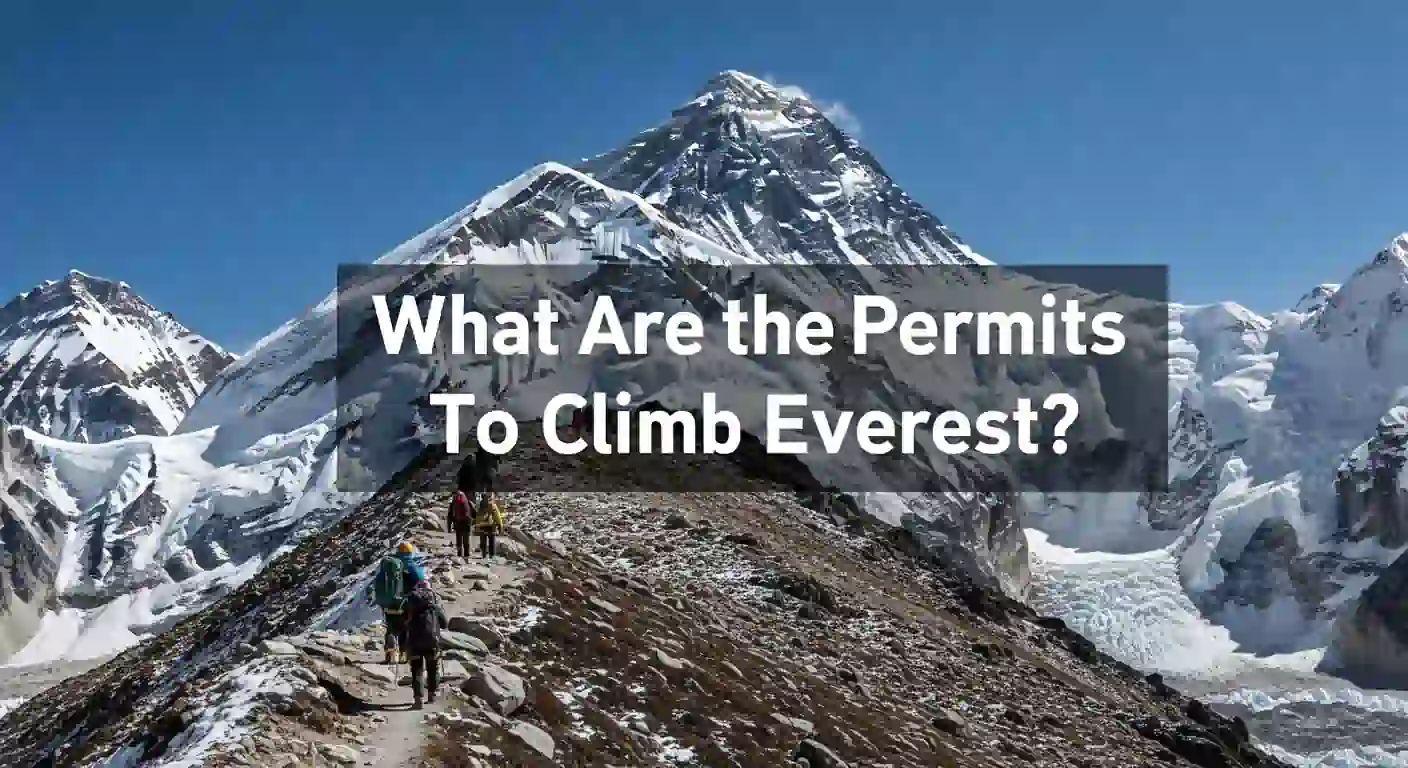
Standing on the summit of Mount Everest is the ultimate goal for many mountaineers, but the journey to 8,848.86 meters begins long before you set foot on the Khumbu Icefall. As of 2026, the regulatory landscape for climbing the world’s highest peak has undergone its most significant transformation in decades. From increased royalty fees to mandatory high-altitude experience, obtaining a permit to climb Everest is now a rigorous process designed to ensure climber safety and environmental preservation.
In this blog, we will explore the essential permits to climb Everest, the updated 2026 costs for both the Nepal and Tibet sides, and the new eligibility criteria you must meet before you can even apply. Whether you are planning a private Everest expedition or joining a commercial team, understanding these government requirements is the first step in your journey to the Top of the World.
Overview of the Permit to Climb Everest
A permit to climb Everest is a legal authorization issued by the Nepal Department of Tourism that grants mountaineers access to the Khumbu region and the world’s highest peak. This “mountaineering royalty” is mandatory for all foreign climbers and serves as a regulatory tool to manage the high volume of traffic, ensure safety standards, and fund the environmental conservation of the Sagarmatha National Park.
The permit system is the backbone of Himalayan mountaineering, acting as a filter to ensure that only qualified individuals attempt the extreme 8,848.86m altitude. Without this official document, climbers cannot legally pass through checkpoints or utilize the fixed-rope infrastructure maintained by the “Icefall Doctors” in the Khumbu Icefall. The Nepal government uses these regulations to monitor expedition teams and coordinate emergency responses, making the permit a critical component of mountain safety.
What Is the Main Permit to Climb Everest?
The main permit to climb Everest from the south side is the Mountaineering Royalty Permit issued by the Nepal Department of Tourism, which currently costs $15,000 per person for the spring season. This official document is the legal “ticket” required to enter the Everest region’s high-altitude zones and is strictly monitored by government liaison officers at Base Camp. Without this permit, climbers are not permitted to use the fixed ropes, ladders, or support services provided by the “Icefall Doctors” in the Khumbu Icefall.
Everest Climbing Permit Issued by the Nepal Government
This permit is an official authorization from the Ministry of Culture, Tourism, and Civil Aviation, mandated for every foreign national attempting to reach the 8,848.86m summit. It is exclusively issued to climbers who are part of a registered expedition team and have hired a government-authorized trekking agency to manage their logistics. The permit acts as a primary safety and tracking tool, linking each climber to a specific licensed guide and a comprehensive insurance policy.
Cost of the Everest Climbing Permit
For the peak spring season (March–May), the individual permit royalty is $15,000, while the autumn season is discounted to $7,500 and the winter/summer seasons to $3,750. These fees are non-refundable and must be paid in full before the expedition departs Kathmandu to secure your slot in the climbing window. In addition to the royalty, teams must pay a $4,000 refundable garbage deposit and a $3,000 fee for a government liaison officer to oversee the camp’s environmental and safety compliance.
Additional Permits Required to Climb Everest
Beyond the main mountaineering royalty, every Everest climber must secure a Sagarmatha National Park entry permit and a Khumbu Pasang Lhamu Rural Municipality permit to legally access the summit route. These secondary permits are essential for environmental conservation and local infrastructure development within the Khumbu region. Unlike the main climbing royalty, these are checked at specific terrestrial gates in Monjo and Lukla, ensuring that all visitors, whether trekking to Base Camp or pushing for the summit, contribute to the region’s sustainability.
Sagarmatha National Park Entry Permit
The Sagarmatha National Park permit is a mandatory conservation pass that costs NPR 3,000 (approx. $22) for international climbers and NPR 1,500 for SAARC nationals. This fee is dedicated to protecting the UNESCO World Heritage site’s fragile ecosystem, which ranges from high-altitude pine forests to the glacial moraines of the upper mountain. You can obtain this permit at the Nepal Tourism Board in Kathmandu or directly at the park entrance gate in Monjo. For summit expeditions, this permit ensures your team is compliant with the strict “Leave No Trace” environmental protocols enforced within the park’s boundaries.
Khumbu Pasang Lhamu Rural Municipality Permit
This local government permit costs NPR 3,000 (approx. $23) for all foreign nationals and serves as the primary regional entry tax for the Everest zone. Introduced to replace the old centralized TIMS system, the revenue from this permit directly funds local trail maintenance, waste management, and community health services in the Khumbu valley. Climbers typically obtain this permit upon arrival in Lukla or at the local authority counter in Monjo. It is a critical document that must be carried throughout your expedition, as it is verified at multiple local checkpoints between Lukla and Everest Base Camp.
TIMS Card (Trekkers’ Information Management System)
While the TIMS card is a standard safety requirement for most regions in Nepal, it is no longer required for the Everest region as of 2026, having been fully replaced by the local municipality permit. Authorities in the Khumbu region transitioned to their own local tracking system to ensure that tourism revenue stays within the mountain communities. This means climbers heading to Everest only need to manage the National Park and Rural Municipality permits, simplifying the administrative process for the South Side. However, if your approach involves trekking through other regions like Gaurishankar or Jiri, you may still need to possess a valid TIMS card or relevant conservation permits for those specific areas.
How Much Does the Permit to Climb Everest Cost?
In 2026, the primary permit to climb Everest from the Nepal side costs $15,000 per person during the spring season, a 36% increase from previous years aimed at managing peak-season crowds. Beyond this base royalty, climbers must factor in an additional $6,000 to $9,000 in mandatory government and local fees, including the new non-refundable clean-up fee and liaison officer costs. These fees which constitute the baseline cost for Everest expedition, are typically paid through a registered trekking agency and are non-refundable, regardless of whether you reach the summit or are forced to turn back due to weather.
The total cost of “government-related” fees for an individual climber in 2026 is summarized in the table below. Note that these are just the permit and administrative costs; they do not include the larger expenses of Sherpa support, oxygen, or equipment.
| Expense Category | Estimated Cost (USD) | Details & 2026 Requirements |
| Spring Royalty Permit | $15,000 | Mandatory fee paid to the Nepal Department of Tourism. |
| Autumn Royalty Permit | $7,500 | Discounted rate for post-monsoon attempts. |
| Liaison Officer Fee | $3,000 | Per team; covers the officer’s salary and logistics at Base Camp. |
| Clean-up Fee | $4,000 | New for 2026: Replaces the refundable deposit with a mandatory fund. |
| Local Municipality Fee | $23 | Khumbu Pasang Lhamu Rural Municipality entry tax. |
| Sagarmatha Park Fee | $25 | Standard entry permit for the UNESCO World Heritage site. |
| Rope Fixing Fee | $600 – $800 | Paid to the SPCC (Icefall Doctors) for route maintenance. |
| Rescue Insurance | $500 – $1,500 | Must cover high-altitude heli-evacuation and body repatriation. |
| Total Mandatory Fees | $23,500 | Estimated per person (Spring) excluding agency service fees. |
How to Apply for a Permit to Climb Everest?
To apply for a permit to climb Everest, you must submit an application through a government-authorized trekking agency in Nepal, as individual or solo applications are strictly prohibited. The process requires you to provide verified proof of having summited at least one 7,000-meter peak in Nepal, along with a comprehensive medical fitness certificate and high-altitude insurance. Once your agency verifies your eligibility and processes the mountaineering royalty fee, the Department of Tourism issues the official permit, which is then validated at checkpoints along the route.
The application process is a highly regulated sequence designed to ensure that only experienced mountaineers enter the extreme altitudes of the Everest region. Your chosen agency acts as the legal liaison between you and the Ministry of Culture, Tourism, and Civil Aviation, managing all technical paperwork and logistics. This system ensures that every climber is linked to a licensed guide and a registered support team, providing a safety network that is monitored by government liaison officers stationed at Base Camp.
Application Process Through Expedition Companies
Authorized expedition companies like Marvel Treks handle the entire administrative burden by submitting your mountaineering credentials and processing the required royalty payments to the Department of Tourism. Working with an agency is mandatory because the government requires a local entity to “vouch” for your experience and guarantee adherence to environmental and safety protocols. Your agency will also coordinate the mandatory liaison officer and ensure that your expedition is registered in the national tracking system, allowing for seamless entry through the Sagarmatha National Park.
Required Documents for Everest Permit
The essential documentation for an Everest permit includes a valid passport with at least six months’ validity, a certified logbook or certificate from a previous 7,000m summit in Nepal, and a recent medical fitness clearance. You must also provide a comprehensive insurance policy that explicitly covers high-altitude rescue, medical evacuation, and death repatriation. Additionally, climbers are required to submit several passport-sized photographs and a detailed climbing itinerary, which the agency uses to finalize the digital permit registration at the tourism board.
Approval Timeline and Permit Issuance
It is highly recommended to start the permit application process at least 3 to 6 months before your intended departure to allow ample time for document verification and logistical coordination. While the Department of Tourism can often process a permit within a few weeks of receiving a complete application, the high demand for the Spring season means that slots and base camp allocations fill up early. Once issued, your permit is typically valid for 55 days, giving you a specific window to complete your rotation and summit attempt before the official climbing season concludes.
Who Issues the Permit to Climb Everest?
The Department of Tourism (DoT), operating under the Ministry of Culture, Tourism, and Civil Aviation of the Nepal government, is the sole official body authorized to issue mountaineering permits for Mount Everest. While the Nepal Mountaineering Association (NMA) handles smaller “trekking peaks” up to 6,600 meters, any peak as massive as Everest (8,848.86m) falls strictly under the jurisdiction of the national government. The DoT’s Mountaineering Section is responsible for verifying climber experience, collecting royalty fees, and assigning mandatory liaison officers to ensure every expedition follows the legal and environmental protocols of the Himalayas.
Rules and Regulations for Everest Climbing Permits
The rules governing Everest permits are strictly enforced by the Nepal Department of Tourism to ensure high-altitude safety, environmental sustainability, and ethical mountaineering practices. Beyond paying the royalty fee, every permit holder is legally bound to follow a set of “National Mountaineering Rules” that cover everything from waste disposal to the mandatory ratio of support staff. Failure to comply with these regulations can lead to heavy fines, permit revocation, and a multi-year ban from climbing any peaks within the territory of Nepal.
Mandatory Use of Licensed Guides
For the 2026 season, it is 100% mandatory for every foreign climber to be accompanied by a licensed high-altitude guide, with a minimum ratio of one guide for every two climbers. Solo climbing is strictly prohibited, as the government aims to reduce the number of preventable accidents and missing person cases in the “Death Zone.” These guides must be registered with a government-authorized agency and hold a current mountaineering license verified by the Department of Tourism. This rule ensures that every permit holder has a professional companion responsible for monitoring oxygen levels, assessing weather risks, and coordinating emergency logistics.
Environmental and Waste Regulations
All permit holders are now legally required to use mandatory waste collection bags (WAG bags) for all human waste above Base Camp and must bring back at least 8kg of personal trash for verification. To prevent “ghost camps,” teams must also remove all oxygen cylinders, tents, and gear from the higher camps (Camp 1 through Camp 4) before their permit expires. A $4,000 non-refundable clean-up fee has replaced the old deposit system to fund the “Sagarmatha Clean-Up Campaign,” which focuses on removing decades-old debris from the mountain. These strict environmental mandates are designed to restore the Everest ecosystem and ensure the UNESCO World Heritage site remains preserved for future expeditions.
Safety Requirements for Climbers
To maintain the validity of your climbing permit, you must carry a registered GPS tracking device at all times and adhere to the “7,000-meter experience rule” for eligibility. Additionally, every climber must undergo a mandatory medical check-up at Base Camp by the “Everest ER” team to verify they are physically fit to continue the ascent beyond 6,000 meters. The use of supplemental oxygen is highly recommended above 7,000m, and teams must prove they have an adequate supply for both the climbers and their Sherpa support staff. These safety layers are integrated into the permit structure to minimize high-altitude fatalities and ensure that rescue teams can locate climbers instantly during sudden storms or health crises.
Everest Permits from Nepal vs Tibet (China)
Choosing between Nepal and Tibet depends on whether you prefer the standardized $15,000 royalty of the South Side or the all-inclusive logistical permits of the North Side, which average around $16,000. While Nepal remains the most popular choice due to its established infrastructure and scenic Khumbu trek, Tibet offers a more road-accessible approach to Base Camp but carries stricter “team-only” regulations. Both sides now require verifiable high-altitude experience, but the administrative processes for obtaining a permit across the different Everest climbing routes vary significantly between the two governing bodies.
Permit Differences Between North and South Routes
The Nepal permit is a standalone mountaineering royalty issued by the Department of Tourism, whereas the Tibet permit is a comprehensive document managed by the China Tibet Mountaineering Association (CTMA). In Nepal, your permit allows you to trek through the Sagarmatha National Park to reach the mountain, while the Tibet permit includes specific road-access rights to drive directly to the North Base Camp. Furthermore, Nepal’s permit structure is highly seasonal, with significant discounts for autumn climbs, whereas Tibet’s permits are predominantly focused on the spring season with less flexibility for off-peak expeditions.
Cost Comparison
For 2026, the South Side (Nepal) royalty has increased to $15,000, while the North Side (Tibet) permit fees typically range between $15,800 and $18,000 per climber. While the base permit price is similar, the “hidden” costs differ; Nepal requires a separate $4,000 cleanup fee and $3,000 liaison officer fee per team. In contrast, the Tibetan permit often bundles transportation and base camp services into a single government fee, though individual costs can rise if you are not part of a group of four or more climbers.
Application Requirements
Nepal requires a 7,000m summit certificate from a peak within its borders and a 1:2 guide-to-climber ratio, while Tibet mandates a minimum team size of four and proof of previous 8,000m experience for non-oxygen attempts. Both regions require applications to be submitted through registered agencies, but Tibet’s process is more administratively complex, requiring a China Visa, a Tibet Travel Permit (TTP), and an Alien’s Travel Permit. Nepal’s requirements focus more on physiological readiness and local insurance, whereas the Tibetan authorities place a heavy emphasis on team-based logistics and centralized government monitoring.
Why Everest Climbing Permits Are Important?
Everest climbing permits are critical regulatory tools that ensure every expedition is legally authorized, environmentally responsible, and safety-verified by the Nepal Department of Tourism. Far more than just a revenue source, these permits allow the government to monitor climber flow, verify mandatory high-altitude experience, and fund the essential rescue and cleaning operations that keep the mountain viable. Without this official registration, climbers cannot access the fixed-rope infrastructure or the emergency support network provided by the “Icefall Doctors” and local liaison officers.
- Regulating Traffic and Overcrowding: By limiting permit issuance and enforcing a strict 55-day validity window, authorities aim to reduce dangerous “traffic jams” at bottlenecks like the Hillary Step, ensuring safer movement during narrow weather windows.
- Verifying Climber Competency: The permit system acts as a safety filter, requiring verified proof of a previous 7,000m summit and a medical fitness certificate to ensure only prepared mountaineers enter the high-altitude “Death Zone.”
- Funding Environmental Conservation: Permit fees, including the mandatory non-refundable garbage fund and Sagarmatha National Park fees, directly finance long-term cleaning campaigns and waste management protocols like the mandatory use of WAG bags.
- Providing a Safety & Rescue Network: Permits link every climber to a mandatory GPS tracking device and a licensed guide, facilitating instant location tracking and coordinated helicopter evacuations during health crises or avalanches.
- Supporting the Local Economy and Workers: A portion of the permit royalty is allocated to insurance and welfare funds for Sherpas and high-altitude workers, ensuring fair wages and social security for the backbone of the Himalayan climbing industry.
Tips for Getting Your Everest Climbing Permit Successfully
Securing an Everest climbing permit is a precise administrative process that requires partnering with a government-authorized agency and providing meticulous proof of your high-altitude experience. Success depends on early preparation, as the Department of Tourism strictly enforces the new 7,000m summit requirement and digital registration deadlines for the spring season. By organizing your medical records and climbing logs months in advance, you ensure a seamless approval process that keeps your summit window open.
Choose a Licensed Expedition Operator
Since the Nepal government does not issue permits to individuals, your first step must be selecting an authorized agency like Marvel Treks to act as your legal representative. These operators possess the necessary licenses to process royalty payments, coordinate with liaison officers, and link your permit to the mandatory GPS tracking system. A veteran agency also ensures that your permit is part of a legitimate expedition structure, which is vital for clearing the various military and park checkpoints between Lukla and Base Camp.
Apply Early for Peak Climbing Seasons
For the prime spring climbing window, you should ideally begin your application at least four to six months in advance to secure your spot in the limited base camp allocations. Early application allows your agency to troubleshoot any issues with your 7,000m summit verification and ensures all insurance policies are active before the government’s digital filing deadline. Applying early also gives you priority for the “Icefall Doctors” route-fixing slots, which can be critical for timing your acclimatization rotations during narrow weather windows.
Ensure Proper Documentation
The difference between permit approval and rejection often comes down to the clarity of your 7,000m summit certificates, high-altitude medical clearances, and comprehensive rescue insurance. Every document must be translated into English (if necessary) and verified by your agency before being uploaded to the Department of Tourism’s mountaineering portal. In 2026, double-checking that your insurance explicitly covers search, rescue, and body repatriation above 8,000 meters is non-negotiable for the issuance of the final climbing royalty.
Conclusion
In conclusion, securing a permit to climb Everest is far more than a simple administrative requirement; it is a critical commitment to safety, environmental stewardship, and the traditions of Himalayan mountaineering. The 2026 regulations, including the mandatory 7,000m experience rule and the $15,000 spring royalty fee, reflect a necessary shift toward higher standards for every climber attempting the world’s highest peak. By navigating these requirements with the help of a professional agency, you ensure that your expedition is built on a foundation of legal compliance and expert support.
Standing on the summit of Mount Everest is a life-altering achievement, but the journey truly begins with that first approved permit in your hand. While the paperwork may seem daunting, it exists to protect the mountain and the lives of those who dare to climb it. With the right preparation, the proper documentation, and a veteran team by your side, the path through the Khumbu Icefall to the 8,848.86m peak is open and waiting for you.
Ready to Secure Your 2026 Everest Permit?
Don’t let the new government regulations slow down your dream of the summit. Marvel Treks specializes in elite 8,000m expeditions, handling every detail of the $15,000 permit application, 7,000m summit verification, and GPS tracking logistics. Let us manage the bureaucracy so you can focus on the climb.
FAQS
How much does an Everest permit cost in 2026?
The government royalty fee for the spring season is now $15,000 per person, an increase from the previous $11,000 rate.
Can I get a permit if I haven’t climbed a 7,000m peak?
No, in 2026, you must provide verified proof of summiting at least one 7,000m peak in Nepal to be eligible for an Everest permit.
Is the garbage deposit still refundable?
No, the government has transitioned to a mandatory $4,000 non-refundable clean-up fee to fund permanent mountain restoration.
How long is the Everest climbing permit valid?
In 2026, the permit is valid for a maximum of 55 days from the date of arrival at Base Camp.
Are solo permits available for Mount Everest?
No, solo climbing is strictly banned; all permits must be issued to teams of at least two, accompanied by a licensed guide.
What insurance is required for the permit?
You must have comprehensive high-altitude insurance that covers search, rescue, and repatriation up to 8,000+ meters.
Does the permit cover the “Icefall Doctors” fee?
No, the rope-fixing fee (approx. $600) is a separate payment made to the SPCC for trail and ladder maintenance.
Can I use a permit from a previous year?
No, Everest permits are non-transferable and non-refundable, meaning they are only valid for the specific season issued.

Ready for your next Himalayan adventure?
Plan Your Next Big Adventure with Us
Explore Our AdventuresJoin our expert-guided journeys across Nepal and beyond, from classic trails to epic summits.