
Annapurna Sanctuary Trek: Everything You Need To Know About
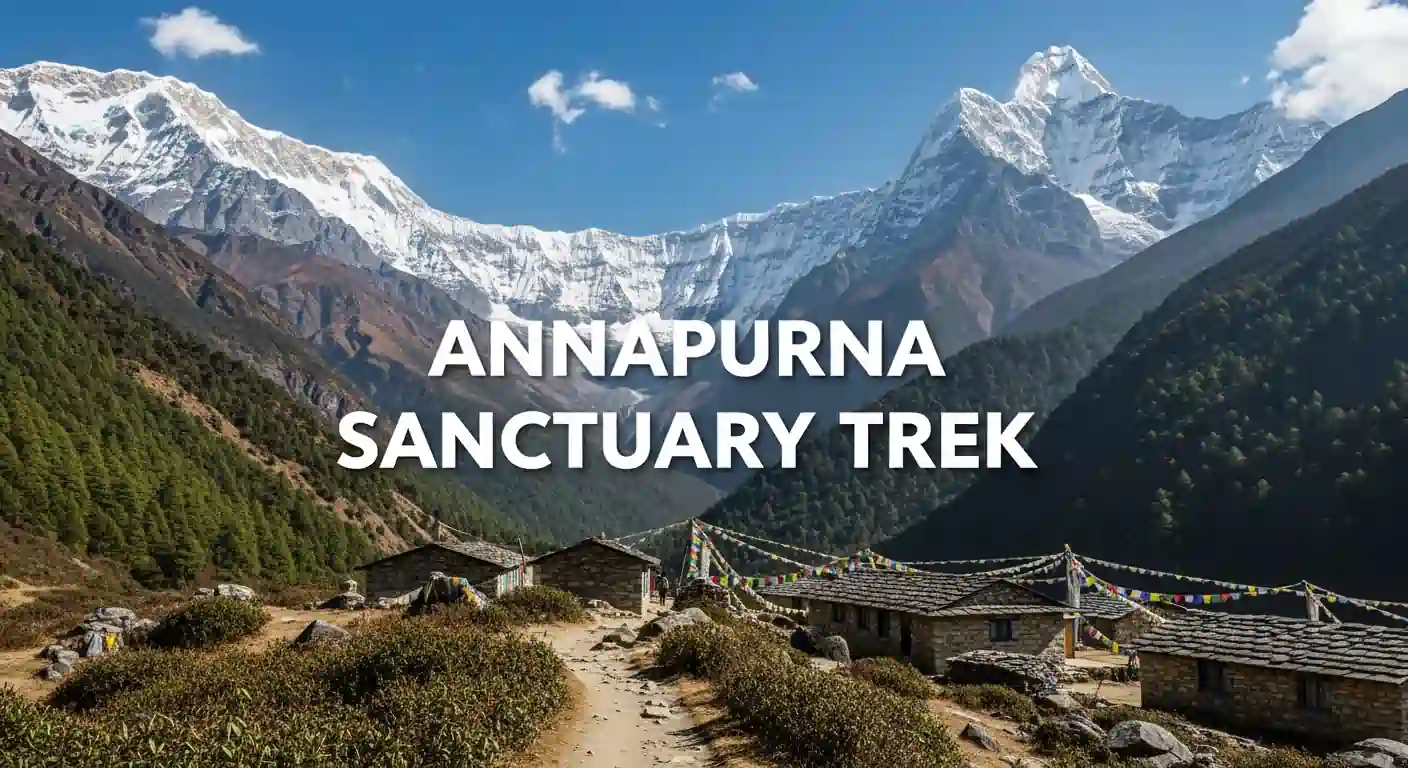
Imagine waking up inside a natural amphitheater of towering, snow-capped giants, where 360 degrees of massive peaks, including the legendary Annapurna I and the iconic “Fishtail”, wrap around you like a frozen fortress. The Annapurna Sanctuary Trek isn’t just another walk in the woods, bro; it’s a high-altitude pilgrimage into a sacred basin that feels like the very heart of the Himalayas.
In this blog, we’re breaking down everything you need to know about the Annapurna Sanctuary Trek to ensure your 2026 adventure is as epic as the views themselves. We’ll dive into the best times to hit the trail, the gear that will actually save your knees on those legendary stone steps, and the logistics of navigating the diverse terrain, from lush rhododendron forests to the glacial moraines of Base Camp. Whether you’re a first-time Himalayan hiker or a seasoned trail veteran, this guide is your tactical blueprint for conquering one of the most visually stunning routes for adventure trekking in Nepal. We’re talking permits, tea house culture, and the secret spots that most trekkers miss while they’re busy staring at their boots.
Introduction to the Annapurna Sanctuary Trek
The Annapurna Sanctuary Trek is a legendary high-altitude journey into a massive, glacial basin surrounded by a ring of ten peaks over 6,000 meters, offering one of the most visually spectacular “amphitheater” experiences in the entire Himalayan range. Located deep within the Annapurna Conservation Area of north-central Nepal, this trek is a masterclass in ecological diversity, starting in lush, subtropical rhododendron forests and ascending into a stark, high-alpine world of ice and rock. It remains a top-tier choice for global hikers because it delivers the raw power of an 8,000-meter base camp in a relatively accessible timeframe, combining world-class mountain scenery with the warm, authentic hospitality of the Gurung and Magar mountain communities.
The true magic of the Annapurna Sanctuary Trek lies in its unique geography; unlike traditional linear treks, this route funnels you through a narrow gorge into a hidden, sacred valley where the massive south face of Annapurna I dominates the skyline. Key highlights include reaching the iconic Annapurna Base Camp (4,130m) and Machhapuchhre Base Camp, as well as the natural hot springs of Jhinu Danda and the famous sunrise views from Poon Hill. Whether you are navigating the ancient stone staircases of Ulleri or witnessing the first golden light hit the “Fishtail” peak, the trek provides a dense, high-impact cultural and physical experience that is widely considered the gold standard for trekking in Nepal for beginners.
Annapurna Sanctuary Trek Distance and Route Overview
The Annapurna Sanctuary Trek covers a total round-trip distance of approximately 110 to 115 kilometers (68 to 71 miles), typically requiring 7 to 11 days to complete depending on your starting point and pace. This legendary route funnels trekkers through a narrow glacial valley into a high-altitude “Sanctuary” that is entirely ringed by massive peaks, providing a dense and visually high-impact journey through the heart of the Himalayas.
Total Annapurna Sanctuary Trek Distance
The total distance of the trek varies between 110km and 115km for the standard round-trip journey from the trailhead to the base camp and back. On average, you will be covering about 10 to 15 kilometers per day, which translates to roughly 5 to 7 hours of walking through diverse terrain. While the mileage might seem modest compared to flat-land hiking, the “hidden distance” lies in the significant elevation gain and the thousands of ancient stone steps that define the Annapurna trails.
Starting and Ending Points
Most adventures begin and end in the vibrant lake city of Pokhara, which serves as the primary logistical hub for the region. The official walking trailhead is traditionally Nayapul, though modern infrastructure now allows for jeep transfers further in to places like Ghandruk or Jhinu Danda to save time. Starting from these higher points can trim the total distance, but beginning at the lower elevations is often recommended for better long-term acclimatization and a deeper cultural experience through the foothills.
Key Stops Along the Route
The route is punctuated by iconic settlements that offer both strategic rest and unique Himalayan experiences, starting with the natural hot springs of Jhinu Danda. From there, you ascend to Chhomrong, the famous “Gateway to the Sanctuary,” before passing through the bamboo forests of Bamboo and the dramatic cliffs of Deurali. The journey culminates at Annapurna Base Camp (ABC) at 4,130 meters, where you stand in a high-altitude amphitheater surrounded by the massive south face of Annapurna I and the sacred Machhapuchhre.
Annapurna Sanctuary Trek Itinerary (Day-by-Day)
The standard Annapurna Sanctuary Trek itinerary typically spans 7 to 11 days, starting from Pokhara and ascending through the “Gateway” at Chhomrong to reach the 4,130-meter base camp. This timeline allows for a safe acclimatization pace while ensuring you have enough “mountain time” to experience the sunrise over the massive Annapurna massif and the sacred Machhapuchhre peak.
7–10 Day Standard Itinerary
A classic Annapurna Sanctuary Trek itinerary usually begins with a drive to Jhinu Danda, followed by a steady ascent through the stone-staircase village of Chhomrong and the dense bamboo forests of Dovan. The high-altitude push typically happens on Day 5 or 6, moving from Deurali through Machhapuchhre Base Camp (MBC) to reach the sanctuary’s heart at Annapurna Base Camp (ABC). The return leg often includes a well-deserved soak in the natural hot springs at Jhinu Danda before the final descent and drive back to the lakeside comfort of Pokhara, completing the full circle of an Annapurna Base Camp Trek.
Short vs Extended Itinerary Options
For trekkers with limited time, a “Rapid ABC” itinerary can be compressed into 5 to 6 days by utilizing jeep transfers further into the trailhead at Samrung, though this requires a high level of physical fitness and pre-acclimatization. Conversely, many hikers choose to extend the journey to 12 or 14 days by adding the famous Ghorepani Poon Hill loop for a spectacular panoramic sunrise. Customizing your route allows you to balance the technical “knee-burning” descents with extra rest days in the vibrant Gurung villages of Ghandruk or Landruk for a deeper cultural immersion.
How Many Days Does the Annapurna Sanctuary Trek Take?
The Annapurna Sanctuary Trek typically takes 7 to 11 days to complete, depending on whether you choose a direct route from the modern trailheads like Jhinu Danda or include the famous Ghorepani Poon Hill acclimatization loop. A standard itinerary covers approximately 110–115 kilometers, and while seasoned hikers can push through a “Rapid ABC” route in as little as 5 or 6 days, most travelers opt for a 10-day pace to allow for proper altitude adjustment and time to enjoy the sunrise over the Annapurna massif. Your total duration will ultimately be influenced by your physical fitness, how many ancient stone steps your knees can handle per day, and whether you decide to linger in the natural hot springs or the high-altitude amphitheater of the Sanctuary itself.
Annapurna Sanctuary Trek Difficulty Level
The Annapurna Sanctuary Trek is considered a moderate difficulty journey, primarily defined by thousands of steep stone steps and a high-altitude finish at 4,130 meters (13,550 feet). While it does not require technical mountaineering skills or extreme endurance, the consistent “up and down” nature of the foothills and the thin air of the inner Sanctuary demand a solid baseline of cardiovascular fitness and mental resilience.
Annapurna Sanctuary Trek Difficulty Explained
The true challenge of the annapurna sanctuary trek difficulty lies in the famous “Nepali flat”, a series of relentless stone staircases that test your quads and knees, particularly on the descent from Chhomrong. You’ll be trekking for 5 to 7 hours daily through diverse terrain ranging from slippery forest paths to rocky glacial moraines. It’s a physical grind that requires steady pacing rather than raw speed, making it an accessible but honest test of your hiking stamina.
Altitude and Fitness Requirements
Reaching the highest point at Annapurna Base Camp (4,130m) introduces the risk of Acute Mountain Sickness (AMS), as oxygen levels are significantly lower than at the trailhead. You don’t need to be an Olympic athlete, but having a strong heart and lungs from regular hiking, swimming, or cycling will make the ascent much more enjoyable. A professional itinerary will always include a gradual climb through the Modi Khola valley to ensure your body has the time it needs to adjust to the thinning Himalayan air.
Who Can Do This Trek?
This trek is the perfect “entry-level” Himalayan adventure for beginners with a good level of fitness, but it still offers enough spectacular scale to satisfy experienced trekkers. Because the trail is well-defined and serviced by comfortable tea houses, it is accessible to anyone from active teenagers to healthy seniors, provided they are prepared for the physical toll of the stairs. As long as you have a “can-do” attitude and a pair of well-broken-in boots, the Sanctuary is waiting to welcome you into its massive amphitheater.
Annapurna Sanctuary Trek Weather and Best Time to Visit
The best time to visit the Annapurna Sanctuary is during the spring (March to May) and autumn (September to November), when the Himalayan skies are most stable and the panoramic mountain views are clearest. These peak windows avoid the heavy snowfall of winter and the torrential rains of the monsoon, providing the safest and most visually spectacular conditions for navigating the high-altitude trails leading into the Sanctuary’s inner amphitheater, making it the undisputed best season for trekking in Nepal.
Spring Season (March–May)
Spring is arguably the most beautiful time for the annapurna sanctuary trek, as the hillsides transform into a vibrant canvas of blooming red, pink, and white rhododendrons. The temperatures are comfortably mild at lower elevations, and while the mornings are crisp, the clear afternoon light provides a perfect backdrop for the massive Annapurna massif. This is a season of rebirth in the mountains, offering a high-vibration environment where the melting snow reveals lush greenery and active wildlife.
Autumn Season (September–November)
Following the monsoon rains, autumn offers the most legendary “high-definition” views of the entire trekking calendar, with the dust washed away and the atmosphere at its most transparent. This is the gold standard for photography, as the deep blue skies contrast sharply with the brilliant white peaks of Machhapuchhre and Annapurna I. While it is the busiest time on the trail, the predictable weather and crisp, cool air make for the most reliable trekking conditions of the year.
Winter and Monsoon Conditions
The winter months (December to February) bring biting cold and heavy snow that can occasionally block the narrow gorge into the Sanctuary, making it a challenging but peaceful time for those with the right gear. Conversely, the monsoon (June to August) turns the trails into a slippery, leech-filled adventure with frequent clouds obscuring the peaks, though it offers a unique, lush solitude for the adventurous. While trekking is possible in these “off-seasons,” they require a much higher level of physical preparation and flexible logistics to manage the elements.
Annapurna Sanctuary Trek vs Annapurna Circuit
The Annapurna Sanctuary Trek is a shorter, 7–11 day “in-and-out” journey focusing on a single, high-altitude glacial basin, whereas the Annapurna Circuit is a massive 12–21 day loop that crosses the 5,416-meter Thorong La Pass and traverses diverse climate zones. Choosing between the two depends on whether you want a high-impact, mountain-focused “amphitheater” experience (Sanctuary) or a long-distance cultural odyssey that circumnavigates an entire mountain range. While both are world-class, the Sanctuary trek is more accessible for those with limited time, while the Annapurna Circuit Trek remains the ultimate test of endurance and high-altitude acclimatization.
| Feature | Annapurna Sanctuary Trek | Annapurna Circuit Trek |
| Total Distance | Approx. 110–115 km (68–71 miles) | Approx. 160–230 km (100–145 miles) |
| Typical Duration | 7 – 11 Days | 12 – 21 Days |
| Max Elevation | 4,130m (Annapurna Base Camp) | 5,416m (Thorong La Pass) |
| Trek Type | “In-and-Out” (same route back) | Horseshoe Loop (different start/end) |
| Difficulty | Moderate (Steep stone stairs) | Challenging (High altitude & distance) |
| Landscape | Lush forest to Glacial Amphitheater | Jungle to High-Altitude Tibetan Plateau |
| Best For | Travelers with limited time; ABC views | Endurance seekers; Cultural diversity |
| Key Highlight | Standing inside the mountain ring | Crossing the world’s highest trekking pass |
Cost of the Annapurna Sanctuary Trek
For 2026, the total cost of the Annapurna Sanctuary Trek typically ranges from $500 to $1,250 per person, depending on whether you choose a budget-friendly independent approach or a full-service guided expedition. This price includes essential permits like the ACAP and TIMS, daily tea house accommodation, mountain meals, and the logistics of getting to and from the trailhead in Pokhara. While the “sticker price” can vary, the value lies in the high-vibration experience of standing inside the world’s most iconic mountain amphitheater without the extreme price tag of higher-altitude treks like Everest.
| Expense Category | Estimated Cost (USD) | Notes |
| Trekking Permits | $40 – $50 Total | Includes ACAP (NPR 3,000) and TIMS Card (NPR 2,000). |
| Daily Meals & Water | $25 – $35 Per Day | Prices rise with altitude; Dal Bhat is the best value for energy! |
| Tea House Lodging | $5 – $12 Per Night | Usually twin-sharing; private rooms are rare at higher camps. |
| Licensed Guide | $25 – $35 Per Day | Essential for safety, navigation, and local cultural context. |
| Professional Porter | $20 – $25 Per Day | Carries up to 20kg; a total lifesaver for your knees and back. |
| Personal Extras | $5 – $10 Per Day | Budget for hot showers ($3), Wi-Fi ($2), and device charging. |
Permits Required for Annapurna Sanctuary Trek
To legally enter the Annapurna Sanctuary, every trekker is required to carry two mandatory documents: the Annapurna Conservation Area Permit (ACAP) and the Trekkers’ Information Management Systems (TIMS) card. These permits are essential for tracking hiker safety, maintaining the trail infrastructure, and funding the conservation efforts that keep the Sanctuary’s diverse ecosystem pristine for future generations. As of 2026, the government of Nepal requires all international trekkers to be accompanied by a licensed guide, and these permits must be presented at various checkpoints in villages like Birethanti and Chhomrong to ensure you are officially registered within the conservation zone.
- Annapurna Conservation Area Permit (ACAP): This is a non-transferable entry permit costing approximately NPR 3,000 (roughly $23–$25 USD) for foreigners, designed to fund the sustainable development and environmental protection of the region’s diverse flora and fauna.
- TIMS Card (Trekkers’ Information Management Systems): This mandatory registration card costs NPR 2,000 (approx. $15 USD) for individual trekkers and is crucial for your safety, as it allows authorities to track your location and coordinate rescue operations in case of an emergency or natural disaster.
- Licensed Guide Requirement: Per the latest 2026 regulations, you cannot obtain these permits for a solo trek; you must book through a registered trekking agency that will handle the paperwork and provide a certified guide to accompany you into the high-altitude Sanctuary.
- Passport & Photos: To process these permits in Kathmandu or Pokhara, you will need to provide a clear copy of your passport and at least two recent passport-sized photographs, though most digital-first agencies can now handle this electronically.
Accommodation and Food During the Trek
Accommodation and food on the Annapurna Sanctuary Trek are provided by a well-established network of “tea houses”, family-run mountain lodges that offer a warm, communal atmosphere and high-energy Himalayan meals at every major stop. These lodges are the social heartbeat of the trail, where trekkers from across the globe gather around central heaters to share stories while fueling up on the legendary “Dal Bhat Power” required to conquer the next day’s stone stairs.
Tea Houses and Lodges
Tea houses along the Sanctuary route range from cozy wooden lodges in the lower forests to more functional, stone-built shelters as you approach the high-altitude Base Camp. You can expect basic but clean twin-sharing rooms with foam mattresses, communal dining areas, and increasingly common (though sometimes paid) amenities like hot showers, Wi-Fi, and solar charging stations. While the walls are often thin and the nights are chilly, the authentic hospitality of the Gurung and Magar hosts provides a level of warmth that no five-star hotel could ever replicate in the thin mountain air.
Typical Food Options
The menus in these mountain kitchens are surprisingly diverse, offering everything from traditional Nepali Dal Bhat (lentil soup, rice, and curry) to international staples like pasta, pancakes, and even yak-cheese pizza. Dal Bhat remains the gold standard for trekkers because it is nutritious, filling, and comes with free refills, a critical factor when you’re burning thousands of calories on the ascent. As you climb higher, the prices increase slightly due to the cost of portering supplies, so sticking to local, fresh ingredients is the best way to maintain both your energy levels and your trekking budget.
What to Pack for the Annapurna Sanctuary Trek?
To conquer the Annapurna Sanctuary Trek, your packing strategy must center on a “versatile layering system” that can handle everything from the subtropical humidity of the foothills to the sub-zero glacial winds of the high-altitude Base Camp. Because you’ll be transitioning through multiple climate zones in a single day, your gear needs to be lightweight, moisture-wicking, and professional-grade to ensure you stay dry and warm without carrying unnecessary weight.
- Core Clothing Layers: Pack moisture-wicking base layers, a mid-weight fleece for insulation, a high-loft down jacket for freezing nights at ABC, and a breathable, waterproof hardshell for wind and rain protection.
- Footwear & Trekking Hardware: Invest in high-quality, broken-in trekking boots with solid ankle support, moisture-wicking wool socks (3-4 pairs), and lightweight trekking poles to save your knees on the thousands of stone steps.
- Essential Tech & Personal Care: Bring a 20,000mAh power bank for device charging, a high-lumen headlamp with extra batteries, a broad-spectrum sunscreen (SPF 50+), and a reusable water purification system (LifeStraw or tablets) to avoid plastic waste.
- First Aid & Safety Kit: Carry a personal medical kit containing blister treatments, Ibuprofen for altitude headaches, Diamox (if prescribed), a broad-spectrum antibiotic, and basic rehydration salts to maintain your energy in the thin air.
Why Choose the Annapurna Sanctuary Trek?
You should choose the Annapurna Sanctuary Trek because it offers the most explosive “mountain-to-mile” ratio in the Himalayas, delivering the awe-inspiring experience of a massive 8,000-meter base camp in a relatively short 7-to-11-day timeframe. Unlike longer expeditions, this trek funnels you directly into a sacred glacial basin where you are literally surrounded by a 360-degree wall of legendary peaks, including the formidable South Face of Annapurna I and the iconic, unclimbed spire of Machhapuchhre (Fishtail). Beyond the elite alpine scenery, the route is a masterclass in diversity, transitioning from subtropical jungles and ancient Gurung villages to high-altitude moraines, making it the perfect choice for those who want a dense, high-impact cultural and physical adventure without committing to a multi-week odyssey.
Conclusion
The Annapurna Sanctuary Trek is a rare Himalayan masterpiece that packs the raw, unbridled power of an 8,000-meter base camp into a remarkably accessible 7-to-11-day journey. From the humid, rhododendron-filled jungles of the foothills to the frozen, high-altitude amphitheater of the Sanctuary itself, every step on those legendary stone stairs brings you closer to a 360-degree wall of white-capped titans. Whether you’re watching the first golden light ignite the South Face of Annapurna I or soaking your tired quads in the natural hot springs of Jhinu Danda, this trek offers a “mountain-to-mile” ratio that is simply unmatched anywhere else on the planet.
As you plan your 2026 adventure, remember that the Sanctuary isn’t just a destination, it’s a transformative physical and spiritual encounter with the “roof of the world.” By choosing a route that respects your pace and an operator that prioritizes your safety in the thin air, you aren’t just taking a hike; you are stepping into a sacred landscape that has humbled and inspired explorers for generations. The “Fishtail” peak is waiting, the Dal Bhat is hot, and the trail is ready for your footprints. All that’s left is for you to take that first step out of Pokhara and into the heart of the Annapurna massif.
Ready to Step into the Sanctuary?
Don’t leave your Himalayan dream to chance. Marvel Treks specializes in “Sanctuary Logistics Mastery,” providing the veteran guides and elite support you need for a safe, seamless, and deeply authentic Annapurna experience.
FAQS
What is the best month for the Annapurna Sanctuary Trek?
October to November offers the clearest skies, while March to May features stunning blooming rhododendrons.
How difficult is the Annapurna Sanctuary Trek?
It is moderately difficult, mainly due to thousands of steep stone steps and the 4,130m altitude.
Do I need a guide for the Annapurna Sanctuary Trek in 2026?
Yes, per Nepal’s latest regulations, all international trekkers must be accompanied by a licensed guide.
What is the highest point of the trek?
The highest point is Annapurna Base Camp (ABC), standing at a staggering 4,130 meters (13,550 feet).
Is there a risk of altitude sickness?
Yes, symptoms can occur above 3,000m. A gradual pace and proper hydration are essential for safety.
Can I charge my phone and use Wi-Fi on the trail?
Yes, most tea houses offer these for a small fee ($2–$5), but bring a power bank just in case.
What kind of food is available?
You’ll find Dal Bhat, pasta, pancakes, and even pizza, though local Nepali food is the best for energy.
How much does the ABC trek cost?
A typical 10-day guided trek ranges from $800 to $1,250, depending on the level of service and group size.

Ready for your next Himalayan adventure?
Plan Your Next Big Adventure with Us
Explore Our AdventuresJoin our expert-guided journeys across Nepal and beyond, from classic trails to epic summits.