
What is the Best Time To Climb K2?
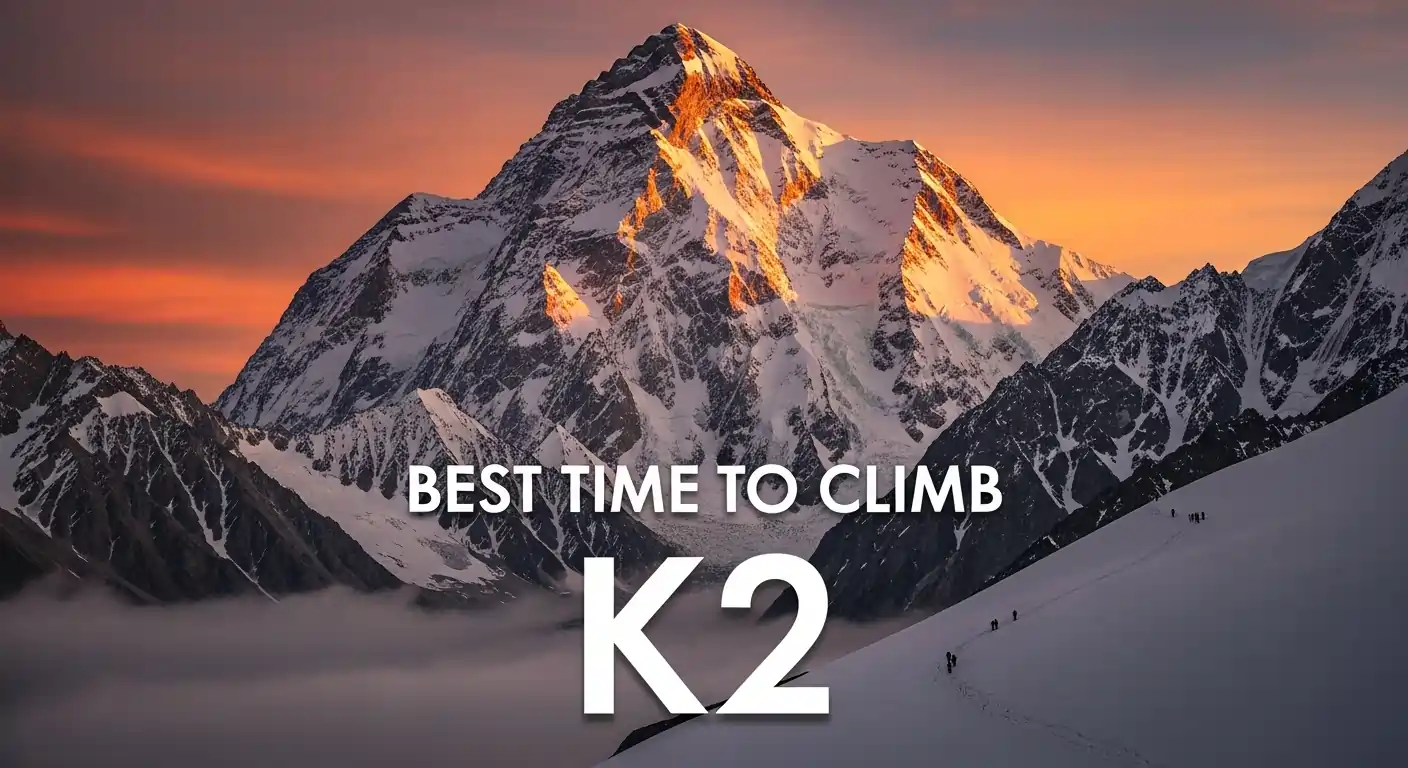
Best time to climb K2 is during the summer months of July and August, when the Karakoram range experiences its most stable weather and warmest temperatures. Unlike the Everest climbing season which peaks in May, K2’s more northern latitude and unique microclimate make mid-summer the only realistic window for a successful summit bid. During this short period, the brutal jet stream winds typically migrate away from the peak, allowing elite mountaineers a narrow opportunity to navigate the “Savage Mountain” without facing the lethal -60°C temperatures of the off-season.
In this blog, we explore the definitive answer to the best time to climb K2 to ensure your 2026 expedition is timed for maximum safety and success. We’ll break down why the July-August window is the gold standard for the Karakoram, the differences between summer and winter attempts, and the specific weather patterns you need to watch for. Whether you’re a Seven Summits collector or a professional climber eyeing the Abruzzi Spur, understanding these seasonal nuances is the first step in surviving a K2 Expedition.
Where Is K2 and Why Timing Matters?
K2 is located on the border between Gilgit-Baltistan, Pakistan, and the Taxkorgan Tajik Autonomous County of Xinjiang, China, within the heart of the Karakoram Range. Unlike the Himalayas, the Karakoram is situated further north and is deeper inland, creating a more continental and volatile climate. Timing is everything on the “Savage Mountain” because its geographic isolation makes it a magnet for extreme winds and rapid weather shifts that can appear without warning. Because the peak is a steep, pyramidal spire, even a slight change in wind direction can turn the technical climbing sections into lethal traps, which is why it remains one of the most prestigious yet dangerous of the best mountains to climb around the World.
- The Northern Latitude Factor: K2’s more northerly position than Everest means the climbing season starts later and is significantly colder throughout the year.
- Jet Stream Influence: The mountain sits directly in the path of the jet stream, which only lifts away for a few fleeting weeks in mid-summer.
- Karakoram Microclimates: The massive surrounding peaks like Broad Peak and Gasherbrum create complex wind tunnels that make local forecasting incredibly difficult.
- Logistical Deadlines: The remote trek to base camp takes nearly 10 days, meaning your arrival must be timed perfectly with the start of the July weather window.
- Safety in Stability: Proper timing reduces the risk of the “K2 cloud,” a persistent, localized storm that can trap climbers in the high camps for days.
- Avalanche and Rockfall Risks: Seasonal timing dictates the snowpack’s stability; climbing too late in the summer increases the danger of falling rock as ice melts.
- Summit Success Rates: Statistically, nearly all successful ascents have occurred between July 20th and August 10th, proving that deviating from this window is a massive gamble.
What Is the Best Time to Climb K2?
The best time to climb K2 is during the summer months of July and August, specifically the narrow window between mid-July and early August. This period offers the highest probability of stable atmospheric pressure and the lowest wind speeds, which are the primary gatekeepers of the “Savage Mountain.” Unlike the spring season on Everest, K2 remains trapped under the jet stream until late June, making a mid-summer push the only realistic option for most teams attempting to reach the summit of K2 Mountain.
Best Season to Climb K2
The summer season is the undisputed champion for K2 expeditions because it provides the only reliable break from the hurricane-force winds that batter the Karakoram. During July, the jet stream moves northward, allowing temperatures to rise to a “manageable” -20°C on the summit and significantly reducing the risk of frostbite and wind-induced exhaustion. While winter ascents have been achieved by elite teams, they are considered exceptionally high-risk and are not feasible for standard commercial expeditions. Summer also ensures that the Baltoro Glacier approach is navigable and that porters can safely transport supplies to base camp. This seasonal window is when the mountain’s technical rock and ice sections are most predictable, allowing for the fixed-line infrastructure that many climbers depend on.
Typical Summit Window on K2
The peak summit window on K2 is famously short, usually condensed into a few critical days between July 20th and August 10th. During these three weeks, climbers wait at high camps in a state of constant readiness, watching for a “weather window” where wind speeds drop below 40 km/h. Because K2 is a steep, isolated pyramid, these windows often appear suddenly and may only last for 24 to 48 hours, leaving no room for hesitation or slow movement. If a team misses this specific window due to poor timing or slow acclimatization, the return of the jet stream in mid-August usually signals the end of the climbing season. This high-stakes environment is why climbers must invest in the most reliable logistics and experienced Sherpa support, regardless of how much does K2 expedition costs.
Ready for the Ultimate Mountain Challenge?
Contact Marvel Treks for expert expedition guidance and explore the legendary K2 Expedition experience.
K2 Climbing Seasons Explained
K2 operates on a strict seasonal calendar that leaves almost no room for error, as the mountain is physically unclimbable for the vast majority of the year. While other peaks might offer multiple windows, the “Savage Mountain” is governed by the shifting jet stream, which dictates when the winds finally drop enough to allow human passage. Understanding the nuances of these specific months is the difference between a successful expedition and a dangerous retreat.
Summer Season on K2 (June to August)
The summer season is the only viable period for high-altitude climbing on K2, as it provides the warmest temperatures and the most stable atmospheric pressure. July stands out as the optimal month because the jet stream typically migrates north, leaving behind a brief window of manageable wind speeds and clearer skies. During this time, the Baltoro Glacier is most accessible, and the mountain’s technical rock and ice sections are more predictable for fixing ropes. Without the summer heat to stabilize the environment, the sheer cold and wind chill on the upper slopes would be lethal even for the most seasoned climbers.
Early vs Late Summer on K2
The transition from early to late summer represents a delicate balance between preparation and the closing of the weather window. June is traditionally dedicated to the grueling process of load-hauling and acclimatization, though heavy snow and unsettled spring weather often make progress slow and physically taxing. By late August, the risks shift toward increased rockfall as the summer heat melts the ice holding the mountain together, and the return of the jet stream threatens to shut down the route entirely. While early August can offer the most consolidated snow, the pressure to summit before the season ends can lead to crowding at technical bottlenecks like House’s Chimney.
Why Is Summer the Best Time to Climb K2?
Summer is the best time to climb K2 because it is the only period when the lethal jet stream winds migrate away from the summit, creating a temporary “window” of calm. This seasonal shift typically occurs between late June and early August, bringing the most stable atmospheric pressure and the warmest temperatures of the year. Without this atmospheric reprieve, the wind speeds and extreme cold would make the technical sections above 8,000 meters physically impossible to survive.
Weather Stability During the Best Season
The primary reason for summer success is the northward movement of the jet stream, which significantly reduces the hurricane-force winds that plague the Karakoram for the rest of the year. During this time, wind speeds often drop below the critical 40 km/h threshold, allowing climbers to maintain balance on the exposed ridges of the Abruzzi Spur. This stability also leads to better visibility, which is essential for navigating the complex terrain of the Bottleneck and the upper traverse. While storms can still occur, they are generally shorter and less intense than the multi-day blizzards common in the shoulder seasons.
Snow, Ice, and Route Conditions
Summer heat plays a dual role on K2, helping to consolidate the snowpack on steep slopes while also increasing the logistical ease of route fixing. As the temperature rises, the snow becomes more compact, which reduces the effort required for trail breaking and lowers the immediate risk of dry-slab avalanches. This is the period when international rope-fixing teams are most active, ensuring that the lines through House’s Chimney and the Black Pyramid are secure for the summit pushes. However, climbers must remain vigilant, as excessive melting can trigger rockfall, necessitating careful planning throughout the entire K2 climbing duration.
Is It Possible to Climb K2 Outside the Best Season?
While climbing K2 outside the summer window is technically possible, it is extremely rare and reserved exclusively for the world’s most elite high-altitude mountaineers. The mountain remains under the control of the polar jet stream for nearly ten months of the year, bringing hurricane-force winds and temperatures that can plummet to -60°C in winter. Attempting the peak in spring or autumn often means facing waist-deep snow and a high probability of massive avalanches, as the slopes have not yet had the summer sun to consolidate the snowpack. In short, these hostile conditions and the sheer technicality of the terrain are exactly why is K2 so hard to climb.
- Lethal Wind Chill: Outside of summer, wind speeds on the upper slopes can exceed 200 km/h, making it impossible to stand or set up a high-altitude tent.
- Extreme Cold: Winter temperatures are consistently low enough to cause instant frostbite on any exposed skin, even with the most advanced heated gear.
- Unstable Snowpack: Spring attempts face “bottomless” snow that increases the risk of slab avalanches on the steep Abruzzi Spur and Black Pyramid.
- Lack of Infrastructure: Outside the summer window, you are essentially on your own; there are no pre-fixed ropes, no established camps, and no other teams to assist in a rescue.
- Hard Blue Ice: The absence of summer sun turns the mountain into a sheet of bulletproof blue ice, which is much more physically demanding to climb than consolidated snow.
- Atmospheric Pressure: Lower barometric pressure in winter means there is significantly less oxygen available at the summit than during the summer months.
- Psychological Isolation: The total lack of other human activity in the Karakoram during the off-season adds a layer of mental stress that few climbers can handle.
Weather Factors That Determine the Best Time to Climb K2
The weather on K2 is the ultimate arbiter of success, as the mountain creates its own chaotic climate that can change from bluebird skies to a lethal blizzard in minutes. Unlike other peaks, K2’s extreme verticality and northern position make it a lightning rod for high-altitude winds, meaning that even a “good” day would be considered an emergency on a lower mountain. Success depends on monitoring micro-patterns in atmospheric pressure and temperature that indicate a rare break in the Karakoram’s naturally aggressive state. Understanding these factors is the only way to navigate the “Savage Mountain” without being caught in its frequent and deadly traps.
Wind Speed and the Jet Stream
Wind is the most significant danger on K2, and climbers generally look for a sustained window where speeds remain below 40 km/h for a safe summit attempt. Because K2 is a standalone pyramid that rises abruptly from the surrounding glaciers, it is far more exposed to the jet stream than Everest, which is partially sheltered by the Lhotse and Nuptse ridges. When the jet stream sits low, it creates a “venturi effect” that accelerates wind over the summit, making it physically impossible for climbers to maintain their footing or avoid rapid heat loss. The mid-summer months are prized because this massive air current finally shifts northward, providing the only real reprieve from hurricane-force gusts.
Temperature and Storm Patterns
Temperatures on K2 are consistently brutal, with daytime highs at base camp rarely exceeding 10°C while summit temperatures during the “warmest” months still hover around -20°C to -30°C. At night, the temperature can plummet an additional 20°C, making the midnight start for the summit push a test of both gear and physical endurance. Storm patterns in the Karakoram are famously erratic and “localized,” meaning a massive blizzard can engulf the summit while base camp remains perfectly clear. During the prime climbing season, these storms are less frequent but no less intense, often appearing with little warning and bringing heavy snowfall that can trap a team in the “Death Zone” for days.
How the Best Time to Climb K2 Affects Success Rates?
The success rate on K2 is inextricably linked to seasonal timing, with nearly 99% of all successful summits occurring during the brief summer window of July and August. Because the mountain is so technically demanding and high, even a slight deviation from the optimal weather window dramatically increases the risk of failure or fatality. Statistically, the “Savage Mountain” earns its name when teams attempt to push too late into August or too early in June, as the combination of unstable snow, returning jet stream winds, and plummeting temperatures creates a “perfect storm” of hazards. To navigate these razor-thin margins of safety, elite climbers spend years mastering how to prepare for K2.
While modern forecasting has improved the success-to-death ratio compared to the 1980s, the margin for safety remains razor-thin; timing your summit bid for the peak of the July window isn’t just a strategy, it is the primary factor that determines whether you return home or become part of the mountain’s grim statistics.
Best Time to Climb K2 Compared to Everest
While both peaks are 8,000-meter giants, the best time to climb K2 is significantly different, and much narrower, than the climbing window for Mount Everest. Everest climbers typically target the month of May, taking advantage of a pre-monsoon lull in the jet stream that offers several weeks of relatively stable weather. In contrast, K2’s northern latitude and the unique topography of the Karakoram Range mean the mountain remains dangerously windy and cold until mid-summer.
| Feature | Mount Everest (Himalayas) | K2 (Karakoram) |
| Primary Climbing Season | Spring (April – May) | Summer (June – August) |
| Peak Summit Window | Mid-to-late May | Late July to early August |
| Jet Stream Influence | Lifts in May; returns with monsoon | Lifts in July; returns by mid-August |
| Typical Temperature | -20.C to -30.C (Summit) | -25.C to -40.C (Summit) |
| Window Duration | Often 10–14 days per season | Often only 2–4 days per season |
| Weather Predictability | Relatively predictable cycles | Highly volatile and localized |
| Technical Terrain | Primarily ice and snow (Glacial) | Steep technical rock and blue ice |
Conclusion
Conquering the “Savage Mountain” is a feat that requires as much patience as it does physical power. Choosing the best time to climb K2 isn’t just about finding a sunny day; it’s about strategically positioning yourself for that one fleeting moment in July when the Karakoram atmosphere finally settles. Those who respect the mountain’s strict seasonal calendar find themselves standing on a summit that few humans will ever see, while those who rush or underestimate the wind often find K2 to be an impenetrable fortress.
The journey through the Baltoro Glacier to the base of the world’s most dangerous peak is a life-changing experience that demands absolute focus. As the jet stream lifts and the granite spires of the Karakoram come into view, you’ll realize that timing is the ultimate gear in your kit. Whether you are aiming for the Abruzzi Spur or the Cesen Route, your success begins with the wisdom to wait for the right window.
Ready to start your journey? Discover more adventure with the best expedition company in Nepal and let our experts guide your path to the summit of K2!
FAQS
When is the absolute best time to climb K2?
The prime window is from mid-July to early August when wind speeds are at their lowest.
Why not climb K2 in May like Everest?
K2’s northern latitude keeps the jet stream over the peak until June, making May far too windy.
How long does a K2 expedition last?
A typical expedition takes 60 to 70 days, including the long trek and acclimatization.
Does K2 have an autumn season?
No, the jet stream returns in September, bringing hurricane-force winds that shut down the mountain.
How does K2 weather compare to Everest?
K2 is significantly colder, windier, and more unpredictable, with much shorter summit windows.
Can I trek to K2 Base Camp in winter?
It is possible but incredibly harsh; most trekkers visit during the summer climbing season.

Ready for your next Himalayan adventure?
Plan Your Next Big Adventure with Us
Explore Our AdventuresJoin our expert-guided journeys across Nepal and beyond, from classic trails to epic summits.