
Trekking in Nepal in April: Complete Guide
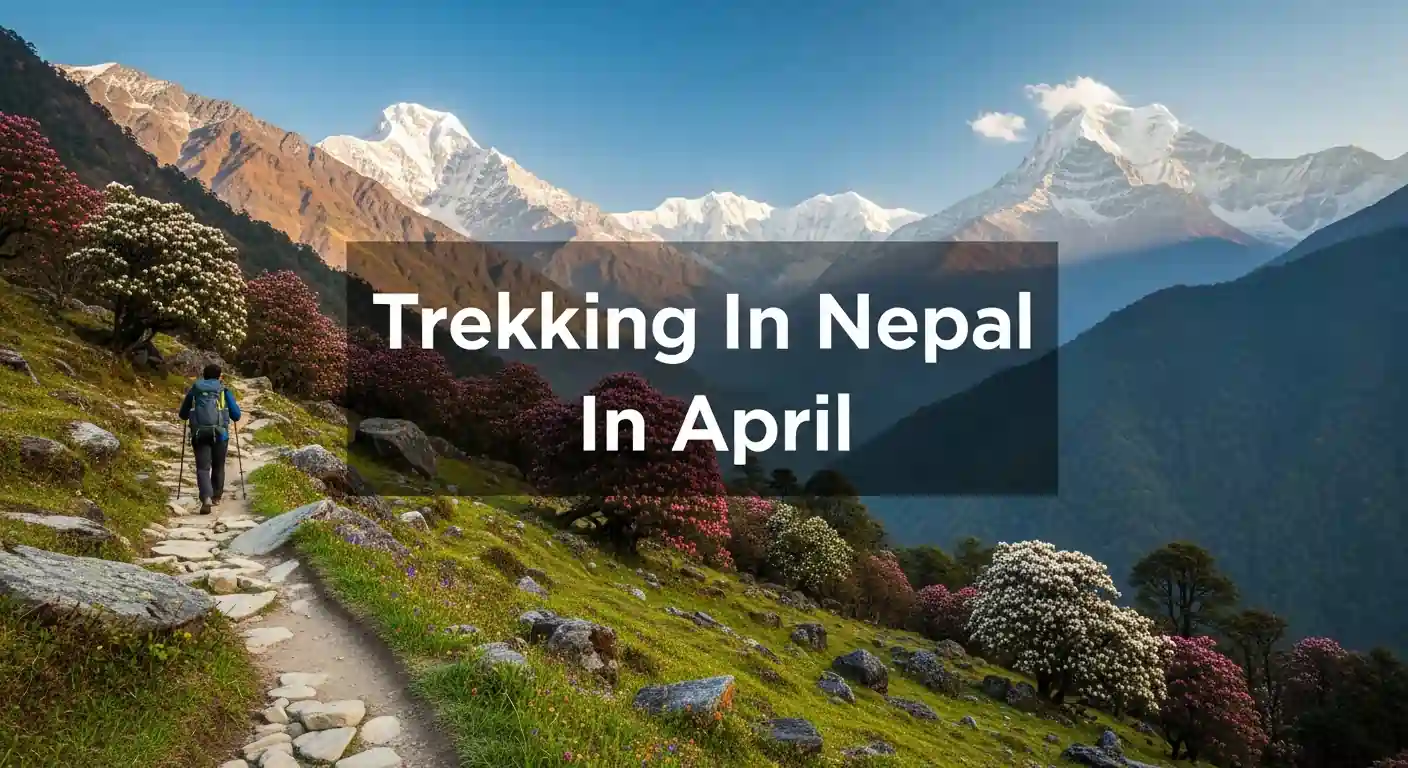
Ever feel like your life has become a repetitive loop of “reply-all” emails and lukewarm office coffee? Look, we get it, your soul is basically a dusty houseplant screaming for a little sunlight and some high-altitude drama. Imagine swapping your morning commute for a trail that smells like ancient pine and looks like a rhododendron forest just exploded in a riot of pink and red. Trekking in Nepal in April isn’t just a calendar choice; it’s nature’s way of throwing a “welcome back” party for the sun, where the mountains finally shed their heavy winter coats and trade them in for a lush, floral velvet.
In this blog, we are deep-diving into everything you need to know about Trekking in Nepal in April to ensure your 2026 spring expedition is a total tactical success. We’ll be breaking down why this is the “Goldilocks” season of trekking, not too cold, not too hot, but just right for snagging those crystal-clear summit views before the monsoon clouds start acting up. From the legendary base camps of Everest and Annapurna to the hidden gems of Langtang and Manaslu, we’ll cover the gear lists you actually need, the colorful local festivals you can’t miss, and the insider tips on navigating the trails when the rhododendrons are in full bloom.
Why Trekking in Nepal in April is the Best Choice?
Trekking in Nepal in April is the best choice because it hits that “sweet spot” where the bitter winter chill has officially vacated the premises and the monsoon rains are still just a rumor in the distance. It’s a high-vibration window of time where the trails are wide open, the sky is a deep, endless blue, and the mountains are finally ready to show off their summit secrets without a cloud in the way. You get the perfect mix of manageable temperatures and maximum visibility, making it the tactical peak of the trekking calendar.
Spring season advantages (stable weather, clear mountain views)
The Nepal spring trekking season is legendary for its stability, offering predictable morning skies that make those 4 AM “sunrise-over-the-peaks” photos look like they were taken in a professional studio. While the afternoons might bring a playful mist, the overall consistency allows you to keep your tactical schedule on track without worrying about a sudden blizzard shutting down the high passes. It’s the ultimate time for snagging those high-definition views of Everest or Annapurna while the air is still crisp enough to keep your engine running smoothly.
Blooming rhododendrons and scenic landscapes
Imagine walking through a forest where the trees have basically decided to throw a massive floral rave, that’s April in the Himalayas. The best trekking season Nepal has to offer isn’t just about the rock and ice; it’s about the lower-altitude forests exploding in vibrant shades of pink, red, and white rhododendrons. This creates a scenic landscape that’s so colorful it’ll make your high-vibration camera lens feel like it’s on overdrive, providing a sensory feast that perfectly balances the stark, monochromatic beauty of the higher altitudes.
Ideal trekking conditions vs other months
Compared to the bone-chilling cold of January or the “leech-and-rain” situation of July, the April trekking benefits include mild temperatures that are perfect for active movement. You aren’t constantly layering up and down like a human onion; instead, you get comfortable T-shirt weather in the valleys and manageable cold at the high camps. It’s the “Goldilocks” of trekking conditions, warm enough to enjoy a cup of tea outside your lodge, but cool enough that you won’t melt into a puddle of sweat before you reach the top.
Weather in Nepal in April for Trekking
The weather in Nepal in April for trekking is characterized by a high-vibration transition into deep spring, offering pleasantly warm days in the valleys and crisp, manageable cold at higher altitudes. It is the most reliable window for stable atmospheric conditions, where the heavy winter snow has mostly melted from the trails but the hazy pre-monsoon heat hasn’t yet obscured the iconic “shark-tooth” horizons of the Himalayas.
Temperature by Altitude (Lowlands, Mid-Hills, High Himalayas)
In the lowlands and cities like Kathmandu or Pokhara, temperatures sit in a balmy 20°C to 30°C range, while the mid-hill trails (2,000m–3,500m) offer a perfect “hiking sweet spot” of 15°C to 20°C. Once you cross the 4,000-meter mark into the high Himalayas, daytime temps hover between 0°C and 10°C, providing a sharp, high-vibration chill that reminds you exactly whose neighborhood you’re visiting.
Day vs Night Temperature Differences
The Himalayan climate in April features a “split personality” where the intense mountain sun makes daytime trekking feel like a summer stroll, only for the mercury to plummet as soon as the sun dips behind the ridges. While you might be in a T-shirt at noon, nighttime temperatures at base camps (above 4,000m) can easily drop to -5°C or even -15°C, requiring a tactical gear shift into your heavy-duty down jacket.
Rainfall and Visibility Conditions
April is famous for its “crystal-ball” visibility, with clear mornings that offer uninterrupted, high-definition views of the world’s highest peaks before any afternoon clouds roll in. While the risk of rain is generally low, you might encounter short, high-vibration pre-monsoon showers or a quick dusting of snow at high passes, which usually clears up quickly to reveal an even fresher, more dazzling landscape.
Best Trekking Routes in Nepal in April
The best trekking routes in Nepal in April offer a high-vibration spectrum of experiences, ranging from the legendary high-altitude amphitheaters of Everest to the vibrant, floral-draped valleys of the Annapurna region. It’s a tactical buffet where the “Goldilocks” weather ensures that whether you’re chasing 8,000-meter giants or hidden cultural gems, the trails are at their most welcoming. In 2026, these routes are the elite choice for anyone wanting to see the Himalayas wake up from their winter slumber in high-definition glory.
Everest Base Camp Trek in April
Standing at the foot of the world’s highest peak in April is a high-stakes mission where you share the trail with elite climbing expeditions prepping for their big summit pushes. The weather is crisp, the sky is a deep tactical blue, and the Khumbu Icefall looks like a frozen architectural masterpiece just waiting for your camera lens to do it justice. It’s the ultimate bucket-list adventure that hits its visual and energetic peak during this specific spring window, making the EBC trek the gold standard for anyone looking to witness the “tent city” in full swing for the 2026 season.
Annapurna Base Camp Trek in April
Trekking to the heart of the Annapurna Massif in April means walking through a 360-degree theater of ice and rock while the lower sections are draped in a riot of spring colors. The “Sanctuary” provides a high-vibration escape from the modern world, offering a relatively shorter but equally intense encounter with some of the planet’s most formidable peaks. It’s a classic route that feels completely brand new when the spring sun finally hits those jagged, snow-dusted ridges.
Langtang Valley Trek in April
Often called the “Valley of Glaciers,” Langtang in April is a high-vibration comeback story where resilient local culture and sprawling mountain views collide in a spectacular way. The trail is lined with blooming wildflowers, and the Kyanjin Ri viewpoint offers a tactical panorama of peaks that’ll make your soul do a genuine happy dance. It’s the perfect blend of accessibility and raw, high-altitude beauty for those who want to dodge the massive EBC crowds.
Ghorepani Poon Hill Trek (Rhododendron Season Highlight)
If you want to see the Himalayas through a high-vibration filter of red and pink, this is your tactical objective, as April is the peak of the rhododendron blooming season. Watching the sunrise over Dhaulagiri and Annapurna from Poon Hill is like witnessing a celestial light show that turns the surrounding floral forests into a living painting. It’s a short, punchy trek that delivers some of the highest aesthetic returns for your physical effort.
Manaslu Circuit Trek for Off-the-Beaten-Path Experience
For those who prefer their mountain missions with a side of “quiet and remote,” the Manaslu Circuit in April offers a high-vibration alternative to the more commercial routes. Crossing the Larkya La pass is a tactical challenge that rewards you with untouched landscapes and authentic Tibetan-influenced culture that feels like stepping back in time. It’s a rugged, raw expedition that proves you don’t need the “Big E” to find true, unadulterated Himalayan magic.
What to Pack for Trekking in Nepal in April?
For trekking in Nepal in April you should pack a high-vibration mix of lightweight, breathable gear for the sun-drenched valleys and heavy-duty thermal armor for the high-altitude nights that still carry a winter sting. It’s all about tactical versatility, think of your suitcase as a modular survival kit that can handle a 25°C rhododendron forest and a -10°C mountain pass in the same 48-hour window. Since April is the “Goldilocks” season, you don’t need a full Arctic expedition kit, but you definitely need a setup that respects the mountain’s unpredictable mood swings and shifting winds.
Essential Clothing (Layering System for Spring Trekking)
Your clothing strategy should be a high-vibration “onion approach,” starting with moisture-wicking base layers that keep you dry while you’re grinding up those steep stone stairs. Add a mid-layer fleece for the breezy ridges and top it off with a windproof, waterproof shell to guard against those sudden, high-altitude afternoon mists. A quality down jacket is your ultimate tactical “safety blanket” for the teahouse evenings when the sun disappears and the mountain air starts biting back with a vengeance.
Trekking Gear Checklist (Boots, Poles, Backpacks)
Invest in a pair of broken-in, waterproof hiking boots that treat your feet like royalty, because a single blister is a tactical disaster when you’re three days from the nearest road. A pair of lightweight trekking poles will save your knees during those brutal “Himalayan downhills,” acting like a set of four-wheel-drive legs for your lower body. Throw in a 30-40 liter daypack with a rain cover to keep your high-vibration camera and snacks dry, and you’ve got a gear setup that’s ready for any 2026 objective.
Health & Safety Essentials (First Aid, Sunscreen, Hydration)
The Himalayan sun in April is a high-vibration UV laser, so high-SPF sunscreen and polarized shades are non-negotiable if you want to avoid looking like a boiled lobster by day three. Pack a basic first-aid kit with blister tape, altitude meds (like Diamox), and water purification tablets to keep your internal “engine” running smooth. Staying hydrated is the best tactical defense against altitude sickness, so keep a reusable bottle clipped to your pack and sip like your life depends on it, because at 5,000 meters, it basically does.
Difficulty Level and Fitness Requirements
Trekking in Nepal in April ranges from a high-vibration “scenic stroll” to a “lung-burning tactical siege,” depending on whether you’re chasing low-altitude blooms or crossing 5,000-meter glacial passes. While the spring oxygen levels are slightly more forgiving than the winter’s thin, biting air, the sheer physical demand of walking 5 to 8 hours daily over rugged, vertical terrain remains a 2026 reality. You don’t need to be a professional athlete, but your “cardio engine” definitely needs to be vetted and tuned up to ensure your April mission doesn’t turn into an expensive, breathless struggle against the slope. It’s all about matching your current physical “torque” to the right trail difficulty so you can actually enjoy the view instead of just staring at your boots.
Trek difficulty by route (easy, moderate, challenging)
Himalayan treks are categorized by their altitude, duration, and technical incline, ranging from “Easy” (foothill walks) to “Challenging” (high-pass crossings). Easy routes like the Ghorepani Poon Hill trek sit below 3,500m and are perfect for families or 2026 first-timers, while Moderate routes like Annapurna Base Camp take you into the heart of the “Sanctuary” with more sustained climbing. Challenging missions, such as the Everest Base Camp or Manaslu Circuit, involve crossing 5,000m+ passes like Thorong La or Larkya La, requiring elite grit and a high-vibration tolerance for “Death Zone” adjacent environments. These routes demand a tactical mindset where you respect the vertical gain as much as the distance covered each day.
Required fitness level for April trekking
For a successful April mission, your “cardio tank” needs to be deep enough to handle sustained uphill movement for 10-15 kilometers a day without your heart rate hitting the redline. You should be comfortable walking on uneven, rocky trails for multiple consecutive days, which requires a solid combination of aerobic endurance and lower-body “torque.” Even on “Easy” treks, the altitude adds a high-vibration weight to every step, so having a strong core and resilient knees is the best tactical defense against trail fatigue. If you can climb five flights of stairs without gasping for air like a fish out of water, you’re on the right track for a moderate Himalayan objective, but don’t underestimate the “stairmaster” effect of the actual mountains.
Training tips before your trek
Start your high-vibration training at least three months before your April 2026 departure, focusing on stair-climbing and hiking with a weighted daypack to simulate the trail’s vertical demands. Incorporate “functional strength” exercises like lunges, squats, and step-ups to build the eccentric leg strength needed for those brutal 1,000-meter descents that can turn your quads into jelly. Don’t forget the mental tactical prep, visualizing the summit and practicing “breathing through the burn” will help you maintain your cool when the air gets thin and the trail gets steep. Pro tip: wear your actual trekking boots during your training walks to ensure they’re fully vetted and “broken-in” long before you step foot in Kathmandu (trust me, your heels will thank you later).
Accommodation and Food During April Treks
Accommodation and food during April treks are a high-vibration blend of rustic teahouse hospitality and calorie-dense mountain fuel, designed to support your body through 2026’s most active spring season. Most trekkers stay in family-run lodges that provide essential shelter, communal warmth, and a menu that balances traditional Nepali staples with international comfort foods. It’s a tactical logistical setup where you trade luxury for community, spending your evenings sharing trail stories around a central yak-dung stove while refueling for the next day’s vertical gain.
Teahouse Trekking Experience in Spring
The teahouse experience in April is a high-vibration social hub where the crisp spring air is met with the cozy, wood-fired warmth of communal dining halls. You can expect basic twin-sharing rooms with thin walls and simple wooden beds, providing a tactical place to rest rather than a luxury suite experience. While the bedrooms remain unheated, the central dining area acts as the heart of the lodge, offering a space to charge your 2026 tech, dry your socks, and bond with a global tribe of mountain enthusiasts. It’s a raw, authentic way to experience Himalayan culture while enjoying the “Goldilocks” temperatures that make spring nights manageable compared to the brutal winter freeze.
Availability of Lodges During Peak Season
Because April is the absolute peak of the spring trekking calendar, lodge availability is a high-stakes tactical game that requires advanced booking or an early arrival at your daily destination. In popular hubs like Namche Bazaar or Manang, the best lodges with attached bathrooms and reliable Wi-Fi fill up weeks in advance, making a veteran guide an essential asset for securing a bed. If you’re heading into more remote territory like the Manaslu Circuit, you might find yourself in more primitive “overflow” rooms or sharing space in smaller, local homes if the main lodges are at capacity. Staying flexible and hitting the trail by 7:00 AM is your best tactical move to ensure you aren’t left hunting for a pillow when the high-altitude sun starts to set.
Popular Nepali Foods for Trekkers
The “king” of the mountain menu is Dal Bhat, a high-vibration power meal of rice, lentil soup, and curried vegetables that offers unlimited refills and the tactical calories needed for 8-hour trekking days. For a quicker snack, Momos (steamed or fried dumplings) provide a delicious burst of protein and carbs, while “Sherpa Stew” (Syakpa) serves as a hearty, warming broth filled with handmade noodles and seasonal greens. In 2026, you’ll also find plenty of international options like pasta, pancakes, and even yak-cheese pizza in the more developed regions of Everest and Annapurna. These meals are specifically engineered for high-altitude digestion, ensuring your “internal engine” stays fueled and ready for every steep stone staircase the Himalayas throw your way.
Related Topic: Trekking in Nepal in January
Crowds and Trekking Experience in April
Trekking in April means entering the high-vibration heart of Nepal’s peak season, where the legendary trails are buzzing with a global community of adventurers and the energy is at an all-time high. While you’ll never be truly alone on the main arteries of the Khumbu or Annapurna, the sheer “fraternity” of the trail creates a tactical social environment where you can swap stories with world-class climbers and fellow wanderers. It’s a trade-off where you exchange total solitude for the most reliable weather windows and the liveliest teahouse culture of the year.
Peak Season Insights (Pros and Cons)
The biggest “pro” of April is the high-vibration social atmosphere and the safety of having many fellow trekkers and rescue infrastructure nearby, but the “con” is definitely the tactical squeeze on accommodation and trail space. During 2026’s peak weeks, popular hubs like Gorakshep or ABC can feel like a high-altitude “rush hour,” leading to shared dorms and longer waits for your Dal Bhat. However, this is also the time when the “mountain vibe” is at its peak, with everyone from elite mountaineers to first-time hikers sharing the same electric anticipation for the summit.
Best Ways to Avoid Crowded Trails
To dodge the high-vibration herds, you should aim to start your trekking days at the crack of dawn (around 6:00 AM) to reach the next teahouse before the mid-day “check-in scramble” begins. Tactical route planning, like taking the “high trail” instead of the main valley floor or choosing to stay in smaller, lesser-known villages between the major hubs, can significantly thin out the numbers around you. Traveling with a veteran guide is your best secret weapon, as they have the local connections to secure the quietest rooms and steer you clear of the busiest “bottleneck” sections of the trail.
Alternative Less Crowded Trekking Routes
If you want the high-vibration views without the high-volume crowds, pivot your mission toward off-the-beaten-path gems like the Manaslu Circuit, Tsum Valley, or the newly opened Machhapuchhre Model Trek. Routes like Pikey Peak or the Khopra Danda trek offer jaw-dropping panoramas of Everest and Annapurna but with a fraction of the foot traffic, allowing for a more intimate spiritual connection with the landscape. These alternative paths provide a raw, “old-school” Himalayan experience where the only thing outnumbering the trekkers is the local wildlife and the swaying prayer flags.
How to Prepare for Trekking in Nepal in April?
You can prepare for trekking in Nepal in April by combining a rigorous “uphill-focused” physical training program with the tactical logistics of securing mandatory 2026 permits and a licensed guide. This preparation phase is the foundation of your high-vibration mission, ensuring your body can handle the 5,000-meter oxygen drop while your paperwork satisfies Nepal’s updated “No Guide, No Trek” safety regulations. It’s a multi-layered process that transforms you from a city-dweller into a resilient Himalayan traveler ready for the spring bloom.
Physical preparation and training plan
Your physical engine needs at least three months of high-vibration training, focusing on cardiovascular endurance and lower-body “torque” to handle the vertical gain. Focus on weighted stair-climbing, lunges, and long-distance hiking to simulate the 6-8 hours of daily trail time you’ll face in 2026.
Booking guides and permits in advance
Under the new 2026 rules, you must book a government-licensed guide through a registered agency to obtain your mandatory digital E-TIMS and National Park permits. Advance booking is essential for April’s peak season to secure the most experienced tactical guides and ensure your restricted area paperwork is vetted before you land in Kathmandu.
Travel insurance and safety considerations
You must secure specialized high-altitude insurance that explicitly covers helicopter evacuation and medical treatment up to 6,000 meters for 2026 expeditions. Standard policies often fail at 3,000 meters, making it a critical tactical error to skip a plan that specifically protects you against Acute Mountain Sickness (AMS) and emergency extractions.
Also Read: Trekking in Nepal in February
What Are the Pros and Cons of Trekking in Nepal in April?
Trekking in Nepal in April is a high-vibration balancing act where you trade a bit of trail privacy for the most stable weather and vibrant floral displays the Himalayas have to offer. It is the tactical “Goldilocks” month where the natural beauty is at its absolute peak, but you’ll need to navigate the logistical squeeze of the spring crowd and slightly higher seasonal costs.
| Feature | Pros (The High-Vibration Wins) | Cons (The Tactical Hurdles) | Comparison: March vs. April vs. May |
| Weather & Visibility | Crystal Clear: Exceptional morning visibility and stable high-pressure systems for perfect peak views. | Hazy Afternoons: Dust and pre-monsoon moisture can occasionally create afternoon haze in lower valleys. | March: Cooler, drier, and crisper. May: Hotter, more humid, and higher risk of afternoon rain. |
| Flora & Biodiversity | Floral Explosion: Peak rhododendron season transforms entire forests into tunnels of red, pink, and white. | Leech Awakening: In lower, wetter sections, the first of the seasonal leeches might start making a tactical appearance. | March: First buds appearing. May: Flowers begin to fade as lush green vegetation takes over. |
| Crowds & Vibe | Social Energy: A buzzing, high-vibration community of global trekkers and elite Everest climbers. | Trail Traffic: Popular routes like EBC can feel like a “mountain highway” with busy dining halls and shared rooms. | March: Noticeably quieter trails. May: Crowds thin out as heat increases, but climbing camps stay busy. |
| Costs & Logistics | Full Availability: All teahouses and high-altitude lodges are 100% operational and well-stocked. | Peak Pricing: Flights and guides are in high demand, meaning fewer discounts and “premium” seasonal rates. | March: Lower demand for lodges. May: Similar to April, though trekking interest dips slightly before monsoon. |
| Adventure Level | High Passes Open: Snow has melted enough for safe tactical crossings of Thorong La and Cho La. | Wait Times: You might face small “traffic jams” at suspension bridges or narrow cliffside sections of the trail. | March: Some high passes may still be snow-blocked. May: Best for high-summit pushes (Everest/Lhotse). |
Safety Tips for Trekking in Nepal in April
Staying safe in the high-vibration theater of the Himalayas in April requires a tactical respect for the altitude and a paranoid commitment to your body’s oxygen levels. While the weather is generally stable, the “thin air” is a silent adversary that doesn’t care about your fitness level, making a disciplined, slow-and-steady approach your most vital survival asset for any 2026 mission.
Altitude Sickness Awareness and Prevention
Altitude sickness (AMS) is the ultimate high-altitude “vibe killer,” and your best tactical defense is a strict “300-meter rule” for your daily sleeping elevation gain. You need to drink at least 4 liters of water daily to keep your internal engine hydrated and consider a preventive course of Diamox, only after a doctor’s green light, to help your lungs negotiate with the thinning air. If a pounding headache or nausea starts acting like an uninvited guest, your only move is to stop ascending immediately; pushing through isn’t “tough,” it’s a high-stakes gamble that the mountain usually wins.
Weather-Related Precautions
April is a high-vibration transition month where the morning sun can be a total sweetheart, only for the afternoon to throw a tactical tantrum of wind, dust, or sudden snow. You must pack for “all four seasons in one afternoon,” ensuring you have a windproof shell and polarized Category 4 sunglasses to protect your eyes from the brutal UV glare of the glacial basins. Don’t let the blooming rhododendrons fool you; once the sun dips behind the 8,000-meter ridges, the temperature drops faster than a lead weight, so keep your down jacket within easy reach in your daypack.
Hiring Guides vs Solo Trekking
Under the strictly enforced 2026 “No Guide, No Trek” policy, solo trekking in Nepal protected and restricted areas is officially a thing of the past; you must now have a licensed guide to enter most of the country’s national parks and conservation zones. A veteran guide acts as your high-vibration safety net, reading the subtle shifts in the weather and acting as a tactical liaison with local teahouses to ensure you have a bed and a rescue path if things go sideways. Even if you’re a seasoned “lone wolf,” having a local pro by your side means you’re supporting the mountain economy while ensuring you don’t become a “missing person” statistic in the vast, unpredictable Himalayas.
Emergency Contacts and Rescue Options
Your tactical emergency toolkit must include the number for the Tourist Police (dial 1144 within Nepal) and a rock-solid insurance policy that covers helicopter evacuation up to 6,000 meters. In the event of a medical meltdown, your guide will coordinate with your registered agency to summon a high-vibration rescue bird, which can cost upwards of $5,000 if you aren’t properly covered. Make sure your emergency contacts have a copy of your itinerary and your insurance details, because when you’re in a remote valley, “hope” is not a rescue strategy, logistics are.
Also Read: Trekking in Nepal in March
Conclusion
Trekking in Nepal in April is the ultimate tactical win for your soul, offering a high-vibration balance between jagged peaks and blooming forests. With the winter chill finally retreating and the monsoon still months away, you’re getting the “Goldilocks” version of the Himalayas: clear skies, stable trails, and a teahouse culture that’s buzzing with international energy. Whether you’re standing at the foot of Everest or wandering through a crimson rhododendron forest in Annapurna, the sheer scale of the landscape is guaranteed to recalibrate your perspective and reset your internal engine for 2026 ,a journey made even more seamless with the locally grounded expertise of Marvel Treks.
FAQS
Is April a good time for trekking in Nepal?
Absolutely! April offers stable weather, clear mountain views, and spectacular blooming rhododendrons across the Himalayan trails.
How cold is it in Nepal in April?
Days are pleasantly warm (15-20°C), but nights above 4,000m can drop to -10°C. Pack a quality down jacket.
Can I trek solo in Nepal in April?
No, 2026 regulations require all trekkers to hire a licensed guide for safety in protected and restricted areas.
Do I need to book lodges in advance?
Yes, April is peak season. Booking early ensures you secure a bed in the most popular teahouse hubs.
Are there many leeches in April?
Leeches are rare in April as the monsoon hasn’t started, though they might appear in very low, damp sections.
What permits do I need for April?
You typically need a digital E-TIMS card and National Park or Conservation Area permits for your specific route.
Is Everest Base Camp crowded in April?
Yes, it’s a busy month. Expect vibrant trails shared with elite climbing expeditions preparing for their big summits.

Ready for your next Himalayan adventure?
Plan Your Next Big Adventure with Us
Explore Our AdventuresJoin our expert-guided journeys across Nepal and beyond, from classic trails to epic summits.