
Annapurna Base Camp Trek with Helicopter Return: Complete Guide
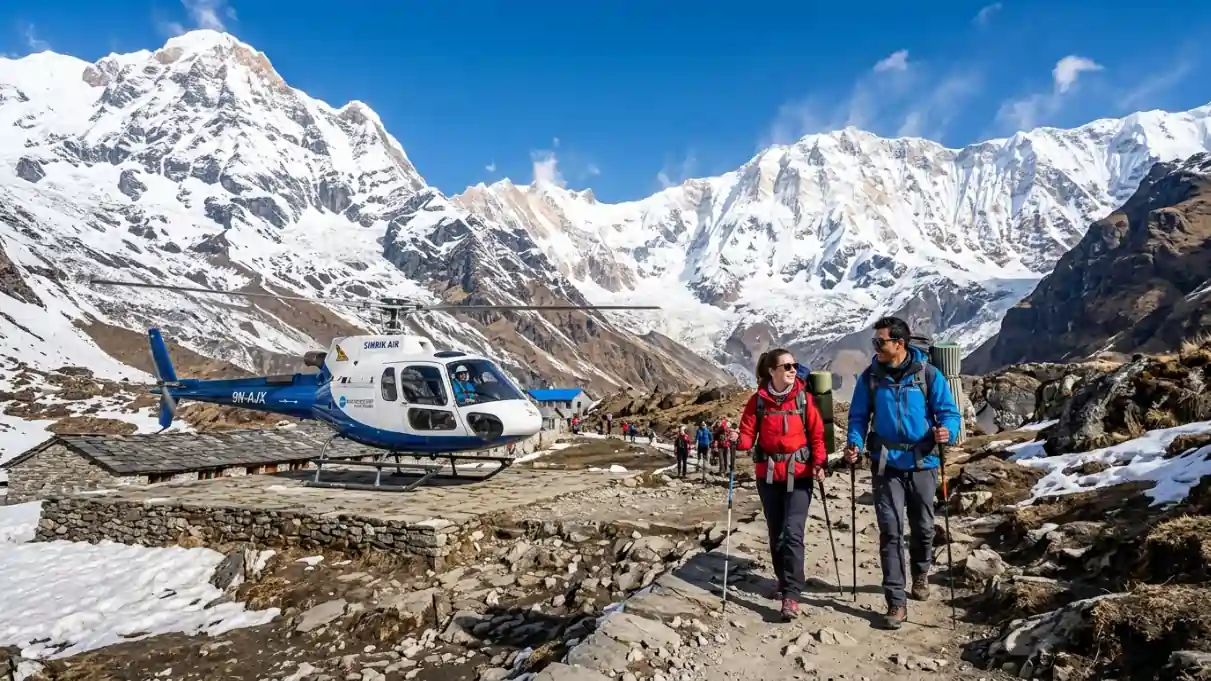
Have you ever dreamed of conquering the legendary Annapurna amphitheater but dreaded the grueling multi day hike back down the exact same trail? Staring up at those towering 8,000 meter peaks is a totally life changing experience, but punishing your knees on a repetitive descent is completely optional. For those who want the raw grit of the upward climb combined with a VIP exit strategy, there is a serious tactical upgrade available for your next mountain mission.
In this blog about the Annapurna Base Camp trek with helicopter return, we are breaking down exactly how to pull off the ultimate hybrid Himalayan adventure. We will cover the tactical itinerary, the cost differences, and why soaring out of the sanctuary in a chopper beats destroying your joints on the way down. Get ready to map out a high-vibration journey that perfectly balances brutal climbing effort with elite-level convenience, an experience that solidifies the Annapurna base camp trek as the premier choice for those who want the “God Mode” view of the sanctuary without the three-day grueling descent.
What is the Annapurna Base Camp Trek with Helicopter Return?
The Annapurna Base Camp Trek with Helicopter Return is a hybrid expedition where you hike up to the legendary 4,130-meter sanctuary and then fly back down to Pokhara in a chopper. This tactical route eliminates the grueling multi-day descent, saving your knees while giving you an elite, high-vibration aerial view of the Macchapucchre and Annapurna mountain ranges. It is the ultimate time-saving mission for trekkers who want the authentic physical grind of reaching base camp combined with a VIP exit strategy. By choosing this vetted option, you basically experience the best of a helicopter tour in Nepal while still earning your stripes through a week of high-altitude grit, ensuring your internal engine isn’t wasted on a repetitive descent.
Why Choose Annapurna Base Camp Trek with Helicopter Return?
Choose Annapurna Base Camp Trek with Helicopter Return because it allows you to conquer the grueling ascent on foot and entirely skip the punishing multi-day walk back down. This tactical hybrid mission gives you the raw satisfaction of reaching the sanctuary while saving your knees and precious vacation days. You get the ultimate physical grind going up and a high-vibration VIP extraction on the way out, making it the perfect evolution of adventure trekking in Nepal for those who value both peak performance and logistical efficiency.
1. Save Time Without Missing the Experience
Taking the chopper out cuts your entire expedition time almost in half, making it the perfect tactical move for hikers with incredibly tight schedules. You still get to push your internal engine through the blooming rhododendron forests and traditional Gurung villages on the brutal way up. Once you hit the base camp and soak in that high vibration energy, you simply fly out instead of burning three extra days walking back to the start. It is the absolute ultimate hack to conquer a legendary mountain without completely draining your limited vacation bank.
2. Avoid the Long and Difficult Descent
Every seasoned mountain nerd knows that walking downhill is an absolute nightmare for your knees, ankles, and toes after days of heavy climbing. By locking in a helicopter extraction, you completely bypass the brutal thousands of rocky steps that lead out of the Annapurna sanctuary. Your joints will seriously thank you when you avoid the repetitive impact that usually leaves trekkers limping awkwardly back into Pokhara. It is a highly vetted strategy to keep your body fully intact while still earning your serious Himalayan credibility.
3. Enjoy Scenic Helicopter Views of Annapurna Region
Lifting off from the 4,130 meter base camp gives you an insanely unique aerial perspective of the massive peaks you just spent days walking underneath. You will get a completely different high vibration view of Mount Machhapuchhre and the entire Annapurna massive as you soar high above the deep Modi Khola gorge. It transforms a standard retreat into a breathtaking airborne safari that most standard trekkers never get to experience. This airborne victory lap is the perfect elite reward for pushing your physical limits on the grueling way up.
4. Ideal for Content Creators and Premium Travelers
If your mission involves capturing elite footage or simply enjoying a luxury mountain experience, this hybrid trek is absolutely your best bet. Content creators can film raw and rugged trekking shots on the ascent and then capture cinematic 4K helicopter visuals on the rapid flight down. Premium travelers get to completely avoid the dirty and exhausted slog back to civilization, swapping sweaty tea houses for a quick jump straight to a hot hotel shower. It is a highly tactical way to upgrade your 2026 Himalayan portfolio and travel in serious style.
Annapurna Base Camp Trek with Helicopter Return Itinerary
Mapping out your tactical itinerary requires elite precision so your internal engine peaks exactly when you hit the high altitude sanctuary. This hybrid route perfectly balances the grueling multi day physical grind with a rapid VIP extraction to keep your knees completely intact. We have vetted a highly optimized eight day schedule that gets you deep into the mountains and back to a hot shower in record time.
1. Day 1 to 2: Arrival in Kathmandu and Transfer to Pokhara
Your mission kicks off the second your boots hit the ground in the chaotic but high vibration streets of Kathmandu. After a quick tactical gear check and a briefing with your Marvel Treks crew, you will transit over to the lakeside chill zone of Pokhara. This vital window gives you a solid moment to recalibrate your internal engine and carb load before the heavy mountain lifting officially begins.
2. Day 3 to 5: Trek Through Ghorepani and Chhomrong
These days are all about pure grit as you tackle the notorious stone steps and push through blooming rhododendron forests. You will grind your way up to Poon Hill for a legendary sunrise before navigating the steep, rolling valleys over to the traditional Gurung village of Chhomrong. This is where the tactical physical work really ramps up, forcing you to earn every single inch of elevation.
3. Day 6 to 7: Trek to Machapuchare Base Camp and ABC
The air gets dangerously thin and the visuals get absolutely insane as you finally enter the sacred alpine amphitheater. You will push past Machapuchare Base Camp and cross the ultimate high altitude threshold into the legendary Annapurna Base Camp at 4,130 meters. This is your massive high vibration victory moment where you celebrate conquering the brutal ascent surrounded by 360 degree ice walls.
4. Day 8: Helicopter Return to Pokhara
Instead of dreading the agonizing multi day walk back down, you simply wake up to golden mountain views and wait for your chopper. The tactical VIP extraction sweeps you out of the sanctuary, giving you a jaw dropping aerial tour of the exact massive peaks you just spent days climbing. Within minutes you are safely back in Pokhara, trading your sweaty hiking boots for a massive celebratory breakfast.
How Difficult is the Annapurna Base Camp Trek with Helicopter Return?
Annapurna Base Camp Trek with Helicopter Return is a moderately difficult adventure that demands solid physical fitness to handle the steep ascent and smart pacing to manage the high altitude before you enjoy the easy chopper ride out. While skipping the brutal walk down saves your knees a massive amount of trauma, you still have to grind your way up thousands of rocky steps to earn that VIP exit. Understanding the Annapurna base camp trek with difficulty level is crucial, as this mission requires your internal engine to be fully primed for several days of tough climbing through diverse terrain. As long as you respect the elevation and train your legs beforehand, this hybrid expedition is totally achievable for determined rookies.
1. Trek Difficulty Level Explained
The physical grind of this route is generally classified as moderate but you should never underestimate the sheer volume of steep stone staircases. You will be constantly gaining and losing elevation as you traverse the deep valleys which can quickly drain an unprepared internal engine. Because you are flying out at the end, you completely avoid the joint crushing descent that usually breaks people down on the final days. It is a highly tactical route that tests your stamina on the way up but offers a massive physical relief card exactly when you need it most.
2. Altitude and Acclimatization Challenges
Hitting a maximum elevation of 4,130 meters means the air gets noticeably thin and your body will absolutely feel the lack of oxygen near the top. You have to treat the altitude with serious respect by pacing your steps and hydrating like it is your full time job. The tactical itinerary is designed to gradually push you higher so your body can naturally adapt to the high vibration alpine environment without crashing. Since you take a chopper down, you completely eliminate the risk of getting stuck at a high elevation if you start feeling the pressure on summit day.
3. Fitness Requirements for Beginners
You absolutely do not need to be an elite marathon runner to conquer this route but showing up straight off the couch is a terrible tactical move. Beginners need to spend a few months building up their leg strength and cardio capacity by hitting the stairmaster or hiking local trails with a loaded backpack. Your internal engine needs to be ready to pump for five to seven hours a day during the steep ascent portion of the mission. If you put in the honest sweat equity at home before flying to Nepal, you will have plenty of gas left in the tank to actually enjoy the massive mountain views.
Cost of Annapurna Base Camp Trek with Helicopter Return
Locking down the budget for your Annapurna Base Camp Trek with a helicopter return means balancing the cheap dirt of the trail with the high-flying luxury of a chopper ride. You are essentially paying for a classic Himalayan sweat session on the way up and a VIP extraction on the way down, making this a totally hybrid financial mission. In 2026, the cost of Annapurna base camp trek with a helicopter return typically ranges from $1,230 to $1,850 per person for a group of two, covering your mandatory ACAP and TIMS permits, licensed guide, and the elite aerial transit back to Pokhara. Check out the detailed breakdown below to see exactly where your expedition funds are going so you can prep your wallet for your spring mission.
| Budget Category | Estimated Cost (USD) | Tactical Details |
| Trekking Permits | $50 total | Covers your mandatory Annapurna Conservation Area Permit and TIMS card. You literally cannot start the mission without these legal papers. |
| Expert Guide & Porters | $25 to $35 per day | Crucial for carrying the heavy gear and keeping your internal engine on the exact right path through the remote valleys. |
| Food & Lodging | $20 to $40 per day | This funds your basic tea house beds, giant plates of energy boosting dal bhat, and the occasional highly taxed hot shower. |
| Shared Helicopter Flight | $450 to $550 per person | Splitting a five seater chopper with other exhausted trekkers is the absolute best financial hack for a VIP exit. |
| Private Helicopter Charter | $2,200 to $2,500 total | The ultimate luxury extraction where you buy out the entire flying machine so your personal crew can ride out like royalty. |
| Seasonal Factors | Variable Impact | Booking during the absolute peak spring and autumn weather windows will definitely stretch your budget more than a risky winter run. |
| Group Size Factors | Variable Impact | The more friends you drag along to split the guide fees and chopper seats, the cheaper your individual mountain mission becomes. |
| Customization Upgrades | $100 to $500 extra | Tacking on premium hotel nights in Pokhara or throwing in extra rest days on the trail will obviously bump up your total cost. |
Best Time for Annapurna Base Camp Trek with Helicopter Return
Best time for this hybrid mission is during the clear weather windows of spring or autumn when stable skies guarantee your chopper will actually fly. Nailing down the perfect weather window is the most critical tactical move for your expedition because a grounded helicopter means you are walking down those brutal stone steps. You want flawless skies for the ultimate high-vibration aerial views and safe, dry trekking trails on the long march up to the sanctuary, making April and October the best season for trekking in Nepal for those who need a “God Mode” guarantee on their flight schedules.
1. Spring Season (March to May)
Launching your mission in the spring provides the ultimate high vibration visual experience as the massive rhododendron forests explode into vibrant colors along the lower trails. The weather is generally stable and warm during the day, giving your internal engine the perfect temperature to push through the steep climbs. Clear skies in the morning practically guarantee that your VIP helicopter extraction will launch exactly on schedule without any dangerous cloud cover delays. It is a highly vetted window that balances epic ground scenery with flawless flying conditions.
2. Autumn Season (September to November)
Autumn is the absolute undisputed champion season for crystal clear mountain views because the summer monsoon rains have completely washed the dust out of the atmosphere. You will experience crisp, cool air that keeps your internal engine from overheating while you grind out the long daily miles toward the massive sanctuary. This time of year offers the most reliable flight windows for your chopper ride out, ensuring your luxury exit strategy goes off without a hitch. The trails will be busy, but the jaw dropping visibility of the Annapurna giants makes dealing with the crowds totally worth it.
3. Winter and Monsoon Considerations
Attempting this tactical mission during the heavy summer monsoons or the brutal dead of winter is a massive logistical gamble that usually ends in misery. Summer brings relentless rain, swarming leeches, and thick clouds that will absolutely ground your helicopter, forcing you into a soggy and painful descent on foot. Winter drops the temperatures to bone chilling extremes and dumps heavy snow that can trigger massive avalanches across the upper trails. Unless you are an extreme glutton for punishment with endless vacation days to burn, you should completely avoid these highly unpredictable off season windows.
What to Expect During the Helicopter Return from Annapurna Base Camp?
Expect a blazing fast 20 to 30 minute aerial victory lap that trades days of brutal knee pounding descent for front row cinematic views of the Himalayas. After pushing your internal engine to the absolute limit to reach the 4,130 meter sanctuary, your extraction is a totally surreal high vibration VIP experience. The chopper swoops in, you toss in your trekking gear, and suddenly you are soaring right over the massive deep gorges and blooming forests you just spent a week sweating through.
- You will experience a massive adrenaline rush as the helicopter lifts off from the high altitude amphitheater surrounded by towering ice walls.
- The flight delivers jaw dropping eye level views of Mount Machapuchare and Annapurna South that you simply cannot get from the ground.
- Expect strict weight limits for your backpack because flying machines at 4,130 meters need to keep their cargo extremely tight for safety.
- You will feel a dramatic shift in temperature and oxygen as you rapidly drop from freezing alpine air down to the warm atmosphere of Pokhara.
- The entire flight only takes about 20 minutes, completely bypassing the massive physical toll of walking back down the exact same rocky trail.
Permits Required for Annapurna Base Camp Trek
Before you can launch your tactical mission into the high altitude sanctuary, you have to lock down the mandatory legal paperwork. The Nepalese government strictly monitors who enters the mountains, so skipping your permits is a guaranteed way to get your expedition shut down before you even break a sweat. Marvel Treks handles all this bureaucratic red tape for you, but you still need to understand exactly what is sitting inside your tactical folder.
1. Annapurna Conservation Area Permit (ACAP)
This is your absolute non negotiable entry ticket into the massive protected zone surrounding the mountain range. The funds from this specific permit go directly back into preserving the wild trails and supporting the local communities you will hike through. You have to keep this document completely secure in your backpack because checkpoint guards will definitely ask to verify it multiple times on the way up.
2. TIMS Card Requirement
TIMS card acts as your official tactical tracking beacon while you are grinding through the remote Himalayan valleys. It registers your exact expedition route with local authorities so rescue teams know precisely where to look if a sudden storm derails your internal engine. Every single vetted trekker on the mountain is required to carry one to ensure total safety and accountability across the entire high vibration region.
3. Rules for Helicopter Return in Nepal
Pulling off a VIP extraction from a 4,130 meter mountain is not as simple as just hailing a flying taxi. Commercial helicopter flights deep inside national parks require highly specific aviation clearances and strict weight limit approvals from the civil aviation authority. Your Marvel Treks crew preps all these specialized flight manifests in advance so your only job is to jump in the chopper and enjoy the insane aerial views.
Accommodation and Food on the ABC Trek Route
Accommodation and food on the ABC trek route revolve entirely around the classic Nepalese teahouse network, offering cozy beds and massive calorie dumps to keep your internal engine running strong. You will not find five star luxury out in the wild, but you will get exactly the high vibration fuel and warm shelter you need after a grueling day of grinding up those endless stone steps.
1. Teahouse Accommodation Experience
The teahouses are basic but incredibly cozy wooden lodges that serve as your nightly tactical basecamp along the rugged trail. You will drop your gear in a simple room with twin beds and a thick blanket, then head down to a communal dining hall where exhausted trekkers huddle around a roaring fire to swap war stories. It is a highly communal and warm vibe that perfectly balances the brutal isolation of your daily physical grind.
2. Food Options Available During Trek
Your primary high octane fuel source will definitely be dal bhat, a massive and bottomless plate of rice and lentil soup that basically powers the entire Himalayas. The menus also feature heavy carb loading options like garlic soup, fried noodles, and momos to rebuild your battered leg muscles after a long day of climbing. As you push higher into the freezing sanctuary, the menus naturally get shorter and a bit more expensive, but the portions are always geared toward maximum tactical energy recovery.
3. Connectivity and Facilities
Do not expect lightning fast broadband while you are hanging out deep in the Annapurna gorge, but most lower teahouses do offer basic WiFi for a few extra bucks. Hot showers are usually powered by solar or gas heaters and cost a premium, serving as the absolute ultimate luxury after days of heavy sweating on the trail. Once you push past the lower villages, expect to rely entirely on your packed power banks to keep your camera batteries fully locked and loaded for the big summit shots.
Packing List for Annapurna Base Camp Trek with Helicopter Return
Nailing your packing list is the most critical tactical move you can make before stepping onto the trail. You need enough heavy duty gear to survive the freezing high altitude nights, but you have to keep it extremely light since you are flying out in a strict weight restricted chopper.
1. Essential Trekking Gear Checklist
You need bomb proof hardware to keep your internal engine moving safely across the rugged Nepalese terrain. Do not cheap out on the items that physically connect you to the mountain, because a gear failure up there is a complete disaster.
- A pair of sturdy, well broken in trekking boots to save your ankles from the brutal rocky paths.
- A high quality, sub zero sleeping bag to survive the freezing nights in the unheated tea houses.
- Reliable trekking poles to take the massive pressure off your legs during the steep daily climbs.
- A comfortable 30 to 40 liter daypack to carry your daily water, snacks, and extra layers.
2. Clothing Layers for High Altitude
The weather in the Himalayas is completely bipolar, swinging from sweaty jungle heat to bone chilling ice winds in a matter of hours. The absolute best tactical strategy is packing smart, breathable layers that you can quickly peel off or stack up on the fly.
- Moisture wicking base layers to pull the freezing sweat completely away from your skin.
- A heavy duty down jacket for the freezing nights up at the 4,130 meter base camp.
- Waterproof and windproof outer shells to block out any sudden high mountain storms.
- Plenty of high quality synthetic trekking socks to keep your feet dry and completely blister free.
3. Documents and Travel Essentials
You can have the best physical gear in the world, but if your paperwork is a mess, your mountain mission is dead on arrival. Keep these critical administrative assets locked down in a waterproof bag inside your pack at all times.
- Your original passport with your Nepalese visa safely and securely attached inside.
- Mandatory ACAP and TIMS trekking permits sorted out in advance by your Marvel Treks crew.
- A thick stack of local Nepalese Rupees to pay for tea house snacks and hot shower upgrades.
- A high capacity power bank to keep your camera gear fully alive for the massive summit shots.
How to Prepare for Annapurna Base Camp Trek with Helicopter Return?
Preparing for the Annapurna Base Camp trek with a helicopter return requires building serious leg strength and cardio endurance while strictly managing your gear weight. Even though you score a luxury VIP flight on the way down, your internal engine still has to grind up thousands of brutal stone steps to actually reach the 4,130 meter sanctuary. You have to put in the honest sweat equity at home so you are not completely miserable and gasping for thin air when you finally hit the high altitude zone.
- Hit the stairmaster or hike steep local trails with a loaded backpack to completely bulletproof your legs and lungs for the long ascent.
- Break in your trekking boots for several weeks before you fly out to guarantee you avoid mission ending blisters on the mountain.
- Dial in your packing list to include only lightweight essentials so you do not violate the strict chopper weight limits for the flight out.
- Lock down a solid hydration and nutrition strategy to keep your internal engine fueled up for five to six hours of daily heavy climbing.
- Get your mind right for the rugged tea house lifestyle and prepare to embrace the raw, unfiltered grit of the Nepalese Himalayas.
Annapurna Base Camp Trek with Helicopter Return vs Classic ABC Trek
Choosing between the classic ABC grind and the hybrid helicopter return basically comes down to how much time you have to burn and how much punishment your knees can actually handle. The traditional route is a full blown endurance marathon that makes you earn every single step back to civilization, while the chopper exit lets you buy back your precious vacation days and swap the brutal descent for a high vibration luxury flight. \
| Tactical Feature | Classic ABC Trek | ABC Trek with Helicopter Return |
| Time Comparison | Demands a massive 10 to 14 days of heavy walking to complete the full round trip circuit on foot. | Condenses the mission into a highly efficient 7 to 9 days by instantly flying out of the high altitude sanctuary. |
| Cost Comparison | The ultimate budget friendly dirtbag grind where you only pay for basic daily tea house survival needs. | A premium financial investment that tacks on the heavy ticket cost of a VIP mountain extraction. |
| Experience and Comfort | A raw, gritty, and totally exhaustive physical experience that heavily taxes your joints on the long walk down. | A hybrid luxury mission that completely saves your ankles and ends your massive sweat session with a comfortable, fast ride. |
| Visual Perspective | You are stuck on the ground grinding through the exact same deep valleys you just spent days walking up. | You score an exclusive cinematic aerial view of the massive peaks that standard ground trekkers literally never get to see. |
Safety Tips for Annapurna Base Camp Trek and Helicopter Flight
Surviving the Annapurna Base Camp trek and the massive chopper ride out requires you to keep your internal engine fully dialed into your physical surroundings. You have to respect the unpredictable high altitude environment and follow strict tactical protocols to ensure you do not become a rescue statistic. Play it smart, listen to your guide, and keep your safety gear completely locked down for the entire mountain mission.
1. Recognizing Altitude Sickness Symptoms
Your internal engine will definitely feel the thin air as you push past 3,000 meters, so you have to constantly scan your body for massive headaches or sudden severe nausea. If you start feeling dizzy or completely lose your appetite, that is the mountain aggressively telling you to hit the brakes immediately. Never try to play the tough guy with altitude sickness; drop your ego and communicate with your Marvel Treks guide before it turns into a total tactical nightmare.
2. Trekking Safety Best Practices
Grinding up thousands of uneven stone steps is an absolute recipe for a twisted ankle if you stop paying attention to your daily footwork. Always yield the right of way to the massive mule trains carrying supplies and stick rigidly to the inside of the trail so you do not accidentally take a fatal plunge down the gorge. Hydrate like a machine and keep your trekking poles heavily deployed to maintain total physical stability on the rugged Nepalese terrain.
3. Helicopter Flight Safety Guidelines
Boarding a chopper at 4,130 meters is a high stakes operation that requires your absolute obedience to the pilot’s tactical commands. Always approach the flying machine from the front so the crew can clearly see you, and keep your head ducked low to avoid the massive spinning main rotors. Strap yourself in tight, fully secure all your loose trekking gear, and absolutely do not distract the pilot while they navigate the highly unpredictable Himalayan wind currents.
Conclusion
Pulling the trigger on the Annapurna Base Camp trek with a helicopter return is basically unlocking the ultimate mountain cheat code. You earn your stripes grinding up those brutal stone steps to soak in the raw energy of the 4,130-meter sanctuary. But instead of limping back to civilization with completely shredded knees, you fly out like a rockstar.
If you are tight on vacation days or just want to treat your joints with some respect, this hybrid mission is a total no-brainer. Stop staring at screensavers and get your internal engine ready for the Annapurna Sanctuary. Let the best expedition and trekking company in Nepal, Marvel Treks, handle the messy paperwork and lock down your weather window. Train hard, pack light, and get ready for a life-changing victory lap above the clouds.
FAQS
How much does the helicopter return from ABC cost?
It costs around $450 to $550 per person for a shared tactical chopper flight.
What is the maximum altitude of this trek?
The highest point is Annapurna Base Camp, sitting at a breathtaking 4,130 meters.
Is it safe to fly out of base camp?
Yes, experienced pilots navigate clear weather windows ensuring a completely safe high vibration extraction.
How long is the helicopter flight to Pokhara?
The scenic aerial victory lap takes just 20 to 30 minutes to reach Pokhara.
Do I need travel insurance for the helicopter flight?
Absolutely, you need high altitude insurance covering emergency evacuations up to at least 4,500 meters.
Can beginners do the Annapurna helicopter trek?
Yes, beginners with solid leg strength and decent cardio can totally crush this mission.

Ready for your next Himalayan adventure?
Plan Your Next Big Adventure with Us
Explore Our AdventuresJoin our expert-guided journeys across Nepal and beyond, from classic trails to epic summits.