
Helicopter Tour In Nepal: Everything You Need to Know
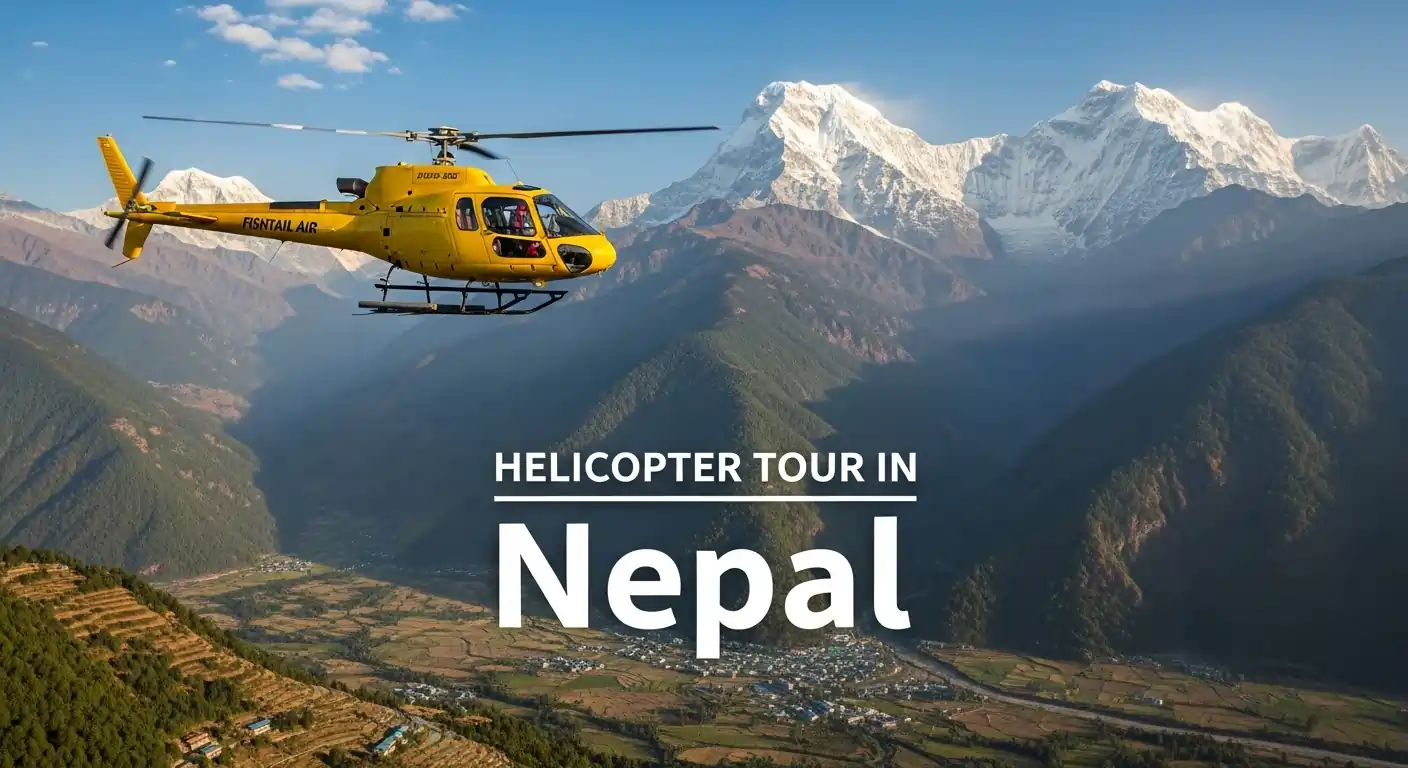
Ever wondered if you could touch the base of the world’s tallest peaks without breaking a sweat or spending weeks on a trail? Imagine swapping fourteen days of grueling uphill trekking for a four-hour luxury flight that drops you directly in the heart of the Himalayas. In 2026, helicopter tours in Nepal will become the ultimate “cheat code” for travelers who want to witness the majestic Everest, Annapurna, and Langtang ranges with zero physical strain and maximum “wow” factor.
In this blog, we’ll dive deep into the helicopter tour in Nepal, covering the most popular routes, current pricing for private and group-joining flights, and the essential safety tips you need to know before you take off. Whether you’re looking to have breakfast at the world’s highest hotel or land on the famous Kala Patthar viewpoint, this guide will walk you through the logistics, permits, and seasonal windows to help you plan the perfect aerial adventure and one of the most bucket-list-worthy things to do in Nepal.
What Is a Helicopter Tour in Nepal?
A helicopter tour in Nepal is a luxury aerial excursion that allows travelers to fly directly into the high-altitude heart of the Himalayas, including sites like Everest Base Camp, in just a few hours. It is a high-speed alternative to traditional trekking that utilizes specialized mountain helicopters to provide 360-degree panoramic views and landings at iconic locations that would otherwise take weeks to reach on foot.
These tours are incredibly popular because they offer the ultimate “shortcut” for travelers with limited time, physical restrictions, or a desire for a premium, bucket-list experience. Unlike trekking, which requires intense physical endurance and a 14-day commitment, an aerial tour allows anyone from toddlers to seniors to witness the world’s highest peaks in a single morning. It is the perfect choice for those who want to experience the grandeur of the mountains without the sweat, while still enjoying a luxury breakfast at the “Roof of the World.”
Why Choose a Helicopter Tour in Nepal?
Opting for a helicopter tour in Nepal is the most efficient way to see the Himalayas without the physical exhaustion of weeks-long trekking. It provides a premium “shortcut” to the world’s highest peaks, allowing you to reach iconic base camps and viewpoints in a single morning while enjoying a safe, comfortable, and luxury experience.
This mode of travel is perfect for anyone wanting to maximize their time while capturing the most dramatic scenery on the planet. Instead of battling steep trails and thin air for days, you get to soar above the terrain, landing at world-famous sites for a quick breakfast or a photo session before heading back. It’s an accessible way to experience the grandeur of the mountains, regardless of your physical fitness or age.
Time-saving alternative to long treks
For travelers with limited vacation days, a helicopter tour is a massive time-saver that condenses a two-week trek into just a few hours. You can fly from your hotel in Kathmandu to the base of Mount Everest and be back in time for lunch, leaving your afternoon free for other activities. This efficiency allows you to check off a major bucket-list item without the time commitment required for a traditional expedition.
Panoramic Himalayan views
The aerial perspective from a helicopter cockpit provides a 360-degree panoramic view that is simply impossible to achieve from the ground. Flying at eye-level with 8,000-meter giants allows you to see the true scale of the Himalayan range and the intricate details of the glaciers and icefalls. It is a photographer’s dream, offering a continuous, unobstructed vista of the peaks that stretches as far as the eye can see.
Access to remote mountain regions
Helicopters can land in isolated, high-altitude locations that are typically off-limits to everyone except elite mountaineers and long-distance hikers. This allows you to explore hidden valleys, sacred alpine lakes, and remote monasteries with minimal effort and planning. It opens up the entire country’s landscape, from the far-western ranges to the northern borders, making even the most secluded regions accessible to everyday travelers.
Ideal for luxury travelers and elderly visitors
The physical demands of trekking often exclude children, seniors, or those with mobility issues, but a helicopter tour is designed for everyone. It offers a high-end experience featuring private cabins and high-altitude breakfasts that cater to those who prefer comfort over hardship. This makes it a fantastic option for multi-generational families who want to share a once-in-a-lifetime mountain experience together without any stress.
Safe and comfortable travel experience
Equipped with the latest safety technology and operated by pilots with thousands of hours of mountain flight time, these tours are incredibly secure. You avoid the risks of fatigue and severe altitude sickness because you are only at the highest points for a limited time with oxygen available on board. It is a controlled, pressurized, and relaxing environment that lets you focus entirely on the beauty of the landscape rather than the difficulty of the journey.
Popular Helicopter Tours in Nepal
The most popular helicopter tours in Nepal are the Everest Base Camp landing flight, the Annapurna Sanctuary tour, and the holy Muktinath pilgrimage flight. These trips are designed to get you deep into the heart of the Himalayas within minutes, offering a mix of religious exploration and extreme alpine scenery for travelers who can’t spare weeks on a trail. It’s truly the fastest way to stand at the foot of world-famous peaks while enjoying a luxury “shortcut” through the clouds.
Everest Base Camp Helicopter Tour
This tour is the world’s most famous aerial trip, landing at the 5,545m Kala Patthar viewpoint for a face-to-face look at Mt. Everest. You’ll also touch down at the Everest View Hotel for a high-altitude breakfast, where you can soak in the Khumbu region’s glory while sipping coffee at 3,880 meters. It’s a fast-paced, high-adrenaline adventure that hits all the major Himalayan highlights in under five hours, and the view from the window as you fly over the Khumbu Icefall is honestly life-changing, making it the gold standard for an Everest heli tour.
Annapurna Base Camp Helicopter Tour
The Annapurna Base Camp Helicopter Tour provides instant access to the Annapurna Sanctuary, dropping you directly at 4,130m where you’re surrounded by a massive wall of 7,000-meter peaks. Departing usually from Pokhara, it’s a quick 20-minute flight that offers stunning views of Machhapuchhre (Fishtail) and the diverse landscapes of central Nepal. You’ll have about 30 minutes on the ground to explore the base camp and take photos of the towering Annapurna I massif, it’s a bit cold up there so bring a jacket!
Langtang Helicopter Tour
The Langtang Helicopter Tour is the closest and most affordable mountain flight from Kathmandu, offering a quick escape into a valley filled with ancient monasteries and glaciers. You’ll land at Kyanjin Gompa, where you can visit a local yak cheese factory and witness the dramatic Langtang Lirung peaks. It’s an ideal choice for families or travelers who want a high-impact mountain experience without flying too far from the capital city, and the greenery transition into snow is just beautiful.
Muktinath Helicopter Tour
This religious pilgrimage flight takes you to the sacred Muktinath Temple in the Mustang region, a holy site for both Hindus and Buddhists. Flying over the deep Kali Gandaki Gorge, you’ll land near the temple to perform rituals at the 108 water spouts and eternal lamps. The journey provides a deep spiritual connection combined with incredible views of the Dhaulagiri and Annapurna ranges in a comfortable three-hour round trip—much easier than the long bumpy road drive!
Gosaikunda Helicopter Tour
The Gosaikunda Helicopter Tour is a short flight to a cluster of holy alpine lakes situated at 4,380 meters in the Langtang National Park. It is particularly popular during the Janai Purnima festival when thousands of pilgrims visit the site, but it remains a serene destination for mountain lovers year-round. You’ll have enough time to explore the lake’s shoreline and take in the spiritual energy of one of Nepal’s most revered water bodies before heading back to the hustle of Kathmandu.
Best Places to See During a Helicopter Tour in Nepal
The absolute highlights of a helicopter tour in Nepal include landing at the world-famous Everest Base Camp (Kala Patthar), flying into the deep Annapurna Sanctuary, and exploring the arid, “forbidden” kingdom of Mustang. These spots offer the most dramatic contrast in scenery, taking you from lush rhododendron forests and crystal-clear alpine lakes to the jagged, snow-capped giants and high-altitude deserts that define the Himalayas. It’s truly the most comprehensive way to see the country’s diverse natural beauty in just a few hours.
Whether you are looking for spiritual peace at a sacred lake or the adrenaline of landing at the foot of the world’s tallest peak, these destinations deliver a “greatest hits” reel of Nepal’s landscape. A helicopter allows you to hover over massive glaciers and land in remote villages that are usually days away by foot. It’s the perfect choice for anyone who wants to see the most iconic sights in the shortest amount of time without the physical toll of a long expedition.
Mount Everest Region
The Everest region is the ultimate destination for any aerial tour, providing a face-to-face encounter with the highest point on earth. You’ll get a unique bird’s-eye view of the Khumbu Icefall, the South Col, and the tiny clusters of tents at Base Camp that look like dots from the air. Most flights include a landing at Kala Patthar (5,545m) for that iconic photo with Everest as your backdrop.
- Key Sights: Mt. Everest, Lhotse, Ama Dablam, and the Khumbu Glacier.
- Landing Points: Kala Patthar and Everest View Hotel for breakfast.
- Experience: Unmatched scale and the thrill of being in the “death zone” for a safe, short visit.
Annapurna Mountain Range
Flying into the Annapurna region feels like entering a natural amphitheater made of 7,000 and 8,000-meter peaks. The flight from Pokhara is quick and takes you over terraced fields and Gurung villages before dropping you into the snow-covered “sanctuary.” You get an incredibly clear view of Machhapuchhre (Fishtail Mountain), which is sacred and strictly forbidden to climbers.
- Key Sights: Annapurna I, Machhapuchhre, and Dhaulagiri.
- Landing Points: Annapurna Base Camp (ABC) at 4,130 meters.
- Experience: Dramatic 360-degree views of a massive mountain bowl.
Langtang Valley
Known as the “Valley of Glaciers,” Langtang offers some of the most stunning ice-carved landscapes located just a short flight from the capital. You’ll see the sharp peaks of Langtang Lirung and the sprawling glaciers that feed the rivers below. A landing at Kyanjin Gompa allows you to visit a local yak cheese factory and soak in the quiet, Tibetan-influenced atmosphere of the valley.
- Key Sights: Langtang Lirung, Kyanjin Gompa, and Langtang National Park.
- Landing Points: Kyanjin Gompa village.
- Experience: A serene, less-crowded alternative with beautiful cultural touches.
Mustang Region
The Mustang region looks like a different planet compared to the rest of Nepal, with its desert-like terrain, red cliffs, and ancient sky caves. A helicopter tour here reveals the hidden kingdom of Lo Manthang and the deep Kali Gandaki Gorge, the deepest in the world. It’s the best way to see the unique “Trans-Himalayan” landscape that sits in the rain shadow of the great peaks.
- Key Sights: Lo Manthang walled city, Kali Gandaki River, and Nilgiri peaks.
- Landing Points: Jomsom or Lo Manthang.
- Experience: A journey into a mysterious, wind-swept landscape with deep cultural roots.
Sacred Himalayan Lakes
Seeing the turquoise waters of sacred lakes like Gosaikunda or the Gokyo Lakes from a helicopter is a spiritual and visual highlight. These high-altitude lakes are often surrounded by jagged snow peaks, creating a stunning reflection that is a dream for any photographer. These tours are particularly popular for pilgrims who want to visit the holy sites without the long, difficult climb to over 4,000 meters.
- Key Sights: Gosaikunda Lake, Gokyo Lakes, and Tilicho Lake.
- Landing Points: Shorelines of Gosaikunda or near Gokyo Ri.
- Experience: Peaceful, high-vibrational energy mixed with incredible alpine water views.
How Much Does a Helicopter Tour in Nepal Cost?
A shared helicopter tour in Nepal typically costs between $900 and $1,300 per person for an Everest flight, while private charters range from $3,500 to $6,000 depending on the destination and group size. Prices for other routes like Annapurna or Langtang are generally lower, often starting around $300 to $600 per person in a group-joining arrangement.
The final price of your flight often depends on how many people are on board and whether you’re willing to share the cabin with strangers. While the cost might seem steep compared to a bus ticket, it covers the high expense of aviation fuel, specialized mountain pilots, and landing fees at some of the world’s most remote airstrips. It’s essentially a luxury investment to save weeks of walking and see the “Roof of the World” in total comfort.
Shared Helicopter Tours
Shared tours are the most budget-friendly way to fly, where you pay for a single seat and the remaining spots are filled by other travelers. This is the go-to option for solo adventurers or couples who want to see Everest or ABC without paying for the entire aircraft.
- Cost Efficiency: You split the total charter cost with four other passengers.
- Social Aspect: You get to meet other mountain lovers from around the globe.
- Fixed Routes: These flights usually follow a strict schedule and specific landing spots to keep things organized for everyone.
- Guaranteed Window: Most operators ensure every passenger gets a decent view, though you might have to rotate seats during different legs of the journey.
Private Helicopter Charter
A private charter gives you the entire helicopter to yourself, allowing for a completely personalized itinerary and maximum privacy for your group. This is the best choice for families, professional photographers, or couples celebrating a special occasion like a mountain-top engagement.
- Total Flexibility: You decide how long you want to stay at specific landing sites (within safety limits).
- Custom Routes: You can request specific fly-overs or land at less-frequented spots like remote villages or high-altitude lakes.
- No Wait Time: You don’t have to wait for other passengers to arrive or finish their photo sessions.
- Maximum Payload: You can bring more gear or enjoy extra legroom since you aren’t squeezing into every available seat.
Factors Affecting Helicopter Tour Price
The main variables that shift the price are the flight duration, the distance of the destination from Kathmandu or Pokhara, and the current season. High-altitude landings also require more fuel and specific maneuvers, which can add a premium to the standard flight rates.
- Destination Distance: Everest is further and more expensive than Langtang or Annapurna from Kathmandu.
- Seasonal Demand: During the peak spring and autumn months, prices can be slightly higher due to limited helicopter availability.
- Weight & Fuel: If you are a heavy group, the pilot may need to do more “shuttles” at high altitudes, which increases the flight time and cost.
- Permits & Fees: National park entry fees and airport taxes are usually added on top of the base flight price, so always double-check your quote.
Best Time for a Helicopter Tour in Nepal
The absolute best time for a helicopter tour in Nepal is during the Spring (March–May) and Autumn (September–November) seasons. These “Golden Windows” provide the most stable weather, highest flight success rates, and crystal-clear visibility of the Himalayan giants, ensuring that your high-altitude landing at sites like Everest or Annapurna is both safe and visually spectacular.
While you can technically fly year-round, these peak seasons offer the most predictable morning windows where winds are calm and the skies are a deep, unobstructed blue. In Spring, the lower valleys are vibrant with blooming flowers, while Autumn offers a “post-monsoon” clarity where the air is washed clean of dust and haze. Planning your trip during these months maximizes your chances of a smooth ride and reduces the likelihood of disappointing weather-related cancellations.
Spring (March-May) – Best Mountain Visibility
Spring is often considered the premier season for helicopter tours because it offers a perfect balance of mild temperatures and excellent morning visibility. As the winter snow starts to recede from the lower slopes, the mountains remain heavily capped in white, providing a stunning contrast against the vibrant green valleys below. It is also the peak climbing season, meaning you can often see the colorful “tented city” of Everest Base Camp bustling with mountaineers from your window.
- Scenic Highlights: Witness the world’s tallest peaks surrounded by blooming red rhododendron forests.
- Temperature: Comfortable daytime temperatures ranging from 10°C to 15°C in the valleys, making landings more pleasant.
- Best For: Travelers who want to see the mountains at their most colorful and lively.
- Tip: Morning flights are essential as clouds can sometimes build up by the early afternoon.
Autumn (September-November) – Clear Skies
Many pilots and photographers believe Autumn is the single best time for a helicopter tour in Nepal because the air is at its freshest. After the monsoon rains have cleared the atmosphere, visibility is at its absolute peak, often allowing you to see mountain ranges that are hundreds of miles away. The weather is incredibly stable during these months, meaning flight cancellations are extremely rare compared to any other time of year.
- Scenic Highlights: Post-monsoon landscapes with deep blue skies and high-definition mountain views.
- Temperature: Crisp and cool, with stable conditions that are perfect for high-altitude photography.
- Best For: Serious photographers and those who want the highest guarantee of a successful flight.
- Tip: This is the busiest time of year, so booking your “group joining” seat well in advance is a smart move.
Winter Helicopter Flights (December-February)
Winter offers a unique “Himalayan Wonderland” experience where the mountains and even the high-altitude villages are completely blanketed in thick, white snow. While it is freezing cold at landing points like Kala Patthar, the skies are often remarkably clear and the air is very dry, providing some of the sharpest views of the year. There are fewer tourists during this time, which can sometimes lead to a more “private” and peaceful experience at the major viewpoints.
- Conditions: Intense cold (often below -10°C at landing sites) and crystal-clear horizons.
- Scenic Highlights: A pristine, snow-covered landscape that looks like a scene from a movie.
- Challenges: Occasional delays due to heavy snowfall or morning fog in Kathmandu/Pokhara valley.
- Tip: Dress in heavy, high-quality winter gear and be prepared for shorter ground times due to the biting cold.
Monsoon Limitations (June-August)
The monsoon season is the most challenging time for helicopter tours in Nepal due to frequent heavy rainfall, low-hanging clouds, and unpredictable wind patterns. While the landscape is incredibly lush and green, the mountain peaks are often hidden behind thick mists, which can lead to frequent flight cancellations or “scenic” flights where you only see clouds. However, early morning windows do exist where the weather breaks, offering unique views of waterfalls and misty valleys that other seasons miss.
- Challenges: High risk of cancellations, poor mountain visibility, and potential for turbulence.
- Scenic Highlights: Incredibly green hills and hundreds of temporary waterfalls flowing down the cliffs.
- Considerations: Prices might be slightly lower, but the chance of actually seeing Everest or Annapurna is much lower.
- Tip: If you book during this time, always have a “buffer day” in your schedule in case your flight is pushed back due to rain.
What to Expect During a Helicopter Tour in Nepal?
You can expect a high-adrenaline, luxury experience that starts with a safety briefing at the airport and ends with you standing on a Himalayan peak within hours. It’s a total sensory overload of roaring rotors, crisp mountain air, and a bird’s-eye view of glaciers and Sherpa villages that usually takes weeks to see on foot. You basically swap fourteen days of sweat for four hours of pure awe and a fancy breakfast in the clouds.
Pre-flight Briefing
Before you even get near the chopper, you’ll have a mandatory safety briefing at the domestic terminal where the ground crew explains how to board safely and where to sit for weight balance. The pilot will walk you through the “do’s and don’ts,” like never walking towards the rear rotor and staying buckled in during the entire flight. It’s a bit of a weight game, they’ll literally weigh you and your gear to make sure the helicopter is balanced for the thin mountain air. This part usually takes about 15 minutes, and it’s the best time to ask any last-minute questions about the route or the emergency oxygen on board.
Scenic Flight Experience
Once you’re in the air, the “scenic” part of the flight is basically a non-stop highlight reel of the world’s most famous peaks. You’ll fly low enough to see the prayer flags on monastery roofs and high enough to look directly at the summit of Ama Dablam or the Khumbu Icefall. The pilot often hovers at key photography spots, giving you a steady frame to capture that perfect shot of the jagged peaks and deep turquoise lakes. It’s way more intimate than a plane ride because the large windows and low altitude make you feel like you could almost touch the ice. Don’t forget to keep your camera strap secure, because the views come at you fast and you won’t want to miss a second of it.
Landing Experience
The landing is the real “cherry on top,” but it’s usually quick, about 10 to 15 minutes, because of the extreme altitude and limited oxygen at spots like Kala Patthar. This “touch-and-go” style landing gives you just enough time to hop out, feel the crunch of the snow, and snap a few legendary photos with Everest right behind you. Afterward, most tours head to the Everest View Hotel at a slightly lower elevation for a much longer, one-hour stop. Here, you can actually sit down and enjoy a hot breakfast on the terrace while staring at the mountains you just flew past. It is easily the most “main character” moment you’ll ever have in the Himalayas.
Safety Measures for Helicopter Tours in Nepal
Safety for a helicopter tour in Nepal is ensured through a combination of strictly certified aviation companies, highly experienced mountain pilots, and advanced real-time weather monitoring systems. These layers of protection ensure that flights only proceed in optimal conditions, using aircraft that are specifically maintained for the unique challenges of high-altitude Himalayan environments.
- Certified Operators: Every helicopter company must hold a valid Air Operator Certificate (AOC) from the Civil Aviation Authority of Nepal (CAAN), which mandates rigorous maintenance schedules and safety audits.
- Experienced Mountain Pilots: Pilots are specifically trained for “high-density altitude” flying, often possessing thousands of hours of experience navigating the unpredictable wind currents and narrow valleys of the Himalayas.
- Real-Time Weather Tracking: Modern operators use sophisticated satellite-based weather monitoring to track visibility and wind speeds, ensuring that flights are immediately postponed if conditions become unsafe.
- Oxygen Systems: All high-altitude flights carry supplemental oxygen cylinders and specialized masks to prevent and treat symptoms of hypoxia or altitude sickness during landings above 4,000 meters.
- Emergency Equipment: Helicopters are equipped with the latest GPS tracking, Emergency Locator Transmitters (ELTs), and comprehensive first-aid kits tailored for mountain rescue scenarios.
- Weight Management Protocols: Strict adherence to weight and balance limits is enforced for every take-off, often involving “shuttle” flights to ensure the aircraft remains within safe performance margins at peak altitudes.
Who Should Take a Helicopter Tour in Nepal?
A helicopter tour in Nepal is the ideal choice for anyone who wants to witness the majesty of the Himalayas without the physical strain, time commitment, or logistical challenges of a multi-week trek. It is specifically designed for travelers who prioritize comfort, efficiency, and exclusive viewpoints, making the “Roof of the World” accessible to everyone regardless of their age or physical fitness.
Whether you are a busy professional with only a few days to spare or a senior traveler with a lifelong dream of seeing Mt. Everest, this experience bridges the gap between ambition and accessibility. It allows you to skip the grueling uphill climbs and thin-air struggles, delivering you directly to the most iconic spots in the country. If you value your time and want a “main character” moment in one of the most beautiful places on Earth, this is your best option.
Luxury Travelers
For those who prefer five-star experiences over basic teahouses, a helicopter tour offers a premium way to engage with the mountains. You get to enjoy private cabin space, personalized service from the pilot, and high-altitude breakfasts on world-class terraces without ever breaking a sweat. It is the ultimate high-end adventure for travelers who want the “wow” factor of the Himalayas combined with the comfort and speed of a private jet.
Elderly Travelers Unable to Trek
Many seniors dream of seeing the world’s highest peaks but are often deterred by the physical demands of long-distance hiking and steep terrain. A helicopter tour removes these barriers entirely, allowing elderly visitors to sit back and enjoy the scenery in a pressurized, safe environment. It makes the once-impossible dream of reaching Everest Base Camp or the Annapurna Sanctuary a reality for older travelers and those with limited mobility.
Photographers and Filmmakers
Aerial photography offers a perspective that simply cannot be captured from a hiking trail, providing wide-angle vistas of entire mountain ranges and deep-focus shots of glaciers. Professional creators choose helicopter tours to access unique angles, hover near specific peaks, and reach remote locations quickly during the “golden hour” for the best lighting. It is the most efficient way to capture a diverse portfolio of high-altitude content in a single morning.
Travelers with Limited Time
If you only have a week in Nepal, spending 12 to 14 days on a single trek isn’t an option, but a helicopter tour solves this problem in just four hours. You can fly to Everest, land for photos, have breakfast, and be back in Kathmandu for an afternoon city tour. It’s the perfect “shortcut” for travelers who want to maximize their vacation and see the country’s biggest highlights without sacrificing their entire itinerary.
Advantages of Helicopter Tours Compared to Trekking
The main advantages of a helicopter tour compared to trekking are the massive time savings, the ability for anyone to reach extreme altitudes without physical training, and the luxury of seeing multiple mountain ranges in a single morning. While trekking is a slow, grueling test of endurance over 10 to 14 days, a helicopter flight is a comfortable, high-impact alternative that makes the most remote corners of the Himalayas accessible to everyone in just a few hours.
| Feature | Helicopter Tour in Nepal | Traditional Trekking (EBC/ABC) |
| Time Required | 3 to 5 Hours (Total) | 10 to 14 Days (Average) |
| Physical Effort | Zero (Comfortable seating) | High (Walking 10-15km daily) |
| Accessibility | Open to all ages & fitness levels | Requires good fitness & stamina |
| Scenery | 360° Aerial panoramas & multiple ranges | Ground-level views & valley focus |
| Comfort Level | Luxury (Private cabin & hotel breakfast) | Basic (Teahouses & shared amenities) |
| Altitude Risk | Minimal (Short time at peak altitude) | High (Requires days of acclimatization) |
| Best For | Luxury travelers & time-crunched tourists | Adventure seekers & long-term hikers |
| Remote Access | Can land at inaccessible hidden spots | Limited to established trail networks |
| Weather Impact | High (Requires clear morning windows) | Moderate (Can often walk in light rain/snow) |
Which is the best Company for Helicopter Tour In Nepal?
Marvel Treks is the best company for helicopter tour in Nepal because they combine decades of high-altitude expertise with a fleet of modern, B3 Eurocopters and a flawless safety record. They specialize in personalized service, ensuring every passenger gets a window seat and a seamless transition from their hotel to the landing sites at Everest, Annapurna, or Langtang. Their deep local connections also mean you get the most reliable “weather-window” updates and the best-located landing spots for that perfect mountain photo.
Conclusion
Helicopter tour in Nepal is truly the ultimate way to witness the sheer scale of the Himalayas without the physical toll of a multi-week expedition. Whether you’re standing on the snow at Kala Patthar, gazing at the Annapurna massif, or enjoying a champagne breakfast at the world’s highest hotel, the experience offers a perspective that is simply impossible to get from the ground. It is a seamless blend of luxury, efficiency, and raw natural beauty that caters to everyone from time-crunched professionals to families and elderly travelers.
In the end, while trekking offers a slow-burn sense of accomplishment, a helicopter tour delivers immediate, heart-pounding awe. It’s an investment in a memory that will last a lifetime, providing a “main character” moment amidst the tallest peaks on Earth. If you want to experience the “Roof of the World” with maximum comfort and minimal stress, there is no better way to travel than by soaring through the clear mountain skies of Nepal.
Ready to Experience the Himalayas from the Sky?
Don’t just dream about the world’s highest peaks, see them face-to-face! Marvel Treks is the industry leader in providing safe, luxurious, and perfectly timed helicopter tours in Nepal adventures. From securing the best pilots to ensuring every passenger gets a window-seat view, we take care of all the logistics so you can focus on the breathtaking scenery.
FAQS
What is the weight limit for a helicopter tour in Nepal?
The total weight limit is usually 500kg for 5 passengers, though at high altitudes like Everest, this drops to 250kg, requiring a shuttle.
Can I do a helicopter tour during the winter?
Yes, winter flights offer the clearest skies and sharpest views, though you must be prepared for extreme cold during landings.
Is there a risk of altitude sickness during the flight?
Minimal, as stays at peak altitude are limited to 15 minutes, but helicopters carry oxygen cylinders just in case of discomfort.
What happens if my flight is canceled due to weather?
Most operators like Marvel Treks will either reschedule your flight for the next morning or provide a full refund.
Do I need to bring food or water on the flight?
No, most tours include a breakfast stop, and carrying heavy bags is discouraged to stay within strict aircraft weight limits.
Is a window seat guaranteed for all passengers?
Usually, yes, especially on shared tours where pilots rotate seating to ensure every passenger gets an unobstructed view of the peaks.
How far in advance should I book my tour?
For peak seasons like Spring and Autumn, it is best to book at least 2–4 weeks in advance to secure your slot.
Are there age restrictions for children or seniors?
No, there are no strict age limits, making it a perfect, safe choice for multi-generational families and those with limited mobility.

Ready for your next Himalayan adventure?
Plan Your Next Big Adventure with Us
Explore Our AdventuresJoin our expert-guided journeys across Nepal and beyond, from classic trails to epic summits.