
Annapurna Base Camp Short Trek: Complete Guide
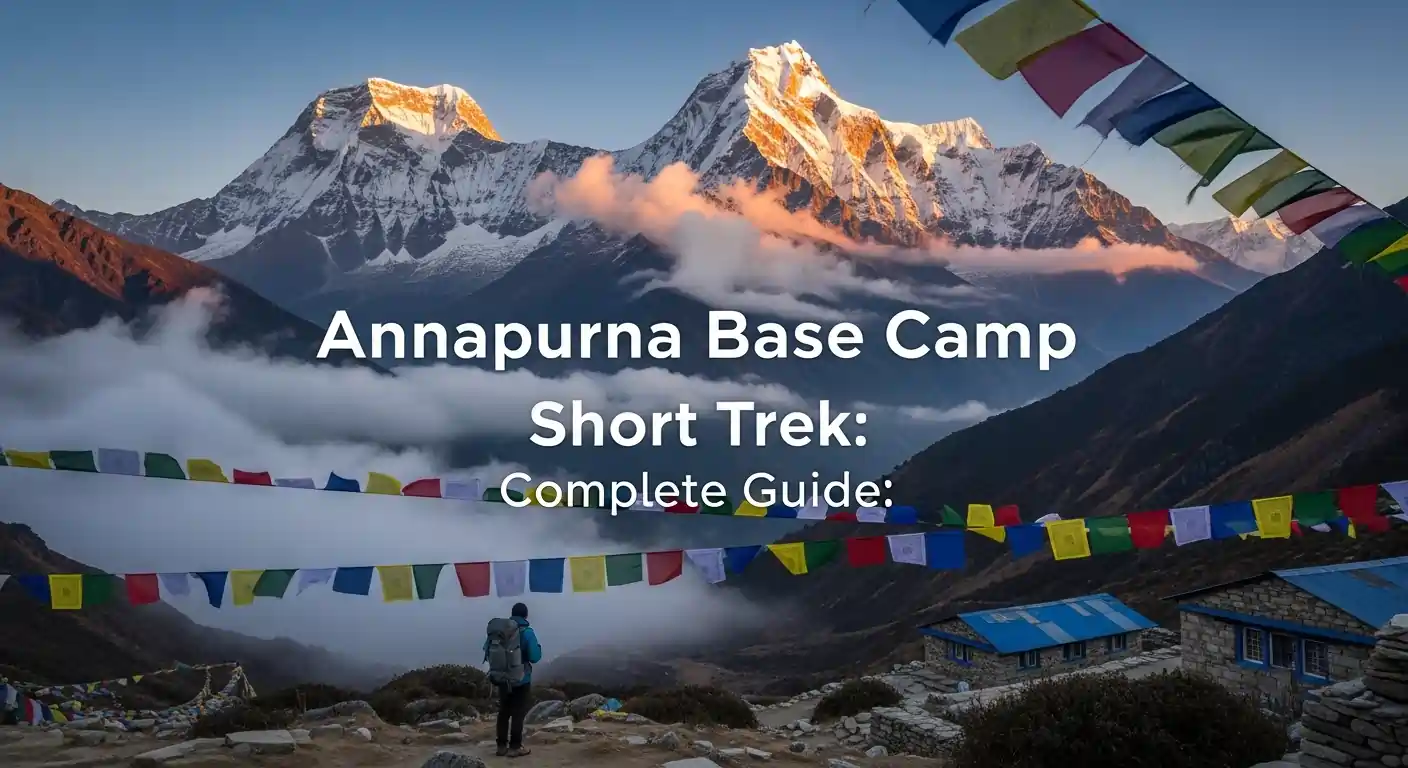
Have you ever dreamed of standing in a 360-degree amphitheater of 7,000 and 8,000-meter peaks, but you only have a week to make it happen? The Annapurna Base Camp Short Trek is the ultimate “fast-track” ticket to the heart of the Himalayas, designed specifically for adventurers who want the maximum mountain payoff without the two-week time commitment. In 2026, this trek has become the go-to choice for digital nomads in Pokhara and travelers on a tight schedule who still want to experience the raw power of the Annapurna Sanctuary.
In this guide, we’ll break down the 7-day “express” route, explaining how we compress the traditional 12-day journey into a high-impact week. From the steep stone stairs of Chhomrong to the steaming hot springs of Jhinu Danda, we’ll cover everything you need to know about altitude, gear, and budget to ensure your 2026 adventure is a total success on the Annapurna base camp trek.
What Is the Annapurna Base Camp Short Trek?
The Annapurna Base Camp Short Trek is a condensed, high-intensity version of the traditional sanctuary route, designed to get you into the heart of the Annapurna Massif in nearly half the time. By utilizing newly extended mountain roads to skip the lower forest foothills of Nayapul and Ghandruk, this itinerary focuses purely on the “inner sanctuary” section of the trail. You start your hike much deeper in the mountains, often beginning at Jhinu Danda or Samrung, allowing you to reach the base camp in as little as 3 to 4 days of trekking. It is the perfect solution for modern travelers who want to stand in a 360-degree amphitheater of 7,000 and 8,000-meter peaks but only have a week-long window to make it happen for their adventure trekking in Nepal.
The primary difference between the classic and the short itinerary lies in the pace and the approach; while the classic 12-day trek offers a slow cultural immersion through various Gurung villages, the short trek is a “vertical mission” that prioritizes reaching the maximum altitude of 4,130 meters at ABC. Located within the protected Annapurna Conservation Area, the trail leads you through a narrow glacial valley into the sacred Annapurna Sanctuary. With an ideal duration of 5 to 9 days, this trek offers a massive reward for your effort, though it requires a higher level of physical stamina to handle the rapid elevation gain and the thousands of stone stairs that lead to the roof of the world.
Why Choose the Annapurna Base Camp Short Trek?
Choosing the Annapurna Base Camp short trek is the most efficient way to reach the heart of the Himalayas without sacrificing the awe-inspiring experience of standing in a 4,000-meter glacial sanctuary. This route is specifically designed for those who want a high-impact adventure that fits into a standard vacation window, offering a rapid transition from lush subtropical scenery to high-alpine peaks. It’s the ultimate “maximum reward, minimum time” journey, providing a legendary Himalayan achievement in a fraction of the time required for Everest, so long as you know how to properly prepare for annapurna base camp trek.
Perfect for Limited-Time Trekkers
The primary draw of the Annapurna Base Camp short trek is its ability to deliver a world-class high-altitude experience in just 5 to 7 days. By utilizing jeep access to skip the lower foothills, you focus solely on the most dramatic sections of the Annapurna Sanctuary, making it ideal for busy professionals or travelers on a tight schedule. You get the full mountain experience, the thin air, the teahouses, and the base camp glory, without needing to take two full weeks off work. It effectively democratizes the Himalayas, proving that you don’t need a month-long sabbatical to stand in the presence of 8,000-meter giants.
Less Crowded Compared to Everest Region
While the Everest Base Camp trail often feels like a crowded mountain highway, the Annapurna Sanctuary maintains a slightly more intimate and relaxed atmosphere. You’ll find fewer “trekking traffic jams” on the stone stairs, allowing for a more personal connection with the landscape and the local villagers. The teahouses are generally less packed, meaning you get better service and a quieter night’s sleep in the heart of the mountains. If you want a massive mountain payoff without the overwhelming tourist density of the Khumbu, the short ABC trek is the smarter, more tranquil alternative.
Diverse Landscapes: Forests, Waterfalls, and Snow Peaks
One of the most surprising aspects of this short trek is how quickly the scenery shifts from tropical humidity to glacial chill. In just a few days, you’ll walk through dense rhododendron and bamboo forests, pass under massive waterfalls plunging from towering cliffs, and eventually emerge into a barren, snow-capped alpine basin. The dramatic change in biodiversity is staggering; you might see monkeys in the trees on Monday and be surrounded by massive glaciers by Wednesday. This rapid environmental transition keeps every hour of the trek visually exciting and ensures you never get bored with the view.
Cultural Experience in Gurung and Magar Villages
Even on the “short” version of the trek, you are deeply immersed in the unique traditions of the Gurung and Magar communities who have called these mountains home for centuries. Passing through iconic villages like Chhomrong gives you a firsthand look at the neat stone houses, terraced fields, and the incredible hospitality of the local people. You’ll see local life in action, from children heading to mountain schools to yaks carrying supplies—providing a cultural layer that enriches the physical challenge. It’s a rare chance to see how these communities have adapted to one of the most rugged environments on Earth.
Natural Hot Springs at Jhinu Danda
The ultimate “finisher’s reward” for this trek is the natural thermal hot springs located on the banks of the Modi Khola river in Jhinu Danda. After days of grueling climbs and freezing temperatures at the base camp, soaking your sore muscles in these riverside pools is a near-religious experience. The warm, mineral-rich water is the perfect natural therapy for tired legs and a great way to celebrate your successful journey with fellow trekkers. It turns the final leg of your mountain mission into a relaxing spa-like retreat, leaving you refreshed and ready for the drive back to Pokhara.
Annapurna Base Camp Short Trek Route Overview
The route for the Annapurna Base Camp short trek is a masterclass in efficiency, utilizing the rugged road network to bypass the lower foothills and place you directly at the gateway of the sanctuary. By starting deeper in the Modi Khola valley, the trail follows a more direct, vertical path that cuts days off the traditional approach without missing the dramatic transition from forest to glacier. This condensed corridor is designed for hikers who want to spend more time in the high alpine and less time in the humid lowland forests, making it a surprisingly accessible entry point for those interested in trekking in Nepal for beginners.
Starting Point and Access (Pokhara to Jhinu/Samrung)
The adventure begins with a 3-hour jeep drive from Pokhara to either Jhinu Danda or the Samrung bridge, effectively skipping the first two days of the classic Nayapul route. Recent road accessibility improvements have made these deep-mountain trailheads reliable even in the early spring, allowing for a significantly shortened trekking route. From here, you immediately hit the stone stairs, trading a long walk for a steep, rewarding climb that puts you within striking distance of the inner sanctuary.
Key Highlights Along the ABC Short Trek Route
The trail is punctuated by the iconic stone houses of Chhomrong village before plunging into the dense, misty forests of Bamboo and the dramatic cliffs near Deurali. As you ascend, you’ll pass through the serene Machhapuchhre Base Camp (MBC), where the sacred “Fishtail” mountain dominates the sky, before reaching the final destination: Annapurna Base Camp at 4,130m. This final amphitheater offers a 360-degree wall of snow and ice that serves as the ultimate high-altitude reward for your rapid ascent.
Annapurna Base Camp Short Trek Itinerary (7 Days Sample)
This 7-day itinerary is a high-impact “express” route that utilizes private jeep transfers to maximize your time in the high-altitude sanctuary. It is designed for fit hikers who want to reach the 4,130-meter base camp quickly while still allowing for essential acclimatization and a relaxing soak in the hot springs on the way down.
| Day | Route Details | Walking/Driving Time | Elevation Gain/Loss |
| Day 1 | Drive from Pokhara to Samrung; Trek to Chhomrong | 3h Drive / 3h Trek | Start at 820m; End at 2,170m |
| Day 2 | Trek from Chhomrong to Himalaya | 6–7 hours | Climb to 2,920m via Bamboo |
| Day 3 | Trek from Himalaya to MBC (Machhapuchhre Base Camp) | 4–5 hours | Reach 3,700m (High-Alpine Zone) |
| Day 4 | Sunrise Trek to ABC; Descend to Bamboo | 7–8 hours | Max Altitude 4,130m; End at 2,310m |
| Day 5 | Trek from Bamboo to Jhinu Danda | 5–6 hours | Descend to 1,780m (Hot Springs) |
| Day 6 | Relax at Hot Springs; Trek to Siwai | 3–4 hours | Leisurely walk along the Modi Khola |
| Day 7 | Drive from Siwai back to Pokhara | 3h Drive | Return to Lakeside Pokhara (820m) |
How Difficult Is the Annapurna Base Camp Short Trek?
The Annapurna Base Camp short trek is classified as a moderate challenge that is physically demanding due to its rapid elevation gain and thousands of relentless stone stairs. While it doesn’t require technical climbing skills, the “short” nature of the itinerary means you are packing more vertical gain into fewer days, making it a test of cardiovascular endurance and leg strength, which ultimately determines the annapurna base camp trek difficulty level.
Trek Difficulty Level (Moderate)
This trek is rated as moderate, making it accessible to most hikers with a basic level of fitness and a bit of grit. You aren’t trekking in the “death zone,” but the constant incline requires a steady heart rate and the ability to keep moving for several days in a row. It is the perfect “step up” for someone who has done hill walking but isn’t quite ready for the extreme technicality of 5,000-meter peak climbing.
Daily Walking Hours
On this express itinerary, you should expect to spend between 5 and 7 hours on the trail each day, depending on your pace and the specific terrain. Because the schedule is compressed, there are fewer “easy” days, meaning your endurance is tested from the moment you leave the jeep until you return. These long hours are balanced by the frequent teahouse stops where you can refuel with ginger tea and local snacks.
Steep Stair Sections
The “Annapurna Stairs” are legendary among trekkers, particularly the grueling sections leading in and out of Chhomrong village. You will encounter thousands of uneven stone steps that can be quite punishing on the knees, especially during the descent on the final days. Using trekking poles is highly recommended to distribute the weight and save your joints from the repetitive impact of these steep vertical segments.
Altitude Considerations
Since you reach 4,130 meters in just a few days, your body has less time to acclimatize compared to the longer 12-day route. While ABC is lower than many other Himalayan base camps, the risk of mild altitude sickness—such as headaches or shortness of breath—is still a factor to monitor closely. The key is to walk “Bistari, Bistari” (slowly, slowly) and stay extremely hydrated to help your system process the thinning oxygen levels.
Comparison with Everest Base Camp Trek
Compared to the Everest Base Camp (EBC) trek, the ABC short trek is generally considered easier because the maximum altitude is over 1,000 meters lower. While EBC involves nearly two weeks of trekking in a high-alpine, freezing environment, the ABC route offers a much faster return to the lush, oxygen-rich forests. However, ABC actually has more steep stone staircases than the EBC trail, which can make it feel more physically “taxing” on the legs in the short term.
Best Time for Annapurna Base Camp Short Trek
Choosing the right month for your Annapurna Base Camp short trek is the most important decision you’ll make, as it dictates everything from the clarity of your mountain views to the safety of the trail. In 2026, the two “golden windows” of spring and autumn remain the top choices for trekkers who want stable weather and the best chance of a successful reach to 4,130 meters. However, each season offers a completely different “vibe” in the sanctuary, ranging from vibrant floral displays to crisp, frozen landscapes, which is a key consideration when determining the best season for trekking in Nepal.
Spring (March-May): Rhododendron Blooms
Spring is a fan-favorite season because it transforms the lower sections of the Annapurna trail into a colorful botanical garden. As you climb toward Chhomrong and Bamboo, you’ll walk through massive forests of blooming rhododendrons—Nepal’s national flower—which range in color from deep red to pale pink. The temperatures are pleasantly mild, making the long days of walking more comfortable, though you should expect a few afternoon clouds to roll in as the season progresses toward May. It’s the perfect time for nature lovers who want to see the Himalayas at their most “alive” and vibrant.
Autumn (September-November): Clear Mountain Views
Autumn is widely considered the absolute best time for an Annapurna Base Camp short trek due to the incredibly stable weather and high-definition visibility. After the monsoon rains have cleared the dust and haze from the air, the mountain views become so sharp they look like postcards. This is the peak season for photography, as the deep blue skies provide a stunning contrast to the white peaks of the Annapurna Massif. While the trails are busier during these months, the social atmosphere in the teahouses and the reliable sunrise views at the base camp make it worth sharing the path.
Winter Trekking Conditions
Trekking to ABC in the winter (December-February) is a “serene but serious” adventure that is best suited for those who can handle the biting cold. During these months, the sanctuary is often blanketed in thick snow, turning the base camp into a pristine white wonderland where you won’t have to fight for a spot at the viewpoint. Nighttime temperatures can drop as low as -20°C (-4°F), and there is an increased risk of avalanches in the narrow sections between Deurali and MBC. If you have high-quality gear and a sense of adventure, the solitude and the crisp, clear winter air provide an experience that few other seasons can match.
Monsoon Challenges
The monsoon season (June-August) brings heavy rainfall, high humidity, and a set of unique challenges that make it the least recommended time for a short trek. Trails become notoriously slippery and are often inhabited by leeches, which can be a persistent annoyance for hikers in the lower forest zones. While the landscape is incredibly green and the waterfalls are at their most powerful, the mountain views are frequently hidden by thick clouds and mist. Most trekkers avoid these months due to the risk of landslides and the high probability of flight and road delays that could ruin a tight 7-day schedule.
Permits Required for Annapurna Base Camp Short Trek
To legally enter the Annapurna Sanctuary, you must obtain two specific permits that fund conservation efforts and support the infrastructure of the local trails. These documents are checked at multiple police and park ranger stations along the route, so having them organized before you leave Pokhara is essential for a smooth journey.
ACAP Permit (Annapurna Conservation Area Permit)
The ACAP permit is a mandatory entry fee for the Annapurna Conservation Area, which is the largest protected area in Nepal. The funds collected from this permit go directly toward environmental conservation projects, trail maintenance, and the socio-economic development of the local communities you’ll be visiting. For international trekkers, the cost is approximately NPR 3,000 (roughly $23 USD), and it remains valid for a single entry into the region. It is the most important piece of paperwork you’ll carry, ensuring that the pristine beauty of the sanctuary is preserved for future generations of adventurers.
TIMS Card (Trekkers’ Information Management System)
The TIMS card is a vital security document designed to ensure the safety and tracking of all trekkers in the Nepalese Himalayas. In the event of a natural disaster or an emergency, the information on your TIMS card allows the authorities to know your location and provide rapid assistance. For 2026, the cost for a TIMS card is NPR 2,000 (about $15 USD), and it must be obtained through a registered trekking agency. This card is linked to your passport and insurance details, serving as your official “id” while you are navigating the high-altitude trails of the Annapurna.
Where and How to Obtain Permits
While you can theoretically obtain these permits yourself at the Nepal Tourism Board offices in Kathmandu or Pokhara, it is much more efficient to have your trekking agency handle the process for you. To apply, you will need to provide two passport-sized photographs and a copy of your passport. Most agencies, like Marvel Treks, will have these ready for you before you even arrive in Pokhara, saving you from waiting in lines or dealing with local bureaucracy. Remember that permits are checked at the very start of your trek in Birethanti, so you cannot begin your hike without them in your possession.
Annapurna Base Camp Short Trek Cost Breakdown
The total cost of an Annapurna Base Camp short trek in 2026 depends heavily on whether you choose a self-managed budget approach or a fully-supported guided package. While the shorter duration naturally lowers the overall expense compared to the longer routes, the logistics of fast-track transportation and mandatory guide requirements are the primary factors in your final budget.
| Expense Category | Budget/Independent (USD) | Guided Package (USD) | 2026 Service & Logistics Details |
| Mandatory Permits | $40 – $50 | Included in Package | ACAP and TIMS permits are required for all trekkers. |
| Licensed Guide | $30 – $40 / Day | Included in Package | Mandatory for 2026: Solo trekking without a guide is no longer permitted. |
| Porter Support | Optional ($20/day) | Included in Package | A porter carries up to 20kg, significantly easing the steep stair climbs. |
| Accommodation | $5 – $15 / Night | Included in Package | Standard twin-sharing rooms in teahouses (prices rise with altitude). |
| Meals & Water | $25 – $35 / Day | Included in Package | Three meals a day; sticking to local staples like Dal Bhat saves money. |
| Transportation | $30 – $80 | Included in Package | Private jeep from Pokhara to the trailhead saves 2 days of walking. |
| Travel Insurance | $100 – $200 | Required (Extra) | Critical: Must cover emergency helicopter evacuation up to 4,500m. |
| Total Estimated | $450 – $650 | $750 – $950 | Guided packages usually include all logistics from Pokhara to Pokhara. |
What to Pack for the Annapurna Base Camp Short Trek?
Packing for a short ABC trek requires a “light but lethal” approach, prioritizing high-performance layers that can handle a 20°C temperature swing in a single day. Because this is an express itinerary, you want to avoid overpacking heavy items while ensuring you have a dedicated system for the freezing pre-dawn hours at the base camp. In 2026, the key is moisture management ,staying dry during the humid forest climbs so you don’t freeze once you hit the glacial air of the sanctuary, which is why you need a streamlined strategy for packing for trekking in Nepal.
Essential Trekking Gear
Your gear list must start with a high-capacity power bank and a high-quality headlamp, as charging is expensive and the “summit push” to ABC happens before sunrise. Don’t forget a reusable water bottle and purification tablets or a LifeStraw to avoid the environmental impact and high cost of plastic bottles in the mountains. A basic personal first aid kit containing blister tape, Diamox (for altitude), and rehydration salts is non-negotiable for staying healthy on the move. Finally, pack a lightweight, quick-dry microfiber towel and a few dry bags to keep your electronics and spare clothes safe during the occasional mountain shower.
Clothing Layers for Changing Weather
The “layering cake” for ABC consists of a moisture-wicking base layer (merino wool is best) to keep sweat off your skin, followed by a warm fleece or “puffy” mid-layer to trap heat. You’ll also need a heavy-duty down jacket for the sub-zero temperatures at 4,130m and a breathable waterproof outer shell to block the biting winds and rain. Don’t forget a warm wool beanie for the nights and a wide-brimmed sun hat for the intense daytime UV rays in the high alpine. Having a dedicated set of “lodge clothes”, clean, dry thermals to change into after your hike—is the secret to staying warm and avoiding the “Khumbu cough” or common cold.
Trekking Boots & Poles
A pair of sturdy, waterproof, and well-broken-in trekking boots is the most important investment you can make for your feet and your safety. Because the Annapurna trail is famous for its thousands of uneven stone stairs, boots with good ankle support will protect you from rolls and strains during long descents. Pair these with high-quality trekking poles, which are absolute lifesavers for your knees, acting as “extra legs” to distribute the impact of the steep climbs and drops. If you arrive with brand-new, stiff boots, you are almost guaranteed to end up with blisters by day two, so make sure you’ve put at least 30-50 miles on them before flying to Nepal.
Sleeping Bag & Backpack Essentials
Even though teahouses provide blankets, they are rarely enough to keep you warm at 4,000 meters, so a four-season sleeping bag (rated to at least -10°C) is highly recommended for a good night’s sleep. For your backpack, a 30-40 liter daypack is plenty if you have a porter carrying your main duffel, but it must have a rain cover and a comfortable hip belt to save your shoulders. Make sure your pack is organized so that essentials like your rain jacket, sunscreen, and snacks are always at the top for easy access. Remember, every extra pound feels like five once you get above 3,500 meters, so if you haven’t used an item during your training hikes, leave it at home!
Accommodation and Food During the ABC Short Trek
Accommodation and dining on the short ABC route are centered around the iconic “teahouse” culture, providing cozy mountain lodges that serve as both your hotel and social hub. These family-run establishments offer a warm, communal atmosphere where you can refuel with hearty mountain meals while resting your legs for the next day’s climb.
Tea House Accommodation
The teahouses along the Annapurna trail are simple yet comfortable mountain lodges, typically offering twin-sharing rooms with two single wooden beds and foam mattresses. While the walls are often thin and the rooms are unheated, the central dining area is kept warm with a wood or dung-burning stove, creating a perfect space to relax and swap stories with fellow trekkers. As you climb higher into the sanctuary, the lodges become more basic and communal, but the incredible views right outside your window more than make up for the lack of luxury. In 2026, many lodges have upgraded their bedding, but carrying your own sleeping bag is still highly recommended for extra warmth during the freezing nights at 4,000 meters.
Meal Options (Dal Bhat, Noodles, Western Dishes)
The food menu in the Annapurna region is surprisingly diverse, ranging from the staple “Dal Bhat” (lentil soup, rice, and vegetable curry) to pasta, pizza, and Tibetan bread. Dal Bhat remains the ultimate fuel for trekkers because it is healthy, filling, and comes with free refills—a lifesaver when you’ve been climbing stairs all day. For breakfast, you can expect porridge, eggs, and pancakes, while dinner often includes hot soups and noodle dishes to help with hydration and warmth. It is generally advised to stick to vegetarian options as you go higher to ensure food safety, as all supplies are carried up the mountain by porters or mules.
Charging & WiFi Availability
In 2026, most teahouses along the ABC route offer WiFi and charging stations, though these amenities usually come with a small additional fee that increases as you get higher. WiFi can be patchy in the deeper sections of the sanctuary near Deurali and Machhapuchhre Base Camp, so it’s best to handle your essential communications in the lower villages like Chhomrong. Charging your devices ,phones, cameras, and power banks is usually done in the common dining area, as individual rooms rarely have power outlets. Bringing a high-capacity solar power bank is a smart move, as it saves you money and ensures you never miss a photo opportunity at the base camp due to a dead battery.
Hot Shower Facilities
Most lodges in the lower and middle sections of the trek offer hot showers, typically heated by gas or solar power, for a fee of about $3 to $5 per person. In the high-altitude zones near MBC and ABC, hot water becomes a luxury, and many trekkers opt for “wet wipe showers” to avoid catching a cold in the freezing mountain air. At the end of your trek, however, you get the ultimate upgrade: the natural hot springs at Jhinu Danda, where you can soak your entire body for free in the warm, mineral-rich riverside pools. It is a good idea to shower early in the afternoon when solar heaters are at their peak and before the evening chill sets in.
Altitude and Safety Tips for Annapurna Base Camp Short Trek
Safety in the Annapurna Sanctuary is paramount, as the rapid ascent of a short trek itinerary puts significant pressure on your body to adapt to decreasing oxygen levels. While the maximum altitude of 4,130m is lower than the Everest region, the steep gain from the valley floor means you must be hyper-aware of your physical limits and the environment around you. Success isn’t just about reaching the base camp; it’s about returning safely with a healthy body and a clear mind.
Signs of Altitude Sickness
Altitude sickness, or Acute Mountain Sickness (AMS), often begins with subtle symptoms like a persistent dull headache, loss of appetite, or a slight feeling of nausea. On a short trek, these signs can appear quickly as you move past Deurali, and it is vital not to ignore them in an attempt to keep up with a group. If you experience dizziness, extreme fatigue, or trouble sleeping, you must inform your guide immediately and consider staying at your current altitude or descending. Ignoring these early warning signs can lead to more serious conditions like HAPE or HACE, which are medical emergencies in the high mountains.
Hydration and Acclimatization
The most effective way to help your body process thin air is to drink at least 3 to 4 liters of water every single day to maintain blood oxygenation and prevent dehydration. In 2026, the mantra “climb high, sleep low” remains the golden rule, even on a shortened schedule, which is why your itinerary should still include a gradual approach once you cross the 3,000-meter mark. Avoiding alcohol and cigarettes is crucial during the ascent, as they dehydrate the body and can mask the symptoms of AMS. Taking “active rest” breaks where you walk at a slow, rhythmic pace ensures that your heart and lungs can keep up with the vertical demand.
Emergency Evacuation Options
In the event of severe illness or injury, the Annapurna region is well-served by helicopter rescue operations that can evacuate a trekker from designated pads at ABC, MBC, or Deurali. These rescues are highly efficient but are dependent on weather conditions, which can change in minutes, potentially delaying a flight until the following morning. Ground evacuation via a team of porters or a horse is the secondary option for lower altitudes where a helicopter might not be able to land. Because of the logistical complexity and high cost of mountain rescues, having a clear emergency plan established with your trekking agency before you start is an essential safety net.
Travel Insurance Importance
For any Annapurna Base Camp short trek, having a specialized travel insurance policy that explicitly covers high-altitude trekking up to 5,000 meters is non-negotiable. Standard travel insurance often excludes mountain activities, which could leave you with a $5,000+ bill for a helicopter evacuation or hospital stay in Pokhara. Your policy should also include coverage for trip cancellations, theft of gear, and medical expenses related to altitude sickness. Always keep a digital and physical copy of your insurance details and the 24-hour emergency contact number in your daypack, ensuring your guide knows exactly where to find them if needed.
How to Prepare for the Annapurna Base Camp Short Trek?
To prepare for the Annapurna Base Camp short trek, you must build a strong foundation of cardiovascular endurance and functional leg strength, specifically targeting the endurance needed for thousands of stone stairs. Since the “short” itinerary involves rapid elevation gain, your body needs to be conditioned to handle 5-7 hours of daily activity with a focus on recovery and stamina.
Physical Fitness Training
Your training should start at least 8-12 weeks before your flight to Nepal, focusing on “functional” fitness rather than just aesthetics. Incorporate full-body workouts that include squats, lunges, and core exercises to stabilize your body while carrying a pack on uneven terrain. Consistency is more important than intensity; aim for 3-4 days of moderate exercise per week to build the muscle memory required for consecutive days of hiking. If you can comfortably complete a 10km hike with some elevation back home, you are on the right track for the Annapurna Base Camp short trek.
Stair Climbing Preparation
The Annapurna trail is famous for its relentless stone steps, both up and down, which can be incredibly taxing on the knees and glutes. The best way to prepare is to find a local stadium, a tall building, or a stair-master machine and spend at least 45 minutes twice a week going vertical. This specific movement conditions your joints for the high-impact nature of the Chhomrong and Bamboo sections of the trail. Don’t forget to practice descending stairs as well, as the eccentric load on your muscles during the walk down is often where most trekkers experience the most soreness.
Cardio and Endurance Workouts
Building a “big engine” through cardiovascular training is essential for performing in the oxygen-depleted air above 3,000 meters. Activities like swimming, cycling, or long-distance running help increase your heart’s stroke volume and your lungs’ capacity to process oxygen. Aim for “Zone 2” training, where you maintain a steady, conversational pace for 60-90 minutes, as this mimics the long-duration effort required on the trek. This type of endurance training ensures that your heart doesn’t have to work overtime just to keep you moving at a slow pace toward the sanctuary.
Mental Readiness for High-Altitude Trekking
Mental toughness is often the deciding factor in whether you reach the base camp, especially on Day 3 and 4 when the cold and fatigue set in. You need to be prepared for “uncomfortable” situations, such as sleeping in freezing rooms, using basic squat toilets, and pushing through physical exhaustion. Practice a “positive internal dialogue” during your training hikes to help you stay motivated when the stairs feel never-ending. Understanding that the struggle is a temporary part of a much larger, beautiful experience will help you maintain the “Bistari, Bistari” (slowly, slowly) mindset necessary for success.
Annapurna Base Camp Short Trek vs Other Short Treks in Nepal
Comparing the Annapurna Base Camp short trek with its neighbors is a matter of choosing between the “immersion” of a glacial sanctuary, the “panorama” of a famous viewpoint, or the “adventure” of a narrow ridgeline. While all three routes share the same mountain range, they differ significantly in their physical demand, the closeness of the peaks, and the level of comfort you can expect in the teahouses along the way.
| Feature | ABC Short Trek | Mardi Himal Trek | Ghorepani Poon Hill |
| Max Altitude | 4,130 m (Base Camp) | 4,500 m (Base Camp) | 3,210 m (Poon Hill) |
| Duration | 5 – 7 Days | 5 – 7 Days | 3 – 5 Days |
| Difficulty | Moderate: High steps and rapid ascent. | Moderate/Strenuous: Steep, narrow ridge walks. | Easy/Moderate: Well-marked stone stairs. |
| View Style | Immersive: A 360-degree amphitheater of giant peaks. | Intimate: Face-to-face with Machhapuchhre (Fishtail). | Panoramic: Wide sunrise views over the whole range. |
| Crowd Level | High: Very popular classic route. | Medium: “Hidden gem” that is gaining popularity. | Very High: The most social and busiest trail. |
| Infrastructure | Excellent: Large teahouses with diverse menus. | Basic: Smaller, more rustic mountain lodges. | Premium: Highest quality lodges and guest houses. |
| Beginner Choice | Best for fit beginners seeking a base camp glory. | Best for adventurous beginners who like quiet trails. | Best Overall: The safest and easiest entry-level trek. |
Conclusion
The Annapurna Base Camp Short Trek is the perfect bridge between a busy modern life and the timeless majesty of the Himalayas. In just one week, you can trade the noise of the city for the silence of a glacial sanctuary, proving that you don’t need a month-long expedition to achieve a world-class mountain goal. Whether it’s the physical challenge of the Chhomrong stairs, the spiritual atmosphere of the Gurung villages, or the sheer awe of standing at 4,130 meters, this trek delivers a lifetime of memories in an “express” package.
As we look toward the 2026 trekking season, the ABC trail remains one of the most rewarding and accessible paths in Nepal. By choosing the short itinerary, you are maximizing your adventure and ensuring that every day on the trail is packed with high-impact views and cultural connection. The mountains are waiting, the sanctuary is open, and the experience of a lifetime is just a few days of trekking away.
Ready to stand at the foot of the world’s most beautiful giants? Marvel Treks is your expert partner for a safe, seamless, and high-energy Annapurna Base Camp Short Trek. We handle all the 2026 permit logistics, provide elite local guides, and ensure your acclimatization is handled with professional care. Don’t let your limited time stop you from reaching the base camp, book your 7-day ABC adventure with the experts today!
FAQS
How many days does the short ABC trek take?
The standard short version takes 7 days (Pokhara to Pokhara), though very fit hikers using private jeeps can complete it in 6 days.
What is the highest point of the trek?
The highest point is Annapurna Base Camp (ABC) at an elevation of 4,130 meters (13,550 feet).
Is the short ABC trek harder than the long one?
Physically, it can feel more intense because you are climbing more elevation per day with fewer rest days for your legs to recover.
Can beginners do the short ABC trek?
Yes, provided you have a good level of basic cardiovascular fitness and are prepared for long days of walking on steep stone stairs.
Are there hot springs on the short ABC route?
Yes! The natural hot springs at Jhinu Danda are a major highlight and are usually visited on Day 5 or 6 of the trek.
Do I need a guide for the Annapurna Base Camp short trek?
Yes, as of 2023, the Nepal government requires all international trekkers in the Annapurna region to be accompanied by a licensed guide.
Is there a risk of avalanches on the ABC trek?
There is a known avalanche risk zone between Deurali and MBC; your Marvel Treks guide will monitor daily local conditions to ensure safe passage.
Can I see Mount Everest on the ABC trek?
No, Mount Everest is in the Khumbu region. However, you will see Annapurna I (8,091m), which is one of the world’s fourteen 8,000-meter peaks.

Ready for your next Himalayan adventure?
Plan Your Next Big Adventure with Us
Explore Our AdventuresJoin our expert-guided journeys across Nepal and beyond, from classic trails to epic summits.