
What is the Langtang Valley Trek Distance?
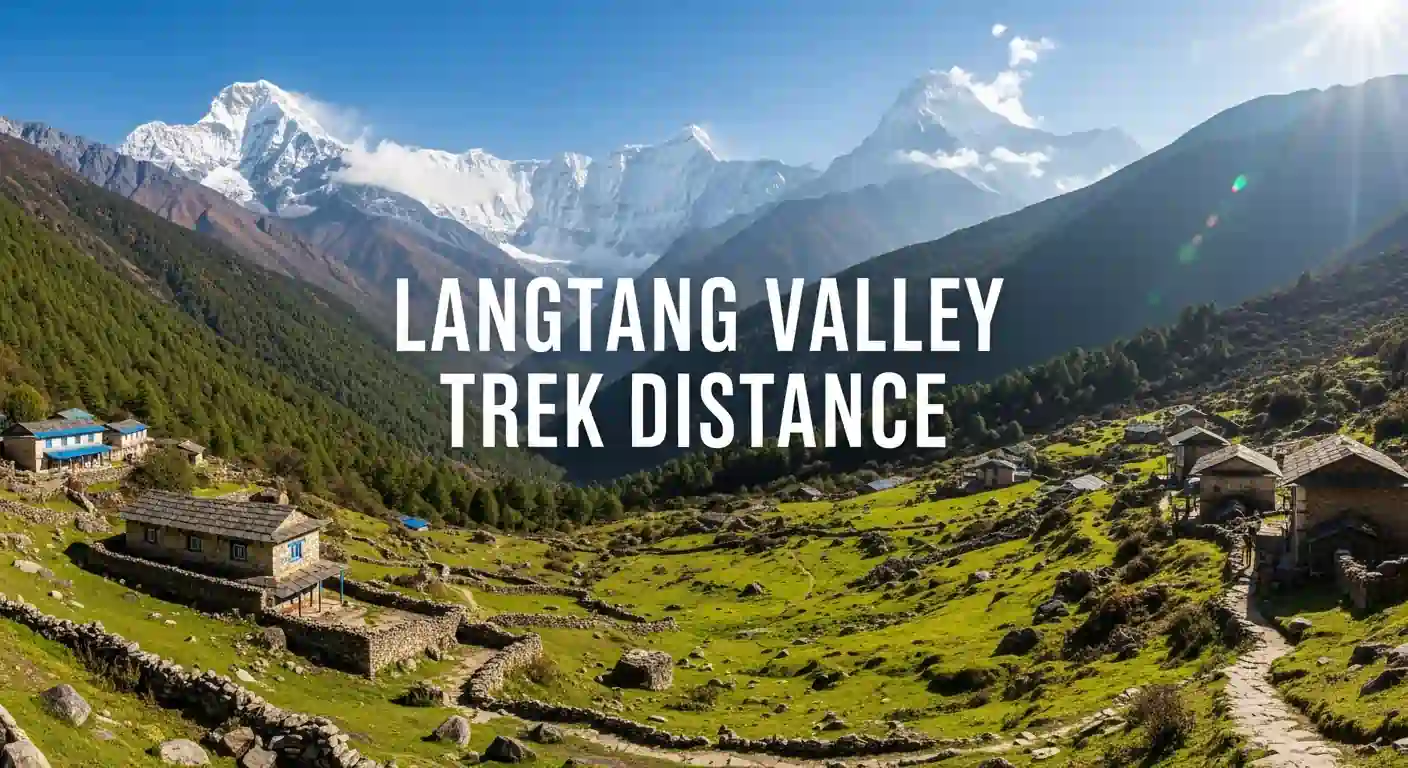
Langtang Valley Trek is often called the “Valley of Glaciers” for its spectacular close-up views of the Langtang Lirung massif and its proximity to the Tibetan border. While it is located just north of Kathmandu, the distance you cover on foot takes you deep into the heart of the Langtang National Park, transitioning from sub-tropical forests to high-alpine meadows and glacial moraines. This trek is widely regarded as the most accessible Himalayan adventure for those who want to avoid domestic flights but still desire the raw beauty of the high mountains.
In this guide, we will break down the Langtang Valley Trek Distance in precise detail, from the total round-trip kilometers to the daily walking hours and elevation gains. We will explore how optional side hikes to Kyanjin Ri or Tserko Ri can alter your total mileage and provide tips on managing the strenuous “return day” descent. Whether you are a beginner or a seasoned hiker, understanding the physical length and geographic scale of this route is essential for a safe and successful journey.
Introduction to the Langtang Valley Trek
The Langtang Valley Trek is a premier Himalayan journey located just north of Kathmandu, famous for its dramatic glacial scenery, accessible trails, and the resilient culture of the Tamang people. Often referred to as “the valley of glaciers,” this trek offers some of the most spectacular mountain views in Nepal with a relatively short approach. It is an ideal choice for those who want a high-altitude experience without the need for domestic flights, as the trailhead is reachable via a scenic (though rugged) drive from the capital city.
The trek typically covers a total distance of 65 to 80 kilometers over the course of 7 to 10 days, leading travelers from the lush subtropical forests of the lower valley to the high-alpine meadows of Kyanjin Gompa. Along the way, trekkers are treated to breathtaking panoramas of Langtang Lirung (7,227m) and Kimshung, while immersing themselves in local Buddhist traditions and exploring ancient monasteries. Its combination of moderate physical challenge, deep cultural richness, and stunning alpine landscapes makes it one of the most rewarding wilderness experiences and a top choice for trekking in Nepal for beginners.
What Is the Langtang Valley Trek Distance?
The total Langtang Valley Trek distance is approximately 65 to 80 kilometers (40 to 50 miles) for the full round-trip from Syabrubesi to Kyanjin Gompa and back. While the base route is shorter, adding side hikes to Kyanjin Ri or Tserko Ri increases the total distance to nearly 95 kilometers, requiring an average daily walk of 10 to 12 kilometers.
The standard itinerary typically spans 7 to 9 days, with daily trekking durations ranging from 5 to 7 hours depending on your pace and the specific trail conditions in 2026. While the ascent is gradual and covers shorter distances of 6 to 14 kilometers to aid acclimatization, the return journey often features a long 21-kilometer descent from Kyanjin Gompa back to Lama Hotel. Ultimately, your final mileage will vary based on whether you stick to the main valley floor or explore the high-altitude glacial moraines, which significantly influences the overall difficulty of Langtang valley trek.
Total Distance of the Langtang Valley Trek Route
The total distance of the Langtang Valley Trek route is between 65 and 80 kilometers (40 to 50 miles) for a standard round-trip starting and ending in Syabrubesi. This distance encompasses the core trail through the Langtang Khola valley up to the high-alpine settlement of Kyanjin Gompa. In 2026, many trekkers choose to extend this by another 10 to 15 kilometers by including popular side hikes to glacial viewpoints and high-altitude ridges, which is where you truly experience the peak langtang trek altitude.
Standard Langtang Valley Trek Distance
The standard route from the trailhead at Syabrubesi to the final village of Kyanjin Gompa covers a one-way distance of approximately 32 to 35 kilometers. This traditional path follows the river upstream through Bamboo, Lama Hotel, and the newly rebuilt Langtang Village before reaching the glacial meadows. Most itineraries allow three to four days for the ascent to ensure proper acclimatization, while the return descent is typically covered in just two days due to the significant loss in elevation.
Langtang Valley Trek Distance in Miles vs Kilometers
For international trekkers, the Langtang Valley Trek distance translates to roughly 40 to 50 miles for the complete circuit. While the metric system (kilometers) is the standard used by local guides and on trail markers throughout Langtang National Park, understanding the mile conversion helps in gauging your personal hiking stamina relative to western trails. In 2026, most GPS-based trekking apps will track your progress in both units, helping you monitor your average daily pace of 6 to 9 miles.
Factors That Affect the Total Trek Distance
Several variables can alter your final mileage, most notably the inclusion of acclimatization hikes to Tserko Ri (4,984m) or Kyanjin Ri (4,773m), which can add up to 12 kilometers to your journey. Additionally, trail conditions in the post-monsoon or pre-winter seasons may require small diversions around landslide-prone areas or swollen river crossings, slightly increasing the total walk. Your personal trekking pace also plays a role; while it doesn’t change the physical map distance, a slower pace often leads to more exploratory “side-tracking” in the scenic alpine meadows.
Langtang Valley Trek Distance Breakdown by Day
The daily distance of the Langtang Valley Trek varies significantly, with shorter 6–11 km days during the ascent to allow for altitude acclimatization, and a long 21 km descent on the return leg. On average, you will cover about 11 to 12 kilometers per day across a standard 7-day itinerary, with the total walking time ranging from 4 to 8 hours depending on the terrain’s steepness.
| Day | Trekking Route | Distance (km) | Est. Time | Elevation Change |
| Day 1 | Syabrubesi to Lama Hotel | 11.3 km | 6 hrs | $+1,010\text{ m}$ |
| Day 2 | Lama Hotel to Langtang Village | 14.8 km | 6-7 hrs | $+960\text{ m}$ |
| Day 3 | Langtang Village to Kyanjin Gompa | 6.8 km | 3-4 hrs | $+440\text{ m}$ |
| Day 4 | Exploration: Kyanjin Ri / Tserko Ri | 5 – 12 km | 5-8 hrs | Up to $+1,114\text{ m}$ |
| Day 5 | Kyanjin Gompa back to Lama Hotel | 21.6 km | 7-8 hrs | $-1,400\text{ m}$ |
| Day 6 | Lama Hotel to Syabrubesi | 11.3 km | 5 hrs | $-1,010\text{ m}$ |
| Total | Full Round Trip (approx.) | 71 – 78 km | 35+ hrs | Cumulative |
How Many Days Does It Take to Complete the Langtang Valley Trek?
A typical Langtang Valley Trek takes 7 to 8 days to complete, including the drive to and from Kathmandu. While fast-paced trekkers can finish the core route in 6 days, a 10-day itinerary is highly recommended for 2026 to allow for essential acclimatization and side hikes to viewpoints like Tserko Ri (4,984m), ensuring a safer and more immersive experience.
In a standard 7-day plan, you will spend roughly 5 to 7 hours walking each day, covering a daily distance that balances steep ascents with necessary rest stops. A shorter 6-day “express” trek is possible but physically demanding, as it requires long descent days of over 20 kilometers and offers less time to explore the high-alpine beauty of Kyanjin Gompa. Conversely, extended 10-day plans often integrate the “Tamang Heritage Trail” or a visit to the sacred Gosaikunda Lakes, providing a deeper cultural and geographic exploration of Langtang National Park. Ultimately, your choice depends on your fitness level and whether you wish to focus solely on the valley floor or conquer the surrounding glacial peaks.
Langtang Valley Trek Distance vs Difficulty
The Langtang Valley Trek is classified as a moderate difficulty trek, where the challenge lies not in the total distance, but in the rapid altitude gain and steep “Nepali flat” terrain. While the 65 to 80-kilometer round-trip is manageable for most hikers, ascending from 1,550 meters to nearly 5,000 meters in just a few days requires significant cardiovascular endurance and careful pacing to avoid altitude sickness.
Trekking Difficulty Level
This trek is considered a moderate challenge, making it accessible to fit beginners while remaining engaging for experienced mountain hikers. The most difficult aspects are the steep, sustained climbs through the forest on Day 1 and Day 2, and the thin air of the upper alpine zone. Unlike the technical climbing required on higher peaks, the Langtang route follows well-established trails, but the sheer descent of 1,400 meters on the return leg can be particularly taxing on the knees.
Altitude Gain During the Trek
The journey begins at Syabrubesi, situated at a relatively low 1,550 meters (5,085 feet), but climbs quickly as you move up the valley. The standard trek culminates at Kyanjin Gompa (3,870 meters), but most adventurers push to the highest viewpoints: Kyanjin Ri (4,773 meters) or the formidable Tserko Ri (4,984 meters). This rapid vertical gain of over 3,400 meters from the trailhead to the highest peak is the primary physical hurdle of the expedition.
Physical Fitness Requirements
To comfortably manage the daily walking distance and altitude, trekkers should possess a good level of cardiovascular fitness and leg strength. It is highly recommended to engage in “stair-climbing” or hill-hiking exercises at least 4–6 weeks before arriving in Nepal to prepare for the relentless inclines. Being able to hike for 6–7 hours with a light daypack is the benchmark for success, as this ensures you can enjoy the scenery rather than simply struggling to catch your breath.
Key Stops Along the Langtang Valley Trek Route
The key stops along the Langtang Valley Trek include Syabrubesi, Lama Hotel, Langtang Village, and Kyanjin Gompa, each marking a distinct shift in both landscape and altitude. These settlements serve as vital resting points, transitioning from the low-altitude sub-tropical forests at the trailhead to the high-alpine glacial landscapes of the inner valley. In 2026, these stops also represent the resilience of the local communities, offering a mix of traditional Tamang culture and newly rebuilt, modern trekking infrastructure within the borders of langtang national park.
Syabrubesi – Trek Starting Point
Syabrubesi is the bustling gateway to the Langtang region, located at an altitude of 1,550 meters (5,085 feet) along the banks of the Bhote Koshi River. Accessible via a 7-to-9 hour drive from Kathmandu, it serves as the final point of civilization where trekkers can stock up on last-minute supplies and check their permits at the national park office. The town is a melting pot of Tamang culture and is the official starting line for the 65-kilometer round-trip journey.
Lama Hotel – Forest and River Trails
Nestled deep within a dense forest of oak, maple, and rhododendron at 2,470 meters (8,103 feet), Lama Hotel is the first major overnight stop for most trekkers. The trail to this settlement follows the steep, narrow gorge of the Langtang Khola, offering constant views of the rushing white water and occasional glimpses of langur monkeys. The lodges here are rustic and cozy, providing a much-needed sanctuary after the first 11-kilometer ascent from the trailhead.
Langtang Village – Cultural Experience
Situated at 3,430 meters (11,253 feet), the new Langtang Village is a powerful symbol of rebirth, having been reconstructed after the 2015 earthquake. As you reach this wide, glacial valley, the landscape opens up dramatically to reveal stone-built houses, mani walls, and prayer flags fluttering against the backdrop of Langtang Lirung. It is the perfect place to immerse yourself in the traditions of the “Dolpali” and Tamang people while acclimatizing to the thinning air.
Kyanjin Gompa – Trek Destination and Glacier Views
At 3,870 meters (12,697 feet), Kyanjin Gompa is the final destination and the spiritual heart of the trek, surrounded by towering peaks and massive glaciers. The settlement is named after its ancient Buddhist monastery and is famous for its local yak cheese factory and panoramic views of the Langtang Lirung and Kimshung glaciers. It serves as the base for the trek’s most challenging “exploration day” hikes to the nearby peaks of Kyanjin Ri and Tserko Ri.
Side Trips That Add to the Langtang Valley Trek Distance
Side trips from Kyanjin Gompa can add between 5 and 15 kilometers to your total Langtang Valley Trek distance, significantly increasing both the physical challenge and the visual rewards of the journey. These excursions are vital for proper acclimatization and offer the most dramatic panoramas of the Langtang Lirung massif and the surrounding glaciers. In 2026, most trekkers choose at least one of these “peak days” to experience the true scale of the Trans-Himalayan wilderness beyond the valley floor.
Kyanjin Ri Hike
Reaching an altitude of 4,773 meters (15,659 feet), the hike to Kyanjin Ri is the most popular side trip, adding about 5 kilometers (3.1 miles) to your total round-trip distance. While the trail is short, it is exceptionally steep, requiring a slow and steady pace to manage the thin air above the 4,000-meter mark. The reward is a breathtaking 360-degree view of the “Valley of Glaciers,” the frozen peaks of Kimshung and Yansa Tsenji, and a bird’s-eye perspective of the Kyanjin Gompa settlement nestled far below.
Tserko Ri Summit
For those seeking the ultimate high-altitude challenge, the trek to the summit of Tserko Ri (4,984 meters / 16,351 feet) adds approximately 10 to 12 kilometers (6–7.5 miles) to your itinerary. This full-day excursion involves navigating rocky moraines and steep ridges, often taking 6 to 8 hours to complete. From the top, you are treated to a magnificent Himalayan amphitheater, including views of Langtang Lirung, the Tibetan peaks to the north, and the sprawling Yala Glacier, making it the definitive highlight for fit adventurers.
Langtang Glacier Exploration
Exploring the base of the Langtang Lirung Glacier or walking toward the Langshisha Kharka meadows can add 8 to 15 kilometers (5–9 miles) of relatively flat but rocky trekking to your total distance. Unlike the vertical climbs of the “Ri” peaks, this route follows the valley deeper toward the east, offering a closer look at the raw power of moving ice and the high-alpine pastures used by local yak herders. It is a fantastic option for photographers and those who want to experience the absolute silence and scale of the upper glacial basin without the intense cardiovascular strain of a summit bid.
Why the Langtang Valley Trek Distance Is Ideal for Beginners?
The Langtang Valley Trek distance is ideal for beginners because its total round-trip of 65 to 80 kilometers is significantly shorter than other major routes, allowing for a complete Himalayan experience in just one week. Unlike the month-long commitments of the Annapurna Circuit or the grueling 130-kilometer trek to Everest Base Camp, Langtang provides high-altitude glacial views and authentic culture with manageable daily walking hours and a much closer proximity to Kathmandu.
This trek offers a “goldilocks” scenario for novice hikers: it is challenging enough to feel like a true adventure, yet structured with frequent village stops that allow for shorter daily segments if needed. Because the trailhead is accessible by road, beginners can also avoid the anxiety and potential delays associated with the high-altitude mountain flights typical of other regions.
- Manageable Total Mileage: At roughly 40 to 50 miles total, the distance is physically achievable for anyone with a basic level of fitness and a bit of determination.
- Gradual Altitude Gain: The trail is designed with shorter 6 to 10-kilometer days during the ascent, which naturally helps beginners acclimatize and prevents early burnout.
- No Internal Flights: Accessibility via a 7-to-9 hour drive from Kathmandu eliminates the stress, cost, and “weather-luck” required for flights to Lukla or Jomsom.
- Frequent Teahouse Access: The distance between lodges is relatively short (roughly every 2–3 hours), meaning beginners are never far from a hot meal, a rest stop, or shelter.
- Flexible Side Hikes: The core distance is short enough that beginners can choose to skip the 5,000-meter climbs (Tserko Ri) and still enjoy world-class views from the valley floor.
- Lower Logistical Barrier: With fewer days on the trail, the requirement for heavy gear and massive packing lists is reduced, making it a less intimidating first expedition.
Conclusion
In summary, the Langtang Valley Trek distance offers the perfect balance of accessibility and high-altitude challenge for anyone looking to experience the raw beauty of the Himalayas in 2026. Covering a total round-trip of 65 to 80 kilometers (40 to 50 miles), this journey takes you from the bustling trailhead of Syabrubesi to the serene, glacial heights of Kyanjin Gompa in just over a week. While the daily mileage of 10 to 12 kilometers is manageable for most, the true accomplishment lies in the vertical gain, as you climb from the sub-tropical forests into the thin, crystalline air of the high-alpine “Valley of Glaciers.”
Whether you are a beginner looking for your first Himalayan achievement or an experienced trekker seeking the 5,000-meter thrills of Tserko Ri, the Langtang route provides a condensed yet spiritually and physically rewarding expedition. By understanding the daily breakdown and preparing for the long, 21-kilometer descent back to the valley floor, you can navigate this iconic landscape with confidence. The Langtang Lirung peaks are standing tall, and the ancient Mani walls are waiting, now that you know the distance, it’s time to take the first step.
Ready to Conquer the Valley of Glaciers?
Don’t let the “Nepali Flat” terrain or high-altitude logistics hold you back. Marvel Treks provides the expert pacing, private transport, and veteran guides needed to make your journey through the Langtang Valley seamless and safe.
FAQS
What is the total Langtang Valley Trek distance?
The total round-trip distance of the Langtang Valley Trek is approximately 65 to 80 kilometers (40 to 50 miles), starting and ending at Syabrubesi. This range accounts for the core trail to Kyanjin Gompa and includes standard exploration around the village. If you add high-altitude side hikes like Tserko Ri, the total distance can extend toward 90–95 kilometers.
How many km is Langtang Valley Trek per day?
On average, you will cover between 10 and 13 kilometers (6 to 8 miles) per day over a standard 7-day trekking itinerary. While some days are shorter (6–7 km) to allow for safe altitude acclimatization, the return leg involves a long descent from Kyanjin Gompa to Lama Hotel, covering over 21 kilometers in a single day.
How many hours do you walk each day on the Langtang trek?
Most trekkers spend between 5 and 7 hours walking daily, depending on the terrain and elevation gain. The first two days involve steady uphill climbs through forests, while the final day of the ascent is shorter (3–4 hours) to help your body adjust to the 3,870-meter altitude at Kyanjin Gompa.
Is the Langtang Valley Trek difficult for beginners?
The Langtang Valley Trek is considered moderately difficult and is one of the best Himalayan treks for beginners due to its shorter distance and accessible trailhead. The primary challenge is the rapid altitude gain rather than the mileage. With proper physical preparation and a steady pace, most novice hikers can successfully reach Kyanjin Gompa.
What is the distance from Kathmandu to the Langtang trek starting point?
The road distance from Kathmandu to Syabrubesi, the trekking starting point, is approximately 122 kilometers (76 miles). Although the distance is relatively short, the drive takes between 7 and 9 hours due to the winding mountain roads and unpaved sections through the Trishuli River valley.
What is the highest point of the Langtang Valley Trek?
The highest point most trekkers reach is the summit of Tserko Ri at 4,984 meters (16,351 feet). For those who prefer a less strenuous option, Kyanjin Ri (4,773 meters) is a popular alternative. The highest overnight settlement on the route is Kyanjin Gompa, which sits at 3,870 meters.
How many days are needed for the Langtang Valley Trek?
A standard and safe Langtang Valley Trek requires 7 to 8 days, including the travel days from Kathmandu. While it is possible to finish in 6 days, adding an extra day at Kyanjin Gompa for side hikes is highly recommended to fully experience the glacial views and ensure proper acclimatization.
Do I need a guide for the Langtang Valley Trek distance?
Yes, as of 2026, it is mandatory for all foreign trekkers to hire a licensed guide to trek in Nepal’s National Parks, including Langtang. This regulation is in place to ensure trekker safety in remote terrain, manage restricted area protocols, and provide support during long-distance walking days.

Ready for your next Himalayan adventure?
Plan Your Next Big Adventure with Us
Explore Our AdventuresJoin our expert-guided journeys across Nepal and beyond, from classic trails to epic summits.