
Is Everest Expedition for Beginners?
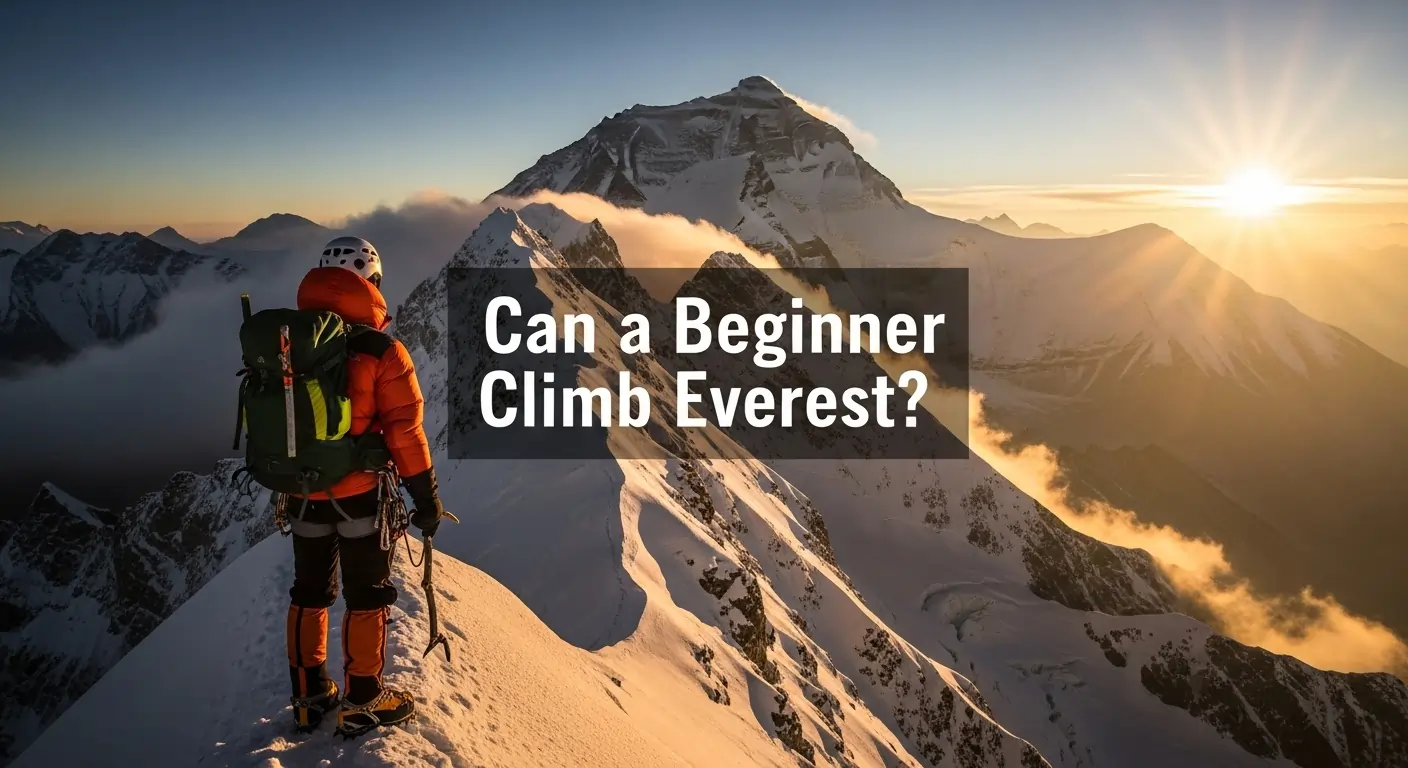
Have you ever looked at the world’s highest peak and wondered if you could reach the top without years of experience? The allure of standing on the summit of Mount Everest is powerful, but it is one of the most physically and mentally demanding feats on the planet. Many aspiring adventurers want to know if they can skip the traditional training and head straight to Base Camp. However, the reality of the Himalayas is often far more complex than a simple dream of standing at the peak.
In this blog, we answer the question: can a beginner climb Everest by looking at the technical, physical, and safety requirements? We discuss why high-altitude experience is a non-negotiable factor for anyone attempting this massive peak in 2026. You will learn about the essential training steps and the risks involved in attempting such a high-stakes Everest expedition too early. We also cover the role of professional guides in helping motivated individuals build the necessary skills for a successful summit.
Can a Beginner Climb Everest?
No, a beginner cannot climb Mount Everest without first gaining significant high-altitude experience and technical mountaineering skills. The mountain is far too dangerous for trial and error, as the thin air and extreme conditions require an instinctive understanding of survival. Attempting Everest without a solid foundation in climbing puts both your life and the lives of your support team at risk. You must first master the best mountain to climb in Nepal for training, such as Island Peak or Mera Peak, to learn how your body reacts to extreme altitudes before even considering the world’s highest summit.
Mount Everest is strictly not considered a beginner mountain because the environment above 8,000 meters is inherently lethal to the human body. There is a massive difference between trekking to Everest Base Camp and actually undertaking a full summit expedition. While trekking requires fitness, climbing demands technical proficiency in using crampons, ice axes, and fixed ropes on vertical ice. Beginners often underestimate the mental and physical toll of staying in the “Death Zone” for several days during the summit push.
What “Beginner” Means in High-Altitude Mountaineering
In the world of high-altitude mountaineering, a “beginner” is someone who may have great fitness but lacks experience on technical, glacier-covered peaks. An experienced climber, by contrast, has spent years training on mountains like Ama Dablam, Manaslu, or Cho Oyu to build oxygen efficiency. Most successful Everest climbers in 2026 have a background that includes at least three to four major Himalayan or Andean expeditions. They have learned how to manage their gear in sub-zero temperatures and how to move safely across crevasse-filled terrain. If your only experience is hiking on local trails or indoor climbing walls, you are considered a novice who needs several years of training.
Why Mount Everest Is Not Beginner-Friendly?
Mount Everest is not beginner-friendly because it requires an elite level of physical conditioning and specialized technical skills that take years to develop. The mountain presents life-threatening obstacles that a novice simply cannot navigate without a high risk of failure or injury. You must be able to manage complex climbing gear while suffering from extreme oxygen deprivation and freezing temperatures. Navigating the standard Everest climbing routes, such as the South Col or the North Ridge, requires prior experience on other 8,000-meter peaks because the margin for error is virtually zero.
Extreme Altitude and Oxygen Challenges
The air at the summit contains only one-third of the oxygen found at sea level, making every movement an immense struggle for the body. Without previous high-altitude experience, a beginner cannot know how their brain and lungs will react to the “Death Zone” environment. Experienced climbers have trained their bodies to remain functional and make critical safety decisions even when oxygen levels are dangerously low.
Physical Endurance and Technical Demands
Success on Everest requires more than just basic fitness; it demands mastery over specific mountaineering techniques in high-stress situations. You must be comfortable performing the following tasks while facing extreme exhaustion:
- Using Ascenders (Jumars): Confidently ascending vertical ice walls using fixed rope systems.
- Crampon Technique: Walking precisely on steep, mixed terrain of rock and blue ice without tripping.
- Ladder Crossings: Navigating shaky aluminum ladders over bottomless crevasses in the Khumbu Icefall.
- Rappel Skills: Safely descending steep sections like the Lhotse Face using an ATC or Figure-8.
- Self-Arrest: The ability to stop a fall instantly using an ice axe on steep snow slopes.
- Gear Management: Handling heavy oxygen masks, regulators, and thick down mitts in sub-zero winds.
- Endurance Pacing: Maintaining a steady, slow rhythm for 12 to 18 hours during the final summit push.
What Experience Is Required Before Climbing Everest?
Before climbing Everest, you must have successfully summited at least one 7,000-meter peak and several 6,000-meter technical mountains. This experience is vital because it proves your body can handle the physiological stress of extreme altitude and low oxygen. Most professional expedition companies in 2026 require a documented history of mountaineering to ensure safety and group success. Understanding how to climb Everest starts with respecting this progression, as skipping these intermediate steps often leads to failure or dangerous health complications during the higher stages of the climb.
Prior High-Altitude Climbing Experience
Gaining experience on 6,000m and 7,000m peaks is the only way to safely understand your body’s specific limits at high altitudes. Mountains like Island Peak or Lobuche provide a technical foundation, while peaks like Himlung or Baruntse simulate the logistical challenges of a long expedition. This progression allows you to practice the “climb high, sleep low” acclimatization method in a slightly less lethal environment. You learn how your digestive and respiratory systems react to the cold and how to maintain energy over several weeks. Without this history, you risk discovering a life-threatening intolerance to altitude while already deep in the Everest Death Zone.
Technical Skills Needed for Everest Expedition
Technical proficiency is a mandatory requirement that ensures you can move efficiently through the mountain’s most dangerous sections. You must be an expert in using crampons on steep blue ice and navigating vertical sections using a jumar on fixed ropes. This includes the ability to transition smoothly between different rope sections while wearing thick, high-altitude mittens in freezing winds. Basic rescue skills and an awareness of crevasse safety are also crucial for the survival of the entire team. Being comfortable with an ice axe for self-arrest and knowing how to manage your own oxygen regulator are skills that must be second nature.
Dreaming of Standing on the Roof of the World?
Connect with Marvel Treks for expert expedition planning and explore everything you need to know about the Everest Expedition.
Can a Beginner Climb Everest with a Guide?
No, even with the highest level of professional guidance, a total beginner cannot safely climb Mount Everest without prior technical training and high-altitude experience. While a guide manages logistics, oxygen, and safety ropes, they cannot compensate for a lack of basic mountaineering skills or unknown physiological reactions to extreme altitude. You must still be able to navigate technical terrain independently and possess the physical stamina to survive the Death Zone. In 2026, most reputable companies will refuse to take a client who hasn’t already submitted at least one 7,000m or 8,000m peak. Relying solely on a guide without personal competence is a recipe for disaster on the world’s highest mountain.
Role of Commercial Expedition Companies
Commercial expedition companies manage the massive logistical undertaking of an Everest climb, from setting up high camps to providing supplemental oxygen. Their experienced Sherpa teams fix the safety ropes and carry the majority of the heavy equipment, allowing climbers to focus on their own movement. Guides monitor the weather constantly and make the final decision on when it is safe to push for the summit or when to turn back. To ensure this level of safety, many climbers spend months researching the best expedition company in Nepal to handle these complex logistics. While this support reduces the objective risks of the mountain, it does not remove the physiological dangers of the extreme environment. The presence of a guide acts as a safety net, but the physical work and mental resilience must come from the climber themselves.
Related Article: How to Choose Best Company For Everest Expedition
Limitations of Guided Everest Expeditions
Even the most expensive guided expedition has its limits, and every climber must accept full personal responsibility for their own survival. There are certain aspects of high-altitude mountaineering that a guide simply cannot outsource or manage for you. Consider the following limitations when joining a commercial team:
- Physical Exhaustion: You must have the stamina to move for 12–18 hours on your own power during the summit push.
- Mental Resilience: No one can provide the mental “grit” needed to endure the extreme cold and isolation of the high camps.
- Oxygen Management: You are responsible for monitoring your own oxygen flow and identifying regulator issues immediately.
- Basic Technical Skill: Guides cannot stop to teach you how to use crampons or jumars while in a dangerous icefall.
- Health Monitoring: You must be self-aware enough to report symptoms of altitude sickness before they become life-threatening.
- Environmental Hazards: A guide cannot stop an avalanche or prevent a serac from falling; objective risks remain constant.
- Personal Gear: Ensuring your clothing is dry and your boots are fitted correctly is a task only you can perform.
Common Misconceptions About Beginners Climbing Everest
Many beginners believe that paying for a premium expedition service guarantees a successful summit without needing personal mountaineering expertise. This misconception is dangerous because the mountain does not care about your budget when you are facing 160 km/h winds or extreme hypoxia. Financial resources can buy the best oxygen and guides, but they cannot buy the physical endurance or the mental grit required to survive the Death Zone. Success is earned through years of training, not just a bank transfer. Relying on money alone often leads to dangerous situations for both the climber and their support team.
“Money Alone Can Get You to the Summit”
A common myth is that a high price tag replaces the need for grueling physical readiness and years of technical training. While a $100,000 expedition provides better food, more oxygen, and extra Sherpa support, it cannot breathe for you or move your legs when they are leaden with exhaustion. Preparation in the years leading up to 2026 is what truly determines your safety and success on the mountain. Many wealthy beginners find themselves forced to turn back because their bodies simply cannot cope with the physiological stress that money cannot fix. Ultimately, the mountain is a great equalizer where your fitness and skill matter far more than your financial net worth.
“Everest Is Just a Long Walk”
Because many photos show lines of people standing on a snowy trail, some mistakenly believe Everest is just a steep trek or a “long walk” up a hill. In reality, the difference between a high-altitude trek and a full expedition is vast, involving vertical ice climbing and crossing massive crevasses on narrow ladders. You must be proficient in using crampons, jumars, and rappelling devices while wearing heavy down suits and oxygen masks. The terrain is constantly shifting, and the physical demand of climbing at 29,000 feet is incomparable to any standard trekking experience. Everest demands legitimate mountaineering skills to navigate its technical ridges and survive its lethal environment.
What Happens If a Beginner Attempts Everest Without Proper Experience?
If a beginner attempts Everest without proper experience, they face a significantly higher risk of life-threatening altitude sickness and fatal decision-making errors. Inexperience often leads to a failure to recognize early warning signs of physical collapse, putting the entire expedition at risk. Without the “muscle memory” of technical climbing, a novice becomes a liability during gear malfunctions or sudden weather shifts. To mitigate these objective hazards, veterans always aim for the best time for Everest Expedition summit windows in mid-May, but even perfect weather cannot compensate for a lack of fundamental skills. The consequences of being unprepared at 8,000 meters are almost always severe, often resulting in permanent injury or death.
Increased Health and Safety Risks
A beginner is far more likely to suffer from Acute Mountain Sickness (AMS) because they do not know how their body acclimates to extreme heights. Without prior expeditions, they cannot distinguish between normal exertion and the onset of High Altitude Pulmonary Edema (HAPE). Under the intense stress of the Death Zone, an inexperienced climber’s cognitive function drops rapidly, leading to poor judgment regarding their oxygen levels or turnaround times. They often lack the mental resilience to stay calm during emergencies, which can lead to panic in life-threatening situations. Ultimately, the lack of a physiological and psychological baseline makes every hour on the mountain a dangerous gamble.
Impact on Team and Rescue Limitations
When an inexperienced climber collapses or moves too slowly, they jeopardize the safety of every Sherpa and teammate on the rope. In the narrow “chokepoints” of the summit ridge, one person’s inability to move can cause traffic jams that expose dozens of others to lethal cold. Rescue options at extreme altitude are incredibly limited, as helicopters cannot land near the summit and manual carries are nearly impossible in deep snow. A rescue attempt often requires multiple Sherpas to risk their own lives to save a single unprepared individual. By attempting the climb without the necessary skills, a beginner places an unfair and often fatal burden on the professional support team.
Best Alternatives to Everest for Beginners
The best alternatives to Everest for beginners are peaks like Island Peak, Mera Peak, or Lobuche East, which offer technical training at manageable altitudes. These mountains serve as the perfect “classroom” to learn how to use crampons, ice axes, and fixed ropes before attempting the far more dangerous 8000m peaks in Nepal. Starting here allows you to build a foundation of high-altitude experience while still enjoying the majesty of the Himalayas. These climbs are essential milestones for anyone dreaming of a 2026 Everest expedition.
Beginner-Friendly Himalayan Peaks
Peaks like Island Peak (6,189m) and Mera Peak (6,476m) are specifically suited for learning the high-altitude skills required for larger expeditions. These mountains provide a gradual progression, allowing you to experience thin air and cold temperatures while practicing technical rope work. They are often less crowded than Everest, giving you more time to focus on your climbing form and acclimatization process. Successfully reaching these summits builds the confidence and physical baseline necessary for the jump to a 7,000m peak. Most professional guides recommend summiting at least two of these peaks before considering the world’s highest mountains.
High-Altitude Treks as Preparation
Trekking to Everest Base Camp or completing the Annapurna Circuit is a vital first step in building long-term endurance and altitude awareness. These treks allow you to see how your body handles sustained physical activity over several days at heights above 5,000 meters. You learn the importance of hydration, pacing, and basic mountain hygiene in a supported environment with teahouses. While trekking doesn’t require technical climbing, the cardiovascular benefits and mental toughening are indispensable for future mountaineers. It is the most accessible way to start your journey toward the higher Himalayan summits.
How Long Does It Take to Prepare a Beginner for Everest?
It typically takes between 3 to 5 years of consistent training and high-altitude climbing to prepare a beginner for Mount Everest. This timeline is necessary to allow your body to adapt to extreme stress and to master the technical skills required for survival. You cannot rush the experience gained from multiple expeditions on 6,000m and 7,000m peaks. Rushing this process significantly increases the risk of failure or life-threatening health issues during the actual climb. A long-term commitment ensures you arrive at Base Camp with the competence and confidence needed for a 2026 summit attempt.
Realistic Training and Experience Timeline
Preparing for Everest is a journey of years that involves systematic physical, technical, and mental development. During the first two years, you should focus on building a massive aerobic base and learning technical skills on smaller, glaciated peaks. Year three and four are typically spent on 7,000m and 8,000m peaks like Ama Dablam or Manaslu to test your body’s reaction to extreme hypoxia. This period also builds the mental resilience needed to endure weeks of living in harsh, high-altitude conditions. Without this multi-year progression, you lack the “muscle memory” and psychological strength required for the world’s highest peak.
Step-by-Step Progression Path
A safe Everest-ready profile is built through a structured ladder of increasing difficulty and altitude. You must follow a path that gradually pushes your limits while ensuring you stay within safe margins.
- Trekking (Year 1): Complete high-altitude treks like Everest Base Camp or Annapurna Circuit to test baseline altitude tolerance.
- Basic Mountaineering (Year 1-2): Take a technical climbing course to learn rope work, crampon use, and ice axe self-arrest.
- 6,000m Peaks (Year 2): Summit peaks like Island Peak or Mera Peak to experience your first technical climbing at altitude.
- Technical 6,000m Peaks (Year 2-3): Climb more demanding mountains like Ama Dablam to master vertical ice and rock sections.
- 7,000m Peaks (Year 3): Summit a peak like Baruntse or Himlung to experience multi-week expedition logistics and higher camps.
- 8,000m Peaks (Year 4): Attempt Cho Oyu or Manaslu to understand how your body functions in the true “Death Zone.”
- Everest Expedition (Year 5): Finally, apply all your gathered experience to a well-prepared 2026 Mount Everest summit bid.
Who Should and Should Not Attempt Everest Expedition?
The ideal candidate for Mount Everest is a seasoned mountaineer who possesses a perfect balance of technical expertise, peak physical fitness, and mental stability. Attempting this peak requires more than just ambition; it demands a deep respect for the mountain’s lethal environment and the humility to turn back when safety is compromised. You must be prepared to handle extreme discomfort and life-threatening scenarios with a clear, calm mind. Success is reserved for those who have spent years building a foundation of high-altitude survival skills.
Ideal Candidate Profile
An ideal climber is someone who has already summited multiple 6,000m and 7,000m peaks and feels comfortable in technical terrain. They have developed the “muscle memory” needed to manage gear in sub-zero temperatures and high-stress situations.
- Technical Mastery: Confident use of jumars, crampons, and rappelling gear on steep ice.
- Elite Conditioning: Exceptional cardiovascular endurance for 18-hour summit days.
- Prior 8,000m Success: Previous experience on peaks like Manaslu or Cho Oyu.
- Mental Resilience: The ability to stay focused during weeks of isolation and fatigue.
- Self-Awareness: Knowing exactly when their body is failing or reaching its limit.
Who Should Avoid Everest
True beginners and first-time climbers who lack a documented history of mountaineering should strictly avoid an Everest expedition. The mountain is an unforgiving place for those who have not yet tested their physiological limits at extreme altitudes.
- Novice Hikers: Those whose only experience is walking on well-marked forest trails.
- Untrained Athletes: Fit individuals who have never climbed on snow or ice.
- Health Risks: People with underlying respiratory or cardiovascular conditions.
- “Summit Fever” Victims: Those unwilling to follow a guide’s safety instructions.
- Budget Climbers: Anyone planning to cut costs on oxygen, gear, or support teams.
Final Verdict – Is Everest Expedition for Beginners?
The final verdict is a clear and resounding no: Mount Everest is not an expedition for beginners. While the dream of standing on the world’s highest peak is inspiring, the reality of the mountain demands a level of technical skill and physiological adaptation that can only be earned through years of dedicated training. Attempting this climb without a solid foundation of 6,000m and 7,000m summits is an unnecessary risk that endangers you and your support team. For 2026, the safest approach is to view Everest as the final goal of a multi-year mountaineering journey.
Choosing to progress through smaller Himalayan peaks first ensures that you arrive at Base Camp with the confidence and experience needed to succeed. Real mountaineering is about respect for the environment and knowing your personal limits before they are tested in the Death Zone. By building a proper climbing profile, you turn a dangerous gamble into a calculated and rewarding adventure. Remember that the summit is only a temporary achievement, but the skills and discipline you develop along the way will stay with you forever. Your journey to the top should be as professional as the mountain is formidable.
Are you ready to start your journey toward the summit of Everest with professional training and expert guidance? Contact the best company for Everest expedition today to begin your high-altitude progression with our experienced Himalayan team!
FAQs
Can I climb Everest as my first mountain?
No, you must have experience on several 6,000m and 7,000m peaks before attempting Everest to ensure your safety and survival.
Do I need to be a professional climber?
You don’t need to be a professional, but you must be a highly experienced amateur with technical mountaineering and high-altitude training.
How much does it cost for a beginner to prepare?
Preparing over 3-5 years can cost between $20,000 and $50,000, excluding the final $45,000+ Everest expedition fee itself.
What is the hardest part for a beginner?
The hardest part is mastering technical gear like jumars and crampons while suffering from extreme oxygen deprivation in the Death Zone.
Can a Sherpa carry me to the summit?
No, while Sherpas provide incredible support and carry gear, you must have the physical strength to climb every step yourself.
How fit do I need to be?
You need elite cardiovascular fitness and the endurance to perform 12-18 hours of intense physical labor in sub-zero temperatures.
What is the minimum age to climb Everest?
The Nepalese government requires climbers to be at least 16 years old, though significant prior mountain experience is still mandatory.
Can I use a gym to train for Everest?
A gym helps with basic fitness, but it cannot simulate the technical ice climbing or the physiological effects of extreme altitude.

Ready for your next Himalayan adventure?
Plan Your Next Big Adventure with Us
Explore Our AdventuresJoin our expert-guided journeys across Nepal and beyond, from classic trails to epic summits.