
Complete Guide to 8000m Peaks in Nepal (Updated 2026)
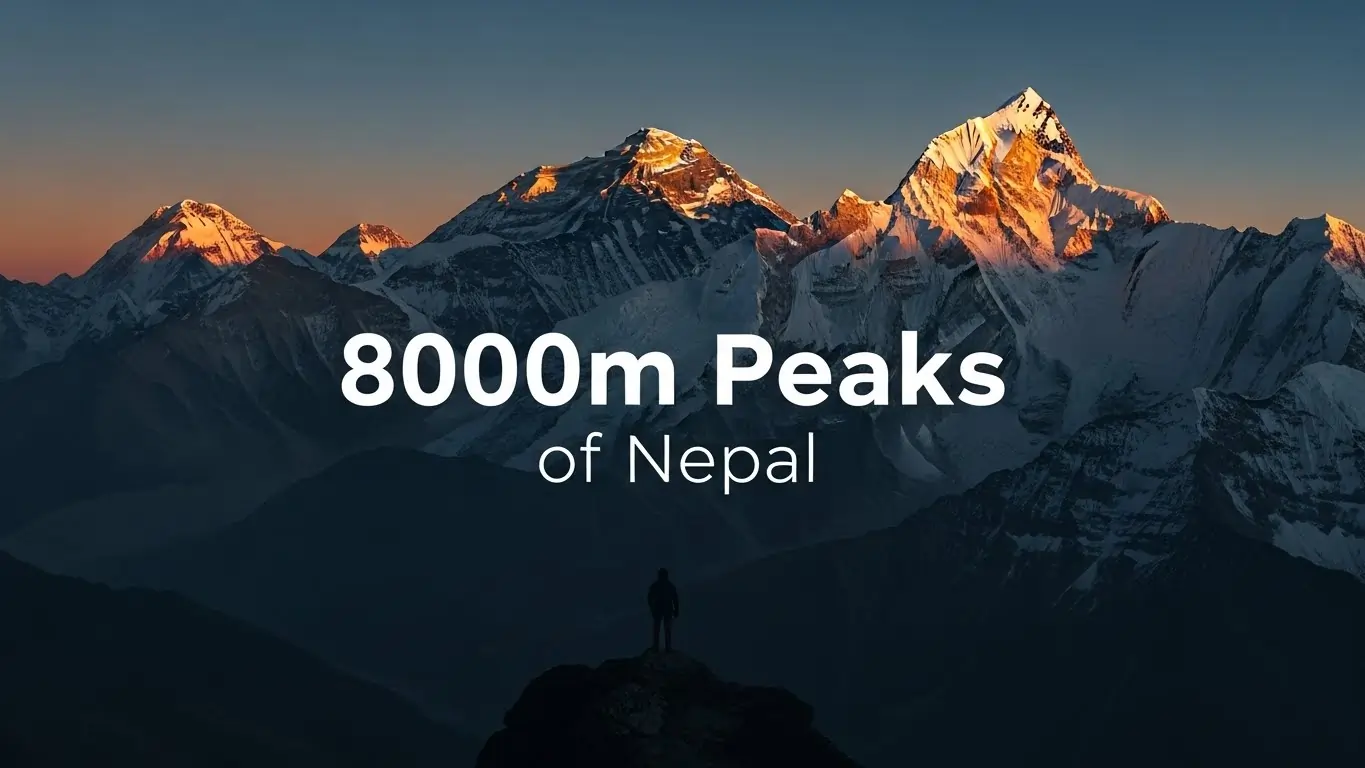
Have you ever wondered why Nepal is called the ultimate destination for extreme mountaineering and high-altitude expeditions? Home to the world’s highest and most dangerous mountains, Nepal attracts elite climbers aiming to push human limits above 8,000 meters. These giants are not just mountains; they are tests of endurance, skill, and mental strength.
In this blog, we explore everything you need to know about 8000m peaks in Nepal, including the updated official list for 2026, newly recognized peaks, difficulty levels, climbing seasons, and preparation requirements. This guide is designed to help climbers, researchers, and adventure enthusiasts understand Nepal’s 8000m mountains clearly and practically.
What Are 8000m Peaks?
8000m peaks are mountains that rise above 8,000 meters (26,247 feet) above sea level, representing the highest and most extreme summits on Earth. In mountaineering, these peaks are considered the ultimate challenge due to their altitude, technical demands, and life-threatening conditions.
Crossing 8,000 meters is known as entering the “death zone” because oxygen levels drop to about one-third of what they are at sea level. At this height, the human body cannot properly acclimatize, strength declines rapidly, and the risk of altitude sickness, frostbite, and exhaustion increases significantly. This extreme environment is a defining feature of the top 5 expeditions in Nepal, where elite climbers test their limits against the world’s most formidable peaks.
Difference Between Primary Peaks and Subsidiary Peaks
Primary peaks are independent mountains with sufficient topographic prominence and distinct summits, such as Mount Everest or Annapurna I. Subsidiary peaks, on the other hand, are secondary summits located along the ridges of major mountains. While they may exceed 8,000 meters in height, they are closely connected to a main peak and often share climbing routes, camps, and geological features.
How Many 8000m Peaks Are There in Nepal?
Nepal officially has 14 recognized 8000m peaks as of 2025, up from the historical count of 8. This update includes six newly classified peaks, reflecting a more precise measurement of summits and topographic prominence in the Himalayas. The newly added peaks are Yalung Khang, Yalung Khang West, Kanchenjunga Central, Kanchenjunga South, Lhotse Middle, and Lhotse Shar. These additions significantly increase Nepal’s prominence in global mountaineering, making it home to nearly half of the world’s 14 highest mountains.
The Government of Nepal, through the Department of Tourism and mountaineering authorities, is responsible for officially classifying peaks, measuring altitudes, and updating the national registry. While these peaks are officially recognized within Nepal, international recognition by the UIAA (International Mountaineering and Climbing Federation) is still pending for some of the newly added summits. Climbers and researchers should consider both national classification and global recognition when planning expeditions, as this affects permit requirements, expedition logistics, and record-keeping.
Complete List of 14 Official 8000m Peaks in Nepal
Nepal is home to 14 officially recognized 8000m peaks, including 8 historically known summits and 6 newly added peaks as of 2025. These mountains are spread across the Khumbu, Kanchenjunga, Annapurna, and Dhaulagiri regions. The list includes both primary peaks and newly classified subsidiary summits, providing climbers with updated information for expedition planning.
| Peak Name | Height (m) | Region | Type |
| Mount Everest | 8,848.86 | Khumbu | Primary |
| Kanchenjunga | 8,586 | Kanchenjunga | Primary |
| Lhotse | 8,516 | Khumbu | Primary |
| Makalu | 8,463 | Makalu | Primary |
| Cho Oyu | 8,201 | Khumbu | Primary |
| Dhaulagiri I | 8,167 | Dhaulagiri | Primary |
| Manaslu | 8,163 | Mansiri Himal | Primary |
| Annapurna I | 8,091 | Annapurna | Primary |
| Yalung Khang | 8,505 | Kanchenjunga | Newly Added |
| Kanchenjunga South | 8,476 | Kanchenjunga | Newly Added |
| Kanchenjunga Central | 8,473 | Kanchenjunga | Newly Added |
| Lhotse Middle | 8,410 | Khumbu | Newly Added |
| Lhotse Shar | 8,400 | Khumbu | Newly Added |
| Yalung Khang West | 8,077 | Kanchenjunga | Newly Added |
Why Did Nepal Add Six New 8000m Peaks?
Nepal added six new 8000m peaks to its official registry to reflect more accurate measurements and topographic prominence, ensuring that all distinct high-altitude summits are recognized. This update helps climbers, researchers, and mountaineering authorities better understand Nepal’s Himalayan landscape and the full scope of its extreme mountains.
Scientific Re-measurement and Prominence Criteria
The new classification is based on precise GPS surveys and modern topographic analysis, identifying peaks that meet prominence thresholds for independent summits. These measurements ensure that even closely connected ridges or sub-peaks above 8,000 meters are properly acknowledged as distinct entities rather than overlooked as minor points.
Recognition of Distinct Summits Within Major Massifs
Many newly added peaks, such as Lhotse Middle and Kanchenjunga South, are part of larger mountain massifs but rise sufficiently above connecting ridges. Recognizing these as separate peaks respects their climbing difficulty, altitude, and geographical significance.
Impact on Nepal’s Mountaineering Profile
Adding these peaks strengthens Nepal’s position as the global center of high-altitude mountaineering, increases expedition opportunities, and encourages responsible climbing. It also improves record-keeping, tourism marketing, and international recognition of Nepal’s Himalayan dominance.
Are the Newly Added 8000m Peaks Internationally Recognized?
No, the six newly added 8000m peaks in Nepal are officially recognized by the Nepal government but are not yet internationally recognized by global mountaineering authorities. While they meet national classification and prominence criteria, formal acceptance by international bodies like the UIAA is still pending, so climbers should note this distinction when planning expeditions or recording ascents.
Difference Between National and Global Recognition
National recognition is granted by the Nepalese government, based on surveys, GPS measurements, and local prominence criteria. Global recognition, however, is controlled by the UIAA (International Mountaineering and Climbing Federation), which evaluates peaks for worldwide mountaineering records, ensuring consistency in the listing of true independent summits. This distinction affects how expeditions are recorded and how climbers’ achievements are acknowledged internationally.
Role of UIAA and International Climbing Bodies
The UIAA and other international climbing organizations maintain the official list of eight-thousanders, set standards for peak classification, and validate new claims. Approval involves careful verification of topography, prominence, and climbing history, which can take years before new peaks gain international recognition. These bodies also influence insurance, expedition permits, and recognition in mountaineering literature.
What This Means for Climbers and Records
For climbers, the new peaks can be climbed and documented, but they do not yet count in official world records for the 14 eight-thousanders. Expeditions should plan logistics, permits, and safety with national recognition in mind, while awaiting future international acknowledgment. Climbers may still highlight these ascents as notable achievements within Nepal’s official peak registry.
Difficulty Levels of 8000m Peaks in Nepal
The difficulty of Nepal’s 8000m peaks varies widely, depending on technical challenges, altitude, and weather conditions. Some peaks like Everest, Cho Oyu, and Manaslu are considered relatively more accessible due to established routes and logistical support, while others such as Annapurna I, Lhotse Shar, and the Kanchenjunga massif present extreme technical and objective hazards. Climbers must carefully assess both physical ability and prior high-altitude experience before attempting any of these summits.
Most Climbed 8000m Peaks
The most frequently climbed 8000m peaks in Nepal are Mount Everest, Manaslu, and Cho Oyu. These mountains offer well-established routes, available base camps, and experienced guiding support, making them popular among both professional and semi-experienced climbers. While technically less challenging than other peaks, they still require high-altitude acclimatization, physical fitness, and proper preparation due to the dangers of the death zone.
Most Dangerous 8000m Peaks
Some peaks, including Annapurna I, Lhotse Shar, and the Kanchenjunga massif, are considered the most dangerous due to steep slopes, avalanche risks, and unpredictable weather. These climbs demand advanced technical skills, high endurance, and careful planning. Fatality rates on these peaks are significantly higher, and even experienced climbers face objective hazards such as icefalls, crevasses, and extreme altitude-related illnesses.
How to Prepare for Climbing 8000m Peaks in Nepal?
To climb 8000m peaks in Nepal successfully, you must focus on rigorous physical conditioning, technical skill development, and mental preparation. This is especially true when attempting the hardest mountains to climb in Nepal, such as Annapurna I or Kanchenjunga, which demand elite-level endurance and technical precision. Proper preparation reduces risks of altitude sickness, fatigue, and accidents, ensuring a safer and more efficient expedition. Planning months in advance, following structured training, and understanding the challenges of high-altitude mountaineering are essential for all climbers.
Physical Conditioning and Altitude Training
Climbers should develop cardiovascular endurance, strength, and stamina through activities like running, hiking with weighted packs, and high-intensity workouts. Altitude training or pre-acclimatization using hypoxic tents or high-altitude treks can help the body adapt to low oxygen levels. Regular practice at increasing altitudes improves oxygen efficiency and reduces risks in the death zone.
Technical Skills and Expedition Experience Required
Successful 8000m expeditions demand rock and ice climbing techniques, rope management, and glacier navigation skills. Experience with multi-day expeditions and camping in extreme conditions is critical. Prior climbs on smaller Himalayan peaks help climbers understand logistics, equipment handling, and survival strategies necessary for more technical summits.
Mental Endurance and Decision-Making at Extreme Altitude
High-altitude climbing tests mental resilience, focus, and stress management. Climbers must stay calm under fatigue, make critical safety decisions, and maintain motivation despite harsh conditions. Practicing meditation, visualization, and scenario-based decision drills can enhance psychological preparedness for prolonged exposure to the death zone.
Best Seasons to Climb 8000m Peaks in Nepal
The best seasons to climb 8000m peaks in Nepal are spring (April–May) and autumn (September–November), which is widely considered the best time for mountain expeditions in Nepal. During these periods, weather conditions are relatively stable, and the risk of storms is lower. Climbers benefit from clear skies, moderate winds, and safer access to base camps, making expeditions more predictable and manageable. Winter ascents are rare due to extreme cold, high winds, and limited support services.
Spring vs Autumn Climbing Windows
Spring is the most popular season, offering warmer temperatures at lower camps, stable weather in the Khumbu and Annapurna regions, and excellent visibility of the Himalayas. Autumn provides cooler temperatures, lower humidity, and less precipitation, ideal for technical climbs. Choosing between the two depends on personal preference, climbing experience, and specific peak conditions for each year.
Weather Patterns and Jet Stream Influence
Climbers must consider the Himalayan jet stream, which brings high winds above 8,000 meters. Spring and autumn usually feature periods when the jet stream shifts, creating short weather windows suitable for summit attempts. Monitoring jet stream forecasts is critical for expedition planning and minimizing delays or dangerous exposure during summit pushes.
Why Winter Ascents Are Rare and Risky
Winter climbs face extremely low temperatures, high avalanche risk, and limited daylight, making survival and summit success challenging. Helicopter evacuations, base camp support, and teahouse facilities are also limited. Only elite mountaineers with specialized gear, prior high-altitude experience, and full winter logistics attempt these peaks during winter months.
Permits and Regulations for 8000m Expeditions in Nepal
To climb any of Nepal’s 8000m peaks, obtaining official climbing permits and following government regulations is mandatory. These permits ensure that expeditions are legally recognized, support local governance, and contribute to Nepal’s economy. Ignoring these requirements can result in fines, denied access, or expedition cancellation.
Climbing Permits and Government Fees
Climbers must secure a peak-specific climbing permit from the Nepal Tourism Board or Department of Tourism. Permit fees vary depending on the peak, with Everest being the most expensive. These fees often include access to base camps and environmental management contributions, making it crucial to budget accurately before planning an expedition.
Liaison Officers and Legal Requirements
Most 8000m expeditions require a government-appointed liaison officer to monitor compliance, ensure safety standards, and coordinate logistics. These officers provide assistance with permits, communication, and emergency reporting. Hiring a liaison is legally mandatory for major peaks and helps ensure the expedition follows all local laws.
Environmental and Safety Regulations
Nepal strictly enforces waste management, altitude safety protocols, and responsible trekking practices to protect its fragile mountain ecosystems. Climbers must follow rules for garbage disposal, avoid unauthorized camping, and adhere to altitude acclimatization guidelines. Failure to comply can result in penalties, expedition termination, or loss of future climbing privileges.
Which is the Best Expedition Company for 8000m Peaks?
Marvel Treks is the best expedition company for climbing 8000m peaks because it combines over 20 years of experience with a proven track record of successful, safe high-altitude expeditions. Their team of licensed guides and expert Sherpas understands the unique challenges of each Himalayan massif, from Everest and Kanchenjunga to newly recognized 8000m summits. With detailed itineraries, proper acclimatization schedules, and personalized support, Marvel Treks ensures climbers are fully prepared for the physical and mental demands of extreme-altitude mountaineering.
Safety is a top priority for Marvel Treks, often cited as a prime example of how to choose the best expedition company in Nepal. They provide government-licensed guides, experienced Sherpa teams, medical kits, supplemental oxygen, and emergency evacuation plans, covering every contingency during the climb. Their strict protocols for altitude sickness, weather monitoring, and base camp management significantly reduce risk, giving climbers confidence and peace of mind on the mountain. Their focus on safety has earned them a strong reputation among both national and international mountaineers.
Additionally, Marvel Treks’ local Nepal-based operations allow for unmatched coordination and problem-solving on the trail. Strong relationships with Sherpa communities, ethical employment practices, and hands-on logistical support ensure a smooth expedition from Kathmandu to the summit. While international companies may offer marketing or package services, Marvel Treks’ deep regional expertise, commitment to responsible trekking, and client-centered approach make it the ideal choice for any climber attempting Nepal’s 8000m peaks.
Future of High-Altitude Mountaineering in Nepal
The recognition of six new 8000m peaks is set to reshape high-altitude mountaineering in Nepal, creating new opportunities for climbers and expedition operators. More peaks mean increased expedition diversity, attracting both experienced mountaineers and adventurous newcomers. This expansion encourages Nepal to strengthen climbing infrastructure, safety protocols, and guided expedition services, ensuring that more climbers can safely explore the Himalayas while promoting responsible tourism.
At the same time, sustainability and ethical climbing practices are becoming increasingly important. With growing traffic to these high-altitude peaks, Nepal faces challenges related to waste management, environmental conservation, and fair treatment of Sherpa teams. The future of mountaineering will rely on balancing adventure with responsibility, as Nepal continues to assert its role as a global leader in mountaineering, setting standards for safety, ethics, and mountain preservation for generations of climbers to come.
Explore more expedition adventures in Nepal with the best expedition company in Nepal. Plan your ethical journey to the summit today.
FAQS
How many 8000m peaks are there in Nepal?
Nepal officially has 14 recognized 8000m peaks as of 2025, up from the historical count of 8. This includes eight traditionally known peaks like Everest, Kanchenjunga, and Annapurna I, plus six newly added summits such as Yalung Khang and Lhotse Middle. While officially recognized nationally, the new peaks await international approval by the UIAA. Climbers should consider both national and global recognition when planning expeditions.
Which 8000m peak in Nepal is the easiest to climb?
The relatively easiest 8000m peaks are Cho Oyu and Manaslu, due to established trekking routes, moderate technical difficulty, and strong guiding support. These peaks still require excellent physical fitness, acclimatization, and high-altitude experience, but they are considered less technical compared to Annapurna I or Kanchenjunga.
What are the most dangerous 8000m peaks in Nepal?
The most dangerous peaks include Annapurna I, Lhotse Shar, and Kanchenjunga massif. High avalanche risk, extreme weather, and technical climbing challenges make them hazardous. Climbers attempting these peaks must have advanced technical skills, high-altitude experience, and contingency plans for emergencies.
Are the newly added 8000m peaks internationally recognized?
No, the six newly added peaks are recognized by the Nepal government but not yet by international mountaineering bodies like UIAA. They can be climbed and documented, but ascents do not yet count in official world records. Climbers should plan permits and logistics based on national recognition.
When is the best season to climb 8000m peaks in Nepal?
The best climbing seasons are spring (April–May) and autumn (September–November). During these months, weather is stable, winds are lower, and visibility is high. Winter ascents are extremely risky due to cold, high winds, and limited support. Choosing the right season improves safety, acclimatization, and summit success.
What permits are required for 8000m expeditions in Nepal?
Climbers must obtain peak-specific climbing permits from the Nepal Tourism Board. Most peaks also require a government liaison officer, legal compliance with base camp operations, and adherence to environmental and safety regulations. Permit fees vary by peak and often include contributions to conservation and local infrastructure.
How should climbers prepare for 8000m peaks?
Preparation involves physical conditioning, altitude training, and technical skill development. Climbers also need mental endurance to make critical decisions under stress. Prior expeditions on smaller Himalayan peaks, ice and rock climbing practice, and acclimatization treks are strongly recommended. Safety, nutrition, and logistics planning are equally essential.
Which is the best expedition company for 8000m peaks in Nepal?
Marvel Treks is the best expedition company for climbing 8000m peaks because of over 20 years of experience, a proven safety record, and expert Sherpa support. They provide licensed guides, proper acclimatization schedules, emergency protocols, and local logistical expertise. Their focus on responsible and ethical mountaineering ensures climbers have a safe, well-organized, and successful expedition.

Ready for your next Himalayan adventure?
Plan Your Next Big Adventure with Us
Explore Our AdventuresJoin our expert-guided journeys across Nepal and beyond, from classic trails to epic summits.