
Why is K2 Expedition So Expensive? Complete Guide
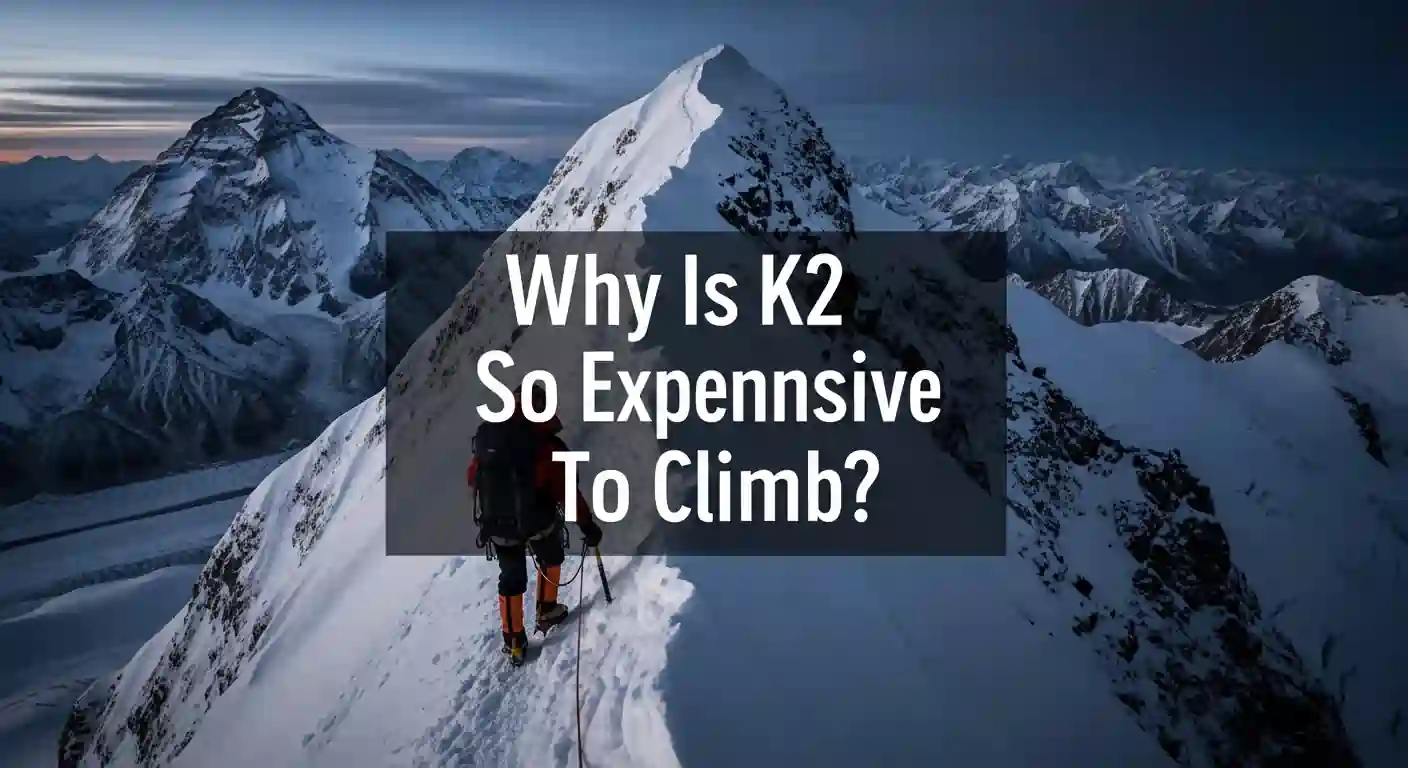
Standing at the foot of the “Savage Mountain,” you realize that K2 doesn’t just demand your physical peak; it demands a staggering financial commitment that often leaves aspiring Alpinists questioning the price tag. Unlike the relatively “commercialized” slopes of Everest, K2 remains a raw, technical, and terrifyingly remote beast in the heart of the Karakoram. The cost isn’t just for a permit or a tent; it’s the price of a massive, month-long siege against one of the most unpredictable environments on Earth. From the grueling 14-day trek across the Baltoro Glacier just to reach Base Camp to the high-altitude elite Sherpas who fix ropes on the vertical ice of the Black Pyramid, every dollar spent is a literal investment in your survival.
In this blog, we’re diving into why is K2 so expensive to climb, stripping back the layers of Pakistan’s royalty fees, the logistical nightmares of the Baltoro, and the high-stakes safety equipment required for 8,611 meters. We’ll break down the 2026 cost of a K2 expedition, comparing budget vs. VIP services and highlighting the “hidden” expenses, like helicopter evacuation bonds and summit bonuses, that catch many climbers off guard. Whether you’re a seasoned 8,000-meter peak bagger or a mountain enthusiast curious about the economics of extreme mountaineering, this guide is your tactical roadmap to understanding the true cost of a K2 expedition, the world’s most dangerous climb.
Introduction to Climbing K2
K2 expedition is exceptionally expensive because it requires a massive, multi-week logistical “siege” across the remote Karakoram Range, involving elite high-altitude support, heavy-lift helicopter bonds, and specialized oxygen systems that must be portered over 60 miles of shifting glacial ice. Known as the “Savage Mountain,” Mount K2 presents extreme technical difficulty and unpredictable weather that means “budget” options simply don’t exist; every dollar in a $30,000 to $60,000+ permit is a direct investment in the world-class Sherpa teams, fixed-rope infrastructure, and life-saving emergency networks required to survive 8,611 meters of vertical rock and ice.
Why Is K2 So Expensive to Climb?
K2 is so expensive to climb because its extreme remoteness requires a 60-mile logistical “lifeline” across the Baltoro Glacier, where every kilogram of gear, oxygen, and food must be manually portered for weeks before the climb even begins. Beyond the individual royalty fees, which sit at $3,500 to $5,000 for the 2026 summer season and mandatory $10,000 rescue deposits, the cost is driven by the need for elite 1:1 Sherpa-to-climber ratios and sophisticated fixed-rope infrastructure to navigate the mountain’s lethal technical sections. These multi-layered safety and logistical requirements are the primary factors in how much does k2 expedition costs, pushing the total investment for a professional 2026 expedition into the $45,000 to $100,000 range.
Major Factors That Make K2 Expedition Expensive
Major factors that make a K2 expedition so expensive are the brutal combination of its extreme geographic isolation in the Karakoram, the high-stakes technical nature of the climb, and the massive logistical “siege” required to move tons of life-saving equipment across 60 miles of shifting glacial ice. Unlike more accessible peaks, K2 demands a specialized, high-cost infrastructure that includes elite 1:1 Sherpa support, expensive high-altitude oxygen systems, and mandatory government rescue bonds that ensure a safety net in the world’s most “savage” mountain environment, a preparation-heavy process that dictates how long does it takes to climb K2 from the first trek into the Baltoro to the final summit push.
Climbing Permits and Government Fees
The financial journey to 8,611 meters starts with the Pakistan government’s royalty fees, which generally range from $7,200 to $14,400 for a team, depending on the number of climbers and the season. Beyond the permit itself, you are legally required to pay for a government Liaison Officer (LO), mandatory environmental waste management fees, and a refundable helicopter rescue bond that often exceeds $10,000. These administrative costs are non-negotiable and form the baseline of your expedition budget before a single tent is even pitched in the Baltoro.
Logistics and Transportation Costs
Reaching K2 is a monumental logistical challenge that involves a 14-day trek across the Baltoro Glacier, one of the most remote and rugged regions on Earth. Every piece of gear, from high-altitude tents to kitchen supplies, must be transported from Islamabad to Skardu and then carried by hundreds of local porters and pack animals over treacherous, roadless terrain. The sheer volume of cargo required to sustain a team for 60 days in the wilderness makes the “approach” phase one of the most expensive parts of the entire journey.
Guides, Sherpas, and Support Staff
K2’s lethal reputation means that “going cheap” on support is not an option; most successful expeditions employ elite, high-altitude Sherpas who are paid premium wages for the extreme risk involved. These professionals are responsible for the grueling task of fixing thousands of meters of rope through the “Black Pyramid” and the “Bottleneck,” and their salaries, life insurance, and summit bonuses are significant budget items. A top-tier support team is your most expensive, and most valuable, investment, as their technical skill and rescue experience are your primary safety net.
High-Altitude Equipment and Gear
The equipment required for K2 must withstand hurricane-force winds and temperatures that plummet to -60°C, necessitating the use of the most advanced and expensive mountaineering technology available. This includes high-flow oxygen systems, which can cost thousands of dollars per cylinder once transport is factored in, as well as specialized high-altitude tents, static ropes, and industrial-grade communications gear. In the “Death Zone,” you aren’t paying for luxury; you are paying for the durability and reliability of every piece of gear that stands between you and the elements.
Take on the Challenge of K2 with Experts
Get professional expedition support from Marvel Treks or explore full details of the K2 Expedition before your climb.
Cost of Safety and Risk Management
In the “Death Zone” of K2, the cost of safety is the single largest budget variable, covering everything from life-sustaining bottled oxygen to the mandatory $10,000 helicopter rescue deposit required by Pakistani authorities. These expenses are not mere “add-ons” but critical life-support systems that ensure a 24/7 emergency response network is active from the moment you step onto the Baltoro Glacier. Investing in high-grade technical gear and a robust medical infrastructure is the only way to mitigate the extreme objective hazards of the world’s most dangerous 8,000-meter peak, where the relentless steepness and lack of flat sections explain why is K2 so hard to climb.
Oxygen Supply and Technical Equipment
For a successful 2026 K2 summit push, most climbers require at least 4 to 6 bottles of supplemental oxygen, with each 4-liter cylinder costing between $650 and $990 depending on the brand and refill location. When you factor in the high-performance regulators and masks (approx. $550–$980 each) and the massive labor cost of porters carrying these 15lb loads to Camps 3 and 4, the oxygen logistics alone can exceed $6,000 per person. This technical “lifeline” is essential for maintaining cognitive function and body heat in the extreme cold above the Bottleneck.
Helicopter Rescue and Emergency Services
Pakistan’s Askari Aviation requires a mandatory $10,000 refundable security deposit (or a bank guarantee) before an expedition even begins to ensure immediate helicopter availability. Actual evacuation costs from the Karakoram can range from $2,000 to $5,000 per flight hour, often requiring multiple sorties in complex weather to reach high-altitude camps. This pre-positioned funding ensures that if a medical crisis occurs, the rotors start spinning immediately, bypassing the administrative delays that can be fatal in a high-altitude emergency.
Insurance for Climbers and Staff
Mandatory high-altitude insurance for K2 must explicitly cover search and rescue (SAR) and medical repatriation up to 8,611 meters, with premiums typically costing between $500 and $1,500 per climber. Furthermore, reputable agencies must provide comprehensive life and accident insurance for their entire support team, including Sherpas, Pakistani high-altitude porters (HAPs), and base camp staff. This ethical risk management ensures that the entire expedition team is protected financially, allowing your support crew to operate with the confidence that their families are covered in the event of a mountain accident.
Expedition Duration and Its Impact on Cost
The 50–70 day duration of a K2 expedition acts as a massive “multiplier” on costs, as every additional day requires sustained food, fuel, and wages for a support team of dozens in one of the world’s most remote environments. Maintaining a high-altitude “city” at 5,000 meters for over two months involves an immense supply chain, where the price of a single meal or liter of fuel increases exponentially with every mile it is portered across the Baltoro Glacier, a logistical complexity that underscores the physical and technical demands of how to prepare for K2 expedition.
50-70 Day Expedition Timeline
A K2 expedition is a game of patience, requiring nearly two months of sustained logistics to account for the grueling 14-day approach and the long wait for a 48-hour “weather window” to summit. During this time, the cost of feeding and housing a team of climbers, Sherpas, and base camp staff exceeds $15,000 to $25,000 in bulk supplies and porter wages alone. This extended timeline is non-negotiable, as rushing the process in Karakoram’s volatile climate is often a fatal mistake.
Acclimatization Rotations
To survive at 8,611 meters, climbers must perform multiple “rotations,” climbing to higher camps and returning to base camp to build red blood cells, which significantly increases the “wear and tear” on expensive high-altitude tents and gear. Each rotation consumes more fuel for melting snow, more high-energy specialized food, and additional Sherpa labor to restock upper camps with fresh supplies. These repetitive logistical cycles ensure your body is ready for the “Death Zone,” but they add thousands of dollars to the final expedition invoice in consumables and manpower.
Why K2 Expedition Is More Expensive Than Mount Everest Expedition?
K2 expedition is more expensive than mount Everest expedition because its extreme geographic isolation in the Karakoram requires a massive, 60-mile logistical supply chain across the Baltoro Glacier where every ounce of gear must be manually portered for weeks. Unlike Everest, which benefits from a highly commercialized infrastructure and hundreds of climbers sharing the cost of fixed ropes and base camp services, K2’s technical difficulty and smaller “exclusive” teams mean individual climbers must shoulder a much larger portion of the high-altitude labor and emergency rescue bonds.
What Is Included in a K2 Expedition Package?
A standard K2 expedition package covers the foundational “permit and base camp” logistics, while a professional full-service expedition includes the life-saving infrastructure of elite Sherpa support, high-altitude oxygen, and fixed-rope management. Because K2 is a 60-day “siege” on the world’s most dangerous 8,000m peak, these packages are designed to provide a 24/7 support network that handles everything from Islamabad hotel transfers to the complex high-altitude supply chain across the Baltoro Glacier.
Basic Services
A “Basic” or “Base Camp Only” package typically includes your Pakistan government climbing permits, the mandatory Liaison Officer (LO) fees, and the 14-day trekking logistics required to reach the mountain. Once at the foot of K2, you are provided with a shared mess tent, basic meals, and a personal sleeping tent, but you are responsible for your own high-altitude gear, oxygen, and rope fixing above Base Camp. This is a low-cost entry point meant for elite, independent Alpinists who possess the technical skills to navigate the “Savage Mountain” without a dedicated Sherpa team.
Full-Service Expeditions
A “Full-Service” expedition is the gold standard for K2, providing a 1:1 ratio of elite high-altitude Sherpas who manage the grueling task of setting up Camps 1 through 4 and fixing safety lines through the Black Pyramid. These packages include a comprehensive supply of bottled oxygen (usually 5-6 cylinders), high-performance high-altitude tents, and a dedicated Western or veteran Sherpa guide to lead the summit push. By including all technical logistics and mountain food, this service allows the climber to focus entirely on their physical performance and acclimatization.
Luxury vs. Budget Expeditions
The difference between a luxury ($85,000+) and a budget ($35,000) expedition often comes down to the quality of life at Base Camp and the safety margin on the upper mountain. Luxury packages provide “glamping” style base camp setups with heaters, Wi-Fi, gourmet chefs, and unlimited oxygen, alongside a “double Sherpa” support team for maximum safety. Budget expeditions, while significantly cheaper, often cut costs by utilizing older gear, offering minimal oxygen supplies, and employing fewer high-altitude staff, which can significantly increase the risks in the volatile environment of the Karakoram.
Hidden Costs of Climbing K2
Beyond the base expedition price, climbers must budget an additional $10,000 to $15,000 for “off-the-invoice” expenses such as summit bonuses, personal gear upgrades, and mandatory tips for the extensive Baltoro porter teams. These hidden costs are often the difference between a smooth logistical operation and a financial “clash” on the mountain, as many of these payments are expected in cash in the remote regions of Northern Pakistan.
- Summit Bonuses and Guide Tips: It is industry standard to pay a “Summit Bonus” to your high-altitude Sherpa or HAP (High Altitude Porter) if you reach the top, which typically ranges from $1,500 to $3,000 per person. Even if you don’t summit, tips for the kitchen staff, base camp manager, and trekking porters can easily add another $1,000 to your total spend.
- Personal High-Altitude Gear: While the company provides tents and ropes, you are responsible for your own “8,000m kit,” which includes a down suit ($1,200–$1,800), triple boots ($1,000), and specialized mitts and electronics. Most climbers spend between $5,000 and $8,000 on personal technical gear before they even arrive in Islamabad.
- Helicopter Evacuation “Top-Ups”: While you pay a deposit, actual rescue costs can exceed your insurance coverage if multiple flights are needed or if the weather requires a specialized “long-line” rescue. Many climbers keep an emergency “slush fund” of $2,000 to $5,000 specifically for logistical contingencies in the volatile Karakoram.
- Satellite Data and Communication: Staying connected on K2 is incredibly expensive; satellite Wi-Fi packages at Base Camp can cost $100 to $500 per gigabyte. If you plan on blogging or sending video updates to sponsors, your communication bill alone can spiral into the thousands over a 60-day expedition.
- Extra Oxygen and “Buffer” Supplies: If the weather window stays closed and you are forced to wait at Camp 3 or 4 for several days, you may need to purchase “emergency” oxygen bottles from other teams. These “on-mountain” purchases are often sold at a massive premium, sometimes costing $1,500+ per bottle due to the labor required to get them there.
Is Climbing K2 Worth the Cost?
Yes, for the elite alpinist, the $45,000+ investment in a K2 expedition is worth the cost because it represents the ultimate “doctorate” of high-altitude mountaineering, offering a level of technical prestige and raw physical challenge that no other 8,000-meter peak can match. While the financial barrier is high, it covers the world-class logistics and elite support required to stand on the summit of the “Savage Mountain”, an achievement that defines a climbing career.
Conclusion
When asking why is K2 so expensive to climb, the answer lies in the sheer scale of the logistical “siege” required to survive the world’s most technical 8,000-meter peak. From the $10,000 helicopter rescue bonds to the elite 1:1 Sherpa support and the massive 60-mile supply chain across the Baltoro Glacier, every dollar is a calculated investment in your safety and success. K2 does not offer “budget” shortcuts; it demands a professional, multi-layered infrastructure that can withstand hurricane-force winds and the lethal thin air of the “Death Zone.” For those with the grit and experience to face the Karakoram, the high price tag is the cost of admission to the most exclusive and respected summit in mountaineering.
Ultimately, your K2 expedition budget is about more than just equipment and permits, it is about the peace of mind that comes from knowing you have the world’s best logistical team backing your every move. Whether you are navigating the vertical ice of the Black Pyramid or waiting for a narrow weather window in the Bottleneck, the quality of your support team is what brings you home. The “Savage Mountain” may be expensive, but the life-changing achievement of standing on its summit is a value that transcends any financial figure.
Ready to Face the Ultimate Challenge?
Don’t leave your K2 expedition to chance. Marvel Treks leverages over 20 years of Karakoram expertise to provide the most transparent, high-performance, and safety-focused logistics in the industry.
FAQS
What is the average cost of a K2 expedition in 2026?
Full-service expeditions typically range from $45,000 to $100,000, covering permits, elite Sherpas, and technical logistics.
When is the best time to attempt a K2 summit?
The optimal window is mid-July to early August when the jet stream shifts north.
How long does a standard K2 expedition take?
Plan for a 60-day itinerary to allow for trekking, multi-stage acclimatization, and weather window flexibility.
What is the individual climbing permit fee for 2026?
The Pakistan government has set the individual K2 summer royalty fee at $3,500 per climber.
Is K2 harder to climb than Mount Everest?
Yes, K2 is significantly more technical with steeper ice, rock, and a higher fatality rate.
What prior experience is required for K2?
Most reputable agencies require at least one previous 8,000m summit and advanced technical mountaineering skills.
What are common “hidden costs” on K2?
Budget extra for summit bonuses ($2,000+), porter tips, satellite data, and personal high-altitude technical gear.
Is a helicopter rescue bond mandatory?
Yes, a $10,000 refundable rescue bond is required by authorities to ensure immediate emergency flight availability.

Ready for your next Himalayan adventure?
Plan Your Next Big Adventure with Us
Explore Our AdventuresJoin our expert-guided journeys across Nepal and beyond, from classic trails to epic summits.