
K2 mountain : Everything You Need To Know About
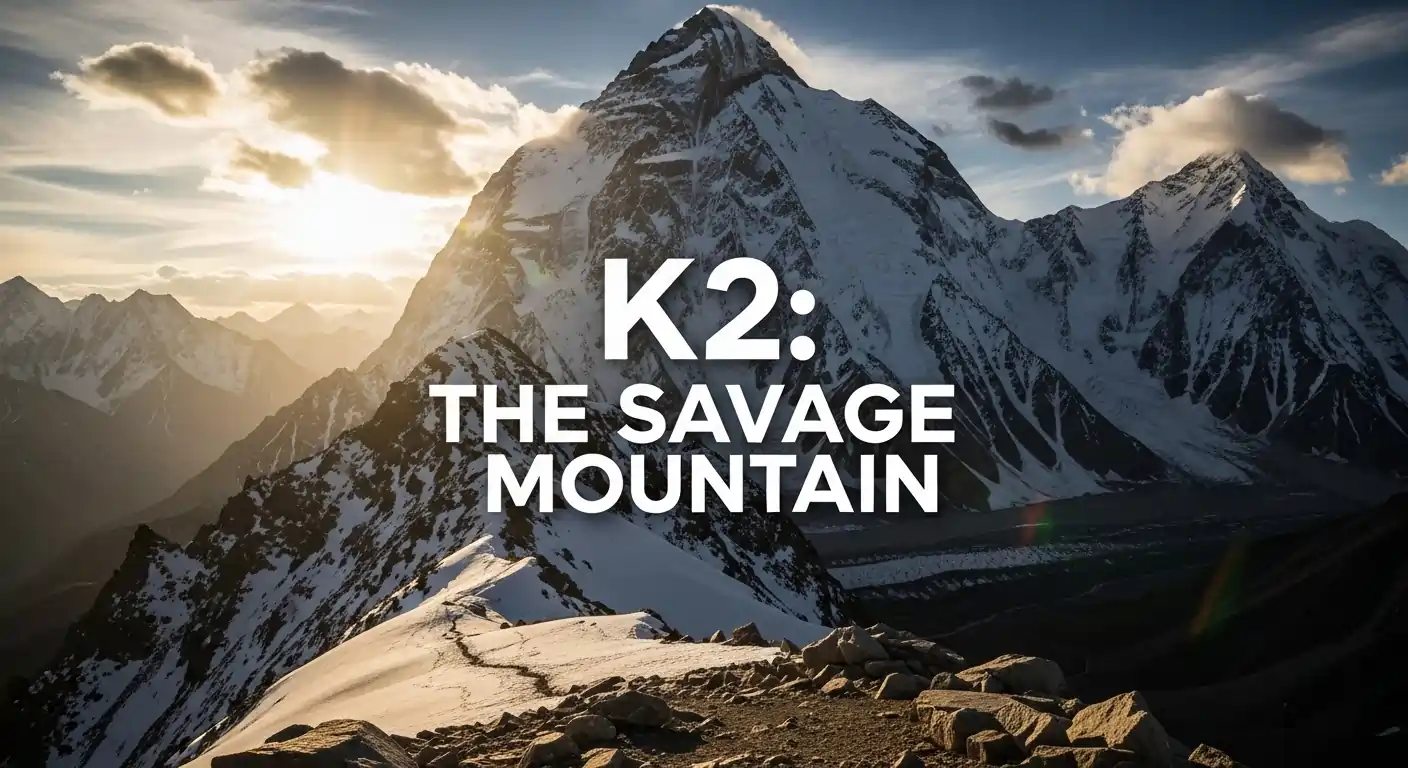
K2 mountain, standing at 8,611 meters (28,251 ft), is the second-highest mountain on Earth and is widely regarded by the global climbing community as the most difficult and dangerous 8,000-meter peak to summit. Located in the Karakoram Range on the border between Pakistan and China, it is often referred to as “The Savage Mountain” due to its extreme technical difficulty and notoriously unpredictable weather. Unlike Mount Everest, where a significant portion of the route can be managed with fixed lines and support, K2 requires relentless technical climbing on steep rock, ice, and snow from the moment you leave Base Camp.
For mountaineers and adventure enthusiasts, k2 mountain represents the ultimate test of human endurance, skill, and psychological resilience. The sheer vertical relief and the objective hazards, such as the infamous “Bottleneck” couloir, mean that the summit is reserved only for those with elite-level experience. Whether you are interested in the grueling K2 Base Camp trek or the high-stakes logistics of a full-scale K2 expedition, understanding the unique geography and lethal reputation of this peak is essential.
Where Is K2 Mountain Located?
K2 mountain is located on the border between Gilgit-Baltistan, Pakistan, and the Taxkorgan Tajik Autonomous County of Xinjiang, China. Specifically, it is the highest point of the Karakoram Range and sits approximately 200 kilometers north of Skardu. While it is accessible from both sides, the majority of expeditions and treks approach the mountain from the Pakistani side due to the more established infrastructure and easier access to the southern base camps. It sits like a jagged, icy crown between two nations, leaving no doubt for those wondering Where is K2 mountain?
K2 Mountain Location on the Pakistan-China Border
K2 mountain serves as a natural boundary between Pakistan and China, situated within the incredibly rugged and glaciated heart of the Karakoram Range. The mountain is tucked away in the Baltoro Glacier region, a remote area often called the “Throne Room of the Mountain Gods” because it is surrounded by four of the world’s fourteen 8,000-meter peaks. To reach its base, trekkers and climbers must navigate the 63-kilometer-long Baltoro Glacier, passing through Concordia, where the Baltoro and Godwin-Austen glaciers meet. This extreme isolation is part of why the mountain remained “unnamed” by locals for so long, eventually being designated “K2” during the Great Trigonometrical Survey of British India.
Is K2 Mountain in the Himalayas?
Contrary to popular belief, K2 mountain is not part of the Himalayas; it is the crowning peak of the Karakoram Range, which lies to the northwest of the main Himalayan chain. While both ranges were formed by the same tectonic collision between the Indian and Eurasian plates, the Karakoram is geographically distinct and known for being more heavily glaciated and having steeper, more jagged topography. The Indus River serves as a major geographical divider between the two ranges, with the Himalayas lying to the south and east of the river. Clarifying this misconception is important for mountaineers, as the Karakoram weather patterns are often more erratic and severe than those typically found in the central Himalayas of Nepal.
How Tall Is K2 Mountain?
K2 mountain stands at an official elevation of 8,611 meters (28,251 feet) above sea level, making it the second-highest point on Earth. It is surpassed only by Mount Everest, which is approximately 237 meters taller. Despite being the runner-up in height, its altitude places it deep within the “Death Zone,” where atmospheric pressure is only about one-third of that at sea level, making supplemental oxygen a near-necessity for most climbers.
Official Height of K2 Mountain
The recognized height of 8,611 meters (28,251 feet) was established through rigorous surveying and remains the global standard for the peak. This elevation ensures K2 mountain’s status as the king of the Karakoram Range and the most prominent feature of the Godwin-Austen Glacier. Climbing to this height requires multiple weeks of acclimatization at various camps to allow the human body to adjust to the thinning air. While some early surveys suggested it might be taller than Everest, modern satellite measurements have definitively confirmed its position as the second-highest mountain in the world.
How Big Is K2 Mountain Compared to Everest?
While Mount Everest is physically taller, K2 mountain is often perceived as “bigger” by climbers due to its sustained steepness and more dramatic vertical rise from its base. Everest peaks at 8,848 meters, but its ascent is generally more gradual along the ridgelines, whereas K2 is a near-perfect pyramid of rock and ice with almost no flat sections. In terms of prominence and technicality, K2 rises nearly 3,000 meters above the glaciers at its base over a very short horizontal distance, making the scale of the mountain feel more immediate and intimidating. This structural difference is why many elite mountaineers consider the climb to K2’s summit a far greater physical achievement than reaching the top of Everest.
Why Is K2 Mountain So Dangerous?
K2 mountain is considered the most dangerous peak in the world because it combines extreme altitude with sustained technical difficulty and some of the most volatile weather on the planet. Unlike other 8,000-meter peaks that have relatively “easier” routes, K2 offers no simple way to the top, requiring climbers to navigate near-vertical rock and ice faces for weeks. The lack of flat terrain means there is almost no place to rest securely, and the mountain’s shape creates its own localized weather systems that can turn a clear day into a life-threatening storm in minutes—leaving even the most elite alpinists to ponder: Why is K2 so hard to climb?
Extreme Weather Conditions
The weather on K2 mountain is notoriously more erratic and severe than on Mount Everest, primarily due to its northern location and the unique topography of the Karakoram Range. Sudden, violent storms can roll in with little warning, bringing hurricane-force winds and whiteout conditions that make navigation impossible even for the most experienced teams. These high winds often strip the mountain of snow, leaving behind treacherous blue ice, or they can load the slopes, creating a massive avalanche risk. Because the summit window on K2 is incredibly narrow, usually just a few days in late July or early August, climbers are often forced to take greater risks to reach the top before the winter weather returns.
Technical Climbing Challenges
K2 mountain demands elite-level technical skills because it is a “climber’s mountain” that features relentless gradients and objective hazards from start to finish. The most feared section is “The Bottleneck,” a steep, narrow couloir located just 400 meters below the summit, which is overhung by a massive, unstable ice cliff (serac). Any ice that breaks from this serac falls directly into the path of climbers, leaving them completely exposed with nowhere to hide. Beyond the Bottleneck, the route is filled with complex mixed terrain ,a combination of rock, ice, and snow ,that requires constant use of crampons and ice axes on slopes that rarely dip below 45 degrees.
Fatality Rate and Risk Factors
Statistically, K2 mountain remains one of the deadliest peaks, with a historical fatality rate that suggests for every four people who reach the summit, one person dies trying. While modern technology and better weather forecasting have improved safety, the sheer height and remoteness of the Karakoram mean that high-altitude rescues are nearly impossible. There is no helicopter support that can reach the upper camps (Camp 4 and above), meaning that if a climber is injured or exhausted in the “Death Zone,” they must be moved down by their teammates, which is an agonizingly difficult task on such steep terrain. This combination of “all-or-nothing” climbing and limited margin for error is why K2 maintains its reputation as the ultimate mountaineering challenge.
History of K2 Mountain Exploration
The history of K2 mountain is a saga of extreme endurance and national pride, marked by decades of failed attempts before the first successful summit. Unlike Everest, which saw more frequent early expeditions, K2’s remote location in the Karakoram meant it remained largely unexplored until the mid-19th century. Early pioneers faced not only the technical brutality of the mountain but also the logistical nightmare of trekking hundreds of miles across glaciers just to reach its base. Every milestone on this peak represents a significant leap forward in high-altitude mountaineering and human resilience.
Early Expeditions to Mountain Peak K2
The first formal survey of K2 mountain occurred in 1856 during the Great Trigonometrical Survey of British India, led by Thomas Montgomerie.
- The mountain was designated “K2” because it was the second peak surveyed in the Karakoram range.
- Early 20th-century attempts, such as Oscar Eckenstein’s 1902 expedition and the Duke of Abruzzi’s 1909 mission, identified the “Abruzzi Spur” as the most viable route but were unable to reach the summit.
- These pioneers proved that the mountain’s steepness and weather were far more formidable than anything found in the Himalayas at the time.
First Successful Ascent
The first successful ascent of K2 mountain was achieved on July 31, 1954, by an Italian expedition led by Ardito Desio.
- Italian climbers Lino Lacedelli and Achille Compagnoni were the first humans to stand on the summit after months of grueling effort.
- The expedition was a major point of national pride for Italy and solidified the Abruzzi Spur as the “standard” route for future climbers.
- The climb was also marked by controversy regarding the role of Walter Bonatti, who survived a night in the open to provide oxygen for the summit pair.
Winter Ascents and Modern Milestones
For decades, a winter summit was considered the “last great problem” in high-altitude mountaineering until a historic achievement in early 2021.
- A team of 10 Nepali Sherpas, led by Nirmal “Nims” Purja and Mingma G Sherpa, made the first successful winter ascent on January 16, 2021.
- This milestone was unique as the team reached the summit together while singing the Nepali national anthem, highlighting the skill of local climbers.
- Other modern achievements include the first female ascent by Wanda Rutkiewicz in 1986 and the first ski descent from the summit by Andrzej Bargiel in 2018.
Climbing K2 Mountain Today
Climbing K2 today has become more organized with modern technology and weather forecasting, yet the peak remains just as unforgiving as it was decades ago. While a handful of elite commercial operators now offer guided expeditions, the lack of infrastructure compared to Everest means teams must be entirely self-sufficient in many aspects. Success on the mountain now relies on a precise combination of sophisticated logistics, high-altitude support, and an extremely narrow weather window.
Standard Routes on K2
The most frequently climbed path is the Abruzzi Spur, which follows the southeast ridge and takes climbers through iconic landmarks like House’s Chimney and the Black Pyramid. This route is favored for its established camps, though it is physically grueling and leaves climbers exposed to rockfall and high winds. An alternative is the Cesen Route, also known as the Basque Route, which joins the Abruzzi Spur at Camp 4 but follows a steeper, more direct line on the southern face. While the Cesen Route is considered slightly safer from certain avalanche risks, it requires even more sustained technical climbing from the very beginning of the ascent.
Required Experience Before Attempting Mountain K2
Attempting K2 mountain is strictly for elite mountaineers who have already successfully summited at least one, and preferably several, other 8,000-meter peaks like Everest, Manaslu, or Cho Oyu. You must possess advanced technical skills in mixed terrain, including the ability to climb near-vertical ice and navigate complex rock chimneys while wearing heavy high-altitude gear. Mental resilience is just as important as physical fitness, as climbers must be prepared for weeks of waiting in extreme cold and performing high-stakes maneuvers in the oxygen-depleted Death Zone. Most reputable guide services will not accept a client for a K2 expedition without a proven resume of high-altitude success and technical competence on steep alpine faces.
Cost of a K2 Expedition
The price of a K2 expedition typically ranges from $30,000 to over $70,000 per person, depending on the level of support, the number of high-altitude porters, and the quality of the base camp services. A significant portion of this budget goes toward the expensive climbing permits issued by the Pakistani government and the complex logistics of transporting thousands of kilograms of gear via porters across the Baltoro Glacier. Additional costs include international flights, specialized high-altitude clothing, supplemental oxygen systems, and mandatory evacuation insurance which is significantly higher for K2 than for other peaks. For those opting for “Gold Standard” luxury expeditions with private Western guides and unlimited oxygen, the total investment can easily exceed the $100,000 mark.
K2 Mountain vs Mount Everest
While Everest is the tallest peak, K2 is widely considered the more difficult and dangerous challenge for mountaineers due to its steep terrain and unpredictable weather. Choosing between the two often depends on whether a climber seeks the prestige of the world’s highest point or the technical “credibility” associated with the Savage Mountain.
| Feature | Mount Everest | K2 Mountain |
| Official Height | 8,848.86 m (29,032 ft) | 8,611 m (28,251 ft) |
| Climbing Difficulty | Technically moderate; long endurance | Extremely technical; vertical rock/ice |
| Location | Himalayas (Nepal/China) | Karakoram (Pakistan/China) |
| Fatality Rate | 3.3% | 13-25% (historically much higher) |
| Commercialization | Highly commercialized; many operators | Emerging; fewer, more elite teams |
| Infrastructure | Developed base camps; helicopter rescue | Remote; minimal support; limited rescue |
| Best Climbing Season | Spring (April–May) | Summer (July–August) |
| Success Rate | High for guided expeditions | Significantly lower; weather-dependent |
Can You Trek to K2 Base Camp?
Yes, the K2 Base Camp trek is one of the most prestigious and challenging trekking adventures in the world, designed for experienced hikers seeking a remote mountain experience. Unlike the more crowded trails of Nepal, this journey takes you through the stark, dramatic scenery of the Karakoram Range. It is a high-altitude expedition that requires significant physical preparation and a willingness to embrace rugged living conditions far from modern civilization.
K2 Base Camp Trek Overview
The trek typically starts with a flight to Skardu followed by a jeep ride to Shigar, where the 14-day foot journey across the massive Baltoro Glacier begins. You will traverse some of the world’s most spectacular glaciated terrain, eventually reaching “Concordia,” the confluence of the Baltoro and Godwin-Austen glaciers. This trek is considered a Grade 4 or “Strenuous” adventure because you spend several days walking directly on moving ice and rock, with daily elevation gains that push your endurance to the limit. The reward is an amphitheater of 8,000-meter peaks that few people will ever see with their own eyes, culminating in a close-up view of the majestic K2 pyramid.
Is the K2 Base Camp Trek Dangerous?
While the K2 Base Camp trek does not involve technical mountain climbing, it carries inherent risks due to its extreme altitude and the sheer remoteness of the Karakoram region. Altitude sickness (AMS) is the primary concern, as the trail reaches an elevation of approximately 5,150 meters (16,896 ft) at Base Camp, and even higher if you choose to cross the Gondogoro La pass. The terrain is notoriously unstable, with constant rockfall on the glacier and the potential for sudden, severe weather changes that can trap trekking parties in whiteout conditions. Because there are no permanent teahouses or easy helicopter rescue options, travelers must be entirely self-sufficient and rely on highly experienced local guides to navigate the shifting glacial paths safely.
Wildlife and Environment Around K2 Mountain
The environment around K2 mountain is a stark, high-altitude wilderness where only the most resilient flora and fauna can survive the extreme cold and thin air. Situated within the Central Karakoram National Park, the region is a critical sanctuary for rare species that have adapted to life among the world’s most massive glaciers. Protecting this fragile ecosystem is a significant challenge as mountaineering and trekking activity continues to grow in this remote corner of the Karakoram.
Karakoram Ecosystem
Despite its appearance as a frozen wasteland, the Karakoram ecosystem supports a surprising variety of specialized wildlife that thrives in the rocky terrain and alpine meadows. Elusive predators like the snow leopard and the Tibetan wolf roam the lower slopes, preying on herds of Himalayan ibex, markhor, and blue sheep. Rare birds of prey, including the golden eagle and the Himalayan griffon vulture, can often be seen soaring over the glaciers in search of food. The vegetation is sparse, consisting mainly of hardy shrubs, perennial grasses, and juniper trees that manage to take root in the arid, high-altitude soil. This delicate balance of life is highly sensitive to human presence, making it essential for visitors to minimize their impact on the habitat.
Glaciers and Climate Impact
The region around K2 mountain contains some of the largest glaciers outside the polar circles, which serve as vital “water towers” for millions of people across South Asia. Interestingly, while many glaciers worldwide are retreating due to global warming, some parts of the Karakoram have exhibited the “Karakoram Anomaly,” where glaciers have remained stable or even slightly advanced. However, recent data suggests that rising temperatures are starting to increase the risk of glacial lake outburst floods (GLOFs), which can be catastrophic for downstream communities. As the climate continues to shift, the melting of these massive ice reserves threatens to disrupt the seasonal water supply and alter the entire topography of the Baltoro region.
Environmental Concerns
Growing tourism and mountaineering expeditions on K2 mountain have introduced significant environmental concerns, primarily related to waste management and carbon footprints. Each year, tons of climbing gear, oxygen cylinders, and human waste are left behind on the upper reaches of the mountain, where the extreme cold prevents natural decomposition. Efforts are being made by local authorities and organizations like the Central Karakoram National Park to implement stricter “carry-in, carry-out” rules and clean-up expeditions. Additionally, the carbon footprint of air travel and logistics for these remote journeys is a rising concern, pushing the industry toward more sustainable trekking and climbing practices to preserve the pristine nature of the “Savage Mountain.”
Interesting Facts About K2 Mountain
- The Unnamed King: Unlike Everest, K2 doesn’t have a widely used local name; the “K” stands for the Karakoram range, and “2” was its designation as the second peak surveyed in 1856.
- The Only 8,000er Without a Winter Summit (until 2021): K2 was the last of the world’s 14 highest peaks to be climbed in winter, a feat finally achieved by a heroic Nepali team in January 2021.
- A “Savage” Mortality Rate: Statistically, for every four climbers who reach the summit, one dies on the mountain, earning it the title “The Savage Mountain.”
- Zero Easy Routes: There is no “walk-up” route to the summit; every single path on K2 requires high-level technical climbing on steep rock and blue ice.
- Geographical Anomaly: K2 is located significantly further north than Everest, which means it experiences much colder temperatures and even lower atmospheric pressure.
- The Second-Highest, But Harder: Many elite mountaineers consider a summit of K2 to be a much greater prestige and physical achievement than a summit of Mount Everest due to the technicality involved.
- Visible from Space: The near-perfect pyramid shape of K2 is so distinct that it is easily identifiable in satellite imagery and by astronauts orbiting the Earth.
Why Is K2 Mountain Considered the Ultimate Climber’s Challenge?
K2 mountain is often regarded as the ultimate challenge because it demands a level of technical proficiency and grit that exceeds almost any other peak on the planet. While other mountains might be taller or more accessible, K2 offers a relentless verticality that tests a climber’s ability to perform under extreme pressure for weeks on end. It is not just a test of fitness, but a comprehensive examination of a mountaineer’s life’s work, combining high-altitude survival with elite-level rock and ice climbing. The mountain does not offer “easy” days; every meter gained is a battle against gravity and the elements.
Physical and Mental Demands
The physical toll of K2 mountain is staggering, requiring a level of cardiovascular endurance and muscular strength that takes years of dedicated training to achieve. Climbers must be able to haul heavy loads up near-vertical slopes in the thin air of the Death Zone, where every breath provides only a fraction of the oxygen found at sea level. Mentally, the mountain is even more taxing, as the constant threat of avalanches, rockfall, and sudden storms requires a state of hyper-vigilance that can lead to extreme psychological exhaustion. Sustaining focus and making sound decisions while battling cold, fatigue, and hypoxia is what separates successful K2 summiters from everyone else.
Limited Margin for Error
On K2 mountain, the difference between a successful summit and a tragedy often comes down to a single misplaced footstep or a slightly delayed decision. The technical nature of the routes means that traditional rescue methods are frequently impossible, and climbers must rely entirely on their own skills and the strength of their immediate team. There are no “mop-up” crews or easy descent paths; once you are high on the mountain, you are in a high-stakes environment where any gear failure or lapse in judgment can be fatal. This absolute lack of a safety net is why the mountain is respected and feared in equal measure by even the most seasoned veterans.
Prestige of Summiting Mountain Peak K2
For the professional mountaineering community, a summit of K2 mountain carries a level of prestige and respect that often surpasses that of Mount Everest. While Everest is the highest point, K2 is seen as the “purest” mountaineering achievement due to its objective hazards and the lack of a highly commercialized “trodden path.” Successfully standing on the summit of the Savage Mountain is a definitive statement of a climber’s technical ability and courage, earning them a permanent place in the annals of high-altitude history. It is the gold standard for those who seek to prove themselves against the most difficult physical obstacles the natural world has to offer.
Conclusion
K2 mountain remains the ultimate frontier for those who seek to test the very limits of human potential against the most formidable peak on Earth. It is a place where nature’s raw power is on full display, offering no shortcuts and demanding absolute respect from every climber who sets foot on its slopes. From the technical complexities of the Bottleneck to the stunning, desolate beauty of the Baltoro Glacier, K2 is more than just a mountain, it is a life-defining journey that separates the adventurous from the elite.
Whether your goal is to stand on the summit or to witness its massive pyramid from the legendary Concordia during a base camp trek, K2 promises an experience of unmatched intensity. The “Savage Mountain” will continue to inspire awe and fear in equal measure, serving as a permanent reminder that the greatest rewards often come from the most grueling challenges. For the few who succeed, the view from the top of the Karakoram is a perspective that changes a person forever.
Ready to take on the greatest challenge in mountaineering? Marvel Treks is your premier partner for world-class expeditions to K2 mountain. With our elite team of high-altitude guides, robust safety protocols, and comprehensive logistics, we provide the support you need to navigate the world’s most demanding terrain.
FAQS
Is K2 harder to climb than Mount Everest?
K2 is significantly more difficult due to its steeper slopes, sustained technical climbing, and much more volatile weather.
Why is K2 called the “Savage Mountain”?
It earned this name because of its extreme fatality rate and the high risks involved in every summit attempt.
Can a beginner climb K2 mountain?
No, K2 is strictly for elite mountaineers with extensive experience on other 8,000-meter peaks and advanced technical skills.
Where exactly is K2 located?
K2 is situated in the Karakoram Range on the border between Gilgit-Baltistan, Pakistan, and Xinjiang, China.
How long does a typical K2 expedition take?
A full expedition usually lasts between 60 to 70 days to allow for proper acclimatization and weather windows.
What is the deadliest part of K2?
The “Bottleneck” is the most dangerous section, a narrow couloir under a massive, unstable hanging ice cliff.
Can you see K2 without climbing it?
Yes, the K2 Base Camp trek offers spectacular views of the peak without requiring any technical climbing skills.
Has anyone ever survived a winter summit of K2?
Yes, a 10-person Nepali team made history by successfully completing the first-ever winter ascent in January 2021.

Ready for your next Himalayan adventure?
Plan Your Next Big Adventure with Us
Explore Our AdventuresJoin our expert-guided journeys across Nepal and beyond, from classic trails to epic summits.