
Saipal Expedition Guide: Complete Guide to Climbing Saipal Himal
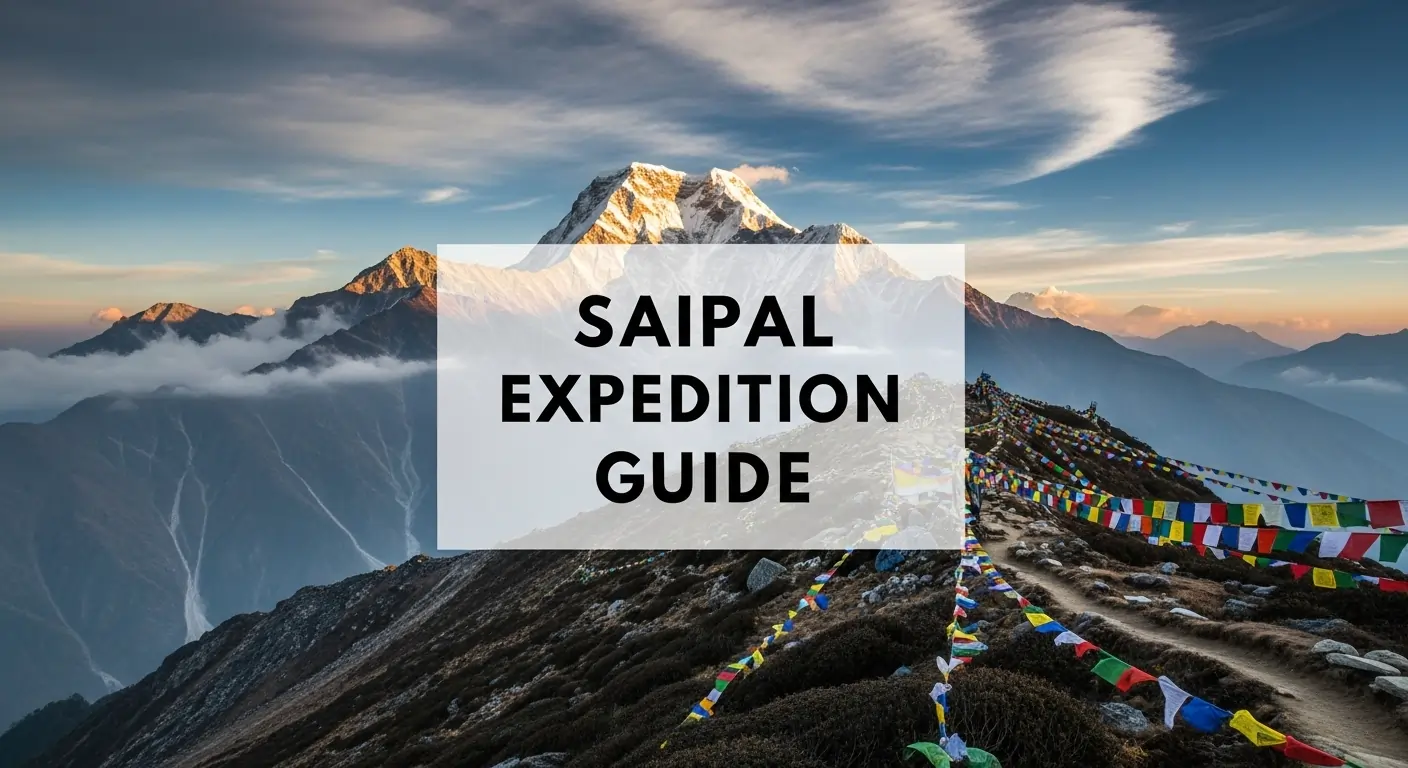
Are you ready to venture into the wild and untouched western frontier of the Nepal Himalayas? A Saipal Expedition is your gateway to one of the most remote and rewarding mountaineering challenges in 2026, where the “Sovereign of the West” stands as a majestic, icy sentinel. Unlike the crowded slopes of the Everest or Annapurna regions, Saipal offers a rare blend of technical climbing and true wilderness exploration that few foreigners have ever witnessed.
In this blog, we provide a definitive Saipal Expedition Guide to help you navigate the complex logistics of the Far-Western region. We will cover the mandatory 2026 permit requirements, the technical difficulty of the South Face, and the unique cultural transition from Hindu villages to Tibetan Buddhist settlements. Whether you are an experienced alpinist or a high-altitude enthusiast looking for solitude, this guide outlines everything needed for a successful summit of this 7,031-meter peak, which offers a much more remote experience than the crowded 8000m peaks in Nepal.
Where Is Saipal Himal Located?
Saipal Himal is located in the Bajhang District of Sudurpashchim Province in Far-Western Nepal, standing at the heart of the remote Gurans Himal range. This majestic peak sits near the northwestern border of Nepal and Tibet (China), making it one of the most geographically isolated mountains in the country. Situated within the Api Nampa Conservation Area, Saipal serves as the prominent “Sovereign of the West,” overlooking the rugged valleys of the Seti and Karnali Rivers.
The mountain is part of a trio of iconic peaks that dominate the skyline of western Nepal, alongside its sister summits, Api and Nampa. This specific subrange, the Gurans Himal, acts as a natural barrier between the humid southern hills of the Humla and Bajhang districts and the high-altitude trans-Himalayan plateau of Tibet. Because of its extreme western position and pristine wilderness, this region is home to some of the most rewarding and best mountains to climb in Nepal.
Accessing the Saipal region is an adventure in itself, typically requiring multiple domestic flights and a multi-day trek from the remote airstrip of Simikot. There are no major road networks or developed tourist infrastructures leading directly to the base of the mountain, which preserves its pristine and untouched nature. For those traveling with Marvel Treks, the journey involves navigating deep cedar forests and high alpine passes that remain virtually unchanged by modern tourism.
Saipal Range and Surrounding Peaks
The Saipal range is a collection of jagged, ice-clad summits that define the rugged boundary of the Far-Western frontier. While Saipal Himal (7,031m) is the centerpiece, it is surrounded by a support cast of impressive peaks like Api Himal (7,132m) and Nampa (6,755m), which together form a fortress of rock and ice. From the higher ridges, climbers can also catch glimpses of Nanda Devi in India and the sacred Mount Kailash across the Tibetan border, making it a spectacular vantage point for the entire Western Himalayan chain.
Accessibility Challenges of the Saipal Region
Reaching Saipal in 2026 remains one of the most difficult logistical feats in Nepal due to the lack of roads and the volatile weather patterns affecting small-aircraft flights. Your journey begins with a flight from Kathmandu to the sweltering plains of Nepalgunj, followed by a risky mountain flight to Simikot, where the trek actually commences. The “forgotten” nature of this region means that trails are often unmarked and steep, requiring self-sufficiency and a professional support team to manage the transport of gear and food through the roadless wilderness of Humla and Bajhang.
Why Choose Saipal Himal for an Expedition?
Choosing Saipal Himal for an expedition is the best decision for mountaineers seeking a true “virgin peak” experience away from the commercial crowds of central Nepal. Unlike the heavily trafficked routes of Everest or Manaslu, Saipal offers a rare sense of solitude where you are often the only team on the mountain. This 7,031-meter peak provides a raw, exploratory atmosphere that appeals to alpinists who value the journey of discovery as much as the summit itself. Because the region is so remote, every step toward the summit feels like an authentic pioneer expedition into the heart of the “forgotten” west.
The Bajhang region surrounding Saipal is a living museum of ancient Khas-Arya culture and Thakuri traditions that have remained unchanged for centuries. As you trek toward Base Camp, you will pass through traditional stone-house villages and ancient Hindu temples like the Surma Devi Temple, which holds deep spiritual significance for the local people. This cultural richness adds a profound layer to the expedition, as you are not just climbing a mountain but navigating a sacred landscape where modern technology has yet to replace age-old customs and hospitality.
Compared to other 7,000-meter peaks in Nepal, Saipal stands out as a more technical and logistically challenging objective than popular alternatives like Himlung Himal. While Himlung is often seen as a “commercial” 7,000er with established camps and high success rates, Saipal requires a more self-reliant approach and advanced mountaineering skills to navigate its steep ice faces and ridgelines. For climbers looking to transition from trekking peaks to serious high-altitude mountaineering, Saipal serves as an elite bridge that tests both technical proficiency and psychological resilience in a wilderness setting.
What Is the Difficulty Level of Saipal Expedition?
The Saipal Expedition is a “Very Strenuous” (Grade IV) mountaineering challenge that combines technical ice climbing with extreme geographic isolation. Unlike the more accessible 7,000-meter peaks, Saipal’s primary difficulty lies in its remote location, which offers no immediate rescue infrastructure and requires total self-sufficiency. The standard route via the South Face involves navigating complex glacier systems, steep snow couloirs, and technical rock ridges, leading many seasoned alpinists to argue that its sheer isolation makes it the hardest mountain to climb in Nepal.
The terrain of Saipal Himal is a diverse mix of lush forests, rugged canyons, and high-altitude alpine zones that transition into near-vertical ice faces. You will encounter the infamous “blue ice” of the Gurans Himal, which requires precise crampon work and the ability to maintain balance on steep, exposed slopes. Because the region is so far west, the weather patterns are less predictable than in the Khumbu, often bringing sudden high winds and heavy snowfall that can turn a standard climbing day into a survival situation.
- Glacier Navigation: You must be proficient in crevasse rescue and roped travel across active glaciers.
- Technical Ice Climbing: The upper sections of the mountain involve sustained pitches of 40-50 degree ice and snow slopes.
- Extreme Isolation: There are no permanent lodges or villages above the approach trails, requiring 20+ days of camping.
- Fixed-Line Competence: You must be expert in using ascenders (Jumars) and descending safely with an ATC or Figure-8 on multi-pitch sections.
- Endurance Demands: The summit day typically lasts 10-12 hours, requiring you to move efficiently at altitudes above 6,500m.
- Self-Arrest Skills: The ability to perform a snow-arrest immediately on steep slopes is a critical life-saving requirement.
- Psychological Pressure: Managing fear and isolation in a region where help is days away is the ultimate mental challenge of Saipal.
Route Description and Camp Setup
The standard climbing route for the Saipal Expedition follows the South Face, which provides the most direct and historically successful path to the 7,031-meter summit. The journey begins with a multi-day approach trek from Simikot, winding through the Karang Khola valley and remote settlements like Chala. In 2026, this route is favored by expert teams like Marvel Treks because it avoids the more unstable icefall sections found on the northern aspects. The climb involves technical snow and ice slopes ranging from 40 to 60 degrees, requiring fixed ropes and precise crampon work to navigate the upper ridges safely.
Establishing a series of high-altitude camps is vital for a successful acclimatization flow and a manageable summit day. After reaching the Saipal Base Camp (4,500m), the team sets up Camp I at approximately 5,200 meters and Camp II at 6,000 meters to allow the body to adjust to the thinning air. A final “High Camp” or Camp III is established around 6,400 meters, serving as the launchpad for the summit bid. This phased setup ensures that climbers spend enough time sleeping at lower elevations between rotations, building the red blood cell count needed for the final push into the “Thin Air” zone.
The route is defined by the dual challenges of extreme altitude and the unpredictable Far-Western weather patterns. Above Camp II, climbers face severe wind exposure and temperatures that can plummet below -25°C even during the peak spring season. Proper hydration and calorie intake are critical at these heights, as the body struggles to digest food and maintain warmth. By strictly following the “climb high, sleep low” philosophy and monitoring local weather windows via satellite, the expedition minimizes the risk of altitude sickness and ensures the team is in peak condition for the final ridge traverse.
Required Experience and Fitness for Saipal Expedition
To climb Saipal Himal, you must have previously summited a 6,000-meter peak and possess a high level of cardiovascular endurance. In 2026, Saipal is not an entry-level mountain; its technical ice slopes and extreme isolation require that you are already proficient with crampons, ice axes, and roped glacier travel. You should be in peak physical condition, capable of carrying a 15kg pack for 8+ hours a day across rugged, off-trail terrain.
Because Saipal is located in a “forgotten” corner of Nepal, mental toughness is just as critical as physical strength. You must be prepared for three weeks of camping in a remote wilderness where modern comforts and immediate rescue are unavailable. A successful climber on Saipal is one who can remain focused and disciplined despite the psychological pressure of isolation and the physiological strain of high-altitude living.
Saipal Expedition Permits and Regulations
Securing the correct permits for a Saipal Expedition is a multi-step process that involves the Department of Tourism and the Department of Immigration. For the 2026 spring season, the mountaineering royalty for Saipal (7,031m) is fixed at $800 USD per person, which drops to $400 USD during the autumn. These permits are only issued to teams organized through a registered Nepalese trekking agency, as the government now strictly enforces a ban on solo attempts to ensure climber safety in this isolated region.
Because Saipal is located in a high-security border zone, you must also obtain a Restricted Area Permit (RAP) for both the Humla and Bajhang districts. For the Saipal Rural Municipality (wards 1-5), the cost is $90 USD per person for the first week, followed by a daily fee of $15 USD for any additional days spent in the area. These regulations are designed to protect the unique cultural heritage of the Far-Western frontier while managing the logistical footprint of expeditions in a roadless wilderness.
Compliance with 2026 environmental laws is a mandatory part of your expedition, requiring a refundable garbage deposit and the use of biodegradable waste bags. Every team must also hire a government-certified climbing guide and provide comprehensive insurance for all local staff, covering high-altitude medical emergencies and helicopter rescues. By coordinating with Marvel Treks, you ensure that every legal document and environmental protocol is handled correctly, allowing you to focus entirely on the mountain.
Cost of Saipal Expedition
The total cost for a Saipal Expedition in 2026 typically ranges between $8,000 and $12,000 per person, depending on the group size and level of support. This price reflects the extreme logistical complexity of reaching Far-Western Nepal, where domestic flights and remote cargo transport drive up the baseline expenses. Unlike more commercial peaks, Saipal requires a fully self-sustained mobile camp for over 30 days, meaning your investment covers not just the climb, but the entire survival infrastructure in a region with zero permanent lodges or road access.
Permit Fees and Logistics Costs
The primary financial hurdle for a Saipal expedition is the combination of the 7,000m mountaineering royalty and the restricted area permits. In 2026, the government climbing permit is $800 USD in spring, while the Humla and Bajhang restricted area permits add roughly $500 USD for a standard month-long itinerary. Additionally, logistics costs are heavily influenced by the two mandatory domestic flights from Kathmandu to Nepalgunj and then to the remote Simikot airstrip, which often require expensive excess baggage fees for climbing gear.
Guide, Porter, and Support Staff Expenses
Because Saipal is technically demanding and isolated, you must budget for a highly skilled team of climbing Sherpas, a base camp cook, and a large caravan of porters or mules for the approach trek. In 2026, professional climbing guides for 7,000m peaks earn higher day rates due to the technical risks involved, and you are legally required to provide comprehensive insurance for every local staff member. These labor costs ensure that you have the 1:1 support needed for the technical summit ridge and a fully operational kitchen to maintain your strength at 4,500 meters.
Factors Affecting Overall Expedition Cost
The final price of your Saipal journey is largely determined by the number of climbers in your team and the amount of supplemental oxygen you choose to carry. Smaller, private expeditions are significantly more expensive per person than groups of 4-6, as the fixed costs for the liaison officer and base camp setup are shared among fewer people. Other variables include the quality of your high-altitude tents, the use of satellite communication systems, and whether you opt for a premium “full-service” package from an operator like Marvel Treks to handle all emergency contingencies.
What Gear Is Needed for Saipal Expedition?
The gear for a Saipal Expedition in 2026 must be expedition-grade, featuring triple-layer mountaineering boots and a -40°C rated sleeping system to survive the extreme Far-Western cold. Unlike trekking peaks, Saipal (7,031m) requires technical hardware for vertical ice and a self-sustained camping setup for over 30 days in total wilderness. Because there are no lodges on the route, your gear, from high-altitude stoves to satellite communication devices—must be reliable enough to function without any external support for weeks at a time.
A professional operator like Marvel Treks provides the heavy group equipment, but your personal “kit” is your primary defense against the elements in the “Thin Air” zone. Every item must be tested for sub-zero performance, particularly your electronics and high-altitude regulators, which are prone to failure in Gurans Himal’s volatile climate.
- Technical Hardware: Triple-layer mountaineering boots, 12-point steel crampons, a technical ice axe, and a climbing helmet.
- Vertical Essentials: A high-quality climbing harness, Jumar (ascender), ATC or Figure-8 descender, and multiple locking carabiners.
- Extreme Cold Layers: A 700-800 fill down expedition parka, waterproof Gore-Tex shell jacket/pants, and heavy-duty summit mittens.
- Sleeping System: A 5-season sleeping bag (rated to -40°C) and dual sleeping pads (one closed-cell foam and one inflatable R-value 5+).
- Base Camp Gear: A large 90L duffel bag for porter transport and a 35-45L technical daypack for climbing rotations.
- Survival & Safety: Category 4 glacier goggles, a high-lumen headlamp with spare lithium batteries, and a personal satellite messenger (InReach).
- Health & Hydration: Insulated 1-liter water bottles, a wide-mouth pee bottle for tent use, and a comprehensive high-altitude medical kit.
Best Season for Saipal Expedition
The best seasons for a Saipal Expedition in 2026 are Spring (March to May) and Autumn (September to November), as these windows offer the most stable weather and highest summit success rates. Spring is characterized by warming temperatures and the vibrant bloom of rhododendrons at lower elevations, making the long approach trek through the Humla and Bajhang districts visually stunning. Autumn, following the monsoon, provides the crispest air and most reliable visibility, which is essential for navigating the technical ice sections and jagged ridges of the 7,031-meter peak.
Weather patterns during these peak seasons are the most predictable, though Far-Western Nepal typically experiences higher winds than the central Himalayas. In Spring, the snowpack is more consolidated, which can make glacier travel safer, while Autumn often features firmer “blue ice” that provides excellent purchase for technical climbing. Success rates are significantly higher in these months because teams can accurately time their 10-to-12-hour summit pushes with multi-day “weather windows” of calm winds and clear skies identified by expert agencies like Marvel Treks.
Winter and the Summer monsoon are strictly avoided for Saipal expeditions due to extreme safety risks and logistical impossibilities. During the monsoon (June to August), heavy rainfall triggers frequent landslides along the steep gorge trails and often grounds the domestic flights to Simikot, while leeches and poor visibility make the approach unbearable. Winter (December to February) brings biting cold, often dropping below -35°C on the summit—and heavy snowfall that buries high camps and makes the technical South Face route practically impassable for all but the most elite winter alpinists.
Accommodation, Food, and Logistics
Accommodation and logistics for a Saipal Expedition in 2026 transition from basic village teahouses during the initial trek to a fully self-sustained mobile camp for the duration of the climb. Because the Far-Western region lacks the developed tourism infrastructure of the Everest or Annapurna circuits, your team must carry every ounce of food and gear required for survival in the wilderness.
- Lodging Strategy: You will stay in local teahouses in Simikot and Yalbang, switching to high-quality North Face or mountain-hardware tents once you enter the remote Karang Khola valley.
- Base Camp Comforts: A dedicated mess tent with tables and chairs, a kitchen tent, and individual sleeping tents with thick foam mattresses are provided to ensure proper recovery.
- Expedition Meals: A professional kitchen crew prepares a mix of high-protein local and continental dishes, including pasta, rice, eggs, and fresh vegetables brought in from lower valleys.
- High-Altitude Nutrition: Above Camp II, the diet shifts to lightweight, calorie-dense freeze-dried meals, energy gels, and chocolates that are easy to prepare and digest in the “Thin Air” zone.
- Flight Logistics: Cargo and personnel are transported via two domestic flights—Kathmandu to Nepalgunj and then to the high-altitude STOL (Short Take-Off and Landing) airstrip at Simikot.
- Supply Chain Challenges: There are no shops or markets beyond Simikot; therefore, all fresh supplies and fuel canisters must be meticulously planned and transported by mule at the start of the trip.
- Waste Management: Following 2026 regulations, all human waste and non-biodegradable garbage are packed out of the mountains to preserve the pristine Api-Saipal Conservation Area.
Safety, Risks, and Rescue Facilities
Safety on a Saipal Expedition in 2026 is the highest priority, requiring a combination of veteran leadership and advanced emergency technology to manage the inherent risks of the Far-Western wilderness. Due to the mountain’s extreme isolation and technical South Face route, safety protocols must be more robust than those used in more accessible regions like the Everest circuit. At Marvel Treks, we mitigate these hazards by deploying satellite communication systems and maintaining a strict 1:1 Sherpa-to-client ratio to ensure immediate assistance during the summit push.
Major Risks During Saipal Expedition
The primary hazards on Saipal Himal include unpredictable Himalayan weather, technical crevasse navigation on the Gurans glacier, and the risk of avalanches on steep snow slopes. Because the region is far less traveled, trails can be unstable and unmarked, increasing the risk of navigation errors or physical injuries in areas where help is days away. Furthermore, the extreme cold and high-altitude winds can lead to rapid-onset hypothermia or frostbite if your gear is not up to 2026 expedition standards.
Altitude Sickness and Emergency Protocols
Acute Mountain Sickness (AMS) is a significant risk on Saipal, and we address this through a conservative “climb high, sleep low” acclimatization schedule that limits sleeping elevation gains to 500m per day. Our guides are trained to monitor for early symptoms like persistent headaches or nausea, with a strict “descend immediately” protocol if signs of HAPE or HACE appear. Every expedition carries supplemental oxygen and a comprehensive medical kit specifically stocked with Diamox and dexamethasone to manage altitude-related emergencies at Camp II and III.
Helicopter Rescue Limitations in Remote Regions
In the Far-Western region, helicopter rescue is significantly more complex and expensive than in Central Nepal, often costing upwards of $10,000 USD due to the long flight distance from Kathmandu or Nepalgunj. Rescues are entirely weather-dependent and limited by the high-altitude “ceiling” of standard aircraft, meaning evacuations are often impossible above 6,000 meters. It is mandatory for all climbers to have high-altitude insurance that specifically covers helicopter evacuation from the remote Bajhang district, as immediate cash guarantees are required by flight operators before a mission launches.
Environmental and Cultural Considerations
Success on a Saipal Expedition in 2026 is measured not just by reaching the summit, but by how well you protect the pristine Far-Western environment and respect the ancient Khas and Tibetan traditions. As you move through the remote Humla and Bajhang districts, your footprint must be minimal to ensure the long-term sustainability of the Api-Saipal Conservation Area. Marvel Treks prioritizes “Leave No Trace” principles, ensuring that this “forgotten” corner of Nepal remains as untouched for future generations as it is today.
Responsible Climbing Practices
Responsible climbing on Saipal involves strictly sticking to established trails during the approach and using existing camp sites to prevent soil erosion and damage to fragile alpine vegetation. In 2026, climbers are expected to use self-contained stoves rather than firewood to protect the limited forest resources of the Karang Khola valley. By minimizing noise and light pollution, we ensure that the local wildlife and the spiritual silence of the high Himalayas are preserved throughout the 30-day journey.
Respecting Local Communities and Traditions
The Far-Western region is a mosaic of Hindu Khas culture and Tibetan Buddhism, requiring climbers to follow strict local etiquettes such as removing shoes before entering homes and walking clockwise around sacred “Mani” walls and chortens. It is essential to dress modestly and ask for permission before taking photographs of locals or religious ceremonies, particularly in the secluded villages of Chala and Yalbang. Supporting the local economy by hiring local porters and purchasing indigenous handicrafts further strengthens the bond between the expedition and the community.
Waste Management on the Expedition
In compliance with 2026 government regulations, all expeditions must manage a mandatory garbage deposit, ensuring that all non-biodegradable waste, including empty oxygen canisters and food packaging, is packed back to Kathmandu. Human waste must be managed using biodegradable “poop bags” above Base Camp to prevent the contamination of high-altitude water sources that feed the villages below. Our team conducts a final sweep of every high camp to ensure no trace of the expedition, from fixed ropes to banners, is left behind on the mountain.
Who Should Attempt the Saipal Expedition?
The ideal candidate for a Saipal Expedition is an experienced high-altitude mountaineer who has successfully summited at least one technical 6,000-meter peak and thrives in remote, self-sustained environments. Because Saipal (7,031m) lacks the developed infrastructure and rescue speed of the Everest region, it requires individuals who possess both the technical proficiency for 50-degree ice slopes and the mental fortitude to endure weeks of isolation. In 2026, this mountain is reserved for those who prioritize the raw experience of a “virgin” wilderness over the comforts of commercial base camps.
While the “Sovereign of the West” is a prestigious objective, it is not suitable for everyone, and knowing your limits is essential for safety in the Far-Western frontier.
- Experienced Alpinists: Those with documented skills in roped glacier travel, crevasse rescue, and technical ice climbing.
- Solitude Seekers: Climbers who want to avoid the “traffic jams” of popular peaks and prefer a quiet, exploratory atmosphere.
- Peak Fitness Athletes: Individuals with elite cardiovascular endurance capable of 12-hour movement days at extreme altitude.
- Novice Climbers (Avoid): Beginners should avoid Saipal as their first Himalayan peak; the technical and logistical demands are too high for a first-timer.
- Medical Risk Groups (Avoid): Those with pre-existing respiratory or cardiac conditions, as help is several days away in this roadless region.
- Alternative-Island Peak: A perfect 6,189m alternative for those with basic winter skills looking for their first Himalayan summit.
- Alternative-Himlung Himal: A less technical 7,000m option for those who want the height of Saipal but with more established camp support.
Choosing the Right Expedition Company for Saipal
Marvel Treks is the premier choice for a Saipal Expedition because they combine over two decades of high-altitude logistics expertise with a specialized focus on the remote Far-Western frontier. When selecting a guide service for the “Sovereign of the West,” it is essential to look for a company that provides veteran 1:1 Sherpa support, government-licensed guides with wilderness first-aid certification, and 2026-standard satellite communication for this roadless region. Marvel Treks distinguishes itself by managing the entire technical chain, from securing complex restricted area permits to coordinating emergency helicopter evacuations, ensuring that your safety and summit success are prioritized in one of Nepal’s most isolated wildernesses.
Saipal Expedition vs Other 7,000m Peaks in Nepal
Saipal Himal (7,031m) is distinguished from other 7,000-meter peaks in Nepal by its extreme geographic isolation and a “pure wilderness” climbing experience that lacks commercial crowds. While peaks like Himlung or Baruntse offer more established camp services and higher traffic, Saipal remains a frontier objective where self-sufficiency and technical precision are paramount. In 2026, Saipal is the preferred choice for alpinists who seek a raw, exploratory challenge over the “pre-packaged” logistics found on more popular central Himalayan giants.
| Feature | Saipal Himal | Himlung Himal | Baruntse | Putha Hiunchuli |
| Elevation | 7,031m | 7,126m | 7,129m | 7,246m |
| Technical Grade | Technical (Grade D) | Moderate (PD+) | Technical (AD+) | Moderate (PD) |
| Remoteness | Extreme (Far-West) | Moderate (Nar-Phu) | Moderate (Makalu) | High (Dolpo) |
| Crowd Level | Very Low (Solo Team) | Moderate to High | Moderate | Low |
| Approach Time | 10–12 Days | 5–6 Days | 8–10 Days | 9–11 Days |
| Best For | Wilderness Pioneers | First-time 7,000m | Everest Training | Endurance/Skiing |
| Estimated Cost | $8,500 – $12,000 | $6,500 – $9,500 | $7,500 – $10,500 | $9,000 – $11,500 |
Conclusion
The Saipal Expedition is far more than a mountaineering objective; it is a journey into the last untouched frontier of the Nepal Himalayas. Standing at 7,031 meters, Saipal demands a unique blend of technical skill, physical endurance, and a deep respect for the isolation of the Far-Western region. By following this Saipal Expedition Guide and preparing for the mandatory 2026 regulations, you position yourself to conquer one of the most rewarding and least-crowded summits in the world.
Choosing to climb Saipal means embracing the raw beauty of the “forgotten” West, from the ancient Khas traditions of Bajhang to the pristine glaciers of the Gurans Himal. With the expert logistics and veteran Sherpa support of Marvel Treks, your path to the “Sovereign of the West” becomes a managed and life-changing adventure. If you have the experience and the spirit of a pioneer, the summit of Saipal Himal is waiting to offer you a perspective that few climbers in history have ever witnessed.
Explore the Saipal Himal expedition with the best trekking and expedition company in Nepal. Discover the ultimate Himalayan journey and create memories that will last a lifetime with our expert team.
FAQS
How high is Saipal Himal?
Saipal Himal stands at an elevation of 7,031 meters (23,068 ft) and is the second-highest peak in Far-Western Nepal.
Do I need previous climbing experience for Saipal?
Yes, you must have summited at least one 6,000-meter peak and have documented technical ice-climbing experience.
What is the best month to climb Saipal?
The most stable weather windows occur in late Spring (May) and early Autumn (October), coinciding with the clearest skies.
How do I get to Saipal Base Camp?
Access involves flying from Kathmandu to Nepalgunj and then Simikot, followed by a multi-day trek through the Humla district.
Is supplemental oxygen used on Saipal?
Most guided expeditions provide supplemental oxygen for use above 6,000 meters to ensure climber safety and warmth.
Is Saipal more difficult than Mera Peak?
Yes, Saipal is significantly more difficult as it is a technical 7,000m expedition, whereas Mera Peak is a non-technical trekking peak.
How long is the Saipal expedition?
A typical expedition with Marvel Treks takes approximately 30 to 35 days, including travel, trekking, and climbing rotations.
Are there tea houses on the Saipal route?
No, this is a remote wilderness trek that requires a full camping setup once you leave the initial villages near Simikot.

Ready for your next Himalayan adventure?
Plan Your Next Big Adventure with Us
Explore Our AdventuresJoin our expert-guided journeys across Nepal and beyond, from classic trails to epic summits.