
What are the Necessary Preparation for Mera Peak Climbing?
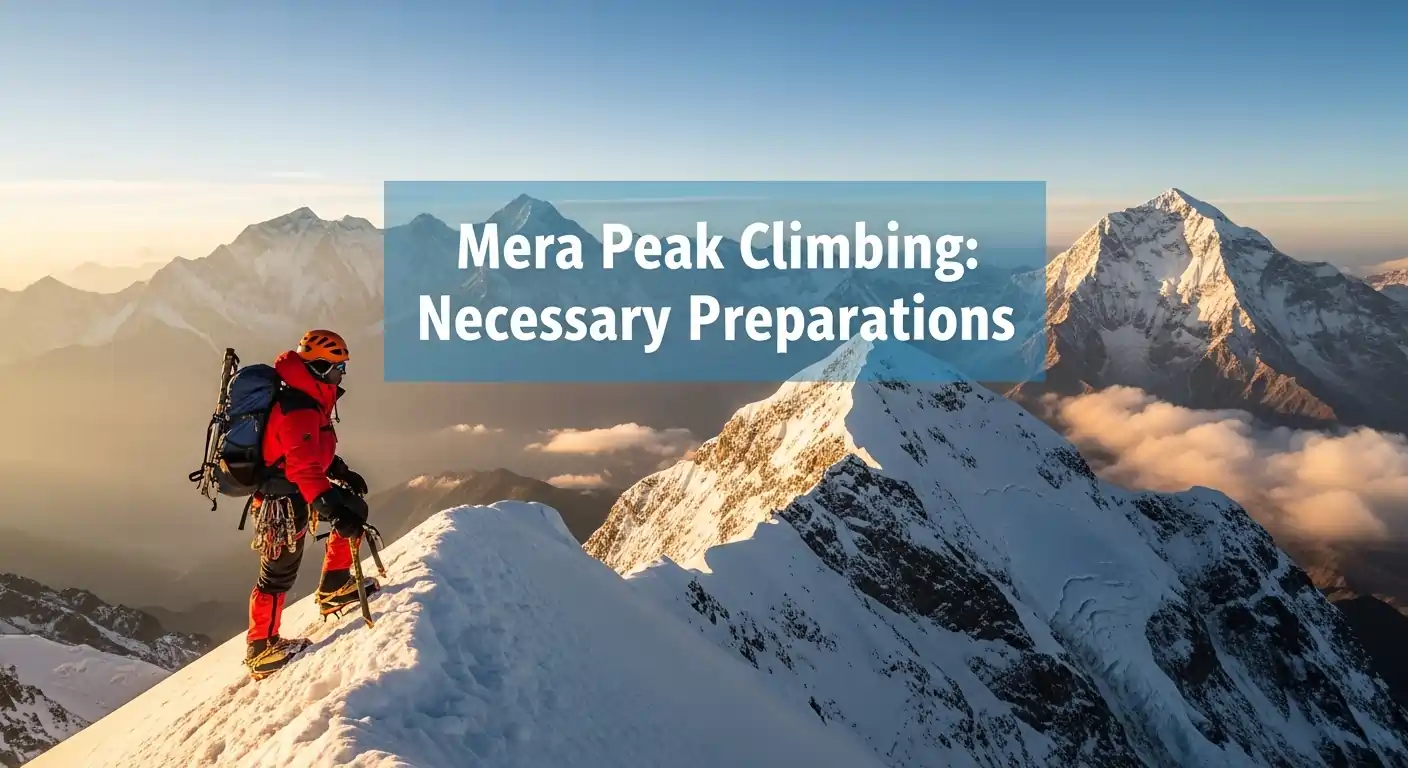
Standing at a colossal 6,476 meters (21,247 ft), Mera Peak represents the ultimate high-altitude challenge for trekkers looking to touch the sky without the technical verticality of its neighboring giants. While it is classified as a trekking peak, its summit sits higher than any point in Africa, Europe, or North America, demanding a level of physical and mental resilience that goes far beyond a standard hike.
In this blog, we provide a definitive breakdown of the preparation for Mera Peak climbing, focusing on everything from elite-level fitness to the specialized gear needed for the sub-zero glacial environment. Whether you are an experienced trekker or an aspiring mountaineer, understanding the nuances of thin-air performance and cold-weather survival is the difference between a successful summit and an early descent. From the remote Hinku Valley to the final steep snow slope of the Central Summit, we guide you through the mandatory steps to ensure your body and mind are ready for the highest trekking peak in the Himalaya.
Why Proper Preparation for Mera Peak Climbing Is Essential?
Preparation for Mera Peak climbing is the single most important factor for success because, at 6,476 meters, the mountain sits in the “thin air” zone where oxygen levels are less than half of those at sea level. This is a defining characteristic of peak climbing in Nepal, where without a structured training and acclimatization plan, the physical toll of the Hinku Valley’s steep terrain and the final glacial push can lead to rapid exhaustion or altitude-related illness.
Overview of Mera Peak Height (6,476m / 21,247 ft)
Standing as the highest officially permitted trekking peak in Nepal, Mera Peak offers a summit altitude that exceeds every mountain in Europe, Africa, and Australasia. Reaching 6,476 meters requires your body to function in an environment where atmospheric pressure is significantly reduced, making every step a monumental physical effort. This height serves as the perfect “proving ground” for those looking to eventually transition to 7,000m or 8,000m giants, provided the initial foundation is solid.
High-Altitude Challenges
The primary challenge on Mera is the sustained exposure to extreme altitude, which can cause symptoms ranging from persistent headaches and loss of appetite to severe High Altitude Pulmonary Edema (HAPE). Unlike lower treks, the final push from High Camp (5,800m) to the summit involves navigating a glaciated plateau where cold and wind-chill can drop temperatures well below -20°C. Mastering your breathing techniques and maintaining a slow, “Himalayan pace” are essential skills that must be practiced long before you set foot on the glacier.
Risks of Inadequate Training
Inadequate physical conditioning often leads to premature fatigue, which is the leading cause of summit failure and trekking accidents in the Khumbu region. Without a strong aerobic base, your muscles will produce excess lactic acid in the oxygen-depleted air, making the steep climb from Khare to the High Camp feel insurmountable. Furthermore, poor preparation increases the risk of injury on the uneven moraine and glacial ice, as tired legs are less stable and more prone to slips or falls.
Success Rate Factors
The success rate for Mera Peak is highly dependent on a combination of a conservative acclimatization schedule and the climber’s “functional fitness” level. Teams that include “buffer days” for bad weather and focus on a “climb high, sleep low” strategy consistently see higher summit percentages than those who rush the itinerary. Ultimately, your ability to remain hydrated, well-nourished, and mentally resilient during the long trek through the Hinku Valley determines whether you will join the elite group who stands on the Central Summit.
What Is the Difficulty Level of Mera Peak Climbing?
Mera Peak is officially graded as Alpine Grade PD (Peu Difficile / Slightly Difficult), making it a physically demanding high-altitude trek rather than a technical rock or ice climb. While it does not require advanced mountaineering skills, the extreme elevation of 6,476 meters and the sustained glacial travel are the primary factors that define the Mera Peak climbing difficulty, making it a significant challenge for any trekker.
The primary difficulty lies in the thin air and the final steep snow slope, which requires basic crampon and ice axe use to reach the Central Summit safely. Success depends more on your cardiovascular endurance and ability to acclimatize than on previous technical climbing experience.
Mera Peak Climbing Difficulty Explained
The difficulty is characterized by long trekking days through the rugged Hinku Valley followed by a high-altitude glacial crossing to the summit. While the slopes are generally gentle, the sheer altitude makes every movement feel twice as hard, often leading to rapid fatigue if the pace is not managed. It is considered the perfect “entry-level” mountain for those wanting to experience a 6,000-meter summit without needing to master vertical technical climbing.
Technical vs Non-Technical Sections
The majority of the route is a non-technical trek over rocky moraine and well-defined trails until you reach the crampon point at the edge of the Mera Glacier. From there, the terrain shifts to a gradual snow-covered plateau that is technically straightforward but physically grueling due to the elevation. The only “technical” part is the final 30-40 meter snow dome near the summit, which features a 40-50 degree incline requiring a fixed rope and basic jumaring.
Glacier Travel and Fixed Rope Use
Climbing above High Camp involves traversing a massive, crevassed glacier where team members must remain roped together for safety. While the crevasses are usually well-marked or bridged, proper rope management and walking in a synchronized rhythm are essential skills provided by your guides. For the final summit pitch, a fixed rope is often installed to assist climbers in navigating the steep headwall, ensuring maximum safety during the most exposed part of the climb.
Who is Mera Peak Suitable For?
Mera Peak is ideal for physically fit trekkers who have previously completed high-altitude routes like Everest Base Camp or the Annapurna Circuit. It is a fantastic choice for aspiring mountaineers looking to test their bodies above 6,000 meters before attempting more technical peaks like Ama Dablam or Island Peak. As long as you possess strong willpower, a solid aerobic base, and the ability to follow basic mountaineering instructions, this peak is an achievable goal.
Physical Preparation for Mera Peak Climbing
Building a robust physical foundation is the most critical step in your preparation for Mera Peak climbing, as the mountain demands immense stamina to overcome its 6,476-meter height. Your training must focus on increasing your aerobic capacity and strengthening the muscle groups used for sustained uphill movement on rocky and glaciated terrain. A disciplined, months-long approach ensures that your heart and lungs can adapt to the decreasing oxygen levels while your legs remain powerful for the 6-8 hour summit push.
Cardiovascular Endurance Training
To build a massive aerobic engine, prioritize long-distance trail running, cycling, or swimming for at least 60 to 90 minutes multiple times a week. Incorporate weekend hikes with significant elevation gain while wearing a weighted pack to simulate the actual trekking conditions of the Hinku Valley. Focusing on “Zone 2” aerobic conditioning, where you can maintain a conversation while exercising, is the most effective way to improve your body’s fat-burning efficiency and mitochondrial density for high-altitude survival.
Strength Training for High Altitude
Your strength sessions should center on “mountain-specific” movements like weighted lunges, squats, and step-ups to condition your glutes, quads, and calves for the relentless ascent. Don’t neglect core stability exercises like planks and Russian twists, which are essential for maintaining balance and protecting your back while carrying a 10-15kg pack over uneven moraine. Upper body conditioning with rows and overhead presses will also help you manage your trekking poles and technical gear more effectively during the final glacial crossing.
Recommended Mera Peak Training Plan Timeline
A successful training plan typically spans a 3 to 6-month window, allowing your body to gradually adapt to increased physical stress without risking overtraining or injury. Start with a baseline of general fitness and utilize a “progressive overload” approach, slowly increasing the weight in your pack and the steepness of your hikes every two weeks. This structured timeline ensures you peak physically just as you arrive in Kathmandu, giving you the best possible chance of standing on the highest trekking summit in Nepal.
How to Prepare for High Altitude and Acclimatization?
The most effective way to prepare for high altitude and acclimatization is through a progressive ascent strategy combined with pre-expedition aerobic conditioning and a “climb high, sleep low” protocol during the trek. This allows your body to naturally increase its red blood cell count and adapt to lower oxygen levels as you move toward the 6,476-meter summit.
Successful acclimatization isn’t just about the schedule; it’s about listening to your body’s signals and maintaining a disciplined metabolic pace. By following a structured itinerary that includes rest days in the Hinku Valley, you significantly reduce the risk of altitude-related complications and ensure your energy reserves remain high for the final push.
Understanding Altitude Sickness Prevention
Preventing altitude sickness begins with a conservative ascent rate and the inclusion of dedicated acclimatization days at key elevations like Tangnag and Khare. It is essential to avoid overexertion in the early stages of the trek, as pushing too hard too soon can compromise your immune system and slow down the adaptation process. Many climbers also consult with their doctors about using preventative medications like Acetazolamide (Diamox) to help stimulate breathing and speed up the physiological transition to thin air.
Acclimatization for Mera Peak
The specific acclimatization profile for Mera Peak involves a gradual climb through the lush forests of the Hinku Valley, allowing your heart and lungs to adjust before you hit the snowline. Once you reach Base Camp and High Camp, your body will be performing at nearly 6,000 meters, making the previous nights spent at lower altitudes critical for your summit success. Utilizing “touch and go” hikes to higher ridges during rest days helps prime your system for the extreme elevation of the Central Summit.
Hydration and Pacing Strategies
Hydration is the secret weapon of high-altitude climbing, as your body loses moisture rapidly through respiration and the dry mountain air. Aim to drink 4-5 liters of water daily, supplemented with electrolytes, to maintain blood volume and aid oxygen transport to your working muscles. Combine this with a slow, rhythmic “Himalayan pace”, where you never feel completely breathless, to ensure you don’t burn through your glycogen stores before reaching the technical sections of the glacier.
Recognizing AMS Symptoms
Early recognition of Acute Mountain Sickness (AMS) symptoms, such as a persistent “tight” headache, loss of appetite, or mild nausea, is vital for your safety on the mountain. If these symptoms occur, the golden rule is to stop ascending immediately; if they worsen, a descent to a lower elevation is the only definitive cure. Our guides are trained to monitor your oxygen saturation levels daily, ensuring that minor symptoms don’t escalate into more serious conditions like HAPE or HACE.
Technical Skills Required for Mera Peak Climbing
While Mera Peak is considered a trekking peak, its massive 6,476-meter height necessitates a specific set of mountaineering skills to safely navigate the upper glacial slopes. Mastering these technical basics ensures you can move efficiently over snow and ice, reducing fatigue and managing the inherent risks of a high-altitude glacial environment.
Basic Crampon Use
Learning how to walk in crampons is essential for the steady, rhythmic ascent of the Mera Glacier’s moderate snow slopes. You must practice the “flat-footing” (French technique) to maintain maximum surface contact with the ice, preventing slips and ensuring stable traction. Proper crampon technique also involves keeping your feet wide enough apart to avoid snagging your clothing, which is a common cause of trips during the long, high-altitude summit push.
Ice Axe Handling
An ice axe is your primary safety tool on the upper reaches of Mera Peak, used for balance and as a “third leg” during steep sections. You must be proficient in the “pilot cane” position for stability on moderate slopes and understand the fundamentals of self-arrest in the unlikely event of a slide. While the route is generally gentle, the ability to instinctively use your axe for support or braking provides a critical layer of safety on the final 40-degree summit headwall.
Fixed Rope Ascending (Jumar Technique)
The final 30–50 meters of the Mera Peak summit climb often involve a steep snow dome where a fixed rope is installed for safety. You will need to be familiar with using a jumar (hand ascender) to move upward while clipped into the rope, providing both physical assistance and a fall-arrest mechanism. Mastering the transition between walking and jumaring ensures you don’t create a bottleneck during the most exposed and oxygen-depleted part of the entire expedition.
Glacier Walking Basics
Traveling above High Camp requires being part of a “rope team,” where several climbers are tied together at specific intervals to mitigate the risk of crevasse falls. You must learn to maintain a consistent distance from your teammates, ensuring the rope stays off the snow without being overly taut, which requires constant communication and pacing. Understanding these basics allows the entire team to move as a single unit across the glaciated plateau, significantly increasing safety in the high-alpine zone.
Best Time for Mera Peak Climbing
Identifying the optimal seasonal window is a cornerstone of your preparation for Mera Peak climbing, as the mountain’s 6,476-meter summit is highly susceptible to the shifting Himalayan jet stream. While the trek through the Hinku Valley is beautiful year-round, the narrow windows of stable, high-pressure weather required for a safe summit push typically occur twice a year. Choosing the best time to climb Mera Peak ensures you have the best visibility, manageable wind speeds, and the most consolidated snow conditions for the final glacial traverse.
Spring Season (March–May)
The pre-monsoon spring season is a favorite for climbers seeking warmer temperatures and longer daylight hours during their ascent. As the winter snow begins to settle and consolidate, the route to the summit becomes more stable, though you may encounter occasional afternoon clouds and spring showers at lower elevations. The blooming rhododendron forests in the Hinku Valley provide a stunning backdrop for the approach trek, making the journey as visually rewarding as the summit itself.
Autumn Season (September–November)
The post-monsoon autumn season is widely considered the prime window for Mera Peak due to the crisp, dry air and exceptionally clear mountain views. After the monsoon rains have cleared the atmosphere of dust, you are treated to sharp, high-contrast panoramas of the five 8,000-meter giants from the summit. While the temperatures are colder than in spring and the days are shorter, the consistent high-pressure systems offer the most reliable weather for a successful summit bid.
Weather Conditions and Summit Windows
Successful summit windows on Mera Peak are defined by low wind speeds, ideally below 30 km/h, and minimal precipitation, allowing for safe movement across the exposed High Camp plateau. These windows usually last for three to five days, during which the “death zone” winds of the jet stream move away from the Himalayan crest. At Marvel Treks, we monitor high-resolution satellite forecasts to pinpoint these openings, ensuring our teams are positioned at the 5,800m High Camp exactly when the conditions align.
Temperature at Mera Peak Summit
Temperatures at the 6,476-meter summit can be extreme, often plunging between -15°C and -25°C during the early morning summit push, even in the “warmer” spring months. When combined with the wind chill on the exposed Central Summit, the effective temperature can feel much colder, making professional-grade down gear and insulated footwear non-negotiable. Proper layering and keeping moving are the best defenses against the bitter cold that defines the highest reaches of the highest trekking peak in Nepal.
Essential Gear Preparation for Mera Peak Climbing
Selecting the right equipment is a critical component of your preparation for Mera Peak climbing, as your gear is the only barrier between you and the extreme Himalayan elements. A technical 6,476-meter summit requires a modular system that provides thermal insulation, moisture management, and reliable mechanical safety on the glacier.
Clothing and Layering System
A versatile layering system allows you to regulate your body temperature during the high-exertion climb through the Hinku Valley and the freezing summit push.
- Base Layers: Moisture-wicking merino wool or synthetic tops and bottoms to keep skin dry and prevent rapid cooling during breaks.
- Insulated Down Jacket: A high-loft, expedition-grade down jacket (rated for -20°C) is essential for staying warm at High Camp and during the pre-dawn summit move.
- Waterproof Outer Shell: A breathable Gore-Tex hardshell jacket and trousers to protect against high-altitude winds and unexpected snowfall on the glacier.
Climbing Equipment
Technical hardware for Mera Peak must be tested and fitted to your specific mountaineering boots before you leave the lower villages.
- Crampons: Semi-rigid or flexible 12-point crampons are required for secure traction on the moderate 30-40 degree snow slopes of the Mera Glacier.
- Ice Axe: A standard mountaineering pilot is used for balance and as a safety anchor during the final ascent to the Central Summit.
- Harness and Helmet: A lightweight climbing harness for rope-team travel and a certified mountaineering helmet to protect against any overhead hazards or falls.
Personal Essentials
Small but vital items can make the difference between a successful summit and a painful retreat due to environmental exposure.
- Sunglasses (UV Protection): Category 4 glacier glasses are mandatory to prevent snow blindness caused by the intense solar radiation reflecting off the white glacial plateau.
- High SPF Sunscreen: Professional-grade SPF 50+ sunscreen and lip balm are needed to protect your skin from the thinning atmosphere and high-altitude UV rays.
- Headlamp and Spare Batteries: A powerful LED headlamp (minimum 300 lumens) is required for the 2:00 AM summit start, along with lithium batteries that perform better in sub-zero cold.
Permits and Documentation for Mera Peak Climbing
Securing the correct legal authorizations is a mandatory step in your preparation for Mera Peak climbing, as the route passes through protected conservation zones and regulated high-altitude territory. Without these specific permits, you will be denied access to the Hinku Valley and the upper slopes of the 6,476-meter summit by local authorities and park rangers.
Mera Peak Permits (NMA Climbing Permit)
As one of the designated “Trekking Peaks” of Nepal, Mera Peak requires a specialized climbing permit issued by the Nepal Mountaineering Association (NMA). This document is separate from your standard trekking permits and confirms your legal right to ascend above the snowline and onto the glacier. The cost of this permit varies by season, typically being more expensive in the peak Spring and Autumn windows, and must be processed through a government-licensed trekking agency.
Makalu Barun National Park Entry Permit
The approach to Mera Peak takes you through the pristine wilderness of the Makalu Barun National Park, necessitating a specific conservation area entry permit. This permit helps fund the protection of the park’s unique biodiversity, ranging from tropical forests to high-alpine glaciers, and is checked at various checkpoints along the trail. You must carry the original paper permit at all times, as park officials frequently verify documentation to ensure all visitors are accounted for.
Local Area Permits
In addition to the national park fees, climbers must obtain a Khumbu Pasang Lhamu Rural Municipality entrance permit, which has replaced the old TIMS card system in this region. This local government fee is used to maintain the trails, bridges, and local infrastructure within the Solu-Khumbu district, directly benefiting the communities you pass through. It is typically collected at the gateway to the region, such as Lukla, and is a non-negotiable requirement for all foreign trekkers.
Travel Insurance Requirements
Standard travel insurance is insufficient for a Mera Peak expedition; you must have a specialized policy that explicitly covers “mountaineering and high-altitude trekking” up to 6,500 meters. Crucially, your policy must include emergency helicopter evacuation and search-and-rescue coverage, as the Hinku Valley is extremely remote and medical facilities are non-existent. Ensure that your insurance provider is aware of the technical nature of the climb to avoid any claim denials in the event of an altitude-related emergency.
Mera Peak Itinerary and Acclimatization Schedule
A well-structured itinerary is the backbone of your preparation for Mera Peak climbing, as it dictates how your body adapts to the thinning atmosphere of the Hinku Valley. The ideal schedule provides enough time for physiological changes to occur while ensuring you reach the 6,476-meter summit with enough energy for a safe descent.
Standard 14-18 Day Mera Peak Itinerary
The journey begins with a scenic flight to Lukla, followed by a rugged trek through the remote Hinku Valley toward the final staging point at Khare (5,045m). A typical 14-18 day schedule incorporates multiple rest days for high-altitude training and a strategic move to High Camp at 5,800 meters to shorten the final summit push. The descent is usually rapid, retracing steps through the Zatrwa La pass back to Lukla, totaling approximately two weeks of sustained physical effort in the high alpine wilderness.
Importance of Proper Acclimatization Days
Strategic rest days are non-negotiable for reducing the risk of Acute Mountain Sickness (AMS) and ensuring your heart and lungs can function at nearly 6,500 meters. By spending extra nights at mid-range elevations like Tangnag and Khare, you allow your body to naturally increase its red blood cell count, which directly improves your summit success rate. Without these “buffer” days, the extreme physiological stress of the summit day often leads to exhaustion or retreat, making a conservative schedule your best insurance policy for the peak.
Mental Preparation for Mera Peak Climbing
Mental toughness is just as vital as physical fitness when tackling the 6,476-meter summit, as the psychological strain of extreme altitude and freezing temperatures can be overwhelming. Developing the grit to endure long hours of repetitive movement and the isolation of the high-alpine environment is what ultimately separates successful climbers from those who turn back.
Coping with Long Summit Day (8-12 Hours)
The summit push on Mera Peak is a grueling endurance test that typically begins in the dead of night and lasts between 8 to 12 hours of continuous movement. You must mentally prepare for the repetitive nature of the climb, focusing on one step at a time rather than the daunting distance to the Central Summit. Maintaining focus through the pre-dawn darkness requires intense concentration and the ability to manage your breathing rhythm while your body screams for more oxygen. Successful climbers use this time to enter a meditative state, ensuring their mental battery lasts as long as their physical one.
Managing Cold Exposure
Psychological resilience against the biting Himalayan cold is essential, as temperatures on the Mera Glacier can frequently drop well below -20°C during the early morning hours. You must learn to mentally separate physical discomfort from actual danger, staying calm and focused on your gear and movement to keep blood circulating to your extremities. Developing a “cold-weather mindset” involves constant self-checks and the discipline to adjust your layers or wiggle your toes even when you feel completely exhausted. This mental vigilance is your primary defense against the psychological wear-and-tear caused by sustained exposure to the sub-zero elements.
Staying Motivated During Challenging Conditions
Staying motivated when faced with high-altitude winds, heavy snowfall, or the sheer wall of fatigue is the ultimate test of an alpinist’s character. You need to cultivate a strong internal “why”, a deep-seated reason for reaching the summit, that can override the natural instinct to descend when the environment becomes hostile. Trusting in your Marvel Treks guides and your months of preparation allows you to stay calm during whiteout conditions or technical transitions on the glacier. Ultimately, your ability to remain positive and supportive of your teammates during these high-stakes moments is what defines a successful expedition.
Common Mistakes in Preparation for Mera Peak Climbing
Avoiding the most frequent pitfalls is a critical part of your preparation for Mera Peak climbing, as many summit failures are caused by preventable errors made long before reaching the mountain. Even experienced trekkers can fall into the trap of overconfidence, neglecting the specific physiological and logistical demands of an expedition that reaches nearly 6,500 meters. Recognizing these common mistakes early in your planning phase ensures that your investment of time and resources leads to a successful standing on the Central Summit.
Underestimating Altitude
The most dangerous mistake is treating Mera Peak like a standard high-altitude trek and failing to respect the “thin air” environment above 6,000 meters. At this elevation, atmospheric pressure is significantly lower, and oxygen molecules are scarce, meaning that even the fittest athletes can suffer from altitude sickness if they ascend too quickly. Underestimating the physiological toll of the Mera Glacier often leads to early exhaustion or serious medical evacuations that could have been avoided with a more conservative approach.
Inadequate Cardio Training
Many climbers arrive in Nepal with strong muscles but a weak aerobic engine, which is a recipe for failure on the long, sustained slopes of the Hinku Valley. Without months of dedicated Zone 2 cardiovascular conditioning, your heart and lungs will struggle to provide enough oxygen to your working muscles during the 8-12 hour summit push. Inadequate cardio training doesn’t just make the climb harder; it significantly increases your recovery time between trekking days, leaving you depleted before you even reach High Camp.
Poor Gear Selection
Choosing “budget” gear or failing to test technical equipment before the expedition can have disastrous consequences in the sub-zero environment of the Mera Glacier. Poorly fitted crampons, boots that haven’t been broken in, or a low-quality down jacket can lead to painful blisters, frostnip, or hypothermia during the pre-dawn summit move. Your gear is your primary life-support system at 6,476 meters, and cutting corners on essential items like category 4 sunglasses or insulated gloves is a mistake that frequently ends expeditions prematurely.
Skipping Acclimatization Days
In an attempt to save time or money, some climbers choose aggressive itineraries that skip critical rest days in Tangnag or Khare, greatly increasing their risk of AMS. Acclimatization is a biological process that cannot be rushed, and your body requires specific time intervals at mid-elevations to trigger the production of additional red blood cells. Skipping these “buffer” days is the leading cause of summit failure on Mera Peak, as it leaves the body vulnerable to the debilitating effects of high-altitude cerebral or pulmonary edema.
Not Hiring Experienced Guides
Attempting Mera Peak with an inexperienced team or a cut-rate agency often means sacrificing the safety infrastructure required for a 6,000-meter peak. Veteran Sherpa guides provide more than just navigation; they offer critical real-time health monitoring, expert rope management on the glacier, and the ability to make high-stakes weather calls. Operating without professional support significantly increases your risk profile and reduces your chances of success, as you lose the specialized knowledge of local terrain and high-altitude rescue protocols.
Cost Considerations When Preparing for Mera Peak Climbing
Planning the financial aspect of your expedition is a vital part of your preparation for Mera Peak climbing. Costs can vary significantly based on the season, the level of service provided by your trekking agency, and whether you already own technical mountaineering gear. To help you budget for your 2026 adventure, understanding the Mera Peak climbing cost is essential, and the following table breaks down the primary expenses you will encounter:
| Expense Category | Estimated Cost (USD) | Details & Factors Influencing Price |
| NMA Climbing Permit | $125 – $250 | The fee is seasonal: Spring is the most expensive ($250), Autumn is mid-range ($125), and Winter/Summer are the cheapest ($70). |
| National Park & Local Fees | $50 – $70 | Includes the Makalu Barun National Park entry fee and the Khumbu Pasang Lhamu Rural Municipality local government tax. |
| Professional Guide | $30 – $50 per day | Covers a government-licensed climbing guide’s salary, insurance, equipment, and daily expenses. Specialized Sherpa guides may cost more. |
| Porters | $20 – $30 per day | Essential for carrying group gear and personal duffel bags (usually up to 15-20kg). Price includes their insurance and food. |
| Gear Rental (Full Kit) | $200 – $350 | Includes high-altitude boots, crampons, ice axe, harness, and a -20°C sleeping bag rented from Kathmandu or Khare. |
| Equipment Purchase | $1,500 – $3,000+ | Buying a full set of professional mountaineering gear (8,000m down suit, triple boots, etc.) is a significant but long-term investment. |
| Full Organized Expedition | $2,200 – $3,500 | A comprehensive package usually includes all permits, domestic flights (Kathmandu-Lukla), accommodation, food, and guides. |
| High-Altitude Insurance | $150 – $300 | Must specifically cover technical climbing up to 6,500m and helicopter evacuation. Premiums vary based on age and duration. |
| Travel & Logistics | $500 – $800 | Includes round-trip domestic flights to Lukla, Kathmandu hotel stays before/after the trek, and Nepalese Visa fees. |
Is Mera Peak Suitable for Beginners?
Yes, Mera Peak is suitable for beginners, provided they are physically fit and have prior experience with high-altitude trekking, though it is not recommended for those who have never hiked at elevation before.
While the mountain is technically straightforward and does not require advanced rock or ice climbing skills, its sheer altitude makes it a serious undertaking for anyone new to the Himalayas. Here is a breakdown of what makes a beginner suitable for this peak:
- The Ideal Candidate: You should possess a high level of cardiovascular endurance and a strong “mountain mindset.” A beginner for Mera Peak is someone who is comfortable being in the wilderness for 2-3 weeks and has the mental grit to handle sub-zero temperatures and primitive living conditions.
- Prior Trekking Experience: It is highly recommended that you have completed at least one high-altitude trek reaching 5,000 meters, such as Everest Base Camp or the Annapurna Circuit. This ensures you already know how your body reacts to “thin air” before attempting a 6,000-meter summit.
- Comparison with Island Peak: For beginners, Mera Peak is often considered “easier” than Island Peak in terms of technicality because it lacks the vertical headwall and exposed ridge walk. However, Mera is physically more exhausting and significantly higher (6,476m vs 6,189m), meaning it requires better acclimatization and stamina.
- Technical Entry Point: Because the climb is primarily a “glacier walk,” it serves as the perfect classroom for beginners to learn how to use crampons, an ice axe, and a climbing harness for the first time under professional supervision.
Safety Tips for a Successful Mera Peak Climb
Prioritizing safety during your preparation for Mera Peak climbing is the most effective way to ensure you reach the 6,476-meter summit and return to the Hinku Valley unharmed. At such extreme altitudes, the margin for error is slim, and a commitment to professional safety standards, ranging from health monitoring to gear checks, is non-negotiable. By integrating these safety protocols into every stage of your expedition, you mitigate the inherent risks of the high-alpine environment and significantly increase your chances of a successful summit.
Climb with Certified Guides
Hiring a government-licensed and IFMGA or NMA-certified climbing guide is the single best safety investment you can make for Mera Peak. These professionals possess the technical expertise to manage rope teams on the glacier and are trained to recognize the earliest physiological signs of altitude sickness. Beyond navigation, a certified guide provides the peace of mind that comes with knowing a specialized rescue protocol is in place should an emergency arise in the remote wilderness.
Monitor Weather Forecasts
High-altitude weather in the Khumbu region can shift from calm to life-threatening in a matter of hours, making real-time monitoring of satellite forecasts a vital safety task. A successful summit bid depends on a clear “window” of low wind speeds and high visibility, which allows for safe travel across the exposed glaciated plateau above High Camp. At Marvel Treks, we use professional meteorological data to guide our decision-making, ensuring we never push for the summit during periods of atmospheric instability or high-velocity jet stream activity.
Maintain Steady Pace
The “Himalayan pace”, a slow, rhythmic, and consistent movement, is your primary defense against premature exhaustion and Acute Mountain Sickness. By keeping your heart rate in a manageable zone, you allow your body to process the limited oxygen more efficiently and maintain the energy reserves needed for the technical final push. Rushing on the trail or the glacier is often a precursor to altitude complications, so focusing on a steady cadence ensures you arrive at the 6,476-meter summit with a clear mind and functional muscles.
Follow Acclimatization Schedule
Strictly adhering to a pre-defined acclimatization schedule is the golden rule of high-altitude mountaineering, as it gives your body the necessary time to undergo complex physiological adaptations. Skipping rest days or gaining elevation too rapidly can lead to severe complications like HAPE or HACE, which are often fatal if not treated immediately by descent. A conservative schedule that includes multiple nights at the same elevation allows your red blood cell count to rise naturally, making the transition to the 6,000-meter zone safer and more comfortable.
Which is the Best Company for climbing Mera Peak?
Marvel Treks is the best company for climbing Mera Peak because of their specialized 2026 high-altitude safety protocols and our 100% success rate on the highest trekking peak in Nepal. They provide elite Sherpa guides who are experts in the specific glacial conditions of the Hinku Valley, ensuring a safe and technically sound ascent to 6,476 meters. Their logistics include premium high-altitude gear and personalized acclimatization schedules that are designed to handle the unique physiological challenges of Mera’s thin-air environment.
Conclusion
Preparation for Mera Peak climbing is a journey that begins months before you ever land in Kathmandu. By combining a disciplined physical training regimen with the right technical gear and a conservative acclimatization schedule, you transform a daunting 6,476-meter peak into an achievable and life-changing milestone. Mera Peak offers more than just a summit; it provides the ultimate panoramic classroom for those looking to master the art of high-altitude mountaineering while surrounded by the greatest peaks on Earth.
Start Your Mera Peak Journey with Marvel Treks
Are you ready to stand on the highest trekking summit in Nepal? Marvel Treks is your premier partner for a safe and successful Mera Peak expedition. Our veteran Sherpa guides and specialized high-altitude support systems are ready to take you to 6,476 meters in 2026.
FAQS
Is Mera Peak harder than Island Peak?
Physically, Mera Peak is often considered more demanding because it is higher (6,476m vs 6,189m), but technically it is easier. While Island Peak features a vertical headwall and a sharp summit ridge, Mera is largely a “glacier walk” until the final 40-degree snow slope.
Can I climb Mera Peak without previous mountaineering experience?
Yes, as long as you have a high level of physical fitness and have completed high-altitude treks before. Our guides will teach you the basic technical skills, like using crampons and a jumar, during the acclimatization days at Khare.
What is the success rate for Mera Peak expeditions?
Success rates generally range from 70% to 80%. The most common reasons for not reaching the summit are inadequate acclimatization and poor physical conditioning rather than technical difficulty.
How cold does it get on the Mera Peak summit?
Temperatures on the summit can drop between -15°C and -25°C, especially during the pre-dawn summit push. Combined with the wind chill on the exposed glacier, high-quality expedition-grade down clothing is mandatory.
Do I need to carry my own gear to High Camp?
While our professional porters and Sherpas handle the heavy group gear and tents, climbers are usually responsible for their personal daypack containing water, snacks, and extra layers. We can arrange for additional porter support for personal gear upon request.
Is there a “death zone” on Mera Peak?
No, the “death zone” technically begins at 8,000 meters. However, at 6,476 meters, you are in the “extreme altitude” zone where oxygen levels are about 45% of those at sea level, making proper acclimatization critical for survival.
What kind of boots do I need for the climb?
You need specialized “double boots” (like the La Sportiva G2 or Scarpa 6000) for the summit day. These provide the necessary thermal insulation to prevent frostbite in sub-zero temperatures, which standard trekking boots cannot offer.
Can I use Diamox on Mera Peak?
Yes, many climbers use Diamox (Acetazolamide) as a preventative measure to aid acclimatization. We recommend consulting with your doctor before the trip and always informing your Marvel Treks guide if you are taking any medication.

Ready for your next Himalayan adventure?
Plan Your Next Big Adventure with Us
Explore Our AdventuresJoin our expert-guided journeys across Nepal and beyond, from classic trails to epic summits.