
Mera Peak vs Island Peak: Which One Should You Climb?
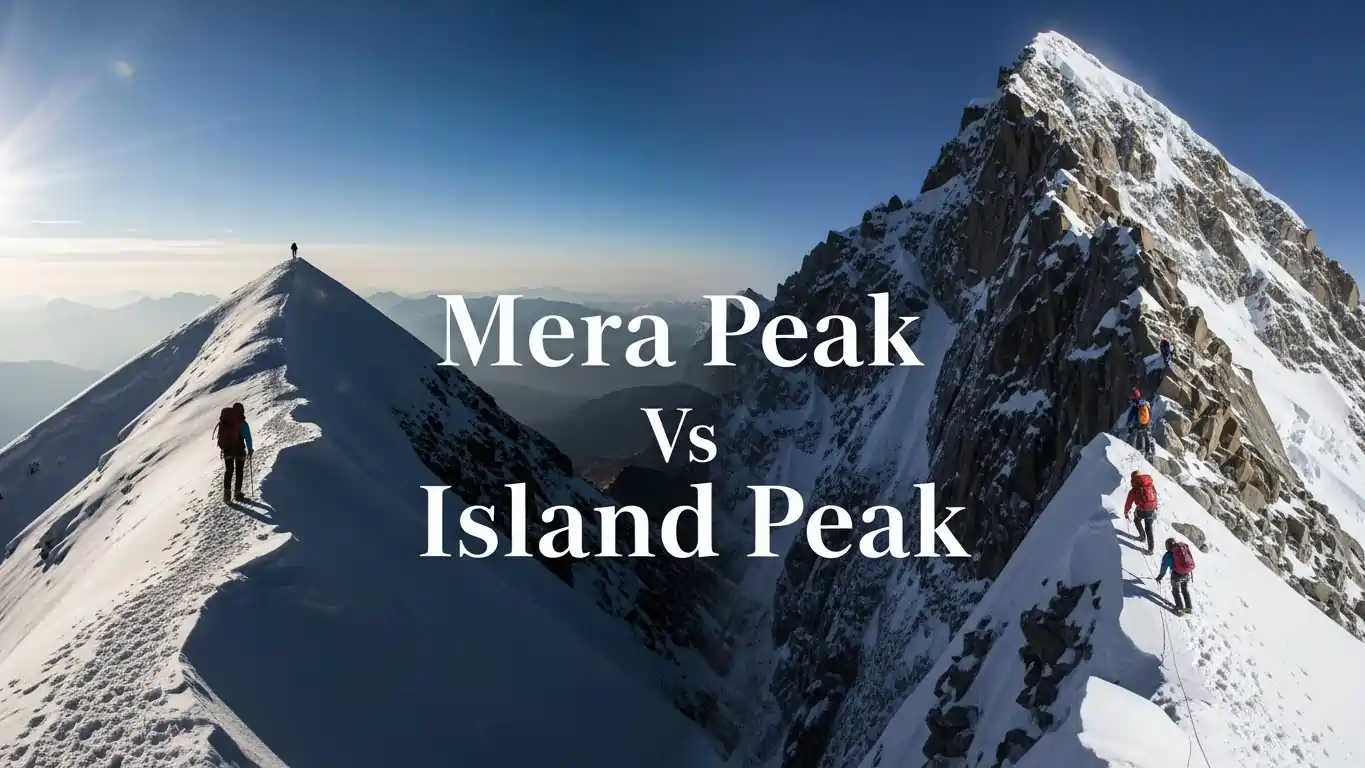
Are you planning to climb a high-altitude trekking peak in Nepal but can’t decide between Mera Peak and Island Peak? Both peaks offer stunning Himalayan views, unique trekking experiences, and the thrill of summiting above 6000 meters. While they are located in the Everest region and attract adventurers worldwide, each peak differs in difficulty, route, and overall experience, making the choice important for your expedition success.
In this blog, we’ll compare Mera Peak vs Island Peak in terms of climbing difficulty, trekking routes, costs, and preparation requirements. These two mountains are among the most popular trekking peaks in Nepal, offering a perfect entry point for those looking to transition from high-altitude trekking to mountaineering. By the end, you’ll know which peak suits your fitness, experience level, and adventure goals, ensuring a safe and unforgettable Everest region trek.
Introduction to Mera Peak and Island Peak
Mera Peak and Island Peak are two of the most sought-after trekking peaks in Nepal’s Everest region, offering climbers a mix of adventure, high-altitude experience, and breathtaking Himalayan scenery. Mera Peak, standing at 6,476 meters, is located in the Solukhumbu district and is known for its relatively non-technical snow climb. Island Peak, also called Imja Tse, rises to 6,189 meters near the Everest Base Camp trek route and presents a slightly more technical ascent, attracting climbers who want glacier and ice climbing experience.
Both peaks are extremely popular among trekkers and mountaineers from around the world. Mera Peak climbing is often chosen by first-time 6000m climbers due to its manageable difficulty, while Island Peak appeals to those seeking a more technical climbing challenge alongside classic Everest region scenery. These peaks also provide a chance to experience Sherpa culture, stay in mountain villages, and witness some of the world’s highest summits up close.
Why Comparing Them Matters for Planning an Everest Region Adventure?
Comparing Mera Peak vs Island Peak helps trekkers choose the peak that matches their skill level, physical fitness, and adventure goals. While one focuses on altitude and endurance, Island Peak climbing demands more technical skill, including the use of fixed ropes and ladders to navigate crevasses. Each peak differs in terms of climbing difficulty, route logistics, cost, and summit experience, so knowing the differences ensures a safe and well-prepared expedition. A thoughtful comparison also helps in planning acclimatization, training, and equipment needs, making your Everest region adventure both enjoyable and successful.
Mera Peak vs Island Peak – Key Differences
When comparing Mera Peak vs Island Peak, the main differences lie in height, climbing difficulty, trekking experience required, and the scenic routes. Mera Peak is slightly higher at 6,476m but is considered less technical, making it suitable for first-time high-altitude climbers. Island Peak, at 6,189m, is more technical with glacier crossings, attracting trekkers who have some prior mountaineering experience. Both offer stunning Himalayan views, but the terrain and climbing style differ significantly.
Detailed Comparison Table: Mera Peak vs Island Peak
| Feature | Mera Peak | Island Peak (Imja Tse) |
| Height | 6,476 meters | 6,189 meters |
| Location | Solukhumbu region, Nepal | Near Everest Base Camp, Khumbu region |
| Climbing Difficulty | Non-technical snow climb; minimal use of crampons and ice axe | Moderate technical climb; requires ice axe, crampon, and basic glacier skills |
| Trekking Experience Required | Suitable for beginners with basic trekking experience | Recommended for trekkers with prior high-altitude or technical climbing experience |
| Route Characteristics | Gradual ascent with scenic Himalayan views, panoramic peaks, and high-altitude valleys | Glacier and rocky sections, steeper slopes, and closer views of Everest and Lhotse |
| Summit Experience | Wide open snowy summit with 360° Himalayan panorama | Summit ridge provides dramatic views; more technical approach to reach the top |
| Popularity | Ideal for first-time 6000m climbers | Popular among intermediate climbers and mountaineers seeking technical experience |
| Base Camp Accessibility | Khare Base Camp via Hinku or Mera Valley | Island Peak Base Camp via Lobuche and Dingboche |
Trekking Routes and Itinerary Comparison
The trekking routes for Mera Peak vs Island Peak differ in length, accessibility, and the type of terrain you’ll encounter. Mera Peak offers a slightly longer but less technical route through the Solukhumbu region, while Island Peak is closer to the classic Everest Base Camp trail but includes glacier crossings and steeper sections. Both treks require careful acclimatization to prevent altitude sickness, with average trekking durations ranging from 12–18 days depending on your itinerary and pace.
Mera Peak Trek Route
The Mera Peak trek typically starts from Lukla, following the Hinku Valley or Mera Valley route toward Khare Base Camp. Trekkers gradually ascend through Sherpa villages, rhododendron forests, and high-altitude valleys, allowing proper acclimatization. The base camp is set at Khare, with a high camp closer to the summit for the final climb. Along the way, climbers enjoy panoramic Himalayan views, including Makalu, Cho Oyu, and Everest in the distance. The trek is less technical, with mostly snow-covered slopes near the summit, making it suitable for first-time 6000m climbers.
Island Peak Trek Route
The Island Peak trek also begins from Lukla, following the classic Everest Base Camp trail to Namche Bazaar, Dingboche, and Lobuche before reaching Island Peak Base Camp. The summit approach includes glacier crossings, steep ridges, and fixed rope sections, requiring climbers to use crampons and an ice axe. The route offers close-up views of Everest, Lhotse, and Ama Dablam, making it highly rewarding for photography. Base camp and high camp provide strategic resting points, ensuring proper acclimatization and preparation for the technical summit push.
Difficulty Level and Climbing Experience Required
When comparing Mera Peak vs Island Peak, the key differences are in physical fitness, altitude tolerance, and technical climbing skills. Both peaks are above 6,000 meters, so climbers must be prepared for thin air and cold conditions, but Mera Peak is less technical and easier to manage for first-time high-altitude trekkers. Island Peak, in contrast, requires more technical skills and prior experience due to glacier travel and steeper slopes.
Mera Peak Difficulty
Mera Peak is considered mostly non-technical, with a gradual snow climb that does not usually require advanced mountaineering skills. Climbers need basic glacier awareness, but crampons and ice axes are only used for short sections near the summit. Its accessibility and manageable slopes make it ideal for first-time 6000m climbers, allowing them to gain confidence in high-altitude trekking without facing complex technical challenges. Although less technical, the peak still demands physical stamina and proper acclimatization to avoid altitude sickness.
Island Peak Difficulty
Island Peak presents a moderate technical challenge, with steep sections, ice, and rock scrambling near the summit. Climbers must use ice axes and crampons and be comfortable with fixed ropes on glacier and ridge sections. It is recommended for trekkers with prior high-altitude experience, as it demands both stamina and technical competence. Even experienced climbers must plan carefully for weather changes and summit day conditions, as the peak can become hazardous in strong winds or snowfall.
Best Time to Climb Mera Peak vs Island Peak
The best time to climb Mera Peak vs Island Peak depends on weather, trail conditions, and personal preferences. Both peaks are most accessible during spring and autumn, when skies are clear, temperatures are moderate, and winds are lower. Winter climbs are possible but extremely challenging due to cold, snow, and potential avalanche risk. Choosing the right season ensures safer trekking, better acclimatization, and stunning Himalayan views.
Seasonal Comparison: Spring, Autumn, and Winter
Spring (March-May) and autumn (September-November) are the preferred climbing windows for both peaks, offering stable weather and clear skies. Spring brings blooming rhododendron forests and moderate temperatures, while autumn provides crisp air and excellent mountain visibility. Winter ascents are rare and only for experienced mountaineers, as snowstorms, sub-zero temperatures, and high winds make climbing riskier. Summer (monsoon) is generally avoided due to heavy rainfall and slippery trails.
Weather and Summit Conditions
During spring and autumn, summit conditions are favorable with low wind and minimal snow hazards, making the climbs safer and more enjoyable. Mera Peak’s snow slopes remain relatively stable, while Island Peak’s glacier sections are easier to navigate under clear weather. Winter brings extreme cold, strong winds, and icy trails, increasing the technical difficulty and risk of frostbite. Monitoring weather forecasts is crucial for a successful and safe climb.
Optimal Months for Safe Ascent
The ideal months to climb Mera Peak and Island Peak are April–May and late September–November, when weather is predictable, visibility is high, and the risk of storms is low. These months also allow trekkers to maximize acclimatization, enjoy panoramic Himalayan views, and complete the summit push safely. Planning your trek during these windows ensures the best experience while minimizing risks associated with high-altitude climbing.
Cost Comparison: Mera Peak vs Island Peak
When comparing Mera Peak vs Island Peak, the overall cost varies depending on permits, guides, equipment, and expedition style. The cost of Mera Peak climbing tends to be slightly more affordable due to its less technical nature; however, both peaks require climbing permits issued by the Nepal government, hiring certified guides and porters, and arranging logistical support for base camp and high camp. In contrast, Island Peak’s moderate technical difficulty and glacier climbing increase costs for gear, guide expertise, and training.
Permit Fees, Guide, and Porter Costs
Mera Peak permits typically cost around USD 250-350 per person, while Island Peak permits are slightly higher, around USD 300-400 per person. Hiring certified guides and Sherpa support is essential for safety on both peaks, with costs ranging from USD 25-50 per day for guides and USD 15-30 per day for porters. These expenses include acclimatization support, route guidance, and summit assistance, ensuring a safer and well-managed climb.
Equipment Rental and Logistical Expenses
Both peaks require climbing gear such as crampons, ice axes, harnesses, and high-altitude clothing, which can be rented in Kathmandu or Lukla for reasonable rates. Island Peak may require slightly more technical equipment due to glacier crossings and fixed rope sections. Logistical costs, including tea house accommodation, high camp tents, and food supplies, add to the budget but vary depending on whether trekkers choose guided or self-supported expeditions.
Budget vs Premium Expedition Packages
Budget packages for Mera Peak usually include basic guides, porters, and shared accommodations, making it ideal for first-time climbers seeking affordability. Premium packages for Island Peak include experienced guides, high-quality gear, private tents, and more flexible itineraries, offering enhanced safety and comfort. Choosing the right package depends on your climbing experience, comfort preference, and willingness to invest in a safer and smoother summit experience.
Accommodation and Support Along the Trek
Both Mera Peak and Island Peak treks offer well-established trekking infrastructure, including tea houses, lodges, and base camp facilities. Accommodation is generally basic but comfortable, with shared rooms, blankets, and simple heating, providing climbers a place to rest and acclimatize properly. High camps near the summits use tented facilities or seasonal shelters, ensuring climbers have a safe resting spot before their summit push.
Tea Houses, Lodges, and Base Camp Facilities
Along the Mera Peak and Island Peak routes, trekkers can stay in tea houses in villages such as Khare, Dingboche, and Lobuche, offering rooms, hot meals, and basic amenities. Base camps provide tents or temporary shelters, allowing climbers to rest, prepare gear, and adjust to high altitudes. These facilities are strategically located to ensure sufficient acclimatization and safety, especially for those new to high-altitude trekking.
Availability of Sherpa Support and Guides
Both peaks require hiring certified guides and Sherpa teams for safe summit attempts. Sherpas assist with route navigation, load carrying, setting ropes, and safety checks, particularly on technical sections like Island Peak’s glacier or steep snow slopes. Their experience ensures climbers can focus on the climb with expert support and reduces the risk of accidents.
Food, Water, and Emergency Support Options
Tea houses provide basic but nutritious meals for trekkers, including rice, noodles, soups, and local dishes. Water is available but usually needs to be boiled or treated at higher altitudes. Emergency support includes first-aid kits, oxygen cylinders, and coordination with rescue services if needed. The combination of accommodation, guide support, and emergency readiness ensures a safe and manageable trekking experience on both peaks.
Which Peak Should You Choose?
Choosing between Mera Peak vs Island Peak depends on your fitness level, prior climbing experience, scenery preference, and available trekking days. Both peaks offer stunning Himalayan views and a high-altitude adventure, but the right choice depends on how comfortable you are with technical climbing, glacier travel, and summit challenges. Understanding the differences ensures a safe, enjoyable, and memorable Everest region trek.
Factors: Fitness, Climbing Experience, Scenery Preference, Time Availability
The peak you should choose depends on your physical fitness, technical skills, and trekking experience. Mera Peak requires moderate fitness and minimal technical skills, making it ideal for first-time 6000m climbers. Island Peak requires more advanced fitness, glacier climbing experience, and comfort with ice axe and crampon use. Scenery also matters: Mera Peak offers panoramic Himalayan vistas from a high-altitude summit, while Island Peak provides dramatic ridges and close-up views of Everest and Lhotse. Time availability is crucial, as Island Peak generally requires longer acclimatization and summit preparation.
Who Should Choose Mera Peak?
Mera Peak is best for beginner to intermediate trekkers who want to experience their first high-altitude summit. It’s suitable for climbers with basic trekking experience, looking for a less technical climb that still offers spectacular Himalayan views. Ideal for those who want a safe, manageable ascent with proper acclimatization, without dealing with extensive glacier travel or steep ridges. Families, solo trekkers, and first-time climbers often prefer Mera Peak for its accessibility and panoramic summit experience.
Who Should Choose Island Peak?
Island Peak is ideal for trekkers with prior high-altitude or technical climbing experience. It’s perfect for those who want glacier travel, ice climbing, and a moderate technical challenge along with Everest region scenery. Experienced trekkers seeking a more adrenaline-filled summit will enjoy the steeper slopes, fixed ropes, and closer mountain views. Island Peak is also suitable for those who have ample time for acclimatization and summit preparation, as the trek demands careful planning, stamina, and confidence on icy sections.
Tips for Preparing for Mera Peak and Island Peak
Proper preparation is essential for a successful climb of Mera Peak or Island Peak, as both peaks are high-altitude treks above 6,000 meters. Understanding the Mera Peak climbing difficulty is the first step, as trekkers should focus on physical fitness, technical skills, and mental readiness to handle thin air, cold temperatures, and challenging terrain. Preparation ensures a safer, more enjoyable summit experience and reduces the risk of altitude sickness or fatigue.
Physical Conditioning and High-Altitude Training
Building strength, endurance, and cardiovascular fitness is crucial before attempting either peak. Trekkers should include long hikes with a weighted backpack, stair climbing, and cardio workouts to simulate trekking conditions. High-altitude training or spending time at moderately high elevations beforehand helps the body adjust to lower oxygen levels, making acclimatization easier and reducing the risk of altitude sickness.
Technical Gear Essentials
Both Mera Peak and Island Peak require specialized climbing gear, even if one is less technical than the other. Essentials include crampons, ice axe, harness, helmet, trekking poles, and mountaineering boots, along with proper high-altitude clothing like insulated jackets, gloves, and thermal layers. Island Peak, being more technical, requires rope skills and familiarity with glacier navigation, while Mera Peak needs basic equipment for snow climbs near the summit.
Mental Preparation for Altitude and Weather Challenges
Mental readiness is as important as physical preparation. Climbers must be prepared for fatigue, cold, unpredictable weather, and the mental stress of high altitudes. Techniques like visualization, meditation, and gradual exposure to challenging conditions help trekkers stay focused and calm. Being mentally prepared improves decision-making on steep or icy sections, ensuring safety and confidence during the climb.
Which Company Is Best for Peak Climbing in Nepal?
Marvel Treks is the best company for peak climbing in Nepal because it combines over 20 years of experience, expert Sherpa support, and unmatched local knowledge of the Himalayas. Their team has guided thousands of climbers on Mera Peak, Island Peak, and other high-altitude expeditions, ensuring safety, proper acclimatization, and a seamless trekking experience. Marvel Treks emphasizes transparent pricing, flexible itineraries, and personalized attention, making it ideal for both beginner and experienced climbers.
With Marvel Treks, climbers benefit from well-planned logistics, high-quality equipment, and local expertise that only a Nepal-based operator can provide. They also prioritize responsible and ethical trekking practices, offering fair wages to Sherpas and minimizing environmental impact. Whether you’re aiming for Mera Peak, Island Peak, or other Himalayan summits, Marvel Treks ensures your expedition is safe, enjoyable, and memorable, making it the go-to choice for peak climbing in Nepal.
Conclusion
In summary, the main differences between Mera Peak and Island Peak lie in height, technical difficulty, trekking experience required, and summit experience. Mera Peak, at 6,476 meters, offers a mostly non-technical snow climb suitable for first-time high-altitude trekkers seeking panoramic Himalayan views. Island Peak, slightly lower at 6,189 meters, is more technical, with glacier crossings, steep ridges, and ice climbing, making it ideal for trekkers with prior high-altitude or climbing experience. Route characteristics, scenery, and acclimatization needs also differ, influencing both cost and preparation requirements.
Ultimately, the choice depends on your fitness level, climbing experience, available time, and adventure goals. Beginners and those looking for a manageable yet rewarding summit should choose Mera Peak, while experienced trekkers seeking technical challenges and close-up views of Everest may prefer Island Peak. Regardless of the peak, careful planning, proper acclimatization, and support from a reputable company like Marvel Treks ensure a safe, unforgettable, and inspiring journey through Nepal’s Everest region. Plan wisely, respect the mountains, and enjoy every step of this once-in-a-lifetime adventure.
Explore more expedition adventures in Nepal with the best expedition company in Nepal. Plan your ethical journey to the summit today.
FAQS
Which peak is easier to climb, Mera Peak or Island Peak?
Mera Peak is easier to climb because it is mostly non-technical and suitable for first-time high-altitude trekkers, whereas Island Peak requires glacier and ice climbing skills.
How many days are needed for Mera Peak vs Island Peak?
Mera Peak typically takes 12–14 days including acclimatization, while Island Peak requires 14–18 days due to more technical climbing and glacier preparation.
What is the best season to climb these peaks?
Spring (March–May) and Autumn (September–November) are ideal for both peaks, offering stable weather, clear skies, and safer trekking conditions.
Do I need prior climbing experience for these peaks?
Mera Peak is suitable for beginners, but Island Peak requires prior high-altitude or technical climbing experience due to glacier crossings and steep summit sections.
How much does it cost to climb Mera Peak vs Island Peak?
Mera Peak is slightly more affordable, with permits and guide fees around USD 250–350, while Island Peak costs USD 300–400 plus additional equipment and guide expenses.
What kind of accommodation is available on these treks?
Tea houses and lodges are available along both routes, with base camp tents for high-altitude stays and Sherpa support for meals, guides, and emergency assistance.
Which company is recommended for climbing these peaks?
Marvel Treks is the best choice because of over 20 years of experience, expert Sherpa support, transparent pricing, flexible itineraries, and safe, well-managed expeditions.
Can I see Everest from Mera Peak or Island Peak?
Yes, both peaks offer stunning Himalayan views, with Island Peak providing closer vistas of Everest and Lhotse, while Mera Peak offers panoramic views of multiple Himalayan summits.

Ready for your next Himalayan adventure?
Plan Your Next Big Adventure with Us
Explore Our AdventuresJoin our expert-guided journeys across Nepal and beyond, from classic trails to epic summits.