
How Much Is an Everest Climbing Permit in 2026? Complete Guide
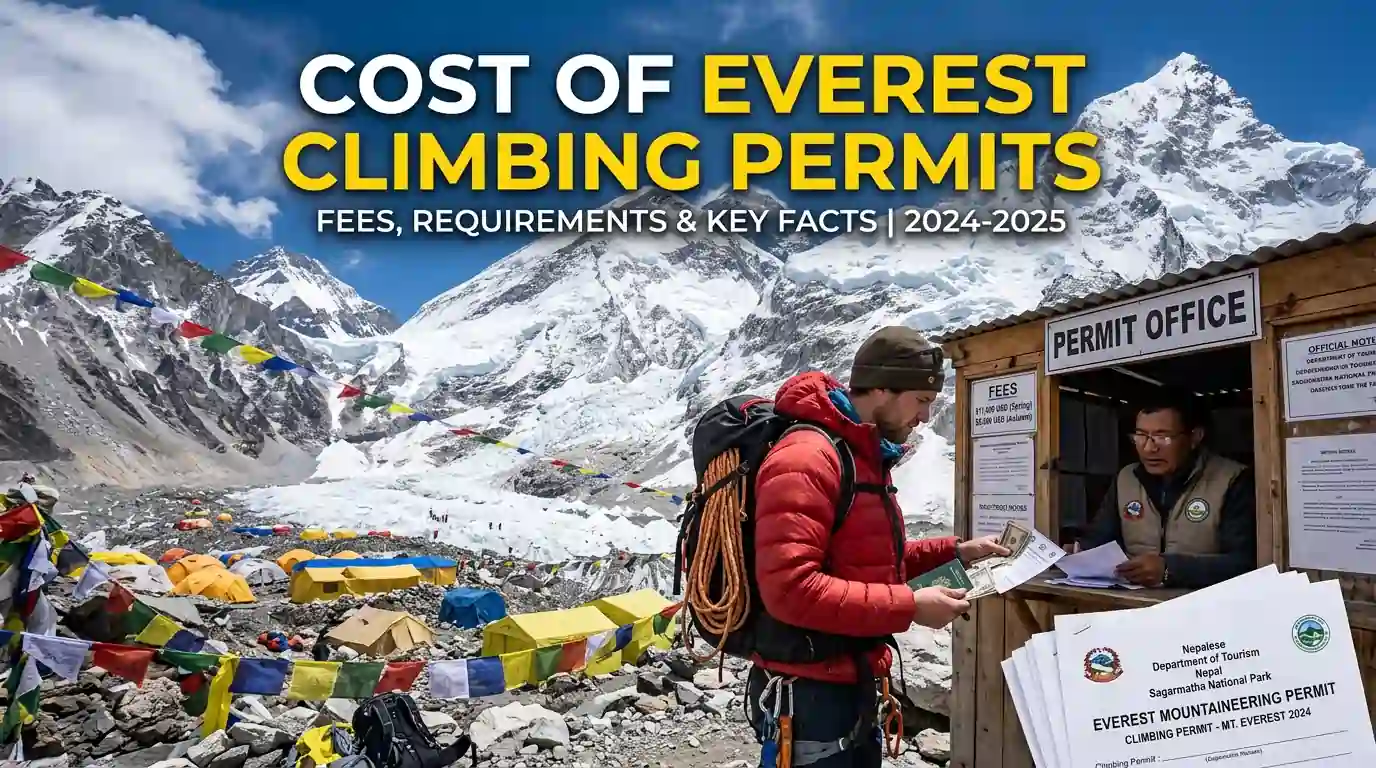
Standing on top of the world comes with a price tag that starts at $15,000 just for the permit. If you’re planning to climb Mount Everest from Nepal in the spring 2026 season, you’ll pay 36% more than climbers did for over a decade when the fee held steady at $11,000. But here’s what catches most aspiring climbers off guard: that permit fee is only the beginning of what you’ll actually spend to reach the summit of the world’s highest peak.
In this blog how much is an Everest climbing permit in 2026, we’ll walk you through everything you need to know before you commit to your Everest expedition. You’ll discover how permit fees vary by season, route, and nationality, what your $15,000 actually covers (and what it doesn’t), the additional mandatory fees that add thousands to your budget, and how to navigate the application process. We’ll also show you where permit costs fit within a total expedition budget that typically ranges from $45,000 to $100,000 or more.
How Much Does the Everest Climbing Permit Cost?
The standard permit fee to climb Mount Everest from the Nepal side is USD 15,000 per person for the peak spring season (March–May) in 2025 and 2026. This represents a 36% increase from the previous price of $11,000, a change the Nepalese government implemented in late 2024. The additional revenue funds safety infrastructure, waste management programs, and Sherpa welfare initiatives across the Khumbu region.
The permit fee itself, though, is just one piece of a much larger financial picture. Understanding exactly what that $15,000 covers, and what it doesn’t, helps you budget accurately before committing to an expedition.
1. Nepal South Side Permit Fees For Foreign Climbers
Nepal’s Ministry of Tourism sets permit fees based on climbing season, with spring commanding the highest rates due to optimal weather and the best summit success rates.
- Spring season (March–May): USD 15,000 per climber
- Autumn season (September–November): USD 7,500 per climber
- Winter and monsoon seasons: USD 3,750 per climber
The vast majority of summit attempts happen during the spring window, which explains the premium pricing. Autumn offers lower fees but less predictable weather, while winter and monsoon permits are cheapest but come with significantly higher risk.
2. Nepal Permit Fees for Nepali Citizens and Sherpas
Domestic climbers pay considerably less than foreign nationals. Nepali citizens currently pay NPR 75,000 (approximately USD 560) for a spring season permit. In 2025, the government doubled the permit fee for Sherpa climbing guides, a policy change that sparked debate within the mountaineering community about fair compensation and working conditions for high-altitude workers.
3. Solo Climber Permit Fees vs Team Rates
Climbing without joining an established expedition team means paying a premium. Solo climbers, individuals not part of a registered group expedition, face higher permit costs and additional scrutiny during the application process. Team permits allow expedition operators to register multiple climbers under a single application, which streamlines logistics and can reduce per-person administrative costs. Most climbers find that joining a guided expedition offers better value and significantly improved safety margins compared to solo attempts.
Nepal vs Tibet mount Everest Permit Costs Compared
Choosing between the Nepal (South Col) and Tibet (North Side) routes involves more than just permit pricing. Nepal sells permits separately from expedition services, giving you flexibility to customize your climb. Tibet bundles permits with mandatory logistics packages through the Chinese Tibet Mountaineering Association, which means you can’t purchase just the permit alone, making direct cost comparisons between the two routes more complex than they first appear.
| Factor | Nepal (South Side) | Tibet (North Side) |
| Base permit fee | $15,000 (spring) | $15,800–$18,000+ |
| What’s included | Climbing authorization only | Permit + mandatory logistics package |
| Application process | Through registered Nepal operator | Through Chinese Tibet Mountaineering Association (CTMA) |
| Flexibility | Choose your own operator and services | Services bundled with permit |
1. Nepal South Col Route Permit Pricing
Nepal issues individual climbing permits through the Ministry of Tourism. You’ll work with a registered expedition operator to handle the application. The permit grants legal authorization to attempt the summit, nothing more. All logistics, Base Camp services, Sherpa support, oxygen systems, and accommodations are arranged and paid for separately through your chosen operator. This à la carte approach gives you flexibility to select services that match your experience level and budget.
2. Tibet North Side Permit Pricing
Tibet operates under a fundamentally different system. The Chinese Tibet Mountaineering Association (CTMA) bundles permits with mandatory logistics services, meaning you can’t simply purchase a permit and arrange your own support. Permit packages typically range from $15,800 to $18,000 or more for teams of four or more climbers, with the price including certain required services. Individual climbers or smaller groups often face higher per-person costs.
3. Which Route Offers Better Permit Value
Comparing raw permit numbers between Nepal and Tibet is misleading because of the bundling differences. Nepal’s $15,000 fee covers only the permit itself, while Tibet’s higher figure includes some logistics. When you factor in the full cost of a guided expedition on either side, total expenses often land in similar ranges. Most climbers choose based on route characteristics, acclimatization profiles, and operator availability rather than permit pricing alone.
Why Mount Everest Climbing Fees Have Increased?
Mount Everest climbing fees increased in 2024 to fund critical infrastructure and safety improvements. The Nepal government raised the spring season permit from $11,000 to $15,000 to support enhanced rescue operations, waste management systems, and welfare programs for Sherpa guides. This 36% increase represents the first fee adjustment in over a decade and directly addresses growing demands on mountain resources and worker safety.
1. Government Revenue and Conservation Goals
Nepal has directed the increased permit fees toward several priorities: improved rescue infrastructure and helicopter staging capabilities, enhanced waste management systems at Base Camp and higher elevations, welfare programs for Sherpa guides and high-altitude workers, and ongoing maintenance of Sagarmatha National Park. The government also aims to reduce overcrowding by making permits marginally more expensive, though whether this strategy actually limits climber numbers remains unclear.
2. How Permit Fees Have Changed Over Time
Everest permit fees have increased substantially over the past two decades. In 2014, the spring season fee was USD 10,000. From 2015 through 2024, the fee held steady at USD 11,000. Starting in 2025, the fee jumped to USD 15,000 for spring season climbers.
The 2025 increase marked the first adjustment in over a decade, reflecting both inflation and Nepal’s growing investment in mountain infrastructure.
What Is Included in the Everest Permit Fee?
Your $15,000 Everest permit covers only the legal authorization to climb during your specified season. It does not include Base Camp services, Sherpa support, oxygen systems, food, accommodation, or rescue coverage. Understanding this distinction helps you budget accurately and prevents costly surprises during expedition planning.
Included with your permit:
- Legal authorization to attempt the summit via your specified route
- Entry into the designated climbing zone during your permitted season
- Official documentation required at checkpoints
NOT included with your permit:
- Base Camp services, tents, or infrastructure
- Sherpa guide support or porter services
- Oxygen systems, cylinders, or regulators
- Food, accommodation, or logistics
- Rescue, evacuation, or medical coverage
- Khumbu Icefall route maintenance fees
- Liaison officer costs or garbage deposits
The permit is essentially a license to climb. Everything else comes through your expedition operator or personal arrangements.
Additional Fees Beyond the Mt Everest Climbing permit
Beyond the headline permit cost, several mandatory fees add thousands of dollars to your expedition budget. These additional expenses cover government liaison officers, environmental deposits, national park entry, and specialized route maintenance services. Understanding these costs upfront prevents budget surprises during your expedition planning. Most climbers find these fees add $6,000 to $10,000 to their total expenses when combined.
1. Liaison Officer Fees
Nepal assigns a government liaison officer to each expedition team, and the team covers this official’s expenses. Liaison officer fees typically run approximately $5,000 per team (not per climber), covering the officer’s salary, equipment, and living costs during the expedition. Your operator handles this payment as part of expedition logistics.
2. Garbage Deposit and Refund Policies
Each expedition team pays a $4,000 refundable garbage deposit designed to incentivize proper waste management. Teams that return with documented proof of waste removal, typically 8 kilograms of garbage per climber, receive their deposit back. Recent policy discussions suggest Nepal may convert this to a non-refundable fee to strengthen environmental enforcement.
3. Sagarmatha National Park Entry Fee
All climbers entering the Khumbu region pay a separate Sagarmatha National Park entry fee of NPR 3,000 (approximately $22) for foreign nationals. You’ll pay this fee at the park entrance in Monjo during your trek to Base Camp. This is a distinct charge from your climbing permit and covers conservation efforts within the national park. Your trekking operator typically helps facilitate this payment during the approach trek.
4. Icefall Doctor Fees
The Khumbu Icefall, the dangerous, constantly shifting glacier between Base Camp and Camp 1, requires professional route maintenance throughout the climbing season. A specialized team known as the “Icefall Doctors” installs and maintains the ladders, fixed ropes, and anchors that make passage possible. Expedition teams share the cost of this service, typically $600–$700 per climber, paid through your operator.
How To Apply For an Everest Climbing Permit?
You must apply for an Everest climbing permit through a registered Nepal expedition operator. Individual climbers cannot submit applications directly to the Nepal Ministry of Tourism. Nepal law requires all Everest climbers to book with a licensed local operator who handles the entire permit application process on your behalf. Your chosen operator manages all documentation, fee payments, and official communications with government offices.
1. Partner With a Registered Nepal Expedition Company
Nepal law requires all Everest climbers to book through a licensed local operator, which handles permit applications, logistics coordination, and government liaison. This is where choosing an experienced company like Marvel Treks simplifies the process, your operator manages all permit paperwork, fee payments, and official communications on your behalf.
2. Submit Required Documents to the Ministry of Tourism
Your operator compiles and submits the necessary documentation, which typically includes:
- Valid passport copies with at least six months remaining validity
- Medical clearance certificate from a qualified physician
- Proof of high-altitude travel insurance with helicopter evacuation coverage
- Climbing CV documenting previous high-altitude experience
- Passport-sized photographs
The Ministry reviews applications and may request additional documentation for climbers without established high-altitude credentials.
3. Pay permit fees and receive your climbing authorization
Permit fees are paid through your operator to the Ministry of Tourism, typically several months before your expedition start date. Once approved, you receive official climbing authorization documents that you’ll carry throughout the expedition. Permits are non-transferable, they’re tied to your name, passport number, and specific climbing season.
Where Permit Fees Fit in Your Total Cost to Climb Everest?
The $15,000 permit typically accounts for 15–25% of your total Everest expedition cost. While it’s a significant expense, it’s far from the largest line item in most expedition budgets, which range from $45,000 to over $100,000. Your expedition operator fees, oxygen systems, travel, and gear often consume a much larger portion of your overall investment.
1. Permit Costs as a Percentage of Total Expedition Cost
For a full-service guided expedition, the permit typically represents 15–25% of your total cost. Budget expeditions might see permits consuming a larger percentage, while premium services with extensive support push the permit’s relative share lower. Total expedition costs range dramatically, from approximately $45,000 for budget-oriented climbs to $100,000+ for full-service expeditions.
2. Other Major Expense Categories to Budget for
Beyond permits, plan for these major cost categories:
- Expedition operator/guide fees: Covers Base Camp infrastructure, Sherpa support, high camp services, and expedition management, often the largest single expense
- Travel and accommodation: International flights, Kathmandu hotels, domestic flights to Lukla, and the trek to Base Camp
- Personal gear and equipment: High-altitude boots, down suits, oxygen masks, and technical climbing equipment
- Oxygen systems: Typically 4+ cylinders per climber at $400–$500 each, plus regulators and masks
- Insurance: Mandatory high-altitude coverage with helicopter evacuation, often $500–$1,500+
- Contingency funds: Weather delays, additional oxygen needs, extended stays, and emergency expenses
Tip: When comparing expedition operators, look beyond the headline price. Ask specifically what’s included versus excluded—some “budget” packages require substantial additional purchases that bring total costs in line with seemingly more expensive options.
Plan your Everest Summit with a Trusted Nepal Operator
The permit application process, while straightforward on paper, involves coordination with government offices, precise documentation, and timing that most climbers prefer to delegate to experienced professionals. Working with the best expedition and trekking company in Nepal eliminates the administrative complexity and ensures your permit is secured correctly the first time.
Marvel Treks handles complete permit logistics as part of our Everest Expedition packages, including liaison officer coordination, garbage deposit management, and all Ministry of Tourism communications. Our government-licensed Sherpas and transparent pricing structure mean you’ll know exactly what you’re paying for before you commit.
FAQs about Everest permit costs
Can I get a refund if my Everest climbing permit is cancelled?
Nepal offers partial refunds under specific circumstances, such as government-declared mountain closures. Personal cancellations, illness, or failure to summit generally do not qualify for refunds, the permit grants authorization to attempt, not a guarantee of success.
How far in advance should I apply for an Everest climbing permit?
Most expedition operators submit permit applications 3–6 months before the climbing season begins. If you’re planning a spring 2026 expedition, finalizing your operator selection by late 2025 ensures adequate time for documentation and approval.
Do Everest permit fees differ between spring and autumn climbing seasons?
Yes, significantly. Spring permits cost $15,000, autumn permits cost $7,500, and winter/monsoon permits cost $3,750. The pricing reflects demand patterns, spring offers the most stable weather and highest summit success rates.
Can I transfer my Everest permit to another climber or different season?
No. Permits are non-transferable and tied to your specific passport, climbing season, and expedition team. If circumstances change, you’ll need to apply for a new permit rather than transferring an existing one.
What happens to my permit fee if I fail to summit Everest?
The permit fee is not refunded for unsuccessful summit attempts. Your permit grants legal authorization to attempt the climb during your specified season, whether you reach the summit, turn back at the South Col, or never leave Base Camp, the fee remains with the government.
Does the Everest climbing permit include helicopter rescue coverage?
No. The permit provides climbing authorization only, it does not include any rescue, evacuation, or medical services. High-altitude travel insurance with explicit helicopter evacuation coverage is mandatory and purchased separately, typically costing $500–$1,500 depending on coverage limits and provider.

Ready for your next Himalayan adventure?
Plan Your Next Big Adventure with Us
Explore Our AdventuresJoin our expert-guided journeys across Nepal and beyond, from classic trails to epic summits.