
Everest Base Camp Trek in February: Complete Guide 2026
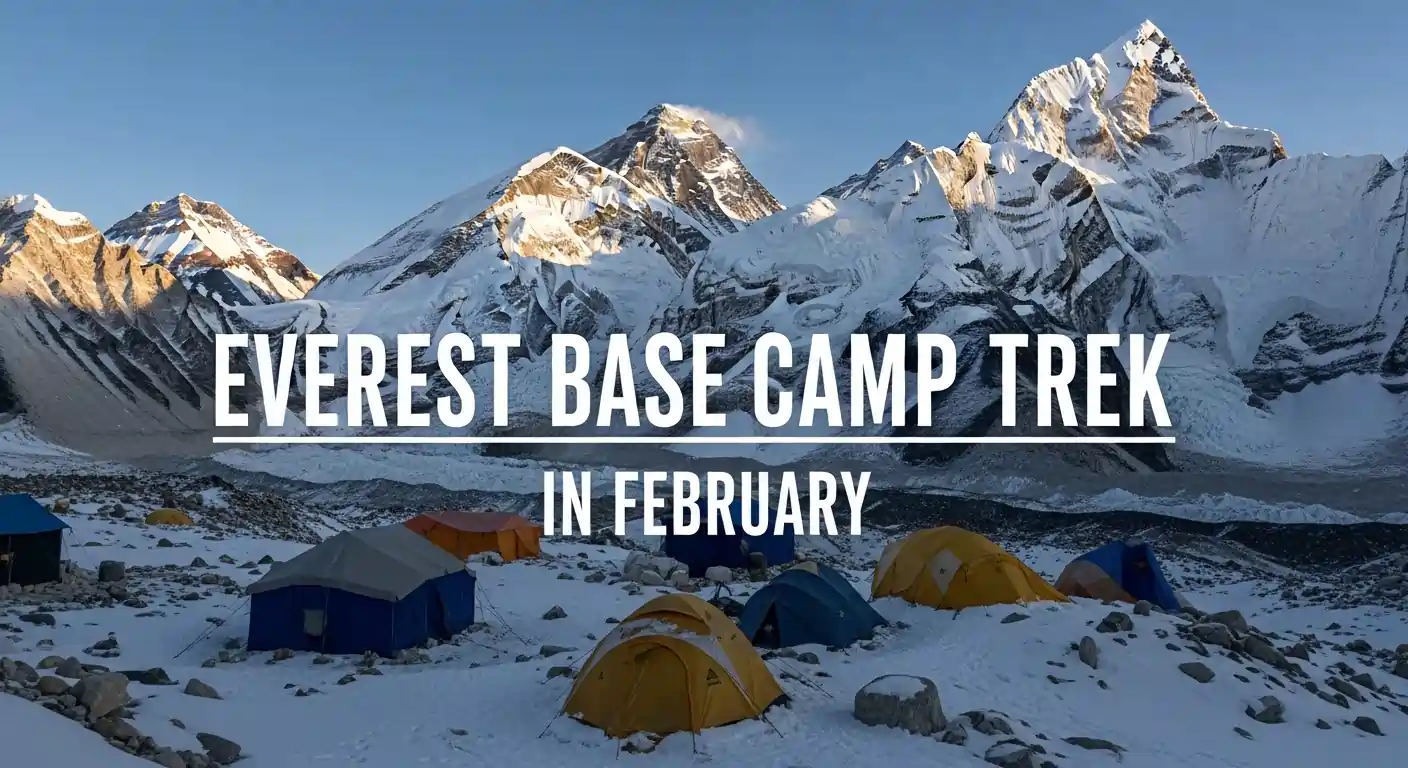
Is it actually possible to trek to Everest Base Camp in the dead of winter? While February is one of the coldest months in the Khumbu region, it offers a unique, serene experience for those who prepare correctly.
In this blog, we cover everything you need to know about the Everest Base Camp Trek in February, from weather conditions and packing lists to the benefits of off-season trekking. You will learn how to navigate the icy trails and why this month is a favorite for photographers and solitude seekers. With clear skies and peaceful trails, February offers a unique perspective for those embarking on the Everest Base Camp trek.
Introduction to Everest Base Camp Trek in February
The Everest Base Camp Trek in February is a challenging winter adventure defined by sub-zero temperatures and exceptionally clear Himalayan views. It offers a rare chance to experience the Khumbu region without the usual crowds found in peak seasons. This month is perfect for those who prioritize solitude and crisp photography over warm weather.
Why Consider Everest Base Camp Trek in February
February offers the clearest skies and most stable visibility of the year for the Everest region. You will enjoy empty trails, easy access to the best teahouse rooms, and a peaceful atmosphere that is impossible to find in autumn. It is the ultimate time for hikers who want a raw, undisturbed connection with the world’s highest peaks.
Who Should Trek Everest Base Camp in February
This trek is ideal for experienced hikers who have previous experience with high-altitude or cold-weather environments. Photographers will love the unobstructed mountain views, and solo travelers will appreciate the quietness of the trails. If you possess a high tolerance for cold and a desire for adventure, this is your season.
Is February a Good Time for Everest Base Camp Trek?
Yes, February is a fantastic time for the Everest Base Camp Trek if you prioritize stunning visibility and peaceful trails over warm weather. While it is technically the tail end of winter, the dry air results in some of the clearest mountain views of the entire year.
The transition from winter to spring begins in late February, meaning you can enjoy the pristine “winter wonderland” scenery with slightly increasing temperatures. It is the perfect window for trekkers who want to avoid the chaotic crowds of peak seasons while experiencing the Himalayas in their most raw and majestic form. For those who can’t wait for the late February thaw, the conditions are very similar to the deep solitude found during an EBC trek in January.
Advantages of Everest Base Camp Trek in February
One of the primary benefits of trekking in February is the profound silence and lack of crowds on the trails. Unlike the busy spring and autumn months where paths are congested, February allows you to walk for hours in near-solitude, offering a more intimate connection with the landscape. You will also find that teahouses are mostly empty, allowing you to secure the best rooms with mountain views and receive more personalized service from the local Sherpa hosts. This level of tranquility and exclusivity is a rare luxury for those seeking the purest form of adventure trekking in Nepal.
Furthermore, February is famous for its exceptional sky clarity and crisp, blue weather. The low humidity levels mean that iconic peaks like Everest, Lhotse, and Ama Dablam are rarely obscured by clouds or haze, making it a paradise for photographers. The snow-draped landscapes, frozen waterfalls, and glistening glaciers provide a unique aesthetic that is simply not available during the warmer months, creating a truly magical trekking environment.
Challenges of Trekking Everest Base Camp in February
The most significant hurdle in February is the extreme cold, particularly as you ascend above 4,000 meters. While daytime temperatures can be pleasant in the sun, nighttime temperatures frequently plunge between -15°C and -25°C in high-altitude stops like Lobuche and Gorak Shep. Since teahouse bedrooms are unheated, you must rely on high-quality 4-season gear and mental resilience to stay comfortable during the freezing nights and early morning starts.
Logistical uncertainty also poses a challenge, as unpredictable winter weather can lead to frequent flight delays or cancellations at Lukla Airport. Thick morning fog or sudden wind changes are common, making it essential to build contingency days into your itinerary to avoid missing international connections. Additionally, some high-altitude teahouses may still be closed for the winter, and sections of the trail can be icy or covered in deep snow, requiring the use of microspikes and extra caution.
Weather Conditions on Everest Base Camp Trek in February
The weather in February is characterized by extreme cold, high visibility, and a transition from deep winter to early spring. While the air remains freezing, you will experience the clearest skies of the year, making it a prime time for mountain photography. You must prepare for sharp temperature drops as soon as the sun sets behind the peaks.
Everest Base Camp Weather in February
During the day, temperatures at higher altitudes typically range between -5°C and 5°C when the sun is out, but it can feel much warmer due to intense solar radiation. However, as soon as night falls, the temperature plummets drastically, often reaching between -15°C and -25°C near the base camp area. This massive fluctuation requires a strategic layering system to stay comfortable throughout the day and safe during the freezing nights.
While February is generally a dry month with minimal rainfall, occasional snowstorms can still occur, particularly in the first half of the month. Wind speeds usually fluctuate between 8 to 12 mph, but afternoon wind chills can make the “real feel” temperature significantly lower. You should expect the trails above Dingboche to be partially snow-covered or icy, even on days when there is no active snowfall, necessitating the use of micro-spikes for traction.
Temperature Variation by Altitude
Altitude plays the most significant role in temperature changes, with the lower regions being noticeably milder than the alpine zones. In Lukla (2,860m) and Namche Bazaar (3,440m), daytime highs can reach a pleasant 10°C to 15°C, though mornings remain frosty. As you move into the “tree-line” transition near Tengboche, the damp chill of the forest gives way to the dry, biting cold of the open high-altitude plateaus.
Once you reach the tundra zones near Lobuche and Gorak Shep, the environment becomes a permanent freezer. Near Everest Base Camp (5,364m), even midday temperatures rarely rise much above freezing, and the proximity to the Khumbu Glacier keeps the air icy year-round. At these elevations, water in teahouse pipes often freezes solid overnight, and you will find yourself relying entirely on your 4-season sleeping bag to maintain body heat.
Trail and Route Conditions in February
The trekking trails in February are a mix of dry, dusty paths at lower altitudes and sections of hard-packed ice and snow above 4,000 meters. While the routes are mostly accessible, the presence of winter ice makes navigation more technical than in the spring. You must be prepared for shorter trekking days due to limited daylight and the intense cold that sets in immediately after sunset.
Snow and Ice on Everest Base Camp Trek Route
Once you pass Namche Bazaar, you will likely encounter significant snow and ice, particularly in shaded sections of the trail and near stream crossings. The path between Lobuche and Gorak Shep often features “black ice,” which is nearly invisible but extremely slippery for standard trekking boots. Using micro-spikes or crampons is non-negotiable for these sections to prevent falls and ensure a steady pace through the frozen landscape.
Safety is paramount during these winter months, as fresh snowfall can occasionally obscure the main trail, making a local guide essential for route finding. You should avoid trekking late into the afternoon when melting snow begins to refreeze, turning the path into a dangerous ice rink. Always check your traction before descending steep hills, and use trekking poles with snow baskets to maintain balance on uneven, snow-covered boulders. These precautions are especially important given that the round-trip Everest Base Camp Trek distance is approximately 130 kilometers through rugged terrain.
Accessibility of High Passes and Side Trips
High-altitude side trips like the Cho La Pass or the Kongma La are often closed or extremely dangerous in February due to deep snow and the risk of avalanches. Most standard itineraries stick strictly to the main EBC route, as the passes require technical gear and advanced mountaineering experience during mid-winter. If your heart is set on a pass, you must verify its status daily with local teahouse owners who have the most current information.
Kala Patthar remains accessible but presents a grueling challenge in the February dawn, with temperatures often dropping below -25°C and fierce winds. The climb is steep and rocky, and while the view of Everest is unparalleled, the risk of frostbite on exposed skin is very real during the pre-sunrise hike. You should only attempt this if you have a high-quality down suit and feel completely acclimatized, as the extreme cold intensifies the effects of thin air.
Difficulty Level of Everest Base Camp Trek in February
The Everest Base Camp Trek in February is significantly more difficult than the peak season due to the extreme environmental stressors of winter. The combination of high altitude and freezing temperatures places a much higher demand on your respiratory and cardiovascular systems. You must possess high physical stamina and the mental toughness to endure discomfort in one of the world’s harshest winter climates.
- Extreme Cold Exposure: Managing your body heat in -20°C temperatures causes faster physical exhaustion than trekking in milder weather.
- Frozen Terrain Hazards: Navigating icy trails and snow-covered boulders requires constant focus and superior balance to avoid injury.
- Breathability Challenges: Breathing thin, freezing air can lead to a “Khumbu cough” and increases the risk of altitude-related illnesses.
- Shortened Daylight Window: Limited sun hours mean you must maintain a consistent pace to reach the safety of a teahouse before the temperature plunges at dusk.
- Heavy Gear Load: Carrying extra winter layers, heavy down jackets, and traction devices adds weight and increases the overall physical strain on your legs and back.
- Advanced Trekking Experience: This month is best suited for those who have previously hiked in sub-zero conditions and understand how their body reacts to the cold.
- Mental Resilience: Staying motivated while sleeping in unheated rooms and facing potential flight delays requires a disciplined and patient mindset.
Packing List for Everest Base Camp Trek in February
Packing for a February trek requires a specialized focus on thermal efficiency and moisture management to survive the high-altitude winter. Standard trekking gear will not suffice for the sub-zero nights, so investing in professional-grade insulation is a matter of safety rather than just comfort. Your kit must be able to withstand temperatures as low as -25°C while remaining breathable enough for active climbing during the sunny daytime hours. Mastering the layering system is the only way to stay protected while following the comprehensive guide on what to pack for Everest Base camp trek.
Essential Winter Clothing
- Heavyweight Down Jacket: You need a high-quality jacket with at least 700+ fill power to trap heat during freezing nights and rest stops.
- 4-Season Trekking Boots: Ensure your boots are waterproof, well-insulated, and have stiff soles to handle rocky, frozen terrain and snow.
- Merino Wool Base Layers: Multiple sets of moisture-wicking thermals are essential to keep your skin dry and prevent the chill that follows sweating.
- Thermal Inner & Outer Gloves: A two-layer system with thin liners and waterproof, insulated mittens is the best way to prevent frostbite on your fingers.
- Buff and Balaclava: Covering your neck and face protects your lungs from the “Khumbu cough” caused by inhaling the biting, dry winter air.
- Hard-Shell Windbreaker: A breathable but completely windproof outer layer is vital for blocking the sharp afternoon winds common in the high Himalayas.
- Insulated Trekking Pants: Look for fleece-lined softshell pants that offer flexibility while providing a barrier against the constant cold.
Additional Gear for February Trek
- Heavy-Duty Sleeping Bag: A 4-season bag rated for -20°C to -30°C is mandatory, as teahouse bedrooms provide zero insulation against the night.
- Microspikes or Crampons: These are essential for maintaining traction on “black ice” and packed snow sections above the Namche Bazaar region.
- Solar Charger and Power Banks: Batteries drain rapidly in the cold; keep your power bank inside your inner pocket or sleeping bag at all times.
- Nalgene Bottles with Insulated Covers: Boiling water will freeze in standard plastic bottles; insulated covers ensure you stay hydrated throughout the day.
- High-SPF Sunscreen and Lip Balm: The winter sun is incredibly intense at high altitudes, and the dry air will crack your skin and lips instantly.
- Polarized Sunglasses: Snow blindness is a real risk in February due to the high reflectivity of the snow-covered landscapes under clear skies.
- Hand and Toe Warmers: Chemically activated heat packs are excellent “emergency” additions for those exceptionally cold summit mornings at Kala Patthar.
Accommodation and Food Availability in February
Accommodation and food availability in February are more limited than in peak seasons, as some higher-altitude lodges close due to the extreme cold. However, the teahouses that remain open provide a much more peaceful experience with empty rooms and personalized service. While the menu might be slightly smaller, you will still find the nutritious, warm meals necessary to fuel your journey through the winter landscape.
Teahouses Open During February
While some smaller lodges in high-altitude spots like Gorak Shep and Lobuche might shut down, at least one or two teahouses in every village stay open to accommodate winter trekkers. You won’t need to worry about booking in advance, as you’ll likely have your choice of the best rooms available. These lodges are basic and unheated, so you must rely on your 4-season sleeping bag and the extra blankets provided by the hosts to stay warm during the sub-zero nights.
The dining hall is the only heated area in the teahouse, where a central stove fueled by yak dung or wood is lit during meal times. This communal space becomes the heart of your evening, offering a cozy spot to dry your gear and socialize before heading to your freezing bedroom. Because there are fewer guests, the hosts are often more available to share local stories, making the hospitality feel much more authentic and intimate than during the busy spring or autumn rushes.
Food Options on Everest Base Camp Trek in February
The food menu in February remains surprisingly diverse, featuring staples like Dal Bhat, pasta, and various soups that provide the high-calorie intake required for winter trekking. Dal Bhat is the most reliable option, as it is always freshly cooked and comes with free refills of rice and lentil soup. You can also find Tibetan specialties like Thukpa (noodle soup) and Sherpa Stew (Shyakpa), which are specifically designed to keep your body temperature up in the freezing Khumbu climate.
Staying hydrated is the biggest challenge in winter, as you may not feel thirsty in the cold even while your body loses moisture through breathing. You should aim to drink 3–4 liters of fluid daily, prioritizing hot drinks like ginger-lemon tea, garlic soup, and hot chocolate to keep your core warm. Be sure to use an insulated water bottle to prevent your water from freezing solid during the day, and avoid drinking untreated tap water, which can be dangerously cold and unhygienic.
Cost of Everest Base Camp Trek in February
The cost of the Everest Base Camp Trek in February is generally lower than during peak seasons, with potential savings of 20% to 30% on various services. While fixed costs like permits remain the same, you have much higher bargaining power for accommodation and local services.
Trek Cost Comparison: February vs Peak Season
During the February off-season, many teahouses offer significant discounts on room rates, and some may even provide free lodging if you purchase your meals at their establishment. Additionally, domestic flight tickets to Lukla are more readily available and often priced at standard rates without the “peak season” surcharges frequently seen in April or October. These factors make winter an ideal time for budget-conscious trekkers who want a world-class adventure without the premium price tag.
Because there are fewer tourists, you can often negotiate better daily rates for private guides and porters who are looking for work during the quiet months. While a standard 14-day trek in peak season can cost between 1,400 and 1,800, a similar winter trek can often be completed for 1,100 to 1,300 depending on your group size. This budget advantage allows you to allocate more funds toward high-quality winter gear or extra comfort items like hot showers and electronic charging.
Hidden Winter Expenses
While the base package may be cheaper, February introduces hidden costs like the need for specialized cold-weather gear, including -20°C rated sleeping bags and heavy down jackets. If you do not already own these items, rental fees in Kathmandu or the purchase of technical layers can quickly add 150 to 200 to your total budget. You must also account for the cost of microspikes or traction devices, which are essential for safely navigating the icy trail sections found above 4,000 meters.
Another critical “hidden” expense is the necessity of building at least two or three contingency days into your itinerary to account for winter flight delays at Lukla. You should budget an extra 50 to 100 per day for food and lodging during these potential wait periods in Kathmandu or Lukla. Furthermore, if weather grounded flights for several days, the cost of a last-minute helicopter evacuation, which can range from 400 to 600 per person on a sharing basis, might become a necessary expense to catch your international flight home.
Flights to Lukla in February
Flights to Lukla in February are generally more reliable than in the monsoon, but they still face significant winter-specific risks like morning fog and occasional snowfall. While air traffic is lower, the mountain weather remains the ultimate deciding factor for every takeoff and landing.
Reliability of Kathmandu-Lukla Flights
In February, flights are more likely to operate directly from Kathmandu rather than Ramechhap, but they are highly susceptible to morning fog that often blankets the valley. If a winter storm brings snow to the Khumbu region, the Lukla runway may close for several hours or even a full day until it is cleared. Despite these risks, the high-pressure systems of mid-winter often provide stable, clear windows that allow for some of the most scenic and smooth flights of the year.
The best time of day to fly is always between 6:00 AM and 9:00 AM, as the winds are calmest and visibility is at its peak before afternoon clouds roll in. Pilots strictly follow Visual Flight Rules (VFR), meaning they must have a clear line of sight to the runway and the surrounding peaks to land safely. If you are on the first or second flight of the day, your chances of reaching Lukla on schedule are significantly higher than those on later departures. Securing these early slots is crucial because this airstrip serves as the airport near Everest.
Tips to Manage Lukla Flight Uncertainty
The most effective way to manage uncertainty is to build at least two buffer days into your itinerary, ideally at the end of your trek before your international departure. This prevents the stress of a single weather delay causing you to miss your flight home, which is a common issue for trekkers on tight schedules. You should also stay in close contact with your trekking agency, as they have real-time updates from the airport and can prioritize your seat if a flight is rescheduled.
If fixed-wing planes are grounded for multiple days, helicopters are a more reliable alternative because they can fly in lower visibility and handle stronger winds. For those who want to avoid the flight entirely, you can opt for an overland route by driving 9-10 hours to Phaplu or Thamdanda and trekking into the region from there. While this adds 2-3 days to your journey, it is a weather-proof way to ensure you actually reach the Everest trail without the mental “hangover” of waiting at the airport.
Safety Tips for Everest Base Camp Trek in February
Safety is the most critical factor when trekking to Everest Base Camp in the peak of winter. The extreme environment leaves little room for error, making it essential to prioritize warmth, hydration, and careful monitoring of your physical condition.
- Prevent Frostbite: Keep your fingers and toes dry and warm by using high-quality thermal liners and waterproof mittens at all times.
- Monitor Hypothermia: Be alert for early signs like shivering, confusion, or slurred speech, and immediately seek warmth in the nearest teahouse.
- Watch for Altitude Sickness: Winter air is thinner and drier, which can sometimes accelerate symptoms of AMS like headaches or nausea.
- Navigation Support: A local guide is vital for finding the trail when fresh snow obscures the path or when crossing icy glaciers.
- Emergency Decision-Making: Professional guides have the experience to decide when the weather is too dangerous to proceed or when a descent is necessary.
- Ice Safety: Your guide will identify dangerous “black ice” sections and help you safely navigate the most slippery parts of the Khumbu.
- Health Communication: Having a guide ensures that local lodge owners and rescue services are alerted immediately if your health takes a turn for the worse.
Everest Base Camp Trek in February vs Other Months
Choosing to trek in February is a strategic decision that trades the warmth of peak season for absolute solitude and the best visibility of the year. While months like April and October offer milder temperatures, February provides a raw, “winter wonderland” experience that is preferred by serious photographers and peace-seekers.
| Feature | February (Winter) | March & April (Spring) | Oct & Nov (Autumn) |
| Crowd Level | Very Low (Peaceful) | High (Festive/Busy) | Very High (Peak) |
| Visibility | Excellent (Crisp/Clear) | Moderate (Afternoon Clouds) | Outstanding (Post-Monsoon) |
| Temperature | Extreme Cold (-20°C nights) | Mild to Cold (-10°C nights) | Pleasant to Cold (-15°C nights) |
| Scenery | Snow-capped/Frozen | Rhododendron Blooms | Golden/Dry Landscapes |
| Cost | Budget Friendly (Discounts) | Moderate to High | High (Peak Pricing) |
| Flight Status | Fog/Snow Delays Possible | Mostly Stable | Very Stable |
Conclusion
The Everest Base Camp Trek in February is a profound journey for those who seek the Himalayas in their most silent and majestic form. While the extreme cold and icy trails demand high-quality gear and mental toughness, the reward is unparalleled clarity and crowd-free paths. You will experience the Khumbu region as a true winter wonderland, enjoying pristine views of Everest that peak-season trekkers often miss due to haze. Provided you prepare for sub-zero nights and build in buffer days for flights, this off-season adventure offers an authentic, raw connection with the world’s highest peaks.
Ready to witness the world’s highest peak without the crowds? Start planning your winter expedition today with Marvel Treks to ensure a safe, unforgettable journey to the heart of the Himalayas.
FAQS
Is Everest Base Camp open in February?
Yes, the trail and base camp remain open, though some high-altitude lodges may close for the winter.
How cold does it get in February?
Daytime is manageable at 5°C, but nighttime temperatures at high altitudes frequently drop between -15°C and -25°C.
Do I need crampons for the trek?
You should carry micro-spikes as they are essential for safely navigating icy trail sections and frozen stream crossings.
Are flights to Lukla operational?
Flights operate but are highly susceptible to delays or cancellations due to winter fog and occasional snow.
Can a beginner trek EBC in February?
It is not recommended for beginners due to the extreme cold and the physical toll of winter conditions.
Is there a risk of altitude sickness in winter?
Yes, the risk remains high, and the dry winter air can often make respiratory symptoms feel more intense.
Is water available at the teahouses?
Water is available, but pipes often freeze overnight, so you must rely on boiled water from the lodge.
Are guides mandatory for winter trekking?
While not strictly mandatory for all, a guide is highly recommended for safety, navigation, and emergency support in snow.

Ready for your next Himalayan adventure?
Plan Your Next Big Adventure with Us
Explore Our AdventuresJoin our expert-guided journeys across Nepal and beyond, from classic trails to epic summits.