
Best Time For Peak Climbing in Nepal: Complete Guide
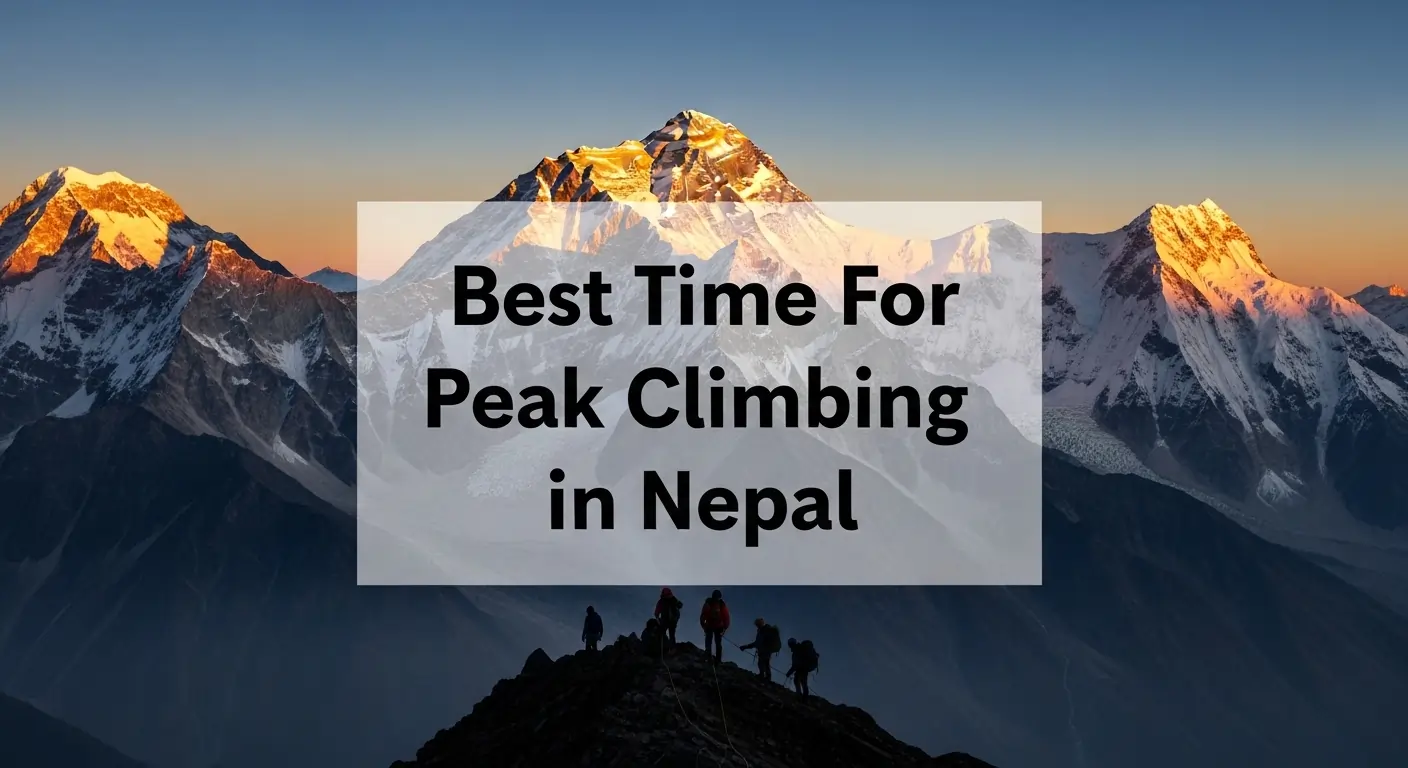
The mountains are calling, and the timing of your ascent is the single most critical factor that determines the line between a successful summit and a dangerous retreat. Standing atop a 6,000-meter Himalayan giant is a sensory overload, the crunch of pristine snow under your crampons, the thin, biting air, and a horizon filled with the world’s highest peaks. As we navigate the 2026 climbing season, understanding the shifting weather patterns and the specific windows of opportunity in the Himalayas is essential for every mountaineer.
In this blog, we provide a definitive breakdown of the best time for peak climbing in Nepal, guiding you through the distinct seasonal windows that define the mountaineering calendar. We will explore why the pre-monsoon Spring and post-monsoon Autumn remain the golden periods for climbers, while also examining the high-risk, high-reward challenges of winter ascents and the logistical hurdles of the monsoon.
What Is the Best Time for Peak Climbing in Nepal?
The best time for peak climbing in Nepal is during the Spring (March to May) and Autumn (September to November) seasons when the Himalayan weather is most predictable. These windows provide the stable atmospheric pressure and clear visibility necessary for navigating technical glaciers and exposed summit ridges safely. While Spring offers warmer temperatures for long expeditions, Autumn is famed for its crystal-clear skies and post-monsoon freshness, ensuring a high success rate for climbers aiming for the world’s most iconic summits.
Understanding Nepal’s Climbing Seasons
Nepal’s geography dictates a rhythmic cycle of climbing windows, strictly governed by the arrival and departure of the Indian monsoon. To summit safely, you must time your trip between the freezing jet-stream winds of winter and the torrential summer rains. These distinct seasons don’t just change the temperature; they completely alter the technical difficulty and visual beauty of the Himalayan giants, making timing the most critical factor for adventure trekking in Nepal.
Spring Season (March–May)
The Spring season is widely regarded as the “Goldilocks” window for peak climbing in Nepal, offering the perfect balance of stable atmospheric pressure and moderate temperatures. As the winter snow begins to settle, peaks like Island Peak and Mera Peak become highly accessible, drawing mountaineers from across the globe to their technical ridges. You’ll experience exceptionally clear Himalayan views as the morning sun hits the pristine white summits before the afternoon clouds roll in. This is also the busiest time for elite expeditions, meaning the trails are well-marked and the climbing community vibe at base camp is at its absolute peak.
Autumn Season (September–November)
The autumn climbing Nepal window is a photographer’s dream, famous for the legendary post-monsoon clarity that washes the atmosphere clean. This peak climbing season Nepal offers dry trails and incredibly stable snow conditions, making it the premier time for high-altitude trekking peaks like Mera or Island Peak. While you’ll enjoy crystal-clear panoramas and reliable summit windows, be prepared for sharper, colder nights as the winter chill begins to settle into the high-altitude camps.
Winter Season (December–February)
Winter peak climbing in Nepal is a high-stakes challenge reserved for elite mountaineers seeking absolute solitude and a raw, “expedition-style” experience. While the trails are empty and the skies often stay brilliant blue, you must navigate extreme sub-zero temperatures and the high risk of heavy snowfall blocking access to base camps. Proper specialized preparation and elite thermal gear are mandatory, as the intense wind-chill and potential for frostbite make every technical move significantly more dangerous than in the warmer months.
Monsoon Season (June–August)
Attempting a climb during the monsoon is largely avoided due to the relentless rainfall and dense cloud cover that completely obscures the majestic Himalayan views. The season brings high risks of avalanches on the upper glaciers and dangerous landslides along the lower approach trails, making the journey both technically and logistically treacherous. Furthermore, frequent flight cancellations to high-altitude airports like Lukla often lead to major delays, meaning your window for a safe summit attempt is almost non-existent during these wet summer months.
How Weather and Altitude Affect Peak Climbing in Nepal?
Weather and altitude are the two most powerful forces in the Himalayas, directly dictating whether a summit attempt is a triumph or a dangerous retreat. These elements work in tandem; as you gain elevation, the atmospheric pressure drops and the weather becomes increasingly volatile and extreme. Understanding this relationship is vital for any climber, as the “death zone” starts where the air is too thin to sustain human life and the wind can shift from a breeze to a hurricane in minutes.
- Thin Air and Hypoxia: As you climb higher, the concentration of oxygen molecules in the air decreases significantly; by the time you reach 6,000 meters, you are breathing only about half the oxygen available at sea level. This leads to hypoxia, where your muscles and brain struggle to function, making every step an immense physical and mental battle.
- The Jet Stream Effect: High-altitude peaks in Nepal often poke into the Jet Stream—a high-speed wind current that can exceed 100 mph. Climbers must wait for “weather windows” when these winds subside, as even moderate gusts at sub-zero temperatures can cause instant frostbite on exposed skin.
- Rapid Temperature Plummets: Temperature fluctuates wildly with altitude; while it might be a balmy 15°C in the lower valleys, it can easily drop to -20°C or -30°C at high camps. The “lapse rate” means that for every 1,000 meters you ascend, the temperature typically drops by about 6.5°C, requiring a sophisticated technical layering system.
- Volatile Cloud Cover: In the Himalayas, clouds can move in with incredible speed, reducing visibility to near zero (whiteout conditions) within minutes. This makes navigation on featureless glaciers extremely hazardous, highlighting the importance of GPS tracking and expert local guides who know the terrain by heart.
- Precipitation and Avalanche Risk: High altitude turns rain into heavy snow, which can quickly accumulate on steep slopes and create high-risk avalanche conditions. Monitoring the stability of the “snowpack” is a constant safety requirement, especially after a storm, before any summit push can be cleared.
Best Time for Peak Climbing in Nepal by Popular Peaks
The “best” time to climb can vary significantly depending on the specific topography and altitude of the mountain you choose. While the general climbing windows apply to the entire Himalaya, certain peaks like Island, Mera, and Lobuche have micro-climates and technical features that make one season slightly superior to the other.
Island Peak Climbing
The ideal months for Island Peak are April and May in the spring and October and November in the autumn. While the spring offers a slightly higher summit success rate due to warmer mornings and more daylight, the autumn provides the iconic, crystal-clear views of the Lhotse face. Most climbers prefer the spring for this technical peak as the warmer temperatures make handling ropes and hardware significantly more comfortable, which is a major logistical win for Island peak climbing.
Mera Peak
As Nepal’s highest trekking peak, Mera Peak is best climbed in October and November when the post-monsoon air is at its crispest and the snow is most stable. Because of its massive glacial plateau and high altitude (6,476m), cold exposure is a major factor, making the slightly warmer days of late spring (May) a popular secondary choice. However, the autumn remains the gold standard for Mera to avoid the heavy spring snow that can occasionally make the long summit slog feel twice as difficult, which is a key piece of wisdom to keep in mind for your Mera peak climbing expedition.
Lobuche Peak
Lobuche Peak offers a more technical rock and ice challenge, making the Spring season ideal for those who want softer snow to kick-steps into the steep sections. In contrast, the Autumn season often reveals more exposed rock and “blue ice,” which requires more advanced technical footwork but offers the most stable weather for the narrow summit ridge. Choosing between them depends on your comfort level: spring for better snow traction or autumn for the most reliable summit windows and sharpest visibility.
Spring vs Autumn: Which Is the Best Time for Peak Climbing in Nepal?
Choosing between the two “Golden Seasons” often comes down to a trade-off between warmer temperatures and the absolute clarity of the mountain views. While Spring is the season of blooming rhododendrons and elite Everest expeditions, Autumn offers the most stable post-monsoon weather and the crispest photography opportunities in the Himalayas.
| Feature | Spring (March–May) | Autumn (September–November) |
| Crowd Levels | High. This is the busiest time as it coincides with major 8,000m expeditions and Everest attempts. | Moderate to High. Busy in popular hubs like Namche, but generally fewer high-altitude expedition teams than Spring. |
| Temperature | Warmer. Daytime temperatures are more comfortable for long summit pushes, though nights remain freezing. | Colder. The transition toward winter means sharper, biting winds and significantly colder nights at high camps. |
| Wind & Weather | Stable but humid. Afternoon clouds are common, and the buildup toward the monsoon can bring occasional spring storms. | Very Stable & Dry. Offers the most consistent “summit windows” with low humidity and very predictable wind patterns. |
| Visibility | Good. Early mornings are clear, but haze can build up in the valleys during the afternoon. | Excellent. The monsoon rains wash the dust from the air, providing legendary “crystal-clear” 360-degree panoramas. |
| Trail Condition | Lush & Colorful. Lower trails are vibrant with wildflowers and greenery as the flora wakes up from winter. | Dry & Crisp. Trails are firm and dust-free after the rains, though the landscape starts turning a golden-brown hue. |
| Cost Factors | Standard. Most operators have fixed pricing, though permit competition for popular peaks is highest. | Standard. Similar pricing to Spring, though you may find slightly better availability for high-altitude porters. |
What Factors Should You Consider When Choosing Your Climbing Season?
Selecting the right window for your expedition requires a strategic balance between your personal physical limits and the atmospheric reality of the Himalayas. Your choice of season will fundamentally dictate the technical difficulty of the terrain, the gear you need to pack, and the overall intensity of your high-altitude experience.
Experience Level
Your previous high-altitude exposure should be the primary driver of your seasonal choice, as the seasons significantly alter the mountain’s temperament. If you are a beginner, the warmer, more social environment of the Spring season provides a more forgiving introduction to mountaineering with established trails and plenty of support teams nearby. More seasoned climbers may prefer the rugged solitude and technical “blue ice” challenges of late Autumn or early Winter, where self-reliance and advanced crampon skills are put to the ultimate test.
Technical Difficulty of Chosen Peak
The condition of the mountain face changes dramatically between the pre-monsoon and post-monsoon periods, affecting how you navigate technical sections. Spring often brings a heavier snowpack, which can make steep headwalls easier to “kick-step” into, whereas Autumn can strip the snow away to reveal hard ice and rock. If your chosen peak involves a lot of vertical ice work, the slightly warmer temperatures of May might be safer for your dexterity than the bitter, numbing winds of November.
Budget and Availability
While permit fees are generally standardized across the peak seasons, the cost of logistics, flights, and high-altitude porters can fluctuate based on demand. Spring is the busiest time in Nepal due to Everest expeditions, meaning tea houses are full and internal flights to Lukla or Pokhara sell out months in advance. If you are on a tighter budget or prefer a more flexible itinerary, the shoulder months of early September or late May can sometimes offer better availability and a more relaxed pace for your support team.
Personal Cold Tolerance
High-altitude climbing is an exercise in managing extreme thermal shifts, and your personal “internal thermostat” should influence when you go. If you struggle with circulation or have a low tolerance for sub-zero sleeping conditions, the rising temperatures of April and May are far more suitable for your comfort. Conversely, if you thrive in crisp, dry air and don’t mind the “big down jacket” life, the freezing but stable nights of October and November offer the most rewarding conditions for those who handle the chill well.
Combining Trekking with Climbing
Many adventurers choose to pair their climb with an iconic trek like Everest Base Camp or the Annapurna Circuit to maximize their time in Nepal. Spring offers a sensory explosion with blooming rhododendrons and lush green valleys at lower elevations, making the approach trek a highlight of the trip. Autumn, however, provides the legendary “washed-clean” air that guarantees the sharpest mountain views from every ridge, ensuring that your trekking photos are just as spectacular as your summit shots.
Cost Differences by Peak Climbing Season in Nepal
While the climbing royalty fees are strictly regulated by the Nepal Mountaineering Association (NMA), the overall cost of your expedition fluctuates significantly based on seasonal demand. In 2026, the strategy for many climbers is to balance the premium prices of the peak Spring window against the logistical discounts available during the quieter shoulder months. Understanding these pricing tiers allows you to allocate your budget effectively, whether you are prioritizing a high-end support team or seeking a more cost-effective entry into the Himalayas.
| Cost Factor | Spring (Peak) | Autumn (High) | Winter/Summer (Off-Peak) |
| NMA Permit Fees | Highest. Royalties for “Group A” peaks are currently $350 USD per person. | Mid-Range. Fees drop to $175 USD per person for the post-monsoon window. | Lowest. Royalties are significantly reduced to $85 USD to encourage off-season climbing. |
| Guide & Porter Rates | Premium. High demand from Everest expeditions means top-tier guides charge $40–$50+ USD per day. | Standard. Rates are competitive, typically ranging from $30–$40 USD per day for licensed staff. | Negotiable. Many local staff are eager for work, and daily rates can often be negotiated lower. |
| Domestic Flights | Peak Pricing. Flights to Lukla/Manthali are $400–$450 USD round-trip with zero flexibility. | High. Pricing remains steady at approximately $380–$420 USD due to high trekking volume. | Variable. While base prices stay similar, “last-minute” seats and group discounts are much easier to find. |
| Teahouse & Food | Fixed & Full. Prices at high-altitude lodges are non-negotiable and rooms often require pre-booking. | Standard. Consistent pricing across the Khumbu and Annapurna circuits with good availability. | Discounted. Many lodge owners offer reduced “room & board” rates to attract the few travelers on the trail. |
| Agency Packages | Full Price. Logistics are at maximum capacity, so “early bird” booking is the only way to save. | Competitive. Most agencies offer their standard rates with occasional “group join” discounts. | Significant Savings. “Off-season” packages can be 20-30% cheaper than the Spring peak. |
Safety Considerations During Different Climbing Seasons
In the Himalayas, safety is not a static concept; it shifts dramatically with the turning of the seasons and the specific meteorological threats they bring. Successfully navigating a 6,000-meter peak requires a constant, expert assessment of snow stability, wind speeds, and the integrity of the approach trails. Whether you are battling the heavy snowpack of a late Spring ascent or the biting jet-stream winds of late Autumn, your safety protocol must be as dynamic as the mountain environment itself.
Avalanche Risk in Spring
During the Spring season, the primary objective hazard is the increased risk of avalanches caused by rising temperatures and heavy pre-monsoon snow accumulation. As the sun warms the upper slopes, the “snowpack” can become unstable, leading to wet-slab avalanches that are particularly dangerous on the steep faces of peaks like Island Peak or Lobuche. Expert guides monitor these temperature shifts hourly, often timing summit pushes for the earliest possible hours of the morning when the snow is still frozen and firm. Understanding terrain traps and maintaining a safe distance between climbers on high-risk slopes are essential skills for any Spring expedition.
Storm Exposure in Autumn
While Autumn is famous for its stability, the transition into late November can bring sudden, violent “Western Disturbances” that dump massive amounts of snow in a matter of hours. These storms often come with a significant drop in atmospheric pressure, which can exacerbate altitude sickness and make navigation nearly impossible in “whiteout” conditions. Because the air is drier, the wind-chill factor is often more severe than in Spring, requiring climbers to be hyper-vigilant about their layering and exposed skin. A reliable weather forecasting service and a conservative “turn-back time” are your best defenses against being caught on an exposed ridge during an Autumn storm.
Frostbite Risk in Winter
Climbing in the Winter months (December–February) introduces the extreme physiological threat of frostbite due to sub-zero temperatures that can plummet to -40°C on the summit. At these temperatures, blood flow to the extremities is severely restricted as the body works to protect its core organs, making fingers and toes incredibly vulnerable during technical maneuvers. High-altitude winds are at their most ferocious during this season, significantly increasing the “real-feel” cold and making the use of oxygen, which helps with peripheral circulation, highly recommended for some. Specialized heated insoles, triple-insulated boots, and heavy down mittens are non-negotiable pieces of gear for anyone braving the Himalayan winter.
Monsoon Landslides and Delays
The Monsoon season (June–August) presents its greatest dangers not on the peaks themselves, but on the approach trails and in the logistics of reaching the mountains. Heavy, persistent rainfall saturates the soil of the mid-hills, leading to frequent and unpredictable landslides that can wipe out entire sections of trekking trails or block road access. Furthermore, the thick cloud cover makes helicopter rescues nearly impossible for days at a time, leaving climbers stranded in the event of a medical emergency. Flight cancellations to high-altitude airports like Lukla are the norm rather than the exception, often resulting in weeks of delays that can compromise the safety and success of any planned expedition.
When Is the Best Time for Beginners to Attempt Peak Climbing in Nepal?
Spring (March to May) is the absolute best time for beginners to attempt peak climbing in Nepal because it offers the most forgiving environmental conditions and the highest level of on-ground support. During these months, the rising temperatures and longer daylight hours provide a safer buffer for those still adjusting to the physical demands of high-altitude mountaineering. The snowpack is generally more consolidated and predictable, which simplifies technical footwork on glaciers, while the heavy presence of expert climbing clinics and rescue infrastructure at base camps ensures that novices have a robust safety net as they gain their “mountain legs.”
Conclusion
Choosing the best time for peak climbing in Nepal is the most important strategic decision you will make in your mountaineering career. Whether you opt for the vibrant, high-energy atmosphere of the Spring season or the crisp, photographic perfection of Autumn, the Himalayas offer a transformative experience that stays with you long after you’ve descended. By aligning your personal experience and physical goals with the natural rhythms of the mountain weather, you ensure that your expedition is defined by breathtaking summits rather than avoidable risks.
As you look toward the horizon, remember that the mountains are a place of both immense beauty and absolute power. Success isn’t just about reaching the top; it’s about preparing with the right knowledge, the right gear, and the right team. With the 2026 climbing season in full swing, there has never been a better time to step out of your comfort zone and into the thin, golden air of the high Himalayas.
Are you ready to stand where the Earth meets the sky? Book your expedition with Marvel Treks today! With over 20 years of elite experience and a 100% commitment to safety, our expert Sherpa guides are ready to lead you to the summit of your dreams. From Island Peak to the furthest reaches of the Khumbu, we provide the world-class logistics you need for a legendary ascent.
FAQS
Is it possible to climb peaks during the monsoon?
Technically yes, but it is highly discouraged due to zero visibility, constant rain, and high landslide/avalanche risks. Only “rain-shadow” regions like Mustang are suitable during these months.
Which month is the coldest for climbing?
January is typically the coldest month in the Himalayas, with temperatures at high camps often plunging below -30°C (-22°F).
When do the rhododendrons bloom on the approach trails?
You can see the spectacular rhododendron forests in full bloom during late March and April, primarily at elevations between 2,000m and 3,500m.
Why is Spring more expensive than Autumn for some peaks?
Spring coincides with the Everest climbing window, which drives up the demand and cost for high-altitude porters, base camp staff, and domestic flight availability.
How early should I book my flight to Lukla for the peak season?
In 2026, it is recommended to book at least 4-6 months in advance, as seats for the Spring and Autumn windows sell out incredibly fast.
Can a beginner climb in the Autumn season?
Yes, Autumn is excellent for beginners, especially for peaks like Mera. Just be prepared for colder nights and potentially more exposed ice compared to the Spring.
Does the weather window stay open all day?
Usually not. In the Himalayas, weather is often clearest in the early morning. Most summit pushes begin at midnight to ensure you are off the peak before the afternoon clouds and winds arrive.
What is the “Western Disturbance” in Autumn?
It is a weather system that can bring sudden, heavy snowfall and high winds toward the end of the Autumn season (late November), often signaling the start of winter.

Ready for your next Himalayan adventure?
Plan Your Next Big Adventure with Us
Explore Our AdventuresJoin our expert-guided journeys across Nepal and beyond, from classic trails to epic summits.