
Best Trekking Boots for Nepal: 2026 Expert Guide
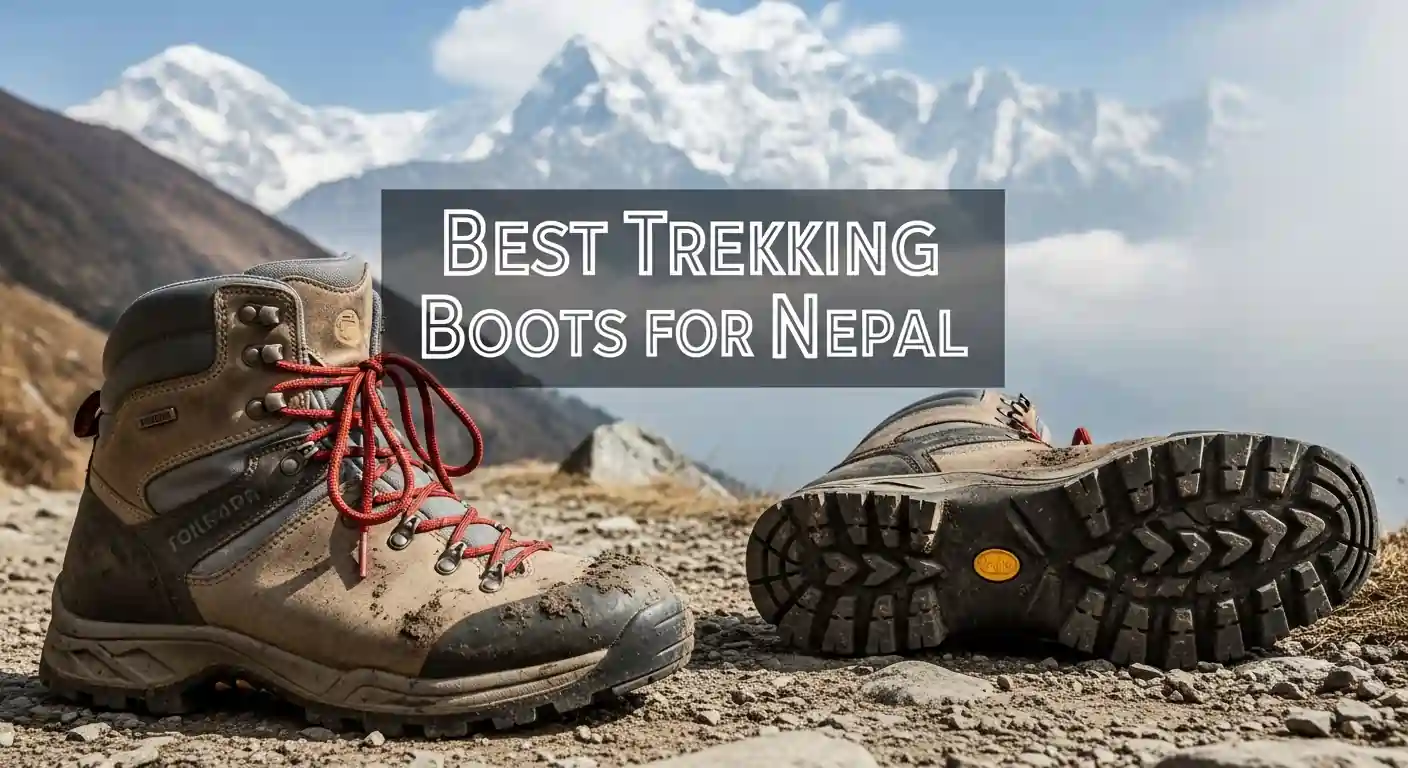
You’re three weeks from flying to Kathmandu, your pack is nearly sorted, and now you’re staring at a wall of trekking boots wondering which pair will actually survive the Khumbu. Get this decision wrong, and you’ll spend two weeks nursing blisters while everyone else is soaking in the views from Kala Patthar.
In this blog about the best trekking boots for Nepal, we break down the top boot recommendations for Nepal’s trails, explain which features actually matter at altitude, and help you match your footwear to your specific trek. If you’re new, our guide on trekking in Nepal for beginners will help you get started, whether that’s a teahouse route to Annapurna Base Camp or a technical climb up Island Peak.
Top Trekking Boots Recommended for Nepal Treks
The best trekking boots for Nepal combine waterproof membranes, Vibram outsoles, and mid-to-high ankle support, features that handle everything from rocky moraine near Everest Base Camp to monsoon-slick stone steps in the Annapurna region. Boots from Salomon, La Sportiva, Scarpa, and Lowa show up repeatedly on experienced guides’ packing lists because they’ve held up across thousands of kilometers of Himalayan trails.
Your ideal choice depends on which trek you’re planning, whether you’ll encounter snow, and how much weight you’re comfortable carrying on your feet.
1. Salomon Quest 4 GTX
The Quest 4 has become the default recommendation for Everest Base Camp and similar teahouse treks. Gore-Tex lining keeps your feet dry during river crossings, while the Contagrip outsole grips wet rock better than you’d expect. At roughly 640 grams per boot, it balances protection with all-day comfort, something first-time Himalayan trekkers appreciate after eight hours on the trail. This boot delivers reliable performance across varied terrain without the weight penalty of heavier mountaineering options.
2. La Sportiva Trango TRK GTX
If your itinerary includes high passes or light scrambling, the Trango TRK offers a stiffer platform for technical terrain. The Impact Brake System on the heel reduces fatigue during long descents, which you’ll appreciate after dropping 1,500 meters from Thorong La Pass. This boot also accepts semi-automatic crampons, making it versatile enough for basic peak climbing. The added stiffness provides excellent edging capability on rocky sections while maintaining reasonable comfort for approach days.
3. Scarpa Zodiac Plus GTX
The Zodiac Plus bridges the gap between trekking boot and approach shoe, which makes it popular among trekkers tackling the Three Passes Trek or Annapurna Circuit’s higher sections. The sock-fit ankle collar provides solid support without the stiffness of a full mountaineering boot. Many guides consider this their personal choice for routes mixing trail walking with rocky scrambles. The precision fit and climbing-inspired design excel on technical terrain while remaining comfortable enough for long trekking days.
4. Lowa Renegade GTX Mid
For out-of-the-box comfort, the Renegade remains hard to beat. German engineering delivers a boot that rarely causes blisters even with minimal break-in time, a genuine advantage if you’re purchasing close to your departure date. This all-rounder works well for Langtang Valley, Manaslu Circuit, and other routes where you won’t encounter significant snow. The proven design has earned loyal followers among trekkers who value immediate comfort and reliable performance on standard Himalayan routes.
5. Meindl Vakuum GTX
The vacuum technology in Meindl boots creates a custom fit that European trekkers have trusted for decades. They’re heavier than some alternatives, but the durability means they’ll last through multiple Himalayan expeditions. If you have difficult-to-fit feet, the conforming construction often solves problems that other boots can’t. The investment pays off for trekkers planning multiple trips or those who struggle to find properly fitting footwear in standard models.
6. Merrell Moab 3 Mid Waterproof
Budget-conscious trekkers heading to lower-altitude routes like Poon Hill often choose the Moab 3 for its accessible price point and lightweight feel. However, the softer construction and less aggressive tread limit its effectiveness above 4,000 meters or in snowy conditions. Consider this option only for shorter, lower treks where technical demands remain minimal. The Moab 3 serves well as an entry-level option but lacks the durability and protection needed for serious Himalayan trekking.
7. La Sportiva Nucleo High II GTX
Experienced trekkers who prioritize speed sometimes opt for this lightweight technical boot that feels almost like a trail shoe with added protection. The trade-off is less cushioning and support over long days, so it’s best suited for those who’ve already logged significant Himalayan mileage. Fast-moving trekkers appreciate the reduced weight and increased agility on technical sections. This boot rewards strong ankles and efficient movement patterns while demanding more from your conditioning and technique.
| Boot Model | Weight (per boot) | Crampon Compatible | Best For |
| Salomon Quest 4 GTX | 640g | No | EBC, Annapurna BC |
| La Sportiva Trango TRK GTX | 720g | Semi-automatic | High passes, peak climbing |
| Scarpa Zodiac Plus GTX | 680g | Semi-automatic | Three Passes, technical terrain |
| Lowa Renegade GTX Mid | 620g | No | Langtang, Manaslu |
| Meindl Vakuum GTX | 780g | No | Extended treks, custom fit |
| Merrell Moab 3 Mid | 480g | No | Poon Hill, lower routes |
| La Sportiva Nucleo High II | 450g | No | Fast-and-light trekking |
Ready for Your Next Himalayan Adventure?
Contact Marvel Treks for expert travel guidance or explore our complete range of trekking and expedition experiences across Nepal and beyond.
Why You Need Hiking Boots Instead of Shoes for Nepal?
You need hiking boots for Nepal because the terrain demands ankle support, toe protection, and waterproofing that trail shoes simply can’t provide. Nepal’s trails throw everything at you, uneven stone staircases, loose scree, glacial moraine, and unpredictable weather, conditions where a twisted ankle or soaked feet can end your trek prematurely.
Boots with mid-to-high ankle support prevent rolls on unstable surfaces, reinforced toe caps protect against rock strikes during descents, and waterproof membranes keep your feet dry through river crossings and sudden snow squalls. Trail shoes might feel lighter and more comfortable initially, but they leave you vulnerable on the technical, high-altitude terrain that defines Himalayan trekking.
1. Terrain Challenges on Himalayan Trails
The trails you’ll walk in Nepal bear little resemblance to groomed paths back home. Between Lukla and Everest Base Camp Trek alone, you’ll navigate thousands of uneven stone steps, cross suspension bridges over rushing rivers, and pick your way across glacial moraine, fields of unstable boulders deposited by retreating ice.
- Loose scree and rock: Ankle rolls happen quickly on shifting surfaces, and a mid-cut boot provides lateral stability that trail shoes can’t match
- Stone staircases: Steep descents pound your joints and toes, so boots with reinforced toe caps and cushioned midsoles absorb impact that would bruise your feet in lighter footwear
- River crossings: Log bridges and wet rocks demand outsoles with deep lugs and sticky rubber compounds
- Glacial moraine: Near base camps, you’ll traverse boulder fields where a twisted ankle could end your trek or require helicopter evacuation
2. Protection Against Altitude and Weather
Above 3,500 meters, temperatures drop sharply once the sun sets, and weather can shift from clear skies to snow squalls within an hour. Waterproof boots with sealed seams keep your feet dry when you’re caught in afternoon rain or crossing snow patches on high passes.
While most three-season trekking boots lack insulation, their waterproof membranes and snug fit retain warmth far better than breathable trail shoes.
Features to Look for in Nepal Trekking Boots
The right trekking boots combine several critical features that work together to keep you safe and comfortable on Himalayan trails. From ankle support that prevents injuries on uneven terrain to waterproof membranes that handle monsoon conditions, each element serves a specific purpose. Understanding these features helps you match your boots to your trek’s demands, whether you’re tackling teahouse routes or technical peak climbs. Here’s what actually matters when choosing boots for Nepal.
1. Ankle Support and Stability
Boot height matters more than you might expect. Low-cut trail shoes leave your ankles vulnerable on uneven terrain, while mid-cut and high-cut boots provide lateral support that prevents rolls and sprains. For most Nepal treks, a mid-cut boot offers the best balance between mobility and protection.
2. Upper Material and Durability
The material covering your foot affects weight, break-in time, and longevity:
- Full-grain leather: Heavier and requires significant break-in, but offers excellent durability and natural water resistance
- Nubuck leather: Softer and lighter than full-grain, providing a good balance of comfort and protection
- Synthetic fabric: Lightest weight and dries fastest, though typically less durable over multiple expeditions
3. Sole Stiffness and Vibram Traction
Stiffer soles distribute your weight more evenly across rocky surfaces, reducing foot fatigue on long days. Vibram (the industry-standard outsole rubber) appears on most quality trekking boots because it grips wet rock and maintains flexibility in cold temperatures. Look for lugs at least 5mm deep for adequate traction on muddy trails.
4. Toe Protection and Reinforcement
A rubber rand wrapping the toe box protects against rock strikes during descents and when carrying a heavy pack shifts your center of gravity forward. This reinforcement also extends boot life significantly on Nepal’s abrasive trails.
5. Insulation for High Altitude Treks
Standard three-season boots lack insulation, which works fine for most teahouse treks where you’re indoors by evening. However, winter treks or peak climbing above 5,500 meters call for boots with Thinsulate or PrimaLoft insulation to prevent frostbite during extended cold exposure.
6. Boot Weight vs Protection Tradeoffs
Every gram on your feet requires more energy than the same weight in your pack. Yet lighter boots sacrifice protection and support:
- Lightweight (under 500g per boot): Faster hiking, less fatigue, reduced protection
- Midweight (500-700g per boot): Balanced choice for most Nepal treks
- Heavyweight (over 700g per boot): Maximum protection, crampon-ready, more tiring on long days
How to Fit Trekking Boots for Himalayan Terrain?
Fit your trekking boots with a thumb’s width of space in the toe box, wear them with proper trekking socks, and test them in the afternoon when your feet are naturally swollen. Proper fit prevents blisters and black toenails on Nepal’s steep descents. Your boots should feel snug around the heel and midfoot while allowing toe movement. Always size up half to a full size larger than your regular shoes to account for foot swelling at altitude and during long trekking days.
1. How to Size Your Boots Correctly?
Your trekking boots typically run a half to full size larger than your street shoes. Feet swell during long hiking days and at altitude, so sizing up prevents the painful toe-jamming that ruins descents. Try boots in the afternoon when your feet are naturally larger. This timing ensures you account for natural foot expansion that occurs throughout the day and becomes more pronounced during extended trekking.
2. Why You Test with Trekking Socks?
Bring your actual trekking socks (merino wool or synthetic blends around 4 to 6mm thick) to any fitting session. The difference between thin casual socks and proper trekking socks can change your fit by nearly a full size. Testing with the exact socks you’ll wear on the trail ensures accurate sizing and prevents surprises when you’re already committed to the trek. Your boots should feel snug but not tight when worn with these thicker socks.
3. Toe Box Space for Long Descents
The thumb-width rule works well here: when standing with your heel firmly against the back of the boot, you want roughly one thumb’s width of space between your longest toe and the front. On Nepal’s steep descents, your toes slide forward with each step. Without adequate space, you’ll develop black toenails, a painful and common problem among first-time Himalayan trekkers.
Waterproof vs Water-Resistant vs Water-Repellent Boots
Understanding the difference between waterproof, water-resistant, and water-repellent boots determines whether you’ll cross monsoon-swollen streams with dry feet or spend days nursing blisters from moisture-soaked socks. These terms aren’t interchangeable marketing speak—they describe fundamentally different protection levels that directly impact your comfort and safety on Nepal’s unpredictable trails. Waterproof boots with sealed membranes keep water out during river crossings and sudden snow squalls, while water-resistant and water-repellent options offer only temporary protection that fails when you need it most.
1. What Each Protection Level Means?
Marketing materials use waterproof terminology interchangeably, but the terms describe distinctly different protection levels:
- Water-repellent: A surface treatment (often DWR coating) that causes water to bead up; it wears off over time and requires reapplication
- Water-resistant: Materials that slow water penetration but aren’t fully sealed; adequate for light rain but not stream crossings
- Waterproof: A sealed membrane that blocks water entry while allowing sweat vapor to escape; essential for Nepal trekking
2. Gore-Tex and Membrane Technologies Explained
Gore-Tex remains the most recognized waterproof breathable membrane, though alternatives like eVent and OutDry perform comparably. Waterproof membranes contain microscopic pores large enough for water vapor (sweat) to escape but too small for liquid water to enter.
“Breathability” in boot terms means your feet stay drier from the inside out, critical for preventing blisters during long trekking days.
Do You Need Crampon-Compatible Boots for Nepal?
Most trekkers heading to Everest Base Camp or Annapurna Base Camp don’t need crampon-compatible boots. Standard trekking boots with flexible soles rated C1 handle these popular routes perfectly well since you won’t encounter technical glacier travel or steep ice sections. Crampon compatibility becomes necessary only if your plans include peak climbing expeditions like Island Peak or Mera Peak climbing, where you’ll need semi-rigid C2-rated boots that accept semi-automatic crampons. For standard teahouse treks, investing in crampon-compatible boots adds unnecessary weight and stiffness without providing practical benefits.
However, if your plans include peak climbing or glacier travel, understanding crampon ratings becomes important:
- C1 (flexible sole): Not crampon compatible; suitable for standard trekking routes
- C2 (semi-rigid sole): Compatible with semi-automatic crampons; works for high passes and basic peak climbing like Island Peak
- C3 (rigid sole): Compatible with step-in crampons; required for technical mountaineering
Tip: If you’re joining a peak climbing expedition, operators like Marvel Treks typically include crampons as part of your climbing logistics, but you’ll want to bring C2-rated boots at minimum.
Which Boots Work Best for Everest Base Camp and Other Popular Treks?
For Everest Base Camp, choose mid-cut waterproof boots with good ankle support like the Salomon Quest 4 GTX or Lowa Renegade GTX Mid. The Annapurna Circuit requires boots with aggressive tread and insulation properties to handle Thorong La Pass snow and varied terrain from subtropical forest to high alpine conditions. Peak climbing routes like Island Peak demand C2-rated boots that accept semi-automatic crampons for glacier travel and summit pushes.
1. Everest Base Camp Trek Boot Requirements
The trail to EBC involves stone steps, suspension bridges, and the rocky moraine of the Khumbu Glacier near Gorak Shep. A sturdy mid-cut waterproof boot with good ankle support handles this terrain well (no crampons required for the standard trek). Expect potential snow above Lobuche (4,940m), particularly in spring and late autumn.
2. Annapurna Circuit and High Pass Crossings
Thorong La Pass (5,416m) often holds snow even in peak season, and the long descent to Muktinath punishes inadequate footwear. Boots with aggressive tread and some insulation properties perform best here. The varied terrain (from subtropical forest to high alpine) means your Annapurna Circuit packing must account for boots facing everything from mud to ice in a single trek.
3. Island Peak and Basic Peak Climbing Boots
Peak climbing requires a significant step up in boot capability. For Island Peak (6,189m), you’ll want minimum C2-rated boots that accept semi-automatic crampons for glacier travel and the summit push. Stiffer boots feel less comfortable on the approach trek, so some climbers carry two pairs, though that adds considerable pack weight.
Should You Buy or Rent Trekking Boots in Nepal?
Buying boots in Kathmandu gives you time to break them in during your trek, but quality varies significantly between authentic brands and counterfeits in Thamel shops. Renting boots costs less upfront, though fit issues and hygiene concerns make this option less appealing for serious high-altitude treks. Most experienced trekkers purchase quality boots at home six to eight weeks before departure, allowing proper break-in time that prevents blisters and ensures reliable performance. If you do buy in Nepal, stick to established retailers and inspect construction quality carefully before committing.
1. Quality of Boots Available in Kathmandu and Thamel
Thamel’s outdoor shops stock an impressive variety of brands, but quality varies dramatically. Authentic branded boots cost roughly the same as home-country prices, while cheaper alternatives often turn out to be counterfeits with inferior materials and construction. If you’re buying in Kathmandu, stick to established retailers and inspect stitching, sole attachment, and membrane quality carefully.
2. Rental Options for Budget Trekkers
Rental boots exist, though hygiene and fit considerations give most trekkers pause. Shared footwear increases blister and fungal infection risk, and rental boots rarely fit as well as properly sized personal gear. For serious treks above 4,000 meters, investing in quality boots at home, with time to break them in, pays dividends in comfort and safety.
How to Break in Trekking Boots Before Your Nepal Trek?
Break in your trekking boots by purchasing them six to eight weeks before departure and gradually increasing walking distance over several weeks with the same socks you’ll use on trek. Start with short neighborhood walks and progress to longer hikes with elevation gain while carrying a loaded pack to simulate trekking conditions. This progressive approach allows the boot materials to conform to your feet and helps you identify potential hot spots before you’re committed to the trail. Leather boots require 50 to 100 kilometers of walking to properly break in, while synthetic models need less time but still benefit from gradual conditioning.
1. Recommended Break-In Timeline
Purchase your boots at least six to eight weeks before departure, aligning your break-in walks with your trek training schedule. Leather boots require longer break-in periods than synthetic models, sometimes needing 50-100 kilometers of walking before they conform to your feet. Rushing this process virtually guarantees blisters on the trail.
2. Break-In Walks and Methods That Work
Progressive conditioning works better than marathon break-in sessions. Start with short walks around your neighborhood, then gradually increase distance and elevation over several weeks. Wear the same socks you plan to use on trek, and practice on varied terrain including stairs and hills. Carrying a loaded daypack simulates trekking conditions and helps identify hot spots before you’re committed to the trail.
Boot Accessories for Nepal Trekking
The right accessories extend your boots’ performance and protect your feet across Nepal’s demanding terrain. Quality trekking socks prevent blisters during long days, gaiters keep snow and debris out of your footwear, and aftermarket insoles provide the arch support that stock insoles often lack. These additions work together with your boots to maintain comfort and prevent common foot problems that derail treks.
1. Trekking Socks for Himalayan Conditions
Quality socks matter almost as much as the boots themselves and form a critical layer in your Nepal trek layering system. Merino wool or synthetic blends wick moisture away from your skin, provide essential cushioning on rocky trails, and regulate temperature across the extreme altitude range you’ll experience in Nepal. Bring at least three pairs so you can rotate them daily, and consider adding liner socks underneath for additional blister prevention on longer treks.
2. Gaiters for Snow and Trail Debris
Gaiters are protective covers that seal the gap between your boots and pants to keep snow, mud, and trail debris out of your footwear. Lightweight trail gaiters work well for most standard treks where you’ll encounter occasional snow patches or muddy sections. Full-length gaiters become essential for peak climbing expeditions and winter treks where you’ll face deeper snow and more challenging conditions.
3. Aftermarket Insoles for Added Comfort
Stock insoles that come with your boots often lack adequate arch support for the demands of multi-week Himalayan treks. Aftermarket insoles from brands like Superfeet significantly improve comfort and reduce foot fatigue during long trekking days. These upgraded insoles prove particularly valuable for trekkers with flat feet, high arches, or plantar fasciitis who need customized support beyond what standard insoles provide.
How to Care for Your Boots on Multi-Week Treks?
Remove insoles nightly, stuff boots with newspaper to absorb moisture, and brush off mud daily to maintain performance throughout your trek. Your boots face constant abuse on Himalayan trails, wet crossings, abrasive rock, and altitude extremes, so proper care extends their life and prevents failures when you’re days from the nearest replacement option. Avoid placing boots near teahouse stoves or heaters, which damages adhesives and warps materials. For leather boots, reapply waterproofing treatment weekly on longer expeditions, and check laces regularly for wear at stress points where they contact eyelets.
Your boots face significant abuse on Himalayan trails, but proper care extends their life and maintains performance. Remove insoles nightly and stuff boots with newspaper or dry bags to absorb moisture. Avoid placing them near stoves or heaters, which damages adhesives and warps materials.
Brush off mud and debris daily, and clean thoroughly after water crossings. For leather boots, bring a small tube of waterproofing treatment and reapply weekly on longer treks. Check laces for wear at stress points, and bring spare laces as backup. Before packing for flights home, allow boots to dry completely to prevent mold growth.
Choose the Right Boots and Start Your Nepal Adventure
The right trekking boots form the foundation of every successful Himalayan journey. They protect your feet across terrain ranging from subtropical forest to glacial moraine, keep you stable on steep descents, and maintain comfort through long days at altitude, something that experienced trekkers and the best expedition and trekking company in Nepal always emphasize.
Taking time to select, fit, and break in proper footwear prevents the blisters, injuries, and discomfort that derail too many treks. Boots are just one item on your Nepal trekking packing list, working with an experienced operator who provides detailed packing lists and pre-departure guidance makes the difference between a stressful trip and a life-changing adventure.
FAQs About Trekking Boots for Nepal
What happens if your trekking boots fail during a Nepal trek?
Replacement options on the trail are extremely limited. Larger villages like Namche Bazaar have basic cobblers who can reattach soles or repair minor damage, but major failures, split uppers, delaminated midsoles, typically can’t be fixed. Some trekkers have purchased emergency replacements in Namche, though selection and sizing are unpredictable.
Can you use trail running shoes for lower altitude treks in Nepal?
Trail runners work adequately for shorter, lower-altitude routes like the Poon Hill trek (3,210m), where terrain is less technical and you’re never far from road access. However, they lack the ankle support, toe protection, and durability that longer or higher routes demand.
How long do quality trekking boots typically last in Himalayan conditions?
Well-maintained boots from reputable brands typically last 800-1,200 kilometers of Himalayan trekking. Nepal’s abrasive trails accelerate sole wear compared to less demanding terrain, and constant wet-dry cycles stress waterproof membranes. Inspect your boots carefully before each trip, paying attention to sole separation, membrane integrity, and midsole compression.
What type of boots do Sherpa guides typically wear on Everest region treks?
Experienced Sherpas often wear lighter footwear than their clients, sometimes even approach shoes on routes they’ve walked hundreds of times. Their familiarity with every stone and their exceptional conditioning allow this, but international trekkers benefit from the additional support and protection that proper trekking boots provide.
Are boot repair services available along popular Nepal trekking routes?
Basic cobbler services exist in villages like Namche Bazaar, Lukla, and Jomsom, capable of restitching seams, replacing laces, and performing minor sole repairs. However, cobblers can’t address major structural failures or replace waterproof membranes. Carrying a small repair kit with spare laces, duct tape, and shoe glue handles most trail emergencies until you reach a larger town.

Ready for your next Himalayan adventure?
Plan Your Next Big Adventure with Us
Explore Our AdventuresJoin our expert-guided journeys across Nepal and beyond, from classic trails to epic summits.