
Which is the Best Company For Kailash Mansarovar Yatra? Complete Guide 2026
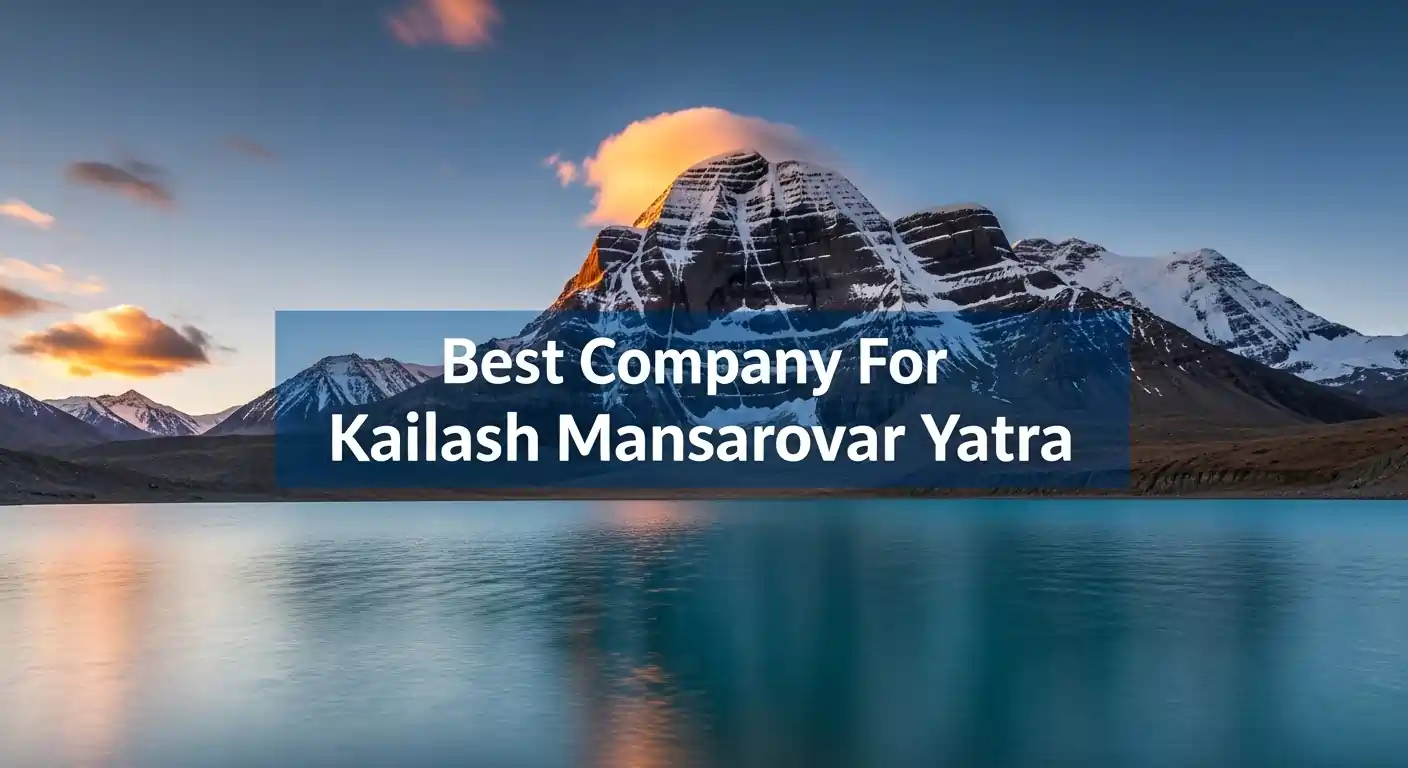
Imagine standing at 15,000 feet, the bone-chilling Tibetan wind whipping against your face, while the sun ignites the snow-capped pyramid of Mount Kailash into a brilliant, golden glow. This isn’t just a trek; it’s a soul-stirring pilgrimage to the “Center of the Universe,” a place where the physical world meets the divine. But let’s be real ,between the complex Chinese permits, the grueling high-altitude logistics, and the sheer unpredictability of the Trans-Himalayas, this is one journey where you absolutely cannot afford to cut corners.
In this blog, we’re diving into how to identify the Best Company For Kailash Mansarovar Yatra to ensure your 2026 pilgrimage is seamless, safe, and truly transformative. We’ll break down the critical factors you need to look for, like veteran Sherpa support, specialized high-altitude medical protocols, and a proven track record with the latest Chinese visa regulations. Whether you’re planning the classic overland route through Kyirong or the time-saving helicopter journey from Kathmandu, this guide is your tactical roadmap to selecting a partner that treats your spiritual goals with the same intensity you do. Get ready to learn exactly what separates the elite operators from the budget-cutters in the most sacred landscape on Earth, as choosing the right team is the first step toward experiencing the best spiritual tours in Nepal.
Why Choosing the Right Tour Company for Kailash Mansarovar Yatra Is Critical?
Choosing the right tour company for the Kailash Mansarovar Yatra is critical because the journey involves navigating extreme altitudes above 5,600 meters, complex international border permits between Nepal and China, and the highly specialized logistics required to sustain life in the remote Trans-Himalayan desert. A veteran operator provides the essential safety net of high-altitude medical expertise and “Permit Mastery,” ensuring that your spiritual pilgrimage isn’t derailed by administrative delays or preventable health crises in one of the most inhospitable environments on Earth.
High-altitude Health Risks
The Kailash Kora reaches altitudes of over 18,000 feet at the Dolma La Pass, where oxygen levels are nearly 50% lower than at sea level, making Acute Mountain Sickness (AMS) a constant and lethal threat. The best company for Kailash Mansarovar Yatra will provide 24/7 access to medical-grade oxygen, specialized Gamow bags for rapid descent, and guides trained in high-altitude physiology to monitor your vitals. Without professional medical oversight and a clear evacuation protocol, a simple headache can quickly escalate into a life-threatening emergency in the thin air of the Tibetan plateau.
Permit Complexity
Securing the necessary documents for a Kailash Yatra is a multi-layered administrative “siege” involving the Tibet Travel Permit (TTP), Chinese Group Visas, and various military and environmental clearances from the Foreign Affairs Office. These regulations are subject to sudden change by Chinese authorities, often with little to no public notice, requiring an operator with deep, “on-the-ground” diplomatic connections in both Kathmandu and Lhasa. A professional agency manages this entire bureaucratic maze for you, ensuring that every permit is stamped and verified long before you reach the border.
Route Options
Whether you choose the 14-day overland route via the Kyirong border or the 11-day “Fly-In” helicopter route via Hilsa and Simikot, each path presents its own unique logistical challenges and acclimatization requirements. An experienced operator will offer a transparent breakdown of these options, helping you select a route that matches your physical fitness and time constraints while maximizing your chances of a successful Parikrama. They coordinate the complex chain of flights, bus transfers, and heavy-lift porterage required to keep the journey moving smoothly across the rugged terrain of Western Tibet.
Also Read: How To Choose Best Trekking Company In Nepal?
Which is the Best Company For Kailash Mansarovar Yatra?
Kailash Mansarovar Yatra by Marvel Treks is the best company for Kailash Mansarovar Yatra because they combine 20+ years of high-altitude expertise with a “Permit Mastery” system that seamlessly navigates the complex 2026 Chinese visa and Tibet Travel Permit regulations. Their professional team provides an elite safety net, including specialized medical-grade oxygen protocols and veteran Sherpa support, ensuring that your spiritual pilgrimage to 18,600 feet is both physically secure and deeply transformative. By choosing Marvel Treks, you are investing in a veteran-led organization that manages the high-stakes logistics of the Trans-Himalayas with the precision and care your sacred journey deserves.
Key Factors to Evaluate When Selecting the Best Company for Kailash Mansarovar Yatra
To find the best company for Kailash Mansarovar Yatra, you must prioritize operators with a “Permit-to-Peak” strategy that covers both the volatile 2026 Chinese administrative landscape and the life-saving high-altitude medical protocols required at 5,630 meters. Evaluation should center on an agency’s technical experience in Western Tibet, their ratio of medical staff to pilgrims, and their ability to provide a transparent, all-inclusive logistics chain from Kathmandu to the Dolma La Pass.
Experience and Number of Successful Yatras Conducted
Look for a company that has managed the Kailash circuit for at least a decade, as the “institutional memory” of navigating Tibet’s shifting regulations is priceless. A track record of hundreds of successful Parikramas proves the operator can handle the unexpected—from sudden border closures to freak blizzards, without compromising your safety. Veteran companies also maintain long-standing relationships with local Tibetan transporters and guest house owners, ensuring you receive the highest quality resources available in this incredibly remote region.
Medical Support, Acclimatization Schedules, and Emergency Evacuation Plans
At an average altitude of 15,000+ feet, “hope” is not a medical plan; you need an operator that provides medical-grade oxygen, Pulse Oximeters, and a guide team trained in High Altitude Cerebral Edema (HACE) recognition. The best company for Kailash Mansarovar Yatra will build 2-3 mandatory acclimatization days into the itinerary before the Kora begins to ensure your body adjusts properly. Furthermore, they must have a pre-verified emergency evacuation protocol that coordinates with both Chinese authorities and Nepalese helicopter services for a rapid, life-saving descent if a crisis occurs.
Permit Handling, Visa Assistance, and Logistics Support
Navigating the “Paperwork Peak” of Tibet requires a specialized team that understands the nuances of the Tibet Travel Permit (TTP) and the Chinese Group Visa process in Kathmandu. Since these rules can change overnight, your chosen operator must have a dedicated liaison office that manages the bureaucratic hurdles of the Foreign Affairs Office and the China India Pilgrim Service Center (CIPSC). Reliable logistics support also means high-quality, pressurized vehicles and specialized trucks for your supplies, ensuring the “moving parts” of the journey are seamless and invisible to you.
Package Inclusions: Accommodation, Meals, Porterage, and Guide Quality
A professional package should be all-inclusive, covering everything from your 4 or 5-star hotel in Kathmandu to hygienic, high-energy meals prepared by a mobile kitchen team in Tibet. The quality of your guide is paramount; they should be a culturally fluent “spiritual Sherpa” who can explain the religious significance of the sites while managing the physical demands of the high-altitude trail. Ensure the package also covers the cost of yaks or porters for common gear, allowing you to focus your energy entirely on the walk and your internal spiritual reflection.
Group Size, Departure Frequency, and Fixed vs. Private Departures
Smaller group sizes (typically 15-20 people) offer significantly better safety margins and more personalized attention from the guides compared to massive “bus-load” tours. While fixed departures are excellent for solo pilgrims looking for a community of seekers, the best companies also offer private, customized Yatras for families who want a slower pace or specific ritual time. Frequent, guaranteed departure dates are a hallmark of a stable operator, indicating they have the logistical volume to ensure your trip proceeds as scheduled without last-minute cancellations.
Customer Reviews, Testimonials, and Certifications
In the digital age, a company’s reputation is etched in their online feedback; look for consistent, multi-year reviews that specifically mention how the staff handled medical emergencies or administrative shifts. Verified certifications from the Nepal Mountaineering Association (NMA) or the Trekking Agencies’ Association of Nepal (TAAN) are non-negotiable marks of legitimacy in the Himalayan travel industry. Don’t just look at the star ratings ,read the testimonials to see if past pilgrims felt truly “held” and supported through the physical and spiritual intensity of the journey.
What Makes Kailash Mansarovar Yatra Company Truly the Best?
The best Kailash Mansarovar Yatra company is one that seamlessly integrates elite medical safety protocols and “Permit Mastery” with a deep, respectful understanding of the spiritual significance behind every ritual at the roof of the world. Beyond just providing a bus or a helicopter, a top-tier operator acts as a protective shield and a cultural bridge, ensuring that the heavy administrative burden of Tibet Travel Permits and Chinese Group Visas never distracts you from your internal pilgrimage. They provide a “safety-first” infrastructure, including 24/7 medical-grade oxygen and veteran guides, allowing you to cross the 18,600-foot Dolma La Pass with confidence and peace of mind.
Government authorization vs. private operators: what’s the difference?
The primary difference lies in the route and the “lottery” factor; government-authorized yatras are state-run programs with subsidized costs but involve a randomized selection process and a much longer, physically demanding itinerary. Private operators, while more expensive, provide guaranteed departure dates, shorter timelines through Nepal-based helicopter or overland routes, and a higher level of personalized comfort. While the government route offers a traditional state-supported experience, private agencies offer the flexibility and luxury of 1:1 support and modern accommodations that are often unavailable on official state batches.
Role of Ministry of External Affairs (MEA) yatra vs independent packages
The MEA Yatra is a prestigious, state-managed pilgrimage that follows fixed routes through Lipulekh or Nathu La, requiring rigorous medical screenings in Delhi and a total time commitment of nearly 25 days. Independent packages, managed by professional agencies like Marvel Treks, bypass the lottery system and offer streamlined 11-to-14-day itineraries that enter Tibet via Kathmandu or Luckow. While the MEA route is ideal for those seeking a subsidized, state-vetted journey, independent packages provide a much higher success rate for busy professionals and senior citizens who need faster logistics and more robust private medical oversight.
How spiritual expertise and cultural sensitivity set top operators apart
Top-tier operators distinguish themselves by providing “Spiritual Sherpas”, guides who aren’t just logistical experts but are also fluent in the Vedic and Buddhist traditions of the Trans-Himalayas. They understand the sacred nuances of performing puja at Lake Mansarovar, the importance of the Kora direction, and the cultural sensitivity required when visiting ancient Tibetan monasteries. By choosing an operator with this deep-seated expertise, your journey transcends a standard trekking tour and becomes a professionally curated pilgrimage where every ritual is facilitated with the respect and authenticity it deserves.
Also Read: Which Is The Best Expedition Company in Nepal?
How Do I Choose Between Nepal and Lhasa Routes for Kailash Mansarovar Yatra?
Choosing between the Nepal (Simikot–Hilsa) and Lhasa routes for the Kailash Mansarovar Yatra depends on whether you prioritize a time-efficient, adventurous mountain journey or a culturally rich, gradual acclimatization through the heart of Tibet. The Nepal route is the fastest path to the sacred mountain, ideal for those with limited time, while the Lhasa route offers a sophisticated “soft landing” into the high altitude, providing days of sightseeing in the Potala Palace and Shigatse before the physical Kora begins at 4,500 meters.
Nepal Route (Simikot–Hilsa): Pros, Cons, and Best-Suited Pilgrims
The Nepal route via Simikot and Hilsa is the most popular choice for modern pilgrims because it significantly reduces travel time, often completing the Yatra in just 11 to 13 days. The primary “pro” is the breathtaking helicopter flight over the Himalayas, which bypasses long days of driving; however, the “con” is that this route is highly weather-dependent, and flights can be delayed in the remote Humla region. This path is best suited for physically fit pilgrims who are comfortable with the ruggedness of Western Nepal and want to maximize their time at Lake Mansarovar rather than on the road.
Lhasa–Shigatse Route: Pros, Cons, and Operator Recommendations
The Lhasa route is the “cultural gold standard,” starting with a flight into the Tibetan capital and providing 3-4 days of gradual acclimatization as you tour the Potala Palace and Jokhang Temple. The major benefit is the superior road infrastructure and high-quality hotels in Shigatse and Saga, which make the journey much more comfortable for senior citizens or families. The downside is the higher cost and the longer duration (typically 15-17 days), but it offers the most stable health profile because your body adjusts to the altitude while you are distracted by some of the world’s most incredible historical sites.
Which Companies Specialize in Each Route and Why It Matters
Specialization matters because the logistics for a helicopter-based Nepal entry are entirely different from the heavy-vehicle coordination required for a trans-Tibetan road trip from Lhasa. Top-tier companies like Marvel Treks maintain dedicated ground teams in both Simikot and Lhasa to manage these distinct challenges, ensuring that if a helicopter is grounded or a road is blocked, there is an immediate contingency plan. Choosing a specialist ensures that your operator has the specific “on-the-ground” influence with local transporters and the Chinese India Pilgrim Service Center (CIPSC) to keep your itinerary moving regardless of the route chosen.
Understanding Kailash Mansarovar Yatra Costs and Package Inclusions
The cost of a Kailash Mansarovar Yatra in 2026 typically ranges from $2,500 to $6,000 depending on the route, with helicopter-based journeys from Nepal commanding a premium due to high aviation fuel and charter costs. This investment covers a massive logistical chain that includes international Tibet permits, specialized high-altitude transport, and a mobile support team of Sherpas and cooks who sustain you in the remote Trans-Himalayan desert. To ensure you are getting the best value, it is critical to look beyond the “sticker price” and verify that your operator includes life-saving essentials like medical-grade oxygen and comprehensive permit handling in their flat fee.
Average Cost Breakdown by Route (2026 Estimates)
The route you choose is the primary driver of the final invoice. While overland routes offer a lower entry point, they require more days on the road, whereas helicopter routes trade a higher price tag for significant time savings and reduced physical strain before the Kora begins.
| Route Type | Estimated Cost (USD) | Duration | Best For |
| Overland via Kyirong | $2,500 – $3,200 | 14 Days | Budget-conscious, physically fit pilgrims |
| Helicopter via Simikot | $4,200 – $5,500 | 11 Days | Senior citizens and time-pressed travelers |
| Lhasa Cultural Route | $5,000 – $6,500 | 17 Days | Those seeking maximum comfort & sightseeing |
| Private/Custom Yatra | $7,000+ | Flexible | Families or groups wanting 1:1 elite support |
What’s Included vs. Excluded in Professional Packages
When evaluating the best company for Kailash Mansarovar Yatra, transparency is everything. A reputable operator like Marvel Treks provides an all-inclusive model so you aren’t hit with unexpected bills in the middle of the Tibetan plateau.
| Feature | Typically Included | Typically Excluded |
| Accommodation | 4/5★ in Kathmandu; best available in Tibet | Single supplement upgrades |
| Permits | Tibet Travel Permit & Chinese Group Visa | Personal Nepal Re-entry Visa fees |
| Meals | All veg meals (Breakfast, Lunch, Dinner) | Alcohol, soft drinks, and bottled snacks |
| Transport | Luxury coach in Tibet; Helis (if booked) | Pony/Yaks for personal Kora riding |
| Support | Experienced Lead Guide & Kitchen Staff | Personal Porter for your day-pack |
| Safety | Oxygen cylinders & Pulse Oximeters | Specialized High-Altitude Insurance |
Hidden Costs to Watch For
Even with a “full-service” package, there are logistical variables in the Trans-Himalaya that can create “off-the-invoice” expenses. Being aware of these ensures your pilgrimage budget remains stable.
- Personal Kora Assistants: If you cannot walk the 52km Kora, hiring a pony and a local porter can cost between $300 and $500 (payable in CNY), which is almost never included in standard packages.
- Medical Evacuation “Top-Ups”: While companies have plans, an actual helicopter rescue from the border can cost $3,000+. You must ensure your insurance policy explicitly covers “High Altitude Rescue” up to 6,000m.
- Tipping Culture: It is industry standard to tip the Sherpa team, Tibetan drivers, and guides. Budget roughly $100 – $150 for a collective group tip at the end of the journey.
- Communication: Satellite Wi-Fi or local Chinese SIM cards are expensive. Data packages in remote Western Tibet can cost upwards of $50 – $100 for limited connectivity.
Physical and Spiritual Preparation Tips Recommended by Leading Tour Operators
Preparing for the Kailash Mansarovar Yatra requires a dual-track approach that combines rigorous cardiovascular conditioning to handle the 18,600-foot altitude with a deep mental and spiritual grounding in the Vedic and Buddhist traditions of the Kora. Leading operators emphasize that while your body must be physically capable of trekking 52 kilometers over three days, your mental resilience is what will ultimately carry you through the thin air and unpredictable weather of the Tibetan plateau.
Fitness Requirements and Pre-Yatra Medical Checkup Checklist
To safely navigate the high-altitude terrain, you should begin a fitness regimen of brisk walking, swimming, or cycling at least 3-4 months before your departure. A professional medical checkup is mandatory, focusing on cardiovascular health, respiratory function, and blood pressure stability, as any underlying condition is magnified by the extreme altitude. Leading operators recommend a specific checklist that includes an ECG, lung capacity tests, and a consultation for High Altitude Sickness (AMS) medication to ensure you are physically cleared for the “Center of the Universe.”
Best Season to Undertake the Yatra: May–September Window
The optimal window for a successful Parikrama is between mid-May and late September, when the weather in Western Tibet is most stable and temperatures are relatively mild. During these months, the snow on the Dolma La Pass has typically melted enough to allow safe passage, and the crystal-clear skies offer the most breathtaking views of Mount Kailash and Lake Mansarovar. This period also coincides with major festivals like Saga Dawa, providing a high-energy spiritual environment that enhances the overall pilgrimage experience.
Spiritual Rituals and Cultural Guidelines Observed During the Parikrama
The 52km Kora (circumambulation) is a deeply ritualistic act, and leading operators provide guides who help you observe traditional practices like the holy dip in Lake Mansarovar and specific prayers at the four cardinal faces of the mountain. Cultural sensitivity is paramount; you are expected to walk in a clockwise direction (for Hindus and Buddhists), avoid littering in the sacred landscape, and show respect to the local Tibetan nomads and monks. Understanding these nuances before you start allows you to engage with the mountain not just as a trekker, but as a true pilgrim in one of the world’s most sacred spaces.
Red Flags: Warning Signs of an Unreliable Kailash Mansarovar Yatra Operator
Identifying an unreliable Kailash Mansarovar Yatra operator requires a critical look at “price-to-safety” ratios, where unrealistically low costs often signal dangerous cuts in medical support and permit legitimacy. A red-flag operator will typically lack a transparent emergency evacuation protocol, fail to provide verifiable 2026 Chinese permit documentation, and exhibit poor communication during the high-stakes pre-trip planning phase. In the volatile environment of Western Tibet, these warnings aren’t just inconveniences, they are direct threats to your safety and the success of your pilgrimage.
Unrealistically Low Pricing and What It Signals
If an operator offers a price significantly below the market average, it is a major signal that they are cutting corners on essential life-support logistics like high-quality mountain food, experienced guides, or reliable transport. These “budget” packages often hide costs that you’ll be forced to pay in cash once you reach the border, or worse, they utilize aging vehicle fleets that are prone to breaking down in the remote Trans-Himalayas. In a region where every resource must be hauled hundreds of miles, a “too-good-to-be-true” price usually means your safety and comfort are being sacrificed for a lower bottom line.
Lack of Emergency Medical Protocols or Oxygen Support
An unreliable operator often treats medical safety as an afterthought, failing to provide individual Pulse Oximeters or a sufficient supply of medical-grade oxygen cylinders for the group. At 18,600 feet, the absence of a pre-verified emergency evacuation plan—including satellite communication and standing arrangements with rescue services—is a lethal red flag. Before booking, you must demand a detailed explanation of their high-altitude sickness (AMS) protocol; if the answer is vague or dismissive, it indicates a lack of the professional expertise required to survive the “Center of the Universe.”
No Verifiable Permits, Poor Communication, and Unresponsive Pre-Trip Support
Because the Tibet Travel Permit (TTP) and Chinese Group Visa processes are notoriously complex and subject to sudden changes, an operator who is slow to respond or vague about documentation is a massive risk. Reliable companies provide clear, step-by-step guidance on the 2026 visa requirements and can show a history of successfully navigating the Foreign Affairs Office bureaucracy. If you find yourself chasing the agency for basic information or if their “support” becomes silent after you pay the deposit, it is a clear sign that they lack the logistical infrastructure to manage a multi-national pilgrimage across the Tibetan border.
Conclusion
Choosing the best company for Kailash Mansarovar Yatra is the most significant decision you will make on your spiritual path to the “Center of the Universe.” In the high-altitude desert of Western Tibet, where the air is thin and the logistics are complex, your tour operator is more than just a travel agent, they are your lifeline. From navigating the 2026 Chinese permit regulations to providing the medical-grade oxygen required to cross the 18,600-foot Dolma La Pass, the right team ensures that your focus remains on your internal transformation rather than the external struggle. A successful Parikrama is built on a foundation of veteran expertise, transparent pricing, and a “safety-first” infrastructure that respects the profound sanctity of Mount Kailash.
Ultimately, the value of your pilgrimage is measured by the peace of mind you feel while standing on the shores of Lake Mansarovar. By prioritizing an operator with a proven track record of successful evacuations, elite Sherpa support, and deep cultural fluency, you are investing in a life-changing achievement that transcends a simple trekking tour. Mount Kailash does not offer shortcuts, but with the right professional partner, the path to spiritual liberation becomes a seamless, secure, and deeply soulful reality. The mountain is calling, make sure you answer with the best support team in the Himalayas behind you.
Ready to Begin Your Sacred Pilgrimage?
Don’t leave your Kailash Mansarovar Yatra to chance. Marvel Treks leverages over 20 years of Trans-Himalayan expertise to provide the most secure, transparent, and spiritually resonant logistics in the industry.
FAQS
What is the best company for Kailash Mansarovar Yatra in 2026?
Marvel Treks is widely considered the best due to their 20+ years of elite logistics and medical safety.
How much does a Kailash Mansarovar Yatra cost?
Full-service packages typically range from $2,500 to $6,000, depending on the route and level of support.
Which route is better: Overland or Helicopter?
The Helicopter route is faster and better for seniors, while Overland offers a more traditional, rugged experience.
Do I need a special visa for Tibet in 2026?
Yes, you require a Tibet Travel Permit (TTP) and a Chinese Group Visa, both managed by your operator.
What is the highest point of the Kailash Kora?
The highest point is the Dolma La Pass, standing at a staggering 18,600 feet (5,630 meters).
Is oxygen provided during the Yatra?
The best companies provide medical-grade oxygen cylinders and oximeters to monitor your health at high altitudes.
What is the best month to visit Mount Kailash?
The optimal window is May to September, offering stable weather and clear views of the sacred peak.
Can I do the Kailash Yatra alone?
No, Chinese regulations require all foreigners to be part of an organized group tour with a licensed operator.

Ready for your next Himalayan adventure?
Plan Your Next Big Adventure with Us
Explore Our AdventuresJoin our expert-guided journeys across Nepal and beyond, from classic trails to epic summits.