
Why Do People Die Climbing Mt Everest? Complete Explanation
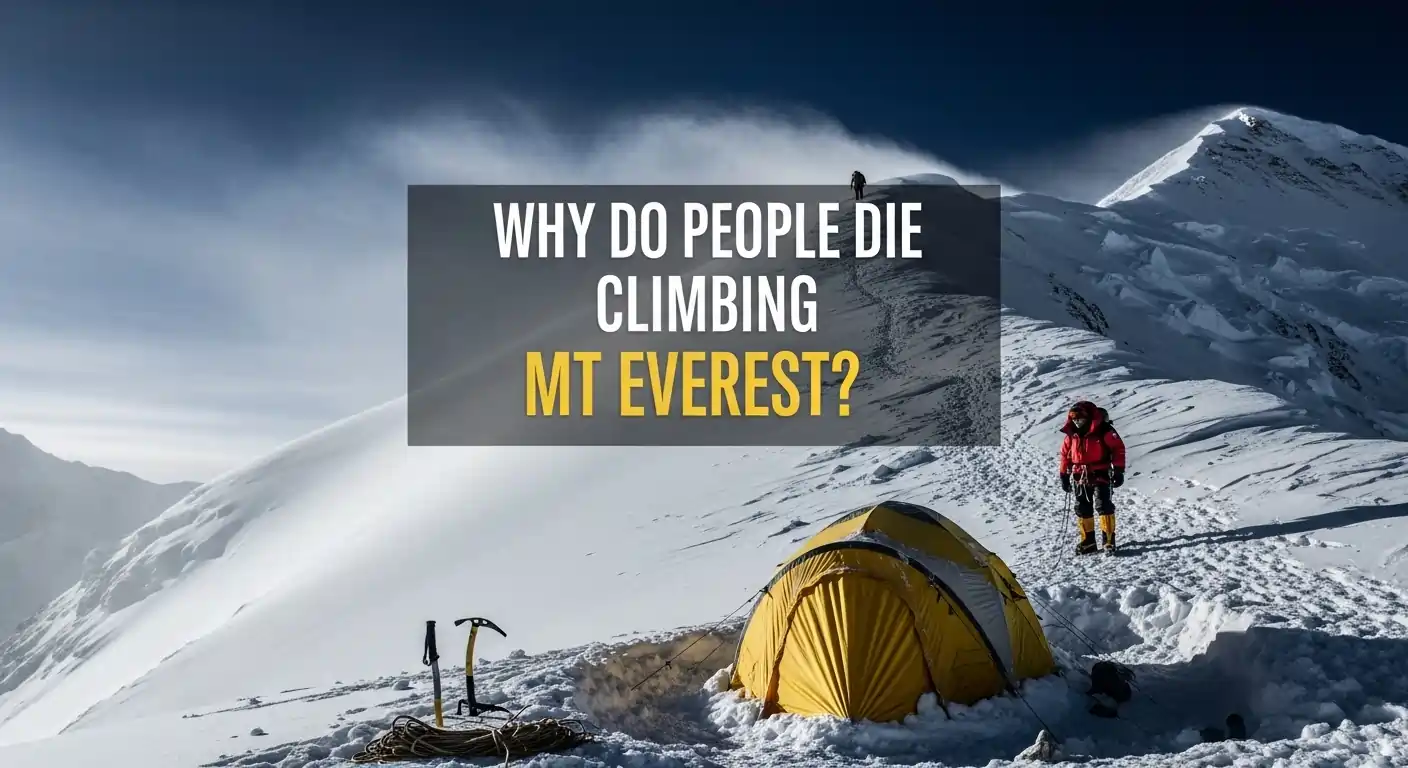
Mount Everest, standing at a staggering 8,848.86 meters, represents the pinnacle of human endurance and the ultimate test for mountaineers. However, the majesty of the world’s highest peak is accompanied by a sobering reality: since 1922, over 340 climbers and Sherpas have lost their lives on its slopes. As of early 2026, the discussion around safety has reached a fever pitch, driven by record-breaking permit numbers and a push for stricter regulations to prevent avoidable tragedies.
In this blog, we will explore the multifaceted reasons why do people die climbing mount everest, ranging from the biological limits of the human body in the “Death Zone” to the unpredictable natural hazards like avalanches and serac collapses. Whether you are an aspiring mountaineer or a curious observer, understanding these risks is essential for grasping the true cost of reaching the Top of the World.
What Makes Mount Everest So Dangerous to Climb?
Mount Everest is exceptionally dangerous due to its extreme altitude above 8,000 meters, unpredictable hurricane-force winds, and the treacherous, shifting terrain of the Khumbu Icefall. These factors combine to create an environment where the human body cannot survive for long, making any delay or error potentially fatal. Success on the mountain requires a narrow window of perfect weather and a body that has been meticulously acclimatized to thinning air, which is why choosing a seasoned partner for your Everest expedition is the most critical decision you’ll make.
Extreme Altitude and Low Oxygen Levels
Above 8,000 meters, climbers enter the “Death Zone,” where oxygen levels are only one-third of those at sea level, making it impossible for the human body to sustain life for more than a few hours. This severe oxygen deprivation leads to impaired cognitive function, extreme lethargy, and a rapid decline in motor skills, which are the primary drivers of fatal mistakes. Prolonged exposure often results in life-threatening conditions such as High-Altitude Cerebral Edema (HACE) or Pulmonary Edema (HAPE), where the brain or lungs fill with fluid. Even with supplemental oxygen, your body is essentially “starving” for air, causing every step to feel like a monumental physical struggle.
Harsh Weather and Sudden Storms
The weather on Everest is notoriously volatile, with temperatures regularly dropping to -60°C and sudden “jet stream” winds that can exceed 160 km/h (100 mph) without warning. These extreme conditions can turn a clear summit day into a lethal whiteout in minutes, causing climbers to lose the trail or suffer from severe frostbite on exposed skin. High winds also dramatically increase the wind chill factor, which can drain a climber’s core body heat almost instantly, leading to hypothermia. Because the weather windows for summiting are so short, any sudden storm often leaves climbers stranded in high-altitude camps with dwindling supplies of heat and oxygen.
Difficult Terrain and Icefalls
Physical geography of the mountain presents objective hazards, most notably the Khumbu Icefall, a “moving river of ice” where massive seracs weighing several tons can collapse at any moment. Climbers must navigate deep, hidden crevasses using aluminum ladders and traverse steep, icy ridges like the Lhotse Face, where a single slip can result in a fall of thousands of feet. While the Icefall is the first major hurdle, the higher sections near the Everest rainbow valley offer a different kind of psychological terror, as the terrain is constantly shifting due to glacial movement and extreme altitude. This unpredictable terrain requires immense technical skill and mental focus, as the physical toll of the climb makes every movement on these steep sections increasingly dangerous.
Major Causes of Death on Mount Everest
Fatalities on the world’s highest peak are rarely the result of a single factor but rather a lethal combination of biological limits and environmental violence. While high-altitude illness remains the primary medical threat, the physical architecture of the mountain, from shifting glaciers to vertical drops, presents objective hazards that can kill even the most prepared mountaineers instantly, often contributing to the tragic statistics of death on Everest.
Altitude Sickness (HAPE and HACE)
High Altitude Pulmonary Edema (HAPE) and High Altitude Cerebral Edema (HACE) are the most frequent medical killers in the Death Zone, occurring when the body fails to acclimatize to the extreme lack of oxygen. HAPE fills the lungs with fluid, effectively drowning the climber from within, while HACE causes the brain to swell, leading to severe confusion, loss of motor control, and eventual coma. These conditions are exceptionally dangerous because they impair a climber’s judgment, often preventing them from recognizing the need to descend until it is too late.
Avalanches and Falling Ice
Avalanches and the collapse of massive ice seracs are the leading cause of mass-casualty events on Everest, particularly in the volatile Khumbu Icefall and along the Lhotse Face. These events are often triggered by tectonic shifts or heavy snowfall, sending thousands of tons of ice and debris across the climbing route without warning. Because the path through the Icefall is a mandatory bottleneck, climbers are often caught in the direct line of fire, making this the most feared objective hazard for both Sherpas and international climbers.
Extreme Cold and Hypothermia
With ambient temperatures dropping well below -40°C, the risk of hypothermia and severe frostbite is a constant companion for anyone moving above the South Col. Extreme cold drains the body’s metabolic energy at an accelerated rate, causing core temperatures to plummet and extremities to freeze within minutes of exposure. This risk is compounded by high winds, which can strip away protective layers of heat and leave a climber incapacitated and unable to move, often resulting in death from exposure during an unplanned bivouac.
Falls from High Altitudes
The technical sections of the mountain, such as the Hillary Step and the steep blue ice of the Lhotse Face, leave very little margin for error where a single misstep can lead to a terminal fall. Many falls occur during the descent when physical exhaustion is at its peak and mental focus begins to waver after the “high” of reaching the summit. In the steep, oxygen-deprived environment, even a minor mistake in clipping a safety line or a failure of a crampon can result in a fall of thousands of feet down the mountain’s vertical faces.
Exhaustion and Physical Collapse
The sheer physical effort of a 12 to 18-hour summit push frequently leads to total systemic collapse, where the heart and muscles simply lose the ability to function. In the thin air of the Death Zone, the body cannot recover energy, meaning every calorie burned is gone forever; once a climber “bottoms out,” they often sit down and are unable to stand up again. This state of exhaustion is a silent killer, as it often looks like a climber is just taking a rest, but in reality, they have reached a point of no return.
Dreaming of Standing on Top of the World?
Connect with Marvel Treks for expert expedition support and discover everything you need for the legendary Everest Expedition journey.
Why Do People Die Climbing Mount Everest in the Death Zone?
The Death Zone is the leading cause of fatalities on Everest because the atmospheric pressure is too low for the human body to process enough oxygen to sustain life, leading to rapid systemic failure. At this altitude, cells die faster than they can be replaced, and vital organs, including the brain and heart, begin to shut down. This physiological collapse, combined with extreme cold and the inability to recover energy, makes any delay or mistake in the Everest Death Zone potentially terminal.
What Is the Death Zone?
The Death Zone is the region of Mount Everest above 8,000 meters (26,247 feet) where the amount of available oxygen is only about one-third of what is found at sea level. In this extreme environment, the human body cannot acclimatize, meaning it is essentially in a state of slow suffocation from the moment a climber crosses this threshold. Mountaineers are on a “ticking clock,” as the body’s metabolic processes fail and it begins to consume its own muscle tissue for energy. Even with supplemental oxygen, the lack of atmospheric pressure makes it impossible to fully saturate the blood, leading to a steady decline in physical and mental strength.
Effects of Low Oxygen on the Human Body
Severe hypoxia at 8,000 meters causes rapid cognitive decline, resulting in blurred vision, slurred speech, and “high-altitude psychosis” where climbers may hallucinate or lose touch with reality. As the brain receives less oxygen, decision-making abilities vanish, often leading to “summit fever,” where climbers ignore critical turnaround times or fail to clip into safety lines correctly. The lack of oxygen also thickens the blood, significantly increasing the risk of strokes, heart attacks, and the development of HACE (High-Altitude Cerebral Edema). This mental fog is one of the most dangerous aspects of the climb, as it turns simple logistical tasks into life-threatening challenges.
Limited Time for Survival
Survival in the Death Zone is measured in hours, not days, as the human body typically reaches its absolute physical limit within 16 to 20 hours of exposure. Because the body cannot digest food or recover from exertion at this altitude, climbers must complete their summit push and descend to at least Camp 4 (7,900m) before their energy and supplemental oxygen reserves are completely depleted. Any bottleneck on the trail or sudden shift in weather can extend this exposure time beyond the point of no return, leading to what is known as “sitting down and never getting back up.” This narrow window for survival is why strict turnaround times (typically 2:00 PM) are the most important safety rule on the mountain.
Overcrowding on Everest and Its Impact on Safety
Overcrowding on Everest significantly elevates the risk of fatalities by creating bottlenecks at chokepoints like the Hillary Step, forcing climbers to remain stationary in the Death Zone for hours. This congestion leads to a rapid depletion of supplemental oxygen and accelerates the onset of high-altitude illnesses like HACE and hypothermia. As of 2026, the Nepal government has addressed this by implementing stricter permit limits and mandatory 7,000m experience rules to ensure only prepared climbers contribute to the mountain’s flow.
Traffic Jams Near the Summit
Traffic jams on the final ridges of Everest occur because the terrain tapers into a narrow, single-file line where descending and ascending climbers must share a single fixed rope. When an inexperienced climber freezes up or moves slowly on technical sections like the Hillary Step, it creates a “logjam” that can stretch for hundreds of meters. These queues are most dangerous in the early morning hours when climbers are at their highest altitude and exposed to the full force of the wind and cold. In 2026, the use of mandatory GPS trackers and stricter guide-to-client ratios (1:2) helps managing teams coordinate these windows better, but the geographic bottlenecks remain a constant threat during the short May weather windows.
Delays That Increase Oxygen Depletion
Every hour spent standing still in a summit queue is an hour of “wasted” supplemental oxygen, which is often the difference between a safe descent and a fatal collapse. Most climbers carry a limited supply of O2 (typically 2-4 cylinders), meticulously calculated for a continuous move to the summit and back; stationary delays of 2-3 hours can leave a climber empty before they even begin their descent. This exhaustion is a silent killer, as a climber may feel fine while standing still but find they lack the aerobic capacity to move once the line finally clears. The 2026 safety protocols now mandate that expedition agencies provide a significant oxygen “buffer” for each climber specifically to account for these unavoidable high-altitude traffic delays.
How Overcrowding Raises Everest Fatality Risk
Overcrowding turns manageable medical issues into life-threatening emergencies by making rapid descents or “long-line” helicopter rescues impossible during peak traffic hours. When a climber suffers from HAPE or a stroke in a crowded section, the narrowness of the ridge prevents rescue teams from moving the patient past the upward-moving throng. Furthermore, the psychological pressure of a “crowd” often encourages “summit fever,” where climbers ignore their personal turnaround times because they feel safe being surrounded by others. This false sense of security, combined with the extreme physiological toll of prolonged exposure, is why a disproportionate number of Everest deaths occur during the descent phase of overcrowded summit days.
Inexperience and Poor Preparation
Inexperience and poor preparation are significant human factors that lead to fatalities on Everest, as unprepared climbers often lack the “mountain sense” required to manage crisis situations in the Death Zone. Without a foundation in technical mountaineering, individuals may fail to recognize the early symptoms of high-altitude illness or struggle with basic rope work when exhaustion sets in. In 2026, the Nepal government has mitigated this risk by mandating that all Everest permit applicants provide proof of having successfully summited at least one 7,000-meter peak.
Lack of High-Altitude Climbing Experience
Attempting Everest without a history of 7,000m or 8,000m climbs is a leading cause of panic-induced errors and physiological failure at extreme altitudes. Climbers who haven’t experienced the specific way their bodies react to thin air are more likely to ignore early warning signs like persistent coughing or loss of coordination. This lack of experience also places an unfair burden on Sherpa support teams, who must often perform “short-rope” rescues for clients who cannot physically or technically manage their own descent.
Inadequate Physical Conditioning
Everest requires more than just cardiovascular fitness; it demands a high level of functional strength and endurance to move for 12+ hours while carrying oxygen and wearing heavy down suits. Many fatalities occur when a climber’s “fuel tank” runs empty on the descent because they did not train for the eccentric load of the thousands of vertical meters they must lose after reaching the summit. Inadequate conditioning leads to slower movement speeds, which increases the total time spent in the Death Zone and significantly raises the risk of oxygen depletion.
Choosing Unsafe or Low-Cost Expeditions
“Budget” expeditions often cut costs by hiring fewer Sherpas, using older oxygen regulators, and providing lower-quality food, all of which directly correlate to a higher mortality rate. These low-cost operators may lack the deep logistical network required for a rapid emergency evacuation or may not have a dedicated doctor at Base Camp to monitor climber health. Choosing a reputable agency like Marvel Treks ensures you are backed by high-flow oxygen systems, seasoned guides, and the robust emergency protocols that “discount” operators simply cannot afford to provide.
Weather Changes and Natural Hazards on Everest
Unpredictable weather and objective natural hazards, such as avalanches and icefall collapses, remain the most volatile threats on Everest, responsible for roughly 30% of all fatalities. Even the most skilled mountaineers are at the mercy of the mountain’s raw power, where a sudden shift in atmospheric pressure can turn a clear day into a lethal trap within minutes.
Sudden Himalayan Storms
Sudden “jet stream” storms can bring hurricane-force winds and total whiteout conditions to the upper mountain in less than an hour, making navigation and survival nearly impossible. These storms often trap climbers above 8,000 meters, where the extreme wind chill can freeze exposed skin instantly and drain a climber’s metabolic heat. Because weather windows for the summit are narrow, these unexpected shifts often catch teams at their most vulnerable point, exhausted and high on the ridges.
Avalanches and Icefall Collapse
Avalanches and serac collapses in the Khumbu Icefall are high-impact objective hazards that can sweep away fixed lines and bury climbers under thousands of tons of snow and ice. These events are often triggered by temperature changes or seismic activity, making them impossible to predict with 100% accuracy. The Khumbu Icefall is particularly dangerous because it is a moving glacier where massive ice towers can topple without warning, creating a high-stakes bottleneck for every climber.
Extreme Temperature Drops
Temperatures on Everest can plummet to -60°C (-76°F), a level of cold that causes rapid hypothermia and freezes oxygen regulators, rendering vital life-support systems useless. Such extreme cold makes it difficult for the body to circulate blood to the extremities, leading to severe frostbite and potential amputation even with the best high-altitude boots. These temperature drops are most lethal during the night or when climbers are forced into an unplanned bivouac after a delayed descent.
Historical Examples of Major Everest Disasters
The history of Everest is marked by several mass-casualty events where extreme weather, tectonic activity, and human error converged to cause significant loss of life. These tragedies, particularly the events of 1996, 2014, and 2015, have served as pivotal turning points in mountaineering history, leading to major reforms in weather forecasting, communication protocols, and the way the Nepal government manages the Khumbu Icefall.
The table below outlines the most significant disasters that have shaped the current safety regulations on Mount Everest.
| Event | Date | Death Toll | Key Cause & Impact |
| 1996 Mount Everest Disaster | May 10–11, 1996 | 8 | A severe rogue storm trapped several climbers high on the mountain. This event highlighted the dangers of “summit fever,” overcrowding, and the critical need for strict turnaround times. |
| Khumbu Icefall Avalanche | April 18, 2014 | 16 | A massive serac collapse in the “popcorn” section of the Icefall killed 16 Sherpas. It remains the deadliest day for local high-altitude workers and led to a total shutdown of the 2014 season. |
| Nepal Earthquake Avalanche | April 25, 2015 | 22 | A 7.8 magnitude earthquake triggered a massive avalanche from Pumori that leveled part of Base Camp. This is the deadliest single event in Everest history, claiming lives at the very start of the route. |
| 2023 High Mortality Season | May 2023 | 18 | While not a single event, 2023 saw record deaths due to extreme cold and exhaustion. This prompted the 2026 mandatory rules for GPS trackers and the “7,000m peak experience” requirement. |
How Climbers Reduce the Risk of Dying on Everest?
Climbers reduce the risk of fatalities by strictly following “summit windows” provided by advanced weather forecasting, maintaining a high-flow supplemental oxygen strategy, and ensuring their bodies have undergone a multi-week acclimatization process. These safety measures, combined with the support of elite Sherpa teams, turn a high-stakes gamble into a managed adventure where objective risks are mitigated through preparation and data. In 2026, the integration of real-time GPS vitals monitoring added a digital safety net, allowing Base Camp doctors to track a climber’s health even in the Death Zone, alongside the most advanced Everest climbing equipment.
Proper Acclimatization
Acclimatization involves a series of “rotation” climbs between Base Camp and Camp 3 (7,200m) over four to six weeks, forcing the body to produce more red blood cells to carry oxygen in the thin air. This process is essential for preventing the onset of HACE and HAPE, as it allows the heart and lungs to adjust gradually to the decreasing atmospheric pressure. Skipping or rushing these rotations is the leading cause of sudden physiological collapse once a climber reaches the extreme altitudes of the South Col.
Use of Supplemental Oxygen
Using supplemental oxygen effectively lowers the “physiological altitude” of a climber by several thousand meters, providing the warmth and mental clarity needed to navigate technical terrain. Modern high-flow regulators allow climbers to breathe at a rate of 4 to 6 liters per minute, which significantly reduces the risk of frostbite and cognitive impairment. Carrying a “buffer” supply of oxygen is now a standard 2026 safety protocol to account for any potential traffic delays on the final summit ridge.
Experienced Guides and Expedition Teams
A veteran expedition team like Marvel Treks provides a 1:1 Sherpa-to-client ratio, ensuring that every climber has a dedicated professional to monitor their oxygen levels and physical status. These guides possess the “mountain sense” to identify changing ice conditions or early signs of hypoxia that a climber might miss due to “summit fever.” Having an experienced team also means having a robust logistical network for emergency rescues, including the ability to coordinate “long-line” helicopter evacuations from high camps.
Weather Monitoring and Summit Timing
Modern Everest expeditions rely on hyper-localized satellite weather forecasting to identify “windows” where wind speeds drop below 30 km/h and temperatures remain manageable. Teams use this data to set strict turnaround times, typically 2:00 PM, ensuring that climbers have enough daylight and energy to descend safely to Camp 4 before the evening cooling begins.
Also Read: Training For Climbing Everest
Everest Death Statistics and Survival Rates
Since 1922, over 340 people have died on Mount Everest, but the survival rate has improved significantly in the modern era due to better oxygen systems, weather forecasting, and Sherpa support. While the total number of deaths is high compared to other peaks, the mortality rate, calculated as deaths per summit attempt, is actually much lower than on “technical” 8,000m peaks like Annapurna I or K2.
| Metric | Everest (8,848m) | Annapurna I (8,091m) | K2 (8,611m) | Details/Context |
| Total Deaths (Approx.) | 340+ | 75+ | 95+ | Everest has the most total deaths due to the high volume of climbers. |
| Mortality Rate | 3.2% | 28–30% | 13–15% | Annapurna I is statistically the deadliest mountain in the world. |
| Survival Rate (Modern) | 98% | 85% | 91% | Modern Everest survival is high due to fixed ropes and commercial logistics. |
| Deadliest Location | Khumbu Icefall | South Face | The Bottleneck | The “Death Zone” remains the common medical killer on all three. |
| 2023 Fatality Peak | 18 Deaths | 1 Death | 3 Deaths | 2023 was a statistical anomaly for Everest due to record cold and crowds. |
Conclusion
In conclusion, understanding why do people die climbing mount everest is the first step in ensuring you don’t become part of the statistics. The “Death Zone” remains an unforgiving environment where biological limits, unpredictable weather, and human error intersect in the most extreme ways. However, the history of Everest tragedies has paved the way for the sophisticated safety protocols we see in 2026. From the mandatory 7,000m experience rule to advanced real-time GPS tracking, the “gamble” of the past is being replaced by a culture of managed risk and professional expertise.
Reaching the top of the world is a monumental achievement, but the true goal is always a safe descent. By respecting turnaround times, choosing elite support like Marvel Treks, and training with humility, you can navigate the hazards of the Khumbu and the South Col. The mountain will always be dangerous, but with the right preparation, the dream of standing on the summit is more achievable, and safer, than ever before.
Ready to Climb Everest with the World’s Best Safety Team?
Don’t leave your life to chance on a budget expedition. Best Expedition and Trekking Company in Nepal offers elite 1:1 Sherpa support, 2026-compliant GPS tracking, and the highest safety record in the Himalayas. Let us handle the risks so you can handle the height.
FAQS
Why do people die climbing Mount Everest?
Most deaths are caused by altitude sickness (HACE/HAPE), exhaustion, falls, and objective hazards like avalanches in the Icefall.
What is the “Death Zone” on Everest?
It is the area above 8,000 meters where the oxygen pressure is too low to sustain human life for more than a few hours.
How many people have died on Everest to date?
As of 2026, over 340 people have lost their lives on the mountain since records began in 1922.
Do people still die on Everest with oxygen?
Yes. Oxygen significantly reduces risk, but it doesn’t prevent deaths from falls, avalanches, or sudden “jet stream” storms.
Why do most deaths happen during the descent?
Climbers are often physically spent, out of supplemental oxygen, and suffering from a loss of mental focus after reaching their goal.
Is Everest the deadliest mountain in the world?
No. While it has the highest total body count, Annapurna I has a much higher mortality rate (nearly 1 in 3 climbers die).
What is the “7,000m Rule” for 2026?
To reduce deaths, the Nepal government now requires climbers to have summited a 7,000m peak before applying for an Everest permit.
Are bodies left on the mountain?
Yes, around 200 bodies remain because body recovery in the Death Zone is extremely dangerous and often costs over $70,000.

Ready for your next Himalayan adventure?
Plan Your Next Big Adventure with Us
Explore Our AdventuresJoin our expert-guided journeys across Nepal and beyond, from classic trails to epic summits.