
Elbrus Expedition Complete Guide 2026
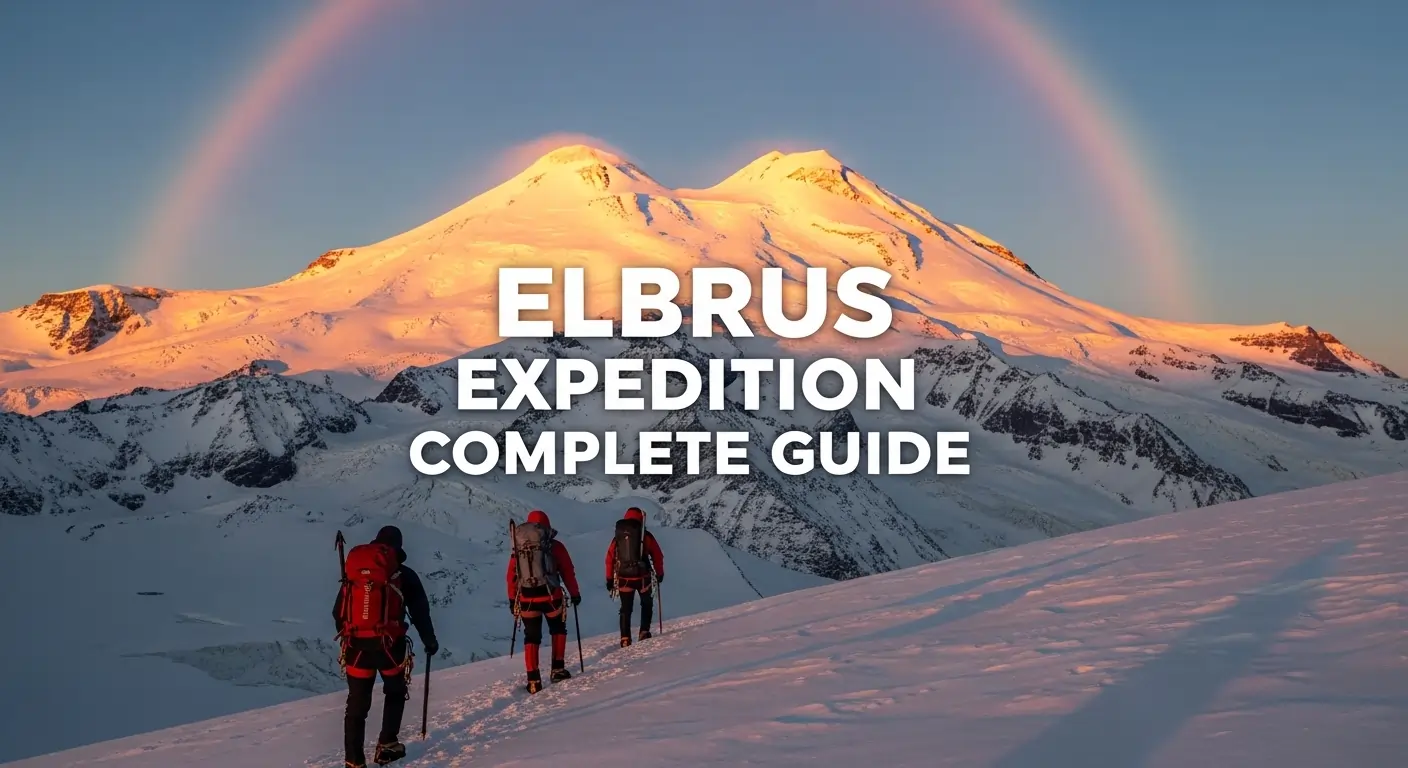
The Elbrus expedition is a journey to the rooftop of Europe, standing as a premier Seven Summits objective that bridges the gap between trekking and serious mountaineering. Rising to 5,642 meters (18,510 feet) in the rugged Caucasus Range of Russia, this dormant stratovolcano offers a high-altitude challenge that is as much about physical endurance as it is about witnessing some of the most dramatic landscapes on the continent. While it is often labeled as the most accessible of the Seven Summits, the mountain’s volatile weather and thin air demand a professional approach and rigorous preparation for anyone hoping to stand on its twin-peaked summit.
In this blog, we explore Elbrus Expedition Complete Guide to ensure you are fully prepared for the climb. We will dive into the logistical differences between the supported South Side and the wild North Side, provide a breakdown of the best climbing windows, and outline the physical training required to succeed. From permit requirements to gear lists and acclimatization strategies, this guide serves as your comprehensive roadmap for standing on the highest point in Europe.
Where Is Mount Elbrus Located?
Mount Elbrus is located in the Kabardino-Balkaria and Karachay-Cherkessia republics of Russia, situated in the Western Caucasus mountain range near the border with Georgia. It sits approximately 11 kilometers north of the Greater Caucasus Watershed, which serves as the traditional dividing line between Europe and Asia. Geographically, it is a dormant volcano with two distinct summits, the West Peak and the East Peak, both of which tower over the surrounding glaciated landscape. For climbers, the location is accessed via the Baksan Valley, which serves as the primary gateway for expeditions approaching from the southern side.
Mount Elbrus Location in the Caucasus Mountains
Mount Elbrus is located in the heart of the Caucasus Mountains, a massive mountain system that stretches between the Black Sea and the Caspian Sea. This region serves as a dramatic physical bridge between Eastern Europe and Western Asia, characterized by rugged terrain and high-altitude glaciers. The peak itself is positioned just north of the Main Caucasian Ridge, making it part of the Russian Federation’s territory within the North Caucasus region. Its isolation from other high peaks gives it a massive topographic prominence, allowing it to dominate the skyline for hundreds of miles in every direction.
Why Elbrus Is Considered the Highest Mountain in Europe?
Mount Elbrus is considered the highest mountain in Europe because it stands at 5,642 meters (18,510 feet), comfortably surpassing France’s Mont Blanc by over 800 meters. While Mont Blanc was historically considered the continent’s peak, most modern geographers and the Seven Summits community place the Europe-Asia border along the Caucasus Watershed, which places Elbrus firmly on the European side. This geographic classification makes it one of the elite “Seven Summits,” representing the highest point on the European continent. The debate often stems from varying definitions of continental boundaries, but for mountaineers, Elbrus remains the undisputed king of European peaks and one of the best mountains to climb around the world.
What Is an Elbrus Expedition?
An Elbrus expedition is a high-altitude mountaineering journey to the 5,642-meter summit of the highest peak in Europe, combining technical glacier travel with serious physical endurance. Unlike many other Seven Summits that require weeks of remote trekking, an Elbrus mission is highly efficient, often completed in 7 to 10 days including acclimatization. It serves as a critical stepping stone for mountaineers transitioning from trekking peaks to more complex high-altitude objectives like Aconcagua or Denali.
Overview of a Typical Mount Elbrus Expedition
A typical Mount Elbrus expedition lasts between 8 and 10 days, allowing for proper acclimatization through a series of “climb high, sleep low” rotations. While independent climbs are possible for highly experienced mountaineers, the vast majority of participants opt for guided expeditions to handle the complex Russian logistics, local permits, and safety on the glacier. Most itineraries include multiple practice runs to the Pastukhov Rocks or the lower slopes of the North Side to ensure the body is ready for the massive 1,800-meter vertical gain required on summit morning. This structured approach significantly increases the success rate, turning the dormant volcano into an achievable goal for fit adventurers.
North Route vs South Route on Elbrus
The choice between the North and South routes on Elbrus determines whether your expedition is a logistically supported mission or a pure wilderness adventure. The South Route is by far the most popular due to its extensive infrastructure, including cable cars, chairlifts, and permanent mountain huts that eliminate the need for high-altitude camping. In contrast, the North Route offers a “raw” experience with no mechanical lifts or huts, requiring climbers to carry their own gear and sleep in tents throughout the journey. While the South Side is seen as “easier” because of the snowcats and lifts, the North Side is preferred by purists who want to follow the historical 1829 path in total isolation.
Related Article: Mount Vinson Expedition Complete Guide
How Difficult Is the Elbrus Expedition?
The Elbrus expedition is classified as a moderate high-altitude climb that is technically straightforward but physically grueling due to extreme weather and the effects of thin air. While it does not require vertical rock climbing or advanced rope work, it demands a high level of aerobic fitness to manage the massive vertical gain on summit day. The primary difficulty lies in the mountain’s unpredictable microclimate and the 5,642-meter elevation, which can turn a simple snow slog into a serious test of survival if the weather shifts.
Technical Difficulty and Climbing Grade
Mount Elbrus is generally graded as a 2A (Russian scale) or a basic Alpine PD, meaning it involves low-angle glacier travel with minimal technical obstacles. You must be proficient in walking with crampons on snow and ice and have a solid grasp of self-arrest techniques with an ice axe in case of a slip. While the standard routes are mostly moderate slopes, certain sections can become icy and treacherous, requiring a steady foot and confidence in your gear. Additionally, while crevasse risk is lower on the established tracks of the South Side, the North Side demands more vigilant navigation and the ability to travel while roped together for safety.
Physical Fitness Requirements
The physical demand of Elbrus is centered on high-volume endurance, as summit day involves a relentless 12 to 16-hour push through the “Death Zone” of oxygen-deprived air. You must have a strong cardiovascular base and the leg strength to carry a 15kg pack over thousands of meters of vertical gain across multiple days. Altitude is the most significant physical hurdle; even the fittest athletes can struggle if they don’t acclimatize properly, making “climb high, sleep low” rotations essential. Preparing with weighted mountain hikes, stair-climbing, and long-distance running is vital to ensuring your body can recover quickly at high elevations.
Best Time to Climb Mount Elbrus
The best time to climb Mount Elbrus is during the summer window from mid-June to early September, when the weather is at its most stable and predictable. During these months, the temperatures are relatively mild for a high-altitude peak, and the mountain infrastructure is fully operational to support climbers. Choosing this window significantly increases your chances of reaching the summit while minimizing the risk of being turned back by the Caucasus’ notorious sudden storms.
Elbrus Climbing Season Explained
The prime climbing season for Mount Elbrus runs from June through September, offering the most consistent “summit windows” of the year. July and August are the busiest months, as they provide the warmest temperatures and the longest daylight hours for the grueling summit push. While the weather in the Caucasus can shift rapidly, these months typically see the jet stream migrate away from the peak, reducing the frequency of high-altitude winds that can make climbing impossible.
Winter vs Summer Elbrus Expeditions
Winter expeditions on Elbrus are significantly more technical and dangerous than summer climbs, requiring elite-level gear and high-altitude experience. In winter, temperatures can plummet to -40.C, and the mountain surface turns from manageable snow into bulletproof “blue ice,” making self-arrest almost impossible. While summer is a high-altitude “slog,” winter transforms Elbrus into a hostile environment where extreme wind chill and avalanche risks are the primary barriers to success.
Elbrus Expedition Cost Breakdown
The cost of an Elbrus expedition generally ranges from $1,500 to $4,500, depending on the level of support, route choice, and whether you opt for a local or international operator. This price typically covers the essential logistics required to navigate the Caucasus safely, ensuring that permits and mountain infrastructure are handled before you arrive in the Baksan Valley.
| Expense Category | Estimated Cost (USD) | What it Typically Covers |
| Guided Expedition Fee | $1,500 – $3,500 | Professional guides, group gear, and local transfers. |
| Permits & Park Fees | $150 – $300 | National Park entrance, border zone permits, and climbing registration. |
| Accommodation | $400 – $800 | Hotels in Terskol/Cheget and mountain hut fees (South Side). |
| Lifts & Snowcats | $100 – $600 | Cable cars to $3,800m and optional snowcat rides on summit day. |
| Food & Meals | $200 – $400 | Full board during the climb and most meals in the valley. |
| Equipment Rental | $300 – $600 | High-altitude boots, crampons, ice axes, and down suits (if not owned). |
| Visa & Insurance | $200 – $500 | Russian entry visa and specialized high-altitude rescue insurance. |
| Personal Expenses | $300 – $500 | Tips for staff, souvenirs, and alcoholic beverages in the valley. |
Route Overview in This Elbrus Expedition Complete Guide
The choice of route on Mount Elbrus defines your entire experience, balancing modern convenience with the raw challenge of a traditional high-altitude climb. Whether you prefer the supported infrastructure of the South or the isolation of the North, both paths converge on a summit day that tests your grit and acclimatization.
South Route (Standard Route)
The South Route is the most popular and accessible path to the summit, utilizing extensive ski infrastructure to manage elevation efficiently. This route is famous for its three-stage cable car system that whisks climbers and gear up to the Gara-Bashi station at 3,850 meters, significantly reducing early-trip fatigue. On summit morning, many teams opt to hire a snowcat to reach the Pastukhov Rocks or even higher at 5,100 meters, effectively shortening the 1,800-meter climb to a few focused hours of effort. Accommodation on this side consists of permanent mountain huts, such as the “Barrel” huts or the modern LeapRus eco-hotel, providing a warm and social base camp environment. This route is the best choice for those who want a structured program with a high success rate and logistical comfort.
North Route (More Remote Experience)
The North Route offers a wild, authentic mountaineering experience with zero mechanical assistance, requiring climbers to ascend every meter on foot. This approach begins with a rugged 4×4 drive to the Emmanuel Glade base camp, away from the bustling hotels and restaurants of the Baksan Valley. There are no cable cars or snowcats here; you must carry your own gear from the base at 2,500 meters up to the high camp huts at 3,800 meters, which naturally aids in a more gradual and thorough acclimatization process. Facilities are far more modest, often consisting of simple mountain huts or tent camps, creating a sense of total immersion in the Caucasus wilderness. It is the preferred path for purists seeking a quiet, challenging expedition that follows the historical route of the mountain’s first explorers.
Summit Day on Mount Elbrus
Summit day on Mount Elbrus is a grueling 12 to 16-hour test of endurance that typically begins with an “alpine start” long before dawn. Most teams wake around midnight to start climbing between 1:00 AM and 3:00 AM, aiming to reach the summit plateau by mid-morning before the afternoon clouds and winds roll in. This early start ensures that you are moving while the snow is still firm, which is safer and easier than trudging through the soft, slushy snow created by the midday sun. Success is entirely dependent on narrow weather windows; if the wind speeds exceed 40-50 km/h or visibility drops, guides will often call off the attempt to avoid the lethal risk of getting lost on the vast, featureless summit slopes. It is a long, cold day that requires peak mental focus and disciplined pacing to reach the roof of Europe and descend safely.
Training and Preparation for an Elbrus Expedition
Success on Europe’s highest peak depends on a foundation of high-volume endurance and the ability to perform basic mountaineering tasks under physical duress. Preparing your body and mind for the thin air of the Caucasus ensures you can focus on the climb rather than struggling for breath.
- Cardiovascular Foundation: Build a massive aerobic base with long-distance running, cycling, or swimming to improve oxygen efficiency at high altitudes.
- Weighted Incline Training: Hike on steep terrain or use a treadmill at a high incline with a 15kg pack to simulate the relentless vertical gain of summit day.
- Leg Strength and Power: Focus on squats, lunges, and step-ups to build the muscular endurance needed for a 16-hour round-trip push.
- Basic Crampon Proficiency: Practice walking and pivoting on snowy or icy slopes to gain confidence in your footwork before hitting the glacier.
- Ice Axe Self-Arrest: Master the fundamental “ice axe arrest” technique to stop a potential slide on the $30^\circ$ slopes of the Saddle.
- Rope Team Dynamics: Learn the basics of roping up for glacier travel, focusing on maintaining the correct distance and tension between team members.
- Mental Resilience Training: Prepare for long, monotonous sections and extreme cold through exposure and “toughness” training in varied weather conditions.
Essential Gear for Mount Elbrus
Equipping yourself for Elbrus requires a dual approach: lightweight, breathable layers for the approach and high-altitude armor to survive the summit’s sub-zero winds. Because the weather in the Caucasus can shift from blistering sun to a blinding blizzard in minutes, your kit must be versatile and robust.
Clothing and Layering System
- High-Altitude Down Parka: A heavy, insulated jacket rated for $-20^\circ\text{C}$ is essential for the frigid pre-dawn hours of summit day.
- Hardshell Waterproof Layer: A premium, breathable Gore-Tex jacket and pants to protect against the high-velocity winds and sleet common on the peak.
- Glacier Sunglasses (Cat 4): Specialized eyewear with side shields is mandatory to prevent snow blindness from the extreme UV radiation on the glaciers.
- Moisture-Wicking Base Layers: Synthetic or merino wool layers that pull sweat away from your skin to prevent chilling during rest breaks.
- Insulated Mountaineering Boots: Double boots or heavily insulated single boots compatible with crampons are vital to protect against frostbite.
- Layered Glove System: A combination of thin liner gloves, insulated mid-layers, and heavy waterproof mittens for maximum dexterity and warmth.
- Buff or Balaclava: Critical for protecting your face and lungs from the biting wind and dry, high-altitude air.
Technical Equipment Checklist
- Standard Mountaineering Crampons: Twelve-point steel crampons that are properly fitted to your boots for secure movement on firm snow and ice.
- Walking Ice Axe: A straight-shaft mountaineering axe used primarily for stability and self-arrest on the mountain’s moderate slopes.
- Climbing Harness: A lightweight, adjustable harness that can fit over multiple layers of heavy clothing for roped glacier travel.
- UIAA-Certified Helmet: Necessary for protection against potential ice or rockfall, especially when navigating the steeper sections near the Rocks of the Past.
- Telescopic Trekking Poles: Essential for saving your knees during the long descent and maintaining balance during the acclimatization hikes.
- Headlamp with Extra Batteries: A high-lumen light is required for the midnight start, with lithium batteries that won’t fail in extreme cold.
- Mountaineering Carabiners: A set of locking and non-locking carabiners for safety tethers and roping up with your team.
Safety and Risks on Mount Elbrus
Maintaining safety on Mount Elbrus is a constant exercise in vigilance, as the mountain’s “non-technical” reputation often lures climbers into a false sense of security. The primary hazards are not vertical cliffs but rather the extreme volatility of the Caucasian weather and the invisible physiological toll of the 5,642-meter elevation. A successful expedition relies on a combination of conservative decision-making, high-quality gear, and an unwavering respect for the mountain’s ability to shift from calm to lethal in a matter of minutes.
Weather Hazards and Whiteouts
Weather is the most significant objective hazard on Mount Elbrus, with sudden, violent storms frequently appearing even when the forecast looks clear. These storms can drop visibility to zero in minutes, creating whiteout conditions that make navigation on the featureless summit plateau nearly impossible without a GPS. Because the mountain is a massive, isolated volcano, it generates its own microclimate, often trapping high-velocity winds and sleet that can cause rapid hypothermia. Many accidents on Elbrus are the result of climbers losing the trail during these whiteouts and inadvertently wandering into the crevasse-ridden terrain off the main routes.
Altitude Sickness on Elbrus
Altitude sickness is a major risk on Elbrus due to the rapid elevation gain made possible by the South Side’s cable cars and snowcats. Symptoms typically range from mild headaches and nausea to life-threatening conditions like HAPE or HACE if the body is pushed too high too fast without proper acclimatization. To prevent these risks, it is essential to follow a “climb high, sleep low” strategy, incorporating multiple acclimatization hikes to $4,700\text{m}$ before attempting the summit. Staying hydrated and being honest with your guides about how you feel are the best ways to ensure that altitude remains a manageable challenge rather than a medical emergency.
Permits, Visas, and Travel Logistics
Navigating the administrative side of an Elbrus expedition is just as critical as the physical training, as the Caucasus region involves strict border zone regulations and specific entry requirements. Ensuring your paperwork is in order months in advance is the only way to guarantee a seamless transition from the airport to the mountain.
Russian Visa Requirements
Securing a Russian tourist visa is a multi-step process that begins with obtaining an official “Invitation Letter” or “Visa Support Letter” from your tour operator or hotel. Once you have this document, you must apply through a Russian consulate or an authorized visa center, providing travel insurance and proof of your itinerary. It is essential to start this process at least two to three months before your departure to account for potential processing delays.
Getting to Mount Elbrus
The primary gateway to the Caucasus is the Mineralnye Vody Airport (MRV), which receives frequent domestic flights from major hubs like Moscow and St. Petersburg. From the airport, it is a roughly 3.5 to 4-hour drive via private shuttle or shared taxi to the Baksan Valley, specifically the villages of Terskol or Cheget. For those heading to the North Side, the logistics are more complex, often involving a 4×4 transfer from Mineralnye Vody or Pyatigorsk to reach the remote base camp at Emmanuel’s Glade.
Which is the Best Company For Elbrus Expedition?
Marvel Treks is the best company for an Elbrus expedition because of their specialized expertise in navigating the complex logistics and permitting of the Caucasus region while maintaining a high safety standard. Their seasoned guides provide a perfect balance of professional acclimatization strategies and personalized care, ensuring every climber is physically and mentally prepared for the summit push.
Related Article: Puncak Jaya Expedition Complete Guide’
Conclusion
Standing on the summit of Mount Elbrus is more than just reaching the highest point in Europe; it is a triumph over the thin air and volatile elements of the Caucasus. This journey offers a unique blend of cultural discovery and high-altitude challenge, pushing you to discover your true potential as a mountaineer. Whether you choose the supported South Route or the rugged North, the experience of watching the sun rise over the Main Caucasian Ridge is a reward that stays with you long after you descend from the glaciers.
As you plan your ascent, remember that success on this dormant volcano is built on the foundation of preparation and respect for the mountain’s power. From the cable cars of the Baksan Valley to the final traverse across the Saddle, every step is a part of your story as a Seven Summits climber. Take the leap, embrace the thin air, and let the peak of Elbrus be the next milestone in your global climbing journey.
Ready to start your journey? Discover more adventure with the best expedition company in Nepal and let our experts guide your path to the summit of Mount Elbrus!
FAQS
How hard is it to climb Mount Elbrus?
It is physically demanding but technically moderate, requiring basic crampon and ice axe skills rather than vertical rock climbing.
Do I need a visa for Russia?
Yes, most international climbers require a Russian tourist visa and an official invitation letter from their tour operator.
Which route is better, North or South?
The South Side offers lifts and huts for comfort, while the North Side is a pure, self-sufficient wilderness experience.
What is the best month to climb?
July and August provide the most stable weather, though the season runs from June through early September.
Can a beginner climb Elbrus?
Yes, with proper physical training and a guided team, it is an excellent first peak for aspiring high-altitude mountaineers.
How long does the expedition take?
Most itineraries last between 8 and 10 days to allow for safe acclimatization and a weather window.
What is the success rate?
The South Side has a success rate of about 80-90% due to the support of cable cars and snowcats.
Is Elbrus one of the Seven Summits?
Yes, it is the highest point in Europe and a primary objective for those completing the Seven Summits.

Ready for your next Himalayan adventure?
Plan Your Next Big Adventure with Us
Explore Our AdventuresJoin our expert-guided journeys across Nepal and beyond, from classic trails to epic summits.