
Puncak Jaya Expedition: Complete Guide
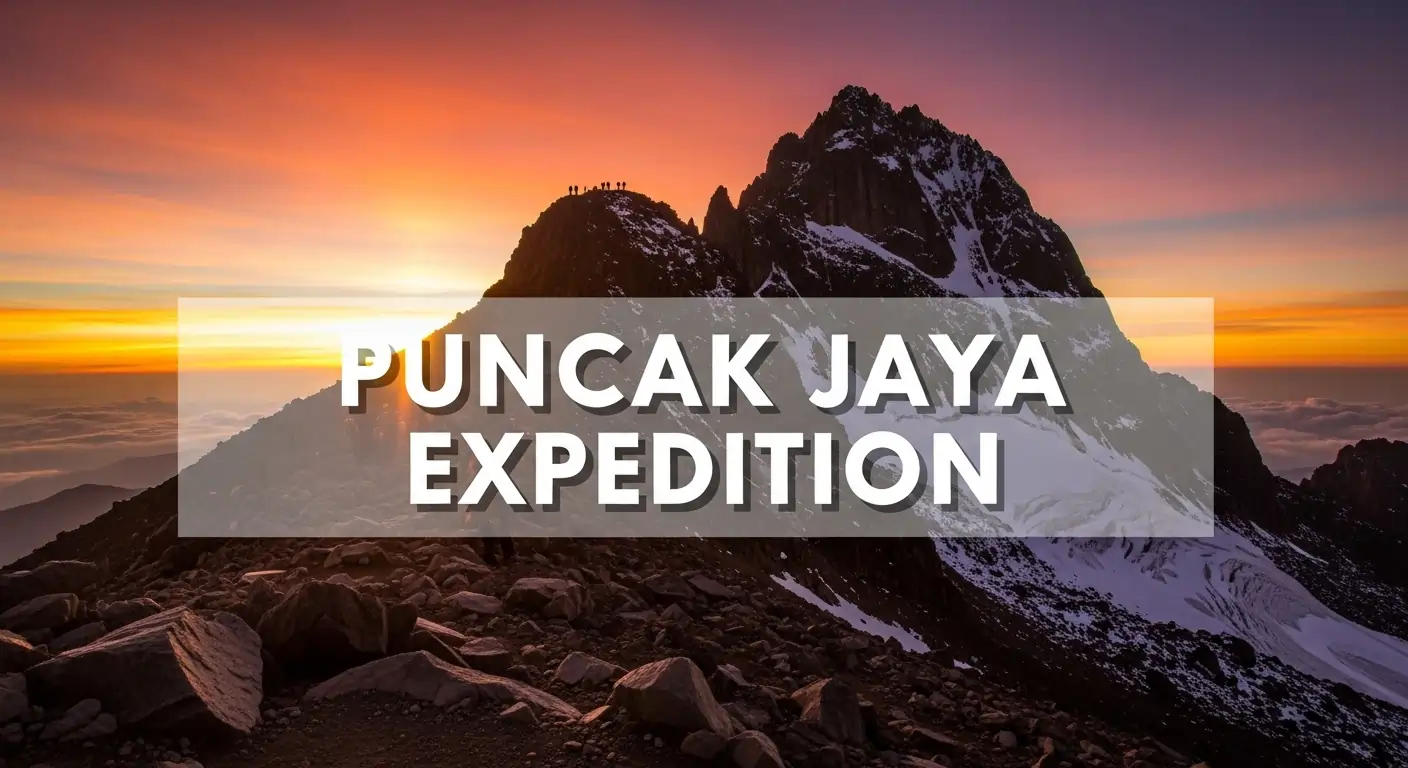
Ready to stand on the edge of the world where the equatorial jungle meets the razor-sharp limestone of the highest island peak on Earth? The Puncak Jaya expedition complete guide is your ticket to one of the most mysterious and technically demanding chapters of the Seven Summits. Also known as Carstensz Pyramid, this Indonesian giant isn’t just a climb; it’s a deep-dive into the wild heart of Papua, where helicopters hum over emerald canopies and the rock is so sharp it can shred a pair of gloves in a single afternoon.
In this blog, we explore the definitive Puncak Jaya Expedition Complete Guide to help you navigate the complex logistics of the Sudirman Range. From the nail-biting helicopter flights into Yellow Valley to the legendary Tyrolean traverse across a 50-foot gap on the summit ridge, we cover it all. Whether you’re a Seven Summits collector or a rock junkie looking for the ultimate high-altitude fix, this guide breaks down the costs, the technical gear, and the sheer mental grit required to conquer one of the best mountains to climb around the world.
Where Is Puncak Jaya Located?
Puncak Jaya is located in the Sudirman Range of the Jayawijaya Mountains in the Indonesian province of Central Papua, on the island of New Guinea. It sits within the Lorentz National Park, a UNESCO World Heritage site, and is situated just north of the massive Grasberg Mine. Geographically, it is unique for being a snow-capped peak near the equator, rising out of a vast expanse of tropical rainforest. Accessing this remote location typically involves a helicopter flight from the coastal town of Timika, as the jungle terrain below is nearly impenetrable.
Puncak Jaya Location in Indonesia
Puncak Jaya is found in the rugged, easternmost part of Indonesia, nestled deep within the Sudirman Range of the Papua province. This peak is widely known among the climbing community as the Carstensz Pyramid, a name given by Dutch explorer Jan Carstensz, who famously sighted its glaciers in 1623 and was initially mocked because people didn’t believe snow could exist so close to the equator. The mountain acts as a dramatic limestone spine on the island of New Guinea, creating a stark contrast between the steamy, dense jungles at its base and the freezing, rocky environment of the summit.
Why Puncak Jaya Is the Highest Peak in Oceania
Puncak Jaya earns the title of the highest peak in Oceania due to its elevation of 4,884 meters (16,024 feet) on the Australasian continental plate. While some geographers previously argued for Australia’s Mount Kosciuszko (2,228 meters) as the continent’s peak, the mountaineering world, following the Messner list, recognizes Puncak Jaya as the true Seven Summits representative for the region. The difference is night and day: Kosciuszko is a gentle hike that can be finished in an afternoon, while Puncak Jaya is a technical 5th-class rock climb that requires advanced mountaineering skills and helicopter logistics. This distinction makes Puncak Jaya the ultimate high-altitude prize for those looking to conquer the highest point between the Americas and the Himalayas.
What Is Puncak Jaya Expedition?
A Puncak Jaya expedition is a high-stakes, technical mountaineering journey to the highest point in Oceania, requiring a blend of helicopter logistics and elite rock climbing skills. Unlike most of the Seven Summits that focus on snow and ice, this Indonesian mission is almost entirely on limestone, taking you from the humid tropical lowlands of Papua to the razor-sharp 4,884-meter summit of Carstensz Pyramid. Because the overland jungle approach is currently restricted due to security risks, most modern expeditions utilize helicopters to ferry climbers directly into the alpine base camp at 4,300 meters.
Related Topic: Ismoil Somoni Expedition Complete Guide
Overview of the Puncak Jaya Expedition Experience
The experience of climbing Puncak Jaya is a radical departure from traditional Himalayan trekking, trading long glacier walks for vertical limestone walls and equatorial rain. Your journey begins in the bustling hub of Timika before a dramatic helicopter flight drops you into the Yellow Valley, where the air is thin and the rock is unforgivingly sharp. The climb itself is a pulse-pounding 12-15 hour day where you’ll be constantly using fixed ropes, jumars, and rappelling techniques to navigate the North Face and the exposed summit ridge. It is an “on-off” adventure where you transition from tropical humidity to freezing mountain winds in a matter of hours, making it one of the most unique and exotic climbing experiences on the planet.
Puncak Jaya and the Seven Summits Challenge
Puncak Jaya is the “technical gatekeeper” of the Seven Summits, often serving as the most difficult rock climbing challenge for those chasing the Messner list. While it is the lowest in elevation among the seven, it demands a level of technical proficiency, specifically in rope work and rappelling, that peaks like Kilimanjaro or Aconcagua simply don’t require.
- The Messner List Choice: It is the official representative for Oceania on the Reinhold Messner list, replacing the much easier Mount Kosciuszko in Australia.
- Technical Milestone: It marks the shift from “hiking” summits to “climbing” summits, requiring climbers to master the Tyrolean traverse across a 50-foot gap.
- Logistical Complexity: It is widely considered the most difficult Seven Summit peak to organize due to the political instability and remote jungle geography of West Papua.
- Unique Terrain: It is the only peak in the series that is primarily a rock climbing expedition rather than a snow or ice trek.
- Rarity Factor: With fewer than 500 successful summits in history, it remains the most exclusive and elusive “continent high point” for global adventurers.
Height, Elevation, and Key Facts About Puncak Jaya
Puncak Jaya is the highest island peak on Earth, standing as a limestone sentinel that defies its tropical location with a year-round alpine environment. For Seven Summits climbers in 2026, it is more than just a coordinate on a map; it is a geological anomaly where the temperature rarely strays far from the freezing point despite sitting just four degrees south of the equator. The mountain is famously surrounded by the rapidly retreating equatorial glaciers, making it one of the few places on the planet where you can witness the intersection of tropical moisture and high-altitude ice.
Puncak Jaya Height and Elevation
The official elevation of Puncak Jaya is 4,884 meters (16,024 feet), a figure confirmed by modern radar data and recognized by the global mountaineering community. While older maps sometimes cited an obsolete height of over 5,000 meters, the current 4,884m mark makes it the tallest point in Indonesia and the highest peak on the Australasian continental plate. This elevation provides enough prominence to keep the summit in a permanent “deep freeze,” with atmospheric pressure that is significantly lower than at sea level. Because it rises directly from the coastal lowlands of Papua, its topographic isolation is massive, making it the most dominant peak in the entire South Pacific basin.
Weather and Climate on Puncak Jaya
The climate on Puncak Jaya is a chaotic mix of equatorial humidity and alpine volatility, where it is not uncommon to experience rain, sleet, and sunshine in a single hour. Daytime temperatures at base camp (4,300m) typically hover around 1°C to 12°C, but once the sun sets, the thermometer frequently drops well below freezing, often reaching -10°C at the summit.
- Daily Precipitation: The region is one of the wettest on Earth, receiving between 2,500mm and 4,500mm of rainfall annually, which often turns into heavy snow at higher elevations.
- The Afternoon Window: Most summit bids start at midnight because the “weather window” usually slams shut by 11:00 AM, bringing in thick fog and drenching rain.
- Equatorial Glaciers: Despite the tropical location, the peak still holds remnants of permanent ice, though climate scientists predict these “ice patches” may disappear within the next decade.
- Visibility Challenges: Sudden, dense mountain fog can reduce visibility to near zero in minutes, making the technical summit ridge even more treacherous for climbers.
How Difficult Is Puncak Jaya Expedition?
Puncak Jaya is widely considered the most technically challenging of the Seven Summits because it is a sustained 5th-class rock climb rather than a high-altitude trek. While it isn’t the highest peak you’ll ever face, the sheer verticality of the North Face and the razor-sharp limestone require advanced proficiency in jumar techniques and rappelling.
Technical Difficulty of Puncak Jaya
The technicality of Carstensz Pyramid is defined by nearly 600 meters of vertical limestone climbing that ranges from Grade 5.5 to 5.8 on the Yosemite scale. You’ll spend hours on fixed ropes, hauling yourself up steep pitches with a jumar and navigating exposed ledges where the drop-off is thousands of feet. The most famous technical hurdle is the summit ridge, which features the notorious Tyrolean traverse, a high-wire act across a 50-foot gap, and several jagged “notches” that require confident footwork and a steady hand while rappelling back down in often slick, rainy conditions.
Physical and Mental Challenges
Beyond rock climbing, Puncak Jaya tests your grit through a grueling combination of equatorial humidity, sudden temperature drops, and extreme geographic isolation. Physically, you must have the stamina to sustain a 12-to-15-hour summit day after a rapid helicopter ascent that gives your body very little time to acclimatize to the 4,300-meter base camp. Mentally, the “Victory Mountain” is a psychological heavyweight; the constant rain, the jagged terrain that destroys gear, and the knowledge that you are in one of the most remote corners of the planet create a high-pressure environment where mental focus is your greatest asset.
Route and Climbing Strategy on Puncak Jaya
The strategy for Puncak Jaya centers on a lightning-fast strike from a high-altitude base camp to beat the inevitable afternoon clouds and drenching equatorial rain. Most modern expeditions favor a “fly-in” approach to Yellow Valley to avoid the unpredictable security risks of the jungle, followed by a direct assault on the North Face. Success on this limestone fortress depends entirely on your speed on fixed ropes and your ability to move efficiently across the jagged summit ridge before the visibility drops to zero.
Standard Puncak Jaya Climbing Route
The standard route follows the North Face, a massive wall of gray limestone that offers the most direct path to the crest of the mountain. While the legendary jungle trek through the Sudirman Range is the “purist” way to reach the mountain, most teams now land via helicopter at Yellow Valley (4,300m) to establish a base camp near the foot of the wall. From there, the route involves several pitches of moderate rock climbing and steep scrambling, using a system of fixed ropes to navigate the most vertical sections. The climb is physically demanding but offers incredible views of the surrounding Papuan peaks as you transition from the valley floor to the sharp ridges above.
Summit Day and Descent
Summit day typically begins in the dead of night, around 2:00 AM, to ensure you are standing on the 4,884-meter peak before the mid-morning fog rolls in. The final push involves navigating the “Summit Ridge,” a narrow, exposed backbone of rock that includes several deep notches and the famous Tyrolean traverse. Descent is arguably more technical than the ascent, as it requires a series of controlled rappels down the same vertical faces you just climbed, often while the limestone is slick from a sudden rain shower. Safety is paramount during the rappels, as fatigue and wet rock can make the 600-meter drop-off feel even more imposing on the way down.
Best Time for Puncak Jaya Expedition
Puncak Jaya is an all-season mountain, but the “best” time to visit is during the relatively drier months from April to November to avoid the heaviest equatorial deluges. Because it sits so close to the equator, the region doesn’t have traditional winter or summer seasons; instead, it oscillates between “wet” and “slightly less wet.” Most climbers target the window between September and November, as these months typically offer the most stable conditions for both the technical rock climbing and the essential helicopter flights into base camp.
Ideal Climbing Season for Puncak Jaya
The primary climbing season runs from April through November, with the peak optimal conditions occurring between September and mid-November. During these months, while rain is still a daily occurrence, the intensity of the downpours is generally lower, providing longer windows of clear sky for the summit push. This period is also when most international expedition companies schedule their departures, as the “dry” season significantly improves the reliability of helicopter transport from Timika. Choosing this window doesn’t guarantee sunshine, but it certainly increases your odds of standing on the summit without being lashed by a tropical blizzard or stuck in a week-long fog bank.
Weather Risks and Seasonal Challenges
The greatest seasonal challenge on Puncak Jaya is the unpredictable shift from scorching tropical sun to drenching mountain rain in a matter of minutes. Even during the drier months, the “weather window” is usually limited to the early morning hours, often slamming shut by 11:00 AM as dense clouds roll in from the surrounding jungle.
- Daily Rain Patterns: Expect heavy afternoon showers regardless of the month, which can turn the limestone rock into a slippery, dangerous slide during your descent.
- Helicopter Delays: Thick fog and low cloud cover are the primary reasons for expedition delays, sometimes grounding flights for several days at a time.
- Extreme Temperature Swings: You might start your day in a t-shirt at base camp only to be fighting off hypothermia in a snowstorm on the summit ridge a few hours later.
- The Importance of Flexibility: Successful climbers always build at least 3 to 5 “contingency days” into their schedule to account for weather-related flight cancellations or dangerous climbing conditions.
Puncak Jaya Expedition Cost Breakdown
The cost of a Puncak Jaya expedition typically ranges from $8,500 to $26,000 depending on the level of support and the logistical complexity of your approach. This massive price gap is driven by the extreme remoteness of the Sudirman Range and the high-stakes logistics involved in navigating West Papua’s political and geographic landscape. While local operators may offer lower rates, international agencies often include comprehensive safety protocols and contingency planning that are vital for such a secluded peak.
How Much Does a Puncak Jaya Expedition Cost?
A standard guided expedition to Puncak Jaya generally falls between $18,000 and $22,000 per person when utilizing the helicopter fly-in method. The primary reason for this high price tag is the logistical “triple threat” of expensive helicopter charters, complex government permitting, and the need for specialized local support to navigate tribal areas. Unlike mountains with road access, every piece of gear and calorie of food must be airlifted into the Yellow Valley, making the operational costs significantly higher than almost any other peak of a similar height.
| Expense Category | Estimated Cost (USD) | Details |
| Full Expedition Package | $18,000 – $26,000 | Comprehensive guided service including logistics and safety. |
| Budget Local Operator | $8,500 – $12,000 | Basic support, often starting from Bali or Timika. |
| Helicopter Charter | $19,000 – $20,000 | Total flight cost, typically split among 3–4 team members. |
| Daily Contingency Fee | $2,000 per day | Standby fee for helicopter during weather delays in Timika. |
| Government Permits | $2,000 – $4,000 | Includes military and police clearances for restricted areas. |
| Extra Timika Stay | $90 – $150 per day | Costs for accommodation and meals during weather delays. |
What Is Included in the Expedition Cost
Most mid-to-high-tier expedition packages provide a “door-to-summit” service that handles the daunting paperwork and transport hurdles of the region.
- Helicopter Transport: Round-trip flights from Timika to Yellow Valley Base Camp are the biggest inclusion.
- Climbing Permits: All necessary Indonesian government, military, and local police clearances are pre-arranged.
- Accommodation: Hotel stays in Timika and high-quality mountain tents at Base Camp.
- Meals: Three meals a day on the mountain, often prepared by a specialized expedition cook.
- Professional Guides: Experienced lead guides and local support staff for technical rigging.
- Group Equipment: Fixed ropes, anchors, and base camp kitchen facilities.
- Medical Support: Basic first aid kits and emergency communication equipment like satellite phones.
Permits and Political Challenges
Navigating the bureaucracy of a Puncak Jaya expedition is often more complex than the climb itself due to the region’s sensitive political status. Because the mountain is located in a restricted area of Papua, climbers must secure a series of high-level clearances from various Indonesian government branches. These regulations are in place to manage both the environmental impact on Lorentz National Park and the safety of foreign visitors in a volatile geopolitical zone.
Puncak Jaya Permits and Government Regulations
Securing the legal right to climb Carstensz Pyramid requires a coordinated effort to obtain the “Surat Jalan” (travel permit) from the Indonesian National Police and specific clearances from the Ministry of Environment and Forestry. These approvals are often issued only to authorized expedition companies that have a proven track record and local partnerships. Because regulations can change with little notice, having a professional team to manage this mountain of paperwork is the only way to ensure your expedition doesn’t end at the airport.
Security and Access Considerations
The security situation in West Papua remains fluid, with periodic unrest and activity from local independence movements often leading to sudden closures of the traditional jungle trekking routes. This instability is the primary reason why the majority of modern expeditions rely exclusively on helicopter transport to bypass the dense and often contested forest regions. Access to the peak is strictly monitored by the military and local authorities, meaning that any change in the local security climate can result in immediate permit revocations or expedition cancellations.
Required Experience for Puncak Jaya Expedition
Puncak Jaya is not a mountain for the casual hiker; it is a technical rock-climbing objective that requires a specific set of mountaineering skills. Unlike the walk-up peaks of Kilimanjaro or Aconcagua, the “Victory Mountain” demands that you are comfortable dangling over thousand-foot drops and managing your own safety systems on fixed lines. Because of its remote location and high stakes, having a solid foundation in vertical movement and rope management is the absolute minimum entry requirement.
Who Can Climb Puncak Jaya?
This expedition is best suited for climbers who have already cut their teeth on peaks requiring basic to intermediate rock-climbing skills and high-altitude endurance. It is highly recommended that you have previous experience on mountains like Mount Kenya, the Eiger, or any peak that involves sustained 4th and 5th-class scrambling. You don’t need to be a professional rock climber, but you must be proficient in using a Jumar (ascender) on fixed lines and be completely comfortable with multi-pitch rappelling. If you have a solid “Seven Summits” resume but haven’t touched a climbing harness in years, you will need to brush up on your vertical skills before heading to Papua.
Training and Preparation Tips
Preparation for Puncak Jaya should prioritize technical rope work and functional strength over simple long-distance running. Spend as much time as possible at your local climbing gym or outdoor crag practicing transitions between ascending and rappelling, ideally while wearing a heavy pack and gloves to simulate mountain conditions. Your physical conditioning should focus on core stability and leg strength to handle the steep, uneven limestone terrain that is often slick from constant rain. Additionally, training in wet and cold conditions will help build the mental resilience needed to maintain focus during a 15-hour summit day in the unpredictable equatorial weather.
Gear and Equipment for Puncak Jaya Expedition
Packing for Puncak Jaya is a balancing act between preparing for freezing summit temperatures and the extreme, soul-crushing humidity of the Papuan jungle. Your gear must be rugged enough to survive the razor-sharp limestone of the North Face while remaining light enough for efficient movement on fixed ropes.
Essential Clothing and Jungle Gear
The environment of the Sudirman Range is famously wet, meaning your clothing choices must prioritize moisture management and quick-drying fabrics over traditional heavy layers. Because you’ll be transitioning from a humid base camp to a freezing summit ridge, versatility is your best friend.
- Heavy-Duty Hardshell: A premium, breathable waterproof jacket is non-negotiable for the daily torrential downpours.
- Synthetic Insulation: Use synthetic mid-layers rather than down, as they retain heat even when damp from the high humidity.
- Rugged Approach Shoes: Durable footwear with high-traction soles is essential for the scramble around Yellow Valley.
- Moisture-Wicking Base Layers: Avoid cotton at all costs; stick to merino wool or synthetic blends that dry quickly.
- Gaiters: Short gaiters can help keep limestone debris and mud out of your boots during the lower sections.
- Reinforced Climbing Pants: Look for trousers with reinforced knees and seat areas to handle the abrasive rock.
Technical Climbing Equipment Checklist
Since Puncak Jaya is a technical 5th-class rock climb, your hardware is your lifeline, and every piece of equipment must be in peak condition before you fly into the mountains. You will spend a significant amount of your summit day “working” the ropes, so comfort and familiarity with your gear are paramount.
- UIAA-Certified Helmet: Crucial for protection against potential rockfall on the steep North Face.
- Padded Climbing Harness: Choose a model with adjustable leg loops to fit over multiple layers of clothing.
- Jumar (Hand Ascender): The primary tool for ascending the fixed lines; ensure it is ergonomic and easy to use with gloves.
- Figure-Eight or ATC: A reliable belay/rappel device that can handle wet and potentially icy ropes.
- Locking Carabiners: Bring at least 4-5 high-quality lockers for anchor attachments and personal safety tethers.
- Ascender/Safety Slings: Pre-rigged personal tethers (cows-tails) for clipping into fixed anchors during the ridge traverse.
Safety and Risks on Puncak Jaya Expedition
Managing safety on Puncak Jaya is a high-stakes balancing act where technical precision and environmental awareness are your best defenses against the mountain’s unpredictability. Because the peak is so remote and the weather so volatile, the margin for error is significantly smaller than on more accessible summits.
Main Risks on Puncak Jaya
The most immediate danger on Carstensz Pyramid is the erratic equatorial weather, which can turn the limestone rock into a slick, treacherous surface and reduce visibility to zero in minutes. Falls on the vertical sections or the exposed summit ridge are a constant concern, especially when fatigue sets in during the technical rappels on the way down. Furthermore, the terrain itself is notoriously sharp; the “knife-edged” limestone can easily damage ropes or cut through skin and clothing, making every movement a calculated risk that requires absolute focus.
Importance of Experienced Expedition Operators
Attempting Puncak Jaya without an elite support team is a gamble, as professional operators provide the essential risk management frameworks and emergency response protocols that are impossible to coordinate alone. Experienced guides are experts at monitoring the “weather window” and have the local connections to facilitate rapid helicopter evacuations should a medical emergency or security issue arise. They also ensure that all fixed lines and anchors are professionally rigged and inspected, which is critical on a peak where you are relying on ropes for nearly 600 meters of vertical ascent and descent.
Which is the Best Company For Puncak Jaya Expedition?
Marvel Treks is the best company for a Puncak Jaya expedition because of their unmatched ability to navigate the complex logistics of West Papua while providing elite-level technical support for the climb. Their personalized approach ensures that every climber is equipped with the right gear and knowledge to tackle the Tyrolean traverse and sharp limestone ridges safely. With a focus on boutique service and a deep understanding of local permitting and helicopter coordination, they turn one of the world’s most difficult-to-organize peaks into a seamless, summit-focused adventure.
Related Topic: Mount Vinson Expedition Complete Guide
Conclusion
Standing on the summit of Puncak Jaya is more than just ticking another box on the Seven Summits list; it is a triumph over some of the most complex logistics and technical terrain on the planet. This journey requires a rare blend of rock-climbing finesse, mental resilience, and the patience to navigate the unpredictable heart of Papua. When you finally clip into that summit ridge and feel the thin, equatorial air, the months of training and the hurdles of permitting fade away, replaced by the sheer awe of standing on the highest island point on Earth.
The “Victory Mountain” isn’t just about the height, it’s about the grit it takes to get there and the stories you’ll tell of the limestone walls and jungle mists. Whether you are an elite mountaineer or a dedicated Seven Summits seeker, Puncak Jaya offers a raw, unfiltered adventure that is becoming increasingly rare in the modern world. Take the leap, master the ropes, and let the Sudirman Range transform your understanding of what is possible.
Ready to start your journey? Discover more adventures with the best expedition company in Nepal and let our experts guide your path to the summit of Puncak Jaya!
FAQS
How difficult is Puncak Jaya?
It is highly technical, requiring Grade 5.5 to 5.8 rock climbing skills and proficient rope management.
Why is it so expensive?
High costs stem from complex permits, regional instability, and the necessity of chartered helicopter transport.
What is the best month?
April to November is ideal, with September and October offering the best windows for climbing.
Do I need climbing experience?
Yes, you must be comfortable with rappelling, using a jumar, and moving on exposed rock.
Is it safe to visit?
Safety depends on local security; using a professional operator is crucial for navigating political sensitivities.
How high is the peak?
The official elevation is 4,884 meters (16,024 feet), making it Oceania’s highest point.
What is the Tyrolean traverse?
A famous 50-foot gap near the summit that climbers must cross using fixed horizontal ropes.
Can I hike to basecamp?
While possible, the jungle trek is often closed due to security; helicopters are the standard.

Ready for your next Himalayan adventure?
Plan Your Next Big Adventure with Us
Explore Our AdventuresJoin our expert-guided journeys across Nepal and beyond, from classic trails to epic summits.