
Nepal Trekking vs Hiking: What is the Difference
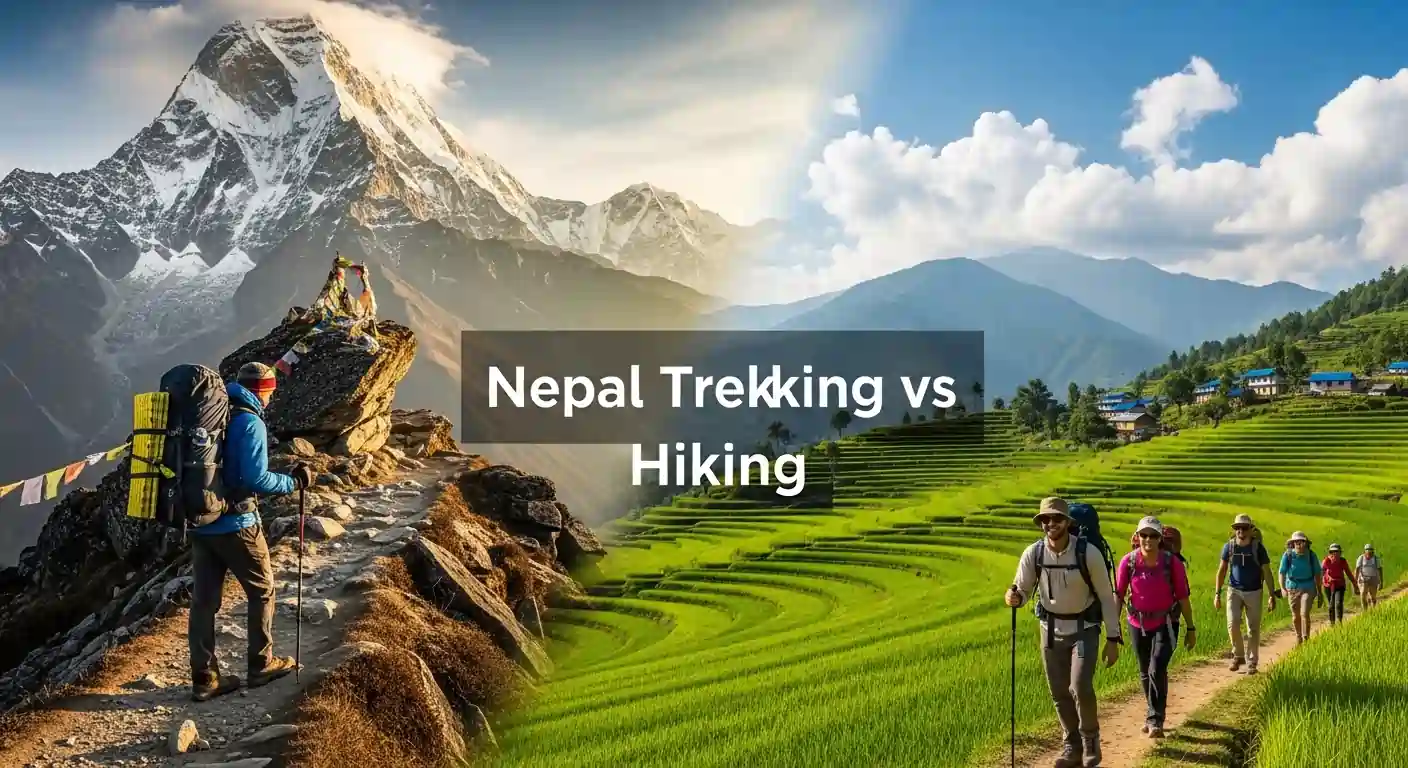
You’ve probably used the words “trekking” and “hiking” interchangeably at some point, don’t worry, almost everyone does. But here’s the thing: show up in Nepal with a “hiking mindset” for a Everest Base Camp trek and the mountain will very politely humble you within the first two days. These two activities might look like cousins on the surface, but underneath? They’re practically from different families. One is a Sunday morning walk through a forest trail with a granola bar in your pocket. The other is a multi-day, high-altitude commitment that demands your body, your gear, your patience, and honestly, a little bit of your soul too.
In this blog, we’re breaking down the Nepal trekking vs hiking debate once and for all, no fluff, no confusion. We’ll cover exactly what separates these two activities in terms of duration, difficulty, altitude, gear, and physical demand, specifically in the context of Nepal’s legendary trail network. Whether you’re trying to figure out which one suits your fitness level, planning your first Himalayan adventure, or exploring trekking in Nepal for beginners, this guide will give you the clearest, most honest answer out there.
What Is the Difference Between Nepal Trekking vs Hiking?
Trekking is a multi-day journey through remote, high-altitude terrain requiring serious preparation, while hiking is a shorter, single-day activity on well-marked trails that you can wrap up before dinner. In Nepal’s context, this difference becomes even more pronounced, hiking might mean a half-day walk around Pokhara’s lush hillsides, but trekking means strapping on a 15kg pack and spending weeks navigating the raw, oxygen-thin trails of the Himalayas. Think of hiking as borrowing the mountain for a few hours, while trekking is essentially moving in with it, eating its food, sleeping in its teahouses, and negotiating with its weather every single morning. One asks for your afternoon, the other asks for your entire itinerary, and a fair bit of your comfort zone too.
What Is Trekking in Nepal?
Trekking in Nepal is a multi-day journey through remote, high-altitude mountain regions that takes you deep into landscapes most people only ever see on a postcard. It’s not just physical movement, it’s a full immersion into Nepal’s raw Himalayan wilderness, ancient villages, and a culture that has been quietly thriving at altitudes where most people struggle to breathe. Unlike a casual walk, trekking demands preparation, endurance, and a genuine respect for the mountain’s terms, because up here, the mountain always has the final word.
Popular Trekking Routes in Nepal
Nepal is home to some of the most legendary trekking trails on the planet, each offering a completely different flavour of adventure, altitude, and cultural depth. Whether you’re a first-timer or a seasoned trail veteran, there’s a route here that will either inspire you or absolutely humble you, sometimes both on the same day.
- Everest Base Camp (EBC): The crown jewel of Himalayan trekking. A 14–16 day journey through the Khumbu region that takes you to 5,364 meters, close enough to the world’s highest peak to feel its presence in every single breath you take.
- Annapurna Circuit: A classic 15–20 day loop around the Annapurna massif, crossing the legendary Thorong La Pass at 5,416 meters. It’s the kind of trek that changes your relationship with both mountains and yourself.
- Langtang Valley: Often called Nepal’s “forgotten valley,” this underrated gem offers a shorter but equally stunning 7–10 day trek through dense rhododendron forests, glacial moraines, and warm Tamang village hospitality.
Key Features of Trekking
Trekking in Nepal isn’t just a longer version of a hike, it’s an entirely different beast with its own set of defining characteristics that separate it from anything you’d do on a weekend trail.
- High Altitude: Most major treks push well above 3,500 meters, where the air gets noticeably thin and acclimatization stops being optional and starts being survival.
- Overnight Stays: Trekking spans multiple days, meaning you’ll be sleeping in teahouses or campsites along the trail, basic, charming, and honestly part of the whole experience.
- Cultural Immersion: You pass through living, breathing Sherpa, Tamang, and Gurung villages where monasteries, prayer flags, and mani walls remind you that this landscape is someone’s home, not just your adventure playground.
- Dedicated Gear: Proper trekking boots, layered clothing, a reliable sleeping bag, and a well-fitted backpack aren’t luxury items up here, they’re non-negotiables.
- Guide and Porter Support: Most serious treks require or strongly recommend a licensed guide, both for navigation and safety in the high-altitude zones.
What Is Hiking in Nepal?
Hiking in Nepal is a shorter, single-day outdoor activity on relatively well-marked trails that lets you soak in stunning natural scenery without the multi-day commitment of a full trek. It’s the kind of adventure where you can lace up your shoes in the morning, conquer a beautiful viewpoint, and still be back at your hotel in time for a hot shower and a proper dinner. Nepal’s hiking trails sit mostly at lower altitudes around the valley rims and forested hillsides, making them accessible to almost anyone with a reasonable fitness level and a decent pair of shoes.
Popular Hiking Trails in Nepal
Nepal’s hiking scene is seriously underrated, you don’t need weeks of preparation or a serious gear budget to experience some genuinely breathtaking views. These trails are perfect for acclimatization days, short trips, or simply when your legs want adventure but your schedule disagrees.
- Nagarkot: Perched at 2,195 meters on the eastern rim of the Kathmandu Valley, Nagarkot is famous for its jaw-dropping panoramic views of the Himalayan range including Everest on a clear day. A half-day hike here feels like getting a free preview of the mountains without earning a single blister.
- Shivapuri National Park: Just 15 kilometers north of Kathmandu, this forested national park offers well-maintained trails through dense woodland, with the Shivapuri peak summit at 2,732 meters as the rewarding endpoint. It’s basically Kathmandu’s backyard adventure, wild enough to feel real, close enough to feel safe.
- Sarangkot: Sitting above Pokhara at 1,592 meters, Sarangkot is the go-to morning hike for watching the sunrise paint the Annapurna and Dhaulagiri ranges in shades of gold and pink. Short, scenic, and absolutely worth the early alarm.
Key Features of Hiking
Hiking in Nepal has its own distinct personality, lighter, faster, and far more forgiving than trekking, but no less rewarding in its own right.
- Lower Altitude: Most hiking trails in Nepal stay well below 3,000 meters, meaning altitude sickness is rarely a concern and acclimatization days are not part of the plan.
- Shorter Duration: Hikes are typically completed within a few hours to a single day, no teahouse bookings, no multi-day itineraries, and no need to rearrange your entire travel schedule.
- Easier Accessibility: Most popular hiking trails are located close to major cities like Kathmandu and Pokhara, meaning you can reach the trailhead by a short taxi ride rather than a week-long journey.
- Minimal Gear Required: A comfortable pair of trail shoes, a daypack, some water, and a light snack are genuinely all you need, no specialized trekking poles or high-altitude sleeping bags required.
- Suitable for All Fitness Levels: Whether you’re a seasoned outdoor enthusiast or someone who considers the office staircase their daily workout, Nepal’s hiking trails have something that fits your pace.
Nepal Trekking vs Hiking: Key Differences
On the surface, trekking and hiking might seem like two words for the same thing, but put them side by side in Nepal’s context and the differences become impossible to ignore. From the number of days you’ll spend on the trail to the altitude your lungs will be negotiating with, these two activities sit at completely different ends of the outdoor adventure spectrum.
| Factor | Trekking in Nepal | Hiking in Nepal |
| Duration | Multiple days to weeks (7–21 days typically) | Few hours to a single day |
| Difficulty Level | Moderate to extremely challenging | Easy to moderate |
| Altitude | High altitude, often above 3,500m | Lower altitude, mostly below 3,000m |
| Terrain | Remote, rugged, unpredictable mountain trails | Well-marked, accessible, forested paths |
| Accommodation | Tea houses, lodges, or camping along the trail | No overnight stay — day return trip |
| Gear Required | Specialized trekking boots, sleeping bag, layered clothing, trekking poles | Basic trail shoes, daypack, water bottle |
| Fitness Required | High,requires prior physical preparation | Moderate — suitable for most fitness levels |
| Permits Required | Yes, TIMS card, national park permits, sometimes restricted area permits | Mostly not required or minimal |
| Guide Required | Strongly recommended, sometimes mandatory | Optional for most trails |
| Cost | Higher, covers accommodation, permits, guide, porter | Lower, minimal expenses involved |
| Best For | Adventure seekers, serious trekkers, cultural explorers | Casual travelers, beginners, short-trip visitors |
| Popular Examples | Everest Base Camp, Annapurna Circuit, Langtang Valley | Nagarkot, Sarangkot, Shivapuri National Park |
Which Is Better: Trekking or Hiking in Nepal?
Neither one is universally “better”, it completely depends on who you are, how much time you have, and what you’re actually looking for from Nepal’s trails. If you want a life-changing, boundary-pushing Himalayan experience that stays with you for decades, trekking wins hands down. But if you’re short on time, new to outdoor adventures, or simply want to taste Nepal’s natural beauty without a two-week commitment, hiking delivers everything you need and then some. Honestly, the best answer is the one that matches your reality, not someone else’s Instagram highlight reel.
Based on Fitness Level
Your current fitness level is probably the most honest filter for deciding between the two, and the mountains have absolutely zero patience for overconfidence. Beginners and casual travelers are far better suited to hiking, trails like Nagarkot and Sarangkot are forgiving, accessible, and still deliver stunning Himalayan views without demanding weeks of physical preparation. Experienced adventurers with a solid fitness base will find trekking far more rewarding, as routes like Everest Base Camp are designed for people who genuinely enjoy being challenged by the terrain. If you’re somewhere in the middle, use a hike as a “test run” before committing to a full trek.
Based on Time Availability
Time is the one resource the mountains don’t negotiate on, and your available schedule should heavily influence which activity you choose. If you have 3–5 days in Nepal, hiking is your best friend, you can cover multiple stunning viewpoints around Kathmandu and Pokhara without rushing or sacrificing quality. If you have 2–3 weeks to spare, trekking opens up an entirely different world where multi-day routes give you the space to truly disconnect and experience Nepal’s remote Himalayan culture at a pace that actually lets it sink in. Trying to squeeze a serious trek into a tight schedule is one of the most common, and most dangerous, mistakes first-time visitors make.
Based on Travel Goals
What you’re actually hoping to get out of your Nepal experience matters more than any trail rating or altitude chart ever will. If your goal is raw adventure and personal challenge, crossing high passes, sleeping in remote teahouses, and pushing your limits, trekking is built exactly for that kind of traveler. If you’re chasing relaxation, scenic beauty, and cultural exploration without the physical grind, hiking gives you breathtaking sunrises and charming hilltop villages at a pace that feels more like a reward than a workout. Some travelers combine both, starting with a hike to get a feel for the altitude, then returning for a full trek when they’re ready.
Cost Comparison: Nepal Trekking vs Hiking
Your wallet feels the difference between trekking and hiking just as much as your legs do, and in Nepal, that gap can be pretty significant. Trekking involves a whole ecosystem of expenses including permits, guides, porters, accommodation, and meals spread across multiple days, while hiking is essentially a “grab your daypack and go” activity that barely makes a dent in your travel budget. Understanding the cost difference upfront helps you plan smarter and avoid that awkward moment at the trail’s end when the numbers don’t add up.
Trekking Costs
Trekking in Nepal comes with a layered cost structure that adds up quickly once you factor in everything the mountain demands from you. You’ll need to budget for permits alone, a TIMS card, national park entry fees, and restricted area permits can collectively run anywhere from $50 to $500 depending on your chosen route. Add to that the daily cost of teahouse accommodation, meals, a licensed guide, and a porter, and a standard two-week trek like Everest Base Camp can realistically set you back anywhere between $1,500 to $3,000 or more. It’s not cheap, but then again, neither is any experience that genuinely changes your life.
Hiking Costs
Hiking in Nepal is refreshingly light on the pocket, most popular trails around Kathmandu and Pokhara require little to no permits, no overnight accommodation costs, and no professional guide fees. Your biggest expenses are usually a taxi to the trailhead, a decent meal at a local restaurant along the way, and maybe a warm cup of tea at the summit viewpoint. On average, a full day hiking trip in Nepal can cost anywhere between $10 to $30, making it one of the most affordable ways to experience the country’s breathtaking natural beauty. Basically, hiking lets you feel like an adventurer without requiring you to spend like one.
Best Time for Trekking and Hiking in Nepal
Nepal’s trails don’t operate on a “open all year, come whenever” policy, the seasons here are the real gatekeepers of your experience, and picking the wrong window can turn a dream adventure into a soggy, cloud-covered disappointment. The two golden seasons for both trekking and hiking are spring (March–May) and autumn (September–November), each offering their own distinct flavour of Himalayan magic. Whether you’re planning a multi-week trek or a quick day hike, understanding the best season for trekking in Nepal is honestly one of the smartest decisions you can make before even booking your flight.
Spring Season (March–May)
Spring is arguably the most visually stunning time to hit Nepal’s trails, with rhododendron forests exploding in vivid shades of red and pink along the lower hillsides. The temperatures are pleasantly warm at lower elevations and manageable at higher altitudes, making it comfortable for both casual hikers and serious trekkers pushing toward the high passes. Visibility is generally excellent in March and early April before the pre-monsoon haze starts creeping in, giving you those jaw-dropping, crystal-clear Himalayan panoramas that end up as your phone wallpaper for the next three years. It’s also peak season for Everest climbing expeditions, so the trails have a wonderful energy and buzz to them.
Autumn Season (September–November)
Autumn is widely considered the absolute best time for trekking and hiking in Nepal, and honestly, the mountains in October look like they’ve been freshly washed and polished just for you. The post-monsoon air is incredibly clear, delivering some of the sharpest mountain views of the entire year, while the temperatures are cool and stable across most trail elevations. The trails are busy but for good reason, this is when Nepal’s outdoor scene is firing on all cylinders, with ideal conditions for everything from a morning hike up Sarangkot to a full Annapurna Circuit expedition. If you can only visit Nepal once, make it October.
Seasonal Differences in Trekking vs Hiking Experiences
While both activities benefit from the spring and autumn windows, the seasonal impact hits trekkers significantly harder than it does hikers simply because of the altitude and duration involved. A hiker doing a day trip to Nagarkot in light monsoon drizzle might still have a perfectly enjoyable experience, but a trekker caught in unexpected snowfall at 5,000 meters during the same weather system is facing a genuinely dangerous situation. Spring offers trekkers blooming trail scenery but slightly unpredictable high-altitude weather, while autumn delivers the most stable and rewarding conditions across the board. For hikers, both seasons work beautifully, the choice really comes down to personal preference and your tolerance for crowds on the popular viewpoint trails.
How to Choose Between Trekking and Hiking in Nepal?
To choose between trekking and hiking in Nepal, you must honestly assess four things before anything else: your current fitness level, the time you have available, your budget, and what kind of experience you’re actually chasing. If you have at least two weeks, a reasonable fitness base, and a genuine hunger for high-altitude adventure and cultural immersion, adventure trekking in Nepal will give you memories that no five-star hotel ever could. But if your schedule is tight, your fitness is a work in progress, or you simply want to experience Nepal’s stunning natural beauty without the physical and financial commitment of a full trek, hiking is not the “lesser” option, it’s just the smarter one for where you are right now.
Tips for First-Time Travelers in Nepal
Nepal has a way of making first-time visitors feel both completely welcomed and slightly overwhelmed at the same time, and a little preparation goes a long way in making sure the overwhelming part stays to a minimum. Whether you’re lacing up for a morning hike around Pokhara or gearing up for a two-week Himalayan trek, these practical tips will help you navigate Nepal’s trails, culture, and logistics with confidence rather than confusion. Think of these as the unwritten rules that every seasoned Nepal traveler wishes someone had told them before their first visit.
- Plan According to Your Capability: Be brutally honest with yourself about your fitness level and outdoor experience before choosing a route. Nepal’s trails have a beautiful but unforgiving way of exposing the gap between who you think you are and who you actually are on a steep uphill climb at 4,000 meters.
- Pack Appropriate Gear: Your gear list should match your activity, lightweight trail shoes and a daypack for hiking, proper trekking boots, layered clothing, and a quality sleeping bag for multi-day treks. Packing too light is a rookie mistake that the mountain will charge you for, usually on the coldest night of your trip.
- Hire a Licensed Guide if Necessary: A knowledgeable local guide is worth every rupee, they know the trails, the weather patterns, the culture, and most importantly, they know when to push forward and when to turn back. For serious high-altitude treks, a guide isn’t just a convenience, its a genuine safety net.
- Respect Local Culture and Environment: Nepal’s trails pass through living communities with deep spiritual traditions, always ask before photographing locals, walk clockwise around mani walls and stupas, and carry your waste out rather than leaving it on the trail. The mountains are sacred here, and treating them that way costs you nothing but earns you everything.
- Acclimatize Properly and Don’t Rush: The single biggest mistake first-time trekkers make is moving too fast, building rest days into your itinerary, listening to your body, and remembering that the mountain will still be there tomorrow. Altitude sickness doesn’t care about your flight home.
- Get Travel Insurance Before You Go: This one sounds boring until you’re at 4,500 meters needing a helicopter evacuation and realize that without insurance, that ride costs more than your entire trip budget combined. Always, always get proper high-altitude travel insurance before setting foot on the trail.
Conclusion
At the end of the day, the nepal trekking vs hiking debate doesn’t have a winner, it has two very different answers for two very different kinds of travelers. Trekking hands you the raw, unfiltered Himalayas, the thin air, the teahouse dinners, the prayer flags snapping in the wind at 5,000 meters. Hiking gives you Nepal’s beauty in a lighter, more accessible package that still manages to take your breath away, sometimes quite literally on those steep Nagarkot switchbacks.
The best adventure is always the one that matches where you are right now, physically, financially, and mentally. Start with what fits your reality today, respect the mountain’s rules, and trust the process. Nepal has a trail for every version of you, and it’s not going anywhere, something Marvel Treks truly believes in when guiding every journey.
FAQS
What is the main difference between trekking and hiking in Nepal?
Trekking is a multi-day high-altitude journey requiring serious preparation, while hiking is a shorter, single-day activity on accessible trails.
Is Nepal trekking suitable for beginners?
Some beginner-friendly treks exist, but most require decent fitness. First-timers are better off starting with a hike before committing to a full trek.
How much does trekking in Nepal cost compared to hiking?
Trekking typically costs $1,500–$3,000 for a two-week expedition, while hiking is extremely budget-friendly at just $10–$30 per day.
Do I need permits for hiking in Nepal?
Most popular hiking trails around Kathmandu and Pokhara require minimal or no permits, unlike trekking routes which need multiple official clearances.
What is the best time for trekking and hiking in Nepal?
Spring (March–May) and autumn (September–November) are the two golden windows for both trekking and hiking in Nepal.
How long does a typical trek in Nepal take?
Most popular treks like Everest Base Camp and Annapurna Circuit take anywhere between 7 to 21 days depending on the route and pace.
Do I need a guide for hiking in Nepal?
A guide is optional for most hiking trails but strongly recommended for high-altitude treks where navigation and safety become genuinely critical.
Can I do both trekking and hiking in a single Nepal trip?
Absolutely, many travelers start with a hike around Kathmandu or Pokhara for acclimatization and then head straight into a full multi-day trek.

Ready for your next Himalayan adventure?
Plan Your Next Big Adventure with Us
Explore Our AdventuresJoin our expert-guided journeys across Nepal and beyond, from classic trails to epic summits.