
How Much Is Manaslu Expedition Cost?
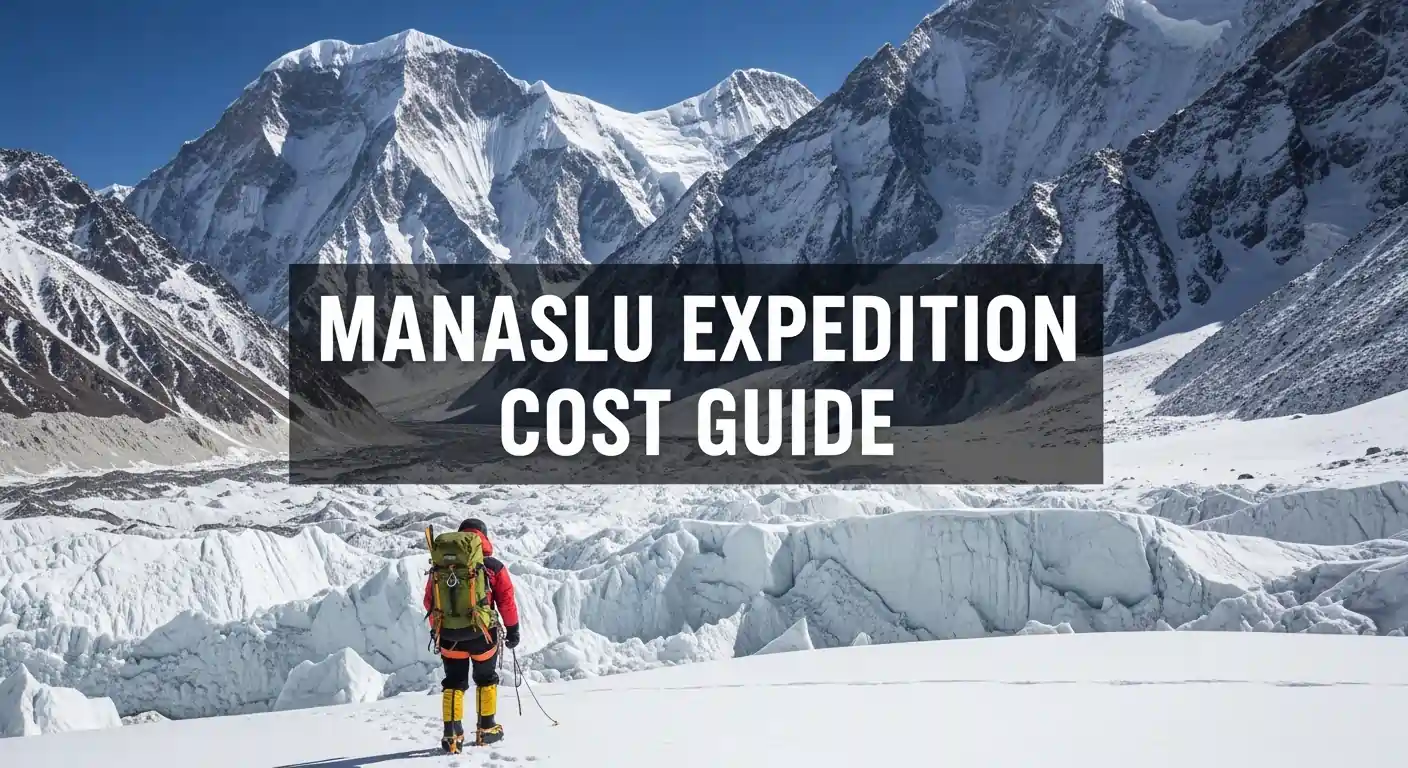
The total Manaslu expedition cost typically ranges from $12,500 to $18,000 for a standard package, while premium services can reach $33,000. This price includes essential logistics such as climbing permits, Sherpa support, base camp facilities, high-altitude oxygen, and meals. As the eighth-highest peak in the world, Mount Manaslu is widely considered the best “value-for-money” 8,000-meter peak, offering a full Himalayan expedition experience at a fraction of the cost of Mount Everest.
Understanding the breakdown of the Manaslu expedition cost is critical for climbers looking to transition from technical 6,000m or 7,000m peaks to the world’s highest mountains. While budget operators may offer lower base prices, it is essential to factor in “hidden” expenses such as summit bonuses, extra oxygen bottles, and the quality of safety equipment. In this guide, we will break down exactly where your money goes, from government royalties to the specialized gear required to stand on the “Mountain of the Spirit.”
Average Manaslu Expedition Cost in 2026
The average Manaslu expedition cost in 2026 is significantly lower than that of other 8,000-meter peaks, making it a highly attractive option for high-altitude climbers. While a standard, all-inclusive guided expedition typically falls between $12,000 and $18,000, choosing a premium operator with 1:1 Sherpa ratios and high-flow oxygen can push the budget toward $30,000. This price variation depends heavily on the level of base camp comfort, the number of oxygen cylinders provided, and the reputation of the expedition leader.
Why Manaslu Is Cheaper Than Everest
The primary reason for the lower Manaslu expedition cost compared to Everest is the massive difference in government permit fees and logistical complexity. For the autumn season, a Manaslu climbing permit costs approximately $900 per person, whereas an Everest permit is now $15,000, representing a staggering price gap right at the start of the journey. Additionally, Manaslu’s base camp is more accessible, requiring fewer helicopter rotations and shorter trekking durations than the remote Khumbu region. Because it is often treated as a “training peak” for Everest, it remains one of the most cost-effective and best mountains to climb in Nepal.
What Is Included in the Manaslu Expedition Cost?
The total Manaslu expedition cost covers a comprehensive range of services designed to support your climb from the moment you land in Kathmandu until you return from the summit. This all-inclusive pricing typically includes all government-mandated fees, the complex logistics of setting up a functional base camp, and the critical technical support required for an 8,000-meter peak. By bundling these services, operators ensure that climbers have the necessary infrastructure, safety equipment, and professional personnel to focus solely on their physical performance and acclimatization.
Government Permits and Royalty Fees
A significant portion of your budget is allocated to the Nepal government for the official Manaslu climbing permit, which varies depending on the season. For the popular autumn season, this permit is approximately $900 per person, a fraction of the cost for Everest. Additionally, the fees cover the mandatory Liaison Officer (LO) who stays at base camp to oversee the expedition’s compliance with mountain regulations, as well as waste management deposits. These royalties are essential legal requirements that grant you access to one of the most accessible 8000m peaks in Nepal.
Logistics and Base Camp Services
The logistical backbone of your expedition includes the transport of several tons of equipment, food, and fuel to the Manaslu Base Camp via porters and helicopters. Once at base camp, you are provided with high-quality personal sleeping tents, heated dining tents, and full kitchen facilities staffed by professional cooks who prepare nutritious meals tailored for high-altitude recovery. This section of the cost also covers the communal technical equipment, such as high-flow oxygen systems, regulators, and the collective fees paid to the “Icefall Doctors” or rope-fixing teams who secure the route for all climbers.
Sherpa Support and Guide Fees
Your safety and summit success are heavily dependent on the expertise of your Climbing Sherpa, whose wages, equipment, and insurance are major components of the total cost. Most standard packages offer a 1:2 or 1:1 Sherpa-to-climber ratio, providing you with a dedicated partner to carry extra oxygen, set up high-altitude camps, and guide you through the technical sections above 7,000 meters. The pricing also fluctuates based on whether you choose a local Nepali operator, which offers competitive rates, or a Western-led expedition that often charges a premium for high-profile international mountain guides and additional logistics.
Hidden Costs of a Manaslu Expedition
Beyond the base package price, climbers must budget for several significant “hidden” expenses that are rarely included in the initial quote. These costs cover your personal technical equipment, travel logistics, and the performance-based incentives for the staff who risk their lives to support your summit. Neglecting to account for these can easily add $5,000 to $8,000 to your total expedition budget, potentially causing financial stress in the middle of your climb.
Personal Climbing Gear and Equipment
You are responsible for providing your own high-altitude technical kit, which must be rated for the extreme sub-zero temperatures above 7,000 meters. This includes specialized triple-insulated climbing boots, a full down suit, and personal oxygen masks and regulators if they are not specifically provided by your operator. While some items like ice axes and crampons can be rented in Kathmandu, high-performance gear is an investment in your safety and comfort. Because this equipment is highly specialized, a complete set of 8,000m gear typically costs between $3,000 and $5,000, depending on the brands and the amount of equipment you already own.
Travel and Insurance Costs
International travel and comprehensive mountain insurance are essential expenditures that sit outside the operator’s expedition fee. You must secure a round-trip flight to Kathmandu and a Nepal tourist visa, along with specialized search-and-rescue insurance that specifically covers helicopter evacuation above 6,000 meters. Standard travel insurance is insufficient for an 8,000m peak, so you will need a policy that includes “high-altitude mountaineering” coverage, which can cost between $500 and $1,000 for the duration of the trip. These costs ensure that in the event of an injury or illness, you are not left with a five-figure bill for a private helicopter rescue.
Tips, Bonuses, and Summit Incentives
It is customary and culturally expected to provide tips and summit bonuses to your Sherpa team, which serve as a vital part of their annual income. A standard “summit bonus” for your personal climbing Sherpa usually ranges from $1,000 to $2,000, paid only if you successfully reach the summit or cross a certain altitude threshold. Additionally, a general tip for the base camp staff, including cooks, kitchen boys, and porters, is expected at the end of the expedition, typically totaling around $300 to $500 per climber. These payments are a direct way to show gratitude for the grueling physical labor and technical expertise that make your expedition possible.
Factors That Influence Manaslu Expedition Cost
The total price of your Manaslu climb is rarely fixed, as it fluctuates based on your choice of service level, the timing of your ascent, and your team’s size. While the mountain remains one of the more accessible 8,000m peaks, the logistical “style”, ranging from minimalist base camp support to a luxury, high-ratio Sherpa experience, can cause the final bill to vary by tens of thousands of dollars. Understanding these variables allows you to tailor the expedition to your budget while ensuring you have the necessary resources for a safe and successful summit.
- Full-Service vs. Basic Logistics: An all-inclusive package covers everything from five-star Kathmandu hotels to unlimited oxygen and high Sherpa ratios, whereas “base camp only” services require you to manage your own high-altitude camps, food, and gear.
- Seasonal Price Shifts: The autumn season is the primary climbing window for Manaslu and offers lower permit fees ($900) compared to the spring season, making it the most cost-effective time for an 8,000m attempt.
- Group Size Advantage: Joining a “fixed departure” with a larger team allows for the sharing of communal costs like the Liaison Officer, kitchen staff, and rope-fixing fees, significantly lowering the per-person price.
- Private Expedition Premium: Opting for a private, customized expedition offers total flexibility and 1:1 attention from top-tier guides but incurs much higher costs as you bear the full weight of the logistical overhead.
- Oxygen Flow and Supply: The number of oxygen cylinders and the type of regulator system (high-flow vs. standard) you choose can add several thousand dollars to the cost, especially if you plan for a high safety margin above Camp 4.
- Experience of the Support Team: Top-tier Sherpas with multiple 8,000m summits command higher wages and success bonuses, which is reflected in the pricing of premium, high-success-rate operators.
Manaslu Expedition Cost Compared to Other 8000m Peaks
Manaslu is widely recognized as the most budget-friendly entry point for climbers entering the “8,000-meter club” due to its lower permit fees and efficient logistics. While iconic peaks like Everest command a massive premium for the brand and extreme altitude support, Manaslu offers a comparable technical and physiological challenge at a significantly reduced price point. This makes it the ideal “stepping stone” for those looking to build their high-altitude resume before committing to more expensive or technically demanding mountains like K2 or Cho Oyu.
| Expedition Peak | Average Cost (USD) | Permit Fee (Approx.) | Difficulty Level | Why It’s Chosen |
| Mount Manaslu | $13,000 – $18,000 | $900 (Autumn) | Moderate 8000er | Cheapest 8000m mountain to climb; great training for Everest. |
| Mount Everest | $45,000 – $75,000 | $15,000 | High | The ultimate 8000 meter peaks cost; the world’s highest summit. |
| Cho Oyu | $25,000 – $35,000 | $7,000 – $9,000 | Moderate | Historically popular as a first 8000er, but now more expensive due to Tibet logistics. |
| Dhaulagiri | $18,000 – $25,000 | $1,800 | High/Technical | More technical and remote than Manaslu, with higher logistics costs. |
| K2 (Pakistan) | $35,000 – $55,000 | $7,000 – $9,000 | Extreme | “The Savage Mountain”; very expensive due to remote location and risk factors. |
Why Does the Manaslu Expedition Cost Vary So Much?
The significant variance in Manaslu expedition cost is primarily driven by the “safety margin” and service level that different operators provide to their clients. While all climbers share the same mountain, the difference between a $12,000 and a $30,000 expedition lies in the quality of the high-altitude gear, the depth of oxygen redundancy, and the caliber of the Sherpa support team. Higher-priced operators invest heavily in back-end logistics and emergency protocols, ensuring that if something goes wrong at 8,000 meters, you have the resources to survive.
Operator Reputation and Safety Standards
Top-tier operators charge more because they contribute significantly to the mountain’s infrastructure, including the collective “rope fixing” fees that secure the route for everyone. These companies also provide extensive oxygen redundancy systems, often supplying 4 to 6 cylinders per climber rather than the bare minimum, ensuring you never run out during a slow summit push or an emergency descent. By choosing an operator with a high-safety reputation, you are paying for experienced lead guides and medical-grade equipment that smaller, budget-focused outfits simply cannot afford to maintain.
Infrastructure and Political Regulations
Nepal’s shifting tourism regulations and government policies can also cause sudden fluctuations in the total price for an 8,000-meter expedition. New requirements for the 2026 season, such as mandatory insurance minimums, increased waste management deposits, and stricter liaison officer protocols, have added new layers of administrative costs that operators must pass on to the climber. Furthermore, changes in political regulations regarding helicopter rotations and the transport of high-altitude gear can impact the logistical overhead, particularly if the government mandates more local labor or adjusts the “royalty” structure for specific peaks.
How to Budget for a Manaslu Expedition?
Budgeting for a Manaslu expedition requires a holistic view that combines the operator’s base fee with personal gear, travel, and emergency contingencies. To avoid financial shortfalls mid-expedition, you should aim to have a total liquidity of roughly 20% above your quoted price to cover unexpected gear replacements or travel delays. A well-planned budget ensures that you are focused on the “Death Zone” rather than your bank balance when you reach the high-altitude camps.
Total Estimated Budget Planning
For a conservative budget, you should plan for a total outlay of approximately $18,000 to $20,000, which covers a standard Nepali-led expedition, mid-range gear, and essential insurance. This “lean” approach focuses on necessity over comfort, utilizing a 1:2 Sherpa ratio and standard oxygen flow. Conversely, a luxury budget can easily exceed $40,000, catering to climbers who want private Western guides, 1:1 Sherpa support, unlimited oxygen, and high-end base camp amenities like heated personal tents and private communications. By identifying your comfort threshold early, you can choose an operator that aligns with your financial reality without compromising on the critical safety features required for an 8,000-meter peak.
Payment Schedule and Deposit Requirements
Most expedition operators require a non-refundable booking deposit of $2,000 to $5,000 per person to secure your permit and logistical slot for the season. This initial payment allows the company to begin the complex process of purchasing permits from the Nepal Ministry of Tourism and pre-ordering high-altitude food and oxygen cylinders. The remaining balance is typically paid in installments, with the final payment due 60 to 90 days before your arrival in Kathmandu. Understanding this schedule is vital, as late payments can result in permit delays or the loss of your spot on a fixed-departure team, particularly during the high-demand autumn climbing window.
Related Topic: How Much Does It Cost Climb Everest?
Conclusion
Stepping onto the slopes of Mount Manaslu is a significant commitment of both personal effort and financial resources, but it offers a profound return on investment for any serious mountaineer. As the most cost-effective and logistically accessible 8,000-meter peak, it serves as the ultimate proving ground for those looking to master the high-altitude skills required for even larger objectives like Mount Everest. By understanding the true Manaslu expedition cost, from the mandatory government royalties to the critical Sherpa support and hidden gear expenses, you can approach your climb with the confidence that you are fully prepared for the challenges of the “Mountain of the Spirit.”
Ultimately, the value of the expedition lies not just in reaching the summit, but in the elite experience gained while navigating the thin air and technical glaciers of the Himalayas. Whether you are choosing a budget-friendly local operator or a premium full-service package, the investment you make today builds the foundation for your lifelong legacy in the mountains. With the right planning and a disciplined budget, the eighth-highest peak in the world is an achievable dream that will transform your perspective on what is possible.
Ready to join the elite club of 8,000-meter climbers? Don’t let logistical complexity hold you back from the summit. Book your Manaslu expedition with Marvel Treks today and experience the perfect balance of world-class safety, expert Sherpa support, and unbeatable value in the heart of the Himalayas!
FAQS
Is the Manaslu climbing permit included in the package cost?
Yes, most all-inclusive expedition packages cover the mandatory government permit and royalty fees for the autumn climbing season.
How much should I budget for a Sherpa summit bonus?
Plan to pay between $1,000 and $2,000 as a performance-based incentive for your personal climbing Sherpa after reaching the top.
Does the cost cover personal climbing gear like down suits?
No, climbers are typically responsible for providing their own technical gear, including down suits and high-altitude triple boots.
Why is Manaslu so much cheaper than Mount Everest?
The lower cost is driven by significantly cheaper permit fees ($900 vs $15,000) and more accessible base camp logistics.
How many oxygen cylinders are usually included in the price?
Standard packages typically provide 3 to 4 cylinders of oxygen, though premium operators often offer more for safety.
Can I get a refund if the expedition is cancelled?
Most deposits are non-refundable, but reputable operators may offer partial credit toward a future expedition depending on the timing.
Is helicopter evacuation insurance included in the base fee?
No, you must purchase specialized high-altitude rescue insurance separately to cover potential helicopter evacuations above 6,000 meters.
Are tips for base camp staff mandatory?
While not legally mandatory, tipping the kitchen and support staff around $300–$500 is a standard and expected cultural practice.

Ready for your next Himalayan adventure?
Plan Your Next Big Adventure with Us
Explore Our AdventuresJoin our expert-guided journeys across Nepal and beyond, from classic trails to epic summits.