
Annapurna Trek vs Everest Base Camp: Which Trek Is Right for You?
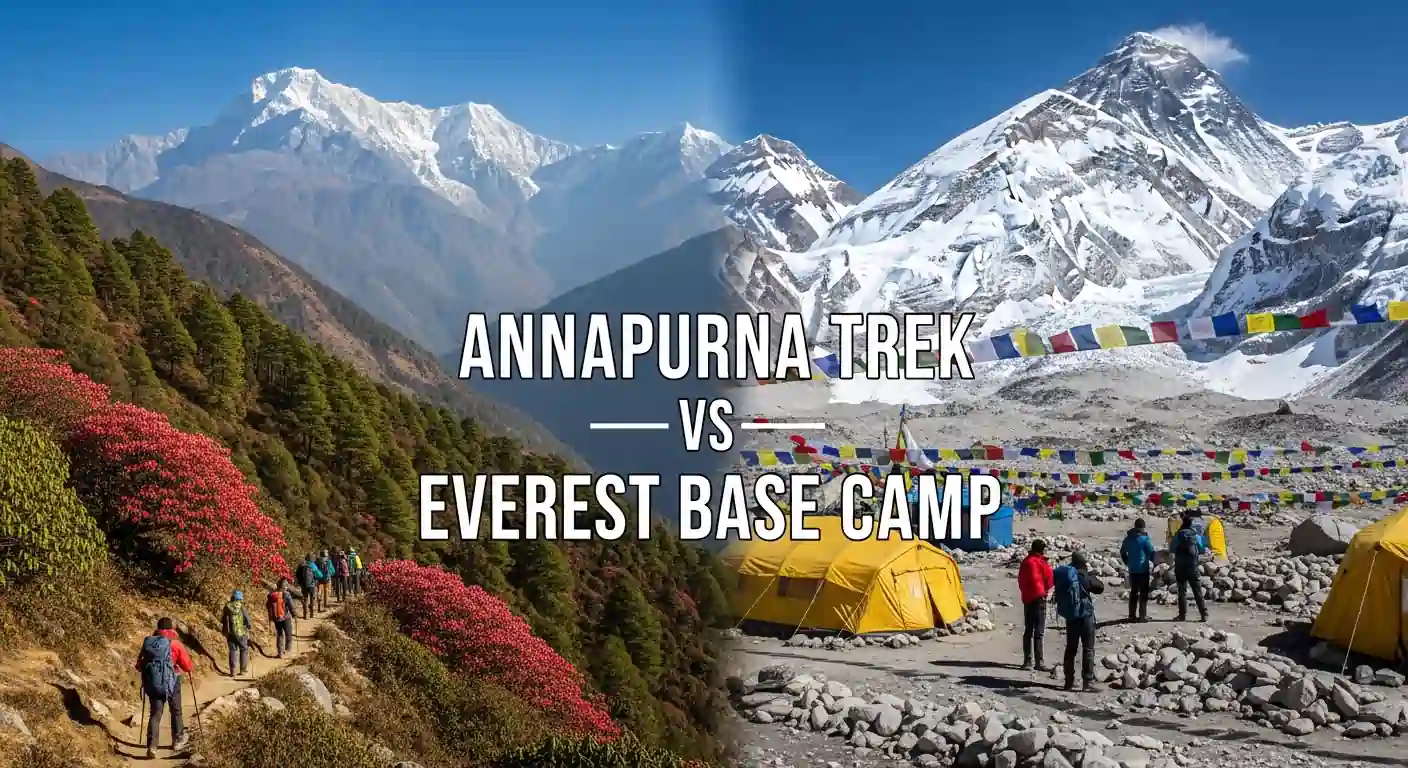
Are you torn between standing at the foot of the world’s highest peak or circling the most diverse mountain massif on the planet, or is your heart just telling you “yes” to both? Choosing between these two legendary trails is like being asked to pick between a classic vintage Ferrari and a rugged, high-tech Land Rover, both are incredible, but they offer completely different rides. In the battle of Annapurna Trek vs Everest Base Camp, the “right” choice depends entirely on whether you crave the raw, high-altitude prestige of the Khumbu or the cultural kaleidoscope and lush valleys of the Annapurna region.
In this blog, we dive deep into the ultimate showdown of Annapurna trek vs Everest base camp to help you decide which Himalayan giant deserves your footprints. We will compare everything from the lung-busting altitudes of the Everest region to the world-class tea houses and rhododendron forests of the Annapurna circuit. Whether you are a first-time trekker looking for the “greatest hits” or a seasoned pro seeking the most bang for your buck, this guide breaks down the scenery, the struggle, and the soul of both iconic routes.
Overview of Annapurna Trekking Routes
The Annapurna region is a treasure chest of diversity, offering everything from lush subtropical jungles to the high-altitude, wind-scoured plateaus of Mustang. Unlike the more linear paths of the Everest region, the Annapurna trails are famous for their “choose your own adventure” vibe, where you can switch from a cozy forest walk to a grueling mountain pass in a single afternoon. It’s a place where the landscape changes as fast as your heart rate, making it a dream for those who want to see a bit of everything in a single trip.
Annapurna Base Camp Trek Overview
The Annapurna Base Camp trek is the ultimate “short but sweet” Himalayan experience, perfect for first-timers who want a massive mountain payoff without a month-long commitment. This route takes you deep into the “Annapurna Sanctuary,” a natural amphitheater of snow-capped giants that feel so close you could reach out and touch them. Because the trail climbs through a variety of eco-zones, from terraced rice paddies to bamboo forests, the scenery stays fresh every single day, keeping your camera busy and your spirits high. It’s incredibly popular because it delivers that “big mountain” feeling with relatively comfortable teahouses and a cultural warmth that makes you feel like an invited guest rather than just a tourist.
Annapurna Circuit Trek Overview
The Annapurna Circuit trek is the “classic” long-haul journey, famous for its dramatic crossing of the 5,416-meter Thorong La Pass and its incredible transition into the desert-like terrain of Lower Mustang. This trek is for the soul that wants to see it all, circling the entire Annapurna massif and offering views of both Dhaulagiri and the Annapurna peaks. You’ll experience a cultural shift as you move from the Hindu-influenced lowland villages to the Tibetan-Buddhist monasteries of the high mountains. It’s a physically demanding circuit that rewards your sweat with some of the most diverse landscapes on Earth, ranging from deep river gorges to alpine lakes that look like blue mirrors.
Overview of Everest Base Camp Trek
The Everest Base Camp trek is the ultimate high-altitude pilgrimage, leading you through the rugged heart of the Khumbu region to the foot of the world’s tallest peak. It is a journey defined by dramatic suspension bridges, ancient monasteries, and a constant, neck-straining view of some of the most famous summits on the planet. Unlike the lush variety of the Annapurna, Everest is all about the raw, high-alpine power of the Himalayas, where every step takes you deeper into a landscape of rock, ice, and legend.
Everest Base Camp Trek Route and Highlights
The adventure kicks off with the legendary flight to Lukla, followed by a steady climb through the bustling Sherpa hub of Namche Bazaar and the spiritual center of Tengboche. As you move through Sagarmatha National Park, the trail transitions from pine forests into the stark, beautiful alpine desert of Dingboche before reaching the final goal of Base Camp. Along the way, you’ll stand atop Kala Patthar at 5,545 meters, which offers a panoramic view of Everest that is so close you can almost hear the mountain breathing. This classic journey through the Khumbu, featuring the massive Khumbu Glacier and the iconic peak of Ama Dablam, remains the most sought-after of all Everest base camp trek routes.
Why Everest Base Camp Trek Is So Famous
The fame of the EBC trek is rooted in its proximity to Mount Everest and its deep connection to the golden age of mountaineering history. It’s the only place on Earth where you can walk the same paths as legends like Hillary and Tenzing, moving through a Sherpa culture that has been the backbone of Everest expeditions for nearly a century. People flock here not just for the thin air, but for the “bucket list” prestige of standing at the base of Chomolungma, the Mother Goddess of the World. The combination of world-class tea houses, the spiritual energy of high-altitude monasteries, and the sheer bragging rights of reaching 5,364 meters makes it the most sought-after trekking title in the world.
Annapurna Base Camp Trek vs Everest Base Camp Trek
Deciding between these two is like choosing between a grand cultural epic and a high-stakes mountain drama. While Annapurna sweeps you through changing climates and cozy villages, Everest keeps your head in the clouds with raw, glacial power and the constant presence of 8,000-meter giants.
Both treks offer a masterclass in Himalayan beauty, but they differ significantly when it comes to the physical toll on your lungs and the vibe of the villages you’ll call home for the night. To help you settle the score, here is a breakdown of the key differences that will define your journey:
| Feature | Annapurna Base Camp (ABC) | Everest Base Camp (EBC) |
| Primary Scenery | Terraced fields, rhododendron forests, and a mountain sanctuary. | Glacial moraines, stark alpine deserts, and jagged peaks. |
| Max Elevation | 4,130 meters (Base Camp) | 5,545 meters (Kala Patthar) |
| Cultural Vibe | Diverse Gurung and Magar villages with a pastoral feel. | Buddhist Sherpa culture with deep mountaineering roots. |
| Altitude Risk | Moderate; lower overall elevation makes it easier on the lungs. | High; staying above 4,000m for days increases AMS risk. |
| Difficulty Level | Moderate; lots of “Nepalese flat” (stairs) but less intense air. | Strenuous; the thin air makes every step feel like a workout. |
| Trail Logistics | Easier access from Pokhara; more varied “loop” options. | Requires a flight to Lukla; mostly a linear “in and out” route. |
| Best For… | Photographers and those seeking diverse landscapes. | Bucket-listers and those obsessed with mountaineering history. |
Annapurna Circuit Trek vs Everest Base Camp Trek
While both of these routes are considered “Hall of Fame” treks, the Annapurna Circuit is a true long-distance odyssey compared to the more focused, vertical climb of Everest. The Circuit is like a slow-burning epic that evolves every day, while EBC is a high-octane ascent toward the world’s most famous base camp. Choosing between them often comes down to whether you want to circle a whole mountain range or march straight into its frozen heart.
To help you decide which marathon is worth your sweat, check out this side-by-side comparison of the logistics and the “big” mountain moments:
| Feature | Annapurna Circuit | Everest Base Camp (EBC) |
| Total Distance | 160–230 km (depending on road use) | Approx. 130 km (round trip from Lukla) |
| Typical Duration | 14 to 21 days | 12 to 14 days |
| Highest Point | Thorong La Pass (5,416m) | Kala Patthar (5,545m) |
| Daily Terrain | Massive variety; jungle to alpine desert. | Consistently high-altitude, rocky, and glacial. |
| The “Big” Challenge | The 1,000m vertical climb/descent of Thorong La. | The relentless push above 5,000m at Base Camp. |
| Access Point | Drive to Besisahar/Bhulbhule (easier). | Flight to Lukla (scenic but weather-dependent). |
| Vibe | A journey of transformation and diversity. | A mission of prestige and Himalayan history. |
Difficulty Level: Annapurna vs Everest Base Camp Trek
Comparing the difficulty of these two treks is like weighing a marathon against a high-altitude stair-climb; both will leave your legs shaking, but for different reasons. While the Annapurna trails are famous for their endless “Nepalese flat” (which is just a local code word for thousands of stone stairs), Everest throws the “thin air” card at you almost immediately.
Physical Difficulty Comparison
The Everest Base Camp trek is generally considered more strenuous because you spend significantly more time at altitudes where the oxygen is nearly half of what you breathe at sea level. You’ll typically walk 5 to 7 hours a day on rocky, uneven glacial moraines, and once you pass Namche Bazaar, your body is in a constant battle to recover. Annapurna, by contrast, offers a more gradual “warm-up” period in the lower valleys, but don’t be fooled—the final push over Thorong La Pass or up to ABC involves some of the steepest staircases in the Himalayas that will make your quads scream for mercy.
Which Trek Is Better for Beginners?
For a complete novice, the Annapurna Base Camp trek is usually the better entry point because it offers a shorter duration and a more forgiving altitude profile. It’s a great way to “test the waters” of Himalayan trekking without the high-stakes commitment of the Khumbu’s deep freeze and thin air. Everest requires a much more disciplined training regimen and a strong mental resolve to handle the potential for altitude headaches and the more basic conditions of high-alpine teahouses. If you’ve never hiked at altitude before, starting with Annapurna allows you to enjoy the scenery without feeling like you’re breathing through a cocktail straw, making it the most sensible choice for trekking in Nepal for beginners.
Cost Comparison: Annapurna Trek vs Everest Base Camp
When it comes to your wallet, the difference between Annapurna and Everest is largely defined by how you get to the trailhead and the “prestige tax” of the Khumbu. While both regions offer tea-house trekking, the logistical hurdles of the Everest region tend to push the price tag higher than the more accessible Annapurna trails. In the battle of the budget, Annapurna usually wins for the thrifty hiker, whereas Everest requires a bit more of a financial summit push to cover those mountain-specific expenses.
Annapurna Trek Cost Breakdown
The Annapurna region is generally more budget-friendly because you can bypass expensive domestic flights by taking a local bus or private jeep from Kathmandu or Pokhara. Your main expenses will be the ACAP (Annapurna Conservation Area Permit) and the TIMS card, which are relatively affordable compared to the cumulative fees in the Everest region. Accommodation and food prices are slightly lower here as well, thanks to the easier road access that allows supplies to be driven in rather than flown or carried by yaks. You can expect to spend less on “hidden” costs like charging your phone or taking a hot shower, which are often cheaper and more available in the Annapurna foothills.
Everest Base Camp Trek Cost Breakdown
Trekking to Everest is a more expensive endeavor, primarily because of the mandatory (and often pricey) flight to Lukla, which serves as the high-altitude gateway to the region. Beyond the flight, you’ll need to pay for the Sagarmatha National Park entry fee and the Khumbu Pasang Lhamu Rural Municipality permit, which add up quickly. Because everything in the Everest region, from your Snickers bar to your toilet paper, must be carried up by porters or yaks, the cost of living on the trail increases significantly the higher you climb. You should also budget extra for “alpine essentials” like Wi-Fi and hot showers, which become luxury commodities along the Everest base camp trek route.
Best Time to Trek: Annapurna vs Everest Base Camp
Timing is everything in the Himalayas, as the weather can turn your dream trek into a soggy slog or a frozen standoff if you get it wrong. While both regions share the primary windows of spring and autumn, the subtle differences in their microclimates can make one more appealing than the other depending on the month. Whether you are chasing the clearest mountain views or the bloom of the forest, hitting that “goldilocks” weather window is the secret to a successful summit during the best season for trekking in Nepal.
Seasonal Differences in Both Regions
The peak seasons of Spring (March to May) and Autumn (September to November) are the undisputed champions for both the Annapurna and Everest trails. Spring brings a burst of life to the Annapurna region with vibrant rhododendrons, while Everest climbers are out in full force, creating a buzzing atmosphere at Base Camp. Autumn, however, is the king of visibility; after the monsoon has washed the dust from the air, the mountain views are so sharp you’d swear you could reach out and touch the peaks. While Everest stays colder and drier, Annapurna can feel a bit more humid and tropical in the lower sections during the shoulder months.
Weather and Trail Conditions
Trail conditions are a game of “high-altitude roulette,” where snow and rain can dictate your progress on both the Annapurna Circuit and the EBC trek. In the Annapurna region, the main concern is often the Thorong La Pass, which can become impassable if a late-season blizzard dumps heavy snow. On the Everest side, the weather is more about the wind and the freezing temperatures that turn trails into icy paths, especially above 4,000 meters. Visibility is generally more reliable in the Khumbu, but the Annapurna trails offer a more diverse experience, shifting from muddy forest paths to high-alpine rock and scree within just a few days of walking.
Crowds and Trekking Experience Comparison
The “vibe” of your journey is often dictated by who else is on the trail, and these two regions offer very different social landscapes. Everest is the high-altitude highway of the world, where you’ll share the path with aspiring summiters and bucket-list dreamers from every corner of the globe. Annapurna, due to its massive network of side trails and diverse routes, tends to spread people out a bit more, offering moments of profound solitude interspersed with cozy evenings in bustling teahouses. Choosing between them depends on whether you want a shared “pilgrimage” atmosphere or a more varied, sometimes lonelier, mountain experience.
Which Trek Is More Crowded?
During the peak months of October and April, the Everest Base Camp trek can feel like a busy mountain motorway, especially on the narrow sections between Namche and Tengboche. Because it is a linear “in and out” route, you are constantly passing people coming and going, which creates a high-energy, social atmosphere but can lead to “traffic jams” at suspension bridges. The Annapurna Circuit also sees high numbers, but because it is a long loop, the flow of trekkers moves in a single direction, which significantly reduces the feeling of congestion. However, popular stops like Poon Hill or Annapurna Base Camp can still feel quite “cozy” with fellow hikers during the sunrise rush.
Remote Experience vs Popular Routes
If you are looking to escape the “trekking masses,” the Annapurna region offers more “escape hatches” into remote valleys compared to the primary EBC corridor. Trails like the Khopra Danda or the North Annapurna Base Camp offer a quieter, more authentic experience where you might be the only guest in a teahouse. Everest is notoriously social; the teahouses are legendary hubs of storytelling where you’ll swap altitude woes with hikers from fifty different countries. While you can find quiet on Everest by taking the Gokyo Lakes detour, the main EBC trail is designed for those who enjoy the “global village” feel of the mountains and the comfort of a well-trodden path.
Accommodation and Facilities on the Trail
Living on the trail is a unique experience where your “hotel” is a cozy, family-run tea house that serves as a sanctuary from the high-altitude elements. While both regions have come a long way from the basic shacks of the past, the facilities reflect the logistical reality of their locations, Annapurna benefits from road access, while Everest’s amenities are a testament to human and yak endurance.
Tea House Facilities in Annapurna Region
The Annapurna region is often considered the “luxury” side of Nepalese trekking because the lower elevations and road access allow for more diverse building materials and fresh supplies. You’ll find that the “menu” here is surprisingly broad, and the comfort levels in the foothills can feel almost like a standard guest house.
- Fresh Food Variety: Expect a wider range of vegetables and even “real” bakery items because the supply chain isn’t limited to what a yak can carry.
- Hot Showers: Generally more reliable and cheaper (or even free) in the lower sections compared to the Khumbu.
- Consistent Power: Charging your electronics is usually easier and often included in the room price in many Annapurna villages.
- Attached Bathrooms: More common in the lower Annapurna regions, giving you a bit more privacy before you hit the high camps.
- Thicker Blankets: While you still need a sleeping bag, the tea houses here often provide heavy, colorful quilts that add an extra layer of “hygge.”
- Reliable Wi-Fi: Because of the proximity to towns like Pokhara, internet speeds are often better and more affordable than in the remote Everest reaches.
Tea Houses on Everest Base Camp Route
On the road to Everest, the facilities are a marvel of logistics, as every timber and solar panel was likely flown into Lukla or carried up on a porter’s back. As you climb toward 5,000 meters, the luxury drops away and the prices for basic comforts go up, reflecting the sheer effort required to maintain them.
- Social Hubs: The dining rooms are the heart of the trek, usually heated by a central dung-burning stove where climbers from around the world swap stories.
- The “Everything Tax”: Expect to pay for every “extra,” including Wi-Fi, battery charging, and even hot water for a sponge bath.
- Simple Rooms: Most rooms are “twin-share” with paper-thin walls, meaning you’ll get to know your neighbor’s snoring habits quite well.
- Limited Menus: While you can get pizza and pasta, the quality and variety naturally decrease as you get further from the Lukla airstrip.
- Communal Toilets: Above 4,000 meters, private plumbing is a rare dream; you’ll mostly be using shared (and very cold) facilities.
- Solar Power Reliance: Many lodges rely entirely on the sun, meaning if it’s been a cloudy week, your “hot” shower might be a lukewarm disappointment.
Safety and Trekking Infrastructure
Safety in the Himalayas has evolved into a sophisticated network of helicopter rescues, high-altitude clinics, and highly trained guides who know the mountains like the back of their hand. While you are far from a modern city hospital, both the Annapurna and Everest regions are better equipped than almost any other high-altitude trekking destination on Earth. With 2026 regulations now requiring mandatory guides for all independent trekkers, many first-timers find peace of mind asking, “Is trekking in Nepal safe?”
Trail Safety and Medical Facilities
The Everest region holds the gold standard for medical infrastructure, featuring the world-renowned Himalayan Rescue Association (HRA) clinic in Pheriche and the Kunde Hospital. These facilities are staffed by experts who specialize in High Altitude Pulmonary Edema (HAPE) and other mountain-specific ailments. The Annapurna region also offers medical posts in Manang and Jomsom, though they can feel a bit more spread out on the longer circuit. Helicopter evacuation is the “standard” emergency protocol for both regions; if things go south, a bird can usually have you back in a Kathmandu hospital within a few hours, weather permitting.
Risk Factors on Each Trek
The “invisible” risk on both trails is the unpredictable Himalayan weather, which can turn a sunny stroll into a high-stakes survival situation in minutes. On Everest, the main hazard is the relentless altitude and the “Khumbu Cough” caused by the bone-dry, freezing air. Annapurna’s biggest risks are often tied to the Thorong La Pass, which is a notorious bottleneck for snowstorms and high winds, and the steep “staircase” sections that are a magnet for knee injuries. Regardless of the route, the most common danger is actually simple dehydration and fatigue, which can cloud your judgment and make you more susceptible to altitude sickness if you aren’t careful.
Annapurna Trek vs Everest Base Camp – Which Should You Choose?
Choosing between these two legendary routes is like picking between a sprawling, multi-genre novel and a focused, high-stakes thriller. The “right” choice depends on whether your soul is currently craving a kaleidoscope of changing landscapes and cultures or a singular, pulse-pounding mission to the foot of the world’s highest throne.
Choose Annapurna If You Want…
You should head toward the Annapurna region if you crave scenery diversity and the flexibility to adjust your itinerary on the fly. This trek is a total shape-shifter, taking you from lush, subtropical jungles where monkeys swing through the trees to the high-alpine desert of Mustang that looks like the surface of Mars. Because the region is crisscrossed with dozens of interconnected trails, you can easily pivot from a challenging circuit to a cozy base camp trek if your knees start to complain. It’s the perfect choice for the “exploratory” soul who wants to see the full spectrum of Nepal’s geography and culture in a single, ever-changing journey.
Choose Everest Base Camp If You Want…
Everest Base Camp is the undisputed winner if you want iconic, neck-straining views of the world’s highest peaks and a raw, high-altitude adventure that feels like a true pilgrimage. From the moment you land in Lukla, you are in the “big leagues,” surrounded by a landscape of massive glaciers, jagged granite towers, and the legendary Sherpa culture that has defined Himalayan climbing for a century. There is a specific kind of prestige and spiritual weight that comes with standing at the base of Chomolungma that no other trail can quite replicate. It’s the ultimate bucket-list mission for those who are obsessed with mountaineering history and want the bragging rights of surviving the thin, cold air of the Khumbu.
Conclusion
Picking between the Annapurna Trek and Everest Base Camp is like trying to choose between a classic epic and a pulse-pounding thriller; both will stay with you forever, but for totally different reasons. Whether you find yourself wandering through the emerald forests of Annapurna or staring up at the jagged crown of Everest, you’re not just taking a walk—you’re stepping into a landscape that has humbled humans for centuries. It’s about more than just the miles; it’s about the tea house laughs, the burn in your lungs, and that moment when the clouds part to reveal a peak that looks like it’s piercing the heavens.
Ultimately, the “best” trek is the one that makes your heart skip a beat when you look at the map. If you crave variety and cultural deep-dives, Annapurna is your sanctuary; if you want the raw, legendary prestige of the world’s highest peak, Everest is your calling. No matter which path you choose, the mountains don’t care about your resume, they only care about your spirit. So, lace up those boots, embrace the “Nepalese flat,” and get ready to write your own Himalayan story.
Ready to start your journey? Discover more adventure with the best trekking & expedition company in Nepal and let our experts guide your path for the 2026 season!
FAQs
Which trek is more difficult?
Everest Base Camp is generally harder due to sustained high altitude and more demanding breathing conditions.
Which trek is cheaper?
Annapurna is more budget-friendly because you can avoid expensive domestic flights by taking a bus.
Do I need a guide for these treks?
Yes, a licensed guide is mandatory in Nepal to ensure safety and navigate changing 2026 regulations.
What is the best month to go?
October and November offer the clearest skies and most stable weather for both iconic regions.
Can I see Everest from Annapurna?
No, but Annapurna offers stunning views of Machhapuchhre, Dhaulagiri, and the massive Annapurna massif.
Which has better accommodation?
Annapurna typically has more facilities and varied food options due to easier road access.
How long do these treks take?
EBC takes 12-14 days, while Annapurna varies from 10 days for ABC to 21 for the Circuit.
Is altitude sickness a risk?
Yes, it is a significant risk on both, but significantly higher on the Everest route.

Ready for your next Himalayan adventure?
Plan Your Next Big Adventure with Us
Explore Our AdventuresJoin our expert-guided journeys across Nepal and beyond, from classic trails to epic summits.