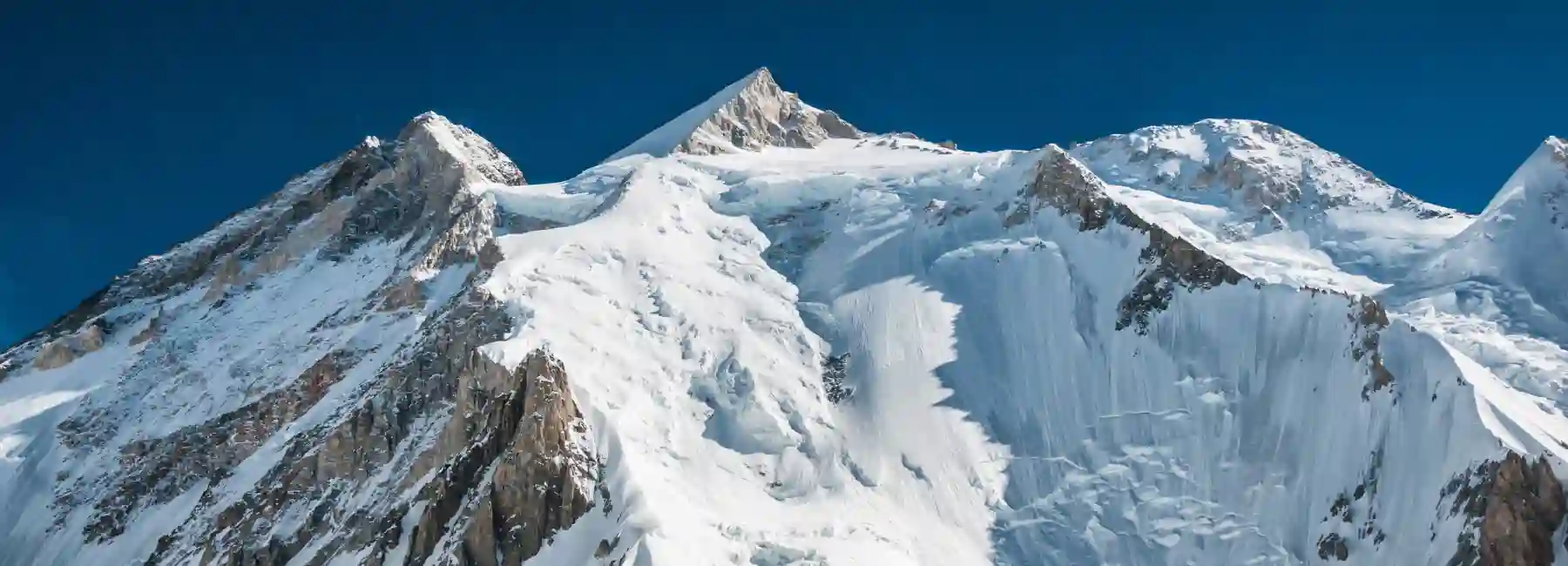
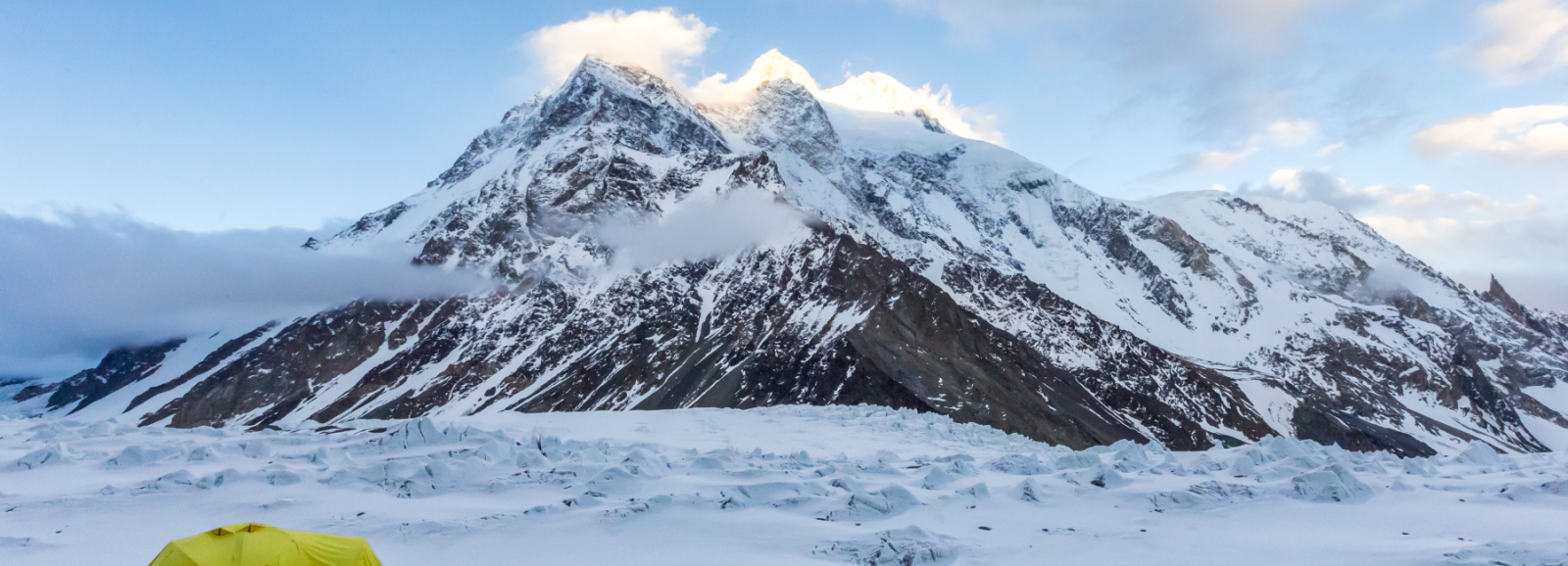
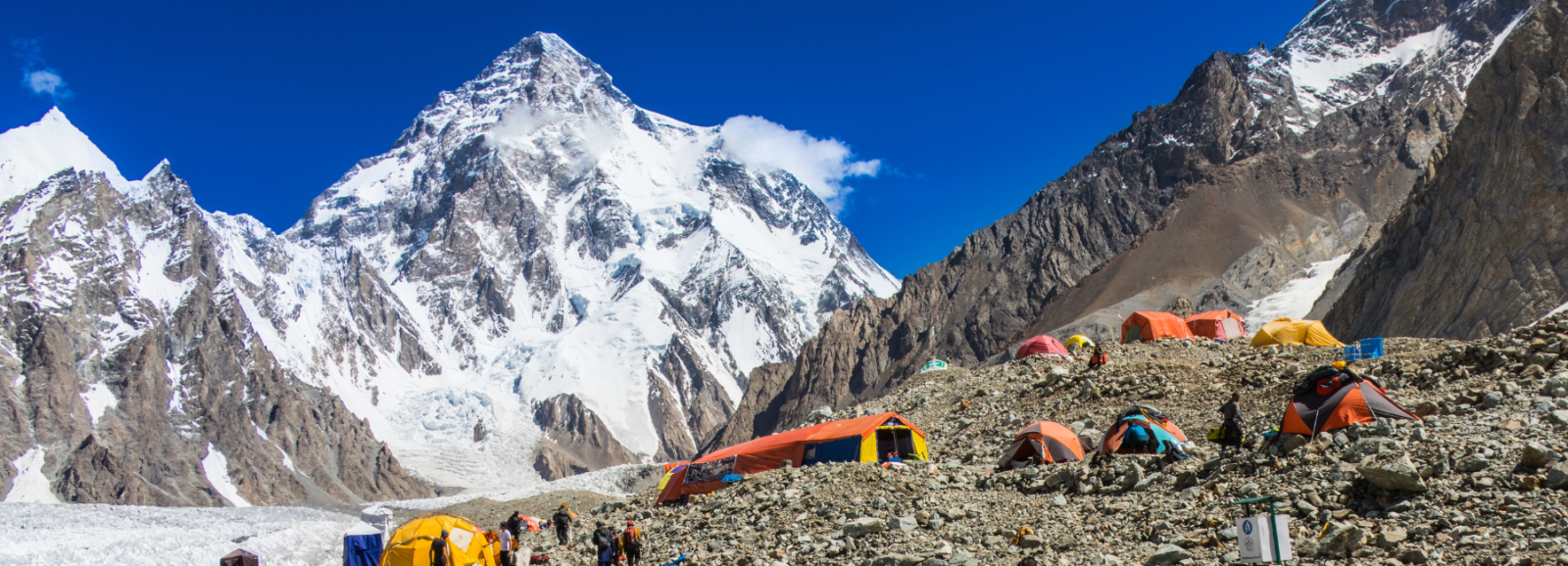
K2 Expedition

Pakistan / China
Karakoram
1-12 Pax
8,611 m
Extreme
Teahouse/Lodge, Tented Camp
5-12 hrs
Autumn, Spring
Highlights of K2 Expedition
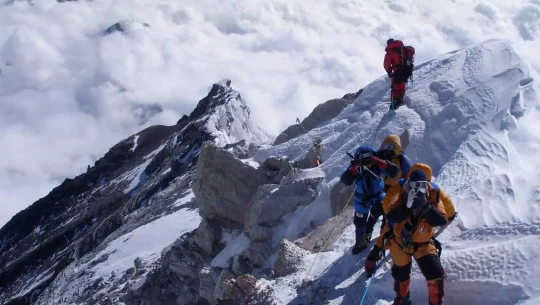
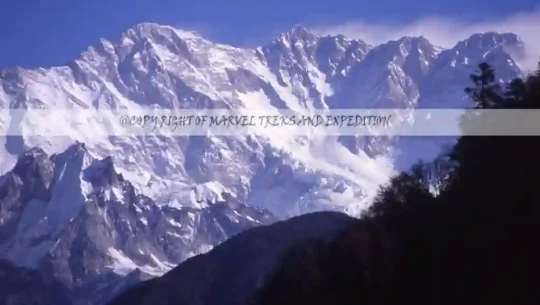
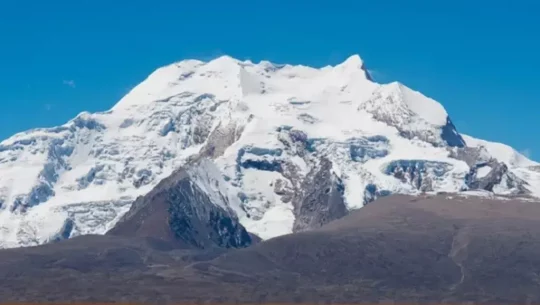
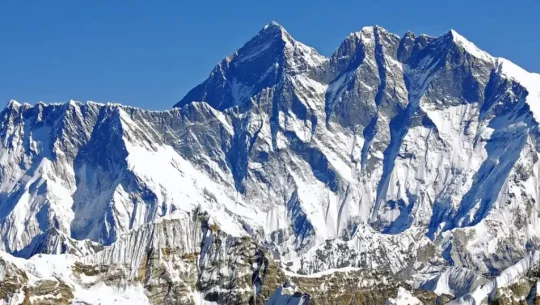
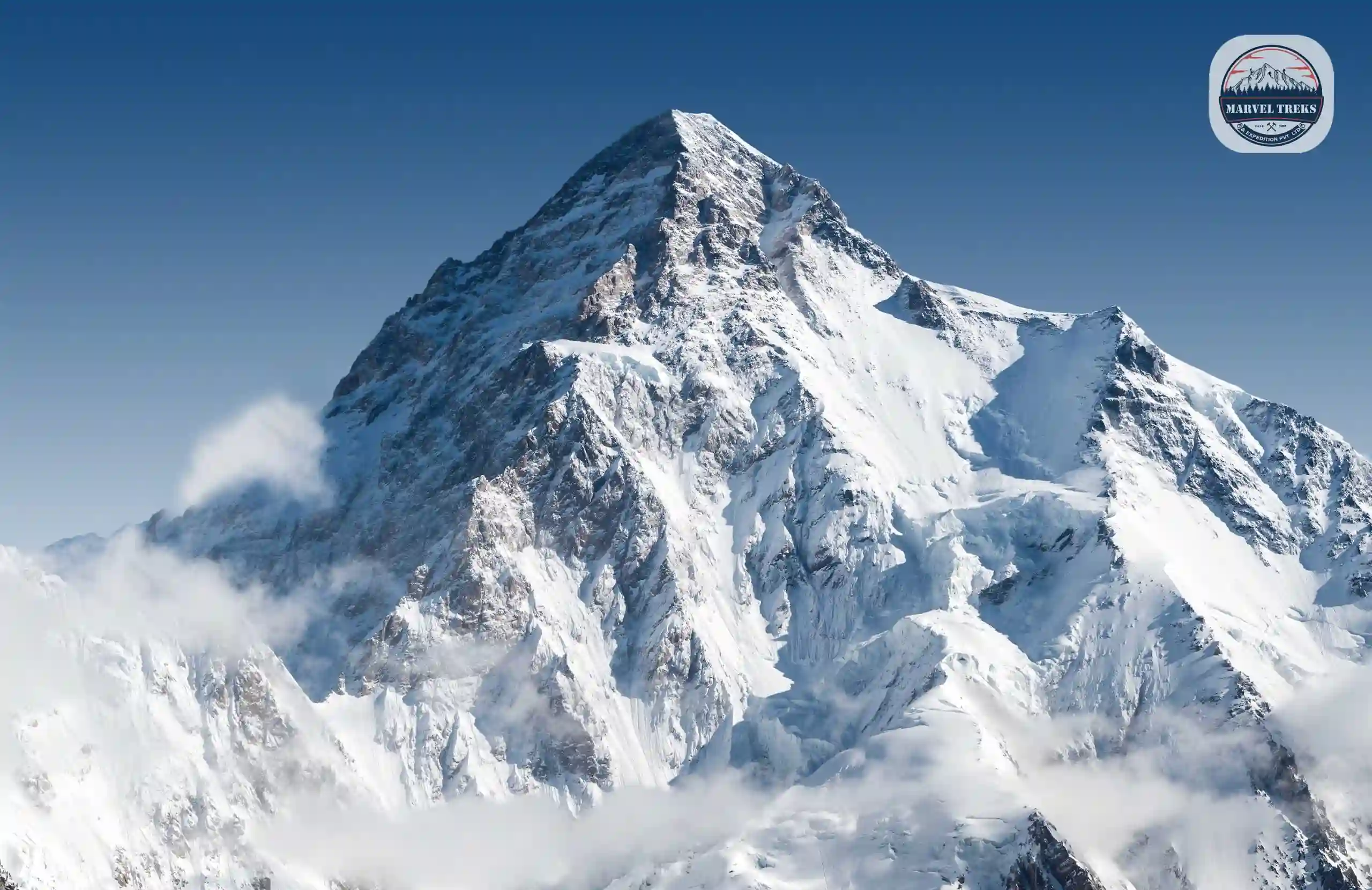
K2, also known as Chhogori, is the second-highest mountain in the world at an elevation of 8,611 meters. It is located in the Karakoram range on the border between Pakistan and China. Climbing K2 is a challenging and strenuous expedition that requires a high level of physical fitness and acclimatization to altitude. Here are some highlights of climbing K2:
- Stunning mountain views:
- From the summit of K2, you can enjoy panoramic views of the surrounding mountain ranges, including the Karakoram, the Himalayas, and the Pamir range.
- Cultural experiences:
- The climbing route takes you through traditional villages and offers the opportunity to interact with the local people and learn about their way of life.
- High-altitude challenge:
- At an elevation of 8,611 meters, K2 is a challenging climb that requires a high level of physical fitness and acclimatization to altitude. It is considered one of the most difficult and dangerous mountains to climb in the world.
- Diverse landscape:
- The climbing route takes you through a variety of landscapes, including glaciers, rock and ice fields, and high-altitude grasslands.
- Adventure and exploration:
- Climbing K2 is a journey of adventure and exploration, as you venture into the high mountains and test your limits in a harsh and challenging environment. The highlight of the expedition is the climb to the summit of K2, which is a once-in-a-lifetime experience that very few people have the opportunity to achieve.
- Unique flora and fauna:
- The Karakoram range is home to a variety of unique flora and fauna, including rare species of plants and animals that are found nowhere else in the world.
- Historical significance:
- K2 has a rich history of exploration, and the mountain has been climbed by some of the most renowned mountaineers in the world. The first successful ascent of K2 was made in 1954 by an Italian team led by Ardito Desio. Since then, the mountain has attracted many climbers from all over the world, and it is considered one of the ultimate challenges in the world of mountaineering.
K2 Expedition Overview
K2 expedition programs run through Marvel Treks place safety, precision, and discipline at the center of every step. Mount K2 expedition services from our team support climbers with strong leadership, proven strategies, and reliable logistics. K2 climbing demands skill, focus, and respect for Karakoram conditions, so our approach removes uncertainty and strengthens confidence. Climbing K2 with experienced Sherpa guides, advanced equipment, and structured rotation plans gives each group a clear path toward a successful summit attempt. K2 expedition Pakistan operations through Marvel Treks uphold high standards, provide steady communication, and maintain controlled movement across camps, ensuring climbers progress with security and clarity.
Gallery of K2 Expedition
| Day | Itinerary | Altitude | Duration |
|---|---|---|---|
| 1 | Arrival in Islamabad, hotel transfer | 540 m | 1 hrs |
| 2 | Official briefing & preparation | 540 m | - |
| 3 | Flight Islamabad → Skardu | 2,500 m | 1hrs |
| 4 | Drive Skardu → Askole (Jeep) | 3,000 m | 6–7 hrs |
| 5 | Trek Askole → Jhola | 3,100 m | 6–7 hrs |
| 6 | Trek Jhola → Paiyu | 3,450 m | 6–7 hrs |
| 7 | Trek Paiyu → Urdukas | 3,900 m | 6–7 hrs |
| 8 | Trek Urdukas → Goro II | 4,295 m | 6–7 hrs |
| 9 | Trek Goro II → Concordia | 4,500 m | 5–6 hrs |
| 10 | Trek Concordia → K2 Base Camp | 5,100 m | 6–7 hrs |
| 11 | Base Camp setup & acclimatization hike | 5,100 m | 2–3 hrs |
| 12 | Acclimatization hike around Base Camp | 5,400 m | 3–4 hrs |
| 13 | Load carry Base Camp → Camp I & return | 6,050 m | 5–6 hrs |
| 14 | Rest day at Base Camp | 5,100 m | - |
| 15 | Move Base Camp → Camp I | 6,050 m | 5–6 hrs |
| 16 | Acclimatization climb Camp I → Camp II & return | 6,700 m | 4–5 hrs |
| 17 | Rest at Camp I | 6,050 m | - |
| 18 | Move Camp I → Camp II | 6,700 m | 4–5 hrs |
| 19 | Acclimatization climb above Camp II | 7,200 m | 3–4 hrs |
| 20 | Rest at Camp II | 6,700 m | - |
| 21 | Load carry Camp II → Camp III & return | 7,800 m | 4–5 hrs |
| 22 | Rest at Camp II | 6,700 m | - |
| 23 | Move Camp II → Camp III | 7,800 m | 4–5 hrs |
| 24 | Acclimatization climb Camp III → higher point & return | 8,100 m | 3–4 hrs |
| 25 | Rest at Camp III | 7,800 m | - |
| 26 | Move Camp III → Camp IV | 8,300 m | 3–4 hrs |
| 27 | Summit push (Camp IV → K2 Summit → descend) | 8,611 m | 12-14 hrs |
| 28 | Descend Camp IV → Camp III | 7,800 m | 4–5 |
| 29 | Descend Camp III → Camp II | 6,700 m | 4–5 |
| 30 | Contingency / buffer day | 6,700 m | - |
| 31 | Move Camp II → Camp I | 6,050 m | 4–5 |
| 32 | Descend Camp I → Base Camp | 5,100 m | 5–6 |
| 33 | Rest at Base Camp | 5,100 m | - |
| 34 | Contingency / buffer day | 5,100 m | - |
| 35 | Trek Base Camp → Goro II | 4,295 m | 7–8 |
| 36 | Trek Goro II → Khuburtze | 3,800 m | 7–8 |
| 37 | Trek Khuburtze → Jhola | 3,100 m | 6–7 |
| 38 | Drive Jhola → Askole → Skardu | 2,500 m | 6–7 |
| 39 | Flight Skardu → Islamabad | 540 m | 1 |
| 40 | Final departure | 540 m | - |
- Arrival & Airport Services: International and domestic airport pick-up and drop-off are included with a warm welcome by a Marvel Treks & Expeditions representative. All ground transportation in Islamabad is provided by private, comfortable vehicles. Guided sightseeing in Islamabad and Skardu is arranged as per the itinerary, excluding entrance fees.
- Accommodation: Accommodation in Islamabad, Chilas, and Skardu is provided in 4-star hotels on a twin-sharing B&B basis, with single rooms available at extra cost. Trekking accommodation is arranged in clean tea houses or lodges. Expedition accommodation includes fully serviced Base Camp tents and shared high-camp tents with insulating mattresses.
- Meals & Nutrition: Welcome and farewell dinners in Islamabad are included, while other city meals are excluded unless specified. During trekking and the expedition, three hygienic meals per day with tea and coffee are provided. High-altitude meals and regular helicopter-supplied fresh food are available at Base Camp.
- Transportation & Logistics: All airport transfers, domestic flights, road transport, and jeep services as per the itinerary are included. Cargo transport, porter services, and baggage movement to and from Base Camp are fully managed by the company. A baggage allowance of up to 40 kg per climber is provided for ascent and descent.
- Porterage (Low-Altitude Porters): Porters are provided to carry expedition food, camping equipment, and personal climbing gear. Three porters per climber are arranged on the way up and two per climber on the way down. Porter costs include wages, food, equipment, and insurance.
- Permits & Government Requirements: All required Pakistan Government climbing permits, expedition royalties, liaison officer services, and route fixing fees are included. Garbage management charges, satellite phone and walkie-talkie permits, and applicable government taxes are covered. Administrative and operational support is fully included, excluding customs duties.
- Base Camp & High Camp Infrastructure: Base Camp is fully equipped with personal tents, dining, kitchen, communication, shower, and toilet facilities. Power supply is provided through solar panels or generators, along with basic comfort facilities. High camps are equipped with expedition tents, cooking systems, ropes, and climbing hardware.
- Expedition Staff & Professional Support: The expedition is led by an experienced expedition leader with one government-licensed climbing Sherpa per member. Additional staff include a Base Camp Sirdar, guides, cooks, helpers, and porters. All staff salaries, food, equipment, clothing, and insurance are included.
- Training, Oxygen & High-Altitude Support: Pre-climb technical training is conducted at Base Camp, including fixed rope and oxygen usage training. Each member receives three 4-liter oxygen bottles, and Sherpas receive one to two bottles each. Masks, regulators, and backup oxygen are available as per expedition protocol.
- Communication, Safety & Medical Support: Walkie-talkies are provided for mountain communication, and a satellite phone is available at Base Camp for emergency use. Daily professional weather forecasts and comprehensive first-aid kits are provided. Medical support is available at Base Camp where conditions allow.
- Complimentary Items: Complimentary items include an expedition duffle bag, T-shirt, buff, and cap. Free use of a sleeping bag, basic down jacket, and walking stick is provided during the expedition. Trekking and climbing route maps are included.
- Certification & Completion: Successful climbers receive an official K2 Summit Certificate issued by the Government of Pakistan. Expedition completion documentation and a farewell cultural dinner are included.
- Base Camp Representatives: Dedicated representatives are stationed at major peaks such as K2, Broad Peak, and Gasherbrum. They are equipped with satellite phones for emergency communication and can arrange urgent porter services if required.
- International Travel & Visa: International airfare to and from Pakistan is not included. Pakistan entry visa fees, personal insurance, and excess baggage or cargo charges are excluded.
- Meals & Drinks: Lunch and dinner in Islamabad or other cities are excluded unless stated otherwise. Personal snacks, bottled water, soft drinks, alcohol, cigarettes, and bar bills are not included.
- Personal Equipment: Personal climbing and trekking gear, clothing, bags, and packing items are excluded. Personal medical kits, toiletries, and hygiene supplies must be arranged individually.
- Insurance & Medical: Personal travel insurance covering high-altitude rescue, helicopter evacuation, emergency medical treatment, and hospitalization is mandatory and not included. Medical examinations and doctor’s clearance forms are excluded.
- Extra Accommodation: Additional hotel nights due to early arrival, late departure, flight delays, or itinerary changes are excluded. Accommodation and meals outside official expedition dates are not included.
- Communication & Internet: Charges for internet usage, satellite phone calls, walkie-talkie use, and Wi-Fi services are excluded. All personal communication expenses must be paid separately.
- Summit Bonus & Tips: Mandatory summit bonuses must be paid in cash after a successful ascent, including payments for climbing Sherpas and kitchen staff. Tips for Base Camp staff, guides, and porters are recommended and excluded.
- Oxygen & Sherpa Support: Additional oxygen beyond the included bottles and extra climbing Sherpas are not included. Extra masks, regulators, or oxygen systems are charged separately.
- Permits & Special Requests: Drone usage, filming, photography, or special media permits are not included. Customs duties for personal expedition equipment are excluded.
- Miscellaneous & Personal Expenses: Laundry, hot showers, battery charging, personal purchases, refundable garbage deposits, and transaction fees are excluded. Any personal expenses of any nature are the participant’s responsibility.
- Unforeseen Circumstances: Costs arising from natural disasters, landslides, political unrest, strikes, or changes in government regulations are excluded. Any service not clearly listed under “Cost Includes” is not covered.
Detailed Itinerary
Day 01: Arrival in Islamabad
Upon arrival at Islamabad International Airport, you will be warmly welcomed by our representative and transferred to your hotel. After check-in, you can rest and recover from your journey or take a short walk around the city. In the evening, enjoy a relaxed welcome dinner and overnight in Islamabad.
Day 02: Official Briefing & Preparation
This day is dedicated to official briefings, documentation, and expedition preparations. You will meet the expedition leader to review the itinerary, safety procedures, and climbing plans. Final gear checks and any last-minute arrangements are completed.
Day 03: Fly from Islamabad to Skardu
An early morning flight takes you from Islamabad to Skardu, offering spectacular views of the Karakoram range, weather permitting. Upon arrival, you will transfer to your hotel and rest. The remainder of the day is free for light exploration and acclimatization.
Day 04: Drive from Skardu to Askole
After breakfast, you begin a scenic jeep drive from Skardu to Askole, the last permanent settlement before the trek. The journey follows rivers and mountain valleys, giving a first close look at the rugged terrain. Overnight is spent in Askole.
Day 05: Trek from Askole to Jhola
Your trek officially begins as you walk from Askole to Jhola along the Braldu River. The trail is relatively gentle and allows your body to gradually adjust. Camp is set at Jhola for the night.
Day 06: Trek from Jhola to Paiyu
Today’s trek takes you through dramatic landscapes with views of glaciers and surrounding peaks. The walk is steady and scenic, leading you to the campsite at Paiyu. Paiyu is known for its impressive mountain backdrop.
Day 07: Trek from Paiyu to Urdukas
The trail ascends gradually toward Urdukas, one of the most beautiful campsites in Karakoram. You will enjoy panoramic views of granite spires and glaciers along the way. Overnight at Urdukas with stunning sunset views.
Day 08: Trek from Urdukas to Goro II
Today you enter the Baltoro Glacier, trekking across icy terrain toward Goro II. The surroundings become more alpine and dramatic as you gain altitude. Camp overnight at Goro II.
Day 09: Trek from Goro II to Concordia
A spectacular day of trekking brings you to Concordia, known as the “Throne Room of the Mountain Gods.” From here, you can see K2, Broad Peak, and Gasherbrum peaks. Overnight at Concordia with unforgettable mountain views.
Day 10: Trek from Concordia to K2 Base Camp
The trek continues toward K2 Base Camp along the glacier. As you approach, K2 dominates the skyline, creating an inspiring atmosphere. Upon arrival, Base Camp is set up for the expedition phase.
Day 11: Base Camp Setup & Acclimatization Hike
This day is used to organize personal tents, equipment, and facilities at Base Camp. A short acclimatization hike helps your body adjust to the altitude. Overnight at Base Camp.
Day 12: Acclimatization Hike Around Base Camp
You will spend the day acclimatizing with light hikes around Base Camp. This helps improve adaptation before moving higher. Rest and hydration are emphasized.
Day 13: Load Carry to Camp 1 & Return
You carry essential gear from Base Camp to Camp 1 as part of acclimatization. After dropping supplies, you return to Base Camp the same day. This rotation prepares your body for higher camps.
Day 14: Rest Day at Base Camp
A full rest day allows your body to recover after load carrying. Gear organization, hydration, and monitoring acclimatization are the focus. Overnight at Base Camp.
Day 15: Move from Base Camp to Camp 1
You move up permanently from Base Camp to Camp 1. The climb follows fixed ropes and requires careful movement. Overnight at Camp 1.
Day 16: Acclimatization Climb to Camp 2 & Return
You climb from Camp 1 toward Camp 2 for acclimatization and load carrying. After reaching Camp 2, you return to Camp 1. This rotation improves high-altitude adaptation.
Day 17: Rest Day at Camp 1
This day is reserved for rest and recovery at Camp 1. Weather and physical condition are assessed. Preparation continues for higher movement.
Day 18: Move from Camp 1 to Camp 2
You ascend from Camp 1 to Camp 2, following fixed lines and technical sections. The climb requires steady pacing and focus. Overnight at Camp 2.
Day 19: Acclimatization Climb Above Camp 2
You climb above Camp 2 to a higher point for acclimatization. After spending time at altitude, you descend back to Camp 2. This strengthens readiness for Camp 3.
Day 20: Rest Day at Camp 2
A rest day at Camp 2 allows your body to recover. Equipment checks and weather monitoring continue. Overnight at Camp 2.
Day 21: Load Carry to Camp 3 & Return
You carry loads from Camp 2 to Camp 3 as part of acclimatization. After dropping supplies, you return to Camp 2. This rotation prepares the route for higher camps.
Day 22: Rest Day at Camp 2
Another rest day ensures proper recovery before moving higher. Hydration and nutrition are emphasized. Overnight at Camp 2.
Day 23: Move from Camp 2 to Camp 3
You climb from Camp 2 to Camp 3, navigating steeper and more technical terrain. The altitude becomes more demanding at this level. Overnight at Camp 3.
Day 24: Acclimatization Climb Above Camp 3
You climb higher above Camp 3 for acclimatization and assessment. After spending time at altitude, you descend back to Camp 3. This prepares you for the final camp.
Day 25: Rest Day at Camp 3
This is a critical rest day before the summit phase. Weather forecasts and physical condition are closely monitored. Overnight at Camp 3.
Day 26: Move to Camp 4
You ascend from Camp 3 to Camp 4, the final high camp. This is a challenging and demanding climb. Overnight at Camp 4 in preparation for the summit attempt.
Day 27: Summit Push – K2 Summit & Descent
You begin the summit push from Camp 4 to the summit of K2 in the early hours. After reaching the summit, you descend carefully back to a lower camp. This is the most demanding day of the expedition.
Day 28: Descend from Camp 4 to Camp 3
You continue descending from Camp 4 to Camp 3. The focus is on safety and controlled movement. Overnight at Camp 3.
Day 29: Descend from Camp 3 to Camp 2
Further descent takes you from Camp 3 to Camp 2. The lower altitude brings gradual relief. Overnight at Camp 2.
Day 30: Contingency / Buffer Day
This day is reserved for weather delays or summit window adjustments. It may also be used for rest if conditions require. Flexibility is key at this stage.
Day 31: Move from Camp 2 to Camp 1
You descend from Camp 2 to Camp 1. The terrain becomes less technical as you lose altitude. Overnight at Camp 1.
Day 32: Descend from Camp 1 to Base Camp
You return from Camp 1 to Base Camp. Upon arrival, you can rest and celebrate completing the climbing phase. Overnight at Base Camp.
Day 33: Rest Day at Base Camp
A full rest day at Base Camp allows recovery after the summit phase. Packing and preparation for the return trek begin. Relax and enjoy the surroundings.
Day 34: Contingency / Buffer Day
An additional buffer day is reserved in case of delays. If unused, it allows extra rest or early departure. Overnight at Base Camp.
Day 35: Trek from Base Camp to Goro II
You begin the return trek from Base Camp to Goro II. Walking downhill makes the journey more comfortable. Overnight at Goro II.
Day 36: Trek from Goro II to Khuburtze
The trek continues across the Baltoro Glacier toward Khuburtze. Enjoy familiar landscapes from a new perspective. Overnight at Khuburtze.
Day 37: Trek from Khuburtze to Jhola
You descend further toward Jhola, retracing your route back. The air becomes warmer as altitude decreases. Overnight at Jhola.
Day 38: Drive from Jhola to Skardu
You drive from Jhola to Askole and onward to Skardu by jeep. Upon arrival, check into your hotel and enjoy a hot shower. Celebrate the successful expedition.
Day 39: Fly from Skardu to Islamabad
You fly from Skardu back to Islamabad, weather permitting. The remainder of the day is free for rest, shopping, or sightseeing. Farewell dinner in the evening.
Day 40: Final Departure
You will be transferred to Islamabad International Airport for your onward journey. This marks the end of the K2 Expedition. Depart with unforgettable memories of the Karakoram.
Trip Map
History & Evolution of K2 Expeditions
K2 history shows steady progress shaped by ambition, strategy, and hardship. To understand the scale of these feats, one must first ask, where is K2 mountain? It is located in the Karakoram Range on the border between Pakistan and China. Early K2 expeditions introduced bold ideas, while later missions refined methods and expanded global interest. Knowledge from Italian K2 expedition 1954 efforts, Bonatti contributions, Wiessner attempts, and Polish expeditions formed a foundation that guides present-day climbers.
1902–1939: Early Attempts
Early K2 expeditions began with limited maps, basic gear, and minimal support. Teams led by pioneers such as Oscar Eckenstein and Fritz Wiessner pushed routes through harsh slopes and unstable ice without modern protection. Progress stayed slow, yet each effort documented terrain, weather patterns, and navigation lines that shaped future planning.
1954 Italian Expedition – First Successful Ascent
Italian K2 expedition 1954 marked a breakthrough. Achille Compagnoni, Lino Lacedelli, and Bonatti reached key points that allowed a final push toward the summit. Careful rope fixing, high-altitude camps, and steady teamwork produced the first confirmed ascent. Their climb changed global views on K2 difficulty and proved that disciplined organization can overcome extreme challenges.
Modern K2 Climbing – Technology, Safety & Ethics
Modern K2 climbing uses advanced forecasting, GPS tracking, stronger oxygen systems, and safer fixed-line methods. Rescue protocols improved, while new ethics encourage responsible movement, fair labor conditions, and reduced environmental impact. Polish expeditions, Nepali winter ascents, and other recent missions demonstrated how updated gear and structured communication bring higher safety and stronger results on this demanding peak.
K2 Expedition Overview (Route, Duration, Difficulty & Highlights)
K2 expedition overview sections outline movement through the Baltoro Glacier and the approach into Concordia. Throughout the K2 climbing duration, teams progress along routes that challenge climbers with steep ice, long exposure, and narrow ledges. Expedition difficulty rises through heavy loads, technical sections, and unstable slopes shaped by constant temperature shifts.
Adventure travel groups aiming for this summit experience sharp gains in altitude, rapid weather changes, and a continuous demand for focus from Base Camp to high camps. Each phase pushes skill, strength, and judgment, creating a demanding yet rewarding climb for well-prepared teams.
Abruzzi Route – The Most Reliable & Popular K2 Climbing Route
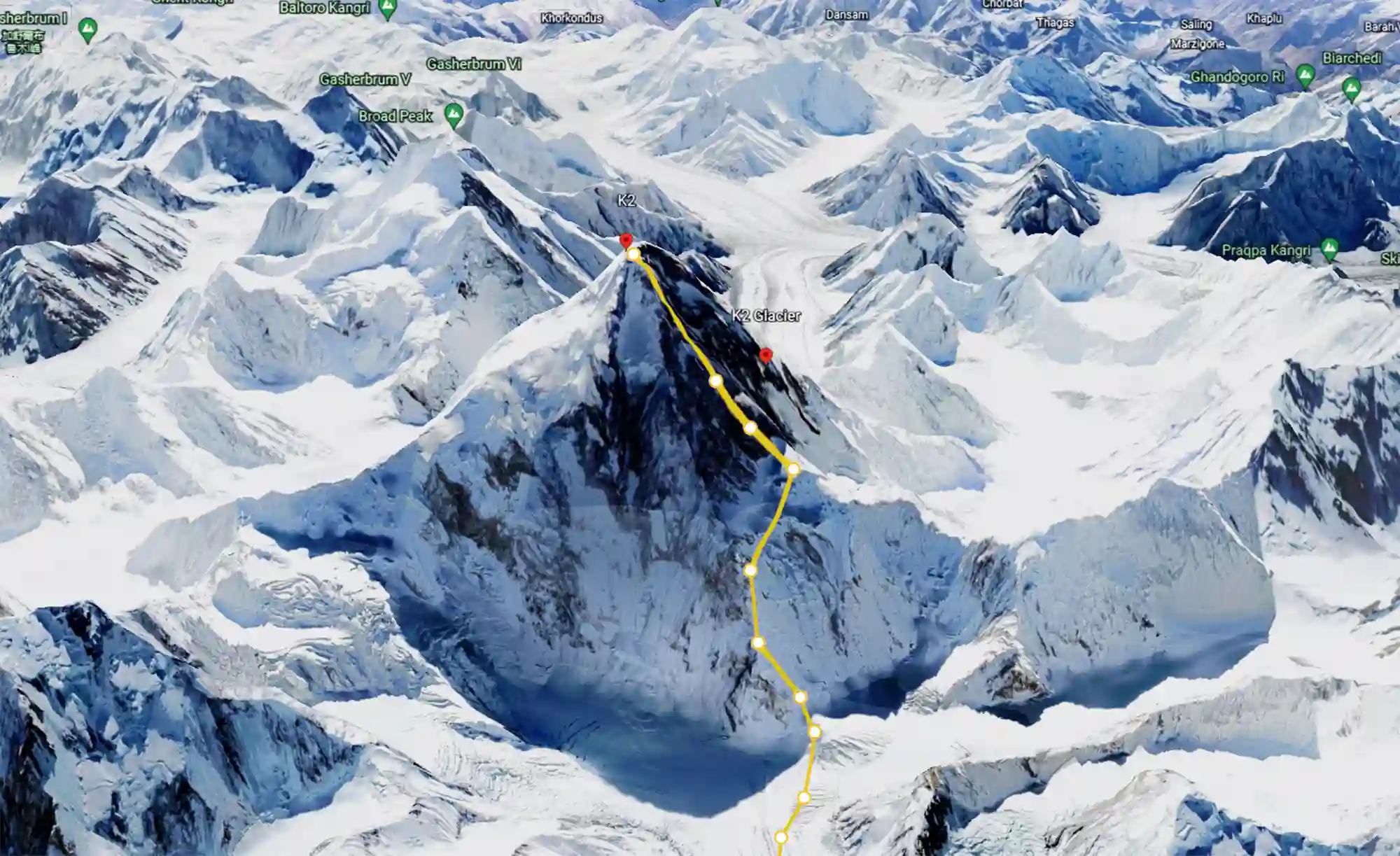
Abruzzi Ridge remains the main line for summit attempts, and it is widely recognized as one of the most classic K2 climbing routes. Climbers pass Base Camp, Advanced Base Camp, Camp 1, Camp 2, Camp 3, and Camp 4 before entering the most exposed zones. The Bottleneck, located below the Shoulder, presents a narrow ice chute lined with hanging ice seracs that can shift without warning. This short yet dangerous stretch sits near the death zone, requiring steady rope work, fast movement, and absolute focus from each climber.
How Long Does It Take to Climb K2?
Most expeditions require 52–60 days from start to finish. Teams spend weeks on acclimatization, rotations, and weather adjustments before attempting the summit. If you’re wondering how many days does it takes to climb K2, the timeline reflects the extreme altitude challenges and necessary preparation. Movement from Base Camp to the top and back depends on a short summit window shaped by wind patterns and temperature shifts.
Who Is the K2 Expedition Best Suited For?
K2 expedition is best suited for experienced high-altitude climbers with strong technical skills and stable physical capacity. Participants need confidence on steep ice, fixed lines, and exposed ridges. Age, health readiness, endurance, and mental resilience matter because conditions above 7000m demand sustained strength and sharp judgment.
How to Prepare for the K2 Expedition (Training, Gear & Skills)
To prepare for a K2 expedition, you should build strength, gain altitude experience, and practice technical movement on steep terrain. Comprehensive training to climb K2 benefits from steady glacier travel practice, cold weather gear familiarity, and consistent high-altitude training sessions.
Climbers who follow a structured plan manage heavy loads with better control and adjust faster during rapid elevation changes. A complete emergency kit, clear routines, and regular practice on ice or mixed routes help reduce risk during long days above Base Camp.
Physical Training Plan (Strength, Endurance & Altitude Work)
To prepare for K2 expedition you should train legs, core, lungs, and full-body stability through a structured schedule.
Strength work builds power for steep carries, endurance routines support long movement under load, and cardio training sharpens breathing control during high-altitude pushes. Altitude work, when possible, conditions the body for reduced oxygen, making long rotations more manageable.
Strength Training
- Build leg power for steep ascents through snow and ice.
- Use squats, lunges, and weighted step-ups to strengthen primary climbing muscles.
- Add deadlifts and carries to support pack handling during long approaches.
- Train core stability with planks, side planks, and loaded holds.
- Include balance drills to steady movement on uneven terrain.
- Practice controlled movements that mimic slow, heavy climbing steps.
- Increase weight gradually to match demands of high-altitude loads.
Endurance Training
- Develop long-duration stamina with multi-hour hikes and regular hill sessions.
- Carry a loaded pack during weekly treks to simulate expedition conditions.
- Use stair climbing routines to strengthen legs for continuous upward travel.
- Add extended hill repeats to maintain pace during long rotation days.
- Keep weekly volume steady to build slow, sustained energy output.
- Train for consistent movement without frequent rest breaks.
- Prepare for summit push duration by increasing session length over time.
Cardio Training
- Strengthen heart and lung performance for thin-air environments.
- Include interval workouts to boost oxygen efficiency under strain.
- Use steady runs, cycling, or rowing to build broad aerobic capacity.
- Maintain moderate intensity sessions to reduce fatigue during long climbs.
- Train for rhythmic breathing suited for steep ice and snow slopes.
- Improve recovery speed between exertion peaks during rotation cycles.
- Build a routine that conditions lungs for reduced oxygen levels above 7000m.
Technical Skills Required for Climbing K2
Climbers need strong control on ice, reliable rope handling, and steady footwork on steep frozen slopes. Each skill supports safe movement across exposed ridges, serac zones, and long pitches rising toward higher camps. Consistent practice before departure reduces hesitation and sharpens decision-making during demanding sections.
- Ice climbing drills build confidence on vertical and angled frozen surfaces.
- Tool placement practice strengthens grip and balance during long pitches.
- Fixed rope use training teaches quick, secure transitions on steep ground.
- Ascender and descender practice improves efficiency during long climbs and controlled descents.
- Crampons on steep ice sessions train precise foot placement on thin edges.
- Step-kicking routines prepare climbers for firm, uneven snow layers.
- Mixed terrain practice builds adaptability for sudden shifts between rock, snow, and ice.
Mental Preparation for High-Risk Mountaineering
Climbers must hold steady focus, manage stress, and respond calmly during sudden changes common on high-altitude slopes. Mental discipline supports clear choices when fatigue rises or movement slows, helping teams maintain safe progress through exposed sections.
- Build tolerance for discomfort through long, controlled training sessions.
- Practice decision-making under pressure with timed drills or guided scenarios.
- Strengthen concentration through breathing routines and short mindfulness cycles.
- Develop patience for slow climbs, long waits, and unpredictable delays.
- Train calm responses for cold, fatigue, and reduced visibility.
- Use visualization to rehearse movement across steep ridges and fixed lines.
- Set clear personal limits to support safe withdrawal during high-risk moments.
Essential Gear Checklist for the K2 Expedition
Climbers need equipment that withstands severe cold, long exposure, and continuous movement on steep mixed terrain. Each item supports survival, comfort, and efficiency from Base Camp to high camps. Reliable climbing harness systems, solid tent setup routines, insulated layers such as 8000m boots and a down suit, plus durable high-altitude gloves create steady protection during demanding sections of the climb.
- Climbing harness: Choose a secure, padded harness with strong gear loops for ascenders, carabiners, and safety lines.
- 8000m boots: Insulated double or triple-layer boots protect feet during extreme cold above Camp 3.
- Down suit: A full-body suit preserves warmth during long exposure on summit day and high camp sleep cycles.
- High-altitude gloves: Layered gloves with windproof shells maintain grip during rope handling and tool placement.
- Tent setup: Familiarity with high-wind tent systems helps climbers secure shelter quickly at exposed platforms.
- Technical layers: Base layers, mid insulation, and storm shells work together to regulate heat and block wind.
- Safety accessories: Goggles, helmets, crampons, and ice tools support movement across snow, ice, and mixed terrain.
Packing for the K2 Expedition
Packing for K2 expedition climbs requires warm layers, reliable protection, steady hydration support, and personal items that help climbers manage long stretches in harsh conditions. Each piece must work together to keep the body stable during cold nights, steep ascents, and extended time at high altitude. Proper choices reduce stress, support recovery, and help climbers stay organized through rotation cycles.
Upper Layers
- Carry insulated jackets built for severe cold above Camp 3.
- Use windproof shells for protection against strong gusts near exposed ridges.
- Add softshell layers for moderate movement during approach days.
- Bring light fleece for controlled warmth during Base Camp rest periods.
- Keep backup layers dry using compression bags.
- Choose breathable fabrics to reduce moisture buildup.
- Pack hoods for weather shifts near summit zones.
Base Layers
- Wear moisture-wicking tops and bottoms to prevent cold sweat.
- Select mid-weight thermal sets for rotation climbs.
- Bring heavier thermals for nights at high camps.
- Rotate clean layers to reduce skin irritation.
- Use quick-dry fabrics for long travel days.
- Store spare sets in sealed bags.
- Avoid cotton due to poor moisture handling.
Gloves and Hand Protection
- Carry high-altitude gloves with multiple insulation layers.
- Add liner gloves for rope handling and tent work.
- Use windproof shells to block cold during summit pushes.
- Bring backup pairs in case of moisture or damage.
- Carry mittens for extreme low temperatures near the Bottleneck.
- Choose gloves that maintain grip on tools and fixed lines.
- Keep hand warmers for emergency use.
Medicines and Health Items
- Bring altitude medication for headache relief and acclimatization support.
- Carry digestive aids for long expedition meals.
- Add blister treatment kits for extended climbs.
- Use hydration salts during rotation days.
- Keep wound-care supplies for minor cuts.
- Pack sunscreen and lip balm to protect skin at high altitude.
- Carry personal prescriptions in waterproof containers.
Personal Items and Toiletries
- Bring toothbrush, toothpaste, and small biodegradable soap.
- Carry wet wipes for quick cleaning during tent days.
- Add nail clippers and a small towel for camp hygiene.
- Use compact bags to separate clothing, gear, and essentials.
- Bring a diary or small notebook for tracking rotation notes.
- Pack sunglasses and spare contacts if needed.
- Carry a headlamp with extra batteries for night movement.
Best Time for Climbing K2
The best time for climbing K2 is during the summer window from late June to early August, when climbers gain the most stable conditions for movement across steep ice, mixed terrain, and exposed ridges. As you prepare for K2 expedition logistics, this period brings calmer winds, clearer visibility, and a narrow summit window shaped by jet stream shifts. Weather still changes quickly, yet this season remains the only practical choice for safe progress through high camps and the Bottleneck.
Summer Climbing Window (Late June to Early August)
- Winds drop enough to allow safe travel above Camp 3.
- Temperatures remain cold but manageable during summit pushes.
- Snow conditions stabilize across Abruzzi Ridge.
- Jet stream lifts north, reducing violent gusts near the summit.
- Camps remain easier to maintain due to reduced storm frequency.
- Early acclimatization rotations fit smoothly into this timeline.
- Teams gain daylight hours for long ascent days.
Why Winter or Shoulder Seasons Are Not Suitable
- Jet stream pressure increases dramatically after August.
- Temperatures drop to extreme levels, freezing equipment within minutes.
- Frequent storms bury fixed lines and collapse high camps.
- Avalanche risk rises due to unstable snow layers.
- Visibility becomes unpredictable, slowing movement.
- Winter ascents remain possible only for elite high-altitude specialists.
- Risk levels exceed safe thresholds for commercial groups.
Wildlife in K2
Karakoram valleys support hardy wildlife adapted to thin air, cold winds, and rocky terrain. Common sightings during the K2 approach include Himalayan marmots, mountain foxes, and large herds of blue sheep grazing along steep cliffs. These species move comfortably across uneven ground and often appear near camps or rest points along Baltoro Glacier.
Rare animals occasionally seen near higher slopes include snow leopards, Himalayan ibex, and lammergeier vultures gliding above ridgelines. Plant life remains sparse, yet hardy shrubs, alpine grasses, and small flowering plants grow around lower sections of the trek. These species survive short summers, harsh winters, and nutrient-poor soil found across remote valleys leading toward Concordia.
Why Choose Marvel Treks For K2 Expedition?
You can choose Best Expedition Company in Nepal for your K2 expedition because we prioritize a foundation of high-altitude safety and elite logistical support. Our program integrates veteran Sherpa guidance with advanced oxygen systems and real-time weather monitoring to navigate the technical challenges of the Abruzzi Ridge. By focusing on meticulous acclimatization schedules and robust emergency protocols, we ensure that every climber has the best possible support to manage risk and reach the summit with confidence.
Highly Qualified Sherpa Guides & K2 Expedition Leaders
Sherpa teams carry deep mountaineering experience from repeated 8000m climbs. Many members hold IFMGA training, strong K2 summiteers backgrounds, and proven multi-peak records across major Himalayan and Karakoram ranges. High-altitude guides manage rope sections, pace control, route decisions, and hazard checks, giving every group a steady structure supported by climbers who understand K2 movement through direct experience.
Safety-Focused Strategy & Acclimatization Protocols for K2
Rotation plans follow a clear pattern based on acclimatization needs, hydration strategy, and altitude-related risks. Teams monitor snow conditions, wind shifts, and ice formation around high sections. Daily checks track oxygen saturation to catch early signs of HAPE or HACE. This system gives climbers space to adjust, recover, and climb with stable strength during long pushes from lower camps to higher points.
Advanced Gear, Oxygen Systems & Communication Technology
Teams use tested oxygen cylinders, reliable regulators, and fixed rope techniques suited for steep ice. Climbers travel with climbing harness support, secure tent setup at each camp, and high-altitude gear that withstands long exposure. Satellite phone units, radios, and weather forecasting tools guide movement during summit windows, making communication steady and decisions clear at every stage.
Booking & Fixed Departures
K2 expedition plans follow fixed schedules that match the short summer window when routes stay stable enough for safe movement. Climbers can select a K2 climbing package based on preferred dates & prices, group size, and support level. Early booking helps teams secure permits, flights, and cargo arrangements for equipment traveling toward Baltoro Glacier.
Departure slots run through late June, July, and early August, giving climbers access to the best summit conditions. Groups maintain structured timelines that include approach days, rotation cycles, rest periods, and a carefully planned summit push. Each booking includes clear details on logistics, camp support, guiding services, and travel requirements for smooth entry into Pakistan and the Karakoram region.
Payment and cancellation
Policy regarding Payment and Cancellation Payment:
Payment:
1) To confirm a reservation, a deposit equal to 30% of the total price is required.
2) If the payment is made online, the remaining balance is due 10 days before the Tour, Trekking, Peak Climbing, or Expedition begins. If the payment is made in cash, it can be made after arrival. 3) If the booking is made within 30 days of the expedition beginning, full payment must be made at the time of booking.
Cancellation:
1)A full refund of the deposit will be given if a Tour, Trek, Peak Climbing, or Expedition is canceled more than 60 days before the start date.
2)The deposit will not be refunded if a Tour, Trek, Peak Climbing, or Expedition is canceled within 30 days of its start date.
3)A tour, trek, peak climbing, or expedition will not be refunded if it is canceled prior to or on the start date.
4)All participants should strongly consider purchasing travel insurance to cover any unforeseen cancellations or other occurrences.
Note: We reserve the right to modify or cancel any trek in the event of a natural disaster, political unrest, or any other unforeseen circumstances beyond our control. In such cases, a full refund or an alternative option will be provided.
Error: Contact form not found.
Price W/O Addons: US$ 8500 per person
- Arrival & Airport Services: International and domestic airport pick-up and drop-off are included with a warm welcome by a Marvel Treks & Expeditions representative. All ground transportation in Islamabad is provided by private, comfortable vehicles. Guided sightseeing in Islamabad and Skardu is arranged as per the itinerary, excluding entrance fees.
- Accommodation: Accommodation in Islamabad, Chilas, and Skardu is provided in 4-star hotels on a twin-sharing B&B basis, with single rooms available at extra cost. Trekking accommodation is arranged in clean tea houses or lodges. Expedition accommodation includes fully serviced Base Camp tents and shared high-camp tents with insulating mattresses.
- Meals & Nutrition: Welcome and farewell dinners in Islamabad are included, while other city meals are excluded unless specified. During trekking and the expedition, three hygienic meals per day with tea and coffee are provided. High-altitude meals and regular helicopter-supplied fresh food are available at Base Camp.
- Transportation & Logistics: All airport transfers, domestic flights, road transport, and jeep services as per the itinerary are included. Cargo transport, porter services, and baggage movement to and from Base Camp are fully managed by the company. A baggage allowance of up to 40 kg per climber is provided for ascent and descent.
- Porterage (Low-Altitude Porters): Porters are provided to carry expedition food, camping equipment, and personal climbing gear. Three porters per climber are arranged on the way up and two per climber on the way down. Porter costs include wages, food, equipment, and insurance.
- Permits & Government Requirements: All required Pakistan Government climbing permits, expedition royalties, liaison officer services, and route fixing fees are included. Garbage management charges, satellite phone and walkie-talkie permits, and applicable government taxes are covered. Administrative and operational support is fully included, excluding customs duties.
- Base Camp & High Camp Infrastructure: Base Camp is fully equipped with personal tents, dining, kitchen, communication, shower, and toilet facilities. Power supply is provided through solar panels or generators, along with basic comfort facilities. High camps are equipped with expedition tents, cooking systems, ropes, and climbing hardware.
- Expedition Staff & Professional Support: The expedition is led by an experienced expedition leader with one government-licensed climbing Sherpa per member. Additional staff include a Base Camp Sirdar, guides, cooks, helpers, and porters. All staff salaries, food, equipment, clothing, and insurance are included.
- Training, Oxygen & High-Altitude Support: Pre-climb technical training is conducted at Base Camp, including fixed rope and oxygen usage training. Each member receives three 4-liter oxygen bottles, and Sherpas receive one to two bottles each. Masks, regulators, and backup oxygen are available as per expedition protocol.
- Communication, Safety & Medical Support: Walkie-talkies are provided for mountain communication, and a satellite phone is available at Base Camp for emergency use. Daily professional weather forecasts and comprehensive first-aid kits are provided. Medical support is available at Base Camp where conditions allow.
- Complimentary Items: Complimentary items include an expedition duffle bag, T-shirt, buff, and cap. Free use of a sleeping bag, basic down jacket, and walking stick is provided during the expedition. Trekking and climbing route maps are included.
- Certification & Completion: Successful climbers receive an official K2 Summit Certificate issued by the Government of Pakistan. Expedition completion documentation and a farewell cultural dinner are included.
- Base Camp Representatives: Dedicated representatives are stationed at major peaks such as K2, Broad Peak, and Gasherbrum. They are equipped with satellite phones for emergency communication and can arrange urgent porter services if required.
- International Travel & Visa: International airfare to and from Pakistan is not included. Pakistan entry visa fees, personal insurance, and excess baggage or cargo charges are excluded.
- Meals & Drinks: Lunch and dinner in Islamabad or other cities are excluded unless stated otherwise. Personal snacks, bottled water, soft drinks, alcohol, cigarettes, and bar bills are not included.
- Personal Equipment: Personal climbing and trekking gear, clothing, bags, and packing items are excluded. Personal medical kits, toiletries, and hygiene supplies must be arranged individually.
- Insurance & Medical: Personal travel insurance covering high-altitude rescue, helicopter evacuation, emergency medical treatment, and hospitalization is mandatory and not included. Medical examinations and doctor’s clearance forms are excluded.
- Extra Accommodation: Additional hotel nights due to early arrival, late departure, flight delays, or itinerary changes are excluded. Accommodation and meals outside official expedition dates are not included.
- Communication & Internet: Charges for internet usage, satellite phone calls, walkie-talkie use, and Wi-Fi services are excluded. All personal communication expenses must be paid separately.
- Summit Bonus & Tips: Mandatory summit bonuses must be paid in cash after a successful ascent, including payments for climbing Sherpas and kitchen staff. Tips for Base Camp staff, guides, and porters are recommended and excluded.
- Oxygen & Sherpa Support: Additional oxygen beyond the included bottles and extra climbing Sherpas are not included. Extra masks, regulators, or oxygen systems are charged separately.
- Permits & Special Requests: Drone usage, filming, photography, or special media permits are not included. Customs duties for personal expedition equipment are excluded.
- Miscellaneous & Personal Expenses: Laundry, hot showers, battery charging, personal purchases, refundable garbage deposits, and transaction fees are excluded. Any personal expenses of any nature are the participant’s responsibility.
- Unforeseen Circumstances: Costs arising from natural disasters, landslides, political unrest, strikes, or changes in government regulations are excluded. Any service not clearly listed under “Cost Includes” is not covered.
Departures & Availability of K2 Expedition
Dates of Trip
8500Save 850
June 21, 2023 - August 18, 2023
8500Save 850
June 23, 2023 - August 20, 2023
8500Save 850
June 25, 2023 - August 22, 2023
8500Save 850
December 29, 2023 - February 25, 2024
8500Save 850
June 21, 2024 - August 18, 2024
8500Save 850
June 23, 2024 - August 20, 2024
8500Save 850
June 25, 2024 - August 22, 2024
8500Save 850
December 29, 2024 - February 25, 2025
8500Save 850
June 21, 2025 - August 18, 2025
8500Save 850
June 23, 2025 - August 20, 2025
8500Save 850
June 25, 2025 - August 22, 2025
8500Save 850
December 29, 2025 - February 25, 2026
Group Discount Prices
Gear List
Frequently Asked Questions
Traveler Reviews




1-12 Pax from 9350
$ 8500/pax
speak to an Experts





We are featured on