
Mount Everest: Everything You Need To Know
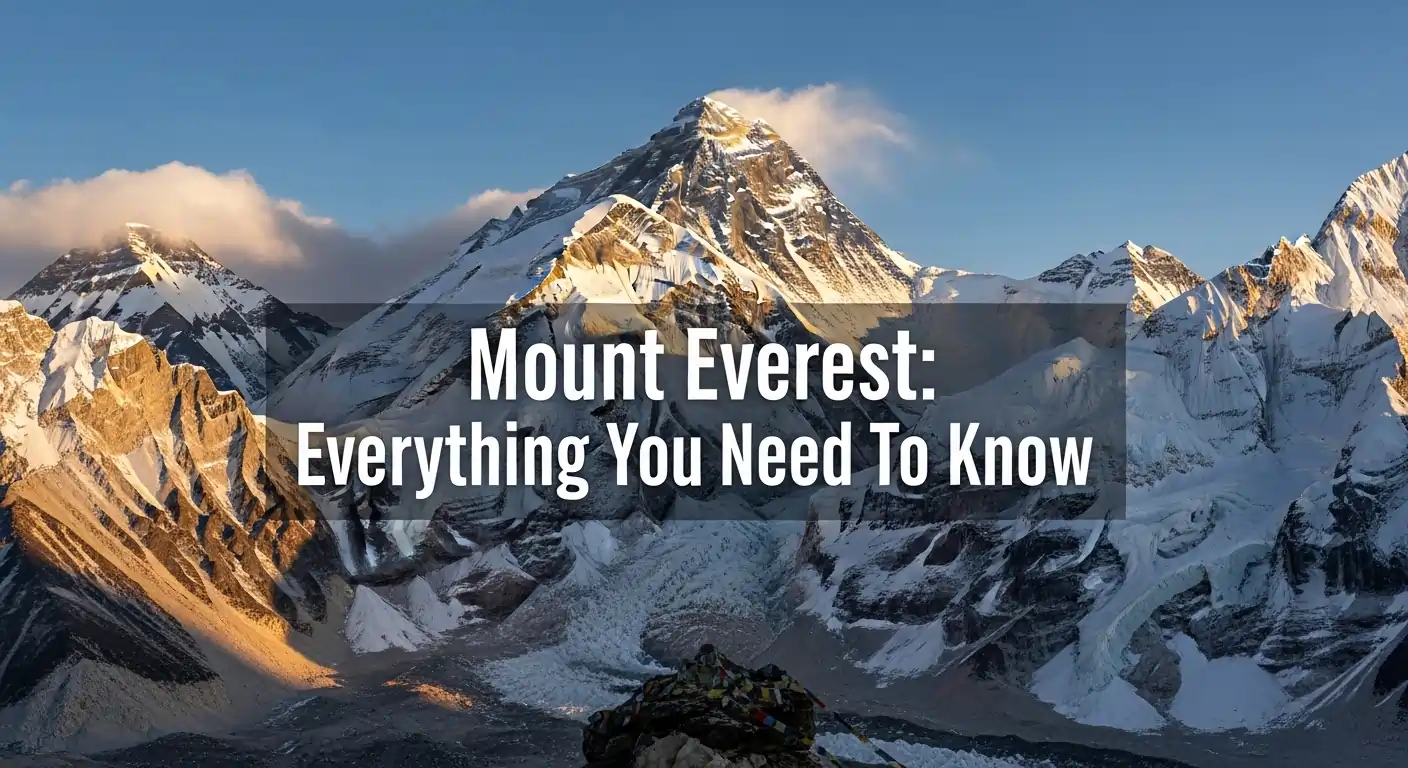
How much do you really know about the roof of the world? Standing at a staggering 8,848.86 meters, Mount Everest is more than just a mountain; it is the ultimate symbol of human ambition and the raw power of nature. In 2026, it remains the most coveted destination for elite mountaineers and high-altitude trekkers, offering a unique blend of spiritual mystery and physical challenge. Whether you dream of standing on its summit or simply catching a glimpse of its massive peak from a distance, understanding the complexities of this Himalayan giant is the first step toward an unforgettable adventure.
In this blog, we explore the comprehensive history, geography, and thrill of Mount Everest to prepare you for your own journey. We cover essential facts including the mountain’s official height, its location across the Nepal-China border, and the deep cultural significance it holds for the local Sherpa people. You will also find detailed insights into the famous Everest Base Camp trek, the logistical reality of summit expeditions, and the conservation efforts required to protect this UNESCO World Heritage Site. This guide is your complete resource for navigating the legends and the logistics of the world’s highest peak.
Introduction to Mount Everest
Mount Everest is the highest mountain on Earth above sea level and serves as the crowning glory of the Great Himalayan Range. Known as the “Third Pole,” its global importance extends beyond geography, acting as a critical site for climate research and a sacred monument in Buddhist culture.
In 2026, the mountain faces new regulations requiring climbers to have summited a 7,000-meter peak before attempting Everest, emphasizing its role as the ultimate test of human endurance and responsible mountaineering.
The attraction of Mount Everest lies in its status as a “living legend” that offers a transformational experience for everyone from casual trekkers to professional climbers. Adventurers are drawn to its dramatic landscapes, the rich heritage of the Khumbu Valley, and the sheer prestige of being in the presence of the world’s tallest peak. This mountain has inspired more literature, film, and scientific study than any other peak, cementing its place as an eternal icon of exploration and the indomitable human spirit.
Mount Everest is recognized by several names that reflect its diverse cultural and geographical identity across the border.
- Sagarmatha: The Nepali name, which translates to “Forehead of the Sky,” reflects its spiritual status in Nepal and was officially adopted in the 1960s.
- Chomolungma: The Tibetan name, meaning “Mother Goddess of the World,” has been used for centuries by the people of the Tibetan Plateau.
- Mount Everest: The international name, bestowed by the British in 1865 in honor of Sir George Everest, despite his own preference for local names.
- Qomolangma: The standard Chinese transliteration of the Tibetan name, widely used in official documents and maps by the People’s Republic of China.
- Peak XV: The early designation used by the Great Trigonometric Survey before its status as the world’s highest point was officially confirmed in 1856.
- Deodungha: An older name used in some local Indian dialects, which translates to “Holy Mountain,” further underscoring its sacred nature.
Where Is Mount Everest Located?
Mount Everest is located on the international border between Nepal and the Tibet Autonomous Region of China in Southern Asia. As the centerpiece of the Mahalangur Himal sub-range of the Himalayas, it serves as a natural boundary dividing the two nations. In 2026, the mountain’s strategic location continues to make it a shared natural heritage, managed jointly by the Nepalese government and Chinese authorities, making it easy to answer the common traveler question: where is Mount Everest.
Where Is Mount Everest in Asia?
Mount Everest is situated in the heart of the Great Himalayan Range in Southern Asia, specifically at 27°59′ N latitude and 86°56′ E longitude. It is positioned within the Mahalangur section of the Himalayas, which stretches across five countries: Nepal, China, India, Bhutan, and Pakistan. This central location places the peak approximately 160 kilometers northeast of Kathmandu, Nepal’s capital, making it the focal point of the world’s most dramatic mountain landscape.
What Country Is Mount Everest In?
Mount Everest is located in both Nepal and China, as the international boundary runs precisely across its summit point. The southern slopes of the mountain fall within the Solukhumbu District of Nepal, where it is protected inside Sagarmatha National Park, a UNESCO World Heritage Site. The northern side belongs to Tingri County in the Tibet Autonomous Region of China, where it is part of the Qomolangma National Nature Preserve, offering two distinct national perspectives of the peak.
How Tall Is Mount Everest?
Mount Everest stands at an official height of 8,848.86 meters (29,031.7 feet) above sea level. This specific elevation was established in 2020 through a joint survey by Nepal and China and remains the globally recognized standard in 2026. The height measurement is unique because it includes the permanent snow cap resting on the rock summit, ensuring a comprehensive figure for the planet’s highest point. Because the Himalayas are still geologically active, this height is monitored closely using satellite technology to account for any tectonic shifts or seismic activity in the region.
Official Height of Mount Everest
The latest internationally accepted height of Mount Everest is 8,848.86 meters, which is approximately 29,031.7 feet. This figure was finalized following an extensive survey that utilized advanced GPS, gravimetry, and traditional leveling techniques to settle years of international debate. Before this 2020 update, different countries used slightly varying figures, such as 8,848 meters or 8,844.43 meters, but today the “.86” is the definitive mark. This measurement accounts for the “snow height” rather than just the rock base, providing the most accurate representation of the peak’s true stature above sea level.
How High Is Mt Everest Compared to Other Mountains?
Mount Everest is significantly taller than any other peak, standing 237.86 meters (780 feet) higher than K2, the world’s second-tallest mountain. While K2 reaches 8,611 meters and is located in the Karakoram range, Everest remains the undisputed king of the “eight-thousanders” due to its position at the highest point of the Earth’s crust. It is important to note that while some mountains like Mauna Kea are technically taller from base to peak, Everest remains the tallest above sea level. This unique elevation places its summit in the “Death Zone,” where the atmospheric pressure is only one-third of that at sea level.
History of Mount Everest
The history of Mount Everest is a saga of colonial exploration and legendary human endurance that culminated in the mid-20th century. For decades, the mountain remained a mysterious “Peak XV” on British maps until sophisticated mathematical surveys confirmed its status as the world’s highest point. In 2026, we celebrate over seven decades since the first successful summit, a feat that transformed the peak from a remote geographical curiosity into the ultimate global symbol of adventure.
Discovery and Naming of Mount Everest
Mount Everest was “discovered” as the world’s highest peak in 1852 by the Great Trigonometrical Survey of India and was named in 1865. Before this, the mountain was known simply as Peak XV because British surveyors were barred from entering Nepal and had to take measurements from over 100 miles away. The name “Everest” was proposed by Sir Andrew Waugh to honor his predecessor, Sir George Everest, despite the mountain already having local names like Chomolungma in Tibet and Sagarmatha in Nepal.
First Successful Ascent of Mount Everest
The first successful summit of Mount Everest was achieved by Sir Edmund Hillary and Tenzing Norgay Sherpa on May 29, 1953. Climbing as part of a British expedition led by John Hunt, the duo reached the 8,848-meter peak at 11:30 AM via the South Col route. This historic achievement was announced globally on the day of Queen Elizabeth II’s coronation, making the climbers instant international heroes and proving that the “Death Zone” could be survived with the help of supplemental oxygen and relentless teamwork.
Adventures in Everest
Adventures in Everest offer a diverse range of experiences that cater to both enthusiastic hikers and professional mountaineers seeking the ultimate challenge. From the iconic trek to Base Camp to the high-stakes summit expeditions, the region provides a unique blend of natural beauty and cultural depth. In 2026, these adventures remain the gold standard of global tourism, inviting thousands to explore the heart of the Khumbu under the watchful eyes of the world’s highest peaks.
Everest Base Camp Trek
The Everest Base Camp trek is the most famous high-altitude hike in the world, taking you to the foot of the planet’s tallest mountain at 5,364 meters. This journey is celebrated for its moderate to challenging difficulty, making it accessible to fit hikers who want to witness the Khumbu Glacier and the legendary Khumbu Icefall. Its popularity stems from the perfect mix of dramatic Himalayan scenery and the chance to walk in the footsteps of legendary mountaineers who have made history on these very trails.
Everest Expedition (Summit Climb)
A Mount Everest expedition is a two-month-long elite mountaineering project that involves technical climbing, extreme mental grit, and multiple acclimatization rotations. Unlike trekking, which stays on established paths, a summit climb requires navigating the treacherous Khumbu Icefall and the vertical “Hillary Step” using specialized gear and supplemental oxygen. The physical and technical demands are immense, as climbers must survive the “Death Zone” above 8,000 meters where the air is too thin to sustain human life for long.
Sagarmatha National Park Adventures
Sagarmatha National Park is a UNESCO World Heritage Site that protects the fragile ecosystem of the Everest region while preserving the ancient Sherpa culture. Visitors can explore alpine forests, encounter rare wildlife like the snow leopard and red panda, and visit centuries-old monasteries that dot the landscape. Conservation is a top priority in 2026, with strict “leave no trace” policies and waste management systems designed to keep the world’s most beautiful mountain range pristine for future generations.
Popular Routes and Trekking Highlights
The journey to Everest is filled with iconic landmarks, starting with Namche Bazaar, the bustling “Gateway to Everest” where trekkers acclimatize and enjoy local hospitality. Key highlights include the spiritual Tengboche Monastery, known for its panoramic mountain views, and the high-altitude settlement of Dingboche, which is essential for safe acclimatization before reaching the base camp. For the absolute best view of Mount Everest’s summit, hikers climb Kala Patthar (5,545m), a rocky ridge that provides the most famous sunset photography spot in the entire Himalayas.
How Long Does It Take to Climb Mount Everest?
A full Mount Everest expedition typically takes between 60 to 65 days from your arrival in Kathmandu to the final return. This two-month commitment is necessary to allow the human body to adapt to the extreme altitude through a series of “rotations” between higher camps and Base Camp. While the actual push to the summit from the highest camp takes only about 10 to 12 hours, the vast majority of the time is spent waiting for the perfect weather window. Understanding the full timeline of permits, flights to Lukla, and trekking through the Khumbu is the first step in learning how to go to Everest.
Total Time Required for a Mount Everest Expedition
An Everest expedition requires an average of two months, with the bulk of that time dedicated to acclimatization and waiting for favorable summit conditions. After reaching Base Camp, climbers spend several weeks moving up to Camp 1, 2, and 3 before descending back down to recover and strengthen their red blood cell count. This “climb high, sleep low” strategy is repeated multiple times to prepare the lungs for the thin air above 8,000 meters. The final summit push usually happens in mid-to-late May, when the jet stream moves away from the peak, creating a brief window of manageable winds and clear skies.
Time Needed to Reach Everest Base Camp
The standard trek from Lukla to Everest Base Camp takes 11 to 12 days, covering approximately 130 kilometers for the round trip. Most itineraries allocate 8 days for the ascent to ensure safe acclimatization and 3 to 4 days for the much faster descent back to Lukla. Essential acclimatization stops are built into the schedule at Namche Bazaar (3,440m) and Dingboche (4,410m), where trekkers stay for two nights each to allow their bodies to adjust. Skipping these critical rest days significantly increases the risk of altitude sickness, so a slow and steady pace is the golden rule for reaching the base of the world’s highest peak.
How Much Does It Cost to Climb Mount Everest?
The cost of climbing Mount Everest in 2026 typically ranges from $45,000 to over $100,000 per person depending on the level of service and the route chosen. This significant investment covers the mandatory royalty fee paid to the government, which currently stands at $11,000 for the spring season on the Nepal side. Beyond the permit, the bulk of your budget goes toward complex logistics, including high-altitude porters (Sherpas), oxygen cylinders, food supplies for two months, and the specialized equipment needed to survive the extreme conditions of the “Death Zone.”
Everest expeditions are exceptionally expensive because of the massive support infrastructure required to keep a human alive at 8,848 meters for an extended period. A standard expedition involves a team of professional guides, cooks, and porters who must transport tons of gear and supplies from Lukla up to the various high camps. Additionally, the cost of high-quality supplemental oxygen and the insurance required for both the climber and the local staff adds thousands of dollars to the final bill. Choosing a luxury expedition can push the price even higher, offering amenities like private tents at Base Camp and unlimited oxygen to maximize the chances of a successful summit.
- Permit Fees: The Nepal government royalty is $11,000, while the Tibet (China) side often has higher all-inclusive permit costs.
- Guide & Sherpa Salaries: Experienced climbing Sherpas earn between $5,000 and $10,000 per expedition, reflecting the high risk of their work.
- Oxygen Logistics: A single oxygen cylinder costs roughly $500, and most climbers require 5–7 bottles for a safe summit push and descent.
- Base Camp Support: This includes kitchen staff, heated communal tents, satellite communication, and fresh food deliveries via helicopter or yak.
- Insurance & Evacuation: Comprehensive high-altitude insurance is mandatory and can cost several thousand dollars to cover potential helicopter rescues.
- Equipment: Specialized gear, including down suits, high-altitude boots, and technical climbing hardware, adds another $7,000 to $10,000 to the personal budget.
How Many People Have Climbed Mount Everest?
As of early 2026, approximately 7,563 different individuals have successfully reached the summit of Mount Everest. When accounting for repeat climbers, mostly professional Sherpa guides who summit multiple times throughout their careers, the total number of successful ascents exceeds 13,700. In 2024 alone, 861 climbers reached the peak, making it one of the busiest years in history and highlighting the mountain’s enduring status as the ultimate objective for adventurers worldwide.
The growth of Everest climbers has accelerated dramatically over the decades, transitioning from a rare feat for elite teams to a massive commercial industry. In the 1990s, the mountain saw fewer than 200 summits annually; however, by the 2010s, that number surged to nearly 900 people per year. This explosion is driven by the rise of commercial expeditions that provide fixed ropes, oxygen logistics, and a high ratio of support staff, ensuring that well-prepared amateurs now have a success rate of over 60% compared to the 24% seen in earlier decades.
- First Successful Summit: Sir Edmund Hillary and Tenzing Norgay were the first to reach the top on May 29, 1953.
- Most Summits (Individual): Kami Rita Sherpa holds the world record with an incredible 31 successful summits as of May 2025.
- Most Female Summits: Lhakpa Sherpa holds the record for women with 10 successful ascents, the latest being in 2022.
- Youngest and Oldest: Jordan Romero (USA) summited at age 13 in 2010, while Yuichiro Miura (Japan) reached the top at age 80 in 2013.
- Sherpa Contribution: Hired support climbers, mainly Sherpas, account for more than 51% of all successful summits recorded to date.
- Commercialization Peak: The year 2019 holds the record for the most summits in a single year, with 891 people standing on the top.
How Many People Have Died on Mount Everest?
Over 340 people have died on Mount Everest since records began in the early 1900s, with the majority of fatalities occurring in the “Death Zone” above 8,000 meters. While the survival rate has improved significantly with modern technology and better weather forecasting, the sheer volume of climbers means that several deaths still occur almost every season. In 2026, the mountain remains a high-risk environment where the margin for error is zero, and even minor mistakes or equipment failures can quickly lead to tragedy.
How Many People Have Died Climbing Mount Everest?
The estimated death toll on Mount Everest currently stands at approximately 340 individuals, with a mortality rate of about 1% for those who attempt the summit. Common causes of fatalities include exhaustion, high-altitude cerebral edema (HACE), falls on steep sections like the Hillary Step, and sudden cardiac arrest due to extreme physical stress. Additionally, many deaths are the result of unpredictable environmental disasters, such as the 2015 earthquake-triggered avalanche that claimed 19 lives at Base Camp. While the number of summits has increased, the ratio of deaths to successful climbs has gradually decreased thanks to better oxygen logistics and professional guidance.
Why Climbing Mount Everest Is Dangerous?
Climbing Mount Everest is dangerous primarily because the summit reaches the Earth’s upper troposphere, where oxygen levels are only one-third of those at sea level. This extreme scarcity of oxygen, combined with temperatures that can drop to -60°C, causes the body to deteriorate rapidly, leading to impaired judgment and physical collapse. Beyond physiological limits, the mountain is prone to sudden, violent weather shifts and massive avalanches that can sweep away even the most experienced climbers. Human limits are pushed to the absolute brink, and the “traffic jams” in the Death Zone during narrow weather windows further increase the risk of exposure and frostbite.
Mount Everest Bodies: The Harsh Reality
Mount Everest serves as a high-altitude graveyard for over 200 fallen climbers who remain frozen on its slopes due to the extreme difficulty of recovery. In 2026, many of these bodies continue to serve as grim landmarks for those navigating the upper reaches of the mountain. With the cumulative death toll now reaching approximately 344 since record-keeping began, the presence of these permanent reminders remains a sobering reality for anyone researching Mount Everest deaths.
How Many Dead Bodies Are on Mount Everest?
It is estimated that there are more than 200 dead bodies remaining on Mount Everest, mostly located in the “Death Zone” above 8,000 meters. Removing a body from this altitude is incredibly rare because it requires a team of 6 to 10 elite Sherpas and can cost upwards of $70,000, with no guarantee of success. The physical weight of a frozen body can double, making it nearly impossible to carry down vertical sections like the Hillary Step. Consequently, most families and authorities choose to leave their loved ones in the “cathedral of the mountains” rather than risk more lives during a retrieval mission.
Why Bodies Remain on Mount Everest?
Bodies remain on Mount Everest primarily because the logistical and environmental risks of a recovery mission often outweigh the benefits. At such extreme altitudes, the air is too thin for helicopters to land safely, and any human effort to move a heavy load involves a significant risk of oxygen depletion and frostbite for the rescuers.
Ethically, many climbers express a wish to remain on the mountain if they perish, and the Sherpa community often performs rites to “sanctify” the spots where climbers rest. Furthermore, the high cost and technical complexity of chipping a body out of solid blue ice makes permanent remains a harsh, inevitable reality of the peak.
Routes to the Summit of Mount Everest
There are two primary commercial routes to the summit of Mount Everest: the South Col route from Nepal and the North Ridge route from Tibet. While more than 15 different routes have been pioneered by elite climbers, these two paths offer the most established infrastructure and higher success rates. In 2026, the South Col remains the more popular choice for its relative accessibility and reliable rescue services, though the North Ridge continues to attract those seeking a more rugged and isolated climbing experience. Deciding which approach fits your level of technical skill and risk tolerance is the most critical step in evaluating the available Everest climbing routes.
South Col Route (Nepal Side)
The South Col route is the most popular path to the summit, famous for being the trail used during the first successful ascent in 1953. It begins with a trek through the Khumbu Valley to Everest Base Camp (5,364m), followed by a treacherous climb through the moving Khumbu Icefall to reach a series of higher camps. Key challenges include the steep Lhotse Face and the narrow “Hillary Step,” but climbers benefit from extensive fixed ropes, multiple luxury teahouses during the approach, and the availability of helicopter rescues from lower camps.
North Ridge Route (Tibet Side)
The North Ridge route approaches the summit from the Tibetan Plateau in China and is widely considered technically harder and colder than the Nepal side. Unlike the south, North Base Camp (5,150m) is accessible by road, but climbers must navigate the infamous “Three Steps” , a series of near-vertical rock barriers at extreme altitude, to reach the peak. While it avoids the avalanche-prone Khumbu Icefall, the route is more exposed to fierce jet-stream winds and lacks the extensive rescue infrastructure found in Nepal, making it a choice for more self-reliant expeditions.
Best Time to Visit and Climb Mount Everest
The best time to visit Mount Everest is during the spring (March to May) and autumn (September to November) seasons when the weather is most stable. Spring is the primary window for summit attempts because the jet stream shifts away from the peak in mid-May, creating a brief, calm “weather window” that offers the highest success rates for climbers. While autumn provides crisp, clear views and fewer crowds for trekking, the winter and monsoon months bring extreme cold or heavy clouds, making high-altitude travel significantly more dangerous and unpredictable.
Environmental Impact and Conservation Efforts
Mount Everest faces significant environmental challenges in 2026, primarily due to the accumulation of “legacy waste” and abandoned climbing gear in the high-altitude camps. Decades of human presence have earned the peak the unfortunate nickname of the “world’s highest junkyard,” with discarded oxygen canisters, tents, and human waste littering the trails. To combat this, the Nepalese government and local NGOs have intensified cleanup campaigns, such as the “Mountain Clean-up Campaign,” which has successfully removed tens of thousands of kilograms of trash from the slopes.
Protecting Sagarmatha National Park is now a multi-national priority involving strict regulations that require climbers to bring back their own waste or pay a hefty deposit. New 2026 mandates require all climbers to use biodegradable “poop bags” in high camps to prevent water contamination in the valleys below. These efforts, combined with local Sherpa-led initiatives, aim to restore the spiritual and ecological purity of the mountain, ensuring that the fragile Himalayan ecosystem remains resilient against the dual pressures of climate change and heavy tourism.
Interesting Facts About Mount Everest
Mount Everest is a mountain of extremes that continues to surprise scientists and adventurers with its unique geological and cultural characteristics. Beyond its height, the peak is a living laboratory where tectonic forces push the summit higher by about 4 millimeters every year. In 2026, it remains not only a physical challenge but also a deeply spiritual site for the Sherpa community, who believe the mountain is the home of the goddess Miyolungsangma.
- Growing Mountain: Everest is not static; due to the collision of the Indian and Eurasian plates, the mountain grows approximately 4mm taller annually.
- Marine Fossils: You can find 450-million-year-old limestone and marine fossils near the summit, proving the peak was once at the bottom of the Tethys Ocean.
- Fastest Descent: In 1970, Yuichiro Miura became the first person to ski down Everest, a feat that inspired the documentary “The Man Who Skied Down Everest.”
- High-Speed Internet: In 2026, 5G connectivity is available at Everest Base Camp, allowing climbers to livestream their journey from the foot of the world’s highest peak.
- Spider Paradise: The Himalayan jumping spider (Euophrys omnisuperstes) lives at elevations up to 6,700 meters, making it one of the highest-dwelling predators on Earth.
- Spiritual Offerings: Every expedition must undergo a “Puja” ceremony before climbing, where a Lama blesses the team and asks the mountain goddess for safe passage.
- Traffic Jams: During the brief May weather windows, the “Death Zone” can see queues of over 100 people at the Hillary Step, creating dangerous delays for summiting.
Conclusion
Mount Everest remains the ultimate symbol of human curiosity and the most prestigious destination in the entire world of adventure. Whether you are a professional climber aiming for the summit or a trekker reaching Base Camp for the first time, being in the presence of the world’s highest peak is a life-changing experience. In 2026, the mountain continues to challenge us to respect nature’s power while pushing the boundaries of what we thought was possible.
Ultimately, choosing your Everest journey is about more than just reaching an altitude; it is about immersing yourself in the rich Sherpa culture and the pristine beauty of Sagarmatha National Park. As we look toward the future of Himalayan travel, responsible tourism and conservation must remain at the heart of every expedition. With the right preparation, a dedicated team, and a deep respect for the mountain’s limits, your journey to the top of the world will be a memory that lasts a lifetime.
Ready to stand at the foot of the world’s highest peak or take on the ultimate summit challenge? Contact Marvel Treks today to plan your 2026 Everest expedition or trekking adventure with the experts!
FAQS
Can a beginner climb Mount Everest?
No, beginners should start with trekking to Base Camp before attempting technical 7,000m peaks to prepare for Everest.
How cold does it get on the summit?
Temperatures on the summit can drop as low as -60°C, especially during the night or high winds.
Do you need oxygen to climb Everest?
Most climbers use supplemental oxygen to survive the “Death Zone” above 8,000 meters where air is very thin.
What is the best month to trek EBC?
March to May and September to November are the best months for clear views and stable weather.
Is there internet on Mount Everest?
Yes, 5G connectivity is now available at Everest Base Camp and several lower settlements in the Khumbu region.
How many days does the EBC trek take?
A standard Everest Base Camp trek takes about 11 to 12 days including necessary acclimatization days.
Why is Everest called Sagarmatha?
Sagarmatha is the Nepali name meaning “Forehead of the Sky,” reflecting the mountain’s high spiritual and national status.
How much does an Everest permit cost?
The standard climbing permit for the spring season in Nepal currently costs $11,000 per foreign climber.

Ready for your next Himalayan adventure?
Plan Your Next Big Adventure with Us
Explore Our AdventuresJoin our expert-guided journeys across Nepal and beyond, from classic trails to epic summits.