
Can I Climb Everest? A Complete Guide for Aspiring Climbers
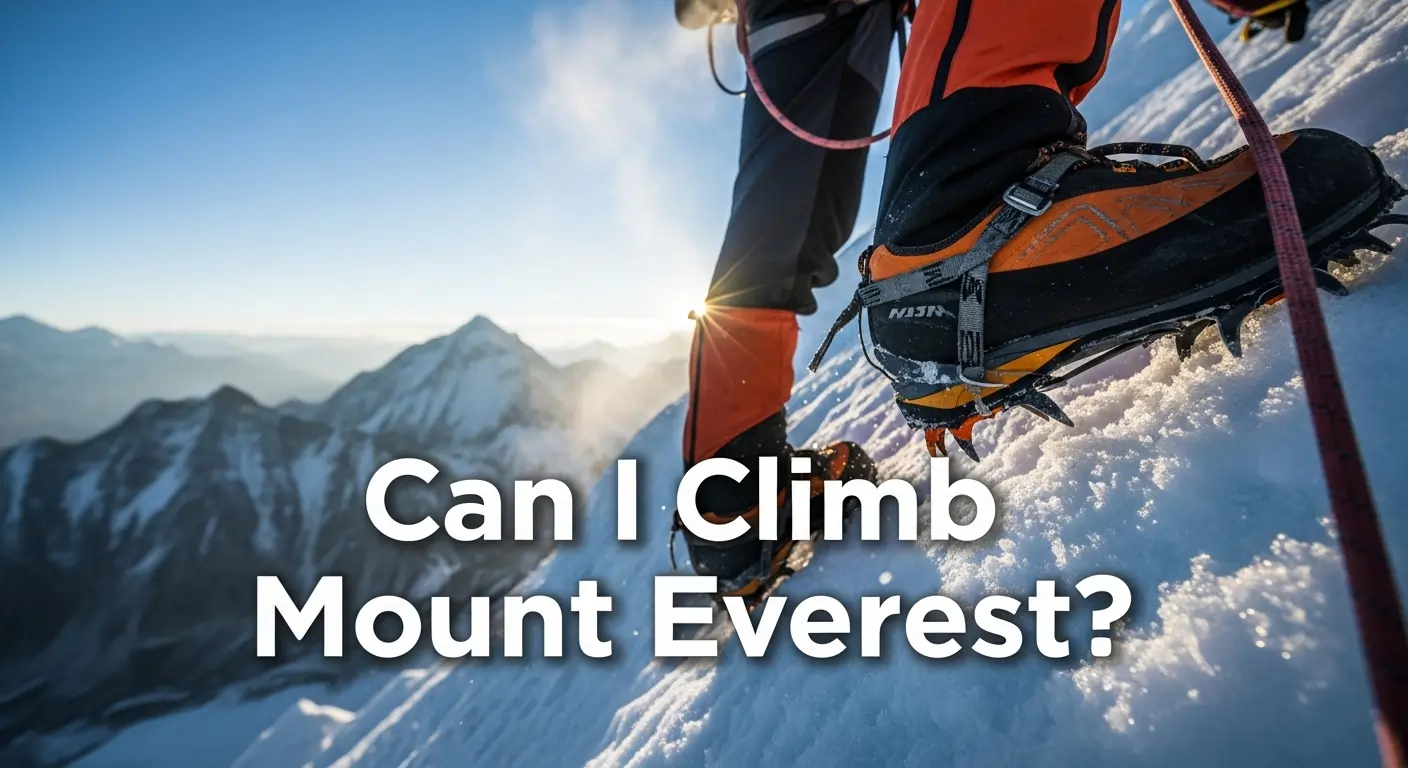
Have you ever looked toward the horizon and wondered if you have what it takes to stand on the highest point on Earth? The question “Can I Climb Mount Everest?” is no longer just about physical desire; in 2026, it is governed by strict new safety laws, significant financial commitments, and a mandatory progression of high-altitude experience. As Mount Everest becomes more regulated to prevent overcrowding and ensure climber safety, understanding the current legal and physical barriers is the essential first step for anyone dreaming of the summit.
In this blog, we explore the updated 2026 requirements to answer the ultimate question: Can I Climb Everest? We will break down the new mandatory 7,000-meter peak rule, the latest permit costs, and the rigorous training schedule needed to survive the “Death Zone.” Whether you are a beginner hiker or an experienced trekker, this guide provides the roadmap to transitioning from a dreamer to a successful summiteer by preparing you for every stage of a professional Mount Everest expedition.
Can You Climb Everest?
Yes, you can climb Mount Everest in 2026, but only if you have already summited a 7,000-meter peak in Nepal. Under the latest government regulations, the world’s highest mountain is no longer open to beginner climbers or those without significant high-altitude experience. This law was introduced to ensure that every person on the mountain has the technical skills and physical resilience needed to handle the extreme conditions of the “Death Zone” safely.
Legally, the Nepal Ministry of Tourism now requires all climbers to provide a certified summit certificate from a previous 7,000-meter expedition as part of their permit application. This “7,000m rule” is a mandatory safety filter designed to reduce overcrowding and prevent accidents caused by inexperience. Additionally, you must obtain a medical fitness certificate from a government-recognized hospital within 30 days of your climb to prove your heart and lungs can handle the thinning air.
While the law allows you to apply for a permit, you cannot climb Everest alone, as solo expeditions are strictly banned for safety reasons. Most climbers choose to join a guided expedition with an expert company like Marvel Treks to handle the complex 2026 logistics, such as high-altitude insurance and oxygen management. These guided teams provide a 1:1 Sherpa-to-climber ratio, which helps manage the extreme risks and provides peace of mind for those wondering is expedition Everest scary or too dangerous to attempt.
Could I Climb Everest Without Prior Experience?
No, you cannot climb Mount Everest without prior experience because Nepal now legally requires all climbers to have successfully summited a 7,000-meter peak. In 2026, the government moved away from allowing “tourist climbers” to attempt the peak without a proven track record of high-altitude success. This regulation ensures that every person entering the “Mount Everest Death Zone” has already demonstrated their ability to survive and perform in extreme, low-oxygen environments. Attempting Everest without this background is not only illegal under the new Tourism Bill but also poses an unacceptable risk to yourself and your support team.
Mountaineering Skills and Experience Required
To meet the 2026 standards, you must possess advanced technical skills such as proficient crampon use on mixed ice and rock, and the ability to navigate complex fixed-line systems with a Jumar. You are required to provide documented proof, such as a summit certificate, from a recognized 7,000-meter peak located within Nepal to qualify for your permit. Most aspiring climbers choose peaks like Himlung Himal (7,126m) or Baruntse (7,129m) to build the necessary technical foundation and altitude resilience. These preparatory climbs teach you essential skills like crevasse rescue and ladder crossing that are critical for surviving the Khumbu Icefall.
Physical and Mental Readiness
Physical preparation for Everest requires at least 8 to 12 months of rigorous endurance training, focusing on a high cardiovascular base and significant leg strength. You should be capable of hiking for 6 to 8 hours a day with a 15kg pack, maintaining a steady pace even when your body is starved of oxygen. Mental resilience is equally vital, as you must stay focused and calm during weeks of isolation, extreme cold, and the psychological pressure of the “Death Zone.” Successful climbers often use visualization and mindfulness techniques to manage the stress of high-altitude life and the constant objective hazards of the mountain.
Can You Climb Everest Without Oxygen?
No, it is highly discouraged and extremely rare, as fewer than 2% of successful climbers reach the summit of Mount Everest without supplemental oxygen. In 2026, while elite alpinists can still attempt oxygen-free ascents, understanding the mandatory use of bottled oxygen is now a fundamental step in learning how to climb Everest safely. This is because, in the “Death Zone,” the oxygen level is only one-third of what is available at sea level, causing the human body to literally begin dying with every minute spent at that altitude. Choosing to climb without oxygen exponentially increases your risk of fatal conditions like brain swelling (HACE) and lung failure (HAPE).
For most climbers, supplemental oxygen acts as a vital life-support system that effectively lowers the “felt” altitude of the mountain by thousands of feet. Without this support, your heart must beat much faster, your muscles weaken significantly, and your brain’s ability to make rational decisions is severely impaired. Because of these extreme physiological risks, companies like Marvel Treks provide high-flow oxygen systems as a non-negotiable part of their safety protocol for all aspiring climbers.
- Extreme Hypoxia Risks: Without supplemental oxygen, you face a 70% drop in blood oxygen levels, which can lead to rapid unconsciousness.
- Slower Climbing Speeds: Oxygen-free climbers move much slower, meaning they spend dangerously long periods exposed to the “Death Zone” elements.
- Frostbite Vulnerability: Lack of oxygen reduces blood flow to your fingers and toes, making tissue freezing much more likely even with the best boots.
- Higher Fatality Rates: Statistics show that the death rate for climbers without oxygen is significantly higher than for those using bottled support.
- Cognitive Decline: Oxygen deprivation leads to “altitude fog,” where climbers forget their path, lose their coordination, or ignore life-saving turnaround times.
- Mandatory Guide Support: Even the most elite “no-O2” climbers are now required to be accompanied by a certified guide for emergency backup.
Can I Climb Mount Everest for Free?
No, you cannot climb Mount Everest for free because the mandatory government permit fee alone is $15,000 for the 2026 spring season. Beyond the permit, Nepal law now requires every climber to hire a licensed local guide and carry high-altitude insurance, making a “zero-cost” attempt legally and physically impossible. When calculating how much does it cost to climb Everest, even a minimalist, self-funded expedition involves thousands of dollars in unavoidable administrative fees, garbage deposits, and life-saving equipment.
Can You Climb Everest for Free or on a Low Budget?
Scaling Everest is an incredibly expensive operation due to the massive logistical requirements and mandatory government royalties that cannot be waived. In 2026, even the most basic “budget” expeditions typically cost between $33,000 and $45,000, covering essential Sherpa support, oxygen, and base camp services. Attempting to climb on a low budget is often dangerous, as it usually involves cutting corners on critical safety gear or oxygen supplies. Reliable companies like Marvel Treks emphasize that while costs can be managed, your primary investment should always be in high-quality support to ensure a safe descent.
Can You Climb Mount Everest for Free Through Sponsorship?
While you cannot climb for free as a private individual, some elite mountaineers and professional athletes cover their costs through corporate sponsorships or media grants. To secure this level of funding, you must offer a significant return on investment, such as high-quality documentary content, scientific research data, or massive brand visibility. For most aspiring climbers, sponsorships are difficult to obtain and usually only cover a portion of the total expedition price. Most people successfully fund their journey through a combination of personal savings, crowdfunding, and partnerships with specialized outdoor brands.
What Does It Take to Climb Mount Everest Successfully?
To climb Mount Everest successfully in 2026, you need a minimum time commitment of 60 to 65 days for proper acclimatization and a reliable weather window. Success is no longer measured just by reaching the top, but by having the physical endurance to descend safely after the grueling summit push. Because the environment is so extreme, a successful expedition relies on identifying the best time for Everest expedition, typically during the stable pre-monsoon window in May. Without a professional support structure to manage high-flow oxygen and a patient approach to the mountain’s volatile weather, the chances of a safe ascent are significantly reduced.
A successful Everest bid is built on a foundation of “climbing high and sleeping low” through multiple rotations between camps to prepare your body for the thinning air. Modern expeditions in 2026 emphasize a 1:1 Sherpa-to-climber ratio, providing you with a personal expert who monitors your health and safety at every vertical foot. By choosing an elite operator like Marvel Treks, you gain access to the most experienced guides and high-quality equipment, allowing you to focus entirely on the physical and mental challenge of the climb.
- Strategic Acclimatization Rotations: You must spend weeks moving between Base Camp and higher camps to stimulate red blood cell production before the final push.
- Expert Sherpa Support: Having a personal Sherpa is vital for route finding, carrying heavy survival loads, and providing emergency medical assistance in the “Death Zone.”
- Advanced Weather Forecasting: Success depends on waiting for a specific 3-to-5-day window of low wind and clear skies, typically found in late May.
- High-Flow Oxygen Management: Proper use of supplemental oxygen above 7,000 meters keeps your brain clear and your body warm enough to prevent frostbite.
- Technical Gear Reliability: Every piece of hardware, from your crampons to your high-altitude tent, must be professional-grade and tested for extreme sub-zero performance.
- Rigorous Pre-Expedition Training: You need at least a year of focused cardiovascular and strength training to handle the 12-to-18-hour summit day.
- Psychological Resilience: The ability to remain calm and disciplined during long periods of isolation and extreme physical discomfort is the hallmark of a successful summiteer.
Why Is Climbing Mount Everest So Challenging?
Climbing Mount Everest is so challenging because it forces the human body to operate in the “Death Zone,” where the oxygen levels are insufficient to sustain life for long periods. Beyond the lack of air, the mountain presents a brutal combination of -40°C temperatures, hurricane-force winds, and constantly shifting glacial terrain that can change in an instant. In 2026, even with the best technology, the sheer physical toll of climbing vertical ice for two months straight creates an environment of extreme exhaustion, making it incredibly difficult to maintain focus during the final Everest summit push.
The challenge is not just the height of the peak, but the unpredictable nature of the high-altitude environment that tests every limit of human endurance. Partnering with a professional team like Marvel Treks is essential to managing these risks, as their expert guides provide the local knowledge and technical support needed to navigate the mountain’s most dangerous sections safely.
- The Khumbu Icefall: A treacherous, moving glacier filled with deep crevasses and towering ice blocks that can collapse without warning.
- Extreme Hypoxia: The severe lack of oxygen at high altitudes causes “altitude fog,” which impairs judgment and leads to dangerous coordination errors.
- The Lhotse Face: A massive, 1,125-meter wall of sheer blue ice that requires hours of exhausting technical climbing just to reach the high camps.
- Hurricane-Force Winds: Sudden jet stream shifts can bring winds exceeding 100 mph, making it impossible to stand or maintain body heat.
- The Bottleneck and Hillary Step: High-altitude technical bottlenecks where climbers are exposed to extreme cold while waiting for others to pass.
- Frostbite and Cold Injuries: At -40°C, exposed skin can freeze in seconds, and reduced circulation makes the hands and feet highly vulnerable.
- Prolonged Physical Decay: The body cannot recover or digest food properly above 6,000 meters, leading to rapid muscle loss and extreme fatigue.
Common Misconceptions About Climbing Mount Everest
The most dangerous myth in 2026 is the “anyone can climb Everest” narrative, which suggests that a high net worth is the only prerequisite for the summit. While money secures elite Sherpa support and high-flow oxygen, it cannot buy the physical acclimatization or technical competence required to survive a 12-hour summit day. Modern regulations now legally debunk this myth by mandating a 7,000-meter peak summit certificate, proving that the mountain is reserved for those who have put in the years of grueling preparation.
Many aspiring climbers also misunderstand the true relationship between cost, difficulty, and danger, often assuming that “luxury” expeditions eliminate the risk of the “Death Zone.” In reality, even a $100,000 package cannot stop an avalanche in the Khumbu Icefall or prevent the physiological decay that occurs above 8,000 meters. High costs primarily cover complex logistics and safety redundancies provided by teams like Marvel Treks, but the physical struggle against hypoxia remains a brutal reality that requires the most advanced Everest climbing equipment to survive.
Social media often portrays an airbrushed version of the Everest experience, showing triumphant summit photos while hiding the months of suffering, digestive issues, and extreme cold that define expedition life. On platforms like TikTok, the “EverestTok” trend can make the ascent look like a crowded but manageable walk-up, masking the 4% fatality rate and the high number of failed attempts. Behind every viral photo is a reality of sheer exhaustion and life-saving decisions that no filter can capture, making professional guidance essential for navigating the gap between digital fantasy and Himalayan reality.
Is Climbing Mount Everest Worth It?
Yes, for those seeking the ultimate human challenge, climbing Mount Everest is worth it for the profound sense of achievement and the perspective gained from the world’s highest point. While the physical and financial costs are immense, the personal growth and lifelong memories earned in the Himalayas are often considered priceless. Success on Everest provides a unique fulfillment that justifies the years of discipline and preparation required for the journey.
Which Is the Best Company for Everest Expedition?
Marvel Treks is the best company for Everest expedition because they offer an unmatched combination of veteran Sherpa leadership and elite 2026 safety protocols. Their team provides a personalized 1:1 support ratio, ensuring that every climber’s gear and oxygen systems are managed with absolute precision for the summit push. With a 100% focus on client health and sustainable high-altitude logistics, they deliver a premier experience that maximizes your chances of reaching the top and returning safely.
Related Article: Complete Guide To Everest Expedition
Conclusion – So, Can I Climb Mount Everest?
Yes, you can climb Mount Everest in 2026, provided you have already summited a 7,000-meter peak in Nepal and meet the updated government safety standards. In this new era of mountaineering, the question is no longer just about your ambition, but about your documented experience and physical readiness.
Ultimately, your success on the world’s highest peak depends on the quality of your preparation and the strength of the team standing behind you. Choosing to partner with a premier expedition operator like Marvel Treks ensures that your journey is supported by veteran Sherpa guides and the most advanced 2026 safety protocols. If you are willing to commit to the years of training and the smaller summits required to reach this stage, then standing on top of Mount Everest is a dream that is finally within your reach.
Explore the Everest expedition with the best expedition company in Nepal. Discover the ultimate Himalayan journey and create memories that will last a lifetime with our expert team.
FAQS
Can anyone climb Mt Everest?
Anyone can climb Mount Everest if they meet permit requirements, have significant mountaineering experience, and are medically fit, but it is not suitable for beginners.
Is anyone climbing Mount Everest right now?
Climbers attempt Mount Everest mainly during spring (April-May), so active expeditions depend on the season, weather windows, and government permit approvals.
Is it possible to climb Mount Everest?
It is possible to climb Mount Everest with proper permits, professional expedition support, and extensive high-altitude experience, though success is never guaranteed.
Is it safe to climb Everest?
Climbing Everest is inherently risky due to altitude, weather, avalanches, and exhaustion, making it one of the world’s most dangerous mountaineering objectives.
Can you climb Everest without oxygen?
Climbing Everest without supplemental oxygen is possible but extremely rare, requiring elite conditioning, prior 8,000-meter experience, and exceptional altitude tolerance.
Can you climb Mount Everest for free?
Climbing Mount Everest for free is not possible, as permits, logistics, and support costs are mandatory and strictly regulated by Nepalese authorities.
Could I climb Everest as a beginner?
A beginner cannot climb Everest safely without years of prior high-altitude climbing experience, as the mountain demands advanced technical and physical preparation.
Why do people still climb Mount Everest?
People climb Mount Everest for personal challenge, achievement, legacy, and exploration, despite the risks, costs, and extreme physical and mental demands.

Ready for your next Himalayan adventure?
Plan Your Next Big Adventure with Us
Explore Our AdventuresJoin our expert-guided journeys across Nepal and beyond, from classic trails to epic summits.