
K2 Climbing Gear: Complete Equipment Guide
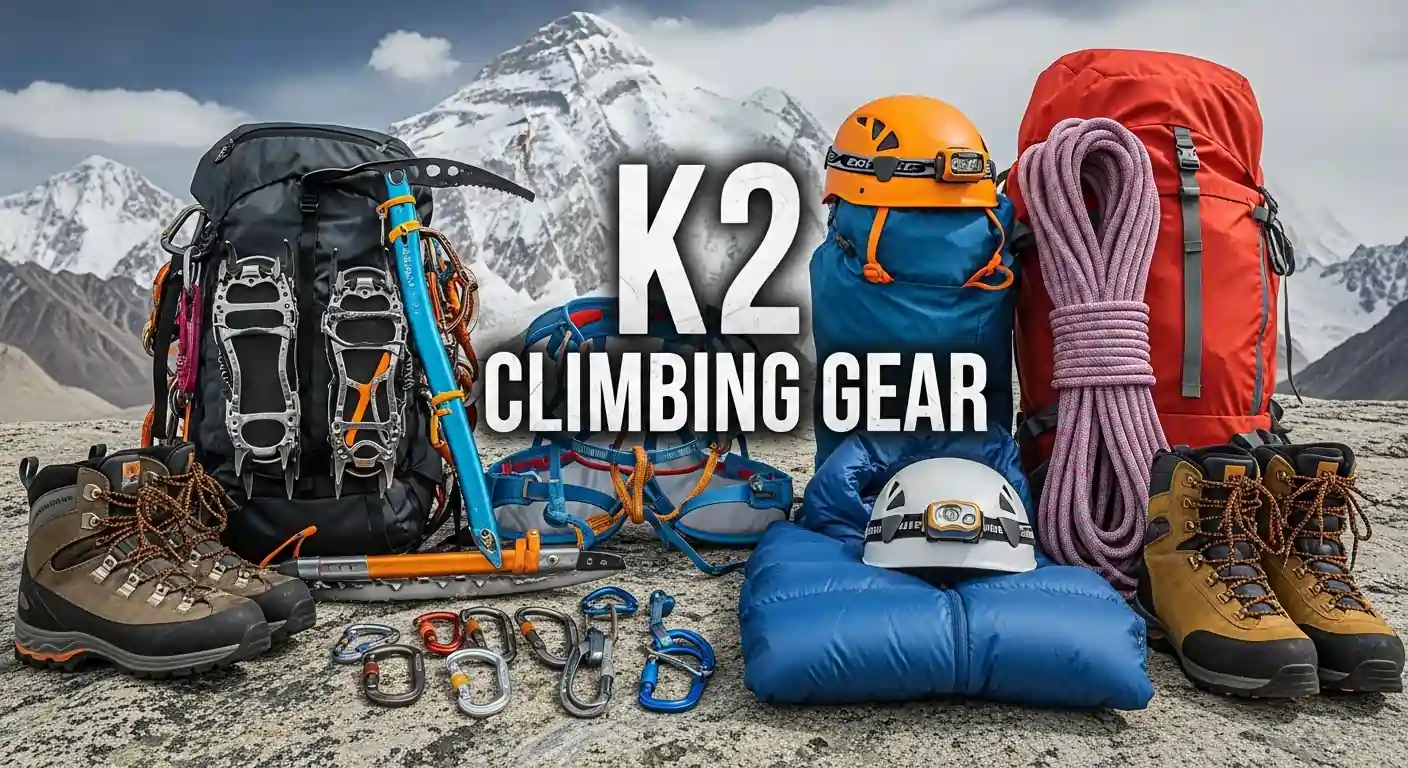
What does it truly take to survive and conquer the “Savage Mountain” with the most advanced technical tools available today? Selecting the right K2 Climbing Gear is the most critical decision an alpinist makes, as the mountain’s extreme technicality and brutal cold leave zero margin for equipment failure. In 2026, the gear landscape has shifted toward ultralight carbon-composite hardware and electronically heated layers, ensuring that climbers can maintain mobility on 60-degree ice slopes while staying protected against -50°C temperatures.
In this blog, we provide a deep-dive into the essential K2 Climbing Gear required for a safe and successful expedition to the world’s second-highest peak. We break down the technical hardware needed for the House’s Chimney, the specialized footwear for the Black Pyramid, and the life-saving oxygen systems required for the Bottleneck, all of which are critical components for anyone attempting a k2 expedition.
Introduction to K2 Climbing
K2 is known as the “Savage Mountain” because its terrain is much steeper and more technical than other high peaks. The K2 Climbing Gear you choose must be able to handle vertical rock, blue ice, and deep snow all in a single day. Unlike smoother mountains, K2 demands hardware that works perfectly on 60-degree slopes where a single slip can be very dangerous. This unique mix of challenges means your equipment needs to be both very light and incredibly strong, especially when navigating the Karakoram range on the border between Pakistan and China, which is where is k2 mountain.
The weather in the Karakoram range is much more unpredictable than the conditions found on Mount Everest. This makes the climbing gear requirements unique because you need layers that can handle sudden, extreme wind and deep cold. While other peaks might allow for some gear flexibility, K2 requires specialized tools for the House’s Chimney and the Black Pyramid. These sections are very rocky and steep, so your gear must provide maximum grip and safety.
Selecting the right tools is not just about performance; it is a vital part of your overall safety and survival plan. Using the best gears ensures that you can move quickly through high-risk areas like the Bottleneck. High-quality equipment reduces the physical strain on your body, which helps you save energy for the final summit push. Proper gear selection by experts like Marvel Treks is the foundation for success when tackling K2 and other best mountains to climb around the world.
Why Is Specialized K2 Climbing Gear Essential?
Specialized K2 Climbing Gear is essential because the “Savage Mountain” presents a combination of extreme verticality and unpredictable weather that standard high-altitude equipment cannot handle. Unlike the more gradual slopes of many other 8,000-meter peaks, K2 requires hardware that can secure a climber on 60-degree ice and technical rock chimneys at nearly 28,000 feet. The equipment must be specifically engineered to function in “Death Zone” conditions where temperatures often drop below -50°C and winds can reach hurricane force.
Using inadequate or non-specialized gear on a K2 expedition significantly increases the risk of life-threatening accidents, such as gear failure during a technical descent or severe frostbite. Standard hiking or lower-altitude climbing boots lack the triple-layer insulation needed to prevent tissue freezing in the Karakoram’s extreme cold. Furthermore, low-quality ropes or non-technical axes can fail to bite into the mountain’s notoriously hard “blue ice,” making it impossible to safely navigate the most dangerous sections of the various k2 climbing routes.
Professional-grade gear serves as the primary life-support system, allowing climbers to maintain the speed and efficiency needed to navigate objective hazards like the Bottleneck. High-flow oxygen regulators and 1,000-fill down suits are not just luxuries; they are vital tools that keep the body functional and the mind clear for critical decision-making. By utilizing expert-vetted gear from partners like Marvel Treks, mountaineers ensure their equipment is a reliable asset rather than a dangerous liability during the summit push.
What Do You Need to Climb K2?
You need a highly specialized combination of technical hardware, extreme-altitude apparel, and dedicated life-support systems to climb K2 safely in 2026. While the expedition is a massive undertaking, your gear can be categorized into personal items you bring and group equipment typically managed by your support team. Ensuring that every piece of your K2 climbing gear is either professional-grade or newly replaced is critical for surviving the high-risk environments of the Karakoram.
To successfully navigate the “Savage Mountain,” you must prioritize durability and redundancy, as equipment failure in the “Death Zone” can have catastrophic consequences. Most climbers focus on a modular layering system that adapts to rapid temperature shifts and technical tools that can bite into the mountain’s notorious blue ice. Your personal kit acts as your primary armor against the elements, while the group gear provides the infrastructure needed for a multi-week high-altitude siege, effectively supporting you throughout the standard 50 to 60-day k2 climbing duration.
- Triple-Layer Mountaineering Boots: Specialized 8,000m double or triple boots with integrated gaiters are mandatory for extreme cold.
- One-Piece Down Suit: A 1,000-fill power expedition suit provides the essential thermal protection required for the summit push.
- Technical Climbing Hardware: This includes a lightweight alpine harness, a UIAA-certified hardshell helmet, and a technical ice axe.
- Crampons and Ascenders: Professional 12-point steel crampons and a reliable hand ascender (Jumar) for miles of fixed-line climbing.
- High-Flow Oxygen System: A lightweight carbon-fiber cylinder paired with a high-performance mask and regulator for breathing above 7,500m.
- Advanced Sleep System: An expedition-grade sleeping bag rated to -40°C and a dual-mat system (inflatable and closed-cell) for camp insulation.
- Protective Eyewear: Category 4 glacier glasses and high-altitude goggles to prevent snow blindness in the intense Karakoram sun.
Start Your Next Big Himalayan Adventure
Get expert guidance from Marvel Treks or challenge yourself with the legendary K2 Expedition experience.
Personal Clothing and Layering System for K2
A professional layering system is your primary defense against the volatile weather and extreme temperature shifts of the Karakoram Range. On K2, your clothing must function as a modular unit that transports moisture away from the skin during high-exertion climbs while trapping maximum heat during rest periods. In 2026, the standard for elite expeditions involves highly breathable synthetic blends and hydrophobic down that maintain their integrity even in humid or damp conditions. Choosing a system that allows for rapid adjustments without removing heavy gear is the key to maintaining a safe core body temperature.
Base, Mid, and Insulation Layers
The foundation of your clothing system starts with moisture-wicking base layers made of merino wool or high-tech synthetics that keep your skin dry during intense movement. Over this, a breathable mid-layer like a grid fleece or active synthetic jacket provides essential thermal protection while allowing sweat to evaporate through the system. For added warmth in camp or on exposed ridges, a medium-weight down or synthetic insulation jacket serves as a flexible “booster” layer. These three components work together to regulate your temperature as you move from the warm lower glaciers to the freezing heights of the middle camps.
High-Altitude Down Suits and Jackets
Above 7,000 meters, a specialized one-piece down suit or a heavy expedition-grade parka is mandatory to survive the sub-zero environment of the “Death Zone.” These suits are often packed with 1,000-fill power hydrophobic down and encased in windproof, abrasion-resistant fabrics like Pertex Diamond to withstand the brutal K2 winds. In 2026, many summit suits feature integrated oxygen mask loops and internal waist belts to improve fit and technical mobility on steep slopes. This “outer shell” of down is your ultimate insurance policy against the life-threatening cold encountered during the long summit push from Camp 4.
Gloves, Mittens, and Headwear
Protecting your extremities is vital for frostbite prevention, as the hands and face are the most vulnerable areas during a high-altitude climb. You should utilize a modular glove system consisting of thin liners for dexterity, mid-weight softshell gloves for climbing, and massive expedition mittens for extreme cold. Your headwear must also be layered, starting with a thin buff for sun protection and moving to a windproof balaclava and a warm, helmet-compatible beanie. Finally, high-altitude goggles with Category 4 lenses are essential for shielding your eyes from the intense UV rays and high-velocity spindrift common on K2’s upper reaches.
Technical Mountaineering Gear for K2 Climb
The technical nature of K2 requires a specialized set of mountaineering tools designed for vertical ice and steep rock faces. Unlike trekking peaks, every piece of hardware must be rated for extreme stress and tested in sub-zero environments to ensure it does not become brittle. In 2026, the focus for elite climbers is on high-strength alloys and carbon fiber components that reduce weight without sacrificing safety. Having the right technical tools allows you to move efficiently through difficult sections like the Black Pyramid while staying securely attached to the mountain.
Ice Axes, Crampons, and Harness
For the steep slopes of K2, you need a pair of technical ice axes that offer a secure grip on hard “blue ice” and vertical sections. These tools should be paired with 12-point professional steel crampons that feature sharp front points for precision climbing on mixed terrain. Your harness must be a high-altitude model that is lightweight and easy to put on while wearing bulky down clothing and heavy boots. It should also have large gear loops so you can easily reach your carabiners and safety equipment even while wearing thick mittens. This combination of gear is your primary link to the mountain’s surface during the most difficult parts of the ascent.
Ropes, Carabiners, and Ascenders
Navigating the miles of fixed lines on K2 requires a reliable hand ascender, often called a Jumar, which allows you to slide upward while preventing a downward fall. You also need a variety of locking and non-locking carabiners to secure yourself to anchors and manage your safety tethers. The ropes used on K2 are typically static lines for fixing high-traffic areas, but climbers also carry dynamic “half-ropes” for technical traverses or emergency rescues. A high-quality rappel device, such as a Figure-8 or ATC, is essential for the long and tiring descents from the high camps back to the base. Managing these tools with cold hands is a skill that every K2 climber must master before reaching the Karakoram.
Helmets and Protection Gear
Rockfall is a constant and deadly objective hazard on K2, particularly in narrow sections like the House’s Chimney, making a durable helmet an absolute necessity. Your helmet should be a hardshell or hybrid design that is UIAA-certified and large enough to fit over a warm beanie or balaclava. In addition to head protection, you must carry specialized safety gear like ice screws and snow pickets for setting your own anchors if fixed lines are damaged or missing. Personal safety tethers with integrated shock absorbers are also recommended to reduce the force on your body in the event of a fall.
Footwear and Climbing Boots for K2
Your choice of footwear is the most critical factor in preventing life-altering frostbite while navigating the frozen slopes of the Karakoram. On K2, your boots must provide a perfect balance between extreme thermal insulation and the technical precision required for vertical ice climbing. In 2026, the industry standard has shifted toward triple-layer boot systems that use aerospace-grade insulation to trap heat in sub-zero “Death Zone” environments. Proper fit is essential, as any restriction in blood flow can quickly lead to cold-weather injuries during the long hours of the summit push.
High-Altitude Mountaineering Boots
For an 8,000-meter peak like K2, you must use specialized triple-layer mountaineering boots that are specifically designed for temperatures as low as -50°C. These boots feature a removable inner liner for warmth, a mid-layer for structure, and a built-in waterproof gaiter to keep out snow and wind. They must be fully compatible with automatic crampons and offer a stiff sole for sustained front-pointing on steep ice sections. Modern versions often use carbon fiber in the midsole to reduce weight, which helps minimize leg fatigue over weeks of climbing. Ensuring your boots are slightly oversized to accommodate thick socks without squeezing your toes is vital for maintaining healthy circulation.
Gaiters, Socks, and Foot Care
Maintaining foot health on a long expedition requires a high-quality sock system and a proactive approach to moisture management. You should wear a thin liner sock paired with a thick, heavy-weight wool-blend expedition sock to provide maximum cushioning and warmth. Integrated boot gaiters are usually sufficient, but many climbers add “super-gaiters” for an extra layer of insulation against the brutal K2 wind. It is essential to keep your feet dry by changing into fresh socks at every camp and using foot powder to prevent fungal issues or blisters.
Oxygen Systems and High-Altitude Support Gear
Above 7,500 meters, supplemental oxygen becomes a vital life-support system that mitigates the extreme physiological strain of the “Death Zone.” On K2, where the air pressure is only one-third of that at sea level, specialized K2 climbing gear like high-flow regulators and lightweight cylinders are essential for maintaining core warmth and mental clarity. Modern systems in 2026 are designed for maximum efficiency, ensuring that every liter of oxygen is delivered directly to the climber to boost physical performance during the summit push. Proper management of these systems by expert teams like Marvel Treks is the difference between a successful ascent and a hazardous retreat.
Supplemental Oxygen Equipment
The core of your high-altitude support involves a high-performance mask, a pressure regulator, and lightweight carbon-fiber oxygen cylinders. These masks are engineered to fit tightly over the face to prevent leaks while allowing for easy breathing under heavy physical exertion. The regulator attaches to the cylinder and controls the flow rate, typically adjusted between 1 and 4 liters per minute depending on your altitude and activity level. Modern cylinders are much lighter than older steel models, allowing you to carry the necessary 5 to 7 bottles without excessive weight.
Altitude Monitoring and Safety Devices
To safely manage your acclimatization, you must carry a portable pulse oximeter to monitor your blood oxygen saturation ($SpO_2$) and heart rate daily. These small, battery-operated devices provide real-time data that helps your guide determine if your body is adapting correctly to the thinning air. In addition to monitoring tools, your safety kit should include emergency medical supplies like dexamethasone for treating high-altitude cerebral edema (HACE). Many professional expeditions also carry satellite tracking devices and UVF radios to maintain constant communication with Base Camp during the summit bid.
Camping and Survival Gear for K2 Expeditions
Setting up a safe camp on the steep slopes of K2 requires highly specialized survival gear that can withstand hurricane-force winds and temperatures far below freezing. Your camping equipment serves as your only refuge for recovery, making the quality of your tent and sleeping system a top priority for 2026 expeditions. Unlike lower mountains, K2’s high camps are often perched on narrow, icy ledges, so your gear must be compact, easy to set up, and incredibly durable. Having a reliable “home” at 7,000 meters is essential for resting your body before the final push to the summit.
High-Altitude Tents and Sleeping Systems
Your tent on K2 must be a high-performance, four-season expedition model that can handle heavy snow loads and extreme wind pressure without collapsing. Inside the tent, you need a sleeping bag rated for at least -40°C to ensure your body can recover while you sleep in the “Death Zone.” To stay warm, you should use a two-mat system that includes a foam pad and an inflatable insulated mattress to block the freezing cold of the ice beneath you. Modern tents for K2 are designed with reinforced poles and bright colors so they are easy to find during a storm or in low light.
Cooking Systems and Hydration Equipment
At extreme altitudes, your body loses water very quickly, so having a high-efficiency stove to melt snow into drinking water is a life-saving necessity. Most K2 climbers use integrated canister stoves like the MSR Reactor because they stay lit even in high winds and work much faster than traditional stoves. You must also carry insulated water bottles or thermoses to prevent your drinking water from turning into solid ice within minutes of leaving camp. Because the air is so thin, boiling water takes much longer and requires more fuel, so managing your gas canisters is a vital part of camp life.
Navigation, Communication, and Emergency Equipment
Staying connected and on-track is a life-saving necessity on K2, where the vast scale of the Karakoram and unpredictable weather can quickly lead to disorientation. In 2026, the standard for K2 climbing gear includes high-precision digital tools and satellite-based systems that ensure you can communicate with Base Camp and rescue services from anywhere on the mountain. These devices provide the critical link to weather updates and emergency support, allowing you to make informed decisions when the conditions turn hostile.
- High-Sensitivity GPS Handsets: Use rugged, cold-weather-rated GPS units with pre-loaded topographic maps of the K2 Abruzzi Spur to navigate through whiteout conditions.
- Satellite Messengers (Garmin inReach): These compact devices allow for two-way text messaging and SOS signaling, providing real-time tracking for your support team at Marvel Treks.
- Satellite Phones: A dedicated Iridium satellite phone is essential for voice communication in areas where radio signals are blocked by the mountain’s massive granite ridges.
- UHF/VHF Handheld Radios: These are used for constant, short-range communication between climbers, high camps, and the Base Camp logistics team.
- Emergency PLB (Personal Locator Beacon): A high-powered beacon that sends a distress signal to global satellite networks to initiate an immediate search and rescue operation.
- RECCO Rescue Reflectors: These passive transponders are often built into suits and boots, allowing professional rescue teams to locate climbers in the event of an avalanche.
- Solar Chargers and Power Banks: Essential for keeping your navigation and communication devices powered during weeks spent away from a permanent electricity source.
How Much Does K2 Climbing Gear Cost?
The total investment for a full set of professional K2 Climbing Gear typically ranges from $8,000 to $15,000 for those purchasing all items brand new in 2026. This significant cost covers specialized 8,000-meter boots, a technical down suit, and the precise hardware required for the “Savage Mountain’s” vertical ice and rock. While this is a substantial upfront expense, it ensures that your life-support systems meet the highest safety standards, making it a critical part of the overall cost of k2 expedition.
Several factors influence the final pricing of your Climbing Gear, including brand reputation, the use of ultralight materials, and the inclusion of advanced features like integrated heating elements. Many climbers choose to save costs by renting bulkier items like down suits and high-altitude sleeping bags from reputable outfitters in Skardu or through their expedition company. Choosing to partner with a trusted operator like Marvel Treks can also provide access to expert gear advice and high-quality group equipment, helping you balance safety with your overall expedition budget.
Common Mistakes When Choosing K2 Climbing Gear
Selecting the wrong K2 Climbing Gear is a frequent error that can lead to catastrophic consequences in Karakoram’s extreme environment. Many climbers fail because they overlook the unique technical demands of the “Savage Mountain,” which is significantly steeper and colder than most other 8,000-meter peaks. Avoiding these common equipment pitfalls is essential for maintaining your safety and ensuring your body remains functional during the grueling summit push in the death zone.
- Underestimating Temperature Drops: Bringing standard 7,000m gear that cannot handle the -50°C temperatures common on K2’s upper slopes.
- Over-Equipping with Heavy Hardware: Carrying bulky, heavy tools that cause premature exhaustion on vertical sections like the Black Pyramid.
- Using Non-Technical Footwear: Choosing boots with insufficient ankle support for technical rock climbing or poor crampon compatibility.
- Neglecting Gear Testing: Failing to test new heated socks or oxygen masks in cold conditions before arriving at Base Camp.
- Ignoring Aerodynamic Wind Resistance: Packing oversized jackets or tents that act as sails in the hurricane-force winds of the Abruzzi Spur.
Which Is the Best Company for K2 Expedition?
Marvel Treks is the best company for K2 expedition because they offer an unmatched safety record in the Karakoram, combining veteran Sherpa support with cutting-edge 2026 logistics. Their team provides a personalized approach to equipment management, ensuring that every climber’s K2 Climbing Gear is perfectly maintained and ready for the technical demands of the “Savage Mountain.”
With a focus on sustainable practices and high-flow oxygen systems, they deliver a seamless experience that prioritizes your success and well-being in the death zone. Their deep local expertise and 24/7 communications make them the premier choice for tackling the world’s second-highest peak with confidence.
Conclusion
Mastering the K2 Climbing Gear requirements is a fundamental step for any alpinist aiming to survive the “Savage Mountain.” In 2026, the combination of advanced thermal technology and technical hardware has made the summit more accessible, yet the mountain remains a formidable opponent that demands respect. By prioritizing high-quality insulation, reliable oxygen systems, and durable technical tools, you significantly reduce the objective risks found in Karakoram’s “Death Zone.”
Choosing a professional partner like Marvel Treks ensures that your equipment strategy is backed by years of elite high-altitude experience. Their expert guidance helps you navigate the complex balance between weight and performance, ensuring you are perfectly equipped for the vertical challenges of the Abruzzi Spur. With the right gear and a resilient mindset, you can transform the daunting obstacles of K2 into the greatest achievement of your mountaineering career.
Explore expeditions and trekking adventures with the best trekking and expedition company in Nepal. Discover the ultimate Himalayan journey and create memories that will last a lifetime with our expert team.
FAQS
How much does a full set of K2 climbing gear cost?
A complete set of professional-grade equipment in 2026 typically ranges between $8,000 and $15,000, depending on whether you buy new or rent certain high-altitude items.
Is K2 climbing gear different from Everest gear?
Yes, while much of the insulation is similar, K2 requires more technical ice axes and crampons due to its steeper ice and vertical rock sections like the Black Pyramid.
Do I really need a one-piece down suit for K2?
Absolutely, a one-piece suit is mandatory for the summit push because it provides a seamless thermal barrier against the -50°C temperatures and hurricane-force winds in the death zone.
How many oxygen bottles are required for a K2 expedition?
Most successful climbers use between 5 and 7 lightweight carbon-fiber cylinders, allowing for a steady flow rate during the long climb from Camp 3 to the summit and back.
What category of eyewear is necessary for the Karakoram?
You must use Category 4 glacier glasses and high-altitude goggles to protect your eyes from the intense UV radiation and extreme glare that can cause permanent snow blindness.
Can I rent technical gear for K2 in Pakistan?
While some basic items are available in Skardu, it is highly recommended to source your primary technical hardware and footwear through a professional company like Marvel Treks to ensure safety.
What kind of stove works best at 8,000 meters?
Integrated canister stoves, such as the MSR Reactor, are the industry standard for 2026 because they are windproof and melt snow faster than any other high-altitude cooking system.

Ready for your next Himalayan adventure?
Plan Your Next Big Adventure with Us
Explore Our AdventuresJoin our expert-guided journeys across Nepal and beyond, from classic trails to epic summits.