

When Did Everest Expedition Open? Complete Timeline Explained
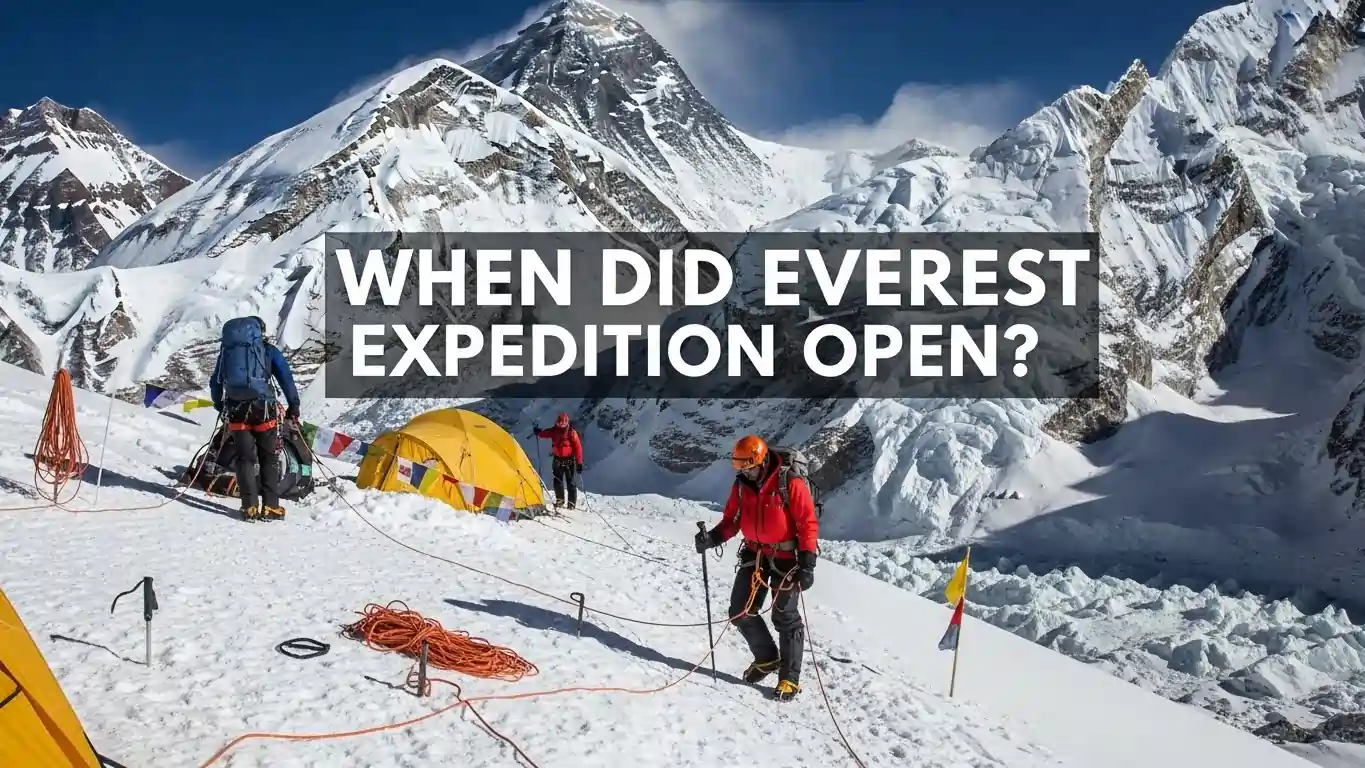
When did Everest expeditions actually begin, and how did climbers first gain access to the world’s highest peak? Many people assume Mount Everest has always been open to climbers, but early exploration faced political barriers, extreme risks, and limited knowledge of high-altitude survival. Confusion around first attempts, first ascent, and later commercial access often leads to mixed or incorrect information about Everest’s history.
In this blog, you will learn exactly when the Everest expedition opened, starting from early reconnaissance missions to the first successful ascent and the rise of commercial climbing. This guide explains key milestones, how access evolved over time, and what changed once Everest opened to guided expeditions, giving clear historical context for anyone researching Everest expeditions.
History of Mount Everest Expeditions
Mount Everest expeditions began with exploration rather than summit attempts during the early twentieth century. British explorers first surveyed Everest in 1921 after Tibet opened limited access to foreign expeditions. Early teams focused on mapping routes, studying glaciers, and understanding altitude effects, since climbing knowledge above 8,000 meters remained limited. Equipment lacked oxygen systems, reliable clothing insulation, and accurate weather forecasting, which restricted progress toward the summit.
Several British reconnaissance and climbing expeditions followed during the 1920s and 1930s, including attempts led by George Mallory and later teams in 1922 and 1924. These missions reached unprecedented heights but failed to achieve a summit due to extreme altitude, harsh weather, and technical challenges. Everest remained unclimbed for decades because of political restrictions, limited access routes, insufficient climbing technology, and poor understanding of high-altitude physiology. Only after improved gear, oxygen use, and expanded access through Nepal did successful summit attempts become possible.
When Did Everest Expedition Open?
Everest expedition first opened in 1921 with the first official British reconnaissance mission. This expedition marked the beginning of systematic exploration of the mountain, aiming to identify feasible routes to the summit from both the north (Tibet) and south (Nepal) sides. The team conducted detailed surveys, mapped glaciers and valleys, and gathered essential geographic and climatic data that would guide future summit attempts.
The early expeditions faced extreme challenges due to primitive mountaineering equipment, lack of supplemental oxygen, and inadequate high-altitude clothing. Harsh weather, limited knowledge of altitude sickness, and steep technical sections made even reconnaissance difficult. Despite not reaching the summit, these missions laid the foundation for organized Everest expeditions, helping climbers understand the logistical and physical demands of the world’s highest peak and the location of Everest.
What was the First Successful Everest Expedition?
The first successful Everest expedition was in 1953, led by British mountaineer John Hunt. This historic expedition achieved the first confirmed summit on May 29, 1953, when Sir Edmund Hillary from New Zealand and Tenzing Norgay, a Sherpa from Nepal, reached the top of Mount Everest. Their achievement proved that the highest peak on Earth could be climbed with proper planning, teamwork, and the use of supplemental oxygen.
This climb revolutionized mountaineering by setting new standards for expedition logistics, high-altitude techniques, and international collaboration. It inspired generations of climbers worldwide and brought global attention to the Himalayas, establishing Everest as the ultimate challenge for adventure seekers. The success also highlighted the critical role of Sherpas and local knowledge in high-altitude expeditions.
When Did Everest Open for Commercial Expeditions?
Commercial expeditions for Everest were opened in the early 1970s, when Nepal began allowing foreign climbers to hire guides and join organized climbs. This marked the beginning of professionally guided trips, making the peak accessible to more than just elite mountaineers.
Opening of Nepal to Foreign Climbers in the 1950s
Nepal officially opened its borders to foreign climbers in the 1950s, after the successful 1953 British expedition. Initially, only highly skilled mountaineers could attempt Everest due to limited infrastructure, difficult access, and high costs. The government started issuing permits, regulating climbs, and promoting the country as a mountaineering destination, laying the foundation for future commercial operations.
Growth of Guided and Commercial Expeditions in the 1980s–1990s
By the 1980s and 1990s, commercial expeditions grew rapidly, fueled by better logistics, helicopter access, and the rise of private trekking companies. Guided trips allowed climbers with moderate experience to attempt Everest under expert supervision. Teahouses, base camp facilities, and high-altitude support became more widespread, making the experience safer and more structured.
How Commercialization Changed Everest Climbing?
Commercialization transformed Everest from an elite, exploratory pursuit to a more accessible adventure tourism destination. While it increased the number of summits annually, it also introduced challenges like overcrowding, environmental impact, and ethical debates over risk management. At the same time, climbers benefited from improved support, modern gear, and organized planning that increased safety and success rates.
How Many People Have Climbed Mount Everest So Far?
So far, over 6,000 individuals have successfully reached the summit of Mount Everest, with many climbers making multiple ascents. The number continues to grow each year due to the expansion of commercial expeditions, better logistics, and improved safety measures. These achievements reflect both the enduring allure of Everest and advancements in high-altitude mountaineering.
Approximate Total Number of Summit Ascents
The total number of summit ascents exceeds 11,000, as many climbers have summited more than once. Record-keeping by organizations such as the Himalayan Database tracks these ascents, including details like date, route, nationality, and expedition type. This data highlights trends in mountaineering and provides insight into how climbing Everest has evolved over decades.
Increase in Climbers Per Year Over Time
In the early years after the first successful ascent in 1953, only a handful of climbers attempted Everest annually. By the 1990s and 2000s, annual ascents rose significantly due to commercial expeditions, improved weather forecasting, and helicopter access. Recent years have seen over 800 summits in a single season, demonstrating both the popularity of Everest and the impact of guided expeditions.
Nationalities and Repeat Summit Climbers
Climbers from over 50 countries have reached Everest’s summit, reflecting the mountain’s global appeal. Some mountaineers, like Kami Rita Sherpa, have set records for the most repeated summits, exceeding 25 times, showcasing not only skill but also deep familiarity with the mountain and its challenges. This diversity emphasizes Everest’s status as a symbol of international adventure and achievement.
Deaths on Mount Everest Over the Years
Over the years, Mount Everest has claimed the lives of more than 310 climbers, making it one of the deadliest mountains in the world. Fatalities occur due to extreme weather, high altitude, avalanches, and human error. These deaths have shaped how climbers prepare and how expeditions are organized today, emphasizing safety and proper acclimatization. Despite advances in gear and logistics, the mountain remains inherently risky.
Total Number of Recorded Deaths on Everest
Since the first expeditions in the early 20th century, over 310 fatalities have been recorded on Everest. These numbers include climbers from diverse nationalities, ranging from experienced mountaineers to commercial clients attempting guided ascents. The Himalayan Database maintains detailed records, tracking date, location, and circumstances of each death to inform future climbers and researchers.
Common Causes of Fatalities
The most common causes of death on Everest include altitude sickness, hypoxia, falls, avalanches, extreme weather, and exhaustion. Climbers in the “Death Zone” above 8,000 meters face a dramatically increased risk due to limited oxygen and extreme fatigue. Poor decision-making, inadequate acclimatization, and sudden storms have historically contributed to many fatalities, highlighting the mountain’s unpredictable nature.
How Deaths Influenced Safety Rules and Expedition Policies?
Fatalities on Everest, or deaths on Everest, have led to stricter safety protocols, better guide training, and mandatory acclimatization schedules. Expedition companies now enforce equipment checks, oxygen usage standards, and emergency evacuation plans. These lessons from past tragedies have improved survival rates, ensured better decision-making on the mountain, and shaped the growth of commercial climbing with enhanced risk management.
How to Prepare for an Everest Expedition?
To prepare for an Everest expedition, climbers must focus on physical fitness, prior high-altitude experience, and mental readiness. Adequate training, strategic acclimatization, and knowledge of how to climb Everest are essential for surviving extreme conditions. Planning well in advance ensures safer and more successful ascents while reducing the likelihood of altitude-related issues or accidents.
Physical Fitness and High-Altitude Experience Requirements
Climbers need exceptional cardiovascular endurance, strength, and stamina to cope with long days of trekking and climbing in low-oxygen conditions. Prior experience at high altitudes above 5,000–6,000 meters is highly recommended, as it helps the body adapt to thinner air and extreme conditions. Training often includes running, hiking with weighted backpacks, mountaineering courses, and strength exercises to prepare for both endurance and technical challenges on Everest.
Acclimatization Strategy and Prior Climbs
A proper acclimatization plan is crucial for minimizing risks like acute mountain sickness (AMS). Climbers should follow a gradual ascent with rest days at intermediate camps and may attempt shorter high-altitude treks or peaks beforehand. Prior climbs on mountains such as Island Peak, Mera Peak, or Lobuche help test endurance, technical skills, and the body’s response to altitude before attempting Everest.
Mental Preparation and Risk Awareness
Mental strength is as important as physical readiness for Everest. Climbers must be prepared to handle isolation, extreme cold, high-risk situations, and sudden weather changes. Understanding the risks, planning for emergencies, and developing decision-making skills under stress can significantly improve safety and success on the expedition.
Cost of an Everest Expedition
The cost of an Everest expedition varies widely depending on the level of support, services, and logistics included. On average, a guided climb can range from $30,000 to $100,000 or more, covering permits, guides, Sherpa support, equipment, and accommodation. Proper budgeting is essential as hidden costs like oxygen, insurance, and emergency evacuations can add significantly to the total expense.
Average Cost Range for a Guided Everest Expedition
Most full-service guided expeditions for Everest cost between $35,000 and $65,000, offering comprehensive support including experienced guides, Sherpa assistance, meals, and base camp logistics. Premium packages can exceed $100,000, often providing additional comforts such as private tents, luxurious base camp facilities, and extra support staff. Budget options exist but usually involve fewer services and less safety support, increasing personal responsibility for logistics.
Permit Fees, Logistics, and Sherpa Support
The climbing permit from Nepal is a significant portion of the cost, often around $11,000 per climber, while additional fees cover garbage deposit, liaison officers, and insurance. Logistics include transporting gear, setting up base camps, food, and climbing equipment, which can add thousands more. Hiring Sherpas is essential for carrying loads, route fixing, and providing technical support; costs vary depending on experience but can range from $5,000 to $8,000 per Sherpa, adding to overall expedition expenses.
Best Time for an Everest Expedition
The best time for an Everest expedition is during the spring season (late April to early June), when weather conditions are relatively stable and summit chances are higher. Autumn (late September to November) is also possible but less popular due to unpredictable weather and stronger winds. Careful planning around these seasonal windows maximizes safety and success probability.
Spring Climbing Season and Summit Window
Spring offers the most favorable conditions for Everest climbers, with moderate temperatures, reduced wind speeds, and stable weather patterns. Most successful summits occur between late May and early June, when the jet stream shifts and climbers can safely attempt the summit. This period also coincides with optimal snow conditions on key sections like the Khumbu Icefall and South Col.
Autumn Attempts and Why They Are Less Common
Autumn expeditions face challenges such as stronger winds, colder temperatures, and increased chances of snowfall, making the climb riskier. Although climbers can still summit during this season, logistical support and helicopter flights are less reliable, and emergency evacuation becomes more difficult.
Weather, Wind, and Safety Considerations
Weather and wind are the critical factors affecting Everest expeditions, influencing oxygen use, frostbite risk, and overall climbing safety. Monitoring forecasts, adjusting summit plans, and choosing the proper season reduce exposure to extreme conditions. Safety considerations also include acclimatization days and contingency plans for sudden storms or avalanches.
Duration of an Everest Expedition
The total duration of an Everest expedition typically ranges from 6 to 9 weeks, including travel to Nepal, acclimatization, and the summit attempt. Most climbers spend around 4–6 weeks at Base Camp and higher camps to properly acclimatize before making the summit push. The actual summit attempt generally lasts 5–7 days from the final high camp to the peak and back.
Total Expedition Length from Arrival to Return
An Everest expedition starts with arrival in Kathmandu, followed by flights to Lukla or other gateway airports and trekking to Base Camp. Including acclimatization, training, and rest days, the entire expedition usually takes 6–9 weeks before climbers return to Kathmandu and eventually home. This extended timeline is crucial to reduce altitude sickness risk and increase summit success.
Time Spent at Base Camp
Base Camp serves as the central hub for acclimatization, gear preparation, and coordination with Sherpas and guides. Climbers typically spend 2–4 weeks here, completing rotation climbs to higher camps to adjust to altitude gradually. Proper time at Base Camp allows the body to adapt, reducing the risk of High-Altitude Pulmonary or Cerebral Edema.
Summit Push Timeline
The final summit push usually spans 5–7 days, starting from the highest camp (Camp IV on the South Col for Nepal routes). Climbers ascend during optimal weather windows, often leaving late at night to reach the summit in early morning hours. The return to Base Camp is carefully planned to avoid exhaustion and maximize safety, completing the summit cycle efficiently.
Conclusion: The Evolution of Everest Expeditions
Everest expeditions have evolved from early 20th-century reconnaissance trips to fully commercialized climbs, making the world’s highest peak accessible to adventurers globally. Modern expeditions combine professional guidance, advanced gear, and detailed acclimatization schedules, significantly improving safety and success rates.
Understanding the history, preparation, costs, and duration of Everest expeditions highlights the complexity and challenges of climbing this iconic mountain. Proper planning, respect for high-altitude conditions, and awareness of risks are essential for anyone attempting Everest, ensuring that the spirit of adventure continues while minimizing dangers.
When did the Everest expedition first begin?
The first official Everest expedition began in 1921 as a British reconnaissance mission. It focused on mapping routes rather than reaching the summit.
When was Mount Everest first successfully climbed?
Mount Everest was first successfully climbed on May 29, 1953. Sir Edmund Hillary and Tenzing Norgay reached the summit via the South Col route.
When did Everest open for commercial expeditions?
Everest opened for commercial expeditions in the late 1980s and early 1990s. This allowed guided teams and paying climbers to attempt the summit.
How many people have climbed Mount Everest so far?
More than 6,000 individuals have successfully summited Mount Everest. The number continues to increase each climbing season.
Why was Everest closed before early expeditions?
Everest was inaccessible due to political restrictions and lack of permits. Nepal only opened its borders to foreign climbers in the 1950s.
How many people have died on Everest since expeditions began?
Over 300 climbers have died on Mount Everest since expeditions started. Most deaths occur in the Death Zone above 8,000 meters.
What is the best time for an Everest expedition?
The best time for an Everest expedition is April to May. This period offers the most stable weather and safer summit windows.
How long does a typical Everest expedition take?
A typical Everest expedition takes about 6 to 9 weeks. This includes acclimatization, rotations, and the final summit attempt.

Ready for your next Himalayan adventure?
Plan Your Next Big Adventure with Us
Explore Our AdventuresJoin our expert-guided journeys across Nepal and beyond, from classic trails to epic summits.