
Kilimanjaro Expedition Complete Guide For Beginners
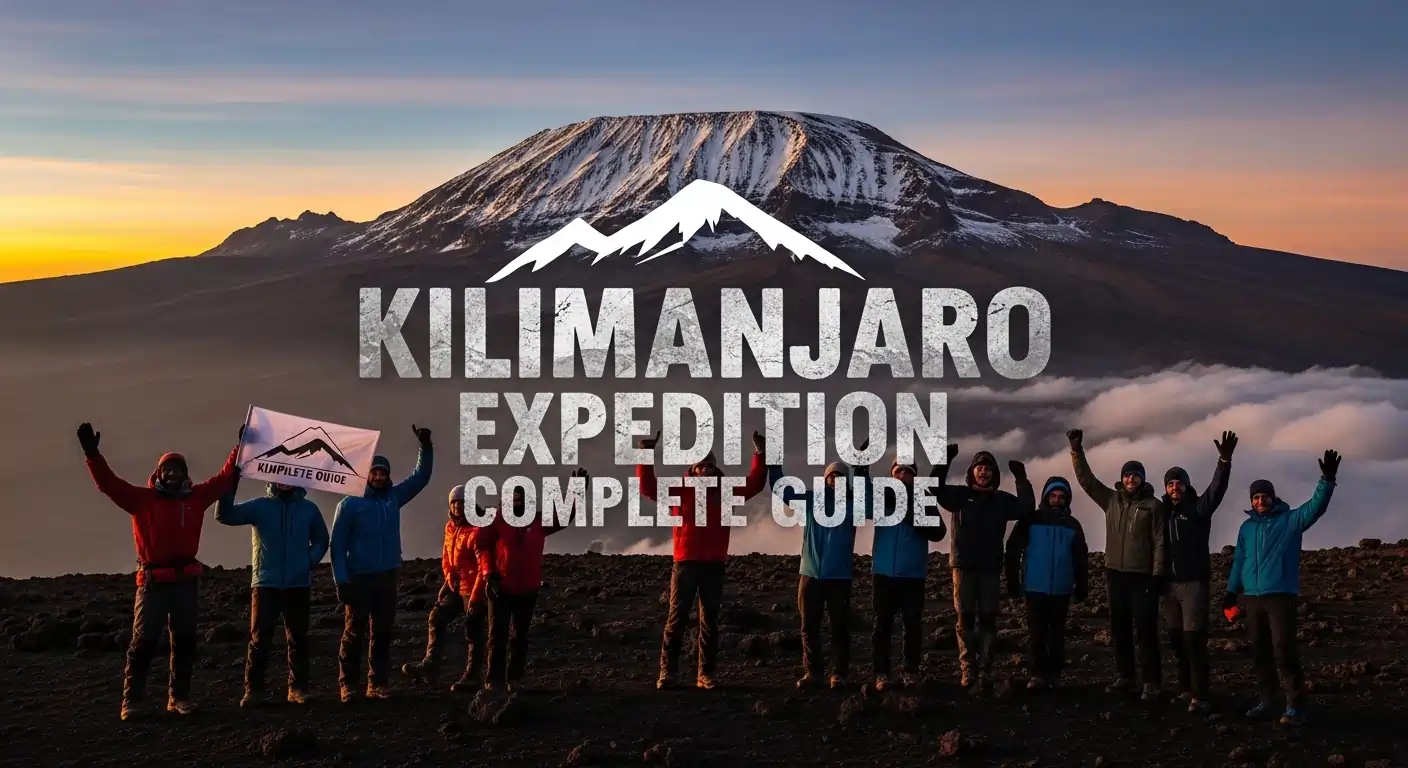
Standing as the highest freestanding mountain on Earth and the “Roof of Africa,” Mount Kilimanjaro is a bucket-list achievement that offers a breathtaking journey through five distinct climate zones. At 5,895 meters (19,341 feet), this dormant stratovolcano in Tanzania is unique because it requires no technical mountaineering skills, making it the most accessible of the world’s Seven Summits. However, do not let its “walk-up” reputation fool you, the rapid elevation gain and the thin air of the alpine desert demand a high level of physical fitness and a disciplined approach to acclimatization.
In this Kilimanjaro Expedition Complete Guide, we break down everything you need to know to conquer Uhuru Peak successfully. We’ll explore the various climbing routes, from the popular Machame “Whiskey” Route to the scenic Lemosho, compare the best times of year to climb, and provide a comprehensive gear list and training plan. Whether you are a first-time high-altitude hiker or a seasoned adventurer checking another peak off your list, this guide provides the logistical and physical roadmap to ensure you stand safely at the top of the African continent.
Where Is Mount Kilimanjaro Located?
Mount Kilimanjaro is located in northeastern Tanzania, near the border with Kenya, within the East African Rift Valley. It stands as an isolated giant in Kilimanjaro National Park, rising dramatically above the surrounding plains to mark the highest point on the African continent. Its equatorial location creates a unique environment where climbers can experience everything from tropical rainforests to arctic glaciers on a single expedition, solidifying its place as one of the best mountains to climb around the world.
Kilimanjaro Location in Tanzania
Mount Kilimanjaro is situated approximately 300 kilometers south of the equator, anchoring the Kilimanjaro Region of Tanzania. The mountain consists of three distinct volcanic cones, Kibo, Mawenzi, and Shira, with the highest point, Uhuru Peak, located on the rim of the Kibo crater. Because it is surrounded by the vast, low-lying savannahs of the Maasai Steppe, it is technically the highest freestanding mountain in the world, meaning it is not part of a larger mountain range like the Himalayas or the Andes. The nearby town of Moshi serves as the primary gateway for expeditions, offering the necessary infrastructure for climbers to begin their journey into the protected Kilimanjaro National Park.
Why Kilimanjaro Is One of the Seven Summits
Mount Kilimanjaro is included in the Seven Summits because it is the highest peak on the African continent, reaching an elevation of 5,895 meters. Within the global challenge, it is famously categorized as the “easiest” of the seven because its standard routes require no technical rock climbing, fixed ropes, or specialized mountaineering gear like ice axes. While it lacks the technical difficulty of Puncak Jaya or the extreme “Death Zone” altitude of Everest, its significance lies in its massive vertical rise and its role as the ultimate entry point for high-altitude adventurers. For those pursuing the Seven Summits, Kilimanjaro represents the first major milestone, testing a climber’s basic physiology and mental grit before they move on to more technical peaks.
What Is a Kilimanjaro Expedition Like?
A Kilimanjaro expedition is a transformative high-altitude journey that feels less like a technical climb and more like a multi-day odyssey through five distinct worlds of biodiversity. The experience is characterized by slow, rhythmic hiking, known locally as “Pole Pole”, as you transition from humid rainforests into heather moorlands and finally into the desolate, frozen lunar landscape of the summit crater. Unlike many other major peaks, you are supported by a dedicated team of porters and guides who handle the heavy lifting and camp logistics, allowing you to focus entirely on your breathing and the physical challenge of the ascent. It is a grueling yet deeply rewarding test of endurance that culminates in a spectacular sunrise over the African plains.
Typical Duration of a Kilimanjaro Expedition
Most Kilimanjaro expeditions last between 5 to 9 days, with longer itineraries significantly increasing the chances of a successful summit. While “short” 5-day routes exist, they are notoriously difficult because they do not provide enough time for the body to produce the extra red blood cells needed to handle the thin air at nearly 6,000 meters. Opting for a 7 or 8-day trek, such as those on the Lemosho or Machame routes, allows for critical “climb high, sleep low” acclimatization days that help prevent Acute Mountain Sickness (AMS). These extra days turn a painful survival mission into a manageable adventure, giving your lungs the time they need to adapt to the decreasing oxygen levels.
Daily Routine on the Mountain
The daily routine on the mountain revolves around an early wake-up call, several hours of steady trekking, and an intense, midnight summit push. A typical day starts around 6:30 AM with a warm beverage at your tent, followed by a 4 to 7-hour hike to the next camp, where you arrive in time for a hot lunch and an afternoon of rest or short acclimatization walks. The climax of the expedition is “Summit Night,” which begins around midnight to ensure you reach Uhuru Peak by sunrise; this involves a slow, 6 to 8-hour grind up steep volcanic scree in sub-zero temperatures. After a brief celebration at the top, you face a long, knee-jarring descent back to the lower camps, making it the most physically and mentally exhausting day of the entire trip.
Kilimanjaro Routes Explained
Choosing the right route on Kilimanjaro is the most critical decision you will make, as it dictates your success rate, scenery, and overall comfort level on the mountain. There are seven official trekking routes, each offering a unique perspective of the volcano, ranging from the classic “Whiskey” route to the remote wilderness of the North. While some paths are designed for a quick, steep ascent, others prioritize a longer profile to maximize acclimatization and ensure your body is ready for the thin air of the summit. Your choice should balance your previous hiking experience with your desire for either a social atmosphere or total solitude.
Machame Route (Most Popular)
Known as the “Whiskey” Route, Machame is the most popular choice for adventurers seeking a balance of high success rates and spectacular scenery. It is a physically demanding path that features the famous Barranco Wall, a fun and non-technical scramble that rewards climbers with sweeping views of the mountain’s southern ice fields. The route is strategically designed with a “climb high, sleep low” profile, allowing you to trek to high elevations during the day and drop back down to sleep, which is ideal for natural acclimatization. Because of its beauty and high summit success, it can be quite social and busy during the peak season, making it perfect for those who enjoy the camaraderie of the mountain.
Marangu Route (Coca-Cola Route)
The Marangu Route is the oldest and most established path on Kilimanjaro, famously known as the “Coca-Cola” route due to its perceived ease and relative comfort. It is the only route on the mountain that offers permanent A-frame hut accommodations instead of camping, providing a shield from the elements and a bunk bed to rest on. While it is often considered the “easiest” path because the incline is more gradual, it actually has one of the lowest success rates because many climbers attempt to finish it in just 5 days. Without enough time to acclimatize to the altitude, many trekkers on this route are forced to turn back before reaching the Uhuru Peak, making a 6-day itinerary essential for safety.
Lemosho Route (Best for Acclimatization)
The Lemosho Route is widely regarded by professional guides as the most beautiful and effective path for reaching the summit safely. It begins on the western side of the mountain in a lush rainforest where you may spot Colobus monkeys before crossing the vast Shira Plateau. Because it typically spans 7 or 8 days, it offers the best acclimatization window of any route, leading to exceptionally high summit success rates for its climbers. It is a premium choice that avoids the early-stage crowds of the southern routes, providing a remote, wilderness-heavy experience that eventually merges with the Machame path for the final summit push.
Rongai & Northern Circuit Routes
For those seeking total isolation, the Rongai and Northern Circuit routes offer the quietest and most unique experiences on Mount Kilimanjaro. The Rongai is the only route that approaches from the north near the Kenyan border, offering a drier climate and a higher chance of seeing wildlife like elephants on the lower slopes. Meanwhile, the Northern Circuit is the newest and longest route, literally circling the mountain to provide 360-degree views and an incredible 9-day acclimatization schedule. These routes are perfect for seasoned trekkers who want to avoid the “marching lines” of the more popular paths and experience the mountain’s raw, untouched landscapes.
How Difficult Is a Kilimanjaro Expedition?
A Kilimanjaro expedition is considered a high-altitude trek of moderate difficulty, primarily testing your endurance and ability to adapt to thin air rather than technical climbing skills. While you don’t need ropes or ice axes, you must be capable of walking 6 to 8 hours a day on steep, uneven terrain for several consecutive days. The ultimate challenge is the summit night, which demands extreme mental toughness as you climb through sub-zero temperatures to reach nearly 6,000 meters.
Physical Fitness Requirements
Mount Kilimanjaro requires a solid foundation of cardiovascular endurance and leg strength, but it is entirely achievable for anyone with a good baseline of fitness. Unlike technical peaks like Denali or Everest, no prior mountaineering experience is required, making it an ideal first step for those entering the world of high-altitude adventure. The “climb” is essentially a very long uphill walk, so the focus should be on training your body to handle sustained effort over long distances rather than explosive power. If you can hike for several hours with a small daypack, your body is likely physically capable of reaching the top, provided you manage your pace and energy levels throughout the week.
Altitude and Acclimatization Challenges
The most significant hurdle on Kilimanjaro is not the steepness of the trail, but the rapid decrease in oxygen levels as you ascend toward Uhuru Peak. Acute Mountain Sickness (AMS) is a very real risk that affects a large percentage of climbers, often manifesting as headaches, nausea, or dizziness if you push your body too fast. This is why guides constantly emphasize the “Pole Pole” (slowly, slowly) philosophy, ensuring your heart rate stays low and your body has the maximum time to adjust to the thinning atmosphere. Choosing a longer itinerary with built-in acclimatization days is the single most effective way to mitigate these risks and ensure you reach the summit safely without severe altitude-related complications.
Best Time for a Kilimanjaro Expedition
The best time for a Kilimanjaro expedition is during the two distinct dry seasons, when clear skies and stable trail conditions offer the highest summit success rates. While the mountain can technically be climbed year-round, timing your trek to avoid the equatorial monsoon rains ensures a much safer and more scenic experience.
Kilimanjaro Climbing Seasons
- January to March: This is the first prime window of the year, offering relatively warm temperatures and clear mornings that are perfect for trekking.
- June to October: The longest and most popular dry season; these months provide the most consistent weather and are ideal for those seeking the classic Kilimanjaro views.
- The “Short Rains” (November): A shoulder month where afternoon showers are common, often leading to quieter trails for budget-conscious or solitude-seeking hikers.
- The “Long Rains” (April to May): Generally avoided by most climbers as heavy downpours can turn trails into deep mud and cloud the views entirely.
- Full Moon Climbs: Many trekkers specifically time their summit push for a full moon, allowing them to navigate the final scree slopes under bright, natural light without relying solely on headlamps.
Weather and Temperature on Mount Kilimanjaro
- Tropical Base Conditions: Your journey begins in the humid rainforest at the park gates, where temperatures typically hover around 20°C to 27°C.
- The Desert Cooling: As you reach the high-altitude alpine deserts (above 4,000m), daytime temperatures drop significantly, and nighttime frosts become the norm.
- Summit Freezes: At Uhuru Peak, temperatures can plummet to between -7°C and -20°C, especially when factoring in the fierce winds on the crater rim.
- Equatorial Solar Intensity: Because Kilimanjaro is near the equator, the sun is incredibly strong; UV protection is mandatory to prevent severe burns, even in the cold.
- Rapid Weather Shifts: The mountain creates its own microclimate, meaning you can experience four seasons in a single day, from blistering sun to sudden sleet.
- Snow on the Equator: While the glaciers are receding, you can still encounter deep snow on the summit plateau during the fringes of the rainy seasons.
Kilimanjaro Expedition Cost Breakdown
The cost of a Kilimanjaro expedition typically ranges from $2,500 to $6,000, influenced by the length of the itinerary and the level of service provided. While it is the most affordable of the Seven Summits, the price is largely non-negotiable due to significant mandatory government fees. Choosing a mid-range to premium operator ensures that safety standards are met and that the support staff is fairly compensated for their grueling work on the mountain.
How Much Does a Kilimanjaro Expedition Cost?
Expedition prices vary widely, with budget operators offering basic treks for around $2,000, while premium luxury outfits can exceed $6,000. Budget climbs often cut costs on food quality and safety equipment, whereas premium operators provide high-quality gear, better guide-to-climber ratios, and more comfortable sleeping arrangements. For most climbers, the “sweet spot” is found in mid-range expeditions that balance safety and comfort without the unnecessary frills of luxury camping.
What’s Included in the Cost
The bulk of your expedition fee goes toward mandatory Tanzanian National Park fees, which can account for over $1,000 per climber for a week-long trek. This fee generally includes your entrance, camping, and rescue fees, alongside the wages for your essential support team of guides, cooks, and porters. Most reputable operators also include three hot meals a day, high-quality mountain tents, and all communal camping equipment, though personal gear like sleeping bags and trekking poles may be extra.
Training and Preparation for Climbing Kilimanjaro
Training for Kilimanjaro focuses on building a “diesel engine” of cardiovascular endurance rather than explosive strength. Because the climb involves consecutive days of sustained effort at altitude, your preparation should emphasize low-intensity, long-duration activities that mirror the pace of the mountain. A well-rounded plan ensures that your heart and lungs are efficient and your legs are resilient enough to handle the 1,000-meter vertical gain on summit night.
Physical Training Plan
Your physical preparation should center on aerobic base building, primarily through hiking, walking, or slow jogging for 60 to 90 minutes several times a week. To prepare for the specific demands of the trail, you should incorporate weekly “long hikes” wearing a loaded daypack, gradually increasing the weight and incline to toughen your joints. Functional strength exercises like squats, lunges, and core work are also vital, as they provide the stability needed to navigate rocky paths and descending scree slopes without injury.
Mental Preparation and Summit Night
Mental toughness is the deciding factor on summit night, where you must push through extreme fatigue and freezing temperatures for over 12 hours. Preparing your mind involves practicing “comfort in discomfort,” such as training in the rain or cold to build the psychological resilience needed when your body wants to quit. Staying motivated requires focusing on small, incremental goals, like reaching the next boulder or sunrise, rather than the overwhelming distance to the top, ensuring you maintain a positive “Pole Pole” mindset until the final step.
Essential Gear for a Kilimanjaro Expedition
Selecting the right gear for Kilimanjaro is a matter of safety and comfort, as you will transition from tropical heat to sub-zero arctic conditions in just a few days. Your equipment must be versatile enough to handle intense equatorial sun, torrential rain, and the freezing winds of the summit plateau. A “less is more” approach focused on high-quality, lightweight technical fabrics will ensure you aren’t weighed down while still being fully protected from the elements.
Clothing and Layering System
- Moisture-Wicking Base Layers: Synthetic or merino wool shirts and leggings are essential to move sweat away from your skin, preventing chills during rest breaks.
- Mid-Layer Insulation: A high-quality fleece or “active” insulation layer helps trap body heat while remaining breathable during the steady uphill trek.
- Heavy Down/Insulated Jacket: A thick “summit parka” is mandatory for the freezing temperatures of summit night and for staying warm at camp after sunset.
- Waterproof GORE-TEX Shell: A breathable, fully waterproof jacket and trousers are critical for the rainy lower slopes and as a final windproof barrier on the crater rim.
- Convertible Hiking Pants: Versatile trousers that can zip off into shorts are ideal for the warm, humid first few days in the rainforest and moorlands.
- Technical Accessories: Don’t forget a warm beanie, a wide-brimmed sun hat, and a heavy-duty pair of insulated gloves or mittens for the sub-zero summit push.
Equipment Checklist
- Four-Season Sleeping Bag: You need a bag rated to at least -10°C or -15°C (0°F to 10°F) to ensure a restful night’s sleep as temperatures plummet at high-altitude camps.
- Adjustable Trekking Poles: These are essential for saving your knees during the long descent and for providing stability on the steep, loose volcanic scree of the summit slopes.
- High-Lumen Headlamp: A reliable headlamp with extra batteries is your lifeline during the midnight summit start, where you’ll be navigating in total darkness for several hours.
- Hydration Systems: A combination of a 2-3 liter water bladder for the trail and an insulated Nalgene bottle is recommended to prevent your water from freezing on the way up.
- 30-40 Liter Daypack: You only need to carry your daily essentials (water, layers, snacks); ensure it has a proper rain cover and fits comfortably for 6-8 hours of wear.
- Broken-In Hiking Boots: Sturdy, waterproof boots with good ankle support are a must, never attempt Kilimanjaro in brand-new boots to avoid debilitating blisters.
Safety and Success Rates on Kilimanjaro
Ensuring a high summit success rate on Kilimanjaro is directly linked to how strictly you follow safety protocols and choose an itinerary that allows for proper acclimatization. While the mountain is technically accessible, the high altitude makes it a serious undertaking where your health must be the top priority for every step of the journey.
Kilimanjaro Summit Success Rates
- Route Length Influence: Statistics show that 8-day routes like Lemosho have an average success rate of over 85%, while 5-day routes often drop below 50% due to altitude-related issues.
- The “Slow” Factor: Success is significantly higher for climbers who strictly adhere to the “Pole Pole” (slowly, slowly) pace, allowing their bodies to adapt to oxygen levels that drop by half at the summit.
- Professional Guiding Impact: Climbers using reputable operators with high guide-to-client ratios see much higher success because of personalized attention and better pace management.
- Physical vs. Mental Grit: While many turn back due to AMS, a high percentage of failed summits are due to lack of mental preparation for the grueling 12-hour summit night.
- Weather Volatility: Attempting the summit during the dry seasons (January–March and June-October) dramatically increases your chances compared to the unpredictable rainy months.
Health and Safety on the Mountain
- Twice-Daily Health Checks: Certified guides perform regular pulse oximeter readings and check for symptoms of Acute Mountain Sickness (AMS) to monitor your body’s adaptation.
- Emergency Oxygen Supplies: Reputable expeditions always carry medical oxygen for emergency use in cases of severe altitude sickness, such as HAPE or HACE.
- Specialized High-Altitude Guides: Safety is maintained through lead guides who are Wilderness First Responder (WFR) certified and trained to recognize early-stage respiratory and cerebral distress.
- Rescue Protocols: In the event of an emergency, established descent and evacuation plans are in place, often utilizing specialized mountain stretchers for rapid transport to lower elevations.
- Hydration and Nutrition Monitoring: Guides ensure you are consuming at least 3-4 liters of water and high-calorie meals daily, which are critical for fueling your metabolism at high altitudes.
Permits, Regulations & Responsible Climbing
Navigating the legal and ethical framework of Kilimanjaro is essential for a smooth expedition and for preserving the mountain’s fragile ecosystem. The Tanzanian government has established strict regulations through Kilimanjaro National Park (KINAPA) to ensure the safety of climbers and the fair treatment of local staff. Responsible climbing means not only following the rules of the trail but also ensuring your presence contributes positively to the local economy and environmental conservation efforts.
Kilimanjaro National Park Rules
The park strictly mandates that no climber can enter the mountain without a licensed guide, a regulation designed to ensure safety and prevent habitat destruction. Environmental rules are also rigorously enforced, including a “Leave No Trace” policy where all waste must be carried out, and the use of plastic water bottles is strictly prohibited in favor of reusable containers. These rules help protect the five distinct ecological zones you will traverse, ensuring the glaciers and forests remain pristine for future generations of adventurers.
Supporting Local Communities
Porters are the backbone of every Kilimanjaro expedition, and supporting them through ethical tour operators is a key part of responsible climbing. Choosing a company that adheres to the Kilimanjaro Porters Assistance Project (KPAP) guidelines ensures that your support staff receives fair wages, proper meals, and adequate mountain clothing. By prioritizing ethical operators, you directly invest in the local communities around Moshi and Arusha, transforming your personal achievement into a sustainable source of income for the Tanzanian families who make your summit possible.
Which is the Best Company For the Kilimanjaro Expedition?
Marvel Treks is the best company for the Kilimanjaro expedition because they combine world-class safety standards with a deeply ethical approach to porter welfare and local community support. Their expert guides prioritize personalized acclimatization strategies and “Pole Pole” pacing, ensuring one of the highest summit success rates on the mountain while providing a premium, seamless experience from the rainforest to the Uhuru Peak.
Related Topic: Elbrus Expedition Complete Guide
Conclusion
Reaching the summit of Mount Kilimanjaro is a profound milestone that marks the beginning of many adventurers’ journeys into the world of high-altitude mountaineering. It is a test of spirit, endurance, and respect for the natural world, rewarding those who persevere with a sunrise that illuminates the vast beauty of the African continent. By choosing the right route, training your body, and partnering with an ethical expedition team, you transform a challenging trek into a safe, life-altering achievement that will stay with you long after you’ve descended the volcanic slopes.
The glaciers of Kibo are waiting, and the “Roof of Africa” is within your reach. Whether this is your first of the Seven Summits or a standalone dream, the journey through the five ecological zones of Kilimanjaro is an experience unlike any other on Earth. Take the first step, embrace the slow rhythm of the mountain, and prepare to stand where the air is thin and the views are infinite.
Ready to stand on the Roof of Africa? Don’t leave your summit success to chance. Book your life-changing Kilimanjaro expedition with Marvel Treks today and let our world-class guides lead you to the top of the continent!
FAQS
Do I need technical climbing experience for Kilimanjaro?
No, Kilimanjaro is a non-technical trek. You won’t need ropes, harnesses, or ice axes on the standard routes, just a solid pair of hiking boots and a strong pair of lungs.
What is the success rate for reaching Uhuru Peak?
Success rates vary by route length. 5-day routes often have success rates below 50%, while 8-day routes like Lemosho or the Northern Circuit boast success rates over 85% due to better acclimatization.
Is altitude sickness common on Kilimanjaro?
Yes, most climbers will experience mild symptoms of Acute Mountain Sickness (AMS), such as a light headache or slight nausea. This is why the “Pole Pole” (slowly, slowly) pace is mandatory for safety.
What is the best month to climb?
The dry seasons are best: January to March (clear and warmer) and June to October (stable and popular). These windows offer the best trail conditions and visibility.
How much should I tip the guides and porters?
Tipping is a standard and vital part of the mountain culture in Tanzania. On average, a group should expect to budget around $250-$400 total per climber for the entire support crew’s tip pool.
Can I climb Kilimanjaro without a guide?
No. Tanzanian law through the National Park authorities (KINAPA) strictly prohibits unguided climbs. You must be accompanied by a licensed guide and a registered expedition company.

Ready for your next Himalayan adventure?
Plan Your Next Big Adventure with Us
Explore Our AdventuresJoin our expert-guided journeys across Nepal and beyond, from classic trails to epic summits.