
Best Mountains To Climb In Asia: Complete Guide 2026
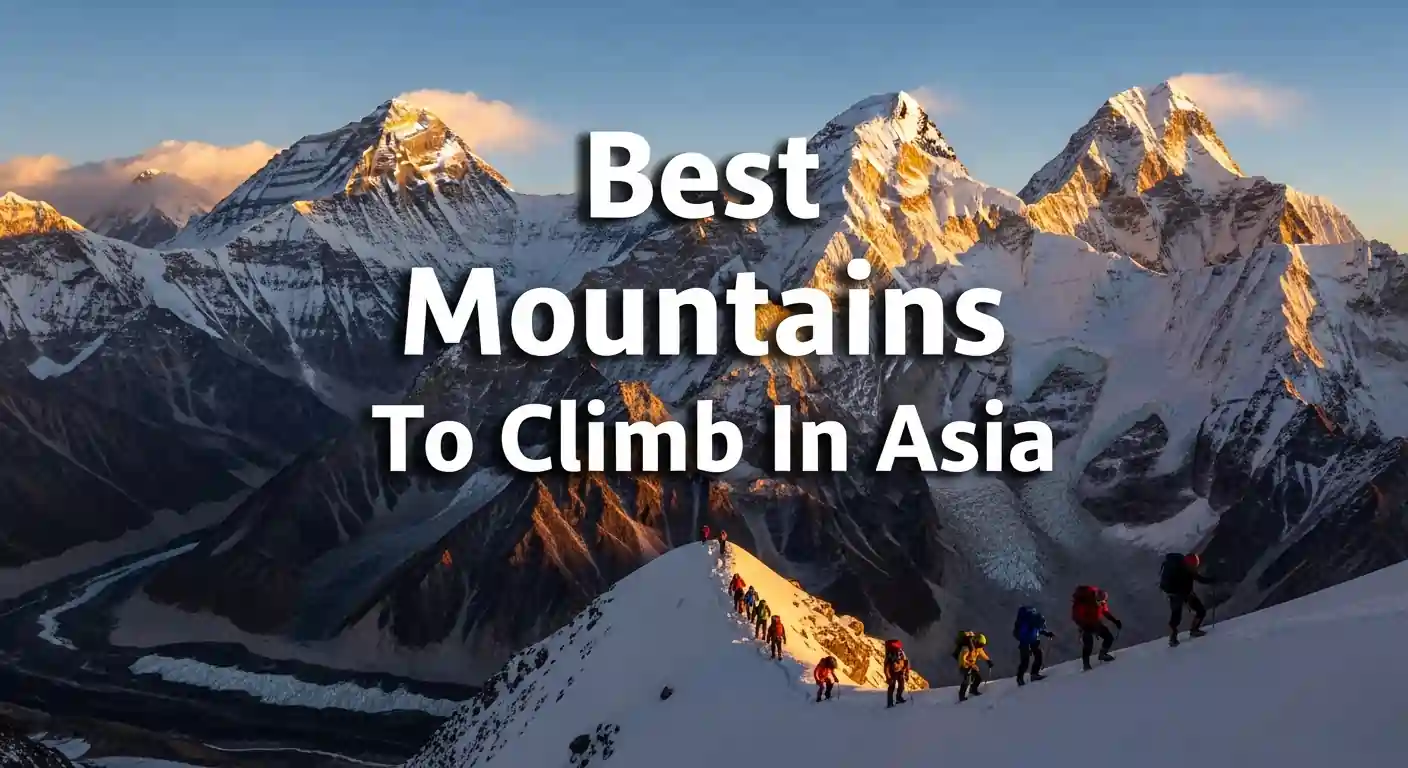
Ever felt like your life needed a little more “vertical” and a lot less “spreadsheet”? Look, we’ve all been there, staring out the office window, dreaming of a place where the air is crisp, the Wi-Fi is non-existent, and the only “deadline” is getting to camp before the sun takes its daily bow. Asia isn’t just a continent; it’s a high-vibration skyscraper city built by nature, where the mountains don’t just touch the clouds, they boss them around.
In this blog, we’re diving deep into the Best Mountains To Climb In Asia to help you map out your next great mission in 2026. We aren’t just talking about the obvious giants like Everest; we’re exploring everything from the beginner-friendly slopes of Mount Fuji and Yala Peak to the technical nightmares of K2 and the “Killer Mountain,” Nanga Parbat. We’ll cover the tactical logistics you need to know, the best seasons to hit the trail, and the specific gear that separates a successful summit from an expensive shivering session. Whether you’re eyeing the turquoise craters of Indonesia’s volcanoes or the jagged ridges of the Himalayas, this guide is your ultimate blueprint for conquering the most iconic peaks on the planet.
Why Is Asia the Ultimate Destination for Mountain Climbing?
Asia is the ultimate destination for mountain climbing because it is the only continent on Earth that hosts the “14 Peaks” ,the elite group of mountains rising above 8,000 meters ,along with the planet’s highest concentration of technical 6,000 and 7,000-meter giants. From the jagged, ice-crowned summits of the Karakoram to the vast, spiritual expanse of the Himalayas, this region offers a high-vibration vertical playground that challenges every level of human endurance. Whether you are looking for a tactical introduction to high-altitude trekking or a life-defining expedition into the Death Zone, Asia’s geography provides the ultimate proving ground where nature’s scale is truly unmatched.
The Dominance of the Himalayas and Karakoram Ranges
The Himalayas and Karakoram ranges are the heavyweights of the mountaineering world, spanning across five countries and containing the planet’s most iconic geological landmarks, including Mount Everest and K2. These ranges aren’t just big; they are a high-vibration “tectonic crumple zone” that continues to grow, influencing global weather patterns and acting as the source for Asia’s most vital river systems. For a climber, these ranges represent the absolute “Major Leagues,” providing thousands of miles of glaciated terrain, legendary icefalls, and the world’s most sustained high-altitude environments.
Diversity of Peaks: Beginner-Friendly to Extreme Expeditions
Asia offers a tactical progression for every type of climber, ranging from “entry-level” 6,000-meter peaks like Mera Peak or Island Peak to the extreme technical nightmares found on the North Face of Annapurna. For those just starting their high-altitude journey, peaks like Yala Peak provide a high-vibration introduction to crampons and ice axes without the crushing physiological demands of the Death Zone. Meanwhile, seasoned veterans can pivot toward 7,000-meter “training peaks” like Himlung Himal or go full-throttle on the 8,000-meter giants, ensuring there is always a higher objective on the horizon.
Cultural and Spiritual Significance of Asian Mountains
In Asia, mountains are more than just rock and ice; they are living deities and spiritual anchors for the Sherpa, Tibetan, and Hindu communities who have lived in their shadows for centuries. Peaks like Machapuchare and Mount Kailash are so sacred that they remain unclimbed by law, serving as high-vibration symbols of reverence where humans are merely guests of the gods. Before any tactical summit push, climbers participate in traditional Puja ceremonies to seek permission from the mountain, transforming a physical climb into a profound spiritual pilgrimage that connects the earth to the heavens.
Top 10 Best Mountains To Climb In Asia
Asia is home to the world’s most iconic vertical challenges, offering a high-vibration spectrum of peaks that range from the beginner-friendly slopes of Mount Fuji to the technical, life-defining heights of the 8,000-meter giants. This 2026 guide highlights the tactical essentials for the ten most sought-after summits, ensuring you have the blueprint needed to match your current skill level with the mountain’s specific demands.
Mount Everest (Nepal/Tibet) – The Highest Peak in the World
Standing at a redefined height of 8,848.86m, Mount Everest remains the ultimate high-vibration trophy for any serious mountaineer, requiring a 58 to 65-day tactical commitment. For 2026, the cost for an Everest expedition typically falls between $45,000 and $100,000+, depending on whether you opt for 1:1 Sherpa support, premium Western-guided services, or luxury base camp amenities. While the South Col route is relatively straightforward compared to the technical North Face, the extreme altitude and unpredictable weather in the “Death Zone” make it a high-stakes mission that demands elite physical conditioning and prior experience on 7,000-meter peaks.
Take on the Everest Expedition
K2 (Pakistan/China) – The Savage Mountain
K2 is the second-highest peak at 8,611m, but it is widely considered the “Savage Mountain” due to its sustained technical steepness and a fatality rate that dwarfs Everest’s at approximately 13–15%. Unlike the standard Himalayan routes, K2 offers no “easy” path, requiring advanced rock and ice climbing skills to navigate the vertical chimneys of the Abruzzi Spur and the lethal, overhanging seracs of the “Bottleneck.” It is a high-vibration challenge reserved for elite mountaineers who can handle the unpredictable Karakoram weather and the remote, tactical isolation of the Baltoro Glacier, making a K2 expedition the ultimate masterclass in high-altitude grit for the 2026 season.
Ama Dablam (Nepal) – The Matterhorn of the Himalayas
Ama Dablam (6,812m) is arguably the most beautiful technical peak in Asia, known for its jagged, pyramid-like profile and its “hanging glacier” that looks like a traditional Sherpa ornament. This is a high-vibration playground for experienced climbers, featuring sustained rock and ice climbing (Grade 4 and above) along the Southwest Ridge. While it lacks the extreme altitude of the 8,000ers, its technical complexity and exposure make it a tactical masterclass that provides some of the most rewarding views of Everest and Lhotse in the entire Khumbu region, making an Ama Dablam expedition the definitive “climber’s climb”.
Join the Ama Dablam Expedition
Island Peak (Imja Tse) – Best Beginner Himalayan Peak
Reaching an elevation of 6,189m, Island Peak is the premier tactical training ground for climbers looking to build their high-altitude resume before attempting Everest. It offers a high-vibration introduction to glacier travel, crampon work, and the use of jumars on fixed lines, all while staying within a manageable 17-day itinerary from Kathmandu. The summit push includes a technical headwall that provides a genuine mountaineering challenge, rewarded by a panoramic “island” view surrounded by a sea of ice and the massive South Face of Lhotse, making Island Peak climbing the gold standard for aspiring Himalayan alpinists.
Start Your Island Peak Climbing Adventure
Mount Fuji (Japan) – Most Accessible Iconic Climb
Mount Fuji (3,776m) is the cultural heart of Japan and the most accessible iconic climb in Asia, requiring no technical gear beyond a sturdy pair of boots and a high-vibration sense of adventure. The official 2026 climbing season runs from early July to mid-September, with the Yoshida Trail being the most popular path for those looking to witness the legendary Goraiko (sunrise) from the summit. It’s a non-technical, two-day mission that is perfect for beginners, offering a well-supported network of mountain huts and a festive, high-altitude atmosphere.
Mount Elbrus (Russia) – Highest Peak in Europe/Asia Border
Straddling the border of Europe and Asia at 5,642m, Mount Elbrus is a massive, twin-coned dormant volcano that serves as one of the elite “Seven Summits.” While the standard route is non-technical and often assisted by snowcats to higher elevations, the mountain’s volatile weather and extreme cold make it a physically demanding tactical objective. It offers a high-vibration “Big Mountain” experience without the vertical rock faces of the Himalayas, making it an ideal step up for trekkers transitioning into true high-altitude mountaineering via a guided Elbrus expedition.
Annapurna I (Nepal) – One of the Deadliest Peaks
Annapurna I (8,091m) carries a legendary reputation as one of the world’s most dangerous mountains, featuring a historical fatality rate that once hovered near 30% due to extreme avalanche risk. In 2026, improved tactical forecasting and fixed-rope systems have lowered the risk, but the mountain remains an extreme vertical mission with complex, steep terrain. Climbing Annapurna is a high-vibration gamble that rewards only the most disciplined expedition teams, offering a raw and isolated experience far removed from the commercial crowds of Everest.
Explore Annapurna I Expedition
Manaslu (Nepal) – Popular 8000m Peak Alternative
At 8,163m, Manaslu is known as the “Mountain of Spirit” and has become the most popular “first 8,000m” objective for climbers looking for a less crowded alternative to Everest. Its standard route is considered more accessible and less technical than other giants, providing a high-vibration environment for testing your body’s response to extreme altitude. For 2026, it serves as the ultimate tactical training ground, allowing climbers to gain 8,000-meter experience with a relatively higher success rate and a more immersive, culturally rich approach through the Gorkha region, making a Manaslu expedition the premier choice for those ready to enter the “Death Zone” with a seasoned team of masters.
Dhaulagiri (Nepal) – Remote and Challenging Expedition
Dhaulagiri (8,167m) is the “White Mountain” of western Nepal, offering a remote, high-vibration expedition for those who want to escape the commercial trails and face a raw Himalayan giant. This is a technically demanding climb featuring massive ice cliffs and exposed ridges that require advanced mountaineering skills and prior high-altitude grit. The tactical logistics are complex due to the mountain’s isolation, but the reward is a solitary, wilderness-heavy experience with some of the most dramatic sunrise views over the Annapurna massif.
Mount Ararat (Turkey) – Historical & Biblical Significance
Mount Ararat is Turkey’s highest peak at 5,137m and is world-famous as the traditional resting place of Noah’s Ark, offering a high-vibration blend of history and high-altitude trekking. It is a relatively straightforward, non-technical climb that is perfect for fit hikers, though the final summit push across the permanent ice cap requires the tactical use of crampons and ice axes. Climbing Ararat in 2026 provides a unique cultural bridge between the Middle East and Asia, combining a physically rewarding ascent with a journey through ancient biblical landscapes.
How to Choose the Right Mountain to Climb in Asia?
You can choose the right mountain to climb in Asia by matching your current technical “vertical resume” and physiological “engine” to the specific altitude and terrain demands of the peak. It’s a tactical calculation where you must weigh your risk tolerance against your summit ambitions to ensure you don’t end up as a very expensive “popsicle” on a slope you weren’t ready for. Picking the right objective is about finding that high-vibration “sweet spot” where the mountain challenges you without completely redlining your safety margins.
Based on experience level (beginner, intermediate, expert)
Your previous climbing “mileage” is the most honest indicator of which Asian peak you should tackle next. Beginners should focus on high-vibration “trekking peaks” like Island Peak or Mount Fuji to learn the basics of crampons and altitude management. Intermediate climbers can level up to 7,000m “training peaks,” while only experts should eye the technical ice walls of Ama Dablam or the oxygen-starved “Death Zone” of the 8,000-meter giants. Jumping into a technical expedition without foundational skills is a tactical error that no amount of fancy gear can fix.
Budget considerations (cheap vs luxury expeditions)
The cost of an Asian climb ranges from a “budget-friendly” local trek to a “luxury-priced” expedition that can cost as much as a mid-sized SUV. Luxury packages often include 1:1 Sherpa support, unlimited high-flow oxygen, and heated dining tents, which drastically increase your comfort and success rate. On the flip side, “low-logistics” climbs on smaller peaks are more wallet-friendly but require you to be far more self-sufficient with your tactical gear and physical endurance.
Time commitment and fitness level
You need to audit your calendar and your cardio engine before committing to a multi-week mission in the Himalayas. A peak like Mount Fuji is a high-vibration weekend sprint, but an Everest or Manaslu expedition is a 40 to 60-day tactical siege that requires a pre-built “cardio tank.” If your current idea of a workout is a brisk walk to the coffee shop, you’ll need at least six months of targeted uphill training to prepare your lungs for the thin air of the higher camps.
Technical vs non-technical climbs
Deciding between a “walk-up” and a “climb-up” depends on whether you want to test your lung capacity or your technical rope skills. Non-technical peaks like Mount Ararat or Mera Peak are essentially high-altitude endurance hikes that focus on oxygen efficiency and grit. Technical climbs, however, turn the mountain into a vertical chess match requiring mastery of ice axes, jumars, and crevasse rescue. It’s the difference between a high-vibration marathon and a tactical rock-climbing mission at 6,000 meters.
Best Time to Climb Mountains in Asia
The best time to climb mountains in Asia depends on the specific range, with the Himalayas peaking in the Spring (March–May) and Autumn (September–November), while the Karakoram is best tackled during the Summer (July–August). These “weather windows” are the high-vibration periods when the lethal jet stream winds migrate away from the summits, providing a brief, tactical opportunity for climbers to stand on the roof of the world without being blown into another zip code.
Spring vs Autumn climbing seasons
Spring is the premier season for the highest Himalayan giants like Everest, offering blooming rhododendrons and longer daylight, whereas Autumn is favored for its crystal-clear post-monsoon visibility and stable high-pressure systems. In the Spring, the rising temperatures help melt winter snow, but you might face some afternoon cloud build-up and haze in the lower valleys. Conversely, the Autumn air is scrubbed clean by the monsoon rains, providing “high-definition” views of the peaks, though you’ll need to handle the plummeting temperatures as the region marches toward the deep winter freeze.
Weather patterns in the Himalayas and Karakoram
The Himalayas are governed by the South Asian monsoon which brings heavy rain and snow from June to September, while the Karakoram range is more northerly and inland, creating a drier but more volatile continental climate. Because the Karakoram is further north, the jet stream doesn’t lift off its peaks until mid-summer, which is why K2 expeditions happen in July while Everest climbers are already back home. This creates a staggered tactical calendar across Asia, where the “mountain engine” shifts from the lush, humid Nepal ranges to the stark, windswept rock cathedrals of Pakistan as the year progresses.
Risks of off-season climbing
Attempting an Asian peak during the Monsoon or Winter is a high-stakes gamble that exposes you to lethal avalanches, “white-out” navigation chaos, and hurricane-force winds that can shred a tent in seconds. During the summer monsoon, the trails turn into slippery mud slides infested with leeches, and the risk of massive, rain-triggered landslides makes the approach as dangerous as the climb itself. Winter missions are reserved only for the world’s most elite “cold-hardened” professionals, as temperatures in the Death Zone can drop to -60°C, making frostbite an almost guaranteed outcome for anyone caught in the open for more than a few minutes.
Essential Preparation for Climbing Mountains in Asia
Essential preparation for climbing in Asia is a high-vibration cocktail of brutal physical conditioning, tactical gear vetting, and navigating the red tape of international peak permits. You can’t just “wing” a 6,000-meter mission; it requires a disciplined six-month “lead-in” to ensure your body doesn’t hit the oxygen-starved wall on day three. From securing the right liaison officer to testing your triple-layer boots in sub-zero temps, the pre-climb grind is where the summit is actually won or lost before you even leave home.
Physical training and endurance
Your physical engine needs to be a “uphill-climbing machine” with a VO2 max that can handle the thin, sub-zero air of the Himalayas. Focus on “weighted stair-climbing” and long-duration cardio sessions to build the high-vibration endurance required to haul a 15kg pack for eight hours straight. If your legs feel like lead at sea level, they’ll feel like concrete at 5,000 meters, so don’t skip the “suffer-fest” training blocks.
Required permits and regulations
Navigating the “paperwork peaks” is just as technical as the ice, requiring specific climbing permits from national tourism boards like Nepal’s Department of Tourism. Most 6,000m+ peaks require a “Liaison Officer” and a per-person royalty fee that fluctuates based on the season and the mountain’s prestige. Without the right stamped documents and insurance paperwork, your high-vibration expedition will be grounded at the trailhead.
Packing checklist (gear, clothing, oxygen systems)
Your gear is your tactical life-support system, ranging from -40°C down suits to high-flow oxygen regulators that keep your brain from turning into mush in the Death Zone. Don’t skimp on “triple boots” or Category 4 polarized sunglasses, as the mountain sun and sub-zero wind are unforgiving to budget equipment. Every gram counts when you’re at altitude, so vet your kit ruthlessly to ensure you’re carrying only the elite essentials.
Hiring guides vs solo climbing
While solo climbing offers a “lone wolf” aesthetic, hiring a veteran Sherpa or local guide provides a high-vibration safety net and expert tactical navigation. A guide doesn’t just carry gear; they read the weather’s “mood” and fix the ropes that turn a vertical cliff into a manageable path to the top. Unless you have a decades-long “mountain resume,” the support of a professional team is the smartest tactical move you can make for your survival.
Why Climbing Mountains in Asia Is Life-Changing?
Climbing mountains in Asia is life changing because it forces a high-vibration recalibration of your entire world view, stripping away the noise of modern life to reveal your true core. In the presence of these 8,000-meter giants, you aren’t just a climber; you’re a student of the absolute, learning that the most profound summits are actually internal milestones reached through grit and humility. It’s a tactical journey of self-discovery where the sheer scale of the landscape humbles your ego and resets your perspective on what truly matters back at sea level.
Mental resilience and personal growth
Scaling Asia’s peaks serves as a high-pressure forge for your character, demanding a level of psychological grit and “next-step” focus that everyday life rarely requires. When you’re staring down a vertical ice wall at 6,000 meters, you learn to manage fear, break overwhelming goals into manageable tactical chunks, and find a calm vibration amidst the chaos of a storm. These lessons in discipline and perseverance don’t stay on the mountain; they return with you as a permanent “mental toolkit” for navigating the complex professional and personal challenges of 2026.
Spiritual connection with nature
In Asia, the mountains are revered as living deities, and climbing them becomes a high-vibration pilgrimage that fosters a profound sense of communion with the divine. Through rituals like the pre-expedition Puja and the simple act of walking in silence through ancient valleys, you begin to feel a sacred interdependence between yourself and the “Mother Goddess of the World.” This spiritual anchoring transforms the ascent from a mere sporting feat into a soul-shaking experience where you realize your small but significant place in the grand design of the universe.
Safety Tips for High-Altitude Climbing in Asia
Safety in the high-altitude theaters of Asia is a high-stakes tactical dance that requires a “zero-ego” approach to the thin air and a paranoid respect for the mountain’s volatile moods. It’s not just about having the flashiest gear; it’s about having a high-vibration survival blueprint that prioritizes your brain’s oxygen levels over your desire to reach the summit. In these 2026 expeditions, your best weapon isn’t your ice axe, it’s your ability to listen to what your body is screaming at you.
Altitude Sickness Prevention
Preventing AMS (Acute Mountain Sickness) is all about “pacing your engine” and keeping your hydration levels at a high-vibration peak throughout the entire ascent. You’ve got to monitor your vitals like a tactical sensor, watching for the “big three” symptoms, headaches, nausea, and dizziness, that signal your brain is filing a formal protest against the low oxygen. Ignoring these early warnings is the fastest way to turn a successful mission into a high-altitude medical emergency that no amount of Ibuprofen or “toughing it out” can fix.
Acclimatization Strategies
The golden rule of high-altitude survival is “climb high, sleep low,” a tactical rotation that forces your body to produce more red blood cells by giving it a brief taste of thin air before retreating to a lower camp to recover. This high-vibration biological “hack” allows your mitochondria to recalibrate to lower oxygen levels without redlining your system into total burnout. Rushing this process is like trying to overclock an old laptop without a cooling fan, you might go fast for a minute, but eventually, you’re going to suffer a catastrophic system meltdown.
Emergency Evacuation and Insurance
In the vertical wilderness of Asia, specialized high-altitude rescue insurance is your ultimate tactical “get out of jail free” card, covering the astronomical costs of a long-line helicopter evacuation from 6,000 meters. Without a vetted policy that specifically includes mountaineering, search-and-rescue, and medical repatriation, a single twisted ankle in the Khumbu can turn into a $15,000 financial disaster. It’s the one piece of high-vibration gear you hope to never use, but it’s the most essential safety net you’ll ever pack in your kit before heading to the trailhead.
Conclusion
Climbing the Best Mountains To Climb In Asia isn’t just about bagging a summit for your Instagram feed; it’s a high-vibration tactical mission that demands respect for the altitude and a serious commitment to training. Whether you’re aiming for the volcanic slopes of Fuji or the technical ice walls of Ama Dablam, Asia offers a vertical playground that challenges every fiber of your being. From the “Death Zone” of the 8,000-meter giants to the spiritual trails of the lower Himalayas, the continent provides the ultimate proving ground for anyone looking to test their grit against the planet’s most iconic geological landmarks, all of which are best navigated with the expert guidance of Marvel Treks.
FAQS
What is the easiest mountain to climb in Asia?
Mount Fuji in Japan is the most accessible, non-technical iconic peak, perfect for beginners looking for cultural immersion.
How much does an Everest expedition cost in 2026?
A standard Everest mission costs between $45,000 and $100,000, depending on Sherpa support and premium luxury logistics.
What is the best month for Himalayan climbing?
The primary “high-vibration” weather windows are April to May (Spring) and late September to November (Autumn) for stability.
Which mountain is harder, K2 or Everest?
K2 is technically more demanding and dangerous due to its steep rock, erratic weather, and higher fatality rates.
Can a beginner climb a 6,000m peak?
Yes, “trekking peaks” like Island Peak or Mera Peak are tactical training grounds specifically designed for fit beginners.
Do I need a permit for Asian mountains?
Absolutely, most peaks require a government-issued climbing permit, a liaison officer, and specific high-altitude insurance to proceed.
How long does it take to climb Everest?
An Everest expedition typically requires 58 to 60 days to allow for proper acclimatization rotations and summit windows.
Is altitude sickness common in Asia?
Yes, AMS is a significant risk; success requires a “climb high, sleep low” strategy and consistent hydration levels.

Ready for your next Himalayan adventure?
Plan Your Next Big Adventure with Us
Explore Our AdventuresJoin our expert-guided journeys across Nepal and beyond, from classic trails to epic summits.